
Native Wild Rice (Zizania)
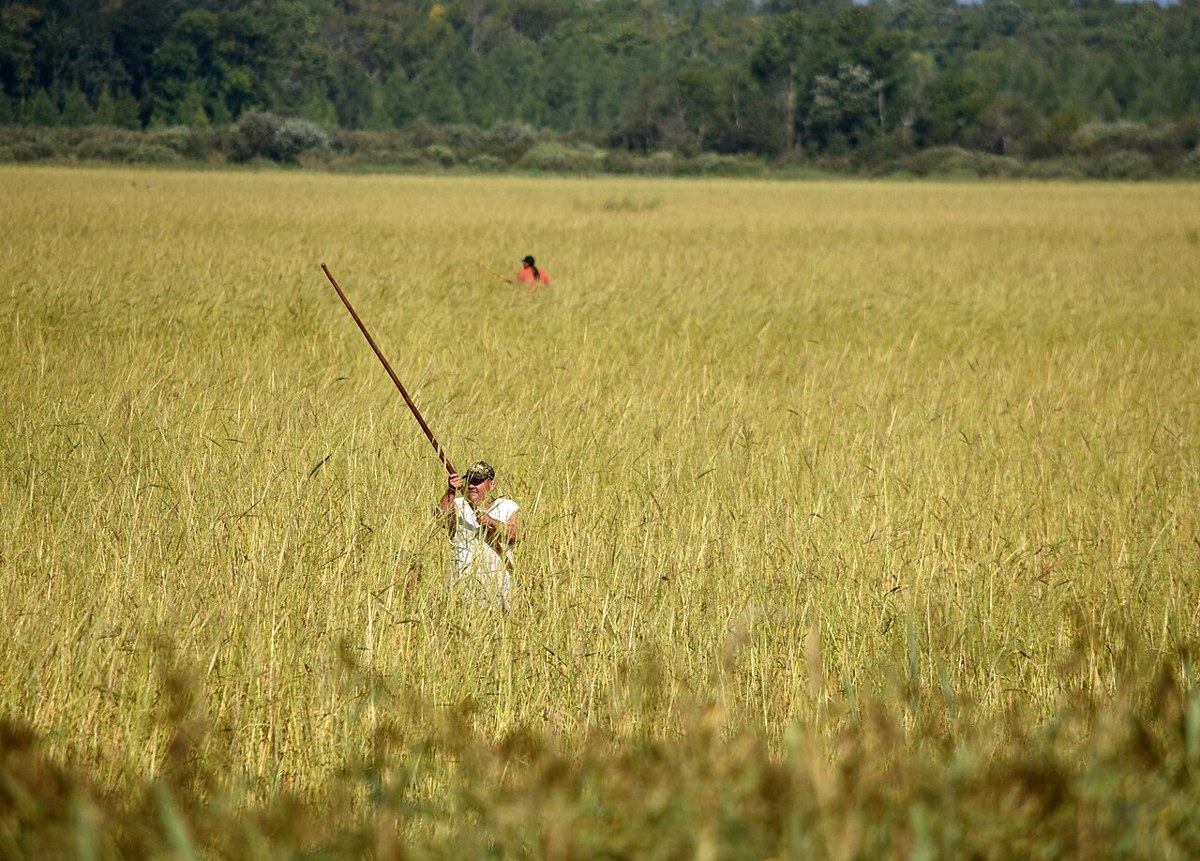
Wild rice (genus Zizania) is a tall water grass, not a true rice. It grows rooted in the mud of shallow lakes, slow rivers and freshwater marshes, rising several feet above the water and ripening long, dark grains in late summer. Four species are recognized worldwide. Three are native to the United States: northern wild rice (Zizania palustris) of the Great Lakes and upper Midwest, southern or annual wild rice (Zizania aquatica) of the Atlantic and Gulf coasts and the Great Lakes, and the endangered Texas wild rice (Zizania texana), found only in one spring-fed river. The fourth species, Manchurian wild rice (Zizania latifolia), is Asian.
Wild rice has nothing to do with dry garden beds. It needs standing water through the growing season, a soft mucky bottom and clean water, and it disappears quickly when water levels are managed for boats or power, when shorelines are developed, or when water quality slips. Where it does grow, it can form vast beds that feed migrating ducks by the thousand and have fed people for more than a thousand years.
In Maine both northern and southern wild rice occur, in still waters, slow streams and the freshwater reaches of tidal rivers. If you came here from our Maine landscaping article, note that wild rice is a grass with tiny, pale flowers rather than showy yellow ones, and that it is an aquatic plant for ponds and shallow water, not for dry or merely moist soil. This guide covers how to recognize wild rice, where each native species grows, how to establish it in a suitable pond, and which other grasses are confused with it.
Identification
Wild rice is easiest to recognize in mid to late summer, when it stands 3–10 feet above the water in dense, light green to golden beds. Earlier in the season the young plants go through a floating-leaf stage, when long, ribbon-like leaves lie flat on the water surface for a few weeks before the stems rise into the air.
Leaves & Stems
The leaves are flat, soft and grass-like, ½ to 2 inches wide and up to 3 feet long, with a rough edge. The stems are thick, spongy and hollow at the base, which helps carry air to roots in the mud. Southern wild rice is generally the taller, broader-leaved of the two common species and can reach 10 feet or more along tidal rivers; northern wild rice is usually 3–6 feet above the water.
Flowers
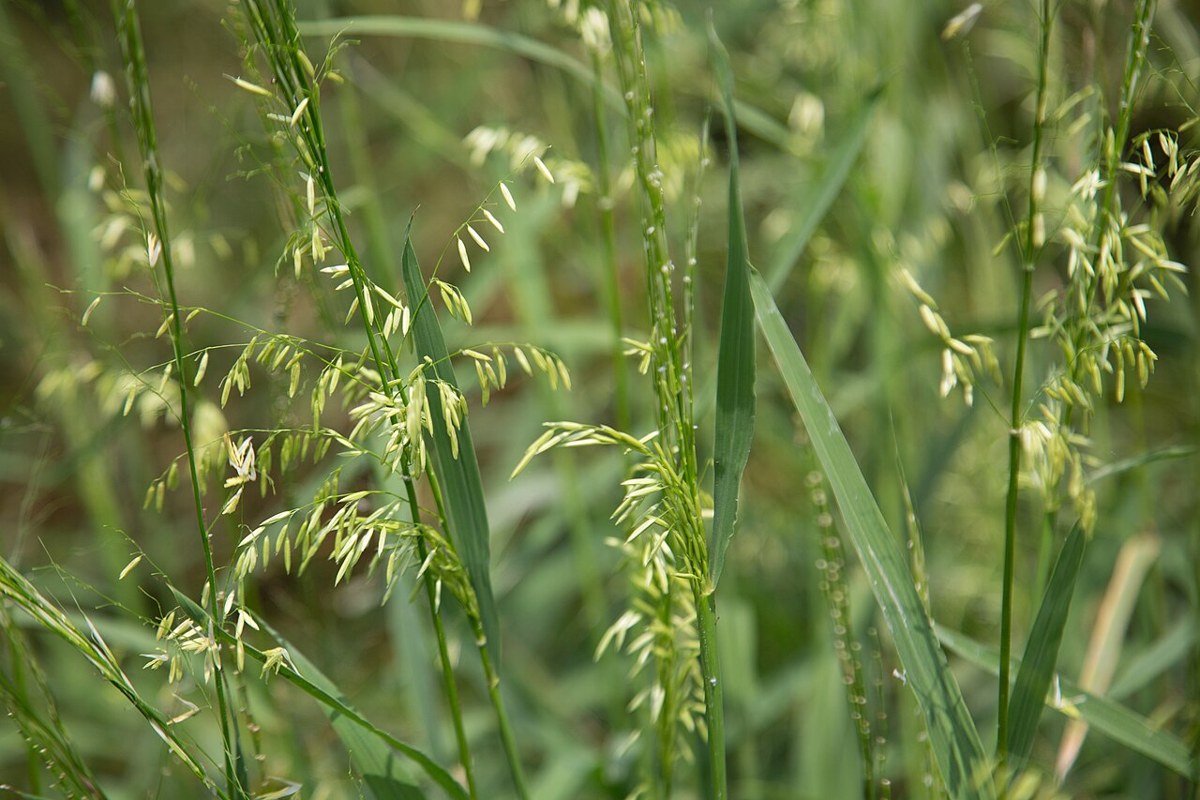
Wild rice flowers in July and August in a large, open panicle with the sexes separated. The female florets are crowded on stiff, upright branches at the top of the panicle, each a slender, pale, bristle-tipped spikelet. The male florets hang below on spreading branches, dangling yellow to purplish anthers that shed pollen into the wind. This “female on top, male below” arrangement is the single best field mark for wild rice and separates it from every other tall wetland grass.
Seeds
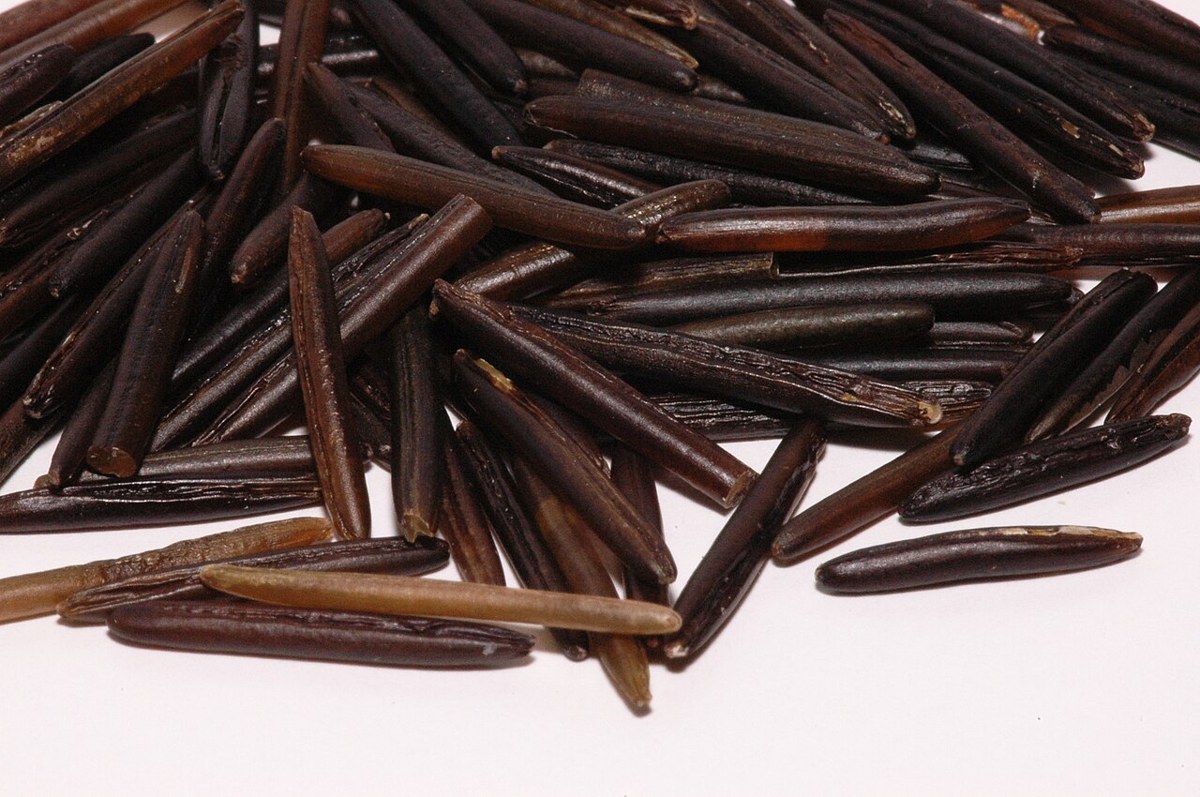
The grains are long and slender, ½ to nearly 1 inch, enclosed in a hull that ends in a long bristle (awn). They ripen unevenly over several weeks in late August and September and drop into the water as soon as they are ripe, which is why harvesters go over the same bed several times. Botanists separate the species partly by the hull: in northern wild rice it is tough, shiny and leathery, while in southern wild rice it is thin, papery and dull. Texas wild rice is a perennial with long, trailing stems in flowing water, unlike the two annual species.
Quick Facts
| Genus | Zizania |
| Family | Poaceae (Grass family) |
| U.S. Native Species | 3: northern wild rice (Z. palustris), southern wild rice (Z. aquatica) and Texas wild rice (Z. texana) |
| Plant Type | Emergent aquatic grass; northern and southern wild rice are annuals, Texas wild rice is a perennial |
| Mature Height | About 3–10 ft above the water surface |
| Growth Rate | Fast (germinates in spring, flowers and sets seed the same summer) |
| Sun Exposure | Full Sun |
| Water Needs | Standing or slowly flowing water about 6 in to 3 ft deep all season |
| Soil Type | Soft, organic muck or silt bottoms |
| Bloom Time | July–August (Texas wild rice can flower from spring into fall) |
| Flower Color | Pale green to straw-colored; anthers yellow to purplish |
| Seed | Long, dark, awned grains that drop into the water from late August to September |
| Deer Resistant | Not applicable (aquatic) |
| USDA Hardiness Zones | About 3–10 depending on species |
| Wildlife Value | Major food for migrating ducks, geese, rails and blackbirds; cover for waterfowl broods, fish and muskrats |
Native Range
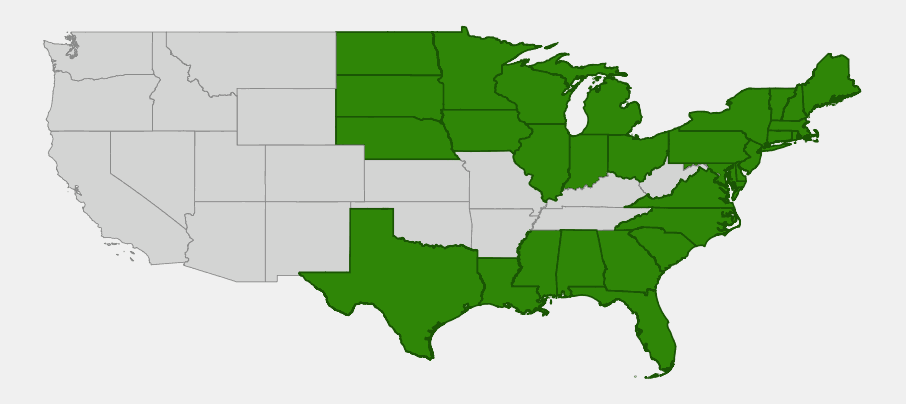
Northern wild rice is the wild rice of the upper Midwest and the North. Its center is the lake country of Minnesota, Wisconsin and Michigan, where it grows in thousands of shallow lakes and slow rivers, and it extends west into North Dakota, eastern South Dakota and a few rare sites in Nebraska, south into Iowa, Illinois, Indiana and Ohio, and east through northern New York, Vermont, New Hampshire, Massachusetts and Maine. Minnesota holds more natural wild rice than any other state, and it is the state grain.
Southern wild rice grows along the Atlantic and Gulf coasts from Maine and the St. Lawrence region to Florida and Louisiana, especially in the freshwater upper reaches of tidal rivers such as the Delaware, the Chesapeake Bay tributaries and the rivers of the Carolinas and Georgia. It also occurs inland around the Great Lakes, in Ohio, Indiana, Illinois, Michigan and Wisconsin, and in New York and Pennsylvania. The two species overlap in the Great Lakes region and New England.
Texas wild rice grows only in the upper few miles of the spring-fed San Marcos River in Hays County, Texas, where water stays clear and about 72°F all year. It has been federally listed as endangered since 1978. Northern wild rice has been planted for waterfowl and as a paddy crop in several western states, including California, Idaho and Oregon, but it is not native there. No wild rice is native to the Rocky Mountain or Pacific states.
📋 Find native wetland plants on our regional plant lists: NH, ME, VT · CT, MA, RI · NY, PA, NJ north · DE, NJ south, NY Long Island · MD, VA, WV · NC, SC · GA, AL, MS · AR, LA, OK east, TX east · OH, IN · IL, IA, MO · MI, WI, MN east · ND, SD, MN west · NE, KS, CO east · TX south/west/central
Native Species
The United States has three native wild rice species. None of them has its own Plant Native profile yet, so all three are described here.
Northern Wild Rice (Zizania palustris)
An annual of lakes and rivers in the Great Lakes states, the northern Plains and northern New England. Usually 3–6 ft above the water, with tough, shiny hulls on the grain. This is the wild rice harvested by hand from canoes in Minnesota and Wisconsin, and the species from which cultivated paddy wild rice was developed. Two varieties are recognized: var. palustris of deeper lakes, and the taller var. interior of shallower, often river or marsh, sites farther south and west.
Southern Wild Rice (Zizania aquatica)
Also called annual wild rice. An annual of the freshwater tidal marshes of the Atlantic and Gulf coasts and of marshes around the Great Lakes, often taller and leafier than northern wild rice, up to 10 ft or more, with thin, papery hulls. Its grains are smaller and the plant has rarely been harvested commercially, but it is a key food for migrating waterfowl along the Atlantic Flyway. Variety brevis is a small form of the St. Lawrence estuary.
Texas Wild Rice (Zizania texana)
A perennial that grows submerged in the clear, swift water of the upper San Marcos River, sending up flowering stems above the surface. It is one of the rarest grasses in North America, federally listed as endangered in 1978, and threatened by reduced spring flow from the Edwards Aquifer, recreation that tramples or uproots plants, and invasive aquatic plants. It is protected by law and is not available for home planting.
Non-Native Look-Alikes
All three wild rice species in the United States are native. The plants confused with wild rice are either other tall wetland grasses or the Asian relatives sold as food.
Manchurian Wild Rice (Zizania latifolia)
The only non-native Zizania, a large perennial from China and eastern Asia that spreads by thick rhizomes. In Asia its swollen stems, infected by a smut fungus, are eaten as a vegetable. It is not native anywhere in the Americas and should not be planted in North American waters, where it could compete with or hybridize with native wild rice.
Asian Rice (Oryza sativa)
True rice is a separate genus domesticated in Asia. Its grains are short to medium, white or brown, and hang in nodding clusters; it does not have wild rice’s separate male and female florets. “Black rice” and “wild rice blends” in stores are often Asian rice varieties mixed with paddy-grown wild rice.
Other Tall Wetland Grasses
Several grasses share wild rice’s habitat. Common reed (Phragmites australis) has a European strain that is highly invasive in marshes across the country; it has stiff, woody stems and fluffy, purplish-brown plumes, and it grows on shore and in shallow water but never forms floating leaves. Reed canarygrass (Phalaris arundinacea), whose aggressive forms are invasive in northern wetlands, has dense, compact flower heads and grows on wet shores rather than in open water. Native rice cutgrass (Leersia oryzoides) is a much smaller grass with leaves that cut like a saw. In the Southeast, native giant cutgrass (Zizaniopsis miliacea), sometimes called southern wild rice, is a tall perennial with all its florets mixed on the panicle; it can be told from true wild rice by its thick, creeping rhizomes and its perennial habit.
Growing & Care Guide
Light
Wild rice needs full sun and open water. It does not grow under overhanging trees.
Soil & Water
Northern and southern wild rice need water roughly 6 inches to 3 feet deep through the growing season, over a soft, organic bottom that seeds can settle into. Gently flowing water, as in a lake with an inlet and outlet or a slow river, is better than stagnant water. Sudden rises in water level during the floating-leaf stage in early summer can uproot or drown a whole crop. Wild rice is also sensitive to water chemistry: Minnesota, for example, has a sulfate standard for wild rice waters because high sulfate levels harm the plants. It will not grow in dry garden soil or in a container of potting mix.
Planting Tips
Wild rice is grown from seed sown in fall, from September to the first freeze, by scattering it on the water where it sinks into the mud. The seed must stay wet: it loses viability if it dries out, so buy seed from a supplier that ships it in water or damp, refrigerated, and sow it soon after it arrives. It needs a winter of cold, wet dormancy before germinating in spring. Choose seed of the species and source native to your region. Many states require a permit to plant anything in public waters, and wild rice waters may be tribally or state regulated, so check before seeding a lake or river.
Pruning & Maintenance
None in the usual sense. Keep water levels as stable as possible from late spring to midsummer, avoid motorboat traffic through the beds, and control common carp, which uproot young plants. Because northern and southern wild rice are annuals, a bed depends entirely on seed that falls each year; a few bad years in a row from flooding or drought can wipe out a small stand. Wild rice beds naturally cycle between good and poor years.
Propagation
By seed only for the two annual species. Texas wild rice spreads by stems and rhizomes, but it is endangered and propagated only under recovery programs.
Landscape Uses
- Large ponds, lake shallows and slow river backwaters in its native range
- Waterfowl and wildlife habitat on wetlands and duck ponds
- Wetland and shoreline restoration, including tidal freshwater marsh restoration on the East Coast
- Not suited to small water gardens, fast streams, deep water or dry beds
Wildlife & Ecological Value
For Birds
Wild rice is one of the most important natural foods for migrating waterfowl in the northern and eastern states. Mallards, black ducks, wood ducks, blue-winged teal, ring-necked ducks and Canada geese feed heavily on the fallen grain in fall. Soras, Virginia rails, red-winged blackbirds and bobolinks, once called “ricebirds,” eat the ripening seed, and marsh wrens and other birds nest in the beds.
For Mammals
Muskrats eat the stems and roots and use the plants in their houses, and the dense beds give cover to waterfowl broods through summer.
For Fish and Water
Wild rice beds shelter young fish and the insects they eat, slow wave action, hold soft sediments in place and take up nutrients from the water. A healthy wild rice bed is a sign of a healthy lake or river.
Ecosystem Role
Because the annual species start over from seed each spring, wild rice depends on natural water levels and clean water. Its decline across much of its southern and eastern range since the 1800s tracks dams, drainage, shoreline development and pollution.
Cultural & Historical Uses
For the Ojibwe and other Anishinaabe peoples of the Great Lakes, wild rice is manoomin, “the good berry,” and it lies at the heart of their history: their migration story tells of traveling west until they reached the place where food grows on the water. Wild rice was also a staple of the Menominee, whose name comes from the Ojibwe word for the plant, and of the Dakota and other peoples of the region. Harvest rights are protected by treaties, and tribal nations and states regulate the harvest, which in Minnesota must still be done by hand from a non-motorized canoe using a push pole and wooden knockers.
Ricers bend the stalks over the canoe and tap the heads so the ripe grain falls in, leaving unripe grain for later passes and for reseeding. The grain is then cured, parched over a fire to loosen the hull, “danced” or jigged to break the hull, and winnowed in birch-bark trays. Harvesters watch for ergot, a fungus that replaces some grains with hard, purplish-black bodies that are toxic and are removed during cleaning.
Since the 1950s, wild rice has also been grown as a paddy crop, mainly in Minnesota and California. Minnesota law requires paddy-grown rice to be labeled “cultivated,” so lake rice harvested by hand is often sold as “hand-harvested” or “natural” wild rice. The grain is high in protein and is a popular food, but it should be bought from reputable sources rather than gathered from unfamiliar waters.
Frequently Asked Questions
Is wild rice native to Maine?
Yes. Both northern wild rice and southern wild rice occur in Maine, in still lakes, slow streams and the freshwater reaches of tidal rivers.
Can I grow wild rice in my garden?
Only if you have a pond or lake edge with 6 inches to 3 feet of water over a soft mud bottom through the summer, in full sun. It will not grow in dry or merely moist garden soil, and it is not a flowering ornamental; its flowers are small and pale.
Is wild rice related to regular rice?
Both are grasses in the same broad group, but wild rice (Zizania) is a different genus from Asian rice (Oryza). Three of the four wild rice species are native to North America.
Why are my wild rice seeds not sprouting?
Most likely the seed dried out before sowing, or it was not kept cold and wet through winter. Wild rice seed must stay moist from harvest to planting and needs months of cold, submerged dormancy before it germinates in spring.
Is Texas wild rice available for planting?
No. Texas wild rice is federally endangered and grows wild only in the upper San Marcos River in Texas. It is protected by law and grown only for recovery work.

Looking for a nursery that carries native wild rice seed?
Browse our native plant nursery directory: Alabama · Connecticut, Delaware, Florida & Georgia · Illinois, Indiana & Iowa · Louisiana, Maine, Maryland, Massachusetts, Michigan, Minnesota & Mississippi · Nebraska, New Hampshire, New Jersey, New York, North Carolina, North Dakota & Ohio · Pennsylvania, Rhode Island, South Carolina, South Dakota, Texas, Vermont & Virginia · Wisconsin

