
Giant Sunflower (Helianthus giganteus)
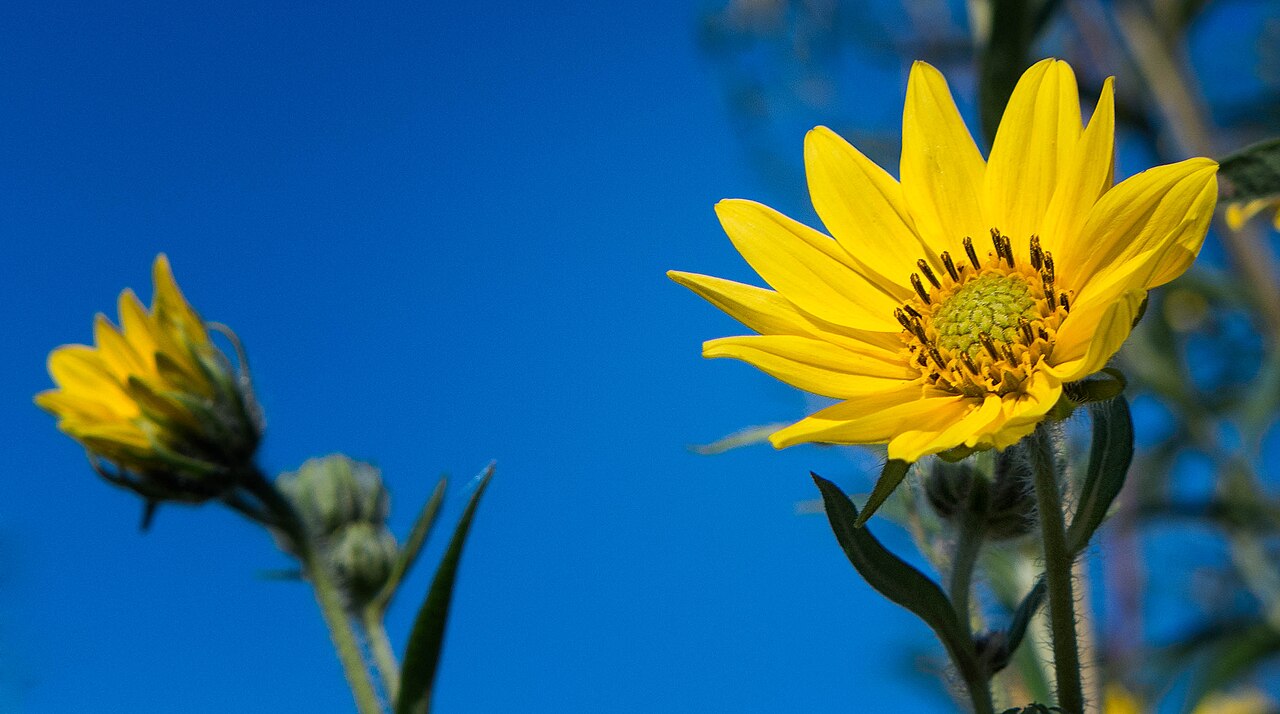
Helianthus giganteus, known as Giant Sunflower (also tall sunflower or swamp sunflower), is a tall, clump-forming perennial sunflower of wet meadows, marsh edges, swamps and moist thickets in eastern North America. It typically grows 4 to 10 feet tall, and vigorous plants in rich, wet soil can top 12 feet. Its stout, rough-hairy stems are often reddish purple, and from late summer into fall they branch at the top into loose sprays of bright yellow flower heads, each about 2 to 3 inches across.
Despite the name, this is not the huge, single-headed garden sunflower. That is the annual common sunflower (Helianthus annuus), which comes from the West. Giant sunflower is a long-lived perennial that spreads slowly from short rhizomes into a clump, and it carries many smaller, daisy-like heads. “Giant” refers to its height, not the size of its flowers.
It is native from Maine and the Maritime provinces west to Minnesota and south to Georgia and Mississippi. For gardeners it is one of the best native perennials for a wet, sunny spot: a tall back-of-the-border or rain garden plant that blooms when many summer flowers are finished, feeds bees and butterflies, and holds seed heads that goldfinches strip in fall.
Identification
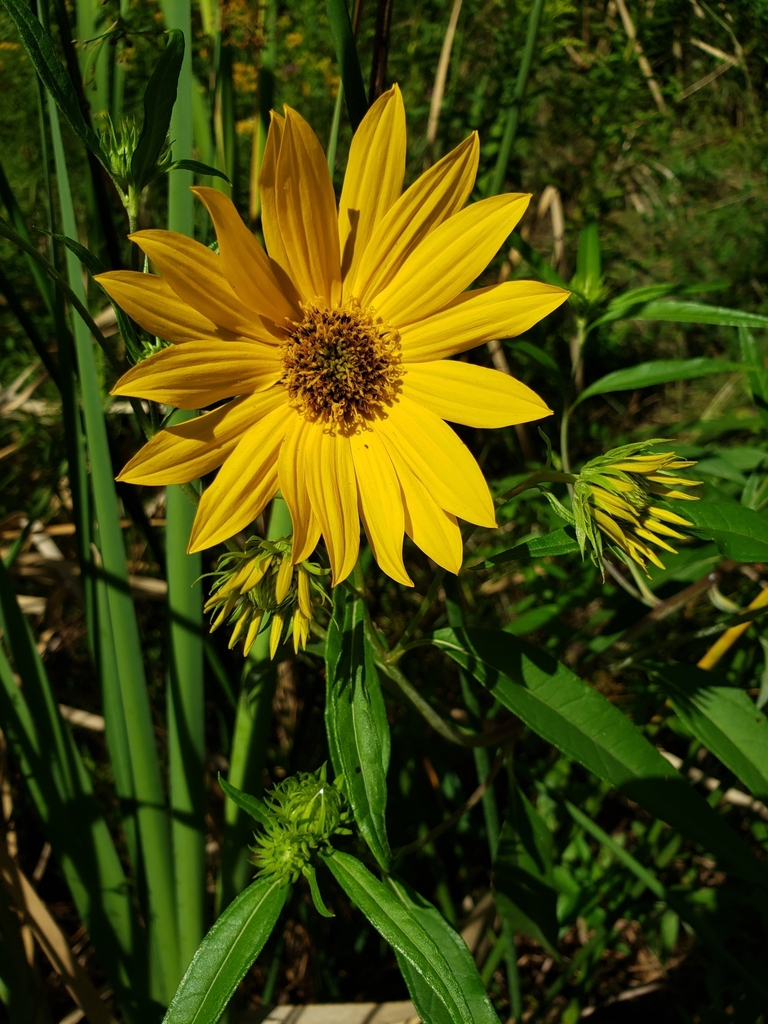
Look for a very tall sunflower in a wet, sunny place, with rough, hairy, often purplish stems, narrow, rough, mostly alternate leaves with little or no leaf stalk, and many 2- to 3-inch heads with yellow rays and a yellow center.
Growth Habit
Giant sunflower is an upright herbaceous perennial, 4 to 10 feet tall (occasionally to 12 feet), that dies back to the ground each winter. Each plant sends up one to several stout stems from a fibrous-rooted crown with short rhizomes, and over time it forms loose clumps or small colonies. The stems are usually unbranched until the flowering top and are covered in stiff, spreading hairs. They are green to strongly reddish purple, especially low down and in sun.
Leaves
The leaves are lance-shaped, 3 to 7 inches long and up to about 2 inches wide, tapering to a point. They have little or no leaf stalk. The upper surface is very rough to the touch (like fine sandpaper), while the underside is softer and more hairy. The edges are finely to coarsely toothed. Most leaves are alternate along the stem, but the lowest ones are often opposite.
Flowers
The flower heads are borne on short stalks at the top of the stems, several to many per stem, in a loose, branched cluster. Each head is about 2 to 3 inches across with 10 to 20 bright to pale yellow ray florets around a yellow central disk. The green bracts beneath the head (phyllaries) are long, narrow, hairy and loose, often spreading or curling outward, which is a useful identification clue. Flowering runs from about August to October, a little earlier in the North.
Fruit & Seeds
After the rays fall, each disk ripens into a cluster of small, dark, wedge-shaped seeds (achenes) about 1/8 inch long, each with two small bristly scales at the top instead of a fluffy pappus. The seed heads stay on the stems into late fall and winter, where birds work them over.
Look-alikes
Several tall yellow sunflowers grow in the same region. Sawtooth sunflower (H. grosseserratus) has smooth, hairless stems that are often bluish-white with a waxy bloom, and longer-stalked leaves. Jerusalem artichoke (H. tuberosus) has broader leaves with winged stalks, shorter, broader bracts and large edible tubers. Pale-leaved sunflower (H. strumosus) is a woodland-edge plant with mostly opposite, stalked leaves that are pale beneath. Swamp sunflower (H. angustifolius) has very narrow, grass-like leaves and a purple-brown disk, and Maximilian sunflower is a prairie plant with folded, gray-green leaves and flowers tight along the upper stem.
Quick Facts
| Scientific Name | Helianthus giganteus |
| Family | Asteraceae (aster or daisy family) |
| Plant Type | Tall herbaceous perennial |
| Mature Height | 4–10 ft (rarely to 12 ft) |
| Mature Spread | 2–4 ft; slowly forms clumps |
| Growth Rate | Fast |
| Sun Exposure | Full sun to part shade |
| Water Needs | High; moist to wet soil |
| Soil Type | Moist to wet loam, clay, muck or peaty soil |
| Soil pH | Slightly acidic to neutral (about 5.5–7.5) |
| Bloom Time | August–October |
| Flower Color | Yellow rays with a yellow disk |
| Fall Color | None notable; stems turn brown |
| Fruit | Small dark achenes in persistent heads |
| Deer Resistant | Low; deer browse young shoots |
| USDA Hardiness Zones | 3–9 |
Native Range
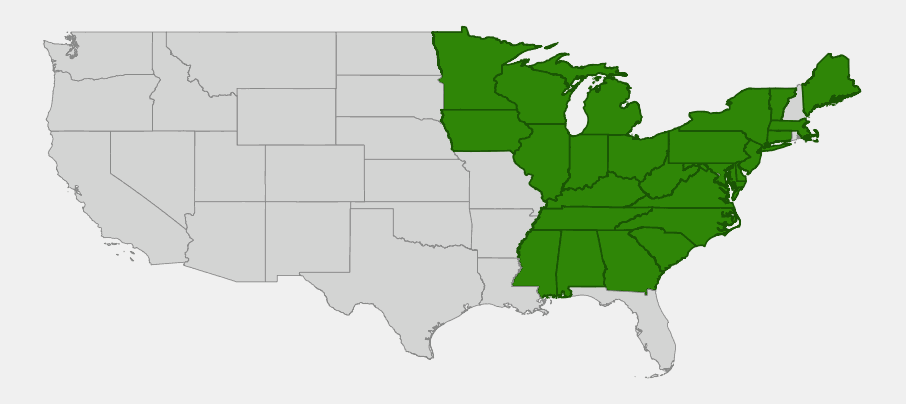
Giant sunflower is native to eastern North America. USDA PLANTS lists it from 25 states, from Maine, Vermont, Massachusetts and Connecticut west through New York, Pennsylvania, Ohio, Michigan and Wisconsin to Minnesota and Iowa, and south through the Appalachians and Piedmont to Georgia, Alabama and Mississippi. In Canada it grows in Ontario, Quebec and the Maritime provinces, with USDA also listing Manitoba and Alberta.
It is most common in the Great Lakes region and the Northeast, and becomes more scattered southward, where it grows mainly in the mountains and upper Piedmont. In Minnesota it is mostly a plant of the eastern and central counties, and in the South it is a plant of bogs, wet meadows and seepy openings rather than the coastal plain, where the similar swamp sunflower takes over.
Typical habitats are open wetlands and their edges: wet meadows, sedge meadows, fens, marsh and swamp margins, wet thickets, low prairies, stream banks, ditches and wet roadsides. It needs plenty of sun and does not tolerate deep, standing water for long periods.
📋 Regional plant lists featuring Giant Sunflower: New York, Pennsylvania & Northern New Jersey · Ohio & Indiana · Michigan, Wisconsin & Eastern Minnesota · Kentucky & Tennessee · Connecticut, Massachusetts & Rhode Island · New Hampshire, Maine & Vermont · Maryland, Virginia & West Virginia · Delaware, Southern New Jersey & Long Island · Illinois, Iowa & Missouri · Alabama, Georgia & Mississippi · North & South Carolina
Growing & Care Guide
Giant sunflower is easy to grow in the right place: full sun and soil that stays moist. It is a big plant, so give it room at the back of a border, beside a pond or in a rain garden or wet meadow planting.
Light
Full sun gives the sturdiest stems and the most flowers. It tolerates part shade, but there it grows taller, leans and flowers less.
Soil & Water
Grow it in moist to wet soil: loam, clay, muck or peaty soils all work, and it is happy in soil that floods briefly in spring. It is less vigorous and shorter in average garden soil, which some gardeners prefer, but it should not be allowed to dry out for long in summer. Avoid very dry, sandy sites.
Planting Tips
Plant nursery plants or divisions in spring or fall, 2 to 3 feet apart. Use it behind shorter wetland plants such as swamp milkweed, turtlehead and blue flag iris, or mix it into a wet meadow with Joe-pye weeds, ironweed and goldenrods. In small gardens, put it where its height is an asset, such as against a fence or at the far edge of a pond.
Pruning & Maintenance
To keep it shorter and bushier, cut the stems back by about a third to a half in late May or early June (the “Chelsea chop”); it will branch and bloom a little later on stems that are less likely to flop. Leave the seed heads standing for birds and cut the old stems down in late winter or early spring. Divide crowded clumps every few years in spring. It spreads slowly by rhizomes but is not aggressive like Jerusalem artichoke. Powdery mildew and leaf spots can appear in late summer but rarely harm it.
Propagation
Divide clumps in early spring. Seed is easy: sow it outdoors in fall, or give it 30 to 60 days of cold, moist stratification before sowing in spring. Seedlings may flower in their second year.
Landscape Uses
- Rain gardens: thrives where water collects after storms
- Pond and stream edges: a tall, late-blooming plant for wet banks
- Back of the border: adds height and late color in moist beds
- Wet meadows: mixes with Joe-pye weed, ironweed and asters
- Pollinator gardens: late-season pollen and nectar for bees
- Bird gardens: seed heads feed goldfinches into winter
Wildlife & Ecological Value
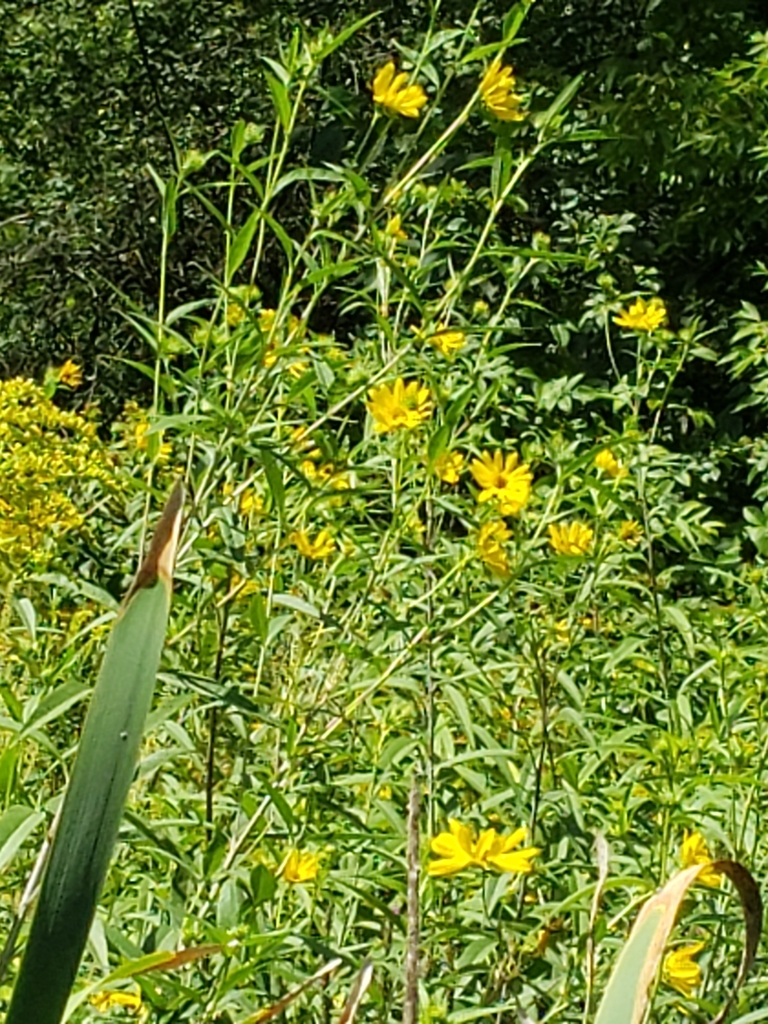
Giant sunflower blooms late in the season, when bees are stocking up before winter, and its seeds carry birds into fall.
For Pollinators
The flower heads attract many bees, including bumble bees, sweat bees, leafcutter bees and long-horned bees. Several native bees, such as some Melissodes and Andrena species, specialize in the pollen of sunflowers and their relatives. Butterflies such as monarchs, skippers and sulphurs visit for nectar during fall migration, and the leaves are a food plant for caterpillars of the silvery checkerspot and many moths.
For Birds
American goldfinches, chickadees and other small seed eaters pick the seeds from the heads in fall and early winter. The dense, tall stems give cover to wetland birds such as sparrows and common yellowthroats.
For Mammals
Deer and rabbits browse the young shoots in spring, and small mammals eat fallen seeds. Muskrats and voles use the stems and cover at wetland edges.
Ecosystem Role
Its dense roots and rhizomes help bind wet soils along streams and ditches. As one of the latest-blooming wetland perennials, it fills a gap in the food supply for pollinators in late summer and fall.
Cultural & Historical Uses
The genus name Helianthus comes from the Greek helios, sun, and anthos, flower. The species name giganteus means “giant,” for the plant’s height. Linnaeus named it in 1753.
In 1775 the naturalist Bernard Romans recorded that the Choctaw of the Southeast cultivated Helianthus giganteus and made a palatable bread by mixing its ground seed with ground maize. The seeds are small, but like other sunflower seeds they are rich in oil.
Perennial sunflowers hybridize readily, and giant sunflower can cross with related tall species where they grow together, which sometimes makes individual plants hard to name. It is one of many wild Helianthus species kept in seed banks as genetic resources for the cultivated sunflower crop.
Frequently Asked Questions
Is giant sunflower the same as the tall garden sunflower?
No. Tall garden sunflowers are annual forms of the common sunflower (Helianthus annuus) with one huge head. Giant sunflower (Helianthus giganteus) is a perennial wetland native with many 2- to 3-inch heads on each stem.
How tall does giant sunflower get?
Usually 4 to 10 feet, and sometimes 12 feet in rich, wet soil. Cutting the stems back by a third in early June keeps it shorter.
Does giant sunflower spread?
It spreads slowly from short rhizomes and forms clumps or small colonies, but it is much less aggressive than Jerusalem artichoke. Divide it every few years to keep it in bounds.
Will giant sunflower grow in a dry garden?
It prefers moist to wet soil. In average soil it will grow but stays shorter, and it struggles in dry, sandy soil or long droughts.
When does giant sunflower bloom?
From about August to October, with peak bloom in late August and September.

Looking for a nursery that carries Giant Sunflower?
Browse our native plant nursery directory: Alabama · Connecticut, Delaware & Georgia · Illinois, Indiana & Iowa · Kentucky, Maine, Maryland, Massachusetts, Michigan, Minnesota & Mississippi · New Jersey, New York, North Carolina & Ohio · Pennsylvania, South Carolina, Tennessee, Vermont & Virginia · West Virginia & Wisconsin

