
Swamp Spiderwort (Tradescantia paludosa)
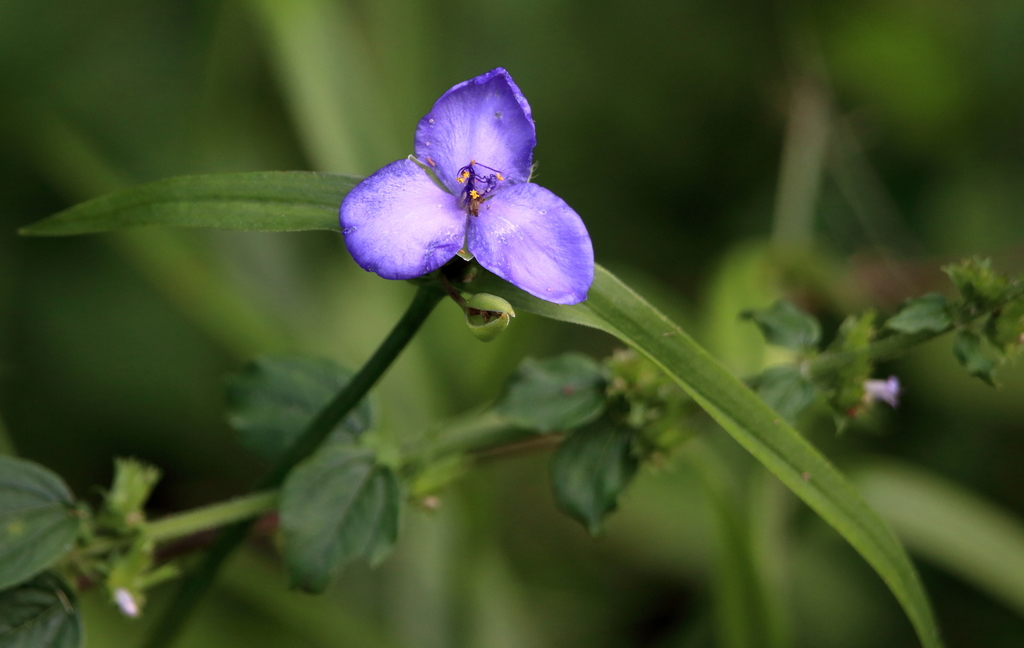
Tradescantia paludosa, the Swamp Spiderwort, is a native perennial wildflower of the Gulf Coast states in the spiderwort family (Commelinaceae). USDA PLANTS lists it under the name confederate spiderwort. It forms clumps of upright, smooth stems 1 to 3 feet tall with long, narrow, grass-like leaves, topped by clusters of three-petaled blue to violet flowers, each open for only part of a day.
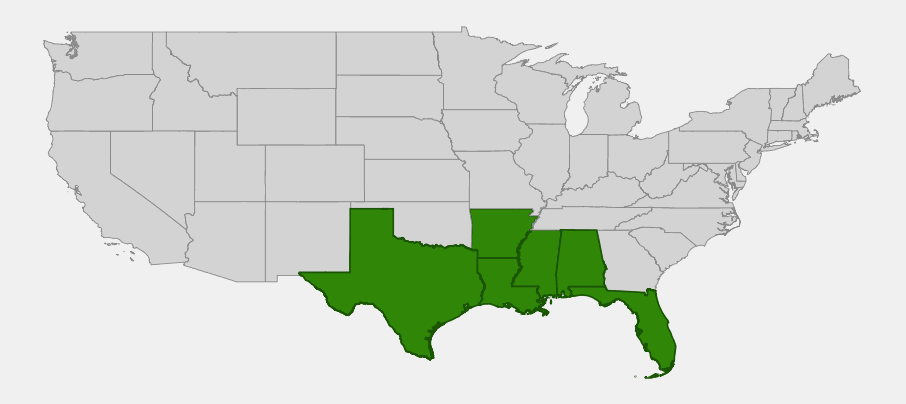
As its name suggests (paludosa means “of swamps”), it grows in wetter, shadier places than most spiderworts: alluvial bottoms, swamp margins and floodplain forests, as well as ditches, fields, roadsides and railroad rights-of-way. It is native from the Florida Panhandle west through Alabama, Mississippi, Louisiana and Arkansas to East Texas.
It is closely related to the widespread Ohio spiderwort, and some botanists treat it as a variety or synonym of that species. For gardeners in the Deep South it is an easy, adaptable spiderwort for moist, partly shaded beds and rain gardens, flowering from spring into summer.
Identification
Look for a smooth, clump-forming spiderwort with long, narrow leaves and blue-violet three-petaled flowers whose small stalks and sepals carry short glandular hairs, growing in moist bottomland woods of the Gulf Coast states.
Growth Habit
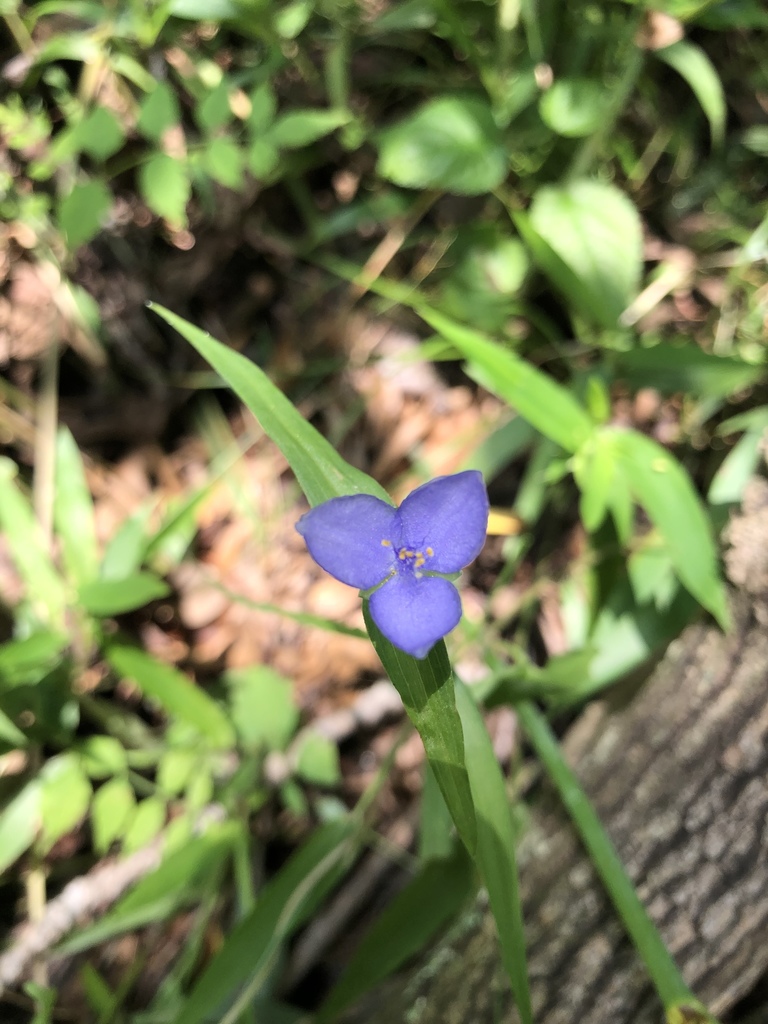
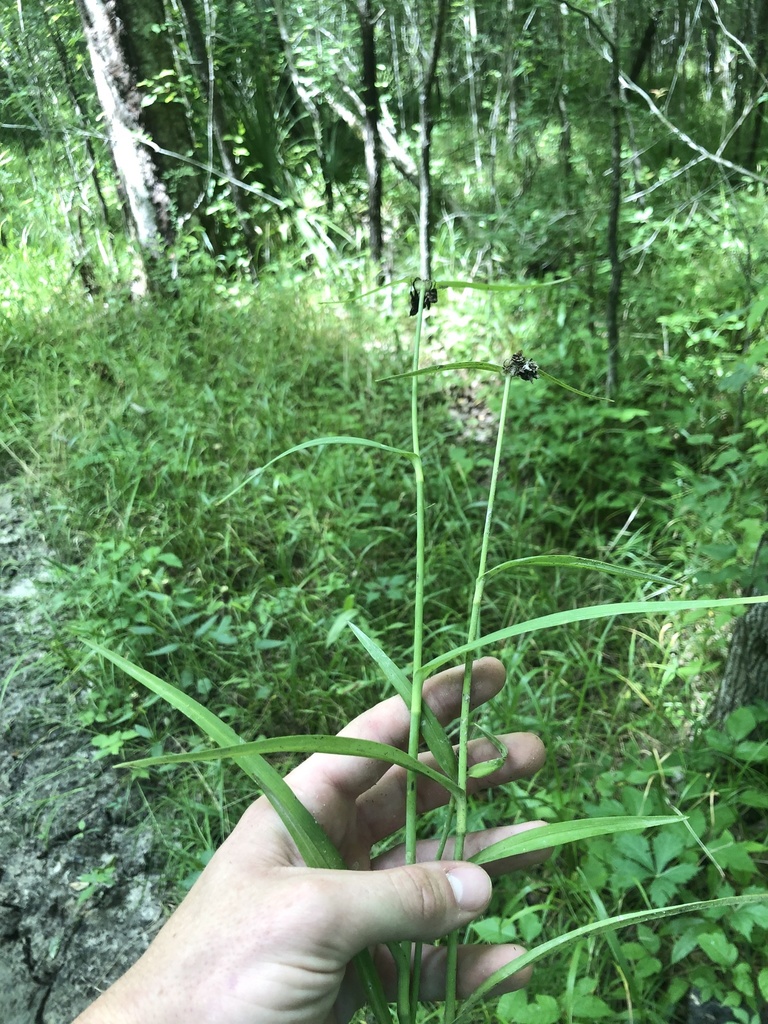
Swamp spiderwort is an herbaceous perennial with fleshy roots. It grows as a clump of erect to leaning stems, usually 1 to 2 feet tall and sometimes taller in rich, shady soil. The stems are smooth, jointed and somewhat succulent, and often branch above, so a plant may carry several flower clusters.
Leaves
The leaves are long, narrow and grass-like, often folded lengthwise into a shallow channel, with sheathing bases that wrap the stem. They are usually 5 to 10 inches long and less than an inch wide, smooth and green to slightly bluish green.
Flowers
The flowers grow in tight clusters (umbel-like cymes) at the stem tips, cupped by a pair of long, leaf-like bracts. Each flower is about 1 inch across with three broad, rounded petals, usually blue to violet but sometimes rose or white, and six stamens with yellow anthers and long purple hairs on the filaments. The flower stalks and the three green sepals are covered with short glandular hairs. Each flower opens in the morning and fades by afternoon, but a cluster produces new flowers for weeks. Flowering is mainly in spring, starting as early as March, and continues into summer and sometimes fall.
Fruit & Seeds
The fruit is a small, rounded, three-celled capsule held inside the persistent sepals. It splits to release a few small, gray, ridged seeds.
Look-alikes
Ohio spiderwort is its closest relative and grows in many of the same states; its flower stalks and sepals are smooth, or have only a small tuft of hairs at the sepal tips, and it prefers sunnier, drier sites. Virginia spiderwort has hairy sepals without glands and grows mostly farther north and east. Zigzag spiderwort has broader leaves on zigzag stems. Hairy-flowered spiderwort (Tradescantia hirsutiflora), also of the Gulf states, has hairy stems and sepals with mostly non-glandular hairs.
Quick Facts
| Scientific Name | Tradescantia paludosa |
| Family | Commelinaceae (spiderwort family) |
| Plant Type | Herbaceous perennial |
| Mature Height | 1–2 ft, occasionally to 3 ft |
| Mature Spread | 1–1.5 ft |
| Growth Rate | Moderate |
| Sun Exposure | Part shade to full sun |
| Water Needs | Moderate to high; tolerates wet soil |
| Soil Type | Moist loam, silt or clay; alluvial soils |
| Soil pH | Acidic to neutral (about 5.5–7.0) |
| Bloom Time | March–July; sometimes later |
| Flower Color | Blue to violet; occasionally rose or white |
| Fall Color | None notable |
| Fruit | Small three-celled capsule |
| Deer Resistant | No; often browsed |
| USDA Hardiness Zones | 7–9 |
Native Range
USDA PLANTS lists swamp spiderwort as native to Alabama, Arkansas, Florida, Louisiana, Mississippi and Texas. It is a plant of the lower Mississippi Valley and the Gulf Coastal Plain, with Florida records mainly from the Panhandle and Texas records from the eastern part of the state.
It is most common in Louisiana, Mississippi and southern Arkansas, in the floodplains and bottomland forests of the Mississippi, Pearl and Red Rivers and their tributaries. Because some authorities lump it with Ohio spiderwort, published range maps and online records can differ.
Its habitats include alluvial bottoms, swamp margins, moist hardwood forests and their edges, as well as more open, disturbed places such as ditches, fields, roadsides and railroad rights-of-way.
📋 Regional plant lists featuring Swamp Spiderwort: North & South Florida · Alabama, Georgia & Mississippi · Arkansas, Louisiana, Eastern Oklahoma & Eastern Texas
Growing & Care Guide
Swamp spiderwort is easy to grow and adapts to most garden soils in the Deep South. It is seldom sold under its own name, so look for it from regional native plant nurseries and plant sales, or grow it from seed.
Light
Part shade is ideal, such as morning sun and afternoon shade or the dappled light of a woodland edge. It tolerates full sun in moist soil, though it may go dormant earlier in summer heat.
Soil & Water
Give it moist, humus-rich loam, silt or clay. It tolerates wet soil and brief flooding, so it suits rain gardens, pond edges and low spots. Water during dry spells in the first year; established plants handle short droughts by going partly dormant.
Planting Tips
Plant in spring or fall, about 12 to 18 inches apart, in groups of three or more. Combine it with ferns, sedges, copper iris and lizard’s tail in a wet woodland garden.
Pruning & Maintenance
After the main bloom, the foliage can look tired in midsummer. Cut the stems back by about half to tidy the plant and encourage fresh leaves and some rebloom. It may self-sow mildly in moist soil.
Propagation
Divide clumps in early spring or fall. Seeds can be collected when the capsules dry and sown in fall outdoors or after a period of cold-moist stratification. Stem cuttings root easily in moist soil. Please do not dig wild plants; propagate from garden plants or buy nursery stock.
Landscape Uses
- Rain gardens: tolerates wet soil and periodic flooding
- Woodland gardens: flowers in the light shade of bottomland trees
- Pollinator gardens: pollen source for native bees in spring
- Pond and stream edges: grows in moist alluvial soil
- Naturalized areas: spreads slowly by seed in moist meadows and ditches
Wildlife & Ecological Value
Spiderwort flowers offer no nectar, but they produce plenty of pollen, which makes them important to bees in spring.
For Pollinators
Bumble bees, sweat bees and other native bees visit the flowers to collect pollen, often buzzing the anthers to shake it loose. Syrphid flies also feed on the pollen. The long hairs on the stamen filaments are thought to give insects a foothold.
For Birds
Ground-feeding birds may eat the small seeds, but the plant is not a major bird food.
For Mammals
Deer and rabbits browse spiderwort foliage, and turtles and other wildlife may nibble the succulent stems.
Ecosystem Role
Swamp spiderwort is part of the herb layer of Gulf Coast bottomland forests and their sunnier edges. Its spring flowers are an early pollen source in floodplains, and its fleshy roots help it survive seasonal flooding.
Cultural & Historical Uses
The genus Tradescantia honors John Tradescant the Younger, a 17th-century English gardener who collected plants in Virginia and introduced the first spiderwort to European gardens. Swamp spiderwort was described in 1935 by Edgar Anderson and Robert Woodson in their study of North American spiderworts.
Spiderwort stamen hairs are famous in biology classrooms. Each hair is a chain of single cells large enough to see under a simple microscope, and they have long been used to show living cytoplasm moving inside cells. The stamen hairs of some spiderworts also change from blue to pink after exposure to radiation, and researchers have used them to study mutations.
The name “spiderwort” may come from the stringy, sticky sap that stretches like a spider web when a stem is broken. The USDA name “confederate spiderwort” refers to its range in the Deep South.
Frequently Asked Questions
Is swamp spiderwort the same as confederate spiderwort?
Yes. USDA PLANTS lists Tradescantia paludosa as confederate spiderwort; swamp spiderwort is the other common name, and it describes the plant’s wet, swampy habitat.
How is swamp spiderwort different from Ohio spiderwort?
The two are very similar, and some botanists combine them. Swamp spiderwort has short glandular hairs on its flower stalks and sepals and grows in shadier, wetter bottomland sites. Ohio spiderwort has mostly smooth sepals and grows in sunnier prairies, fields and roadsides.
Can swamp spiderwort grow in wet soil?
Yes. It grows naturally in alluvial bottoms and swamp margins and does well in rain gardens and low, moist spots.
Why do spiderwort flowers close in the afternoon?
Each flower lasts only one day. It opens in the morning and the petals wither by afternoon, especially in hot sun, but each cluster keeps producing new flowers for weeks.
Is swamp spiderwort invasive?
No. It is a native wildflower that spreads slowly by seed and short rhizomes. It should not be confused with non-native Tradescantia such as small-leaf spiderwort (T. fluminensis), which is invasive in Florida.

Looking for a nursery that carries Swamp Spiderwort?
Browse our native plant nursery directory: Alabama & Arkansas · Florida · Louisiana & Mississippi · Texas

