
American Eelgrass (Vallisneria americana)
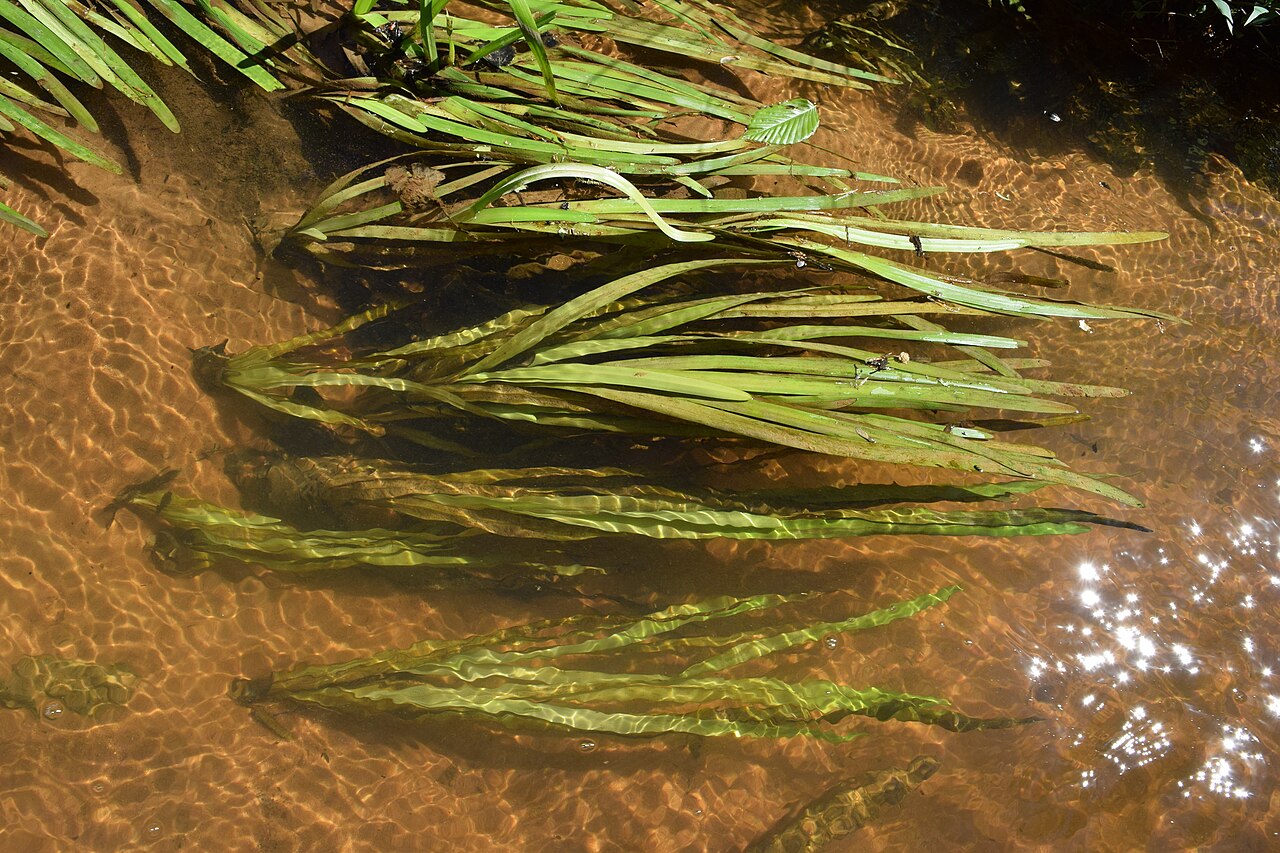
Vallisneria americana, known as American Eelgrass, wild celery, water celery or tape grass, is a fully submersed aquatic plant of lakes, rivers, streams and tidal fresh and brackish waters. It forms underwater meadows of long, ribbon-like leaves that rise from a basal rosette and trail in the current, often 2 to 6 feet long in deep water. It belongs to the tape-grass family (Hydrocharitaceae), and despite the names it is related to neither true celery nor the marine eelgrass (Zostera) of salt water.
American eelgrass is one of the most important native underwater plants in North America. Its winter buds and rhizomes are the favorite food of the canvasback duck, whose scientific name, Aythya valisineria, comes from this plant. Its beds shelter young fish and crabs, steady bottom sediments and help clear the water, and it is a central species in submersed aquatic vegetation (SAV) restoration in the Chesapeake Bay, the Hudson River and the Great Lakes.
It is also one of the best-known aquarium plants. “Val,” “jungle val” and “Italian val” are standard background plants in freshwater tanks, and some of the plants sold under those names are this species. This guide covers how to identify American eelgrass, where it grows wild, how to grow it in ponds and aquariums, and its role as food and habitat for waterfowl and fish.
Identification
American eelgrass is easy to recognize once you know the leaf pattern, though at a glance it can be confused with other ribbon-leaved underwater plants such as tape-leaved arrowheads, bur-reeds and some pondweeds.
Leaves
All the leaves rise from a basal rosette; there is no leafy stem. Each leaf is a flat, thin ribbon, usually ⅛ to 1 inch wide, with a blunt tip that is finely toothed near the end. Leaf length depends on water depth, from a few inches in shallow streams to 6 feet or more in deep, clear water, where the tips float at or just below the surface. Held up to the light, a leaf shows a pale central band of air channels flanked by rows of tiny cells and fine parallel veins, a three-zone pattern that separates it from look-alikes.
Roots & Runners
Plants are anchored by fibrous roots and spread by slender runners (stolons) that creep across the bottom and root at the nodes to form new rosettes, so a single plant can grow into a dense, connected bed. In late summer and fall, plants form starchy winter buds at the ends of the runners. These overwinter in the sediment and sprout the next spring.
Flowers
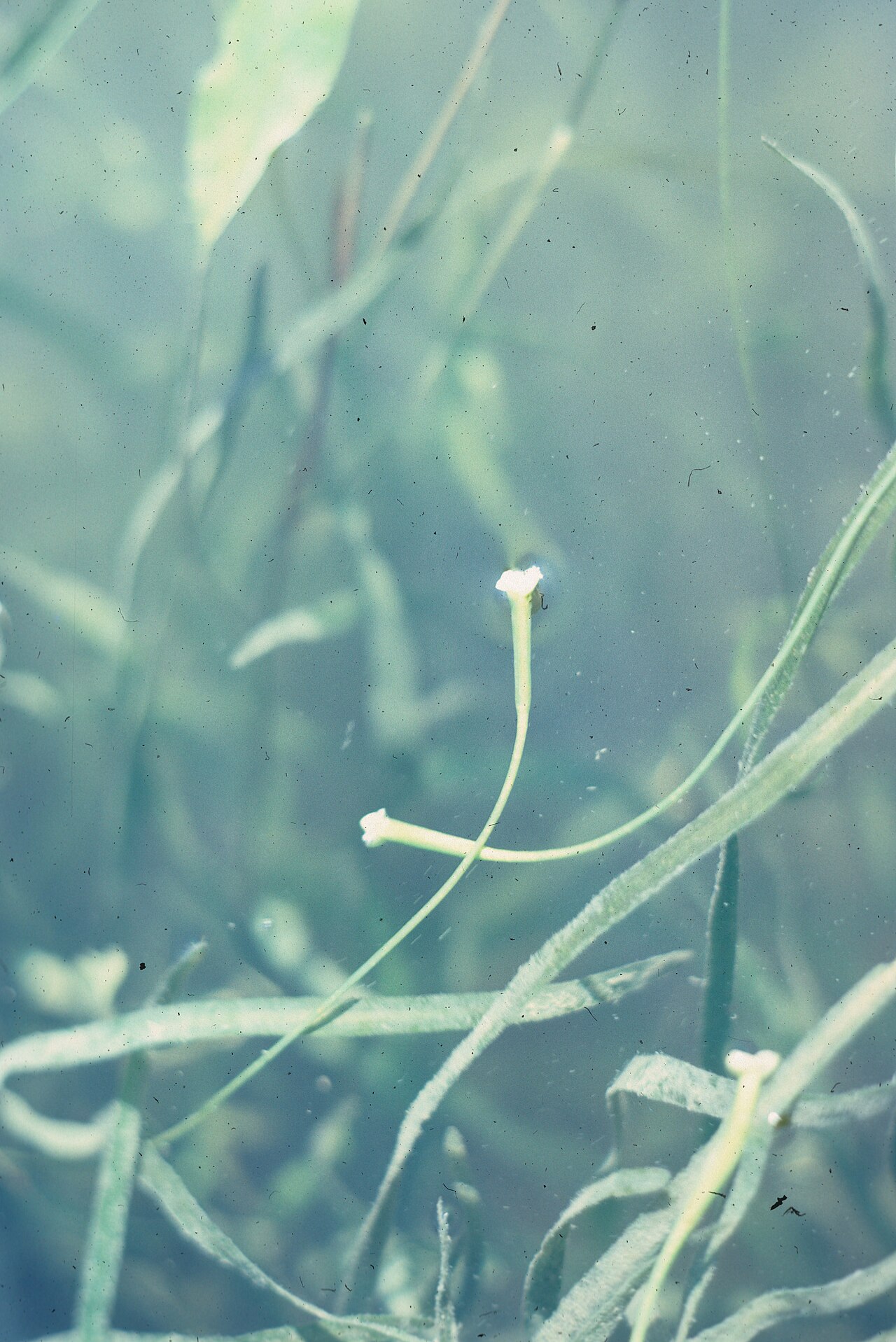
The plant is dioecious, with male and female flowers on separate plants, and its pollination is remarkable. Female flowers are single, white, about ½ inch wide, and carried to the water surface on long, thread-like stalks. Male flowers are tiny and form by the hundreds inside a sheath near the base of the plant. When ripe they break free, float to the surface, open, and drift like miniature boats until they bump into a female flower. Bloom is from midsummer into early fall.
Fruit & Seeds
After pollination, the female flower stalk coils into a tight spiral and pulls the developing fruit back down into the water. The fruit is a slender, cylindrical, fleshy pod about 2 to 4 inches long, packed with many small seeds embedded in a gel.
Quick Facts
| Scientific Name | Vallisneria americana (incl. V. neotropicalis) |
| Family | Hydrocharitaceae (tape-grass family) |
| Plant Type | Submersed aquatic perennial; spreads by runners |
| Mature Height | Leaves 6 in–6 ft long, depending on water depth |
| Mature Spread | Indefinite; forms beds by runners |
| Growth Rate | Moderate to fast |
| Sun Exposure | Full sun to part shade (tolerates low light underwater) |
| Water Needs | Aquatic; fully submersed in about 1–15 ft of water |
| Soil Type | Sand, silt or muck bottoms |
| Soil pH | About 6.0–8.5 |
| Bloom Time | July–September |
| Flower Color | White (female); tiny male flowers |
| Fall Color | None; leaves die back in cold water |
| Fruit | Slender cylindrical pod with many seeds |
| Deer Resistant | Not applicable (aquatic); heavily eaten by waterfowl |
| USDA Hardiness Zones | 3–11 |
Native Range
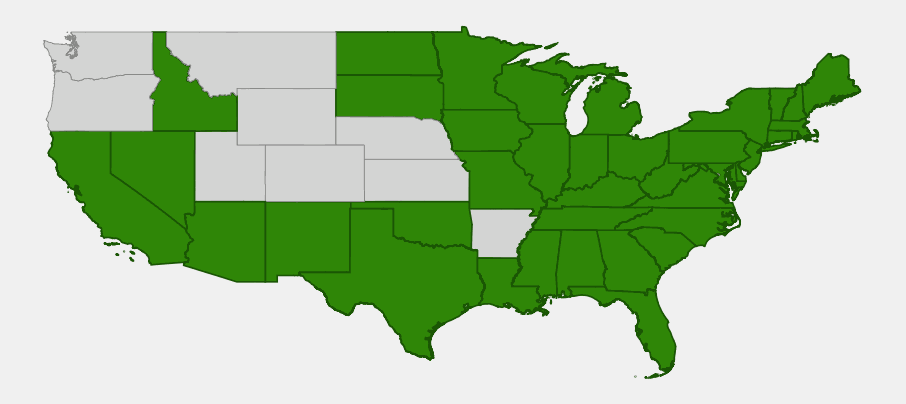
American eelgrass is native across much of eastern and central North America. USDA PLANTS records it in most states east of the Great Plains, from Maine and the Great Lakes south to Florida and the Gulf Coast and west to the Dakotas, Oklahoma and Texas, and in Canada from Nova Scotia and New Brunswick west to Manitoba. Its range continues south through Mexico and Central America to the Caribbean and northern South America.
West of the Plains it is scattered. USDA treats records from California, Nevada, Idaho, Arizona and New Mexico as native, and these are outlying populations in rivers, reservoirs and springs. In Washington, Oregon and British Columbia, the Burke Herbarium and regional floras treat it as introduced from eastern North America, so those states are not shown as native on the map.
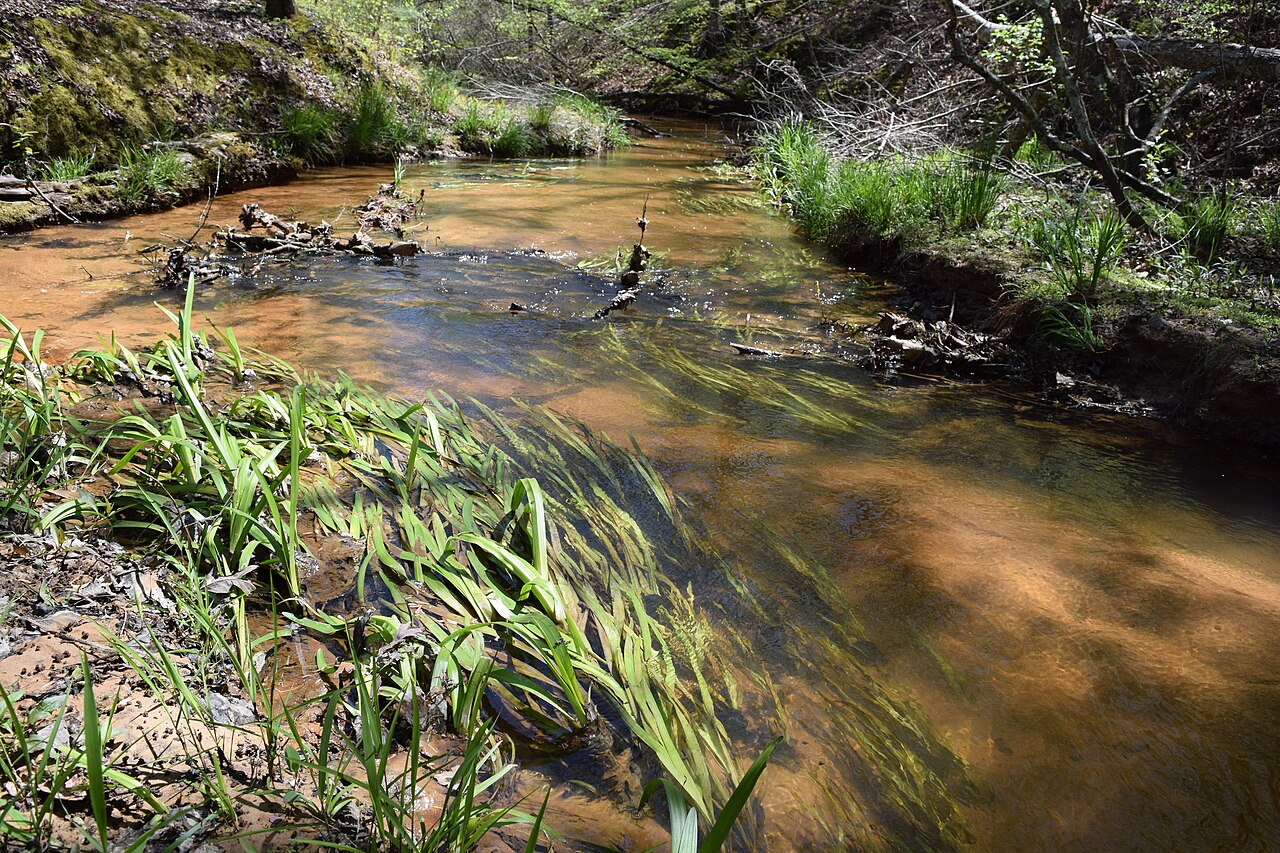
Within its range it is a plant of permanent water with at least moderate clarity: lakes, slow and moderately fast rivers, spring runs and tidal rivers. It tolerates brackish water well, which makes it important in the upper Chesapeake Bay, Delaware Bay, the tidal Hudson and Gulf Coast estuaries. Plants from Florida and the Gulf Coast, once separated as Vallisneria neotropicalis, are now included in this species.
📋 Regional plant lists featuring American Eelgrass: New York, Pennsylvania & Northern New Jersey · Idaho, Eastern Oregon & Eastern Washington · Ohio & Indiana · Michigan, Wisconsin & Eastern Minnesota · Kentucky & Tennessee · Connecticut, Massachusetts & Rhode Island · New Hampshire, Maine & Vermont · Maryland, Virginia & West Virginia · Delaware, Southern New Jersey & Long Island · Arizona & New Mexico · Illinois, Iowa & Missouri · Alabama, Georgia & Mississippi · North & South Florida · North & South Carolina · Arkansas, Louisiana, Eastern Oklahoma & Eastern Texas · South & West Texas · North Dakota, South Dakota & Western Minnesota · California & Nevada
Growing & Care Guide
American eelgrass is easy to grow in ponds and aquariums as long as it stays fully underwater and gets reasonable light. Buy plants from aquatic nurseries or aquarium suppliers, and for outdoor ponds choose stock labeled Vallisneria americana, since several Asian and Australian Vallisneria species are also sold. Never release aquarium plants or water into lakes or streams.
Light
Outdoors it grows best in clear water with sun reaching the bottom. In turbid water it survives only in the shallows. In aquariums, moderate light is enough; strong light and added CO₂ make it grow faster but are not necessary.
Soil & Water
Plant in sand, gravel or a loam-and-sand mix. It roots heavily and benefits from some nutrients in the substrate, such as aquatic plant tablets or a clay-based soil under sand. Outdoors it does best in 1 to 6 feet of water in ponds and lakes, and the leaves simply lengthen to reach the light in deeper water. In aquariums it thrives at 60–82 °F (about 15–28 °C) and pH roughly 6.5 to 8.5, and it tolerates hard water and a little salt.
Planting Tips
Push the roots into the substrate but keep the crown (where the leaves join) at or just above the surface; a buried crown tends to rot. Space plants 3 to 6 inches apart in a tank, or set potted plants into a pond in a pot of heavy soil topped with gravel. In ponds, plant in late spring once the water has warmed.
Pruning & Maintenance
Cutting a leaf tip stops that leaf from growing, so trim long leaves at the base rather than the tips. Thin out runners as needed to keep it from crowding other plants. In aquariums, sudden changes in water chemistry or certain liquid carbon products can cause leaf melt; plants usually recover from the roots.
Propagation
Propagation is easy: cut the runners between rosettes and replant the young plants once they have a few roots. In ponds, winter buds formed in fall sprout new plants each spring. Seed is rarely used outside restoration programs, which grow seedlings and plant them in mesh bags or cages to protect them from grazing fish, turtles and waterfowl.
Landscape Uses
- Aquariums: a classic, easy background plant for freshwater tanks
- Wildlife ponds: oxygenates water and shelters tadpoles, insects and small fish
- Lake and river restoration: submersed aquatic vegetation planting for fish and waterfowl habitat
- Estuary restoration: tidal fresh and brackish SAV projects such as those in the Chesapeake Bay
- Waterfowl management: a key food plant for canvasbacks, redheads and other diving ducks
Wildlife & Ecological Value
Few underwater plants matter as much to wildlife as American eelgrass. Its beds are nursery habitat, feeding grounds and water filters all at once, and its decline in places like the Chesapeake Bay and the upper Mississippi River has been tied directly to declines in diving ducks.
For Pollinators
American eelgrass is water-pollinated, so it does not feed bees or butterflies. Its beds do support large numbers of aquatic insects, including mayfly, caddisfly and midge larvae, which feed fish, ducks and, after they emerge, swallows and bats.
For Birds
Canvasbacks are famous for diving for its starchy winter buds and rhizomes, and redheads, scaup, ring-necked ducks, American coots and tundra swans also eat its buds, leaves and seeds. Historic canvasback concentrations on the Chesapeake Bay, Lake St. Clair and the upper Mississippi River were tied to large beds of this plant.
For Mammals
Muskrats and beavers eat it, and manatees graze on it in Florida springs and rivers.
Ecosystem Role
Eelgrass beds slow currents, trap sediment, reduce shoreline erosion and release oxygen into the water. They shelter juvenile fish such as largemouth bass, sunfish and striped bass, as well as blue crabs in brackish water. Turtles graze it, and the leaves support films of algae and tiny invertebrates at the base of the food web. Because it needs clear water, healthy eelgrass beds are a widely used indicator of water quality.
Cultural & Historical Uses
The genus name honors Antonio Vallisneri (1661–1730), an Italian physician and naturalist. André Michaux described Vallisneria americana in 1803 in his Flora Boreali-Americana. The name “wild celery” goes back to waterfowl hunters, who said canvasbacks fattened on it had a sweet, celery-like flavor; the plant itself does not taste of celery.
The canvasback’s scientific name, Aythya valisineria, records that bond between bird and plant. Nineteenth-century market hunters on the Chesapeake Bay and the Susquehanna Flats sought out canvasbacks for this reason, and the loss of eelgrass beds in the twentieth century, through pollution, sediment and storms, was followed by steep declines in wintering canvasbacks there.
Today American eelgrass is a flagship species for clean-water programs. In Maryland and Virginia, volunteers in the Chesapeake Bay Foundation’s “Grasses for the Masses” program grow wild celery at home and plant it in the Bay’s tributaries, and similar restoration efforts are underway on the Hudson River, the Great Lakes and Florida spring runs.
Frequently Asked Questions
Is American eelgrass the same as aquarium “val”?
Partly. The aquarium trade sells several Vallisneria species under names like jungle val, Italian val and corkscrew val, and labels are often unreliable. Vallisneria americana is one of them, typically sold as jungle val or giant val. All grow in much the same way.
Is American eelgrass related to seagrass eelgrass?
No. Marine eelgrass (Zostera marina) grows in salt water along the coasts and belongs to a different family. American eelgrass is a freshwater plant that tolerates brackish water, and the two only overlap where rivers meet the sea.
Can I plant American eelgrass in my pond?
Yes, in ponds with clear water at least a foot or two deep. Use nursery-grown plants, ideally from local sources, and protect new plantings from carp, turtles and geese, which can uproot them. Check your state rules before moving any aquatic plant into public waters.
Why is it called wild celery?
Waterfowl hunters gave it the name because canvasbacks that fed on it were said to taste of celery. The plant is not related to celery and is not a vegetable.
Does American eelgrass need CO₂ in an aquarium?
No. It grows well with moderate light, a nutrient-bearing substrate and no added CO₂, which is why it is a popular beginner plant. It does dislike sudden water changes and some liquid carbon supplements, which can cause leaves to melt.

Looking for a nursery that carries American Eelgrass?
Browse our native plant nursery directory: Alabama & Arizona · California · Connecticut, Delaware, Florida & Georgia · Idaho, Illinois, Indiana & Iowa · Kentucky, Louisiana, Maine, Maryland, Massachusetts, Michigan, Minnesota, Mississippi & Missouri · Nevada, New Hampshire, New Jersey, New Mexico, New York, North Carolina, North Dakota, Ohio & Oklahoma · Pennsylvania, Rhode Island, South Carolina, South Dakota, Tennessee, Texas, Vermont & Virginia · West Virginia & Wisconsin

