
Strawberry Blite (Chenopodium capitatum)
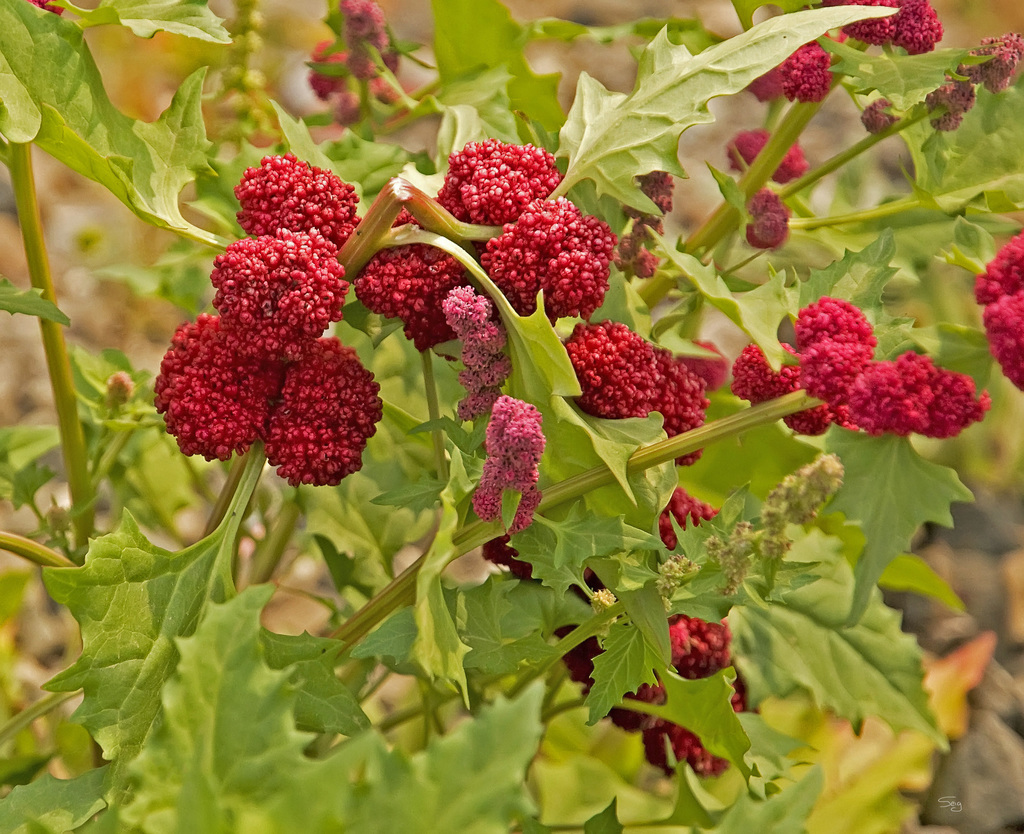
Chenopodium capitatum, known as Strawberry Blite, beetberry, strawberry spinach or blite goosefoot, is a native annual in the amaranth family (Amaranthaceae), related to lamb’s quarters, quinoa, beets and spinach. Many botanists now place it in the genus Blitum as Blitum capitatum. It is a low, branching plant with arrowhead-shaped, toothed leaves and dense, round clusters of tiny flowers that swell in summer into glossy, bright red, juicy “berries” that look like small strawberries.
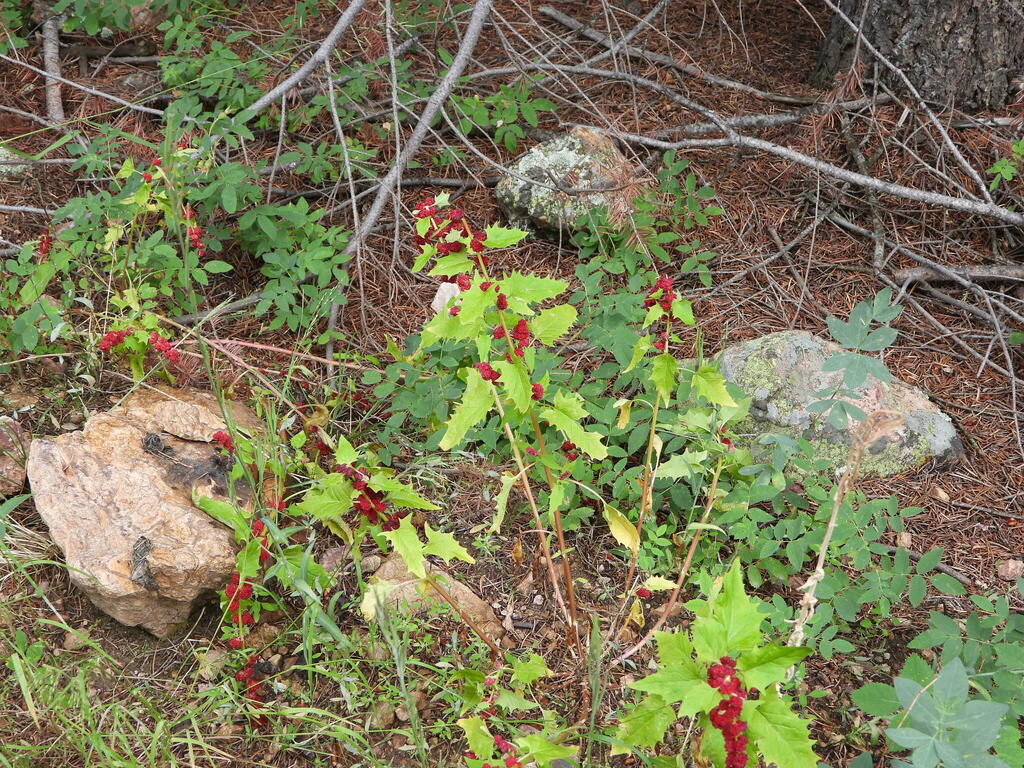
Strawberry blite is native across much of North America, from Alaska and the Canadian territories south through the Rocky Mountains and the West and across the northern states to New England. It is a plant of open, disturbed ground: burned and logged forests, clearings, riverbanks, trailsides, old homesteads and gardens, mostly in mountain and northern regions.
Its young leaves are eaten like spinach and its mild, slightly sweet fruits are edible, and it has long been grown in European gardens as an ornamental and vegetable. It is easy to grow from seed as a curiosity in vegetable and wildflower gardens. As with spinach and other goosefoots, the leaves contain oxalates, so eat them in moderation and cooked if eating them often.
Identification
Look for a low, leafy annual with triangular, toothed leaves and round, bright red, mulberry-like clusters packed along the stems and at the stem tips in mid to late summer.
Growth Habit
Strawberry blite is an annual from a slender taproot. The stems are smooth, green to reddish, and usually 6 inches to 2 feet long, either upright or sprawling outward from the base. Plants are usually hairless and not mealy, unlike many of its goosefoot relatives.
Leaves
The leaves are alternate, on long stalks, and triangular to arrowhead-shaped (hastate), usually 1 to 4 inches long, with a broad, squared or slightly heart-shaped base and a few coarse, irregular teeth along the edges. They are bright green and somewhat fleshy.
Flowers
The tiny flowers have no petals. They are packed into dense, round clusters (glomerules) about 1/4 to 1/2 inch across, in the axils of the upper leaves and in a leafless spike at the stem tips. They are green at first and appear from late spring to summer, mostly June to August.
Fruit & Seeds
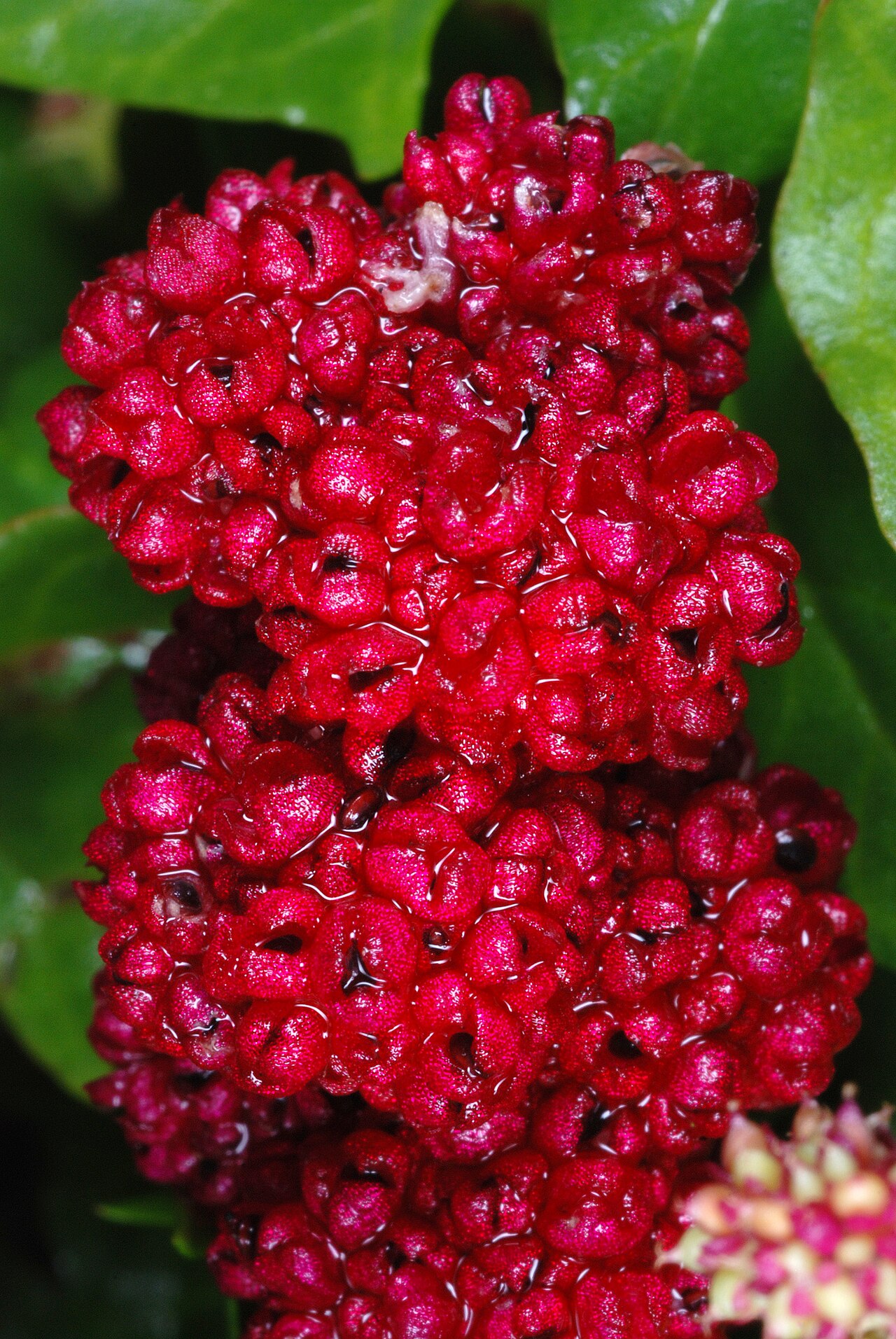
After flowering, the sepals around each flower become fleshy and turn bright red, so each cluster becomes a soft, glossy, red “berry,” like a small strawberry or mulberry. The fruits ripen from July to September. Inside each flower is a single small, shiny black, lens-shaped seed about 1 mm across. The red juice stains fingers and cloth.
Look-alikes
Leafy goosefoot (Chenopodium foliosum, also called Blitum virgatum), a European species sometimes grown and sold as “strawberry spinach,” is very similar, but its fruit clusters are smaller and are set among small leaves along the whole length of the stem, rather than forming a leafless spike at the tip. Lamb’s quarters and other goosefoots have mealy, grayish leaves and dry, green or brownish flower clusters that never turn red and juicy.
Quick Facts
| Scientific Name | Chenopodium capitatum (syn. Blitum capitatum) |
| Family | Amaranthaceae (amaranth family; formerly Chenopodiaceae) |
| Plant Type | Annual herb |
| Mature Height | 6 in–2 ft |
| Mature Spread | 1–2 ft |
| Growth Rate | Fast |
| Sun Exposure | Full sun to part shade |
| Water Needs | Medium |
| Soil Type | Loose, fertile, well-drained soil; disturbed ground |
| Soil pH | Slightly acidic to slightly alkaline (about 6.0–7.5) |
| Bloom Time | June–August |
| Flower Color | Green (inconspicuous) |
| Fall Color | None notable |
| Fruit | Bright red, fleshy, strawberry-like clusters, July–September |
| Deer Resistant | No |
| USDA Hardiness Zones | Annual; grows in zones 2–9 as a summer annual |
Native Range
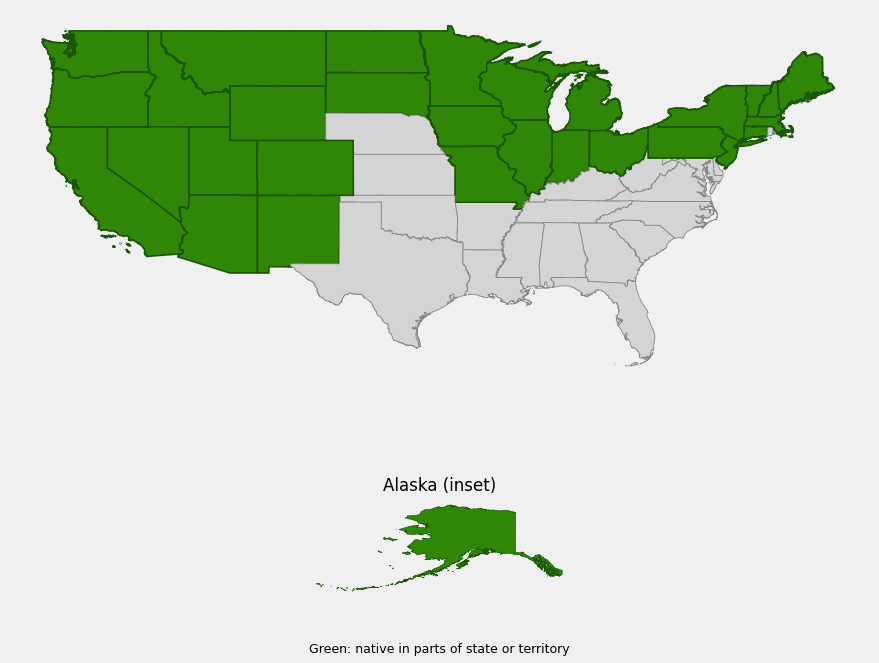
Strawberry blite is native to much of Canada and the northern and western United States. USDA PLANTS lists it as native in Alaska and 29 of the lower 48 states: across the West in Washington, Oregon, California, Nevada, Idaho, Montana, Wyoming, Utah, Colorado, Arizona and New Mexico; in the northern plains and Midwest in North Dakota, South Dakota, Minnesota, Iowa, Wisconsin, Michigan, Illinois, Indiana, Missouri and Ohio; and in the Northeast in New York, Pennsylvania, New Jersey, Connecticut, Massachusetts, Vermont, New Hampshire and Maine.
It is most common in Alaska, the northern Rocky Mountains and the mountains of the West, where it comes up after fires, logging and other disturbance. In the East it is much less common and tends to be found in scattered places such as clearings, abandoned lots and old fields. In Ohio, the state Department of Natural Resources considers it extirpated, and it is rare in several other eastern and midwestern states at the southern edge of its range.
It grows on bare or disturbed, fertile soil in sun or light shade: burns, clear-cuts, avalanche paths, forest openings, riverbanks and gravel bars, trailsides, roadsides, camps and old homesites. Outside North America it has been introduced in parts of Europe and New Zealand.
📋 Regional plant lists featuring Strawberry Blite: Alaska · California & Nevada · Arizona & New Mexico · Utah & Western Colorado · Montana & Wyoming · Idaho, Eastern Oregon & Eastern Washington · North Dakota, South Dakota & Western Minnesota · Michigan, Wisconsin & Eastern Minnesota · Illinois, Iowa & Missouri · Ohio & Indiana · New York, Pennsylvania & Northern New Jersey · Delaware, Southern New Jersey & Long Island · Connecticut, Massachusetts & Rhode Island · New Hampshire, Maine & Vermont
Growing & Care Guide
Strawberry blite is one of the easiest native annuals to grow, and the seed is often sold by heirloom vegetable seed companies as “strawberry spinach.” It is a fun plant for children’s gardens, edible gardens and wildflower patches in the northern and mountain states.
Light
Full sun to part shade. It fruits best in sun, but in hot, low-elevation gardens it appreciates some afternoon shade.
Soil & Water
Grow it in loose, fertile, well-drained soil with even moisture. It does best in cool summers and can stop growing and fruiting in hot, dry weather. It does not need fertilizer in average garden soil.
Planting Tips
Sow seed outdoors in early spring, as soon as the soil can be worked, about 1/8 inch deep, or start indoors 4 to 6 weeks before the last frost. Thin seedlings to about 8 to 12 inches apart. A light frost does not harm the young plants.
Pruning & Maintenance
Pick the young leaves as needed; the plants keep producing new growth. Harvest the fruits when they are fully red and soft. Pull plants after they finish in fall. They self-sow freely in open soil, so remove fruiting stems before the seed drops if you do not want seedlings next year.
Propagation
Grow it from seed, which germinates easily in cool soil. Collect ripe red fruit clusters in late summer, let them dry, and rub out the small black seeds. In the wild the seed can wait in the soil for years and germinates after fire or soil disturbance.
Landscape Uses
- Edible gardens: young leaves as a spinach substitute and mild red fruits
- Children’s gardens: easy, fast and fun to pick
- Wildflower patches: bright red color in late summer
- Restoration: quickly covers bare, disturbed ground
- Natural dye: red juice was used as a dye
Wildlife & Ecological Value
As an early colonizer of burned and disturbed ground, strawberry blite provides quick cover, seeds and fruit in places where other plants have not yet returned.
For Pollinators
The flowers are wind-pollinated and have no petals or nectar, so it is of little value to bees and butterflies.
For Birds
Sparrows, juncos, finches and grouse eat the small seeds, and the soft red fruits are eaten by some birds that help spread the seeds.
For Mammals
Deer, elk, rabbits, hares and rodents browse the tender leaves and stems, and small mammals eat the seeds.
Ecosystem Role
Strawberry blite is a pioneer plant. Its long-lived seeds wait in the soil and sprout quickly after fire, flooding, logging or other disturbance, helping to hold bare soil until perennial plants and shrubs return. Its dependence on disturbance is also why it can disappear from places as forests close in.
Cultural & Historical Uses
The species name capitatum means “headed,” for the round fruit clusters. “Blite” is an old English name for spinach-like plants in the goosefoot and amaranth families. Other common names include strawberry spinach, Indian paint and Indian ink, for the red juice.
Indigenous peoples of North America used strawberry blite as food and as a dye. Alaska Natives ate the greens, which are a good source of vitamins A and C, and many peoples used the red juice of the fruit as a dye for skin and clothing. The fruits are bland but juicy and were eaten raw.
Safety note: like spinach, beet greens and lamb’s quarters, strawberry blite leaves contain oxalic acid, and the seeds of goosefoots contain saponins. Eating moderate amounts of the cooked greens is generally considered safe, but avoid eating large quantities raw, and people prone to kidney stones may want to avoid them. Only eat plants you have identified with certainty, from places free of pesticides and road runoff.
Frequently Asked Questions
Is strawberry blite edible?
Yes. The young leaves can be eaten raw in small amounts or cooked like spinach, and the red fruits are edible, though bland. The leaves contain oxalates, so eat them in moderation.
Is strawberry blite native to North America?
Yes. It is native across Alaska, Canada and much of the northern and western United States. It has been introduced in parts of Europe and New Zealand.
Is strawberry blite the same as strawberry spinach?
Often. Seed sold as strawberry spinach may be this species or the closely related European leafy goosefoot (Chenopodium foliosum), which looks very similar.
When does strawberry blite ripen?
The red fruit clusters usually ripen from July to September.
Is it a weed?
It can self-sow in gardens and comes up after disturbance in the wild, but it is a native annual that is easy to pull and rarely becomes a problem.

Looking for a nursery that carries Strawberry Blite?
Browse our native plant nursery directory: Alaska & Arizona · California · Colorado & Connecticut · Idaho, Illinois, Indiana & Iowa · Maine, Massachusetts, Michigan, Minnesota, Missouri & Montana · Nevada, New Hampshire, New Jersey, New Mexico, New York, North Dakota & Ohio · Oregon · Pennsylvania, South Dakota, Utah & Vermont · Washington · Wisconsin & Wyoming

