
Milkflower Willowherb (Epilobium lactiflorum)
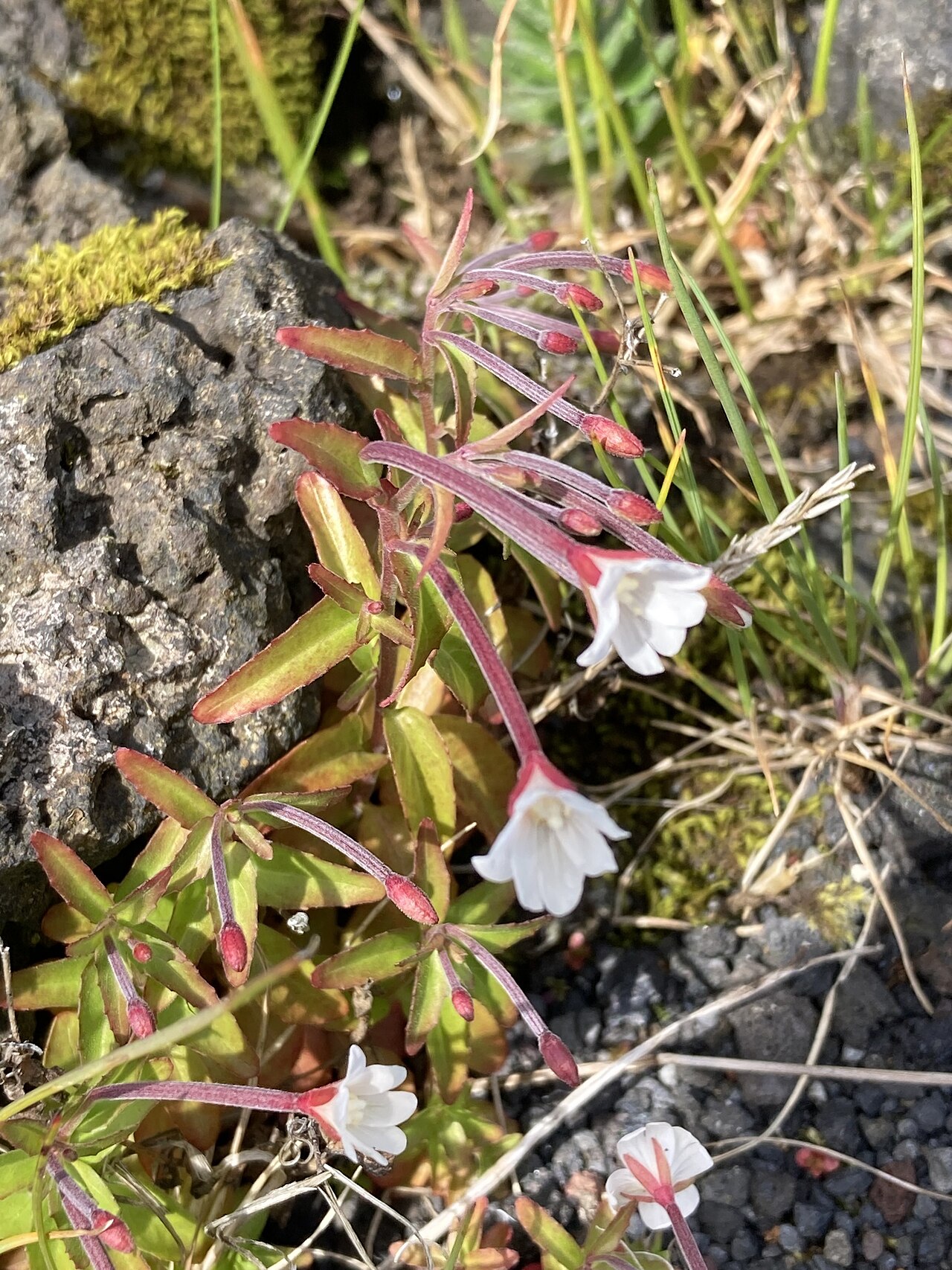
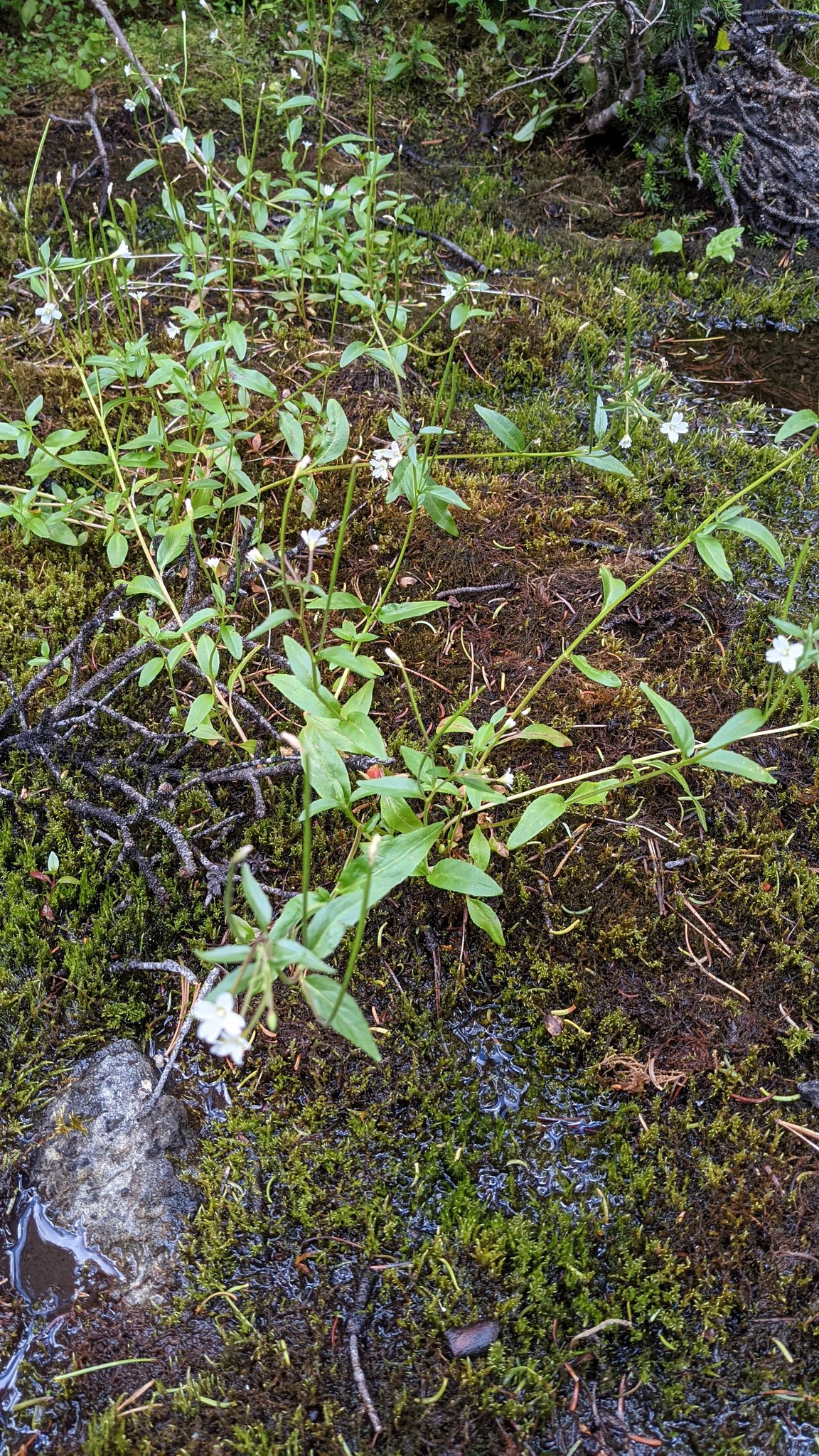
Epilobium lactiflorum, the Milkflower Willowherb or white-flowered willowherb, is a small perennial wildflower of cold, wet mountain places. It grows 4 to 20 inches tall along subalpine and alpine streams, in seeps, snowmelt meadows and wet rocky slopes, and from midsummer to early fall it bears small, milky-white flowers, the source of its name (lactiflorum means “milk-flowered”).
It belongs to the evening-primrose family (Onagraceae), in the same genus as the many pink-flowered willowherbs and close to fireweed. Like other willowherbs, it produces long, slender seed pods that split to release seeds with silky white tufts, which drift away on the wind.
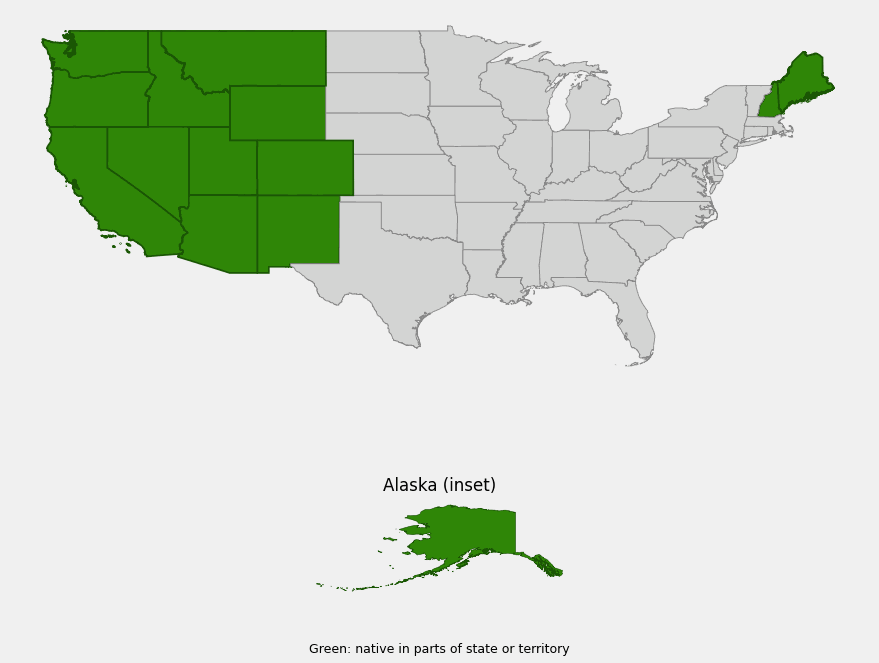
Milkflower willowherb has a broad but patchy range: across the western mountains from Alaska to Arizona and New Mexico, on the highest peaks of northern New England, and in Greenland, Iceland and northern Europe. This guide explains how to identify it among its many look-alike relatives, where to find it, and its role in alpine wetlands.
Identification
Willowherbs are notoriously difficult to identify, and several small species share high-mountain seeps with milkflower willowherb. Its best field marks are its pure white to milky flowers, its fairly broad, bluish-green leaves with smooth or faintly toothed edges, and its erect, unbranched stems.
Stems
Plants grow in small clumps from short underground stems and overwintering rosettes. The flowering stems are erect or curve upward from the base, 4 to 20 inches tall, usually unbranched, and often marked with fine lines of hairs running down from the leaf bases. They are green to reddish.
Leaves
Leaves are opposite, elliptic to oval or broadly lance-shaped, about ¾ to 2 inches long, on short stalks. They are hairless, slightly bluish-green, and have smooth or faintly toothed edges. Upper leaves are often smaller and may be alternate.
Flowers
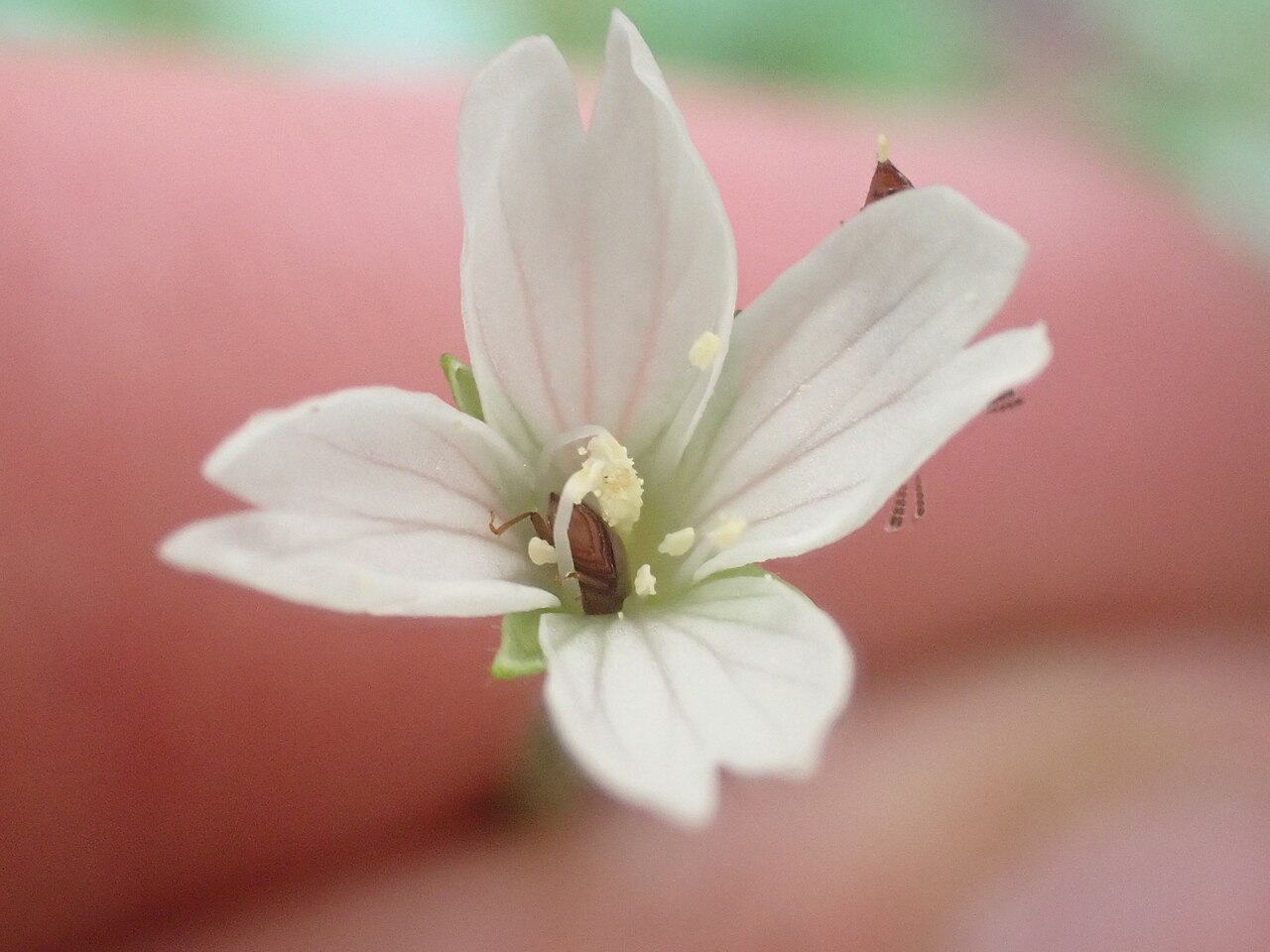
Flowers appear from late June into September at the tips of the stems, often nodding in bud. Each has four white (rarely pale pink) petals about ⅛ to ¼ inch long, notched at the tip, with a club-shaped stigma in the center. Pink-flowered relatives such as Hornemann’s willowherb (Epilobium hornemannii) are the most similar species; they have pink to rose-purple flowers.
Fruit & Seeds
After flowering, the slender, four-sided pods grow to about 1½ to 3 inches long, often turning reddish. When ripe they split into four strips, releasing many tiny seeds, each with a tuft of silky white hairs (a coma) that carries it on the wind.
Quick Facts
| Scientific Name | Epilobium lactiflorum |
| Family | Onagraceae (evening-primrose family) |
| Plant Type | Herbaceous perennial wildflower |
| Mature Height | 4–20 in |
| Mature Spread | 6–12 in |
| Growth Rate | Moderate |
| Sun Exposure | Full sun to part shade |
| Water Needs | High; constantly moist to wet soil |
| Soil Type | Wet gravel, sand, silt or mossy organic soil |
| Soil pH | About 5.0–7.5 |
| Bloom Time | Late June–September |
| Flower Color | White to milky white, rarely pale pink |
| Fall Color | Stems and pods often turn reddish |
| Fruit | Slender four-sided pods with tufted, wind-borne seeds |
| Deer Resistant | Moderately; occasionally grazed by deer, elk and mountain goats |
| USDA Hardiness Zones | 2–6 |
Native Range
Milkflower willowherb has an unusual circumpolar-type range. In North America it grows across the western mountains, from Alaska and the Yukon south through British Columbia and Alberta to Washington, Oregon, California, Nevada, Idaho, Montana, Wyoming, Utah, Colorado, Arizona and New Mexico. It also grows in eastern Canada (Quebec, Labrador and Newfoundland), Greenland, Iceland and northern Europe.
In the West it is a plant of the subalpine and alpine zones, typically between about 5,000 and 11,500 feet in the southern Rockies and the Sierra Nevada, and lower farther north and in Alaska. It grows along cold streams, at seeps and springs, in wet meadows and snowbed hollows, and on wet, rocky slopes.
In the eastern United States it is known only from the highest mountains of northern New England in Maine and New Hampshire, including the alpine zone of the Presidential Range. These populations are remnants of a cold-climate flora left behind as glaciers retreated, and the species is uncommon there.
📋 Regional plant lists featuring Milkflower Willowherb: Alaska · Western Oregon & Western Washington · Idaho, Eastern Oregon & Eastern Washington · California & Nevada · Montana & Wyoming · Utah & Western Colorado · Arizona & New Mexico · New Hampshire, Maine & Vermont
Growing & Care Guide
Milkflower willowherb is not grown as a garden plant and is rarely if ever available from nurseries. It is best appreciated in the wild, along mountain streams and seeps. Gardeners in cool mountain climates with a naturally wet, sunny site may be able to grow it from seed.
Light
In the wild it grows in full sun to part shade. In a garden it would need bright light with cool temperatures.
Soil & Water
It needs constantly moist to wet, cool soil, such as a seep, stream edge or bog garden fed by cold water. It does not tolerate drought or summer heat.
Planting Tips
If growing it, plant seedlings in spring in a wet, sunny spot with other small mountain wetland plants. It is best suited to mountain gardens or alpine house collections.
Pruning & Maintenance
No pruning is needed. Plants may self-sow in suitable wet sites.
Propagation
Grow from seed sown on the surface of moist soil; willowherb seeds need light to germinate. A few weeks of cold stratification may improve germination. Small clumps can also be divided in spring.
Landscape Uses
- Alpine wetland restoration: for revegetating disturbed seeps and streambanks in mountain areas, using local seed
- Wildflower viewing: look for it along high-country trails and streams in late summer
- Botanical study: a good example of an arctic-alpine plant with relict populations in New England
Wildlife & Ecological Value
In the short mountain summer, milkflower willowherb contributes to the diversity of alpine wetlands and supports small pollinators.
For Pollinators
The small flowers are visited by flies, small bees and other insects, but many willowherbs with small flowers, likely including this one, also self-pollinate, which helps them set seed in cold, windy habitats with few pollinators.
For Birds
Small birds such as rosy-finches and pipits may eat the seeds, but it is not an important bird food. Some birds use willowherb seed fluff in nest building.
For Mammals
Pikas, marmots, deer, elk and mountain goats may graze it lightly in high meadows.
Ecosystem Role
With its wind-borne seeds, it quickly colonizes bare, wet gravel along streams and at the edges of snowbeds. Its roots help stabilize wet soil in these fragile, slow-recovering mountain habitats.
Cultural & Historical Uses
The species was described by the German botanist Carl Haussknecht, who published a major monograph of the genus Epilobium in 1884. The genus name comes from Greek words meaning “upon the pod,” because the flower sits on top of the long, slender ovary that becomes the seed pod.
Willowherbs, including fireweed, have been used by northern peoples as food and medicine, especially young shoots and leaves. Little is recorded specifically for milkflower willowherb, which is small and grows in remote places.
In New England, milkflower willowherb is one of the alpine plants that make the alpine summits of New Hampshire and Maine botanically famous. Hikers are asked to stay on trails above treeline to protect these rare plants and their fragile habitats.
Frequently Asked Questions
Why is it called milkflower willowherb?
Its species name, lactiflorum, means “milk-flowered,” for its small, milky-white flowers. “Willowherb” refers to the willow-like leaves of many species in the genus.
Where can I see milkflower willowherb?
Along cold streams, seeps and wet meadows in the subalpine and alpine zones of the western mountains, from Alaska to Arizona and New Mexico, and in the alpine zone of the high peaks of New Hampshire and Maine.
How is it different from fringed willowherb?
Fringed willowherb (Epilobium ciliatum) is a taller, often branched, weedier plant of lower elevations with small pink or white flowers and more sharply toothed leaves. See our fringed willowherb guide.
Is milkflower willowherb rare?
It is fairly common in suitable habitat in the western mountains but uncommon in Maine and New Hampshire, where it grows only in the alpine zone of the highest peaks.
Can I grow milkflower willowherb?
It is rarely cultivated. It needs cool, constantly wet soil, such as a mountain seep, and does not tolerate heat or drought.

Looking for a nursery that carries Milkflower Willowherb?
Browse our native plant nursery directory: Alaska & Arizona · California · Colorado · Idaho · Maine & Montana · Nevada, New Hampshire & New Mexico · Oregon · Utah · Washington · Wyoming

