
Slender Three-seeded Mercury (Acalypha gracilens)
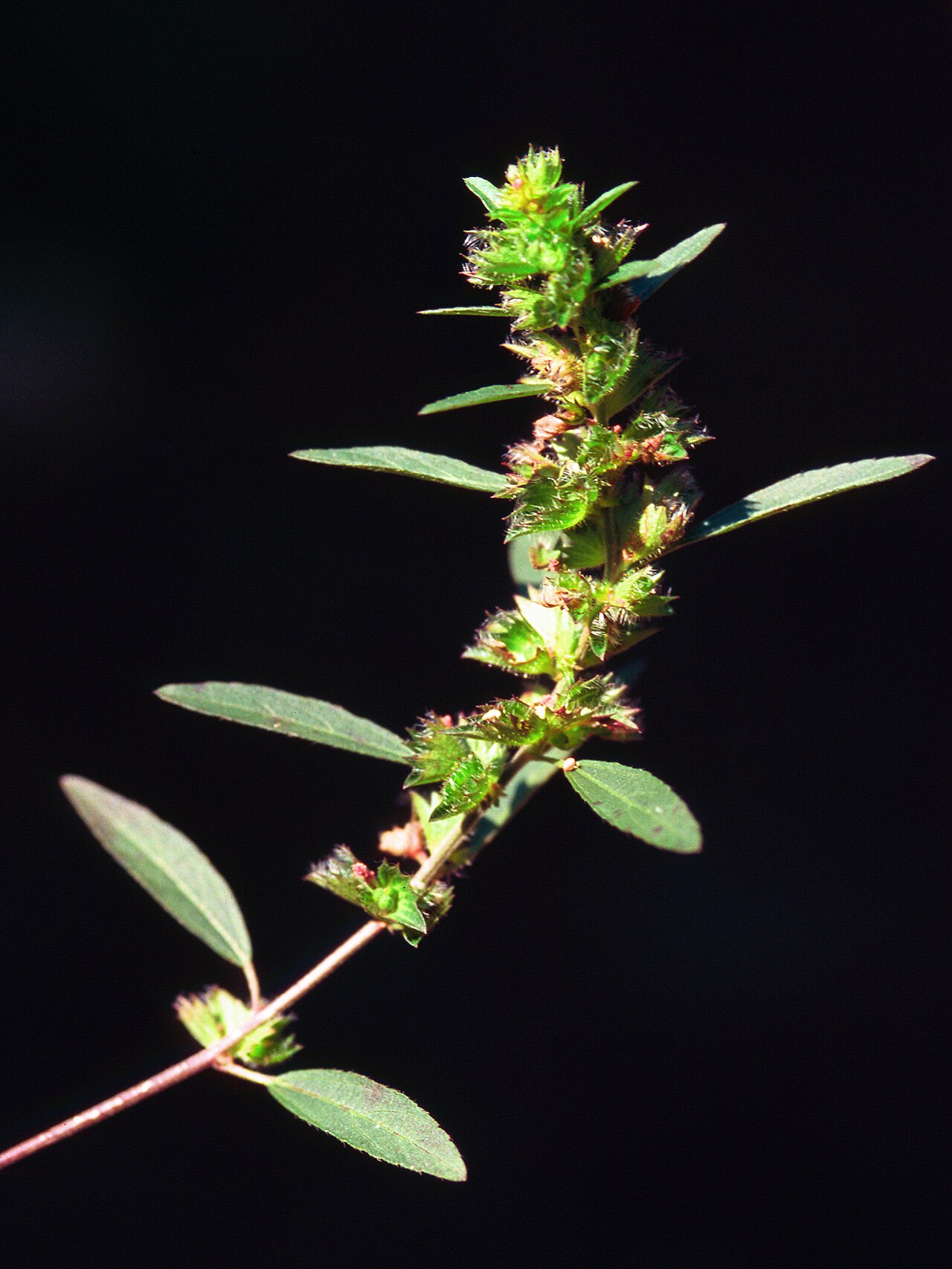
Acalypha gracilens, the Slender Three-seeded Mercury (USDA: slender threeseed mercury; also called slender copperleaf), is a small, wiry annual wildflower of dry, open ground across the eastern United States. It is easy to overlook: its flowers are tiny and green, tucked into leafy, toothed bracts at the base of each leaf. But it is common in sandy fields, open woods, clearings and roadsides from New England to Florida and west to Texas, Oklahoma and Iowa.
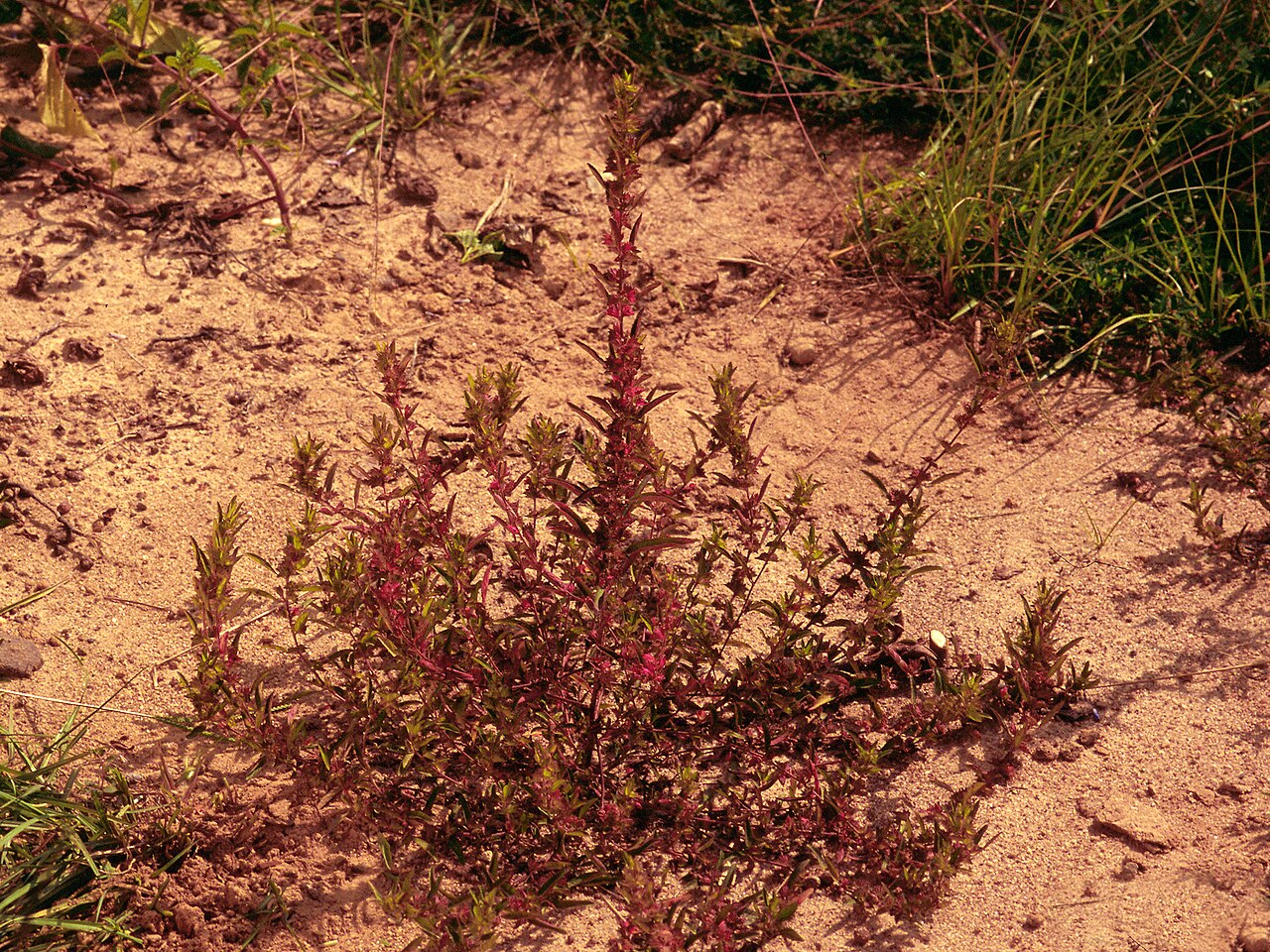
The name three-seeded mercury refers to its small seed capsules, which usually hold three seeds, and to an old resemblance to the European herb mercury (Mercurialis). It belongs to the spurge family but, unlike many spurges, has no milky sap. In late summer and fall the plants often turn red or coppery, which is where the name copperleaf comes from.
It is not a garden showpiece, but it is a genuine native annual that feeds seed-eating birds and is part of the natural plant cover of dry, disturbed and early-successional habitats. This guide covers how to identify it and tell it from other three-seeded mercuries, where it grows, its role in wildlife habitat and how to manage it.
Identification
Slender three-seeded mercury is an upright, slender annual with alternate, narrow leaves and small, cup-like leafy bracts in the leaf axils. Its narrow leaves on very short stalks distinguish it from most other Acalypha species in the East.
Stems & Leaves
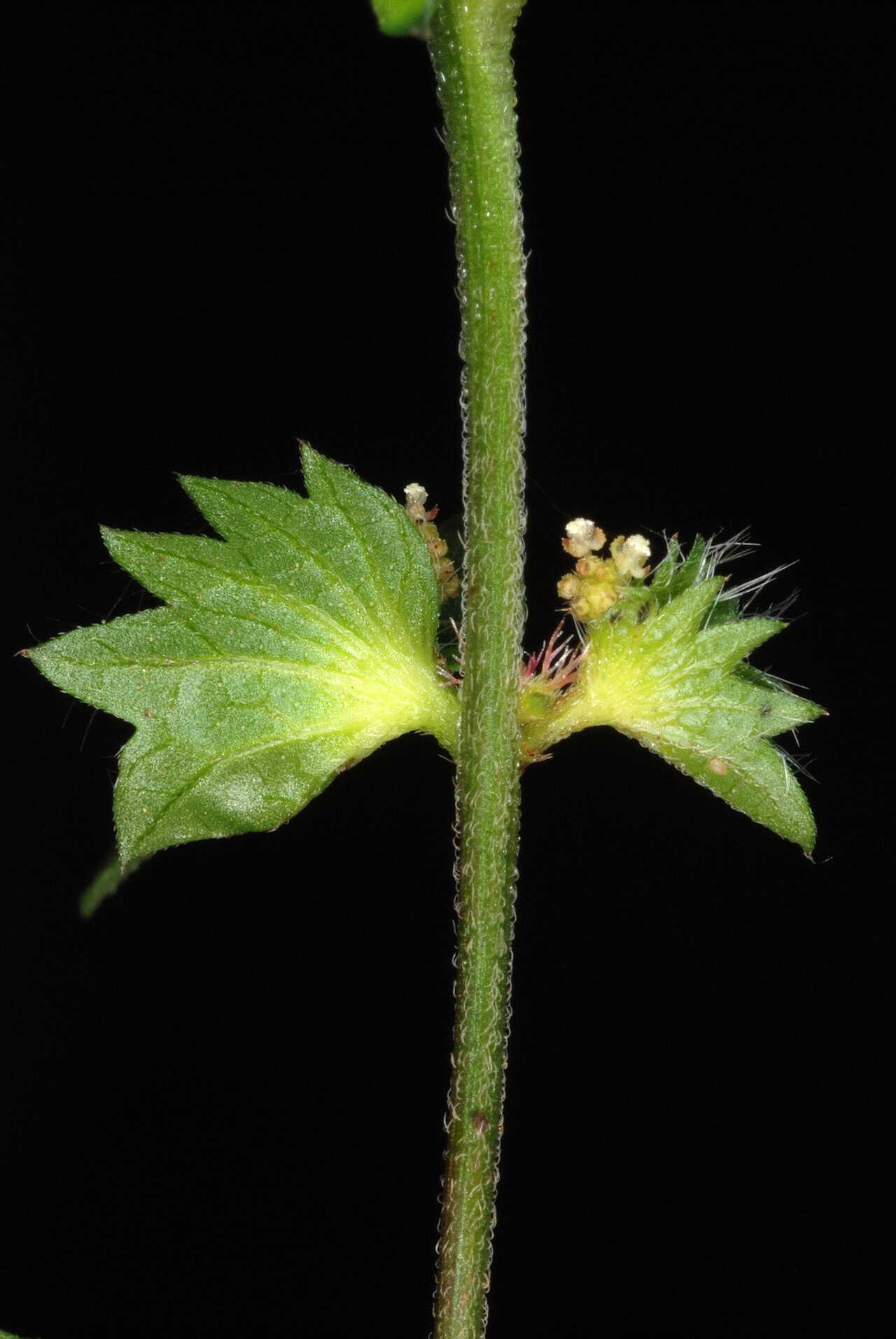
Plants are 4 inches to about 2½ feet tall, usually with a single slender stem that may branch above. Stems are covered with fine, short, curved hairs. Leaves are alternate, narrowly lance-shaped to linear-oblong, ¾ to 2 inches long, with shallowly toothed or nearly smooth edges. The leaf stalks are very short, usually less than a quarter the length of the blade.
Flowers
From early summer to fall, small flower clusters appear in the leaf axils. Male flowers are minute and grouped in short, slender spikes that often extend beyond the bract. Female flowers sit at the base, inside a leafy bract about ¼ to ½ inch long that has a row of short, triangular teeth along its edge. There are no petals.
Fruit
The fruit is a tiny, three-lobed capsule hidden within the bract. It normally contains three small, rounded seeds, which are ejected when the capsule splits. Plants produce seed continuously from midsummer until frost.
Look-alikes
Rhombic three-seeded mercury (A. rhomboidea) and Virginia three-seeded mercury (A. virginica) have broader, oval to diamond-shaped leaves on longer stalks, often half the length of the blade or more. One-seeded mercury (A. monococca), formerly treated as a variety of this species, is very similar but has capsules with only one seed. Hop-hornbeam copperleaf (A. ostryifolia) has heart-shaped leaves and elongated female spikes at the stem tips.
Quick Facts
| Scientific Name | Acalypha gracilens A. Gray |
| Family | Euphorbiaceae (spurge family) |
| Plant Type | Annual herb |
| Mature Height | 4 in–2½ ft |
| Mature Spread | 3–8 in |
| Growth Rate | Fast |
| Sun Exposure | Full sun to partial shade |
| Water Needs | Low to moderate; dry to medium soils |
| Soil Type | Sandy, gravelly or loamy, well-drained |
| Soil pH | About 4.5–7.0 (acidic to neutral) |
| Bloom Time | June–October |
| Flower Color | Green, inconspicuous |
| Fall Color | Often red to coppery |
| Fruit | Tiny three-lobed capsule with three seeds |
| Deer Resistant | Not significantly browsed |
| USDA Hardiness Zones | Annual; grows in zones 4–9 |
Native Range
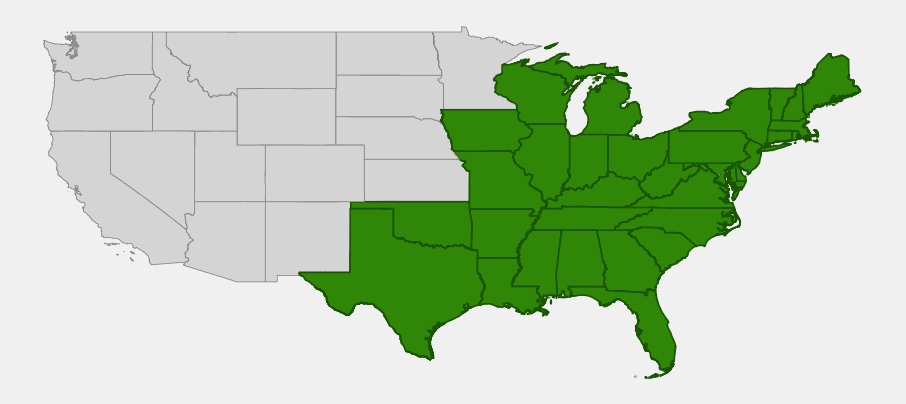
Slender three-seeded mercury is native to the eastern United States. USDA PLANTS lists it from Maine, New Hampshire and Vermont south through the Atlantic states to Florida, west through the Gulf states to Louisiana and Texas, and inland to Kentucky, Tennessee, Ohio, Indiana, Illinois, Michigan, Wisconsin, Iowa, Missouri, Arkansas and Oklahoma. It is most common on the sandy soils of the Coastal Plain and in the Southeast; at the northern and western edges of its range it is local and less frequent.
It grows in dry, open, often sandy or gravelly places: open oak and pine woodlands, sandhills, woodland edges, clearings, old fields, sandy fields, powerline cuts, roadsides and trailsides. It is a plant of early-successional habitat and often appears after disturbance, such as fire, logging or soil scraping, then gives way as taller vegetation fills in.
Because it is an annual that depends on seed, populations shift from year to year as open, disturbed ground appears and disappears. In the Southeast it is a characteristic plant of fire-maintained pine woodlands and of the open, sandy ground favored by quail and doves.
📋 Regional plant lists featuring Slender Three-seeded Mercury: North & South Florida · Alabama, Georgia & Mississippi · North & South Carolina · Kentucky & Tennessee · Arkansas, Louisiana, Eastern Oklahoma & Eastern Texas · Maryland, Virginia & West Virginia · Delaware, Southern New Jersey & Long Island · New York, Pennsylvania & Northern New Jersey · Connecticut, Massachusetts & Rhode Island · New Hampshire, Maine & Vermont · Ohio & Indiana · Michigan, Wisconsin & Eastern Minnesota · Illinois, Iowa & Missouri · South & West Texas
Growing & Care Guide
Slender three-seeded mercury is not sold as a garden plant, and most gardeners meet it as a volunteer. In naturalistic plantings, meadows and wildlife areas, it can simply be allowed to come and go. It is native and not invasive, though it can be weedy in disturbed soil.
Light
Full sun to partial shade. It grows best in open, sunny sites and becomes thin and leggy in shade.
Soil & Water
It prefers dry to medium, well-drained, sandy or gravelly soil that is low in nutrients, and it tolerates drought. Rich, moist garden soil favors taller plants that crowd it out.
Planting Tips
It is rarely planted on purpose. In wildlife meadows, quail and dove habitat, or sandy restoration sites, light soil disturbance such as disking, raking or prescribed fire encourages it to germinate from seed already in the soil.
Pruning & Maintenance
No maintenance is needed. In vegetable beds or lawns where it is not wanted, pull seedlings before they set seed; the shallow roots come up easily. Leave plants standing in wildlife areas so birds can feed on the seeds.
Propagation
From seed only. It self-sows readily, and seed germinates in late spring as soils warm. Collected seed can be scattered on bare, open soil in fall or spring.
Landscape Uses
- Wildlife food plots and meadows: seeds feed doves, quail and songbirds
- Sandhill and pine woodland restoration: a native annual of open, fire-maintained ground
- Naturalistic and meadow gardens: allow it to self-sow in dry, sunny gaps
- Education: an example of the inconspicuous wind-pollinated flowers of the spurge family
Wildlife & Ecological Value
Small and plain as it is, slender three-seeded mercury is a useful wildlife plant, especially for seed-eating birds in open habitats.
For Pollinators
Its flowers are mostly wind-pollinated and have no petals or nectar, so they attract few pollinators. Small bees and flies occasionally collect pollen from the male spikes.
For Birds
The small, hard seeds are eaten by mourning doves, northern bobwhite quail and sparrows, and wildlife managers in the Southeast recognize three-seeded mercuries as a useful food for quail and doves in fields and open pine woods.
For Mammals
Small rodents eat the seeds. The foliage is occasionally browsed by white-tailed deer but is not an important food for them.
Ecosystem Role
As a fast-growing native annual, it quickly covers bare, disturbed soil after fire or other disturbance, helping hold it in place until perennial plants return. It is part of the diverse ground layer of fire-maintained pine and oak woodlands in the Southeast.
Cultural & Historical Uses
Asa Gray described Acalypha gracilens in 1848. Acalypha is an old Greek name used by Hippocrates for a nettle, a reference to the nettle-like leaves of many species, and gracilens means “slender,” for its thin stems and narrow leaves.
The common name three-seeded mercury comes from its three-seeded capsules and from its resemblance to the European herb mercury (Mercurialis), another inconspicuous plant of the spurge family. The genus Acalypha is large and mostly tropical; it includes the colorful tropical shrubs known as copperleaf and chenille plant, which are grown as ornamentals.
Slender three-seeded mercury has no well-documented traditional uses. It is valued mainly by botanists and wildlife managers, who know it as a dependable seed producer on poor, sandy soils and as one of the many native annuals that make up the ground layer of eastern woodlands and fields.
Frequently Asked Questions
Is slender three-seeded mercury a weed?
It is a native annual that often grows in disturbed ground, so it can appear as a weed in gardens and fields. It is not invasive, and in natural areas it provides seed for birds.
Why is it called three-seeded mercury?
Its small capsules usually contain three seeds, and it was named for a resemblance to the European herb mercury (Mercurialis).
How do I tell slender three-seeded mercury from other Acalypha species?
Look at the leaves: slender three-seeded mercury has narrow, lance-shaped leaves on very short stalks, while rhombic and Virginia three-seeded mercury have broader, diamond-shaped to oval leaves on longer stalks. One-seeded mercury looks very similar but has one seed per capsule.
Is slender three-seeded mercury poisonous?
It is in the spurge family but has no milky sap, and it is not known as a significant poisonous plant. As with any wild plant, do not eat it.
What animals eat three-seeded mercury?
Mourning doves, bobwhite quail, sparrows and small rodents eat the seeds, and deer sometimes browse the foliage.

Looking for a nursery that carries Slender Three-seeded Mercury?
Browse our native plant nursery directory: Alabama & Arkansas · Connecticut, Delaware, Florida & Georgia · Illinois, Indiana & Iowa · Kentucky, Louisiana, Maine, Maryland, Massachusetts, Michigan, Mississippi & Missouri · New Hampshire, New Jersey, New York, North Carolina, Ohio & Oklahoma · Pennsylvania, Rhode Island, South Carolina, Tennessee, Texas, Vermont & Virginia · West Virginia & Wisconsin

