
Smooth Flatsedge (Cyperus laevigatus)
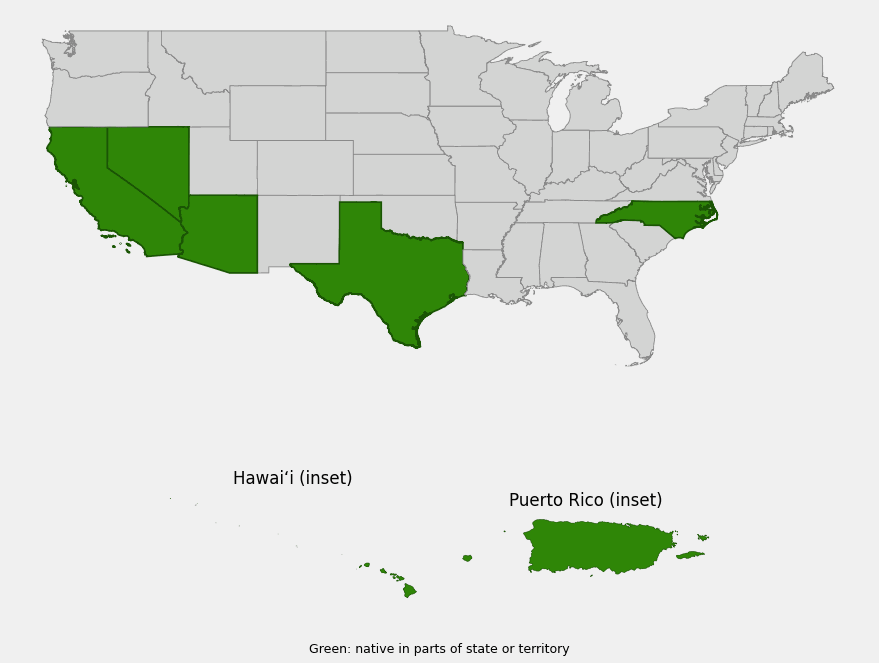
Cyperus laevigatus, known as Smooth Flatsedge, and in Hawaiʻi as makaloa, is a creeping, rush-like perennial sedge of salty and alkaline wetlands. It is one of the most widespread sedges in the world, growing in warm regions of the Americas, Africa, the Mediterranean, the Middle East, southern Asia, Australia and many oceanic islands. In the United States it is native from the desert Southwest and California to Texas, with an outlying record in North Carolina, and in Hawaiʻi and Puerto Rico.
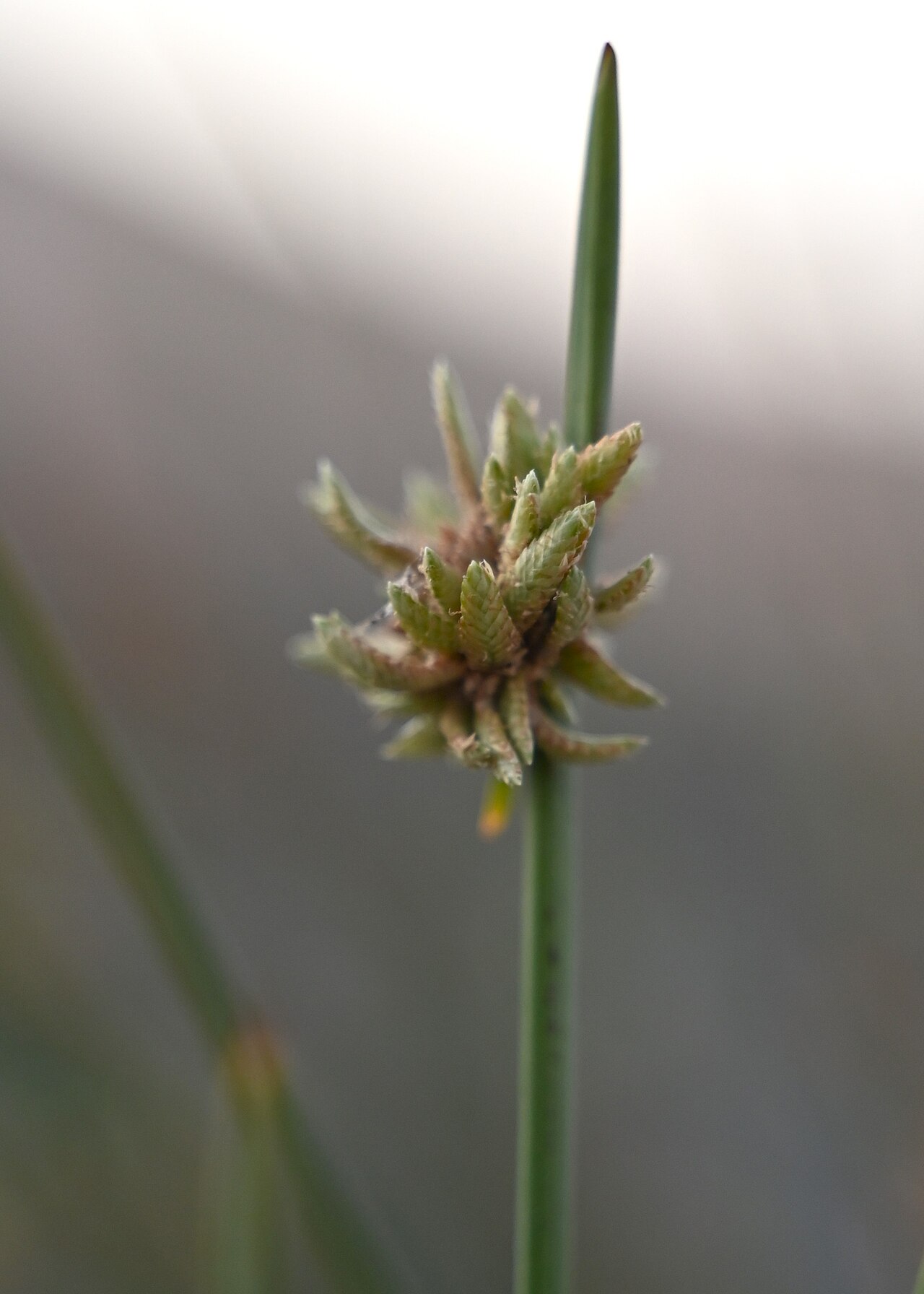
It forms loose clumps or spreading patches of smooth, round, nearly leafless green stems up to about 2 feet tall. A small, tight cluster of flattened greenish to reddish-brown spikelets sits near the top of each stem, seemingly on its side, because a stiff bract continues upward like an extension of the stem. It is tolerant of salt, alkali and hot mineral water, and grows in brackish marshes, coastal ponds, hot springs, alkaline seeps and ditches.
In Hawaiʻi, makaloa is famous as the material for the fine sleeping mats (moena makaloa) woven on the island of Niʻihau, considered some of the finest plaited work in the Pacific. This guide covers how to identify smooth flatsedge, where it grows, how to use it in wetland and saline restoration, and its value to wildlife and culture.
Identification
Smooth flatsedge is easy to mistake for a rush or a small bulrush. Look for smooth, leafless stems, a stiff bract continuing above a lateral cluster of flat spikelets, and its typical salty or alkaline wet habitat.
Stems & Growth Habit
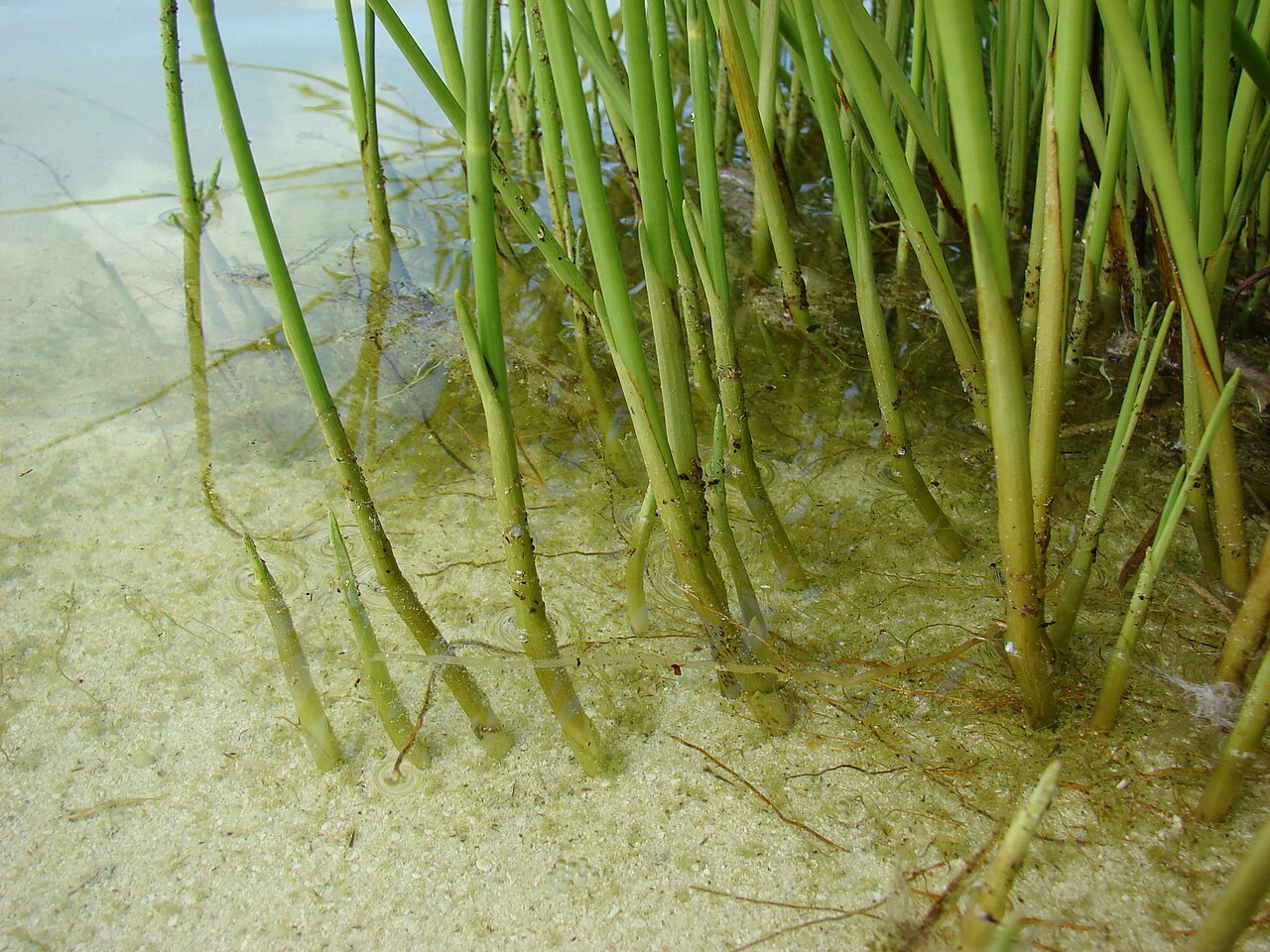
A perennial from a creeping, often reddish rhizome, forming loose rows, clumps or patches. The stems are smooth, round to bluntly three-angled, bright green, and 4 to 24 inches tall. In very salty or exposed sites plants stay short and tufted; in fresh, mineral-rich seeps they grow taller and denser.
Leaves
Leaves are reduced mostly to brownish or reddish sheaths at the base of the stems, so the plant appears leafless. Occasionally a short, narrow blade develops on a sheath.
Flowers & Spikelets
The tiny wind-pollinated flowers are borne in flattened, two-sided spikelets, about ¼ to ½ inch long, packed into a small head of 1 to 15 or more spikelets. The head appears to sit on the side of the stem because the lowest of the one to three bracts is erect and continues straight up. Spikelets are green when young and turn straw-colored, reddish or dark brown. Flowering can occur through much of the year in warm climates.
Fruit & Look-alikes
Each flower has two stigmas and produces a small, flattened, two-sided (lens-shaped), gray, glossy achene. This feature is why it was once placed in the separate genus Juncellus, as Juncellus laevigatus. Rushes such as Baltic Rush have similar stems with a lateral flower cluster, but rush flowers have six small tepals and form capsules. Soft-stemmed Bulrush and other bulrushes are much taller, with spikelets in looser clusters, and spikerushes such as Common Spikerush carry a single spikelet at the very tip of each stem.
Quick Facts
| Scientific Name | Cyperus laevigatus L. (syn. Juncellus laevigatus) |
| Family | Cyperaceae (sedge family) |
| Plant Type | Rhizomatous perennial sedge (graminoid) |
| Mature Height | 4–24 in |
| Mature Spread | Spreads by rhizomes to form patches |
| Growth Rate | Moderate to fast |
| Sun Exposure | Full sun |
| Water Needs | Wet; saturated soil to shallow standing water |
| Soil Type | Sand, mud or silt; tolerates salt, alkali and mineral-rich water |
| Soil pH | Neutral to strongly alkaline |
| Bloom Time | Spring–fall; much of the year in the tropics |
| Flower Color | Green to straw-colored or reddish-brown spikelets |
| Fall Color | Stems may turn straw-colored or reddish |
| Fruit | Small, flattened, gray, glossy achene |
| Deer Resistant | Not well documented |
| USDA Hardiness Zones | About 8–13 |
Native Range
Smooth flatsedge is native to warm regions around the world. USDA PLANTS lists it as native in Arizona, California, Nevada, Texas, North Carolina, Hawaiʻi and Puerto Rico, as well as the U.S. Virgin Islands. In the Southwest and California it grows in alkaline and saline wetlands, around hot and warm springs, in desert seeps and along brackish coastal marshes. In Texas it occurs in coastal and inland saline wetlands. The North Carolina record is an outlying one on the Atlantic coast, far from its main U.S. range, and the species is very rare there.
In Hawaiʻi it is indigenous, occurring naturally both in the islands and elsewhere. It grows in coastal wetlands, brackish ponds and marshes, anchialine pools and seeps on the main islands, and on the low Northwestern Hawaiian Islands, including Laysan and Midway Atoll, where it is a key plant around Laysan’s hypersaline lake. In Puerto Rico and the Virgin Islands it is found in coastal salt flats, brackish lagoon margins and mangrove edges.
Across its range, the common thread is wet ground with high salt or mineral content and little shade. It often grows where few other plants can, along the salty margins of ponds, on wet sand behind beaches, and in mineral crusts around springs.
📋 Regional plant lists featuring Smooth Flatsedge: Arizona & New Mexico · California & Nevada · Hawaii · North & South Carolina · Puerto Rico · South & West Texas
Growing & Care Guide
Smooth flatsedge is grown mainly for wetland restoration, and in Hawaiʻi by native plant nurseries and cultural practitioners who grow makaloa for weaving. It is easy to grow wherever it can have full sun and constantly wet soil, and it is one of the best native sedges for salty or alkaline wet sites. Outdoors it is suited to about USDA zones 8 to 13.
Light
Full sun. It grows in open, unshaded wetlands and declines when overtopped by taller plants.
Soil & Water
Keep the soil saturated or under a few inches of water. It grows in sand, mud and silt and tolerates brackish water, alkaline soils and mineral-rich water that many plants cannot. It does not need fertilizer.
Planting Tips
Plant divisions or plugs 1 to 2 feet apart along pond edges, in bog or rain gardens with consistently wet soil, or in containers set in shallow water. In Hawaiʻi it suits coastal ponds and the margins of brackish water features. It is not a houseplant, but it can be grown in a water-filled container on a sunny patio or lanai.
Pruning & Maintenance
Little is needed. Cut back old, brown stems once a year to tidy the planting. Keep invasive grasses and pickleweed from overrunning it in restoration sites.
Propagation
Divide the rhizomes at almost any time in warm climates; divisions establish quickly in wet soil. It can also be grown from seed sown on the surface of wet soil in warm conditions, though division is faster.
Landscape Uses
- Saline and alkaline wetland restoration: one of few native sedges that thrives in salty, mineral-rich water
- Pond and water-garden edges: a fine-textured, rush-like accent for full sun
- Hawaiian cultural gardens: grown as makaloa for traditional mat weaving
- Shoreline stabilization: spreading rhizomes help bind wet sand and mud
Wildlife & Ecological Value
Although it is wind-pollinated and offers no nectar, smooth flatsedge creates habitat in places where few other plants can grow.
For Pollinators
Its flowers are wind-pollinated and not important to bees or butterflies. Small insects shelter among the dense stems.
For Birds
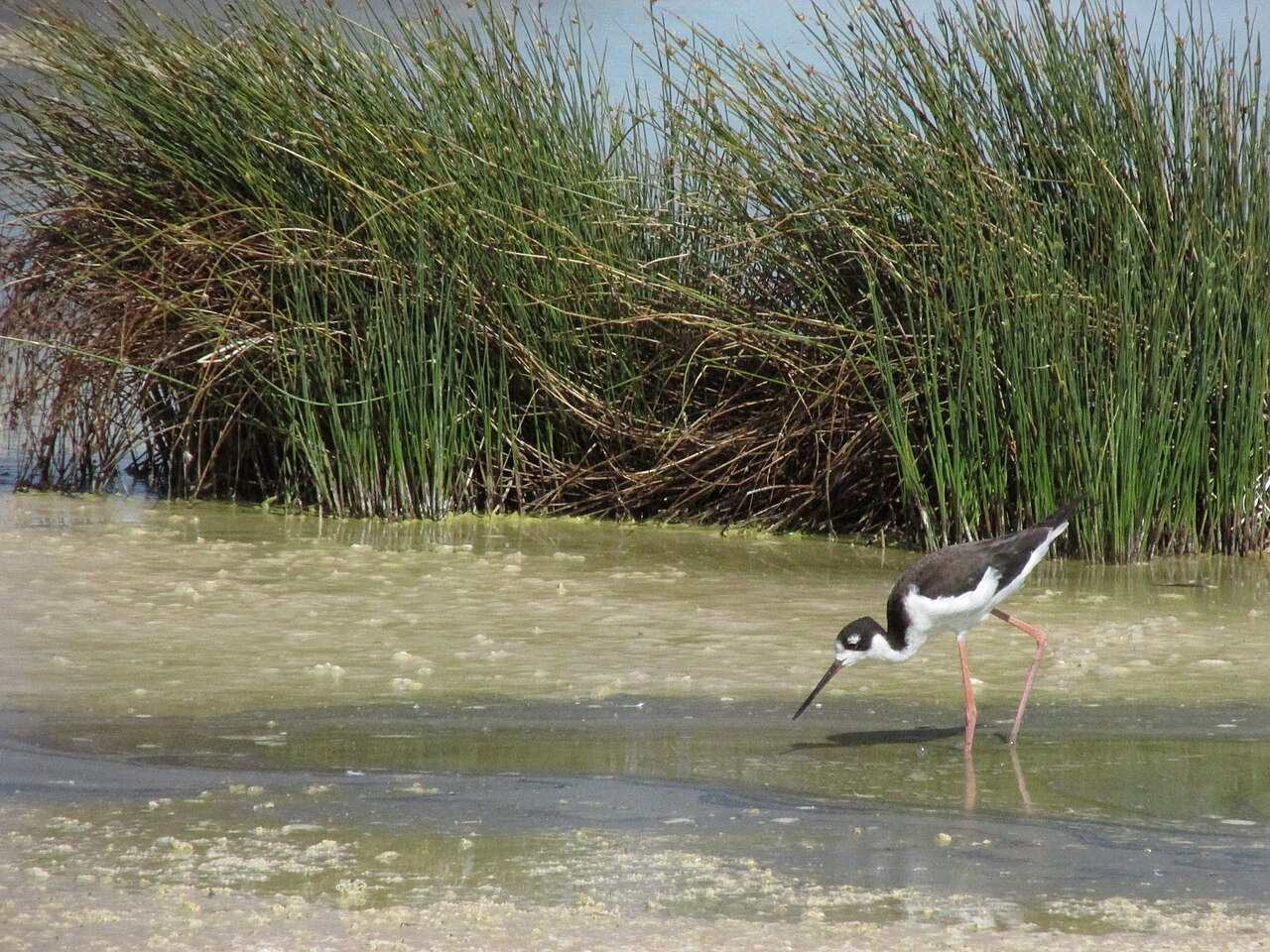
In Hawaiʻi, its marshes and pond edges are foraging and nesting habitat for endangered waterbirds such as the Hawaiian stilt (aeʻo), Hawaiian coot and Hawaiian duck. On Laysan Island, it grows around the lake where the endangered Laysan duck feeds and shelters. Elsewhere, shorebirds and waterfowl eat its seeds and forage among the stems.
For Mammals
It has little documented importance for mammals, though it may be grazed in salt marshes.
Ecosystem Role
Its creeping rhizomes stabilize wet sand and mud in salt marshes, coastal ponds and spring margins. In Hawaiʻi, the caterpillars of the tiny moth Chedra microstigma have been found mining inside the plant in coastal marshes on Oʻahu.
Cultural & Historical Uses
Makaloa mats from Niʻihau, the privately owned island west of Kauaʻi, are among the most celebrated objects of Hawaiian material culture. Weavers split the fine stems of makaloa into narrow strands and plaited them into soft, pliable mats. In the 19th century these mats were highly prized by Hawaiian royalty and foreign visitors alike, and fine examples are held in museum collections today.
Because makaloa grows naturally only in particular wet, brackish places, the craft depended on local knowledge of where it grew. Today the art of makaloa weaving is rare, and cultural practitioners and native plant growers work to keep both the plant and the tradition alive.
Carl Linnaeus described Cyperus laevigatus in the 18th century. The species name laevigatus means “smooth” or “polished,” referring to its smooth stems. It was later placed in the genus Juncellus, meaning “little rush,” because of its rush-like appearance and two-sided achenes, but it is now usually kept in Cyperus.
Frequently Asked Questions
What is makaloa?
Makaloa is the Hawaiian name for smooth flatsedge (Cyperus laevigatus), an indigenous sedge of Hawaiian coastal wetlands. Its stems were plaited into the famous fine mats of Niʻihau.
Is smooth flatsedge native to the United States?
Yes. USDA PLANTS lists it as native in Arizona, California, Nevada, Texas, North Carolina, Hawaiʻi, Puerto Rico and the U.S. Virgin Islands. It is also native in warm regions around the world.
Can it grow in salt water?
It tolerates brackish water, salty and alkaline soils, and mineral-rich spring water, but it does best in shallow, slightly brackish to alkaline water rather than full-strength seawater.
How do I tell it from a rush?
Smooth flatsedge has flat, two-sided spikelets in a small head, while rushes have small six-parted flowers that form round capsules. Both may look like a leafless stem with a cluster on its side.
How do I grow smooth flatsedge?
Plant divisions in full sun in constantly wet soil or shallow water. It spreads by rhizomes and needs no fertilizer.

Looking for a nursery that carries Smooth Flatsedge?
Browse our native plant nursery directory: Arizona · California · Hawaii · Nevada & North Carolina · Texas

