
Hairy Arnica (Arnica mollis)
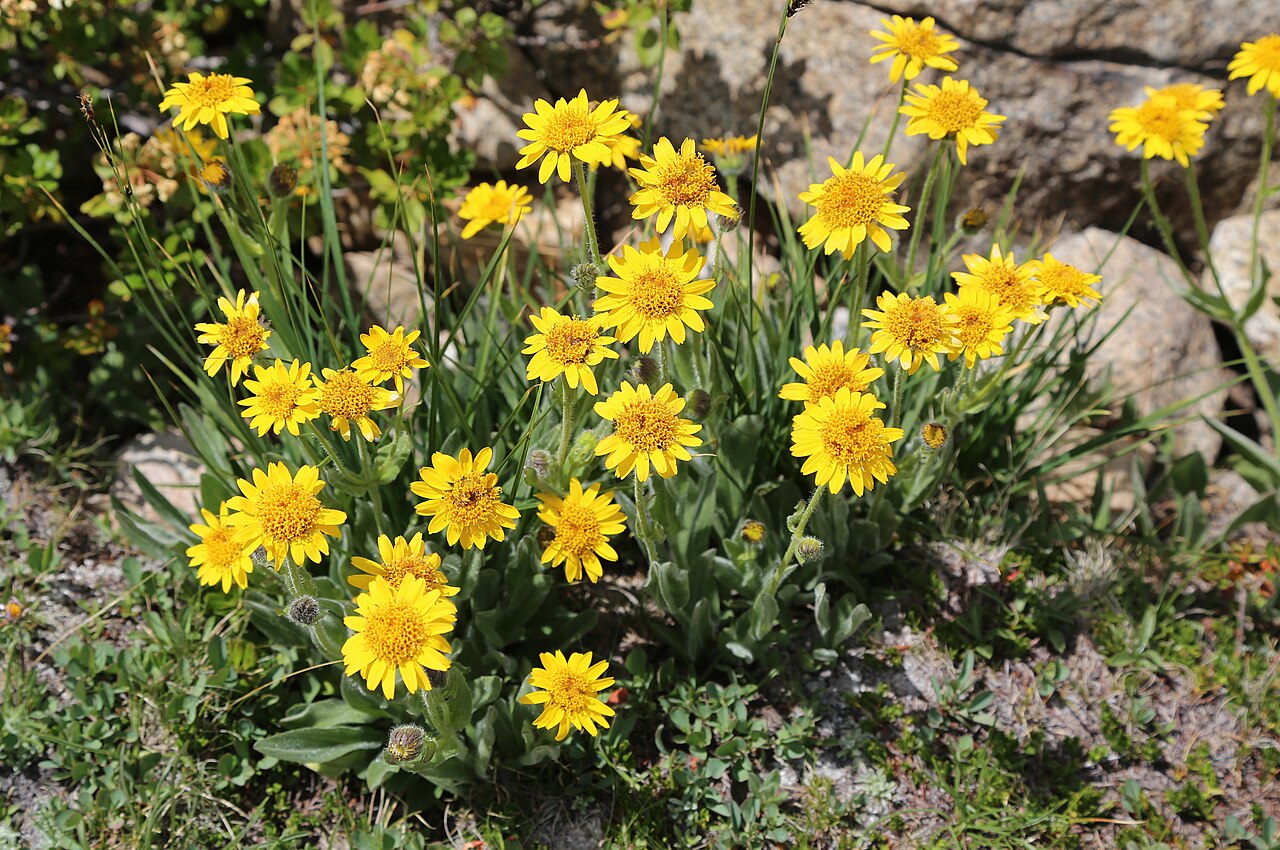
Arnica mollis, the Hairy Arnica (also called cordilleran arnica or soft arnica), is a native mountain wildflower of western North America. It grows from Alaska and Yukon south through the Cascades, Sierra Nevada and Rocky Mountains to California, Nevada, Utah and Colorado, with eastern mountain populations recorded in New Hampshire and Vermont.
It is a soft, glandular-hairy perennial that spreads by rhizomes into small patches. In midsummer its leafy stems carry one to several bright yellow, daisy-like flower heads 1½ to 2½ inches across. It is a characteristic flower of wet subalpine meadows, streambanks, seeps and moist talus slopes, often near the timberline.
Hairy arnica is a lovely plant to find on a mountain hike and can be grown in cool, moist rock gardens. Like other arnicas, it contains compounds that are toxic if eaten. This guide covers how to identify it, where it grows, how to grow it and its value to wildlife.
Identification
Hairy arnica is a patch-forming perennial with a few pairs of opposite, softly hairy leaves and one to several yellow daisy-like heads with tawny, slightly feathery bristles on the seeds.
Growth Form
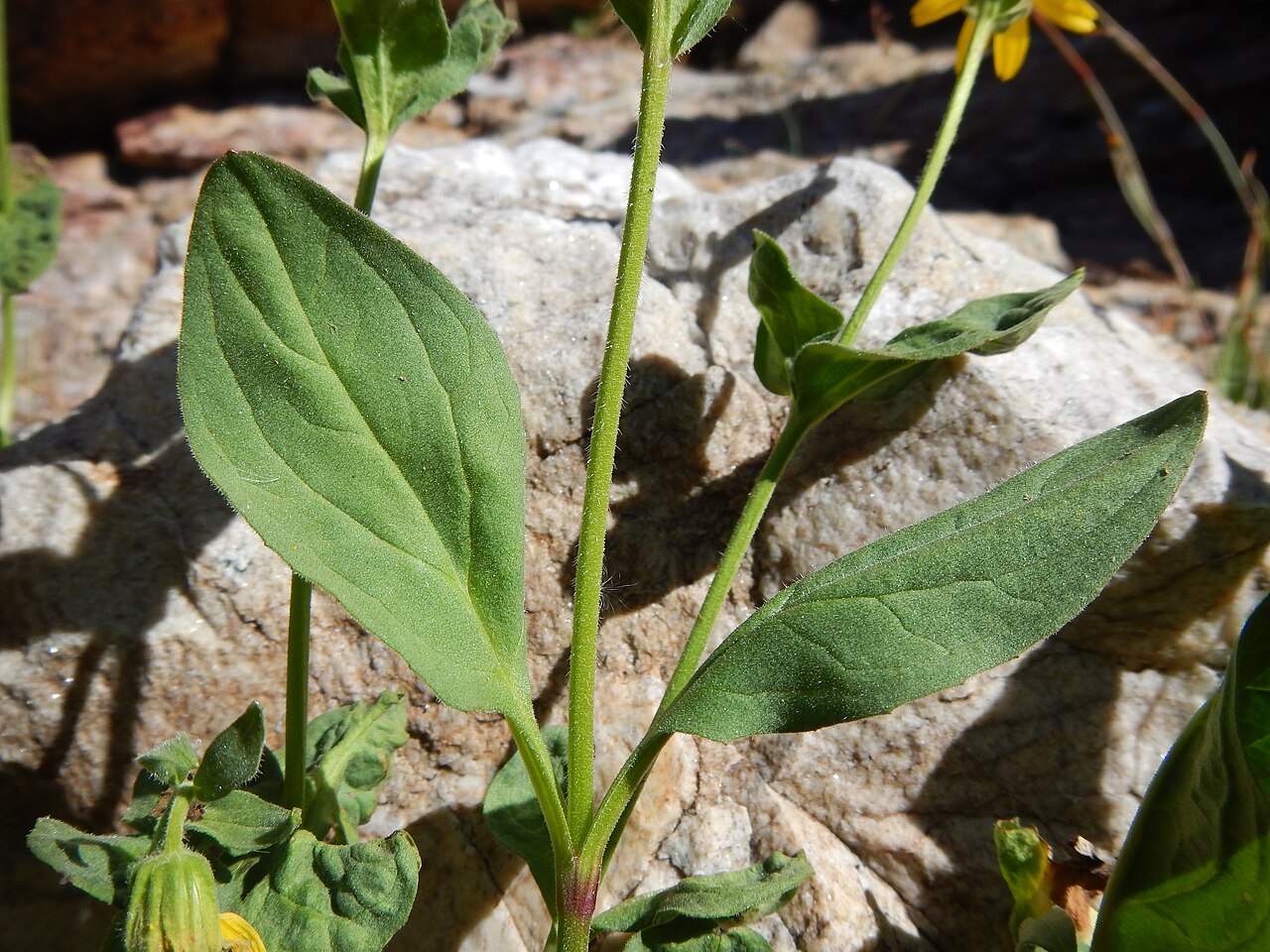
It grows from creeping rhizomes, forming small colonies of upright stems usually 4 to 20 inches tall, sometimes up to 2 feet in rich meadows. The stems are covered in soft, sticky, glandular hairs, which give the plant its name (mollis means “soft”).
Leaves
The leaves are opposite, in about two to four pairs along the stem, plus a rosette of basal leaves. They are lance-shaped to elliptic or oblong, about 2 to 8 inches long, smooth-edged or with a few small teeth, and softly hairy and glandular. The lower leaves have short, winged stalks; the upper ones clasp the stem without stalks.
Flowers
From about July to August, each stem bears one to three (rarely more) flower heads about 1½ to 2½ inches across, with roughly a dozen or more broad yellow ray florets around a yellow-orange center of disk florets. The green bracts below the head are glandular-hairy.
Seeds & Look-alikes
The small, dark seeds (achenes) carry a tuft of tawny or straw-colored, slightly feathery bristles that carry them on the wind. Heartleaf Arnica grows in drier, shadier forests and has heart-shaped basal leaves on long stalks. Chamisso Arnica has more leaf pairs (often five to ten) and many smaller heads. Arrowleaf ragwort and other yellow composites have alternate, not opposite, leaves.
Quick Facts
| Scientific Name | Arnica mollis Hook. |
| Family | Asteraceae (aster or daisy family) |
| Plant Type | Herbaceous perennial wildflower, rhizomatous |
| Mature Height | 4–20 in (occasionally to 2 ft) |
| Mature Spread | 1–2 ft (spreading colonies) |
| Growth Rate | Moderate |
| Sun Exposure | Full sun to partial shade |
| Water Needs | Moderate to high; consistently moist soil |
| Soil Type | Moist, gravelly or rocky loam; humus-rich |
| Soil pH | About 5.5–7.0 |
| Bloom Time | July–August (June at lower elevations) |
| Flower Color | Bright yellow |
| Fall Color | None notable |
| Fruit | Small achene with tawny, feathery bristles |
| Deer Resistant | Generally resistant; bitter and toxic |
| USDA Hardiness Zones | 3–7 |
Native Range
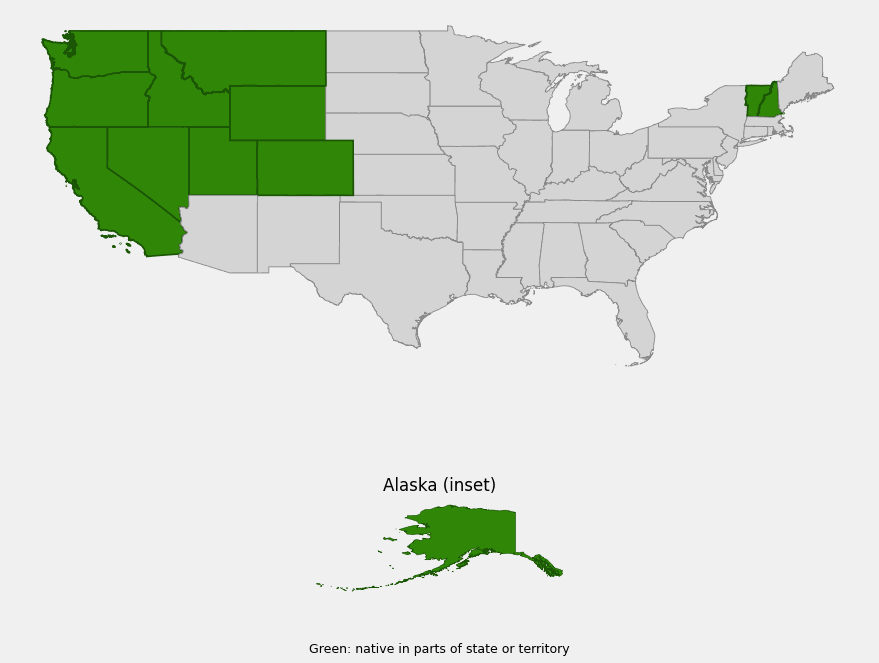
Hairy arnica is a plant of the western mountains. USDA PLANTS lists it as native in Alaska, Washington, Oregon, California, Idaho, Nevada, Utah, Montana, Wyoming and Colorado, and in Yukon, the Northwest Territories, British Columbia and Alberta. In Oregon and Washington it grows in the Olympics, Cascades and the Blue and Wallowa Mountains, and in California mainly in the Sierra Nevada and the Klamath Ranges.
USDA PLANTS also lists it in New Hampshire and Vermont. These eastern populations grow in the northern Appalachians, especially the White Mountains, and many botanists now treat them as the closely related Arnica lanceolata. Either way, they are rare plants of cold mountain ravines and streamsides.
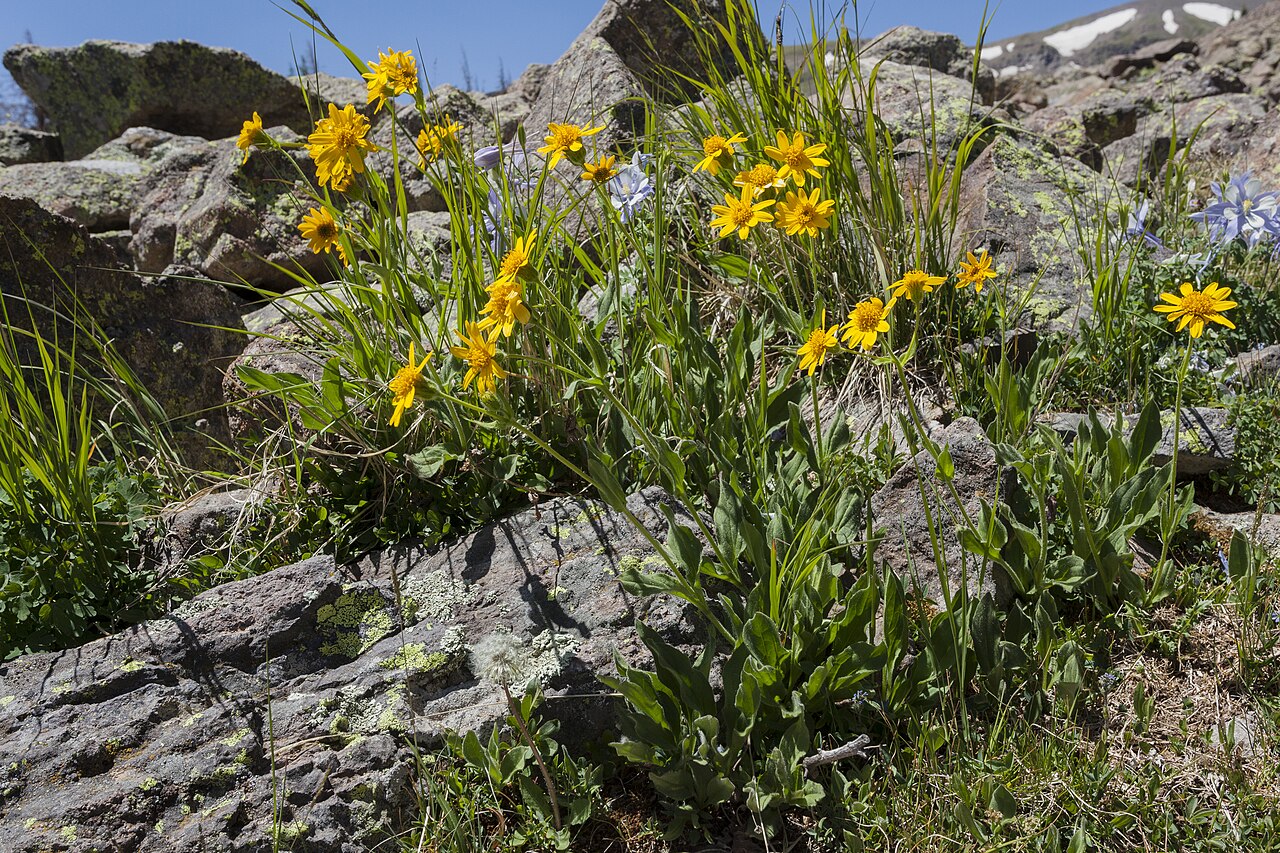
Throughout its range it grows in moist to wet places at middle to high elevations: subalpine and alpine meadows, streambanks, seeps, snowmelt basins, moist talus and rocky slopes, and openings in spruce-fir forest, from about 4,000 to over 11,000 feet in the West.
📋 Regional plant lists featuring Hairy Arnica: Alaska · Western Oregon & Western Washington · Idaho, Eastern Oregon & Eastern Washington · Montana & Wyoming · Utah & Western Colorado · California & Nevada · New Hampshire, Maine & Vermont
Growing & Care Guide
Hairy arnica is rarely sold in nurseries, but seed is sometimes available from specialist alpine and native seed sources. It is best suited to cool-summer mountain gardens and rock gardens. In hot, humid lowlands it usually struggles. Never dig plants from the wild; grow it from legally collected or purchased seed.
Light
Full sun in cool mountain and northern gardens; partial shade, especially in the afternoon, where summers are warmer.
Soil & Water
Give it gritty, humus-rich soil that stays evenly moist through the growing season but drains well, similar to a streamside or snowmelt meadow. It does not tolerate drying out in summer or soggy, stagnant soil in winter.
Planting Tips
Plant it in a moist pocket of a rock garden, along the edge of a stream or pond, or in a trough garden with other alpine plants. Its rhizomes slowly spread into small patches, so allow room to the sides. Space plants about 12 inches apart.
Pruning & Maintenance
Little care is needed. Remove spent flower stems if you prefer a tidy look, and mulch with gravel to keep the crowns cool and the soil moist. Slugs may damage young leaves in damp gardens.
Propagation
Sow fresh seed in fall or give it a few weeks of cold, moist stratification before spring sowing; cover it only lightly. Established patches can also be divided in early spring by separating rooted pieces of rhizome.
Landscape Uses
- Rock and alpine gardens: bright summer color in cool, moist pockets
- Streamside and pond edges: spreading native for moist, gravelly soils
- Mountain meadow restoration: native forb for subalpine sites
- Pollinator plantings: summer nectar and pollen at high elevations
Wildlife & Ecological Value
Hairy arnica is an important summer flower in the short growing season of high mountain meadows.
For Pollinators
The open yellow heads are visited by bumble bees, solitary bees, flower flies, beetles and butterflies, which find nectar and pollen on them during the brief alpine summer. Several small moths and flies feed in arnica flower heads.
For Birds
Birds rarely eat arnica directly, but the insects that visit and feed on it are food for mountain songbirds and grouse, and the dense meadow vegetation it grows in provides cover.
For Mammals
Its bitter, resinous leaves are usually avoided by deer and livestock, though elk and other grazers may nibble it. Toxicity note: arnicas contain helenalin and related compounds that can cause stomach upset, heart problems and other poisoning if eaten, and can irritate sensitive skin. Do not eat any part of the plant or use it internally.
Ecosystem Role
Its rhizomes help bind soil on wet slopes, streambanks and talus, and it is part of the rich wildflower community of subalpine meadows and snowmelt areas.
Cultural & Historical Uses
William Jackson Hooker named Arnica mollis in his Flora Boreali-Americana from specimens collected in western North America. The species name mollis means “soft,” for its soft, hairy leaves and stems.
The European Arnica montana has long been used in topical salves for bruises and sprains, and some Indigenous peoples and settlers used North American arnicas in similar ways externally. Taken internally, arnicas are poisonous, so their use is limited to diluted external preparations.
Arnica is a difficult genus because many species hybridize and some reproduce without fertilization, producing many intermediate forms. Hairy arnica has been split and lumped in various ways, and its eastern and northern populations are often treated today as Arnica lanceolata.
Frequently Asked Questions
Where does hairy arnica grow?
In moist subalpine and alpine meadows, streambanks, seeps and talus slopes in the western mountains from Alaska to California and Colorado, with rare eastern populations in northern New England.
How do I recognize hairy arnica?
Look for a patch-forming plant with two to four pairs of opposite, softly hairy, lance-shaped leaves and one to three bright yellow daisy-like heads in mid to late summer.
Is hairy arnica poisonous?
Yes. Like other arnicas, it contains compounds that are toxic if eaten and may irritate the skin. Do not eat it or use it internally.
Can I grow hairy arnica in my garden?
It can be grown from seed in cool, moist rock gardens or streamside plantings, especially in mountain or northern areas. It struggles in hot, dry or humid gardens.
How is hairy arnica different from heartleaf arnica?
Heartleaf arnica has heart-shaped basal leaves on long stalks and grows in drier forests. Hairy arnica has lance-shaped leaves and grows in wet meadows and streambanks at higher elevations.

Looking for a nursery that carries Hairy Arnica?
Browse our native plant nursery directory: Alaska · California · Colorado · Idaho · Montana · Nevada & New Hampshire · Oregon · Utah & Vermont · Washington · Wyoming

