
Eschscholtz’s Buttercup (Ranunculus eschscholtzii)
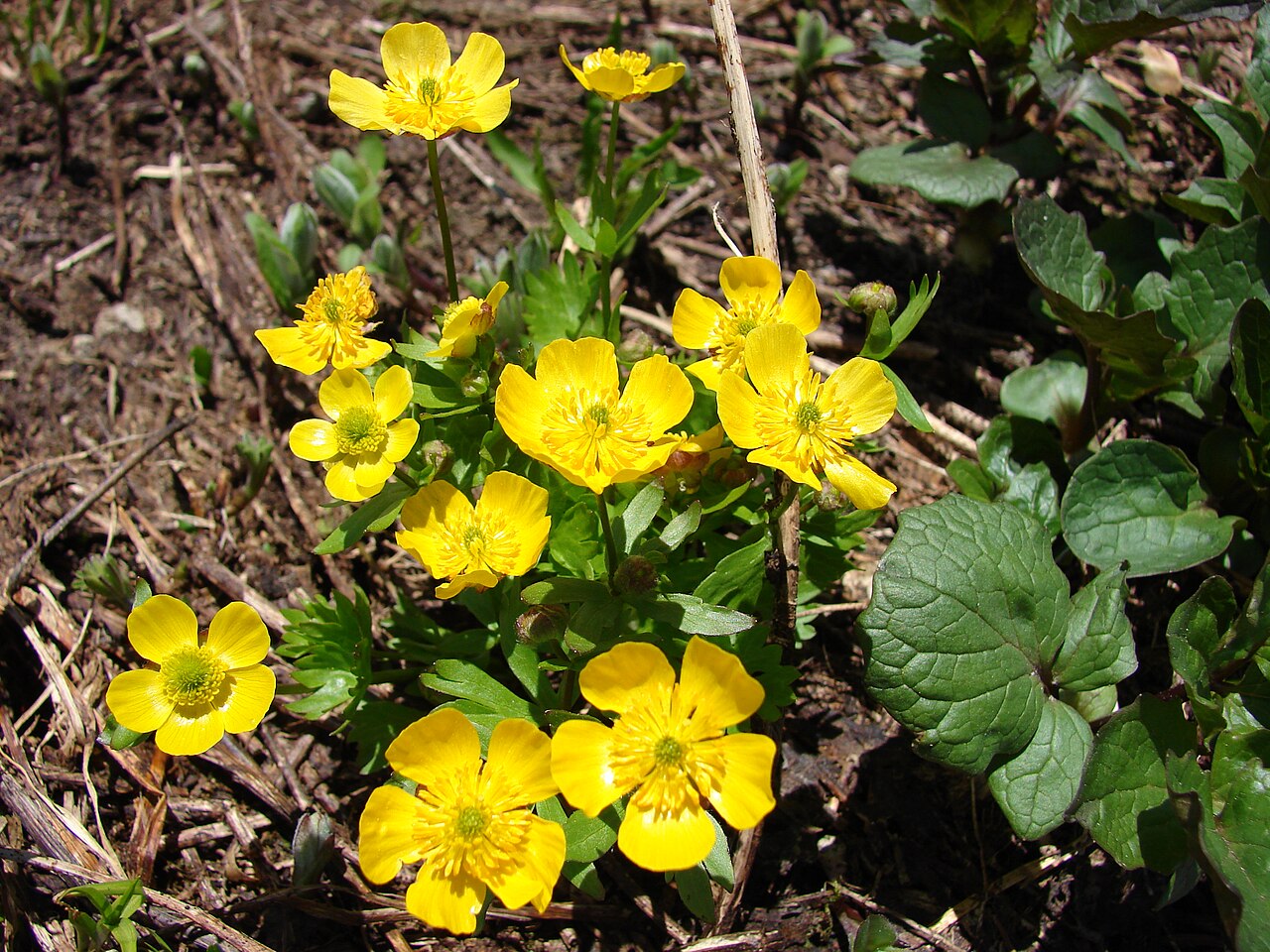
Ranunculus eschscholtzii, known as Eschscholtz’s Buttercup, subalpine buttercup or snowpatch buttercup, is a low, native perennial of high mountain meadows and rocky slopes in western North America. It is one of the first wildflowers to bloom as the snow melts, opening large, glossy yellow flowers just above a tuft of smooth, lobed leaves.
It grows from Alaska and northwestern Canada south through the Cascades, Sierra Nevada and Rocky Mountains to California, Arizona and New Mexico, usually at subalpine and alpine elevations. In many places it follows the retreating edge of snowbanks, flowering in June, July or even August depending on how long the snow lies.
Its flowers are among the largest of any North American buttercup, and patches of it in bloom are a highlight of summer hikes in the high country. Like other buttercups, all parts of the plant are mildly toxic and its sap can irritate skin. This guide covers how to identify it, where to see it, and how it can be grown in cold-climate rock gardens.
Identification
Eschscholtz’s buttercup is a small, hairless buttercup of high elevations with large, shiny yellow flowers. Its smooth, rounded, deeply lobed basal leaves help separate it from other mountain buttercups.
Growth Habit
A tufted perennial from short rootstocks and fibrous roots, with one to several stems usually 2 to 8 inches tall, occasionally to about 10 inches. Plants often grow in loose patches.
Leaves
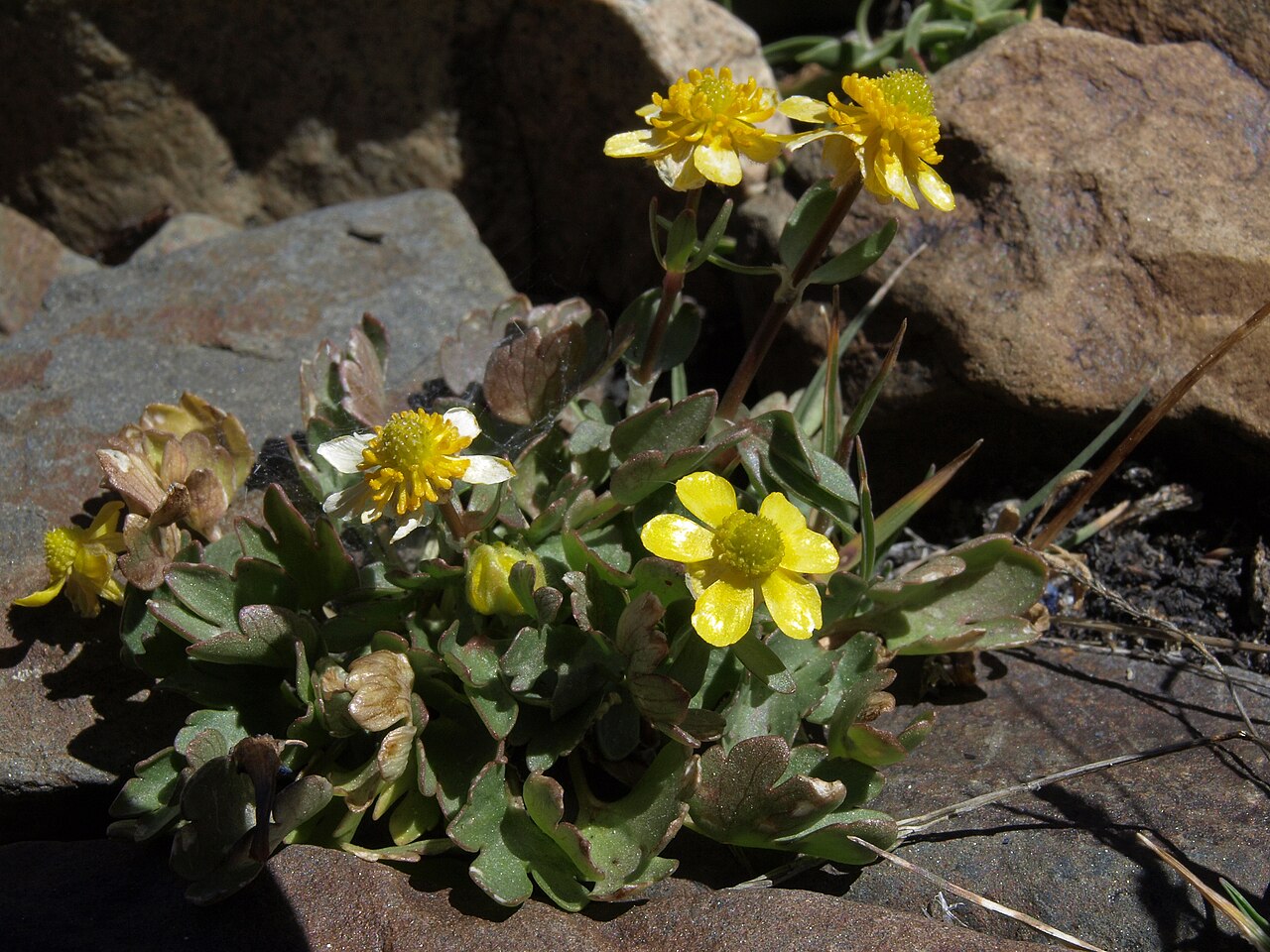
The basal leaves have long stalks and kidney-shaped to rounded blades, about ½ to 1½ inches wide, divided into three main lobes that are further cut into rounded or pointed segments. They are smooth, hairless and sometimes slightly waxy. The few stem leaves are smaller, stalkless and divided into narrow lobes.
Flowers & Fruit
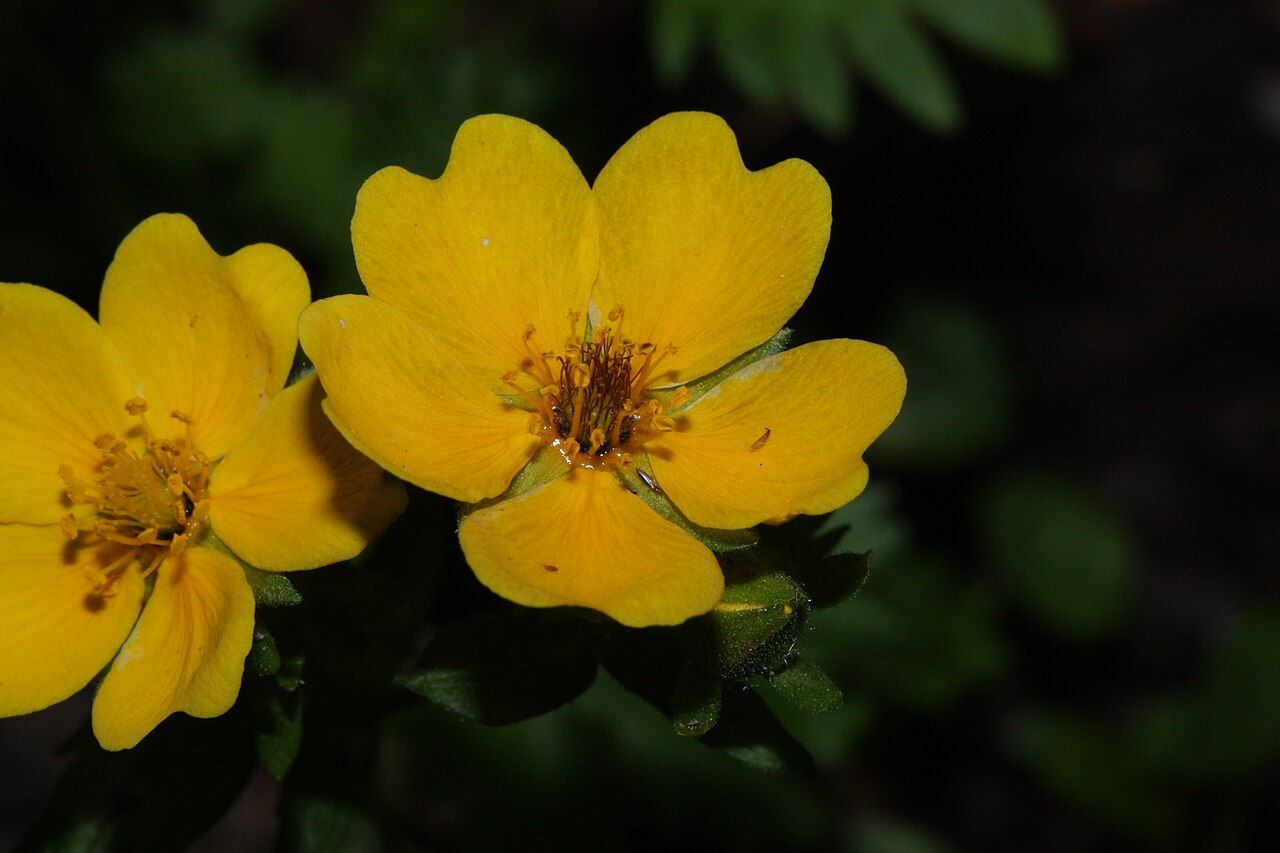
Each stem bears one to three flowers about 1 to 1½ inches across, with five to eight broad, glossy yellow petals up to about ⅝ inch long and five yellowish, often purple-tinged sepals. The center has many stamens around a dome of green pistils. Flowering follows snowmelt, mainly June to August. The fruit is a small round head of 17 or more smooth, beaked achenes.
Look-alikes
Sagebrush Buttercup (R. glaberrimus) blooms in early spring at lower elevations and has mostly unlobed or shallowly lobed leaves. Snow buttercup (R. adoneus) of the Rockies has leaves cut into very narrow, thread-like segments. Western Buttercup (R. occidentalis) is a hairy, taller plant of lower meadows with smaller flowers.
Quick Facts
| Scientific Name | Ranunculus eschscholtzii |
| Family | Ranunculaceae (buttercup family) |
| Plant Type | Herbaceous perennial (alpine wildflower) |
| Mature Height | 2–8 in |
| Mature Spread | 3–8 in |
| Growth Rate | Slow |
| Sun Exposure | Full sun |
| Water Needs | Medium to high; moist from snowmelt |
| Soil Type | Moist, gravelly or rocky, well-drained |
| Soil pH | Acidic to neutral |
| Bloom Time | June–August (after snowmelt) |
| Flower Color | Glossy yellow |
| Fall Color | None; dies back in late summer |
| Fruit | Small round head of beaked achenes |
| Deer Resistant | Yes; bitter and mildly toxic |
| USDA Hardiness Zones | About 2–6 |
Native Range
Eschscholtz’s buttercup is native to western North America. It ranges from Alaska, Yukon and the Northwest Territories south through British Columbia and Alberta, along the Cascades and Olympic Mountains of Washington and Oregon, through the Sierra Nevada and Great Basin ranges of California and Nevada, and down the Rocky Mountains through Idaho, Montana, Wyoming, Utah and Colorado to northern New Mexico and the high peaks of Arizona.
Botanists recognize several varieties. Variety oxynotus grows in the Sierra Nevada and Great Basin ranges of eastern California and western Nevada, and variety suksdorfii, Suksdorf’s buttercup, is found in the Klamath Mountains and parts of the Pacific Northwest. The typical variety covers most of the remaining range.
It grows in subalpine and alpine meadows, snowbed hollows, moist talus, rocky ridges and the edges of melting snowfields, generally from about 5,000 to more than 12,000 feet in the southern part of its range and at lower elevations in the north.
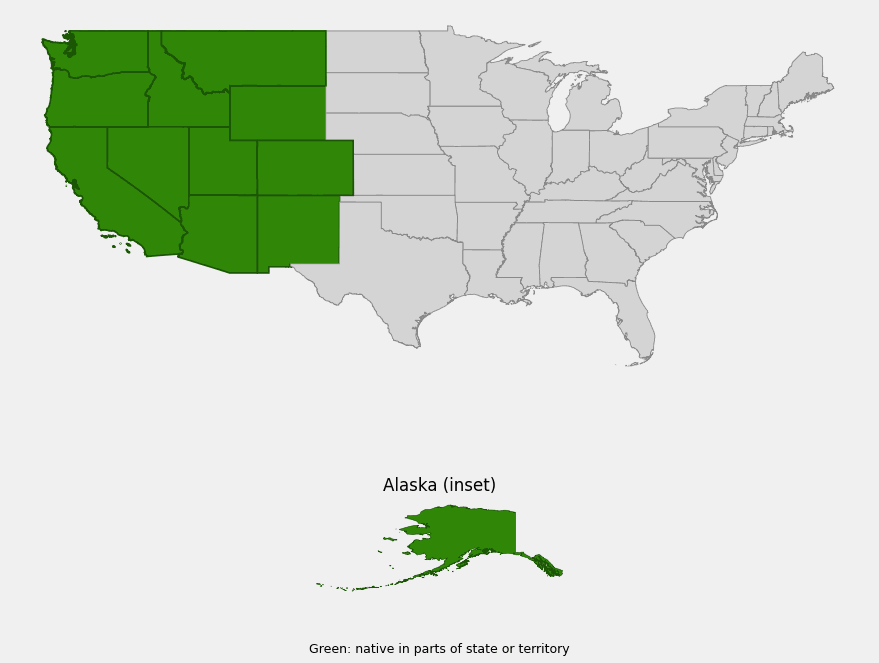
📋 Regional plant lists featuring Eschscholtz’s Buttercup: Alaska · Arizona & New Mexico · California & Nevada · Idaho, Eastern Oregon & Eastern Washington · Montana & Wyoming · Western Oregon & Western Washington · Utah & Western Colorado
Growing & Care Guide
Eschscholtz’s buttercup is a true alpine and is rarely offered for sale. It can be grown by experienced rock gardeners in cold climates, but in most gardens it is better enjoyed in the wild on summer hikes.
Light
Full sun, with cool temperatures. At lower elevations, light afternoon shade helps keep plants cool.
Soil & Water
A gritty, well-drained but moisture-retentive mix that stays cool and evenly moist through spring and early summer, as it would below a melting snowbank. It does not tolerate hot, dry summers or soggy winter soils.
Planting Tips
Best suited to rock gardens, scree beds and troughs in high-elevation and northern gardens. Plant in spring in a spot that holds winter snow cover. Never dig plants from the wild; mountain populations grow slowly and are often in protected parks and wilderness areas.
Pruning & Maintenance
No pruning is needed. Keep competing plants and fallen leaves off the small clumps, and water during summer dry spells while the plant is in active growth.
Propagation
Sow fresh seed in fall in a gritty mix and leave the pots outdoors over winter; the seeds need cold, moist conditions to germinate. Established clumps can be carefully divided in early spring.
Landscape Uses
- Alpine and rock gardens: cold-climate gardens with cool, moist summers
- Troughs and scree beds: small yellow flowers in early summer
- Wildflower viewing: a classic of snowmelt meadows in western parks
- High-elevation restoration: moist meadows and talus within its range
Wildlife & Ecological Value
In the high country, Eschscholtz’s buttercup blooms when few other flowers are open, giving early-season insects an important food source.
For Pollinators
Its open, glossy flowers attract flies, small native bees, bumblebee queens and beetles, which feed on the nectar and pollen. The shiny petals reflect sunlight and may help warm visiting insects in cold alpine air.
For Birds
Ground-feeding mountain birds such as white-tailed ptarmigan and rosy-finches feed on buds, leaves and seeds of many alpine plants in the short summer season.
For Mammals
Because buttercups contain irritating compounds, most grazing animals avoid them, but pikas and marmots harvest a variety of alpine plants, and buttercups may be among the plants they store.
Ecosystem Role
As a snowmelt specialist, it uses the short window of moisture and light after snow disappears, flowering and setting seed quickly. It helps cover and hold moist alpine soils and talus.
Cultural & Historical Uses
The species name honors Johann Friedrich von Eschscholtz, a Baltic German physician and naturalist who visited the Pacific coast of North America with Russian expeditions in the early 1800s. The same naturalist is honored in the poppy genus Eschscholzia.
The genus name Ranunculus means “little frog” in Latin, because many buttercups grow in damp places where frogs live. The name subalpine buttercup is widely used in national parks such as Mount Rainier, where it blooms along trails in July.
Safety note: Like other buttercups, all parts of the plant contain protoanemonin, an irritating compound. Eating it can cause burning of the mouth, stomach pain, vomiting and diarrhea, and the fresh sap can redden or blister the skin. Do not eat it, and keep children and pets from chewing on it.
Frequently Asked Questions
Where can I see Eschscholtz’s buttercup?
In high mountain meadows of the West, such as Mount Rainier and Olympic National Parks, the Sierra Nevada, and the Rocky Mountains, as well as in Alaska. Look along the edges of melting snowfields from June to August.
Is it poisonous?
Yes, mildly. Like other buttercups it contains protoanemonin, which can irritate the mouth, stomach and skin. Do not eat it, and wash your hands after handling the plants.
Why does it bloom so late in the summer?
It blooms as soon as the snow melts. In high meadows where snow lingers into July or August, that is when the plants flower.
Can I grow it in my garden?
Only in cold-climate rock gardens or troughs with cool, moist summers and good drainage. It is rarely sold, and wild plants should never be dug up.
What is the difference between Eschscholtz’s buttercup and snow buttercup?
Snow buttercup (Ranunculus adoneus) has leaves cut into very fine, thread-like segments, while Eschscholtz’s buttercup has broader, rounded, lobed leaves.

Looking for a nursery that carries Eschscholtz’s Buttercup?
Browse our native plant nursery directory: Alaska & Arizona · California · Colorado · Idaho · Montana · Nevada & New Mexico · Oregon · Utah · Washington · Wyoming

