
Blunt Woodsia (Woodsia obtusa)
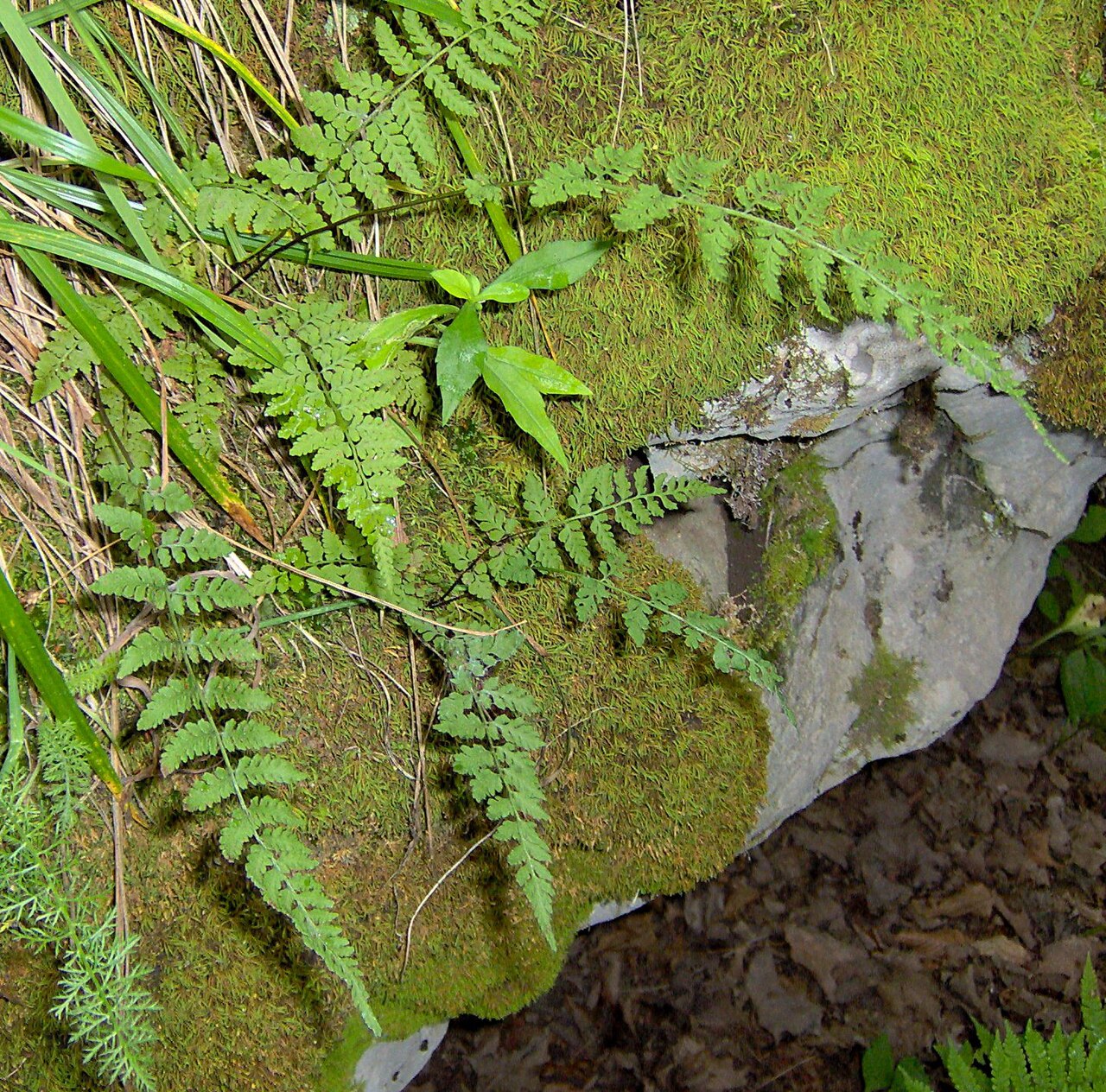
Woodsia obtusa, known as Blunt Woodsia (also blunt-lobed woodsia or common woodsia; USDA: bluntlobe cliff fern), is a small to medium-sized native fern of rocky slopes, ledges and cliffs across the eastern and central United States and southeastern Canada. It belongs to the cliff fern family (Woodsiaceae). Its soft, light green, lacy fronds are usually 6 to 16 inches long and grow in tufts from a short, compact rhizome wedged among rocks.
Blunt woodsia is the most widespread and common woodsia in the East. It grows on many kinds of rock, including limestone, sandstone, shale and granite, and it often turns up in the mortar of old stone walls, on road cuts and on rocky banks. The fronds are slightly hairy and glandular, and the small leaflets have rounded, blunt lobes, which give the species its names. Some fronds stay green into winter in milder areas.
For gardeners, blunt woodsia is an easy, adaptable fern for rock gardens, stone walls and dry, shady slopes. It tolerates drier conditions and more sun than many woodland ferns. It is occasionally offered by native plant and fern nurseries; buy nursery-propagated plants and never pry ferns from wild rock ledges.
Identification
Blunt woodsia is easily confused with fragile ferns (Cystopteris), which grow in the same rocky places. Check the stalk and frond axis for small brown scales and fine hairs, and look under fertile fronds for the distinctive star-shaped indusia.
Growth Habit
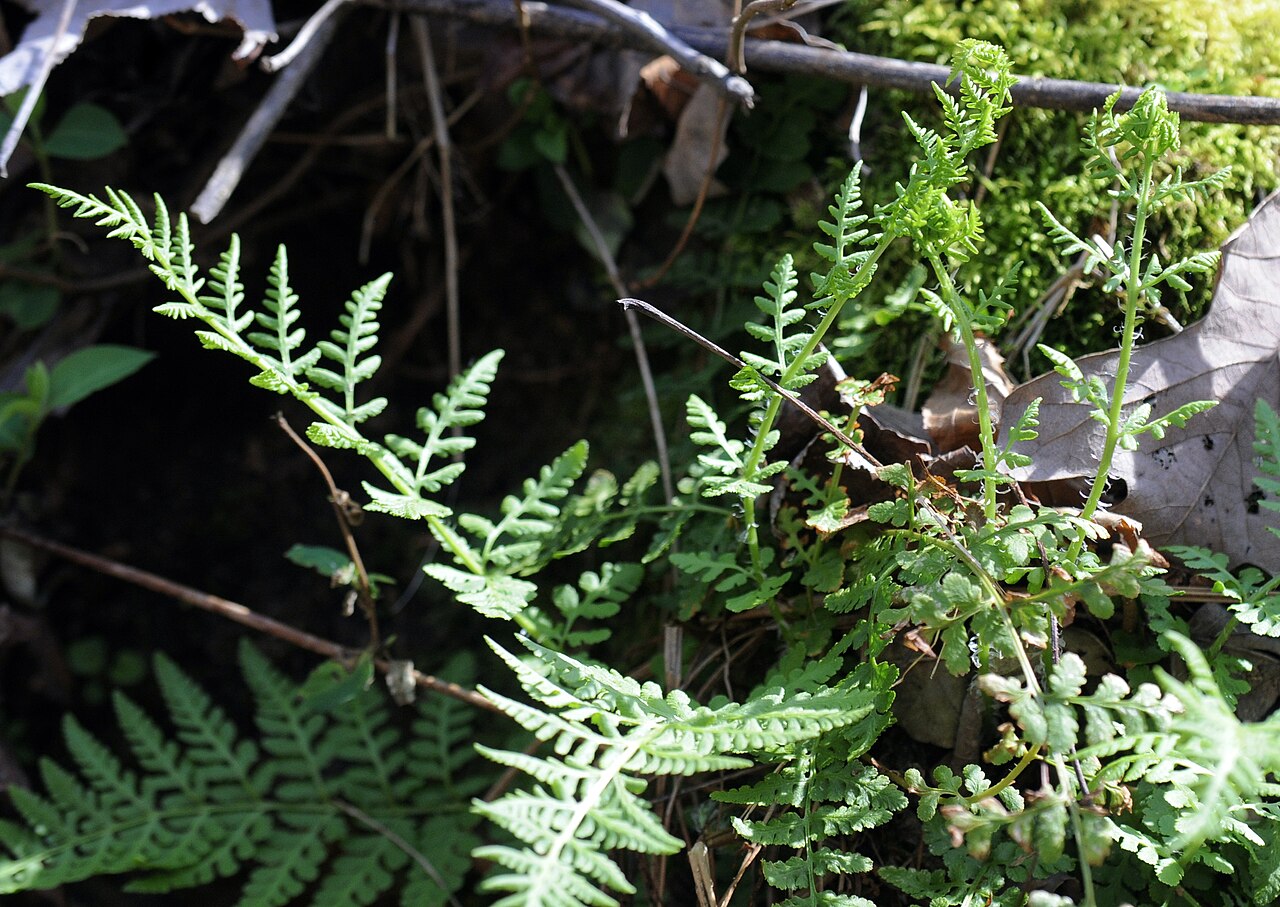
Plants form small, upright to arching tufts from a short, scaly, compact rhizome. The fronds are clustered and of nearly equal size, and old stalk bases persist at the base of the clump. Clumps are usually 8 to 16 inches tall.
Fronds
The fronds are 6 to 16 inches long (up to about 2 feet) and 2 to 5 inches wide, lance-shaped, and twice-divided: the blade is cut into 10 to 15 pairs of leaflets (pinnae), which are themselves divided into blunt, rounded, toothed lobes. The blades are soft, pale to medium green and sparsely covered with short glandular hairs, which make them feel slightly sticky. The stalk is straw-colored to light brown, sometimes darker at the base, with scattered brown scales, and has no joint (unlike some western woodsias).
Sori & Spores
Round sori sit near the edges of the lobes on the underside of the fertile fronds. Each sorus sits on a star-shaped indusium that splits into several broad lobes, which wrap around the young sorus like a cup and later spread open beneath it. Spores ripen from early summer into fall.
Seasonal Behavior
Blunt woodsia emerges in spring and produces new fronds through summer. Fertile fronds often remain green well into winter, especially in the South and in sheltered spots. In drought, the fronds can wither and the plant becomes dormant until rain returns.
Look-alikes
Fragile ferns (Cystopteris) have hairless, smooth fronds and stalks without scales above the base, and a hood-like indusium attached on one side of the sorus. Rusty woodsia (Woodsia ilvensis) of northern cliffs is smaller, with jointed stalks and fronds densely covered with rusty hairs and scales underneath. In the West, Rocky Mountain woodsia (W. scopulina) replaces it on cliffs and talus; it has narrower fronds with whitish, flattened hairs. Blunt woodsia’s stalk scales, glandular hairs, blunt lobes and star-shaped indusia together set it apart.
Subspecies
Two subspecies are recognized. Subspecies obtusa is widespread in the East. Subspecies occidentalis grows mainly in the Ozarks and the southern Great Plains, in Kansas, Oklahoma, Arkansas, Missouri and Texas, and has somewhat narrower, more glandular fronds.
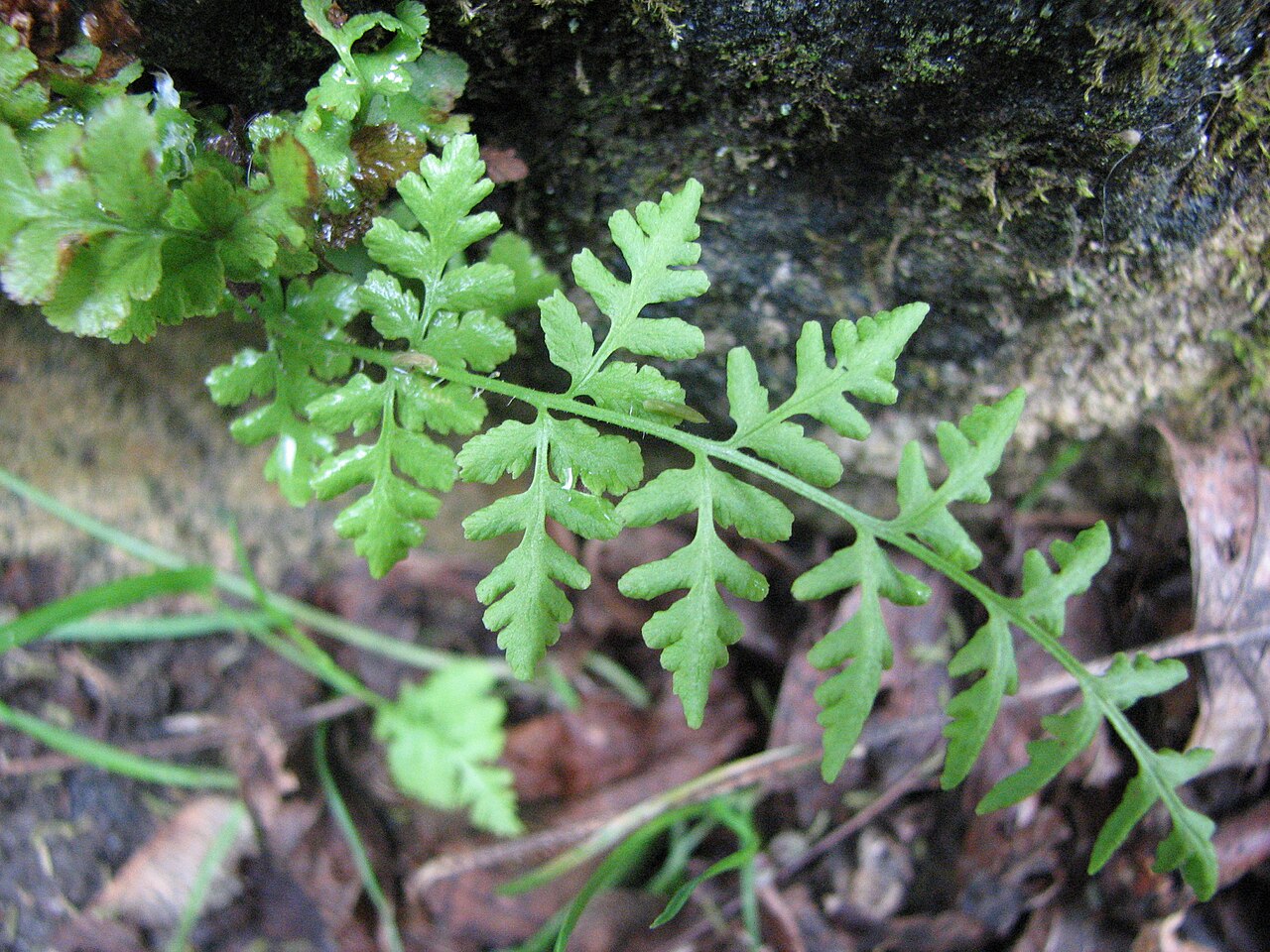
Quick Facts
| Scientific Name | Woodsia obtusa |
| Family | Woodsiaceae (cliff fern family) |
| Plant Type | Deciduous to semi-evergreen fern |
| Mature Height | 8–16 in (fronds up to about 2 ft) |
| Mature Spread | 8–18 in |
| Growth Rate | Moderate |
| Sun Exposure | Part shade to shade; tolerates some sun |
| Water Needs | Low to medium; well-drained |
| Soil Type | Rocky or gravelly soil, rock crevices, stone walls |
| Soil pH | About 5.5–8.0 (slightly acidic to alkaline) |
| Bloom Time | None; spores ripen June–October |
| Flower Color | None (fern) |
| Fall Color | Fronds yellow to tan; fertile fronds may stay green |
| Fruit | None; round sori with star-shaped indusia |
| Deer Resistant | Yes; seldom browsed |
| USDA Hardiness Zones | 4–9 |
Native Range
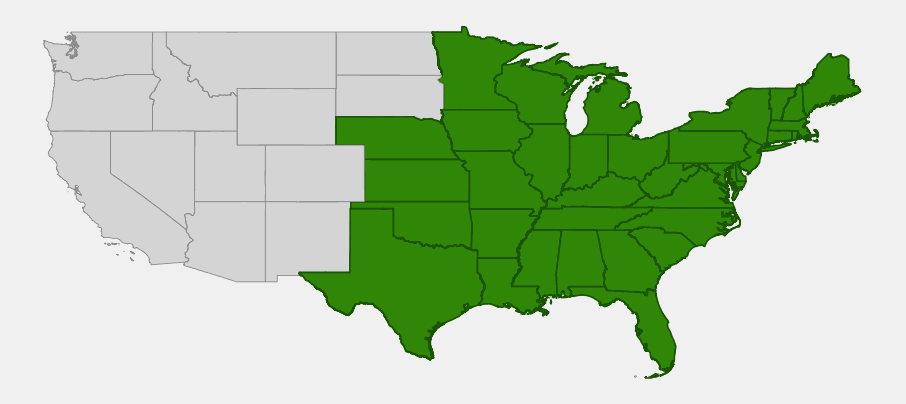
Blunt woodsia is native to eastern and central North America. USDA PLANTS lists it as native in the lower 48 states and Canada, and records it from 35 states and the District of Columbia, plus Ontario and Quebec. It ranges from southern Maine, Vermont and southern Ontario and Quebec west to Wisconsin, Minnesota, Iowa, Nebraska and Kansas, and south to Georgia, the Florida Panhandle, Louisiana, Oklahoma and Texas.
It is most common in the central Appalachians, the Ohio Valley, the Ozarks and the Interior Low Plateaus of Kentucky and Tennessee, where rocky slopes and ledges are widespread. It becomes scarce toward the edges of its range, for example in northern New England, Delaware, Florida, Minnesota and Nebraska. In Texas it grows mainly in the eastern and central parts of the state, including rocky sites in East Texas and the Edwards Plateau and Llano Uplift, rather than in the far south and west.
Blunt woodsia grows on shaded to partly sunny rocky slopes, cliffs, ledges and boulders, talus, rocky woods and bluffs, and on old stone walls, bridges and road cuts. It grows on both acidic and calcareous rock and tolerates drier, sunnier sites than most ferns.
📋 Regional plant lists featuring Blunt Woodsia: New York, Pennsylvania & Northern New Jersey · Ohio & Indiana · Michigan, Wisconsin & Eastern Minnesota · Kentucky & Tennessee · Nebraska, Kansas & Eastern Colorado · Connecticut, Massachusetts & Rhode Island · New Hampshire, Maine & Vermont · Maryland, Virginia & West Virginia · Delaware, Southern New Jersey & Long Island · Illinois, Iowa & Missouri · Alabama, Georgia & Mississippi · North & South Florida · North & South Carolina · Arkansas, Louisiana, Eastern Oklahoma & Eastern Texas
Growing & Care Guide
Blunt woodsia is one of the easiest small native ferns to grow among rocks. It needs good drainage more than constant moisture and handles brighter, drier spots than most ferns. Buy nursery-propagated plants from a native plant or fern nursery.
Light
Part shade to light shade is ideal. It tolerates morning sun and, on cool, rocky sites, even more sun, but hot afternoon sun in dry soil can scorch the fronds.
Soil & Water
Plant in well-drained, gravelly or rocky soil with some organic matter. It grows on both acidic and limestone rock and does well in the crevices of stone walls. Water regularly during the first season; once established it tolerates dry periods, though fronds may wither in long droughts and regrow with rain. Avoid heavy, waterlogged soil.
Planting Tips
Plant in spring or early fall, tucking the crown between rocks or into a pocket of a dry-laid wall with the rhizome just at the surface. Space plants about 12 inches apart. It pairs well with columbine, alumroot, small sedges and other rock ferns.
Pruning & Maintenance
Little maintenance is needed. Remove dead fronds in early spring before new growth appears. Keep heavy leaf litter from smothering small plants, but a light layer of leaves is natural. It has no serious pests or diseases.
Propagation
Divide older clumps in early spring, keeping a portion of the crown with each division. It also grows readily from spores sown on a sterile, moist medium, and volunteer sporelings often appear in rock walls near established plants.
Landscape Uses
- Rock gardens: a fine-textured fern for shaded or partly sunny rock gardens
- Stone walls: grows in the crevices and mortar of walls
- Woodland slopes: for dry, rocky banks under trees
- Mixed fern plantings: with rock polypody, ebony spleenwort and walking fern
- Naturalized rocky sites: road cuts, ledges and boulder piles
Wildlife & Ecological Value
Blunt woodsia is part of the diverse plant community of rocky slopes and cliffs, where it helps hold soil in crevices.
For Pollinators
Ferns reproduce by spores and have no flowers, so blunt woodsia offers no nectar or pollen.
For Birds
It provides little food for birds, but rocky ledges with ferns are used by birds such as eastern phoebes, which nest on ledges and under overhangs.
For Mammals
Deer rarely browse it. The clumps give some cover to small animals, including salamanders and invertebrates, on rocky slopes.
Ecosystem Role
As a pioneer on rock ledges and crevices, it helps trap organic matter and build thin soils that support mosses, wildflowers and other plants. It also colonizes human-made rock habitats such as walls and road cuts.
Cultural & Historical Uses
The genus Woodsia was named by Robert Brown in 1810 in honor of Joseph Woods, an English architect and botanist. The species name obtusa means “blunt,” referring to the rounded lobes of the leaflets. It was first described by the German botanist Kurt Sprengel as Polypodium obtusum and later moved to Woodsia.
The two subspecies differ in their chromosomes: the widespread eastern subspecies obtusa is a tetraploid, with twice as many chromosome sets as the diploid subspecies occidentalis of the Ozarks and southern Plains. Ferns like this, with closely related forms that differ in chromosome number, are of great interest to botanists studying how fern species evolve.
Because it grows so readily on old walls, bridges and foundations, blunt woodsia is often one of the first ferns people notice in towns and along rural roads in the eastern United States.
Frequently Asked Questions
How can I tell blunt woodsia from fragile fern?
Look for small brown scales and glandular hairs on the stalk and frond axis, and star-shaped indusia under the sori. Fragile ferns are smooth and hairless, with a hood-shaped indusium.
Does blunt woodsia grow in sun?
It prefers part shade but tolerates more sun and drier conditions than most ferns, especially among rocks.
Is blunt woodsia evergreen?
Partly. Many fronds die back in fall, but fertile fronds often stay green into winter in milder areas.
How is blunt woodsia different from Rocky Mountain woodsia?
Rocky Mountain woodsia grows in the West and has narrower fronds with whitish, flattened hairs. Blunt woodsia is an eastern and central species with glandular hairs and broad, blunt lobes.
Can I grow blunt woodsia in a stone wall?
Yes. It is one of the best native ferns for stone walls and rock crevices. Plant it in spring and water it until it is established.

Looking for a nursery that carries Blunt Woodsia?
Browse our native plant nursery directory: Alabama & Arkansas · Connecticut, Delaware, Florida & Georgia · Illinois, Indiana, Iowa & Kansas · Kentucky, Louisiana, Maine, Maryland, Massachusetts, Michigan, Minnesota, Mississippi & Missouri · Nebraska, New Hampshire, New Jersey, New York, North Carolina, Ohio & Oklahoma · Pennsylvania, Rhode Island, South Carolina, Tennessee, Texas, Vermont & Virginia · West Virginia & Wisconsin