
Savannah Milkweed (Asclepias pedicellata)
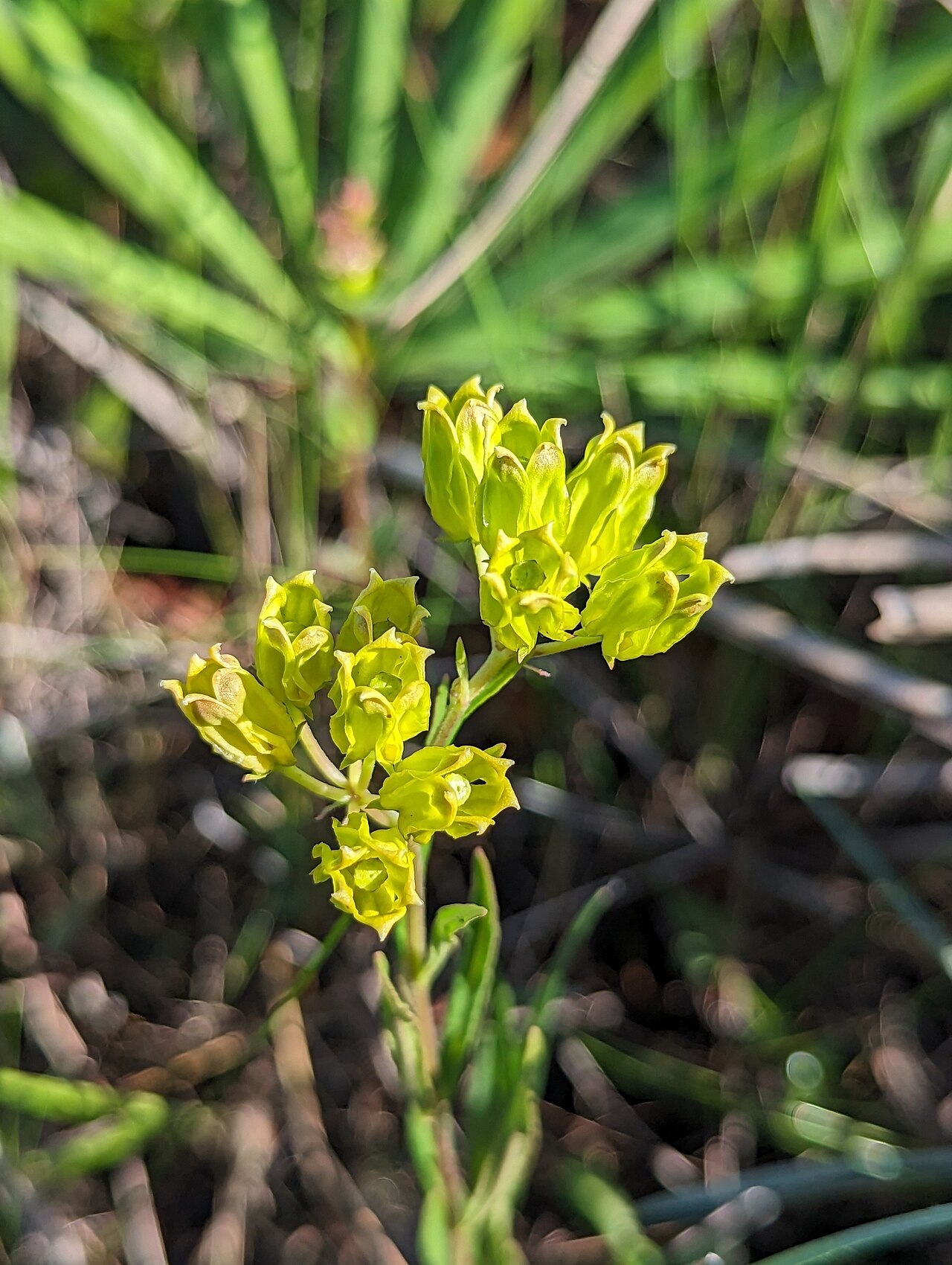
Asclepias pedicellata, known as Savannah Milkweed, is a small, slender milkweed of the fire-maintained pine flatwoods and savannas of the southeastern Coastal Plain. It is one of the most unusual milkweeds in North America: its yellow-green flowers sit on long, thin stalks, and instead of folding back like the petals of most milkweeds, its petals stand upright, forming a little cup or bell.
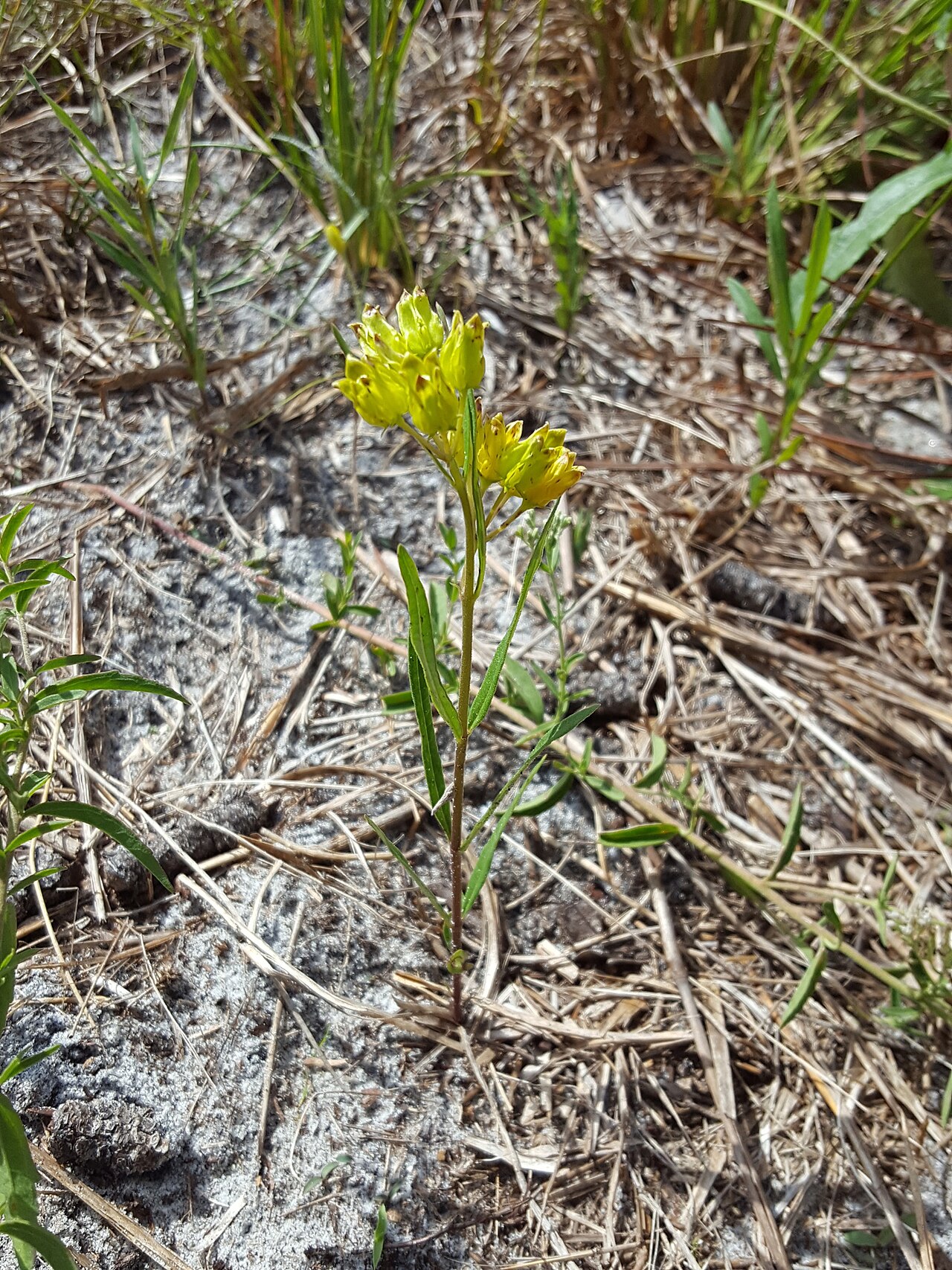
Plants are usually only 6 to 18 inches tall, with a single wiry stem, narrow leaves and a small, loose cluster of a few flowers at the top. They blend into the wiregrass and saw palmetto around them and are easy to overlook until they bloom, often in the months after a fire. The flowers are so different from other milkweeds that the species was once placed in a separate genus, Podostigma.
It ranges along the Coastal Plain from southeastern North Carolina through South Carolina and Georgia into Florida. This guide covers how to identify savannah milkweed, where it grows, whether it can be grown, and its value to pollinators and monarch butterflies.
Identification
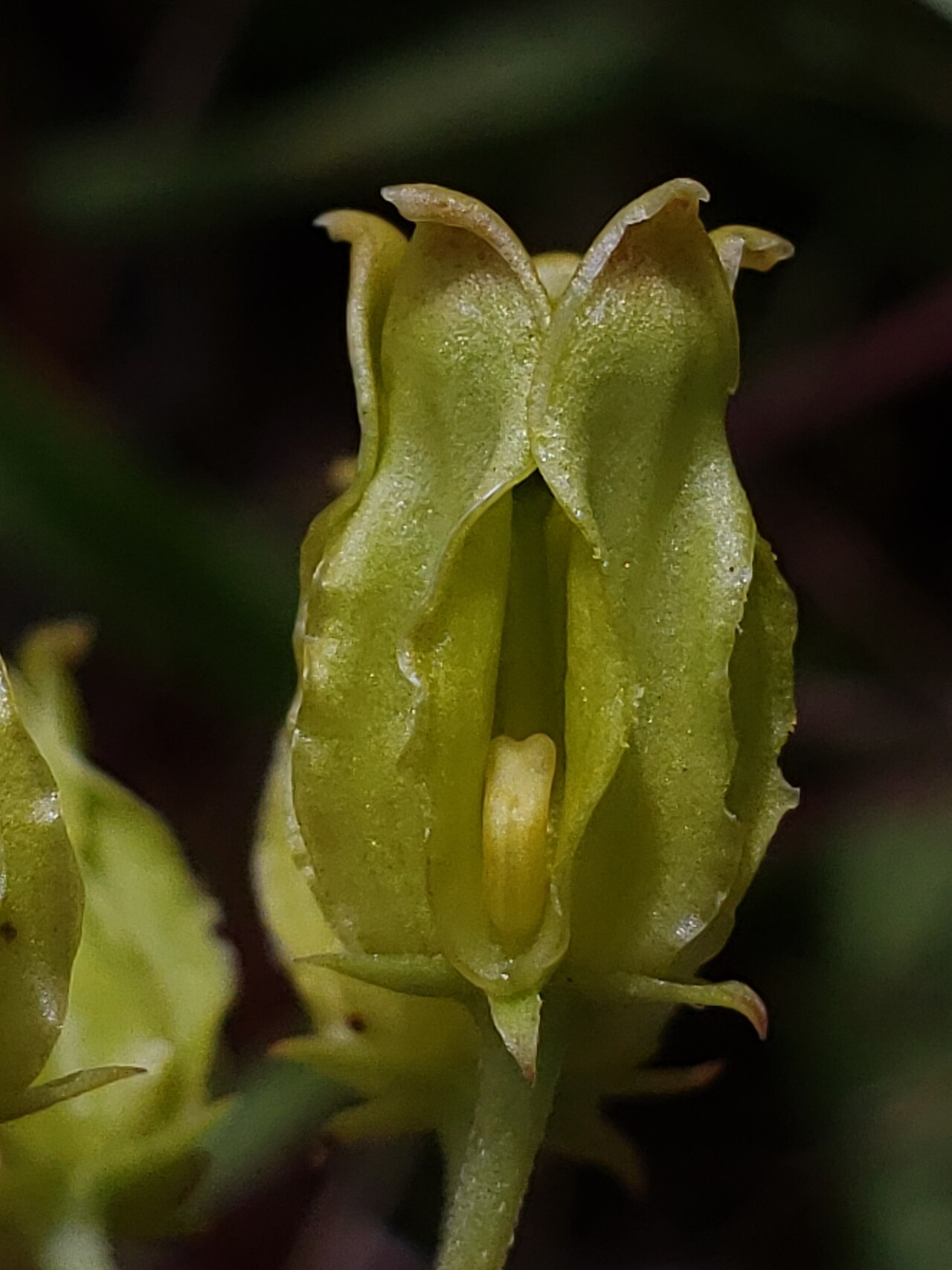
In a pine flatwoods or savanna, look for a short, slender, usually unbranched stem with narrow leaves and a few long-stalked, yellowish-green flowers whose petals point upward rather than backward.
Growth Habit
It is a small perennial with one to a few slender, upright stems, usually 6 to 18 inches tall, rising from a thick, deep root. Like other milkweeds it has milky sap.
Leaves
The leaves are opposite, narrow and linear to lance-shaped, about 1 to 3 inches long, sometimes slightly hairy and with edges that may roll under. They are well spaced along the stem.
Flowers
The flowers are borne in a small, loose cluster of about 3 to 10 at the top of the stem, each on a long, slender stalk (the pedicel that gives the species its name). The five petals are greenish-yellow to yellow, about 1/2 inch long, and stand erect, forming a cup around a short crown of pale hoods. Bloom is mainly from late spring through summer, with flowers possible from spring to fall in Florida, often most abundant after fire.
Fruit & Seeds
The fruits are slender, smooth, upright pods typical of milkweeds, which split in late summer or fall to release flat brown seeds with tufts of silky hairs that carry them on the wind.
Look-alikes
Few milkweeds resemble it, because its upright petals are so unusual. Green comet milkweed (Asclepias viridiflora) has greenish flowers in dense clusters with petals folded back. Fewflower milkweed (Asclepias lanceolata) of wet pinelands has narrow leaves but red-orange flowers. Pinewoods milkweed (Asclepias humistrata) has broad, pink-veined leaves and grows on dry sandhills.
Quick Facts
| Scientific Name | Asclepias pedicellata Walter |
| Family | Apocynaceae (dogbane family; milkweed subfamily Asclepiadoideae) |
| Plant Type | Slender herbaceous perennial |
| Mature Height | 6–18 in |
| Mature Spread | 3–6 in |
| Growth Rate | Slow |
| Sun Exposure | Full sun |
| Water Needs | Moderate; seasonally moist to dry sandy soil |
| Soil Type | Acidic sand in pine flatwoods and savannas |
| Soil pH | About 4.5–6.0 |
| Bloom Time | May–September (spring to fall in Florida) |
| Flower Color | Greenish-yellow to yellow |
| Fall Color | None; stems die back in winter |
| Fruit | Slender upright pod with silky-tufted seeds |
| Deer Resistant | Generally avoided; milkweeds contain toxic cardiac glycosides |
| USDA Hardiness Zones | 8–10 |
Native Range
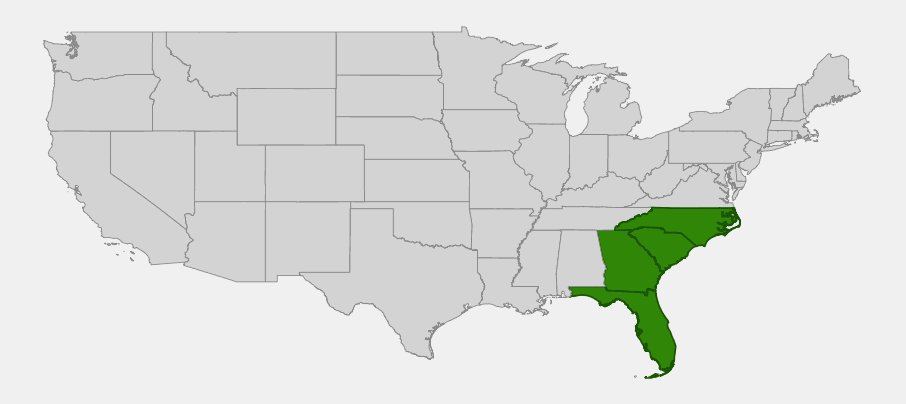
Savannah milkweed is native to the southeastern Coastal Plain of the United States. USDA PLANTS lists it in North Carolina, South Carolina, Georgia and Florida.
It occurs from the outer Coastal Plain of southeastern North Carolina south through the lower Coastal Plain of South Carolina and Georgia, and through much of peninsular Florida and the eastern Florida Panhandle, reaching south into southern Florida. It is generally uncommon and local across its range.
It grows in mesic to wet pine flatwoods, longleaf pine and slash pine savannas, wet prairies and the edges of seasonal ponds, almost always on acidic, sandy soil, at low elevations near sea level. Like many Coastal Plain wildflowers, it depends on frequent fire to keep its open, grassy habitat from becoming overgrown with shrubs, and plants often flower most heavily in the season after a burn.
📋 Regional plant lists featuring Savannah Milkweed: North & South Florida · Alabama, Georgia & Mississippi · North & South Carolina
Growing & Care Guide
Savannah milkweed is rarely available in the nursery trade and is mainly a plant to appreciate in the wild. Like many Coastal Plain milkweeds, it has a deep root, grows slowly and is difficult to establish. If you want to try it, look for seed or plants from specialty native nurseries in Florida and the Southeast that propagate it, and never dig plants from the wild; transplanted wild milkweeds almost always die.
Light
It needs full sun. In nature, it declines when shrubs and trees shade its savanna habitat.
Soil & Water
Provide acidic, sandy soil that is moist in the growing season but well drained, like a pine flatwoods. It tolerates seasonal wetness and short dry periods but not heavy, rich or alkaline soil.
Planting Tips
Sow seed or set out small, nursery-grown plants in a sunny, sandy spot among low native grasses such as wiregrass, where it will not be crowded by taller plants. Mark its location, because it dies back to the ground in winter and is easily lost among other plants.
Pruning & Maintenance
No pruning is needed. In larger natural areas, periodic prescribed fire or mowing in the dormant season mimics the natural fires that keep its habitat open and stimulate flowering.
Propagation
Grow it from seed. Fresh seed of Coastal Plain milkweeds often germinates without treatment, but a few weeks of cold-moist stratification may help. Sow in deep pots to accommodate the taproot and transplant young plants carefully. Collect seed only in small amounts, only where permitted and only from large populations.
Landscape Uses
- Pine flatwoods restoration: a characteristic wildflower of fire-maintained savannas
- Monarch habitat: a native milkweed host for monarch and queen caterpillars
- Pollinator meadows: nectar for bees, wasps and butterflies
- Natural areas: best enjoyed in the wild in burned flatwoods
- Specialty native gardens: for collectors with sunny, sandy, acidic sites
Wildlife & Ecological Value
Savannah milkweed is one of many native milkweeds of the Southeast that support monarch and queen butterflies, and its flowers feed a variety of insects in the pine savannas.
For Pollinators
The nectar-producing flowers are visited by bees, wasps and butterflies. Like all milkweeds, its leaves feed the caterpillars of monarch and queen butterflies, which store the plant’s toxins and become distasteful to predators. Milkweed specialists such as milkweed bugs and milkweed tussock moths may also use it.
For Birds
Its fluffy seed hairs may be gathered for nest lining, and birds of the pine savanna, such as Bachman’s sparrows, forage among the grasses and wildflowers where it grows.
For Mammals
Its milky sap contains toxic cardiac glycosides, so mammals seldom eat it.
Ecosystem Role
It is part of the exceptionally diverse groundcover of longleaf pine and slash pine flatwoods, among the most species-rich plant communities in North America. Because it responds to fire, it is one of many wildflowers that indicate a healthy, regularly burned savanna.
Cultural & Historical Uses
The species was described in 1788 by Thomas Walter in his Flora Caroliniana, based on plants from the South Carolina Lowcountry. Because of its upright petals and raised stigma head, it was later placed in a genus of its own, Podostigma, as Podostigma pedicellatum, before being returned to Asclepias.
Savannah milkweed has drawn attention as part of efforts to conserve native milkweeds for monarch butterflies in the Southeast. Many Coastal Plain milkweeds, including this one, have declined as longleaf pine savannas were converted to farmland, development and dense pine plantations, and as natural fires were suppressed.
Safety note: like all milkweeds, savannah milkweed contains cardiac glycosides in its milky sap and tissues, which are toxic to people, pets and livestock if eaten. Wash your hands after handling it and keep the sap away from your eyes.
Frequently Asked Questions
Where does savannah milkweed grow?
It grows in pine flatwoods, savannas and wet prairies on the Coastal Plain of North Carolina, South Carolina, Georgia and Florida.
What makes savannah milkweed unusual?
Its yellow-green petals stand upright to form a cup, instead of folding back as in most milkweeds, and each flower sits on a long, slender stalk.
Is savannah milkweed a host plant for monarchs?
Yes. Like other milkweeds, its leaves can feed monarch and queen caterpillars.
Can I grow savannah milkweed in my garden?
It is difficult and rarely sold. It needs full sun and acidic, sandy soil. Use only nursery-propagated seed or plants, and never dig it from the wild.
Is savannah milkweed poisonous?
Yes. Like all milkweeds, it contains toxic cardiac glycosides and should not be eaten by people, pets or livestock.

Looking for a nursery that carries Savannah Milkweed?
Browse our native plant nursery directory: Florida & Georgia · North Carolina · South Carolina

