
Tainturier’s Chervil (Chaerophyllum tainturieri)
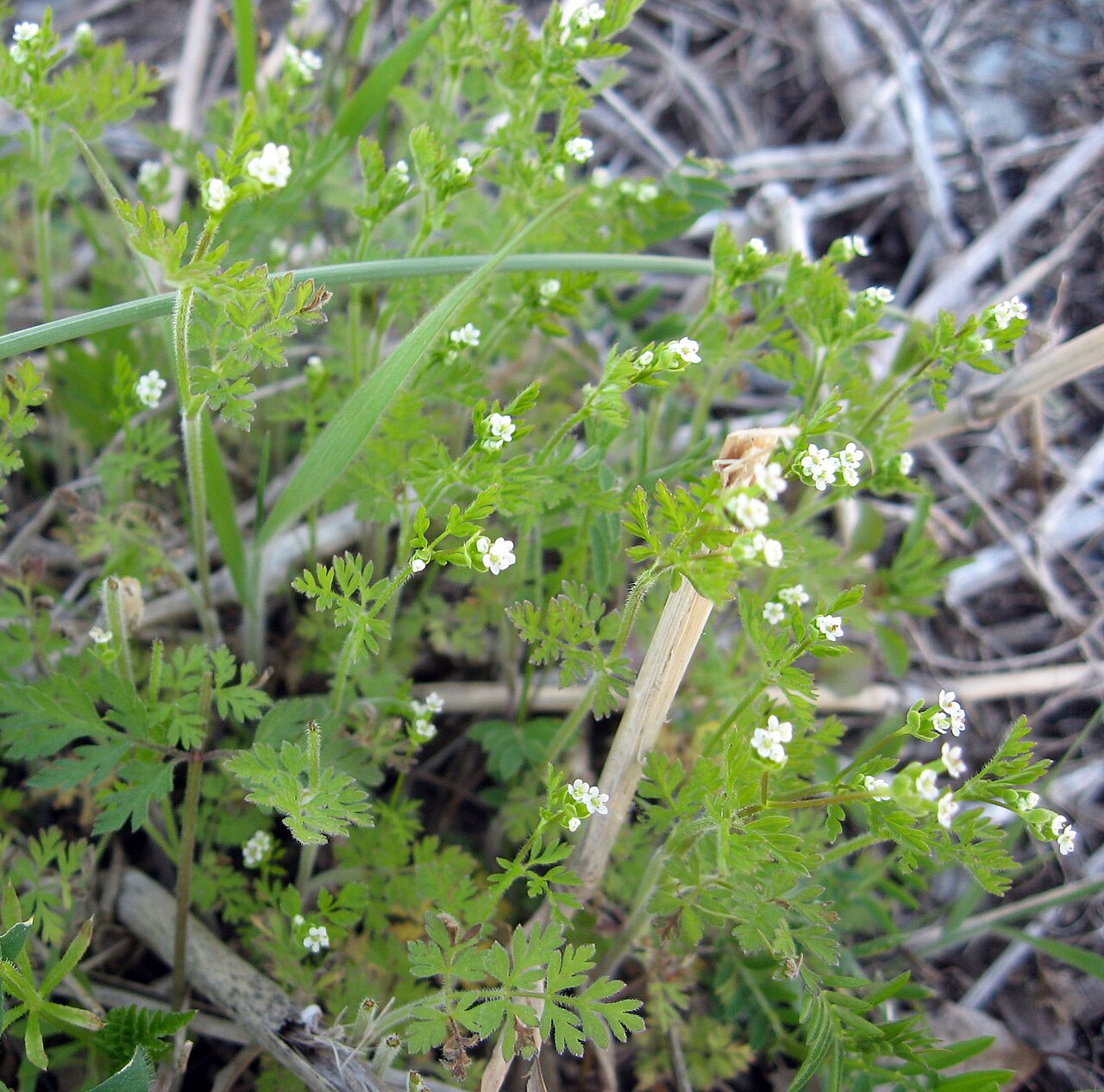
Chaerophyllum tainturieri, known as Tainturier’s Chervil (USDA: hairyfruit chervil; also southern chervil, wild chervil), is a small native annual in the carrot family (Apiaceae). It is one of the common little wildflowers of early spring across the southern United States, coming up in lawns, fields, roadsides, glades and open woods from Florida and the Carolinas west to Texas and Kansas. Plants are usually 8 to 20 inches tall, rarely to about 32 inches, with lacy, finely divided leaves that look a lot like those of garden chervil or carrot.
From about February in the Deep South to May farther north, it bears many small, loose umbels of tiny white flowers. The flowers are easy to overlook, but they feed small bees and flies, and the leaves are a host for the caterpillars of the black swallowtail butterfly. By late spring the plant is covered in narrow, ribbed seeds, then it turns yellow and dies, leaving the seeds to germinate the following fall.
Tainturier’s chervil is a winter annual: seeds sprout in autumn, the small rosettes grow over winter, and the plants bloom and set seed in spring. It is rarely planted on purpose, but it is a useful, low-key member of native lawns, meadows and pollinator plantings. Like any wild member of the carrot family, it should not be gathered for food unless you are an expert, because deadly poisonous relatives such as poison hemlock look similar.
Identification
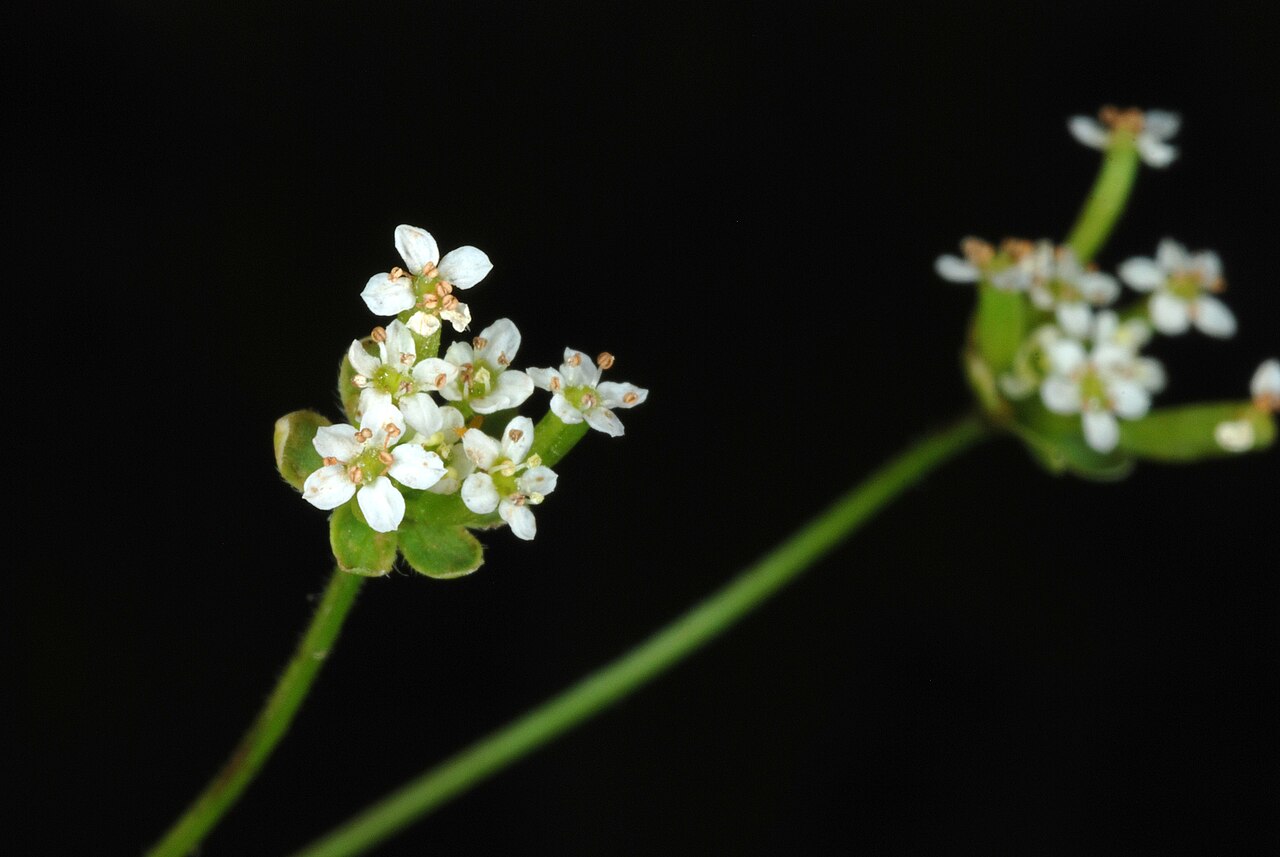
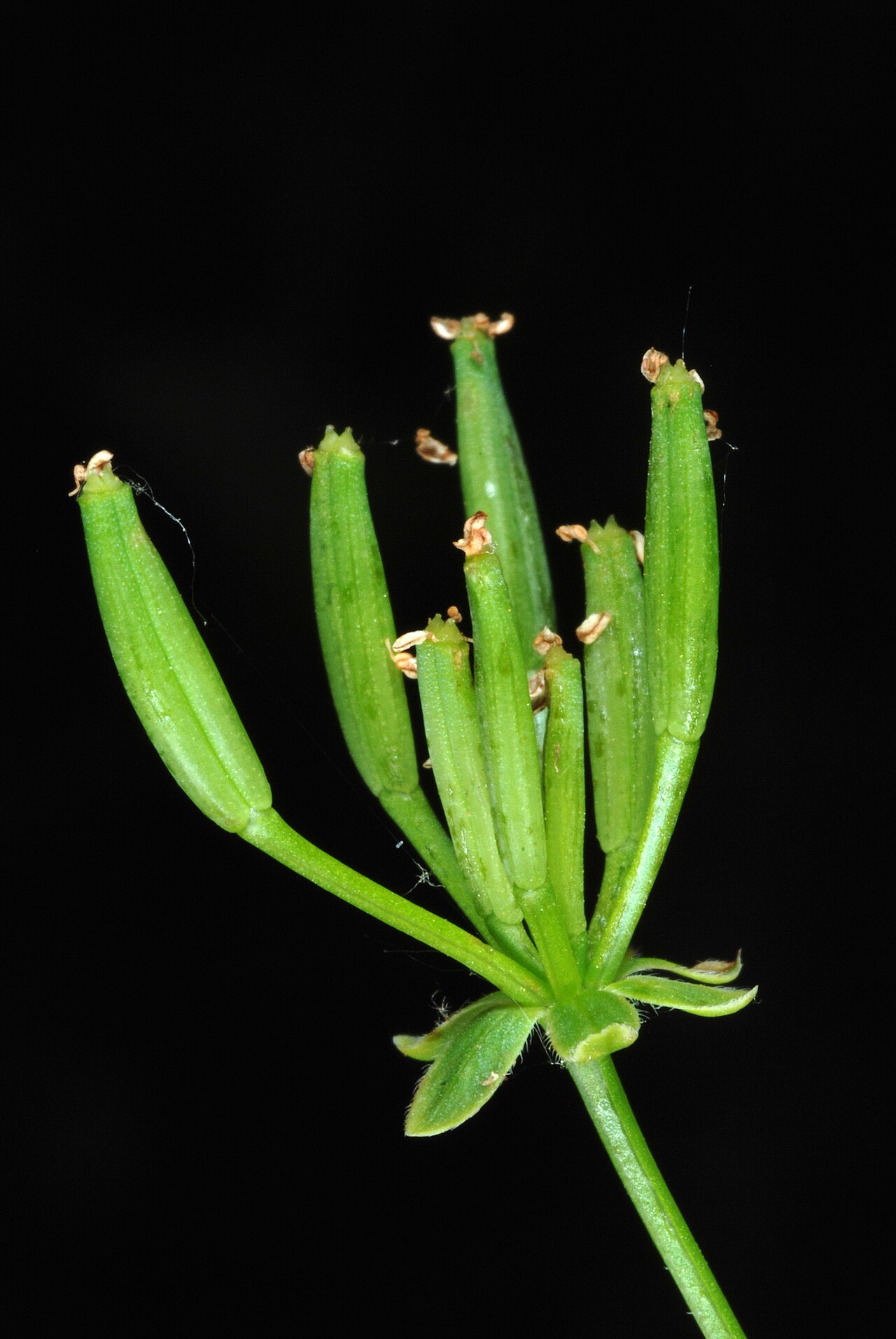
Tainturier’s chervil is a small, branching annual with ferny leaves and many tiny white umbels. The narrow, beak-less fruits on short stalks are the best clue to the genus.
Growth Habit
Plants start as a low rosette of finely divided leaves in fall and winter. In spring they send up one to several branched, often reddish stems that can be erect or sprawling, usually 8 to 20 inches tall. The stems are slightly to moderately hairy, especially near the base. The whole plant is soft and delicate, and it has a slender taproot.
Leaves
The leaves are two to three times divided into many small, narrow, lobed segments, giving them a lacy, parsley- or carrot-like look. Lower leaves have long stalks with a sheathing base around the stem; upper leaves are smaller and nearly stalkless. Leaves are light green and may be slightly hairy.
Flowers
The flowers are tiny, about 1/16 inch wide, with five white petals, and are grouped in small compound umbels of a few rays at the ends of branches and opposite the leaves. Each little umbel holds roughly 3 to 10 flowers. Blooming usually runs from March to May, starting as early as February in Florida and South Texas.
Fruit & Seeds
The fruit is narrow, about 1/4 to 3/8 inch long, slightly flattened and ribbed, and tapers to a short point with the two small styles at the tip. It splits at maturity into two one-seeded halves. Fruits may be smooth or covered in short hairs (the USDA name, hairyfruit chervil, refers to the hairy form). They turn from green to purplish brown as they ripen.
Look-alikes
Spreading chervil (Chaerophyllum procumbens) of moist woods is similar, but its fruits are shorter and blunter and it usually grows in shadier, wetter places. Wild carrot (Daucus carota, not native) and American wild carrot (D. pusillus) have bristly fruits and bracts under the umbel. Poison hemlock (Conium maculatum, not native) is much larger, with purple-spotted, hairless stems and a musty smell. If in doubt about a carrot-family plant, do not taste it.
Safety
Tainturier’s chervil itself is not known as a dangerous plant, but the carrot family includes some of the most poisonous plants in North America, including poison hemlock and water hemlock. These can look similar to inexperienced eyes. Do not eat wild chervil-like plants, and teach children not to put them in their mouths.
Quick Facts
| Scientific Name | Chaerophyllum tainturieri |
| Family | Apiaceae (carrot family) |
| Plant Type | Winter annual wildflower |
| Mature Height | 8–20 in (rarely to 32 in) |
| Mature Spread | 4–12 in |
| Growth Rate | Fast |
| Sun Exposure | Full sun to partial shade |
| Water Needs | Moderate; moist in winter and spring |
| Soil Type | Most soils: sand, loam, clay, thin soil over limestone |
| Soil pH | About 5.5–8.0 |
| Bloom Time | March–May (from February in the Deep South) |
| Flower Color | White |
| Fall Color | Plants yellow and die in late spring |
| Fruit | Narrow, ribbed fruit that splits into two seeds |
| Deer Resistant | Moderately |
| USDA Hardiness Zones | 5–10 (grows as a winter annual) |
Native Range
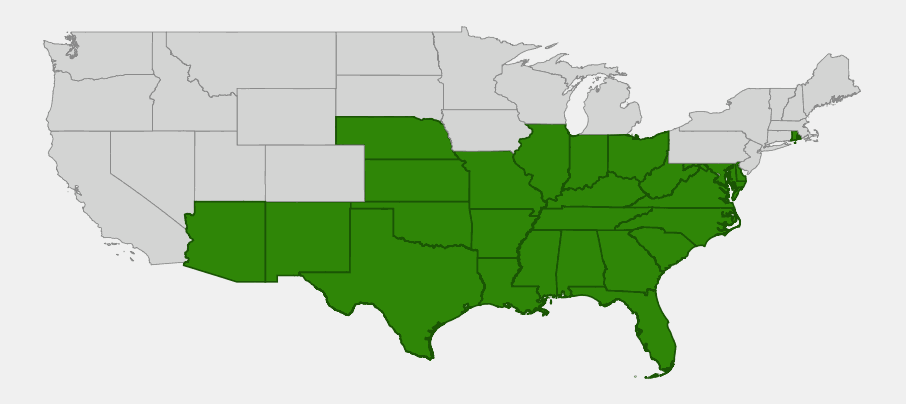
Tainturier’s chervil is native to the southern and eastern United States. USDA PLANTS lists it as native in the lower 48 states and records it from 25 states: Alabama, Arizona, Arkansas, Delaware, Florida, Georgia, Illinois, Indiana, Kansas, Kentucky, Louisiana, Maryland, Mississippi, Missouri, Nebraska, New Mexico, North Carolina, Ohio, Oklahoma, Rhode Island, South Carolina, Tennessee, Texas, Virginia and West Virginia. It is not recorded from Canada.
It is most common from the Carolinas and Florida west through the Gulf states to Texas and Oklahoma, and north in the Mississippi and Ohio valleys to Missouri, Kentucky, southern Illinois and Indiana. In Texas it is widespread, including the Edwards Plateau, the Hill Country and South Texas. Populations in Arizona and New Mexico are outlying, disjunct records, and the records in Delaware, Maryland and Rhode Island are at the northeastern edge of its range.
It grows in open, sunny or lightly shaded places with moist soil in winter and spring: fields, pastures, lawns, roadsides, cedar glades, rocky limestone outcrops, prairies, open woods and woodland edges, floodplains and disturbed ground. It is common in grassy places that are mowed or grazed.
📋 Regional plant lists featuring Tainturier’s Chervil: Ohio & Indiana · Kentucky & Tennessee · Nebraska, Kansas & Eastern Colorado · Connecticut, Massachusetts & Rhode Island · New Hampshire, Maine & Vermont · Maryland, Virginia & West Virginia · Delaware, Southern New Jersey & Long Island · Arizona & New Mexico · Illinois, Iowa & Missouri · Alabama, Georgia & Mississippi · North & South Florida · North & South Carolina · Arkansas, Louisiana, Eastern Oklahoma & Eastern Texas · South & West Texas
Growing & Care Guide
Tainturier’s chervil is seldom sold as a plant, and most gardeners meet it as a volunteer in lawns and beds. If you want it, scatter seed in fall in a sunny meadow or low-mow lawn, and let it reseed. It is a welcome food plant for black swallowtail caterpillars and a small, early nectar source.
Light
Full sun to partial shade. It grows best in open places or under deciduous trees that are bare in winter and early spring, when it does most of its growing.
Soil & Water
It is not fussy about soil: sand, loam, clay and thin, rocky soil over limestone all work. Normal winter and spring rainfall is enough. It needs no summer water, since the plants die by early summer.
Planting Tips
Sow fresh seed in late summer or fall directly where you want it, pressing it lightly into bare soil. The seeds wait through summer and then germinate when the weather cools in autumn. Good places include low-mow or no-mow lawns, wildflower meadows, prairie gardens and the sunny edges of woodland gardens.
Pruning & Maintenance
No pruning is needed. If you want it to return, avoid mowing until the seeds have turned brown in late spring. Where it is not wanted, it is easy to pull or mow before it sets seed. Leave plants with swallowtail caterpillars until the caterpillars have finished feeding.
Propagation
Grow it from seed only. The seeds have a complex dormancy: they need a warm summer period after shedding, followed by cooler fall temperatures, before they germinate. In practice, sowing outdoors in summer or early fall works best. Established patches maintain themselves by self-sowing.
Landscape Uses
- Butterfly gardens: a native host plant for black swallowtail caterpillars
- Native and low-mow lawns: a small, early-blooming lawn wildflower
- Spring meadows: fills gaps between perennials in early spring
- Pollinator plantings: tiny flowers for small native bees and flies
- Woodland edges: light shade under deciduous trees
Wildlife & Ecological Value
Small as it is, Tainturier’s chervil supports insects at the start of the growing season and is widely used by a familiar butterfly.
For Pollinators
The tiny white flowers produce nectar and pollen for small native bees, such as sweat bees and mining bees, as well as small flies, wasps and beetles. Because it blooms in early spring, it provides food when few other flowers are open.
For Birds
Seed-eating birds such as sparrows and finches may eat the small fruits, and insect-eating birds forage on the caterpillars and other insects that use the plant.
For Mammals
Rabbits and deer may nibble the tender foliage. Grazing livestock eat it in pastures, where it is a minor, short-lived part of spring forage.
Ecosystem Role
Tainturier’s chervil is a documented larval host plant of the black swallowtail (Papilio polyxenes), which lays eggs on many carrot-family plants. As a winter annual, it also covers bare soil in winter and early spring and then dies back, making room for warm-season plants.
Cultural & Historical Uses
William Jackson Hooker named Chaerophyllum tainturieri for Louis François Tainturier des Essards, a Frenchman living in New Orleans in the early 1800s, who sent Louisiana plants to European botanists. The genus name Chaerophyllum comes from Greek words meaning “pleasing leaf,” a reference to the fragrant leaves of some species.
The plant has been the subject of seed research. Studies of its germination identified an unusual type of seed dormancy, in which the small embryo must grow further inside the seed before it can sprout. In nature this happens over the summer, so the seeds germinate when the weather cools in fall. This is one reason it behaves so reliably as a fall-germinating winter annual.
Garden chervil (Anthriscus cerefolium), the culinary herb, is a different plant from Europe. Although wild chervils are related and look similar, foragers should not use native Chaerophyllum as a substitute because of the risk of confusing it with poisonous carrot-family plants.
Frequently Asked Questions
Is Tainturier’s chervil a weed?
It is a native wildflower that often appears in lawns and fields. It is small, short-lived and dies by early summer, so most gardeners can simply let it be or mow it after it sets seed.
Is it the same as culinary chervil?
No. Culinary chervil is Anthriscus cerefolium, a European herb. Do not eat wild chervil-like plants, because poison hemlock and other toxic relatives look similar.
Does it host butterflies?
Yes. Black swallowtail caterpillars feed on Tainturier’s chervil and many other carrot-family plants.
When does it bloom?
Usually March to May, starting as early as February in the Deep South.
How do I grow it?
Scatter seed outdoors in late summer or fall on bare soil in sun or light shade. Let it reseed by delaying mowing until the seeds turn brown.

Looking for a nursery that carries Tainturier’s Chervil?
Browse our native plant nursery directory: Alabama, Arizona & Arkansas · Delaware, Florida & Georgia · Illinois, Indiana & Kansas · Kentucky, Louisiana, Maryland, Mississippi & Missouri · Nebraska, New Mexico, North Carolina, Ohio & Oklahoma · Rhode Island, South Carolina, Tennessee, Texas & Virginia · West Virginia