A Southeast Woodland-Edge Planting With Beautyberry, Spicebush, and Local Companions
Last updated: November 7, 2026
In the Southeast, the strip where a lawn runs into pines, oaks or a creek bottom is often the hardest part of the yard to plant. It gets sun on one side, shade on the other, and the soil changes from dry and sandy to damp and leafy within a few steps.
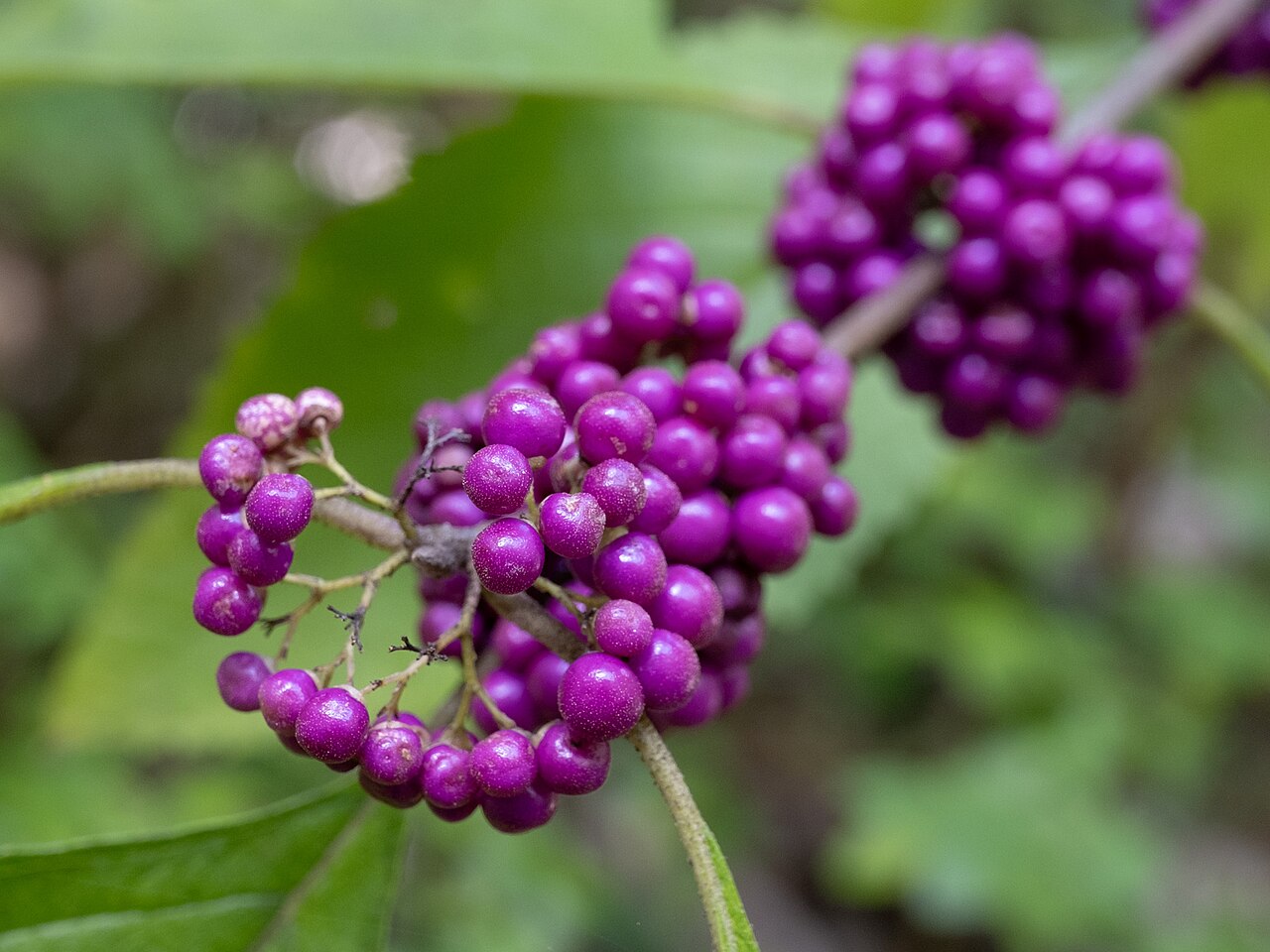
That gradient is exactly what two well-loved southern shrubs need. American beautyberry fruits best toward the sunny side, and spicebush prefers the moist, part-shaded side under the trees.
This plan places each plant where it does its best work and adds companions that are native to the Southeast, not just “eastern.” It covers Georgia, Alabama, Mississippi, the Carolinas and north Florida, and notes where you should swap plants based on your own county.
Plan at a Glance
| Site | The transition between open lawn and an existing tree line, creek edge or wooded lot |
| Size | Example bed about 40 feet long and 15 to 20 feet deep; scale the repeats up or down |
| Sun | Sun to part shade on the outer edge; part shade to shade under the canopy |
| Soil | Moist, well-drained loam or clay loam with leaf litter; one damp low spot is a bonus |
| Maintenance | Low after year two: a late-winter cut on beautyberry, sucker control, path upkeep |
| Best regions | Piedmont and upper Coastal Plain of GA, AL, MS, SC and NC, plus north Florida; most plants also suit VA, TN and AR |
Why This Is a Southeastern Plan
Beautyberry is the plant that defines the region here. The Lady Bird Johnson Wildflower Center gives its native range as Virginia to Arkansas, south to Florida and east Texas, so it is not a native choice for Ohio or New England gardens.
Spicebush has a much larger range, from southwestern Maine and Michigan south to Florida and southeast Texas. Overlap the two ranges and you get the Southeast and the lower Mid-South, which is where this design belongs.
Every companion below was checked against the Wildflower Center’s distribution records or NC State’s Plant Toolbox for the same states. If you garden north of Virginia, use our spicebush woodland-edge plan instead, since it builds on plants that reach farther north.
Read the Edge Before You Draw Anything
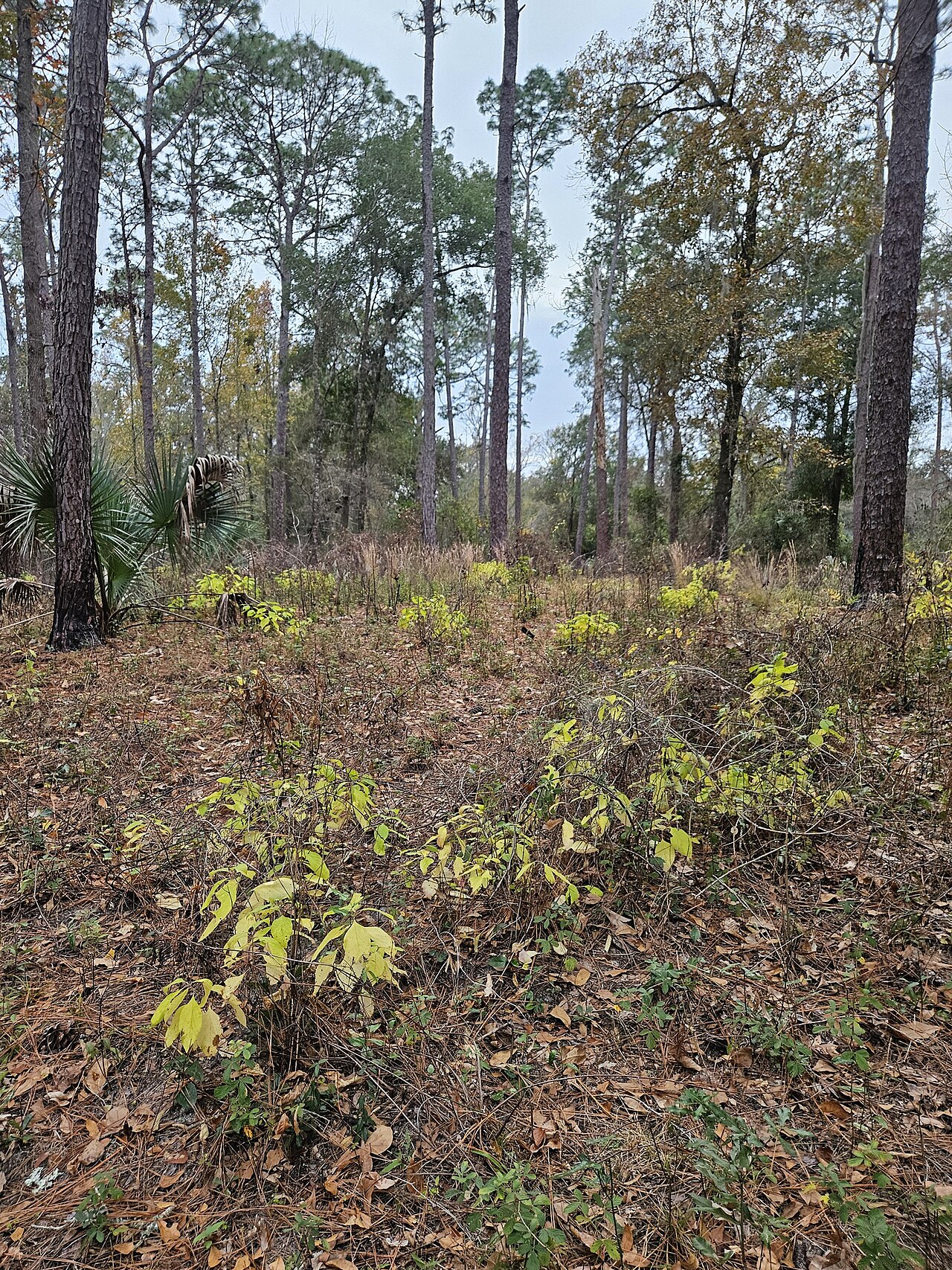
Walk the edge at mid-morning and again in late afternoon in early summer. Mark three zones with flags: the sunny outer band, the dappled middle and the shaded band under the drip line.
Next, find the wettest spot. After a heavy rain, note where water sits for a day or more. In clay Piedmont soils this is often the low corner, and in the Coastal Plain it may be a swale running toward a ditch.
Finally, check the soil texture with a trowel. NC State notes that sweetshrub struggles in sandy soil and drought, while beautyberry grows in most soils as long as drainage is good. That single test tells you whether the plan below needs a sand-tolerant swap.
Layer 1: Sunny Outer Edge for Beautyberry
NC State says beautyberry prefers full sun to part shade and is intolerant of deep shade. Its fruit forms on new shoots, so the plant needs enough light to grow vigorously each summer.
Set beautyberry in groups of three or five along the lawn side. NC State notes that plants seem to fruit more heavily when several are planted nearby, and a group also reads as a deliberate mass rather than a stray shrub.
NC State lists a mature size of 3 to 8 feet tall and 3 to 6 feet wide. Planting about 4 to 5 feet apart lets the arching stems meet without crowding. If you already grow beautyberry in a shadier bed, our guide to part-shade companions for beautyberry covers that version of the layout, and our Piedmont front-yard shrub plan uses it in full sun near the house.
Layer 2: Spicebush in the Moist, Dappled Band
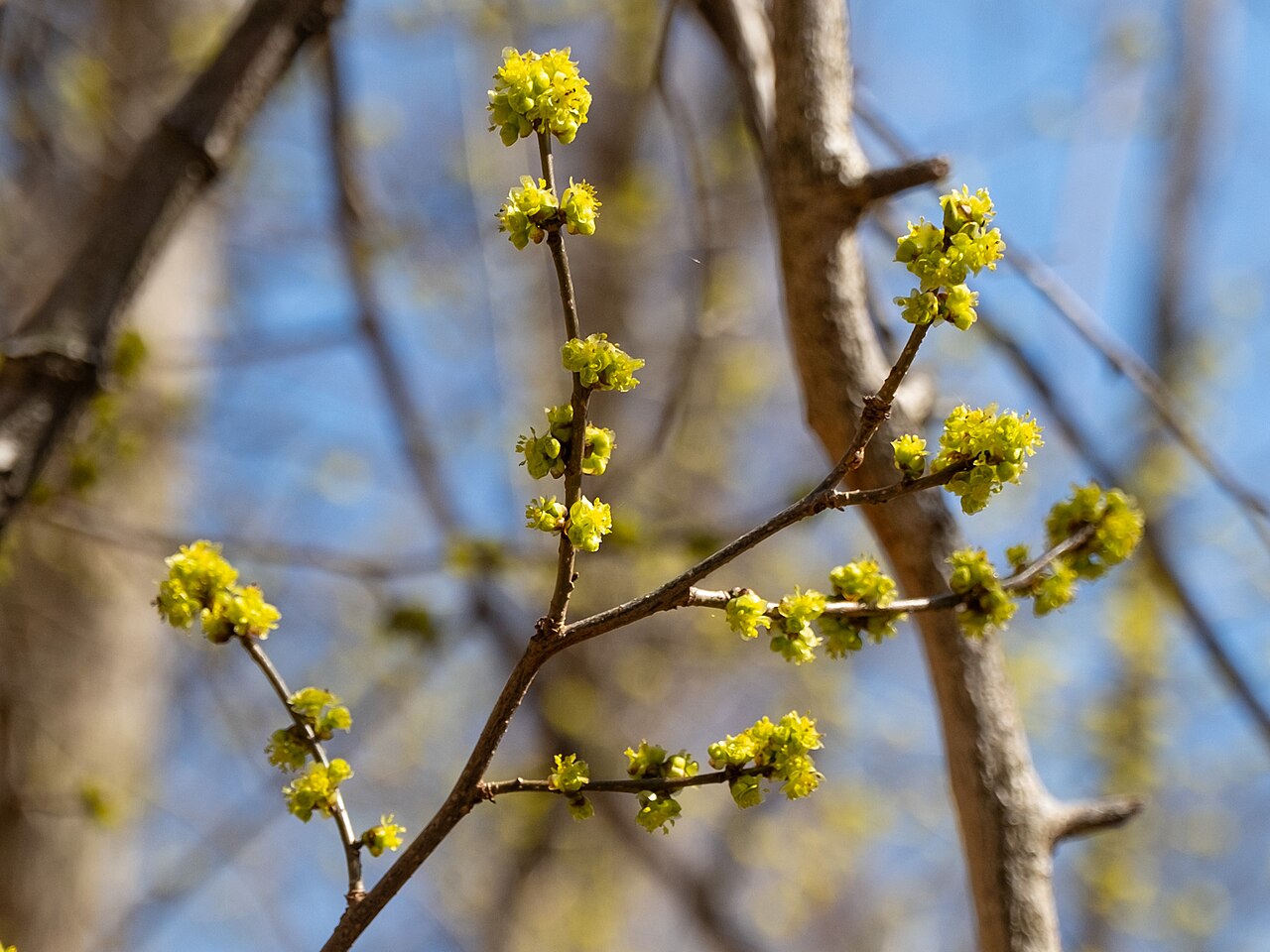
Spicebush grows naturally in low deciduous woods, along stream banks and in swamps, according to the Wildflower Center. NC State recommends moist, well-drained soil in part shade and notes the plant needs more watering in full sun.
Plant it 8 to 12 feet back from the lawn, where the canopy breaks the afternoon sun. NC State gives an average size of 6 to 12 feet tall and wide, so space plants about 8 feet apart.
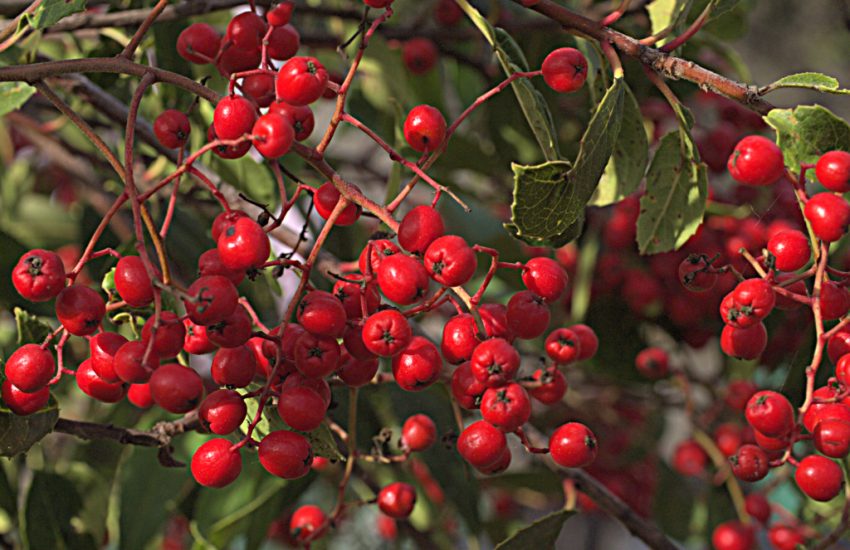
Spicebush is dioecious: a male plant is needed for the female to set its red fruit. Plant at least three, ideally from seed-grown stock, to improve your odds of getting both sexes.
One southeastern caution: NC State lists spicebush as susceptible to laurel wilt, the disease that has killed many redbay trees along the Georgia and South Carolina coast. In Coastal Plain counties, ask your county extension office about local laurel wilt activity before you build the whole back row on spicebush.
Layer 3: A Small Tree to Bridge Canopy and Shrubs
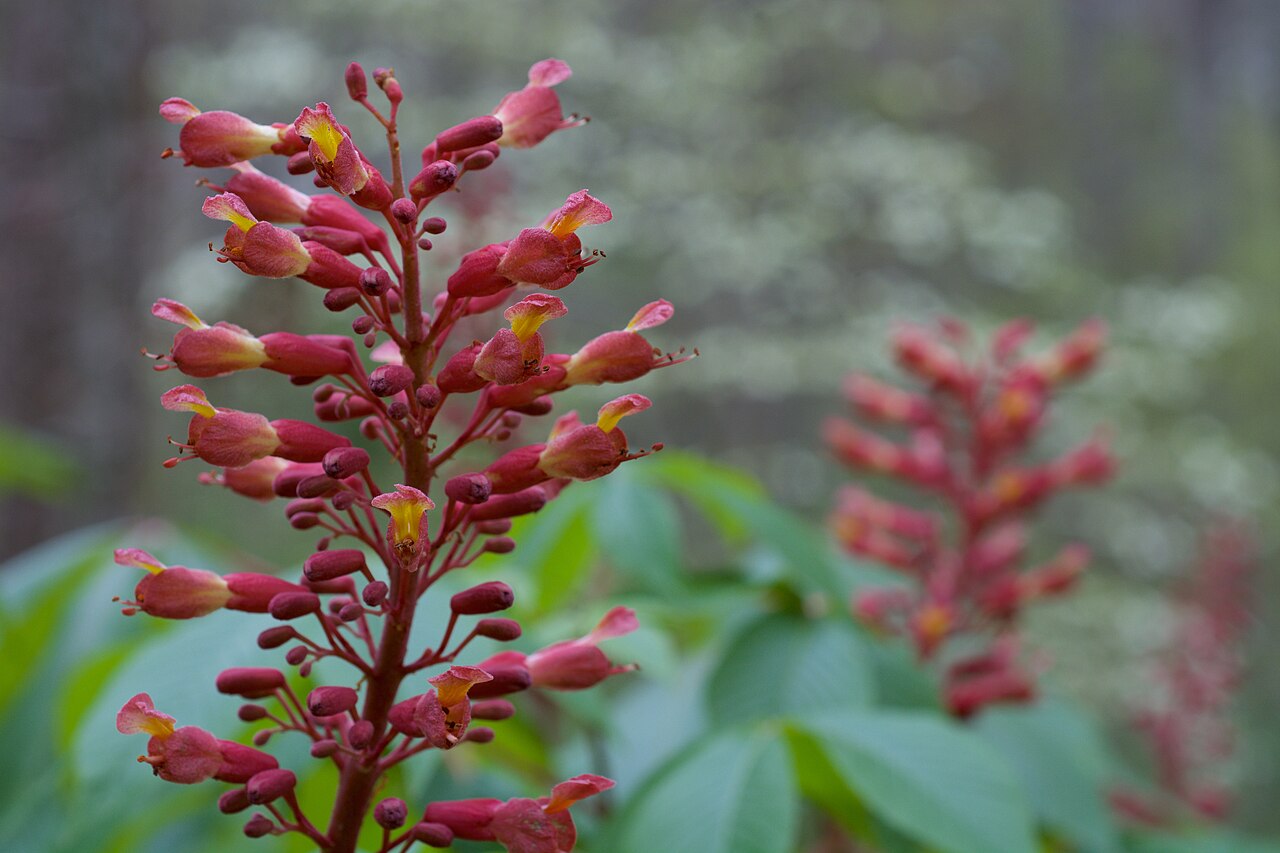
A woodland edge looks unfinished without something between shrub height and the big trees. Choose one small tree for a 40-foot bed, two for a longer run.
Red buckeye is a strong southern choice. NC State describes it as native to the coastal and Piedmont areas of North Carolina, 15 to 25 feet tall, preferring part shade and moist, well-drained soil. Its red flower clusters attract hummingbirds and butterflies in early spring.
Plan around two quirks. Its leaves usually fall by the end of September, so set it behind shrubs that stay green into fall. NC State also rates all parts as highly toxic if eaten, including the seeds, so keep it away from play areas.
Flowering dogwood is the alternative. NC State gives 15 to 25 feet and notes that Piedmont plantings need more shade, especially in the afternoon, plus a 2- to 4-inch layer of mulch to keep roots cool.
Layer 4: Fill Shrubs for Fragrance and Wet Spots
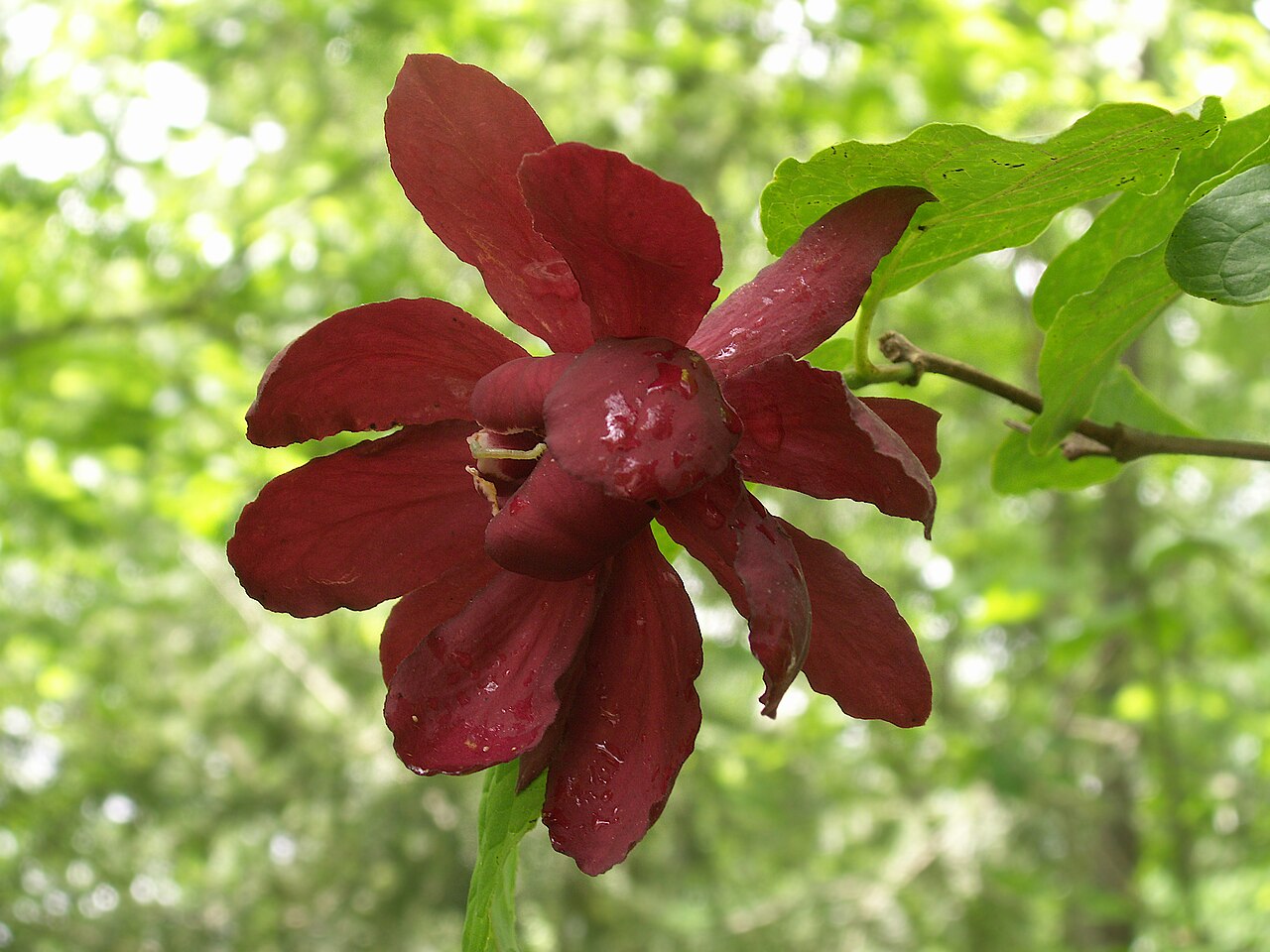
Sweetshrub, also called Carolina allspice, fills the shaded band between spicebush plants. NC State describes it as a southeastern shrub of shady woods and streambanks that grows 6 to 12 feet tall and wide.
It grows from full sun to deep shade, but prefers shade on hot summer afternoons. NC State advises planting it at least 6 feet from other shrubs and removing suckers unless you want it to spread.
Put Virginia sweetspire in the damp low spot you flagged. The Wildflower Center lists its native habitat as wet, wooded stream banks and swamps, and NC State notes it tolerates periodic flooding and forms colonies by root suckering, 4 to 8 feet tall.
Layer 5: Ground Layer and Path Edge
Bare mulch between shrubs invites weeds. A ground layer covers the soil and ties the zones together visually.
Christmas fern anchors the shaded band. The Wildflower Center gives a normal height of 1.5 to 2 feet and a preference for part shade to shade in moist, humus-rich soil, and it stays green through winter.
Woodland phlox edges the path in spring. The Wildflower Center describes its range as reaching south to North Carolina and Alabama, so it fits best in Piedmont and upland gardens; in the lower Coastal Plain, use more Christmas fern instead.
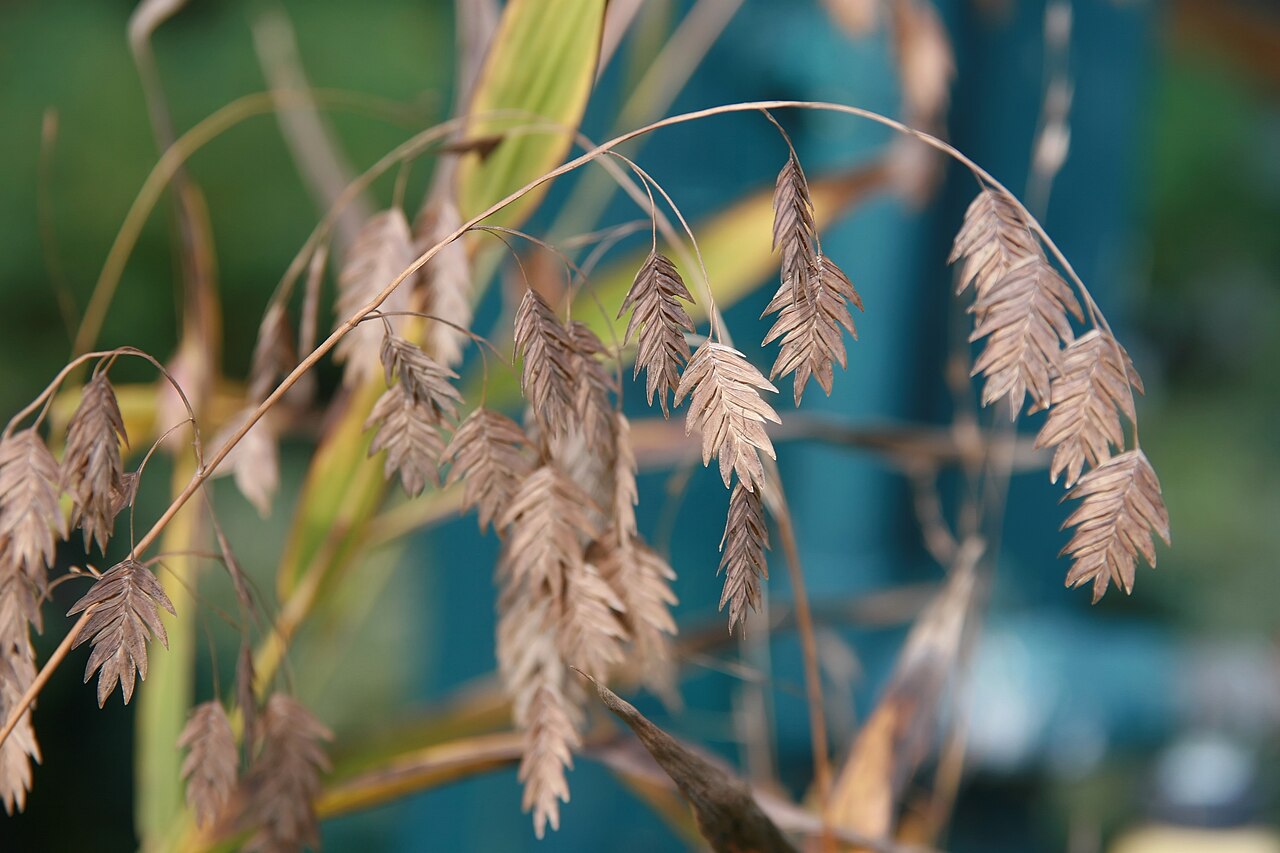
Inland sea oats gives the edge movement in late summer. NC State lists a height of 2 to 5 feet in part sun to part shade, but warns it can spread aggressively by rhizomes and seeds, so use it only where it can form a drift between the beautyberry and the lawn.
Plant Palette
| Plant | Role | Height | Sun / moisture | Native range |
|---|---|---|---|---|
| American beautyberry | Outer-edge fruiting shrub | 3–8 ft | Sun to part shade; moist, drained | VA to AR, south to FL and e. TX |
| Spicebush | Back shrub; early bloom, host plant | 6–12 ft | Part shade; moist | SW ME, MI, SE KS south to FL and SE TX |
| Red buckeye | Small tree; spring hummingbird flowers | 15–25 ft | Part shade; moist, drained | NC to n. FL, west to c. TX, north to s. IL |
| Flowering dogwood | Alternate small tree | 15–25 ft | Part shade; rich, drained | FL to e. TX, north to s. ME and s. IL |
| Sweetshrub | Fragrant fill shrub | 6–12 ft | Sun to shade; avoid dry sand | Southeastern U.S. |
| Virginia sweetspire | Wet-spot shrub | 4–8 ft | Part shade to sun; moist to wet | S. NJ to KY, s. IL, MO, OK, south to FL and TX |
| Christmas fern | Evergreen ground layer | 1.5–2 ft | Part shade to shade; moist | N.S. to SE MN, south to c. FL and e. TX |
| Woodland phlox | Spring path edging | to 20 in | Part shade to shade; moist | SW Que. to MI, south to NC and AL |
| Inland sea oats | Late-season grass drift | 2–5 ft | Part sun to part shade; moist | PA to n. FL, west to s. IL, e. KS, c. TX |
Heights from NC State Plant Toolbox or the Wildflower Center; ranges from the Wildflower Center (sweetshrub from NC State).
Example Quantities for a 40 × 18 ft Edge
| Small tree | 1 red buckeye or flowering dogwood, set off-center in the middle band |
| Spicebush | 3 to 4 plants, about 8 ft apart in the back band |
| Sweetshrub | 1 to 2 plants between spicebush, at least 6 ft from neighbors |
| Virginia sweetspire | 3 plants in the wettest spot, about 4 ft apart |
| American beautyberry | 5 plants in two groups along the lawn side, 4 to 5 ft apart |
| Ground layer | 10 to 12 Christmas ferns in shade, 12 to 15 woodland phlox along the path, 5 inland sea oats in one sunny drift |
Plan a Path Before You Plant
A woodland edge is easier to enjoy and maintain with one curving path running through the middle band. Keep it at least 3 feet wide and lay leaf mulch or pine straw on it so it reads as a path, not a gap.
Set the shrub centers far enough back that mature branches do not close it. For spicebush, that means planting at least 4 to 6 feet from the path edge; our guide to pruning spicebush near a walkway covers selective cuts if one leans in anyway.
Installation Steps
- Plant in late fall or early spring. NC State says most container plants do best, and need the least watering, when planted at those times.
- Remove lawn, not the leaf litter. Strip turf from the outer band. Leave existing leaf litter under the trees.
- Place the tree first, then shrubs, then ground layer. Set pots out and walk the path before you dig.
- Dig wide, not deep. NC State’s ideal hole is only as deep as the root ball and at least two to three times wider.
- Mulch and water. Apply 2 to 3 inches of organic mulch, kept 6 inches from stems, and water deeply right away.
The First Three Years
Year one: Water is the main job. NC State advises 3 to 5 gallons twice a week for 1- to 3-gallon shrubs during establishment when it does not rain. Pull weeds before they set seed.
Year two: In late winter, cut beautyberry back hard. NC State recommends cutting it to about 1 foot high, since flowers and fruit form on new shoots; the plant regrows and blooms the same summer. Remove sweetshrub suckers you don’t want, and prune sweetspire only after it flowers.
Year three: Edit, don’t add. Thin inland sea oats seedlings that move into the path, divide crowded phlox and let the shrubs knit together. During long dry spells, NC State suggests watering established woody plants every 10 days.
Mistakes to Avoid
- Beautyberry in deep shade. It survives but fruits poorly. Keep it on the bright side.
- One spicebush. Without a male nearby, a female plant sets no fruit.
- Red buckeye beside a play area. All parts are toxic if eaten.
- Inland sea oats in a tidy bed. It self-sows and spreads by rhizomes.
- Asian beautyberries. Nursery “beautyberry” can mean Asian species; check the label for Callicarpa americana.
- Summer planting. NC State notes late-spring and summer transplants are the most vulnerable to drought.
Regional swaps: In the mountains or upper Piedmont, swap inland sea oats for more Christmas fern and woodland phlox. In sandy Coastal Plain soils, drop sweetshrub and add more beautyberry, which NC State lists for sand, clay and loam. In Arkansas and Louisiana, most of these plants also appear in the Wildflower Center’s state records, but check your state list before you buy.
📋 Find these plants in your region: see our native plant lists for Georgia, Alabama & Mississippi and North & South Carolina. Each list includes several of the shrubs and ground-layer plants in this plan.
Frequently Asked Questions
Can beautyberry and spicebush grow side by side?
Yes, at a woodland edge. Give beautyberry the sunnier outer band and spicebush the moister, shadier band a few feet back. Both are native across most of the Southeast.
How deep should a woodland-edge bed be?
About 15 to 20 feet lets you fit a small tree, a shrub layer and a ground layer without crowding. A narrower strip can still work with beautyberry and ground-layer plants only.
Is American beautyberry native to my state?
The Wildflower Center gives its range as Virginia to Arkansas, south to Florida and east Texas. North of that range, choose another fruiting shrub that is native to your area.
Why are my spicebush plants not producing berries?
Spicebush needs male and female plants. Plant three or more, and see our guide to spicebush that flowers but sets no berries if established plants still don’t fruit.
When should I plant a woodland edge in the South?
Late fall or early spring. NC State says container plants set at those times need the least watering and get established before summer heat.
Sources
- Lady Bird Johnson Wildflower Center plant database: Callicarpa americana, Lindera benzoin, Aesculus pavia, Cornus florida, Itea virginica, Polystichum acrostichoides, Phlox divaricata, Chasmanthium latifolium: native ranges, habitats, light and moisture, sizes.
- North Carolina Extension Gardener Plant Toolbox: American beautyberry, spicebush, red buckeye, flowering dogwood, Carolina allspice, Virginia sweetspire, river oats: sizes, light, pruning, toxicity, spreading habits, laurel wilt susceptibility.
- NC State Extension Gardener Handbook, Chapter 11: Woody Ornamentals: planting timing, hole width, mulch depth and distance, establishment watering.
- Wikipedia, Laurel wilt: spread in Georgia and South Carolina and its effect on redbay.