
Rice Button Aster (Symphyotrichum dumosum)
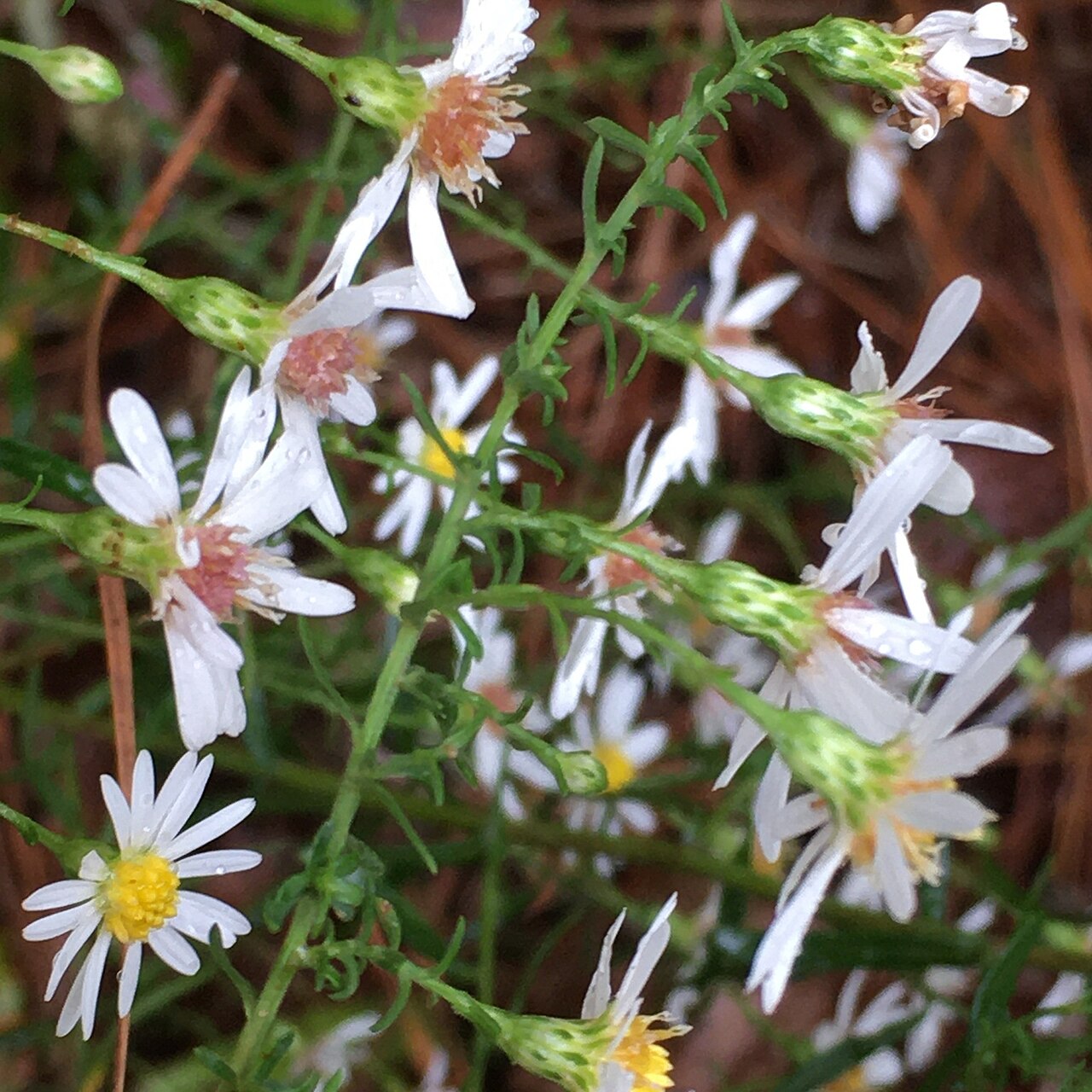
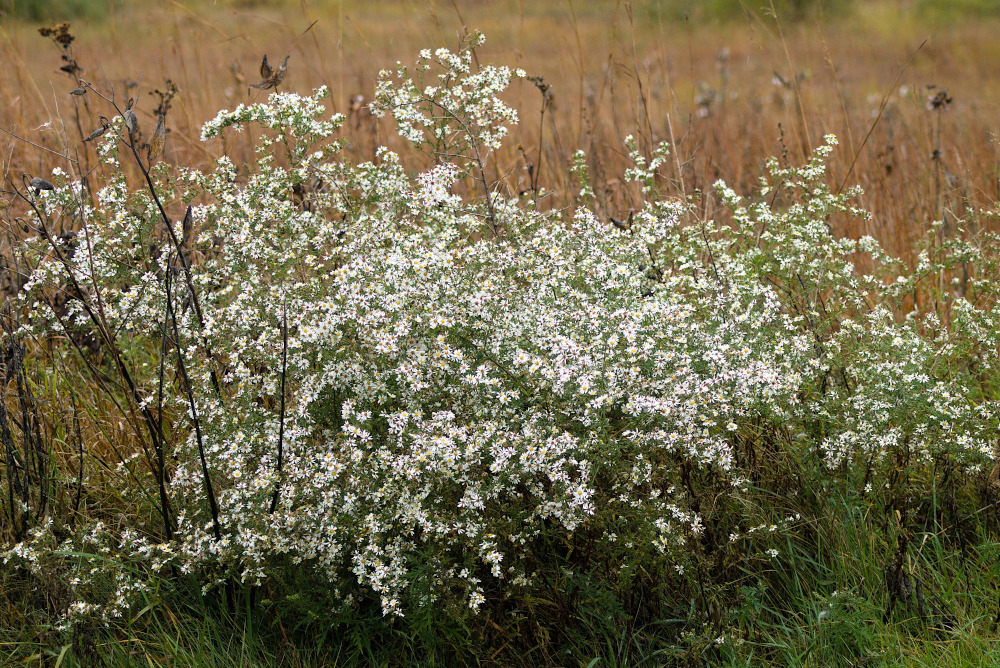
Symphyotrichum dumosum, known as Rice Button Aster or bushy aster, is a fall-blooming native aster of sandy, open ground in eastern North America. It forms a much-branched, airy plant 1 to 3 feet tall, covered from late summer into late fall with hundreds of small white to pale lavender daisies, each with a yellow center that turns reddish-purple with age. The leaves on its many side branches are tiny and crowded, like grains of rice, which is one explanation for its common name. It belongs to the aster family (Asteraceae) and was long known as Aster dumosus.
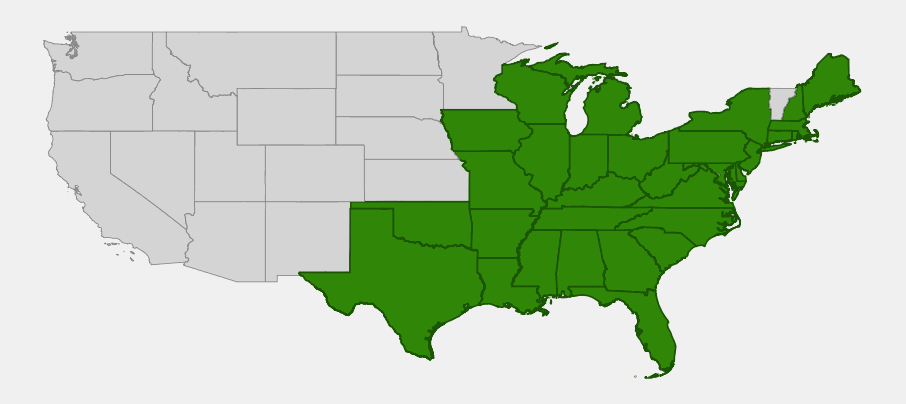
Rice button aster grows from Maine, southern Ontario and Michigan south to Florida and west to Missouri, Oklahoma and Texas. It is most common on the Atlantic and Gulf Coastal Plain, in pine flatwoods and savannas, sandy fields, the edges of marshes and ponds, and roadsides. In Florida it is one of the most widespread fall asters, found throughout the state.
For gardeners, it is a tough, adaptable native that brings late-season flowers to sunny, sandy beds and meadows when few other plants are blooming. The Xerces Society notes its special value to native bees. This guide covers how to identify it, where it grows, how to grow it and how it supports pollinators.
Identification
There are many small white asters in eastern North America, and they are notoriously hard to tell apart. Rice button aster is identified by the combination of slender, much-branched stems, long flower stalks covered in tiny leaf-like bracts, and small heads with several rows of green-tipped bracts.
Stems & Habit
Rice button aster is a perennial that grows from creeping rhizomes and can form loose colonies. The stems are slender, 1 to 3 feet tall (occasionally taller), and branch repeatedly in the upper half, giving the plant a bushy, open outline. Stems are smooth to slightly hairy.
Leaves
The main stem leaves are narrow, linear to lance-shaped, mostly 1 to 3 inches long, and often wither by flowering time. The leaves on the branches are much smaller, often less than ½ inch long, stiff and crowded, and the flower stalks are covered with even smaller, bract-like leaves. This combination of long stem leaves and many tiny branch leaves is a good field mark.
Flowers
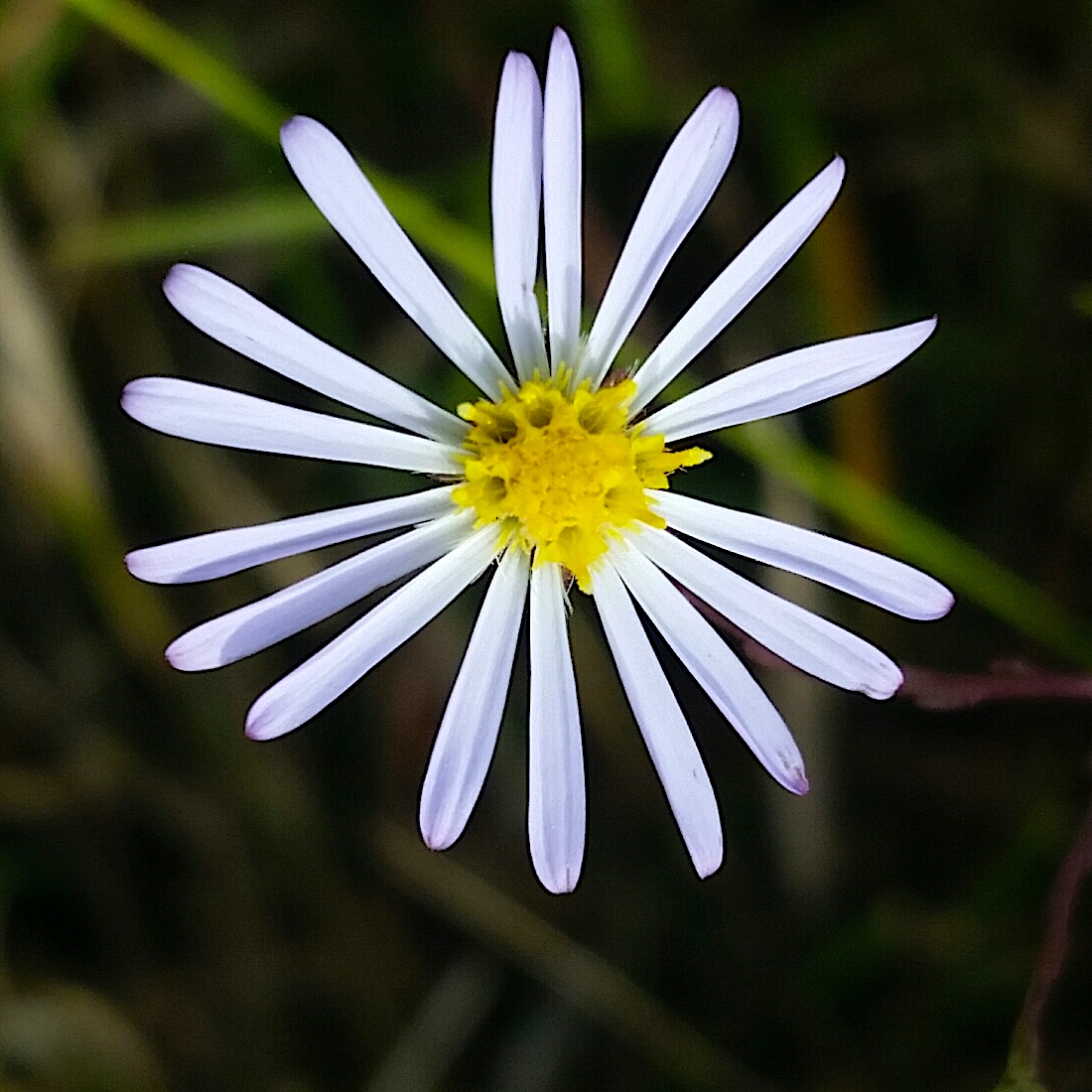
The flower heads are about ½ to ¾ inch wide and borne singly at the tips of long, slender stalks along the branches. Each has about 13 to 30 narrow ray florets, white to pale lavender or bluish, around a disc of yellow florets that turn reddish-purple after pollination. The bracts under the head are arranged in several overlapping rows, each with a green, diamond-shaped tip. Flowering is mainly from August into November, and into December in Florida.
Calico aster (S. lateriflorum) has its heads arranged along one side of the branches and broader leaves. Heath Aster (S. ericoides) has stalkless heads crowded along the branches and grows in drier prairies. Frost Aster (S. pilosum) has spiny-tipped bracts and is often hairy.
Fruit & Seeds
Each disc and ray floret produces a small, dry, single-seeded fruit (cypsela) topped with a tuft of white or tan bristles. The seeds ripen in late fall and are dispersed by wind.
Quick Facts
| Scientific Name | Symphyotrichum dumosum (L.) G.L. Nesom (syn. Aster dumosus) |
| Family | Asteraceae (aster family) |
| Plant Type | Herbaceous perennial wildflower |
| Mature Height | 1–3 ft |
| Mature Spread | 1–2 ft; slowly spreads by rhizomes |
| Growth Rate | Moderate |
| Sun Exposure | Full sun to part shade |
| Water Needs | Low to medium; dry to moist sandy soils, tolerates periodic wetness |
| Soil Type | Sand, sandy loam; also loam and clay |
| Soil pH | Acidic to near neutral (about 5.0–7.0) |
| Bloom Time | August–November (into December in Florida) |
| Flower Color | White to pale lavender rays; yellow discs aging reddish-purple |
| Fall Color | None of note |
| Fruit | Small dry seed (cypsela) with a tuft of bristles |
| Deer Resistant | Moderately; deer sometimes browse asters |
| USDA Hardiness Zones | 4–10 |
Native Range
Rice button aster has a broad eastern range. USDA PLANTS and the Lady Bird Johnson Wildflower Center record it from 31 states and the District of Columbia, from Maine, New Hampshire and Wisconsin south to Florida and west to Iowa, Missouri, Oklahoma and Texas, and in Canada from southern Ontario and New Brunswick. The Wildflower Center summarizes its distribution as “Maine south to Florida and west to Texas, mainly coastal; north through Illinois and Indiana to Michigan.”
It is most common on the Atlantic and Gulf Coastal Plain, where it grows in pine flatwoods and savannas, sandy fields, the edges of ponds, marshes and bogs, and along roadsides. Farther inland it is local, occurring in sandy prairies, barrens and the dunes and sand plains of the Great Lakes region. In Florida it grows throughout the state.
It is a highly variable species. Botanists have named several varieties based on leaf size, hairiness and the length of the flower stalks, including var. dumosum, var. coridifolium, var. gracilipes, var. subulifolium and var. strictior. Gardeners need not worry about the varieties, but buying plants grown from local seed gives the best adapted stock.
📋 Regional plant lists featuring Rice Button Aster: North & South Florida · Alabama, Georgia & Mississippi · North & South Carolina · Maryland, Virginia & West Virginia · Kentucky & Tennessee · Arkansas, Louisiana, Eastern Oklahoma & Eastern Texas · Illinois, Iowa & Missouri · Ohio & Indiana · Michigan, Wisconsin & Eastern Minnesota · New York, Pennsylvania & Northern New Jersey · Delaware, Southern New Jersey & Long Island · Connecticut, Massachusetts & Rhode Island · New Hampshire, Maine & Vermont
Growing & Care Guide
Rice button aster is easy to grow and adapts to most sunny garden sites, especially sandy ones. It is available from native plant nurseries, particularly in Florida and the Southeast, and it is simple to grow from seed.
Light
Full sun gives the densest, most floriferous plants. It tolerates part shade, but the stems become lanky and lean toward the light.
Soil & Water
It does best in well-drained sandy or loamy soil and tolerates both dry spells and periodic wet soil, reflecting its wide range of natural habitats from dry fields to pond margins. Water during establishment. After that it rarely needs irrigation except in prolonged drought. Rich soil and fertilizer produce floppy plants.
Planting Tips
Plant in spring or fall, about 18 inches apart. It looks best in groups or drifts in a meadow, a pollinator garden, or the back of a sunny border, where its cloud of small flowers can fill space between grasses and other fall bloomers such as goldenrods, blazing stars and native grasses.
Pruning & Maintenance
To keep plants shorter and bushier, cut them back by about a third in early summer, before flower buds form. Leave the seed heads standing through winter for birds and for overwintering insects in the hollow stems, and cut back old stems in late winter. Divide clumps every few years if they become crowded.
Propagation
Divide established clumps in early spring. It can also be grown from seed collected in late fall when the fluffy seed heads are dry. Sow outdoors in fall, or cold-stratify seed in moist sand in the refrigerator for about four to eight weeks before spring sowing. Seedlings often bloom in their first or second year.
Landscape Uses
- Pollinator gardens: a late-season nectar and pollen source for native bees and butterflies
- Meadows and naturalized areas: fills sunny, sandy spaces with fall flowers
- Coastal plain restoration: in pine flatwoods, savannas and old field restoration
- Rain garden edges: tolerates both dry spells and periodic wet soil
- Cut flowers: sprays of small daisies for fall arrangements
Wildlife & Ecological Value
Like other asters, rice button aster is one of the most important fall food sources for insects, and its long bloom period extends into weeks when little else is flowering.
For Pollinators
The Xerces Society lists it as having special value to native bees. Its flowers attract many small bees, including sweat bees, mining bees and bumble bees, as well as honey bees, syrphid flies, wasps and butterflies such as skippers, sulphurs and migrating monarchs in the South. Asters as a group are host plants for the caterpillars of the pearl crescent butterfly and many moths.
For Birds
Small seed-eating birds such as goldfinches and sparrows eat the seeds in late fall and winter. The insects that visit the flowers feed warblers and other migrating songbirds.
For Mammals
Deer and rabbits may browse the foliage, though plants usually recover. Small mammals use the dense stems for cover.
Ecosystem Role
As a late-season bloomer, rice button aster helps sustain pollinators preparing for winter, including bumble bee queens and migrating butterflies. In fire-maintained pine flatwoods and savannas, it resprouts readily after burns and is part of the diverse herbaceous groundcover.
Cultural & Historical Uses
Linnaeus described this plant as Aster dumosus in 1753. The Latin dumosus means “bushy” or “full of brambles,” describing its much-branched habit. In 1994 botanist Guy Nesom moved most North American asters, including this one, into the genus Symphyotrichum, a split later supported by DNA studies, and many field guides and nurseries still use the older name.
Bushy aster has a long history in European gardens. Crosses between it and the New York aster (S. novi-belgii) produced many of the compact “dwarf Michaelmas daisies” and “cushion asters” that are sold today. The wild species is airier and less tidy than those cultivars, but it is better adapted to Southern heat and sandy soils.
The name “rice button aster” refers to its small, button-like flower heads and the tiny, rice-grain-like leaves crowded on the branches. It is one of several white asters that make Southern fields and flatwoods look frosted in late fall.
Frequently Asked Questions
Why is it called rice button aster?
The name refers to its small, button-like flower heads and the tiny leaves crowded on its branches, which look like grains of rice. It is also called bushy aster, from its many-branched habit and its Latin name dumosum.
When does rice button aster bloom?
From late summer through fall, mainly August to November. In Florida it often continues blooming into December.
Is rice button aster good for pollinators?
Yes. The Xerces Society lists it as having special value to native bees, and it also feeds butterflies, flies and wasps in fall.
Does rice button aster spread?
It spreads slowly by rhizomes and can self-seed, forming loose colonies. It is not aggressive in most gardens.
Is Aster dumosus the same plant?
Yes. Aster dumosus is the older name. Botanists now place North American asters like this one in the genus Symphyotrichum.

Looking for a nursery that carries Rice Button Aster?
Browse our native plant nursery directory: Alabama & Arkansas · Connecticut, Delaware, Florida & Georgia · Illinois, Indiana & Iowa · Kentucky, Louisiana, Maine, Maryland, Massachusetts, Michigan, Mississippi & Missouri · New Hampshire, New Jersey, New York, North Carolina, Ohio & Oklahoma · Pennsylvania, Rhode Island, South Carolina, Tennessee, Texas & Virginia · West Virginia & Wisconsin