
White Bog Orchid (Platanthera dilatata)
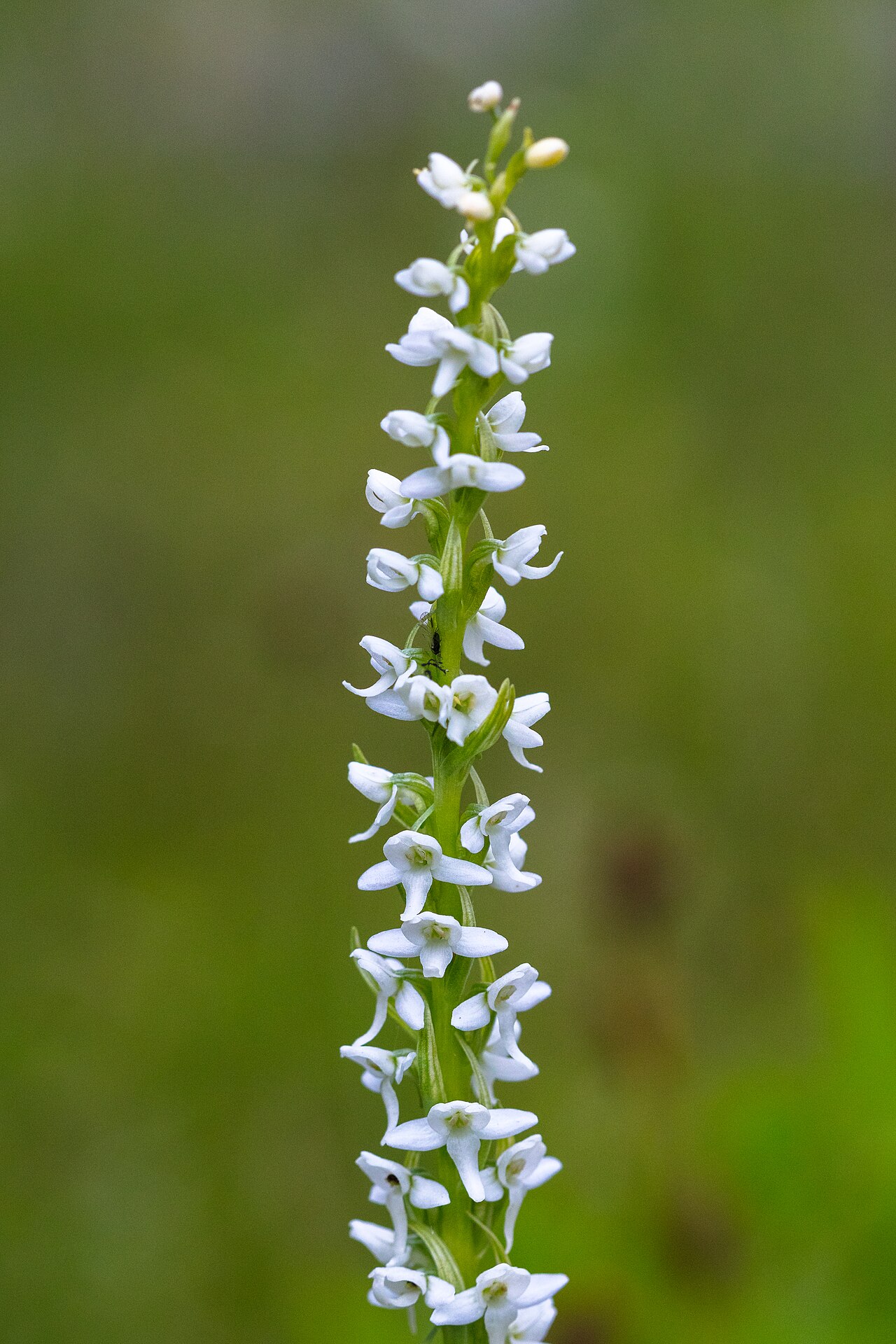
Platanthera dilatata, known as White Bog Orchid, scentbottle (the USDA name), bog candle, tall white bog orchid or leafy white orchis, is a native terrestrial orchid of wet, open places across northern and western North America. In early to midsummer a leafy stalk, usually 1 to 3 feet tall, carries a dense spike of small, pure white, intensely fragrant flowers that glow like a candle among the sedges.
It grows in bogs, fens, wet meadows, seeps, streambanks, lakeshores and wet tundra, from Alaska and the Yukon south through the Rocky Mountains, Sierra Nevada and Cascades to California, Arizona and New Mexico, and east across Canada and the Great Lakes states to New England and Newfoundland. The species name dilatata means “widened” and refers to the base of the flower’s lip.
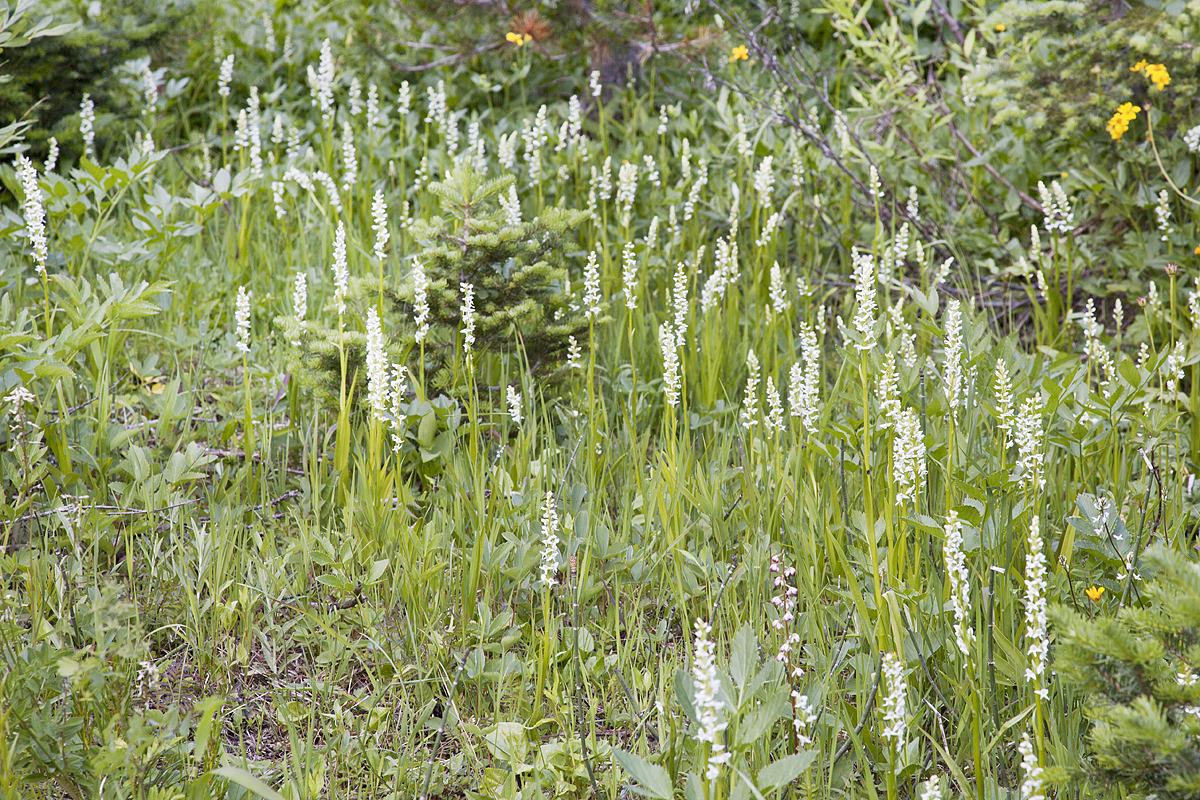
White bog orchid is one of the most common native orchids of the West, and in good mountain meadows it can number in the thousands. Like other wild orchids, though, it depends on soil fungi and specific wetland conditions. This page is mainly an identification and appreciation guide. Wild plants should never be dug, and it is very rarely available as legally propagated nursery stock.
Identification
Several white-flowered bog orchids grow in the same habitats, and they can be hard to tell apart. White bog orchid is recognized by its pure white flowers, strong spicy fragrance and a lip that widens abruptly at the base.
Roots & Stems
Each plant grows from a cluster of fleshy, tuber-like roots. The flowering stem is stout, hollow, smooth and leafy, usually 1 to 3 feet tall, occasionally taller in rich wet meadows and only a few inches tall in alpine sites.
Leaves
Several leaves grow along the stem. They are lance-shaped to linear, fleshy, upright, 2 to 10 inches long at the base of the stem and becoming smaller toward the top, where they grade into bracts among the flowers.
Flowers
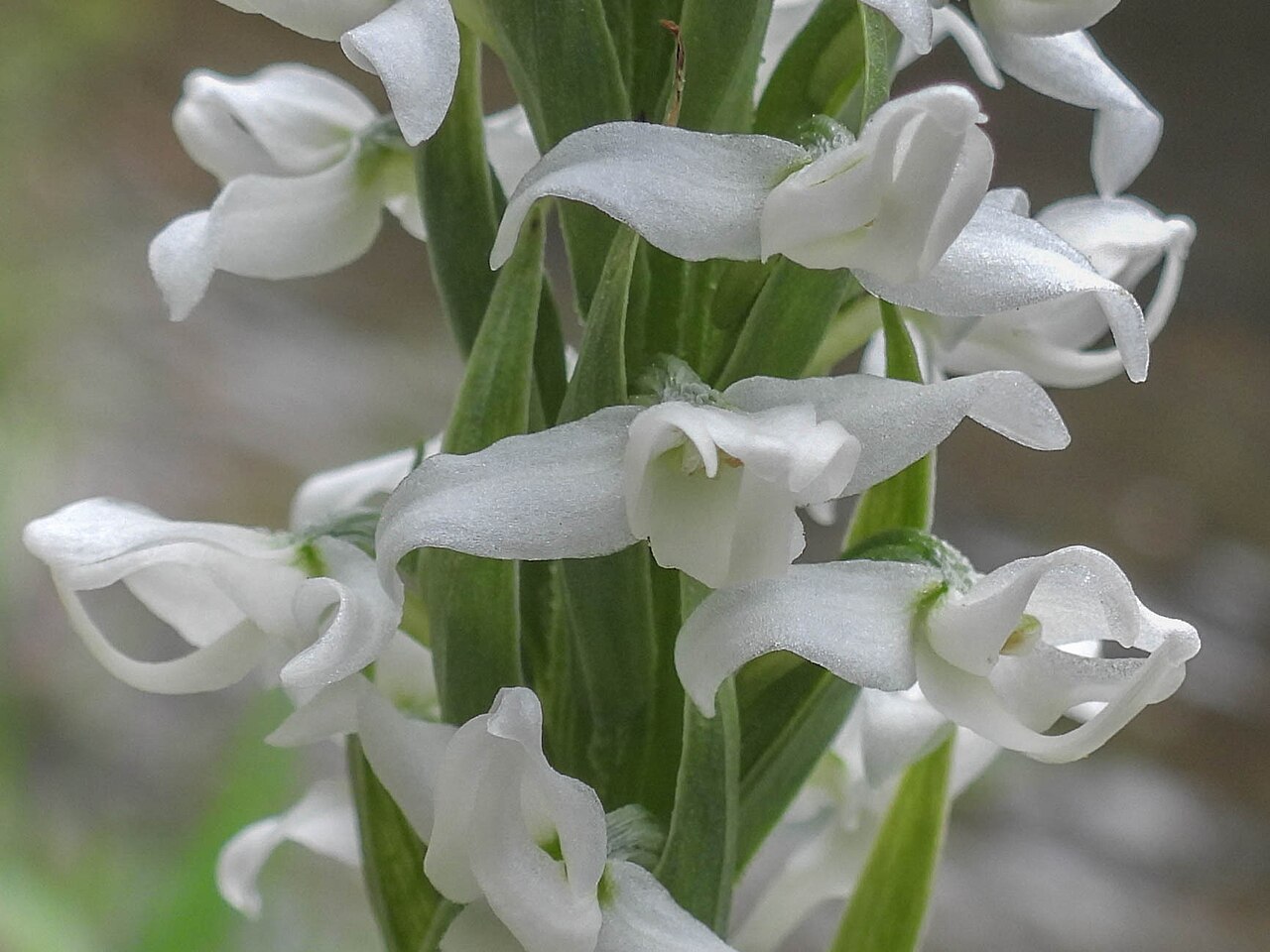
The flowers are crowded in a dense spike several inches to a foot long. Each is small, about ½ inch long, and pure white, sometimes with a slight greenish tinge. The upper sepal and two petals form a hood, and the lip hangs down, narrow and tongue-like but abruptly widened into a rhombic base. A slender nectar spur curves down behind it. The flowers have a strong, spicy, clove-like scent, especially in the evening, which gives the plant its names scentbottle and bog candle. Bloom runs from June to August, later at high elevations and in the North.
Three varieties are recognized. Var. dilatata, the widespread form, has a spur about as long as the lip. Var. leucostachys (Sierra bog orchid), of the Sierra Nevada, Cascades and other western ranges, has a spur up to about twice as long as the lip. Var. albiflora, of the Pacific Northwest coast, has a very short, sac-like spur.
Fruit & Seeds
Pollinated flowers ripen into small, upright capsules filled with thousands of dust-like seeds. Like all orchid seeds, they lack stored food and can only germinate with the help of compatible soil fungi.
Quick Facts
| Scientific Name | Platanthera dilatata (syn. Habenaria dilatata, Limnorchis dilatata) |
| Family | Orchidaceae (orchid family) |
| Plant Type | Terrestrial orchid; herbaceous perennial from fleshy roots |
| Mature Height | 1–3 ft in flower (smaller in alpine sites) |
| Mature Spread | 4–8 in per plant |
| Growth Rate | Slow |
| Sun Exposure | Full sun to part shade |
| Water Needs | High; constantly wet, often seepy soil |
| Soil Type | Wet peat, muck, mossy or mineral soils of bogs, fens and wet meadows |
| Soil pH | About 5.0–8.0 (acid bogs to alkaline fens) |
| Bloom Time | June–August |
| Flower Color | Pure white |
| Fall Color | None; plants wither in late summer |
| Fruit | Upright capsule with dust-like seeds |
| Deer Resistant | No; deer and elk browse flower spikes |
| USDA Hardiness Zones | 2–7 |
Native Range
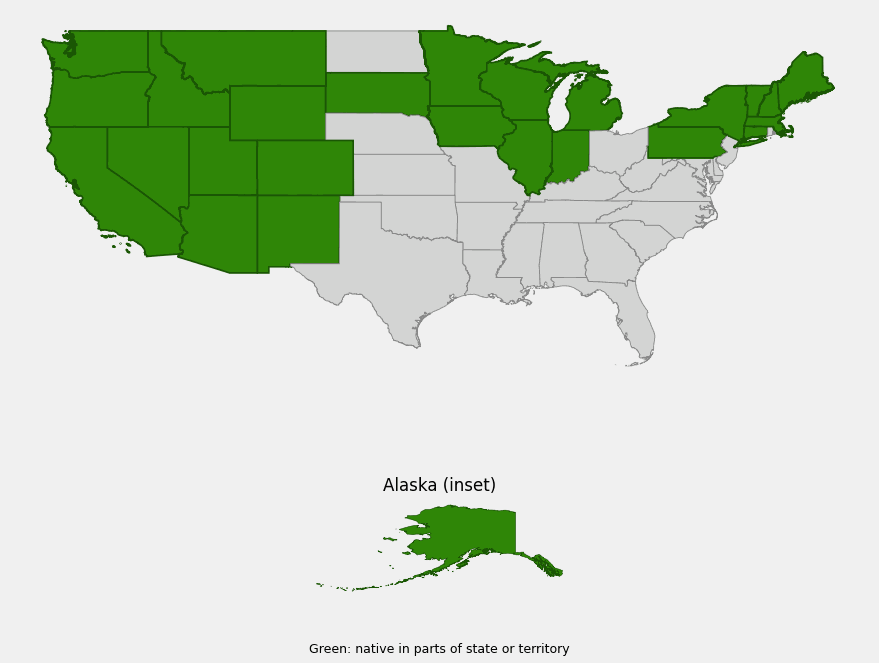
USDA PLANTS records white bog orchid as native in 26 states. In the West it occurs in Alaska, Washington, Oregon, California, Nevada, Idaho, Montana, Wyoming, Utah, Colorado, Arizona, New Mexico and South Dakota’s Black Hills. In the East it ranges through Minnesota, Wisconsin, Iowa, Illinois, Indiana, Michigan, New York, Pennsylvania and New England. It grows across all of Canada, from British Columbia and the Yukon to Labrador and Newfoundland, and on the French islands of Saint Pierre and Miquelon.
It is most abundant in the mountains of the West and in the boreal North, where wet meadows, fens and seepy slopes are common. In the Sierra Nevada and Rocky Mountains it reaches subalpine and alpine meadows at about 11,000 feet. In the East it is a plant of northern bogs and fens and becomes rare toward the southern edge of its range in Iowa, Illinois, Indiana and Pennsylvania, where several states track it as a species of conservation concern.
Across its range it depends on cold, constantly wet, open ground. Drainage, grazing that tramples wet meadows, and changes in groundwater have reduced it locally, especially at lower elevations.
📋 Regional plant lists featuring White Bog Orchid: Alaska · Arizona & New Mexico · California & Nevada · Idaho, Eastern Oregon & Eastern Washington · Utah & Western Colorado · Montana & Wyoming · Western Oregon & Western Washington · Connecticut, Massachusetts & Rhode Island · New Hampshire, Maine & Vermont · New York, Pennsylvania & Northern New Jersey · Delaware, Southern New Jersey & Long Island · Illinois, Iowa & Missouri · Ohio & Indiana · Michigan, Wisconsin & Eastern Minnesota · North Dakota, South Dakota & Western Minnesota
Growing & Care Guide
White bog orchid is best enjoyed in the wild. It depends on specific soil fungi, cold, constantly moving groundwater and open wetland conditions that are very hard to recreate in a garden. Wild plants almost never survive digging, and collecting them harms populations and is illegal on most public lands. If you want to try it, look only for plants raised from seed in lab culture by specialist native orchid nurseries, and grow them in a carefully built bog or fen garden.
Light
In the wild it grows in full sun to light shade. In a garden bog, give it morning sun and some afternoon shade in warm climates.
Soil & Water
It needs soil that stays cold and wet all season, ideally with slowly moving water, as in a seep or fen. A mix of sphagnum peat, sand and some loam in a lined bog, kept wet with rainwater, is the usual approach. It does not tolerate drying out, heat or stagnant, warm water.
Planting Tips
Plant lab-propagated seedlings or dormant tubers in spring, with the growing tip just below the surface, among low sedges and mosses. Mark the spot, since plants die back in late summer and are easy to disturb.
Pruning & Maintenance
Keep the area wet, open and free of aggressive competitors. Do not fertilize. Leave flower stalks to ripen seed if you want to try for seedlings; otherwise cut them after bloom.
Propagation
Propagation is a job for specialists. Seed must be grown in sterile lab culture or with compatible fungi. Established clumps occasionally produce extra tubers, but dividing them is risky. Never collect plants or tubers from the wild.
Landscape Uses
- Wildflower viewing: one of the most common and fragrant orchids of western mountain meadows
- Wetland conservation: an indicator of healthy, intact fens, seeps and wet meadows
- Specialist bog gardens: only with legally lab-propagated plants and expert care
- Nature photography and botany outings: easy to find in bloom in many national parks in July
- Restoration: included only in carefully managed wetland projects using propagated material
Wildlife & Ecological Value
White bog orchid fills the evening air of wet meadows with its scent, and that perfume is aimed at a specific group of pollinators.
For Pollinators
The fragrant, nectar-filled spurs attract moths, especially small night-flying moths, as well as some butterflies and bees during the day. Pollen masses stick to the insect’s head or tongue as it feeds and are carried to other flowers. Varieties with different spur lengths are matched to insects with different tongue lengths.
For Birds
The plant has no direct food value for birds, but it grows in wet meadows and fens that support many birds, including sandpipers, snipe and songbirds.
For Mammals
Deer, elk and other browsers sometimes eat the flower spikes, and rodents may dig the fleshy roots. Heavy browsing can keep plants from setting seed in some years.
Ecosystem Role
White bog orchid depends on mycorrhizal fungi to germinate and, to some degree, throughout its life. It is part of the rich community of wetland plants that grow where cold groundwater reaches the surface, and its presence is often a sign of a wetland with intact water flow.
Cultural & Historical Uses
Frederick Pursh first described the plant in 1814 as Orchis dilatata. It was later placed in Habenaria and Limnorchis, and many older field guides use Habenaria dilatata. The genus name Platanthera means “broad anther.”
The common names “scentbottle” and “bog candle” describe the plant’s two most memorable features: its strong, sweet, spicy fragrance and its tall white spike. Some Native American groups of the West and North are reported to have used bog orchid roots, but specific records are scattered and this orchid should not be harvested.
Today it is one of the best-known orchids of western national parks such as Yellowstone, Glacier and Yosemite, and many visitors first notice it by its scent. It is a reminder that orchids are not only tropical plants, and that some of the most fragrant grow in cold mountain bogs.
Frequently Asked Questions
Can I grow white bog orchid in my garden?
Only with great difficulty. It needs cold, constantly wet soil and compatible soil fungi. Never dig plants from the wild. If you want to try, buy plants raised from seed in lab culture by a specialist native orchid nursery and grow them in a bog or fen garden.
Why is it called scentbottle?
Its flowers have a strong, sweet, clove-like fragrance, especially in the evening. The scent attracts the moths that pollinate it.
How do I tell it from other bog orchids?
Look for pure white flowers and a lip that widens abruptly at its base. Northern green orchid (Platanthera aquilonis) and similar species have greenish flowers and narrow lips without the broad base.
Where can I see white bog orchid?
In July it is common in wet meadows of western mountain parks such as Yellowstone, Glacier and Yosemite, and in northern bogs and fens. Stay on trails and boardwalks to protect wet soils.
Is white bog orchid endangered?
It is secure across most of its range, but it is rare at the southern edge of its eastern range, where some states track it as a species of conservation concern.

Looking for a nursery that carries White Bog Orchid?
Browse our native plant nursery directory: Alaska & Arizona · California · Colorado & Connecticut · Idaho, Illinois, Indiana & Iowa · Maine, Massachusetts, Michigan, Minnesota & Montana · Nevada, New Hampshire, New Mexico & New York · Oregon · Pennsylvania, South Dakota, Utah & Vermont · Washington · Wisconsin & Wyoming