
Carolina Sea Lavender (Limonium carolinianum)
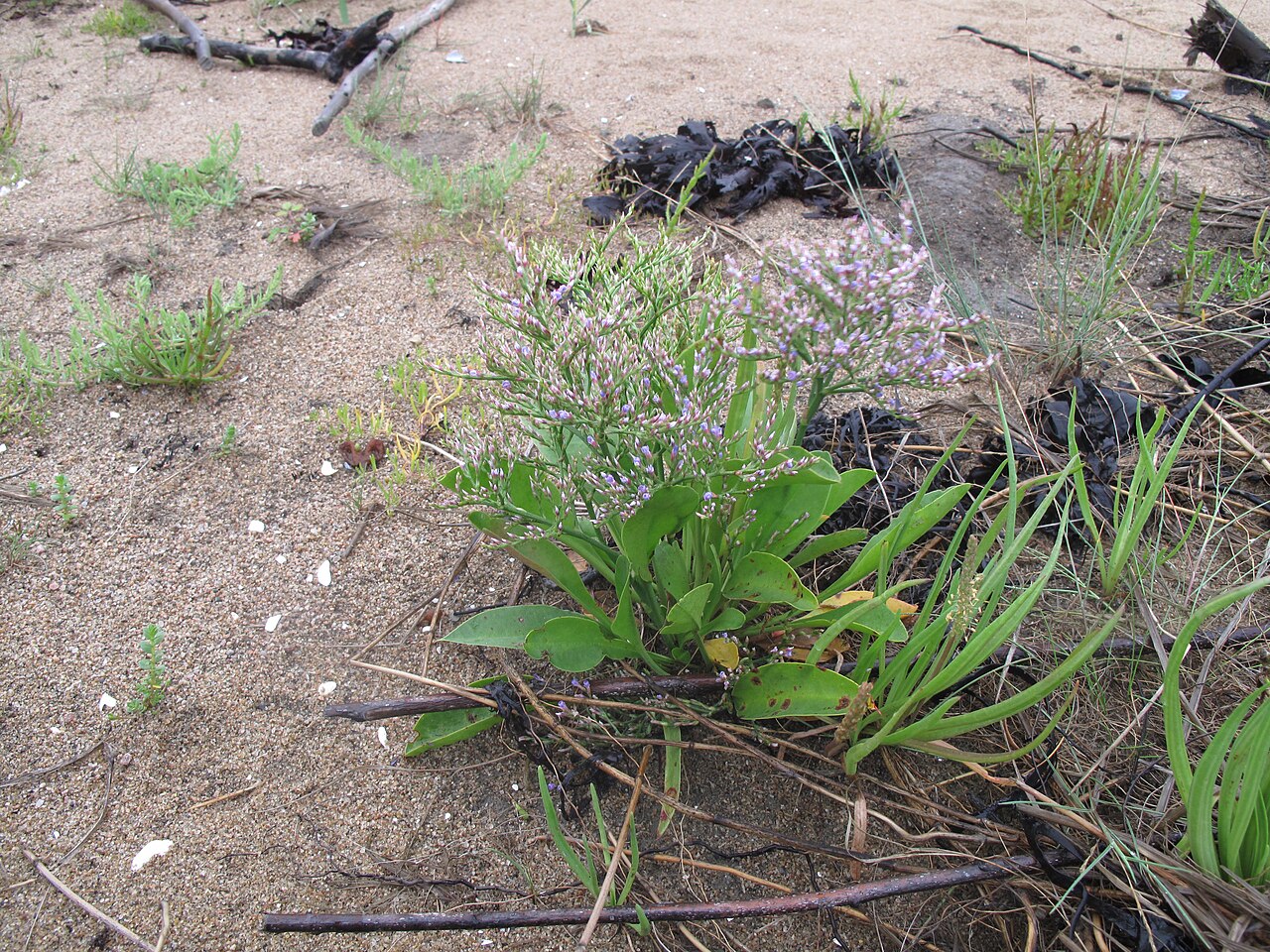
Limonium carolinianum, known as Carolina Sea Lavender (USDA: Carolina sealavender), and also called marsh rosemary or American sea lavender, is a salt-marsh perennial of the leadwort family (Plumbaginaceae). Older books treat the northern plants as a separate species, Limonium nashii, but most botanists now include them in L. carolinianum.
It is the native sea lavender of the Atlantic and Gulf coasts, growing from Labrador and Quebec south to Florida and west to Texas. From a deep, woody root it forms a flat rosette of thick, leathery, paddle-shaped leaves. In late summer and fall it sends up wiry, much-branched flower stalks 1 to 2 feet tall, covered with hundreds of tiny lavender flowers, so that whole stretches of marsh take on a soft purple haze.
Carolina sea lavender grows in the upper parts of salt marshes, on salt pannes and tidal flats, and along the edges of sandy beaches. It is a beautiful plant for coastal gardens with salty soil, and its flowers feed many small bees, flies and butterflies late in the season. Because its sprays are so long-lasting when dried, it has been heavily picked in some places. Admire it in the marsh and leave it where it grows.
Identification
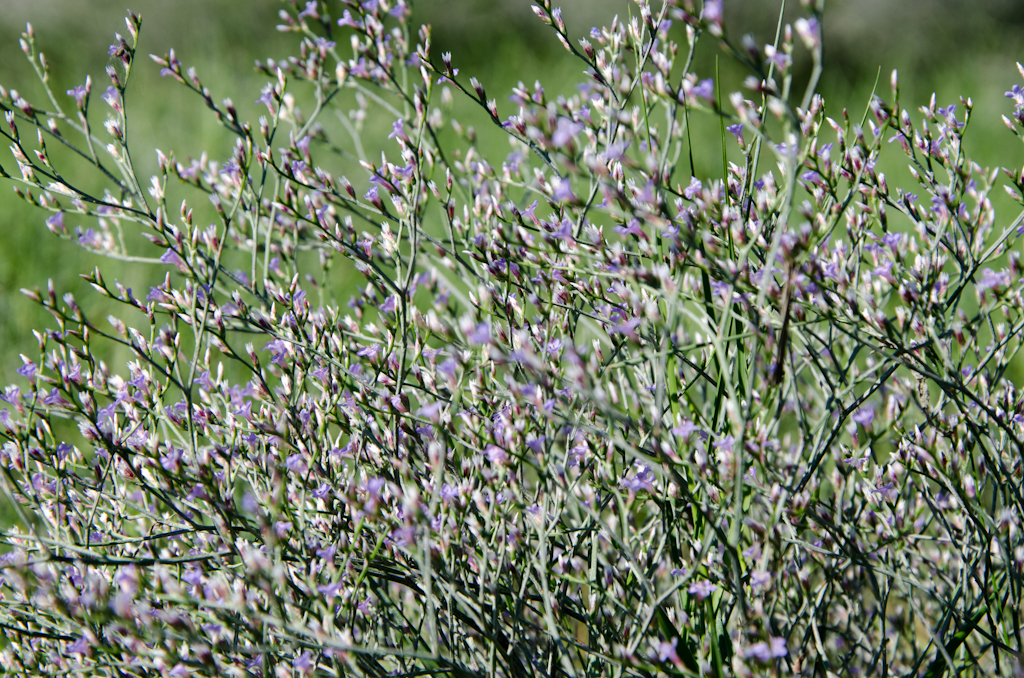
Carolina sea lavender is unmistakable in its salt-marsh home: a low rosette of leathery leaves topped in late summer by a cloud of tiny lavender flowers on wiry, zigzag branches.
Growth Form
A long-lived herbaceous perennial with a thick, woody taproot. It forms a basal rosette of leaves, from which one or more leafless flowering stalks rise 1 to 2 feet tall and branch repeatedly into a broad, airy, rounded to flat-topped spray.
Leaves
All leaves are basal. They are spatula- to paddle-shaped or elliptic, about 2 to 10 inches long including the long stalk, thick, smooth and leathery, with smooth edges and often a small point at the tip. The rosette is often present while the plant flowers.
Flowers
Tiny flowers, about 1/8 to 1/4 inch long, sit in one- to three-flowered clusters along one side of the slender upper branches. Each has a funnel-shaped, papery calyx that is whitish with green ribs and five small pale lavender to violet petals. Flowering runs from about July to October, later in the South.
Fruit
Each flower produces a single small, dry, one-seeded fruit that stays enclosed in the papery calyx. The stiff, dry flower stalks persist into winter and turn brown.
Look-alikes
The cultivated statice (Limonium sinuatum) and other garden sea lavenders from Europe and Asia have larger, more colorful flowers and winged stems. Sea Thrift (Armeria maritima), a relative in the same family, has grass-like leaves and dense, round heads of pink flowers. In the salt marsh, few other plants have such fine, branched sprays of tiny purple flowers.
Safety
Carolina sea lavender is not known to be toxic. Its root was once used in folk medicine as an astringent, but it is not a food plant and should not be harvested from wild marshes.
Quick Facts
| Scientific Name | Limonium carolinianum (syn. Limonium nashii) |
| Family | Plumbaginaceae (leadwort family) |
| Plant Type | Herbaceous perennial; salt-marsh plant |
| Mature Height | 1–2 ft in flower |
| Mature Spread | 1–2 ft |
| Growth Rate | Slow |
| Sun Exposure | Full sun |
| Water Needs | Moist to wet; tolerates tidal flooding and salt |
| Soil Type | Salty sand, silt or peat; brackish to saline soils |
| Soil pH | About 6.0–8.0 |
| Bloom Time | July–October (later in the South) |
| Flower Color | Pale lavender to violet with a whitish calyx |
| Fall Color | Dry flower sprays turn brown and persist |
| Fruit | Tiny one-seeded fruit held in the papery calyx |
| Deer Resistant | Yes; leathery salty leaves are rarely browsed |
| USDA Hardiness Zones | 3–10 |
Native Range
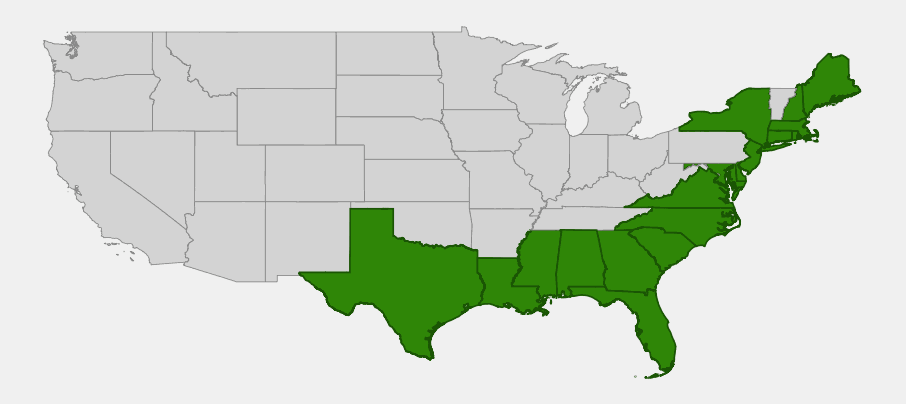
Carolina sea lavender is native to the Atlantic and Gulf coasts of North America. USDA PLANTS records it from Labrador, Newfoundland, Quebec, New Brunswick, Nova Scotia and Prince Edward Island south along the Atlantic coast through Maine, New Hampshire, Massachusetts, Rhode Island, Connecticut, New York, New Jersey, Delaware, Maryland, Virginia, the Carolinas and Georgia to Florida, and west along the Gulf Coast through Alabama, Mississippi and Louisiana to Texas.
It is strictly coastal, following salt and brackish marshes along the shoreline and up tidal rivers and bays such as Chesapeake Bay. It occurs along much of the Texas coast, and it is common in salt marshes from New England to the Carolinas.
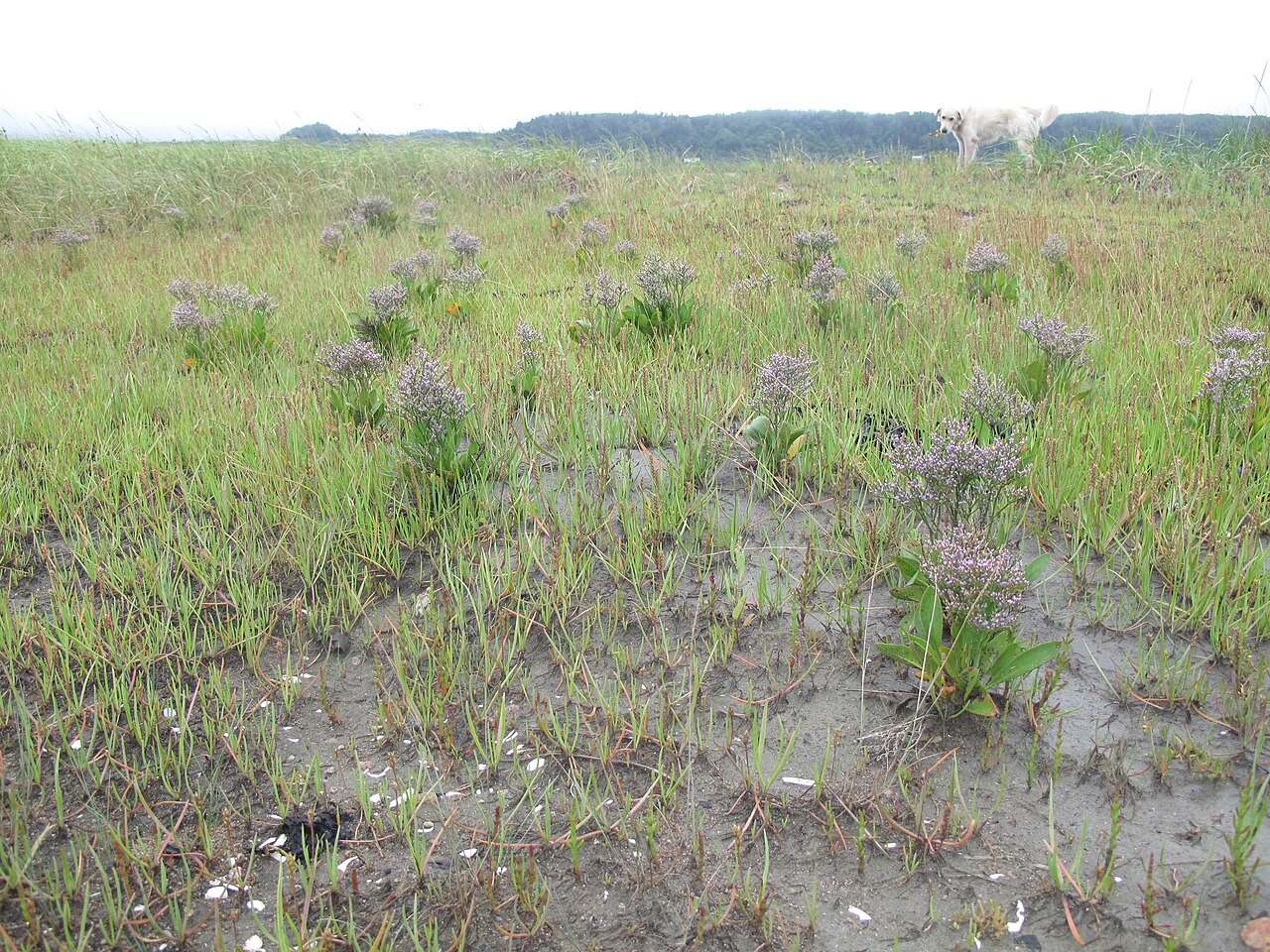
It grows in the high marsh and salt pannes above the zone of daily flooding, where it is wetted by the highest tides, as well as on tidal flats, the edges of mangroves in Florida, and the upper edges of sandy beaches. It is tolerant of salt and periodic flooding but not of shade.
📋 Regional plant lists featuring Carolina Sea Lavender: New York, Pennsylvania & Northern New Jersey · Connecticut, Massachusetts & Rhode Island · New Hampshire, Maine & Vermont · Maryland, Virginia & West Virginia · Delaware, Southern New Jersey & Long Island · Alabama, Georgia & Mississippi · North & South Florida · North & South Carolina · Arkansas, Louisiana, Eastern Oklahoma & Eastern Texas · South & West Texas
Growing & Care Guide
Carolina sea lavender is occasionally offered by native nurseries on the East Coast and Gulf Coast, mainly for salt-marsh restoration and coastal gardens. It is slow to establish and does best where its natural conditions can be matched.
Light
Plant it in full sun. It does not tolerate shade.
Soil & Water
It grows in salty or brackish sand, silt and peat that stays moist, and it tolerates periodic tidal flooding. In a coastal garden it can grow in sandy soil exposed to salt spray, with water during dry spells. It is not suited to rich, freshwater garden soils, where it tends to be short-lived and outcompeted.
Planting Tips
Use nursery-grown plants only. Set them 12 to 18 inches apart in spring in sandy, sunny spots near the shore, salt-marsh edges or rain gardens that receive salty runoff. Its deep taproot makes established plants difficult to move, so choose the site carefully.
Pruning & Maintenance
Little care is needed. Leave the dry flower stalks standing through winter, then cut them back in spring before new leaves appear.
Propagation
Grow it from seed collected only from your own or nursery plants. Sow fresh seed on the surface of a sandy mix in fall or spring; germination can be slow and uneven. Seedlings take a year or two to reach flowering size.
Landscape Uses
- Coastal gardens: late-summer color for salty, sandy soils
- Salt-marsh restoration: a key flowering plant of the high marsh
- Pollinator plantings: late-season flowers for small bees and flies
- Living shorelines: adds diversity to planted marsh edges
- Seaside views: a soft purple haze across the marsh in fall
Wildlife & Ecological Value
Carolina sea lavender is one of the few flowers blooming in the salt marsh in late summer and fall, and it is busy with insects.
For Pollinators
Its small flowers provide nectar and pollen to many small native bees, including sweat bees and mining bees, as well as wasps, flies, beetles and small butterflies. In many marshes it is one of the main late-season nectar sources for insects migrating along the coast.
For Birds
Salt-marsh sparrows and other marsh birds forage around the plants for insects, and the rosettes are part of the high-marsh habitat where several of these birds nest.
For Mammals
Its leathery, salty leaves are rarely eaten by mammals.
Ecosystem Role
As a long-lived perennial of the high marsh and salt pannes, it helps hold sediment and adds flowering diversity to marsh grasslands dominated by cordgrasses and saltgrass. Its presence is often a sign of a healthy, undisturbed high marsh.
Cultural & Historical Uses
The genus name Limonium comes from the Greek leimon, “meadow,” a reference to the salt meadows where many species grow. The species was first described by the Charleston botanist Thomas Walter in 1788 as Statice caroliniana, and it was moved to Limonium by Nathaniel Lord Britton.
Under the name marsh rosemary, its astringent root was described in Jacob Bigelow’s American Medical Botany (1817–1820) and used in folk medicine for sore throats and mouth sores.
Because the flower sprays keep their color when dried, sea lavender was long gathered for dried arrangements and wreaths, and in some areas heavy picking has reduced local populations. Conservationists encourage visitors to leave it unpicked. Please leave it in the marsh for the insects and the view, and buy dried “statice” grown as a crop instead.
Frequently Asked Questions
Can I pick sea lavender?
Please don’t. Picking the flower sprays prevents the plants from setting seed, and heavy collecting has reduced sea lavender in some marshes. Marshes are also often protected areas. Buy nursery-grown plants or cultivated statice for dried flowers.
Is Limonium nashii a different species?
Older books separate the northern plants as Limonium nashii. Most modern treatments, including USDA PLANTS, include them in Limonium carolinianum.
Can I grow it in a regular garden?
It needs full sun and sandy, moist soil, ideally with some salt. It does best in coastal gardens or salt-affected sites and is usually short-lived in rich, freshwater garden soils.
When does it bloom?
From about July to October, later in the South. The dry flower sprays persist into winter.
Is it related to the garden statice?
Yes. Garden statice (Limonium sinuatum) and other cultivated sea lavenders are in the same genus but come from Europe and Asia.

Looking for a nursery that carries Carolina Sea Lavender?
Browse our native plant nursery directory: Alabama · Connecticut, Delaware, Florida & Georgia · Louisiana, Maine, Maryland, Massachusetts & Mississippi · New Hampshire, New Jersey, New York & North Carolina · Rhode Island, South Carolina, Texas & Virginia