
Small Green Wood Orchid (Platanthera clavellata)
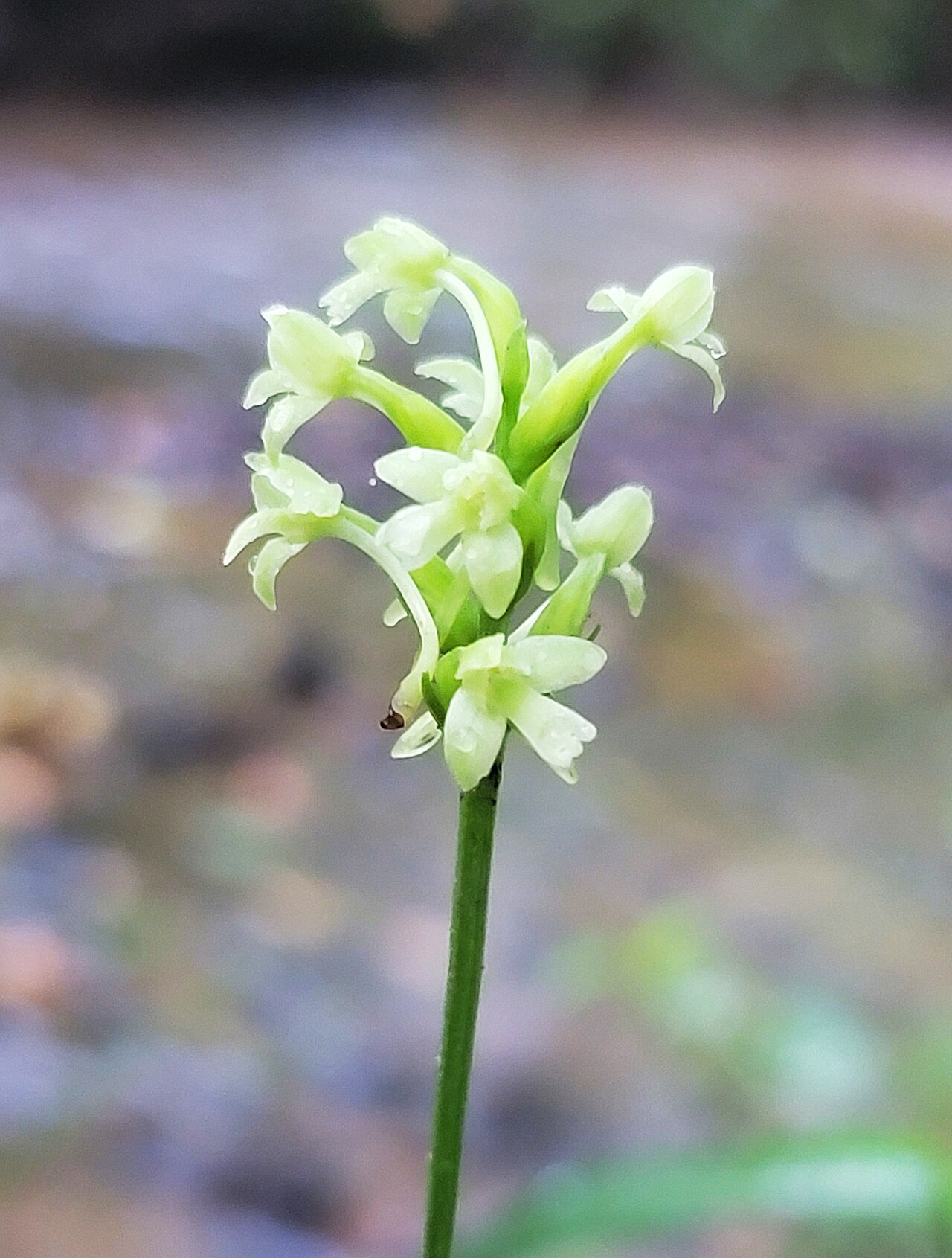
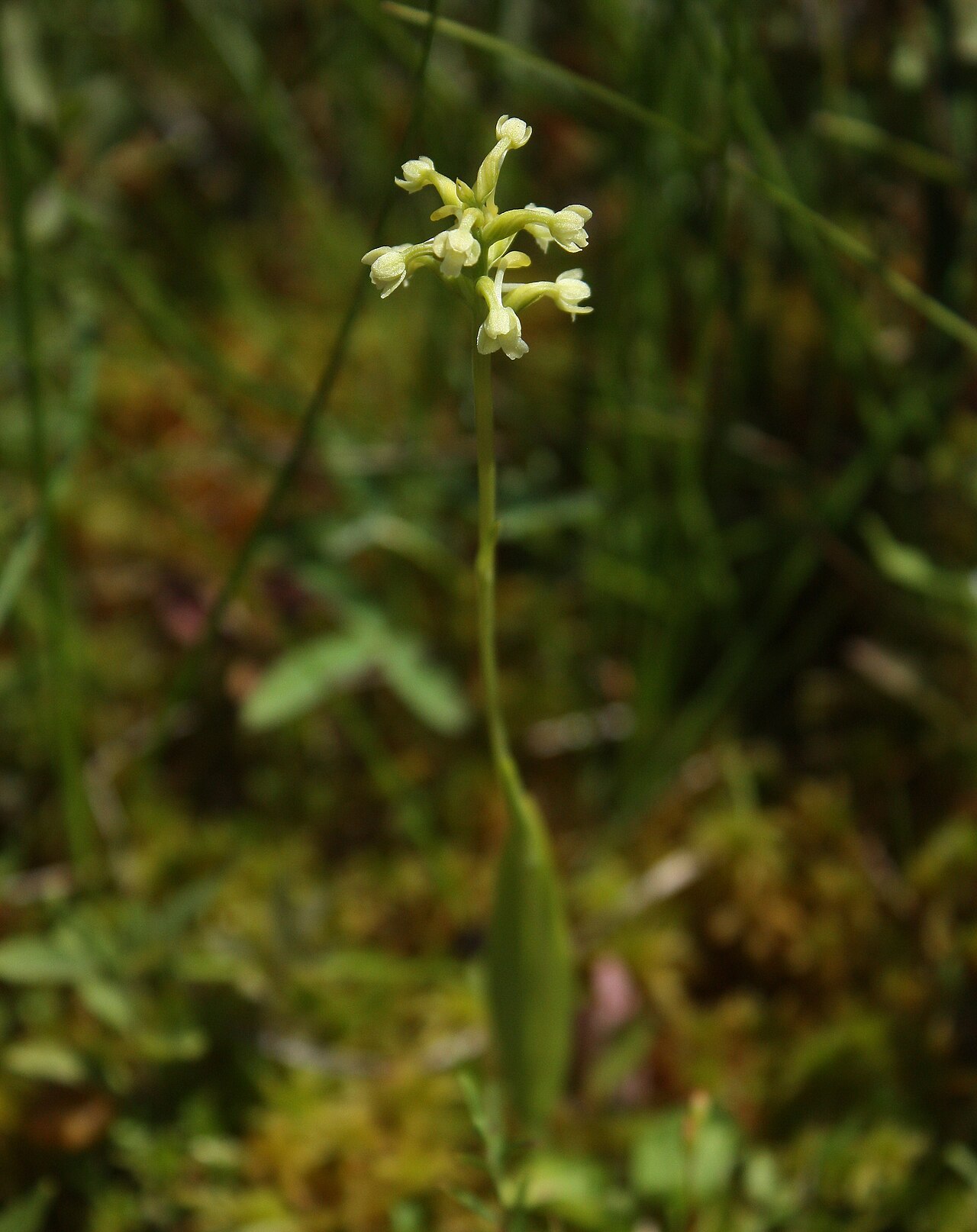
Platanthera clavellata, known as Small Green Wood Orchid, club-spur orchid or green woodland orchid, is a small native orchid of wet, shady places across eastern North America. It grows 4 to 14 inches tall, with a single main leaf near the base of the stem and a short spike of tiny, pale green to creamy white flowers in mid- to late summer.
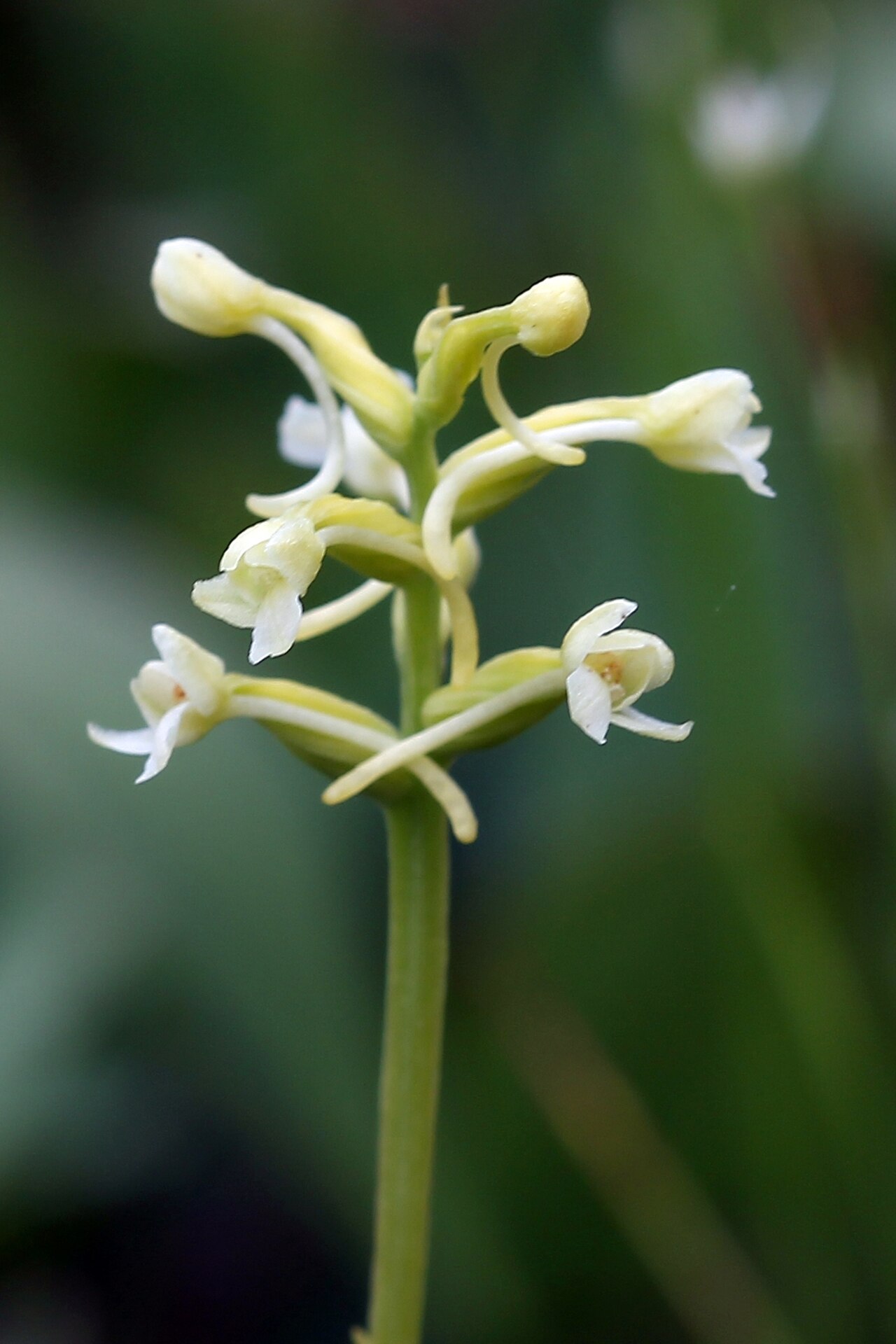
Its flowers have an unusual look: each one is twisted to the side on its stalk, so the spike appears lopsided, and each has a slender spur that swells into a small club at the tip. The name clavellata means “little club.” Unlike many showy orchids, it is mostly self-pollinating.
It is one of the most widespread orchids in the East, found from Newfoundland and Ontario south to Florida and eastern Texas, in sphagnum bogs, seepy slopes, stream banks and wet woods. Like all native orchids, it depends on soil fungi and should never be dug from the wild. This page is meant to help you find and identify it.
Identification
Look in mossy, wet, acidic sites for a slender stem with one oblong leaf near the base and a short spike of small greenish-white flowers that are twisted sideways and have club-tipped spurs.
Growth Habit
A small perennial orchid, usually 4 to 14 inches tall, growing from fleshy roots. Each plant produces a single upright stem. Plants often grow singly or in small, scattered groups in moss.
Leaves
There is one main leaf, attached low on the stem. It is oblong to narrowly oval, about 2 to 6 inches long and up to about 1 1/4 inches wide, smooth and bright green, clasping the stem at its base. Above it there are usually one or two much smaller, bract-like leaves.
Flowers
The flowers are carried in a short, loose spike of about 5 to 20 at the top of the stem. They are small, about 1/4 inch across, pale green, yellowish green or creamy white. The ovary and flower stalk twist so that each flower turns sideways. The lip is short and tongue-shaped with a few small teeth at the tip. Behind it is a slender, curved spur about 1/3 to 1/2 inch long that widens into a small club at the end. The flowers open from June in the South to July and August in the North.
Fruit
Each pollinated flower forms a small, ribbed, upright capsule that splits to release thousands of dust-like seeds, which drift on the wind.
Look-alikes
Other green-flowered Platanthera species are usually larger and lack the club-tipped spur and sideways-twisted flowers. Tubercled orchid (Platanthera flava) has a lip with a small bump (tubercle) at the base, and white bog orchid (Platanthera dilatata) has many leaves and bright white, fragrant flowers. Twayblades (Liparis and Neottia) have two leaves rather than one.
Quick Facts
| Scientific Name | Platanthera clavellata |
| Family | Orchidaceae (orchid family) |
| Plant Type | Small terrestrial orchid (perennial) |
| Mature Height | 4–14 in |
| Mature Spread | 2–6 in |
| Growth Rate | Slow |
| Sun Exposure | Part shade to full shade; sometimes in open bogs |
| Water Needs | High; constantly moist to wet soil |
| Soil Type | Wet, acidic, mossy or peaty soil; sphagnum, seepy sand or muck |
| Soil pH | Acidic (about 4.0–6.0) |
| Bloom Time | June–August |
| Flower Color | Pale green to yellowish or creamy white |
| Fall Color | None |
| Fruit | Small ribbed capsule with dust-like seeds |
| Deer Resistant | No; deer sometimes browse orchids |
| USDA Hardiness Zones | 3–9 (in the wild) |
Native Range
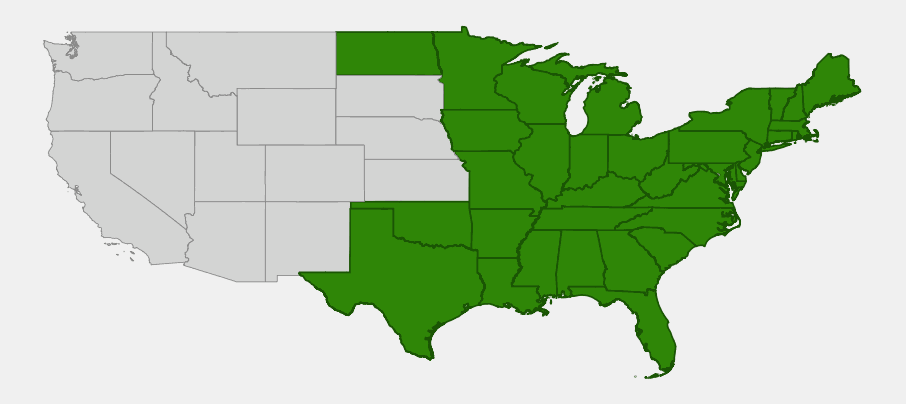
USDA PLANTS lists small green wood orchid as native in 34 states of the eastern and central United States, from Maine to Minnesota and south to Florida, Louisiana and eastern Texas, as well as in eastern Canada from Ontario and Quebec to the Atlantic provinces and Newfoundland. A record from North Dakota is an outlying one at the far western edge of its range.
It is most common in the Northeast, the upper Great Lakes, the Appalachian Mountains and the Atlantic and Gulf coastal plains. In the Midwest and on the western edge of its range, in places such as Iowa, Missouri, Oklahoma and Texas, it is scattered and uncommon, and it is considered rare in several states.
It grows in wet, acidic places: sphagnum bogs and fens, the mossy edges of ponds and streams, seepage slopes, swampy and wet woods, wet ditches and trail edges, and the hummocks of forested wetlands. In the South it is found in seepage bogs and on stream banks, often in the shade of trees and ferns.
📋 Regional plant lists featuring Small Green Wood Orchid: New York, Pennsylvania & Northern New Jersey · Ohio & Indiana · Michigan, Wisconsin & Eastern Minnesota · Kentucky & Tennessee · Connecticut, Massachusetts & Rhode Island · New Hampshire, Maine & Vermont · Maryland, Virginia & West Virginia · Delaware, Southern New Jersey & Long Island · Illinois, Iowa & Missouri · Alabama, Georgia & Mississippi · North & South Florida · North & South Carolina · Arkansas, Louisiana, Eastern Oklahoma & Eastern Texas
Can You Grow It?
Not in an ordinary garden. Like other native orchids, small green wood orchid depends on specific soil fungi, especially as a seedling, and on constantly wet, acidic, mossy conditions. Plants dug from the wild almost always die, and digging them harms wild populations, so never collect it. It is rarely, if ever, offered by nurseries. The best way to enjoy it is to protect the wetlands where it grows and look for it there.
Light
In the wild it grows in part to full shade in wet woods and on shaded stream banks, and sometimes in more open, sunny bogs.
Soil & Water
It needs soil that stays wet all year, such as living sphagnum moss, peat or seepy sand, with an acidic pH. Draining, drying or enriching a wetland quickly eliminates it.
Planting Tips
Do not plant or transplant it. If it grows on your property, keep the wetland and its water supply undisturbed, leave the moss layer intact and avoid fertilizers, herbicides and trampling.
Pruning & Maintenance
None. Do not mow or clear around known plants during the growing season. Keeping deer browse and invasive plants in check helps local populations.
Propagation
Not practical for home gardeners. Orchid seeds are dust-like and need specific fungi to germinate. Only specialized labs can raise native orchids from seed. Protecting habitat is the only reliable way to conserve it.
Where to See It
- Bogs and fens: in sphagnum moss with sundews and pitcher plants
- Mossy stream banks: in shaded ravines and along small streams
- Seepage slopes: in the Appalachians and on the coastal plain
- Wet woodland trails: along boardwalks through forested wetlands
- Nature preserves: bog and fen preserves across the Northeast and Great Lakes
Wildlife & Ecological Value
Small green wood orchid is a quiet member of wetland plant communities, where its presence reflects clean water and intact moss and soil.
For Pollinators
The flowers are mostly self-pollinating: pollen can fall onto the stigma within the same flower, so most flowers set seed without insect help. Small insects, possibly including moths, visit the flowers and may occasionally carry pollen between plants.
For Birds
It provides little food for birds but is part of the wetland ground layer where many birds forage for insects.
For Mammals
Deer and rabbits sometimes browse orchid stems and flower spikes.
Ecosystem Role
Like all orchids, it relies on mycorrhizal fungi. Its tiny seeds have almost no stored food, so seedlings feed on fungi until they can make their own food. Its presence is a sign of an undisturbed, acidic wetland with a healthy moss layer and fungal community.
Cultural & Historical Uses
The species name clavellata means “with a little club,” referring to the club-tipped spur. Platanthera means “flat anther.” The plant has also been placed in the genera Habenaria and Gymnadeniopsis, so older field guides list it as Habenaria clavellata.
Its habit of twisting each flower to the side is unusual among North American orchids, and the reason is not well understood. Because it is mostly self-pollinating, it can set seed even where pollinators are scarce, which may help explain its very wide range.
Some states protect native orchids by law, and collecting plants on most public lands requires a permit. Even where it is legal, digging them is harmful, as transplanted orchids rarely survive. Photographs are the best way to take this plant home.
Frequently Asked Questions
Can I grow small green wood orchid?
Not in an ordinary garden. It depends on soil fungi and permanently wet, acidic conditions and is rarely sold. Never dig it from the wild; transplanted plants almost always die.
Where can I find small green wood orchid?
In sphagnum bogs, fens, mossy stream banks, seepage slopes and wet woods across the eastern United States and eastern Canada, blooming from June to August.
Why are the flowers twisted sideways?
The ovary and flower stalk twist so that each flower turns to one side. It is a distinctive feature of this species and helps identify it.
What does clavellata mean?
It means “with a little club,” for the small club-shaped tip of the flower's spur.
Is small green wood orchid rare?
It is widespread and fairly common in the Northeast, Great Lakes and Appalachians, but scarce and considered rare in several states at the edges of its range.

Looking for a nursery that carries Small Green Wood Orchid?
Browse our native plant nursery directory: Alabama & Arkansas · Connecticut, Delaware, Florida & Georgia · Illinois, Indiana & Iowa · Kentucky, Louisiana, Maine, Maryland, Massachusetts, Michigan, Minnesota, Mississippi & Missouri · New Hampshire, New Jersey, New York, North Carolina, North Dakota, Ohio & Oklahoma · Pennsylvania, Rhode Island, South Carolina, Tennessee, Texas, Vermont & Virginia · West Virginia & Wisconsin