
Canadian Milkvetch (Astragalus canadensis)
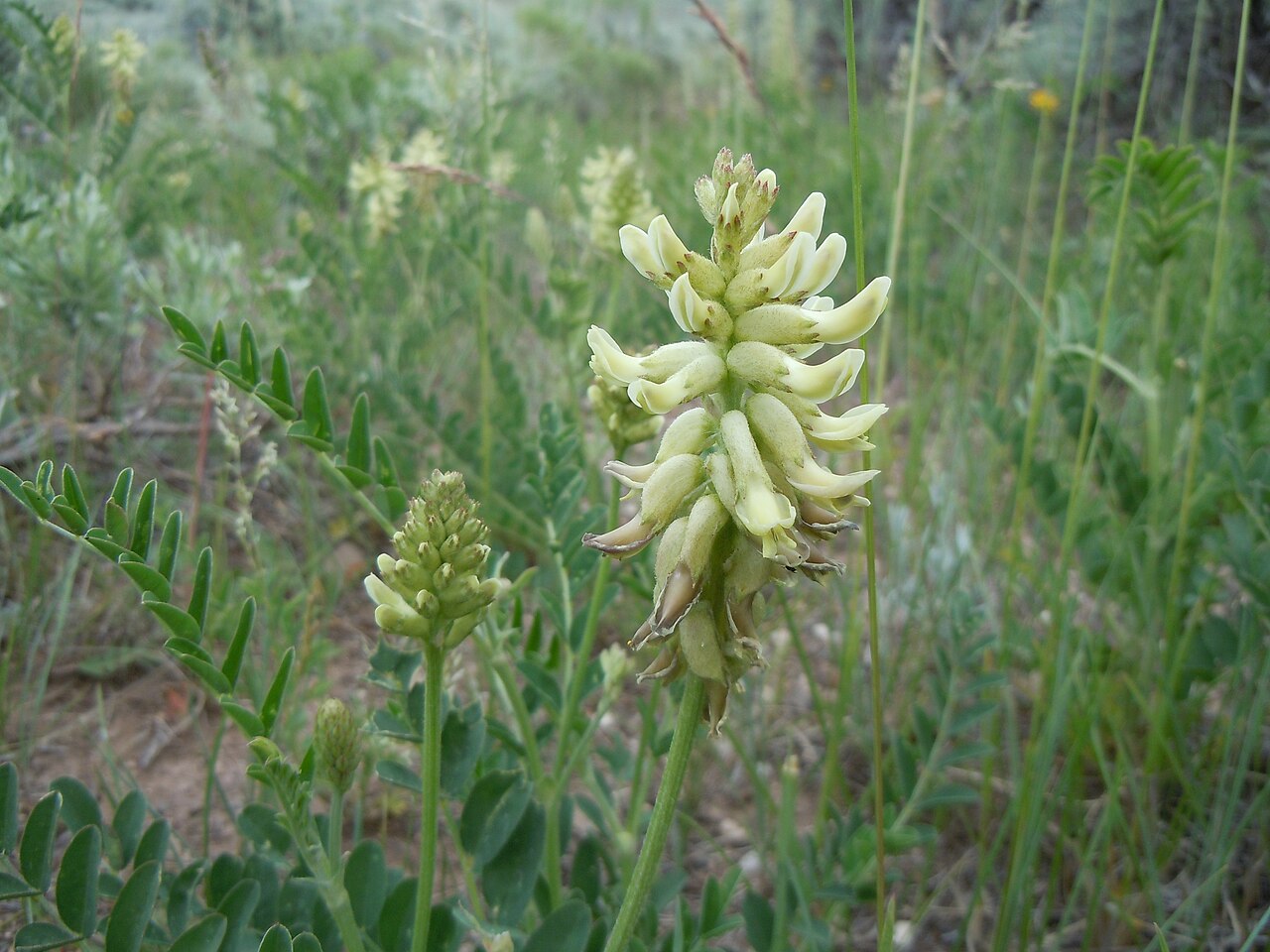
Astragalus canadensis, known as Canadian Milkvetch (also Canada milkvetch), is a sturdy, upright perennial in the pea family (Fabaceae). It is one of the most widespread milkvetches in North America. From early to late summer it carries dense, cylindrical spikes of creamy white to pale greenish-yellow pea flowers above handsome, feather-like leaves. Plants usually grow 1 to 4 feet tall and spread slowly by rhizomes into loose colonies.
It grows in moist prairies, meadows, stream banks, lakeshores, thickets and open woods from Quebec and the Northwest Territories south to Georgia, Texas, Utah and northern California. Unlike many western milkvetches, which are specialists of dry, harsh soils, Canadian milkvetch is an adaptable plant that is easy to grow in ordinary garden soil.
As a legume it fixes nitrogen, and bumble bees visit its flowers heavily. It is a good choice for prairie plantings, rain-garden edges and wildlife gardens. Some populations contain natural compounds that are toxic to livestock, so read the safety note below before planting it in pastures.
Identification
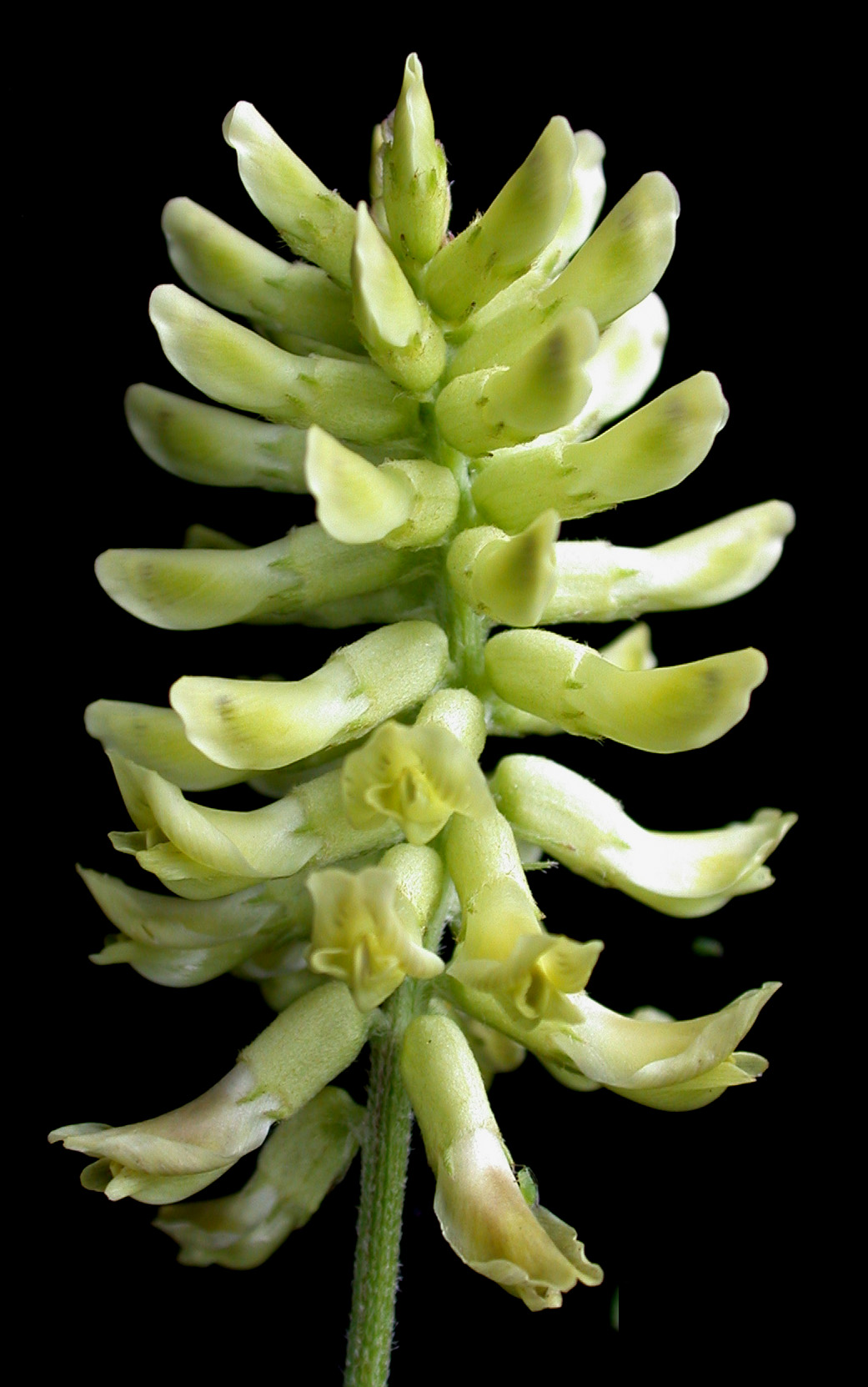
Look for an upright, leafy legume with pinnate leaves and thick spikes of many narrow, cream-colored pea flowers that point downward as they open, followed by crowded, erect pods.
Growth Habit
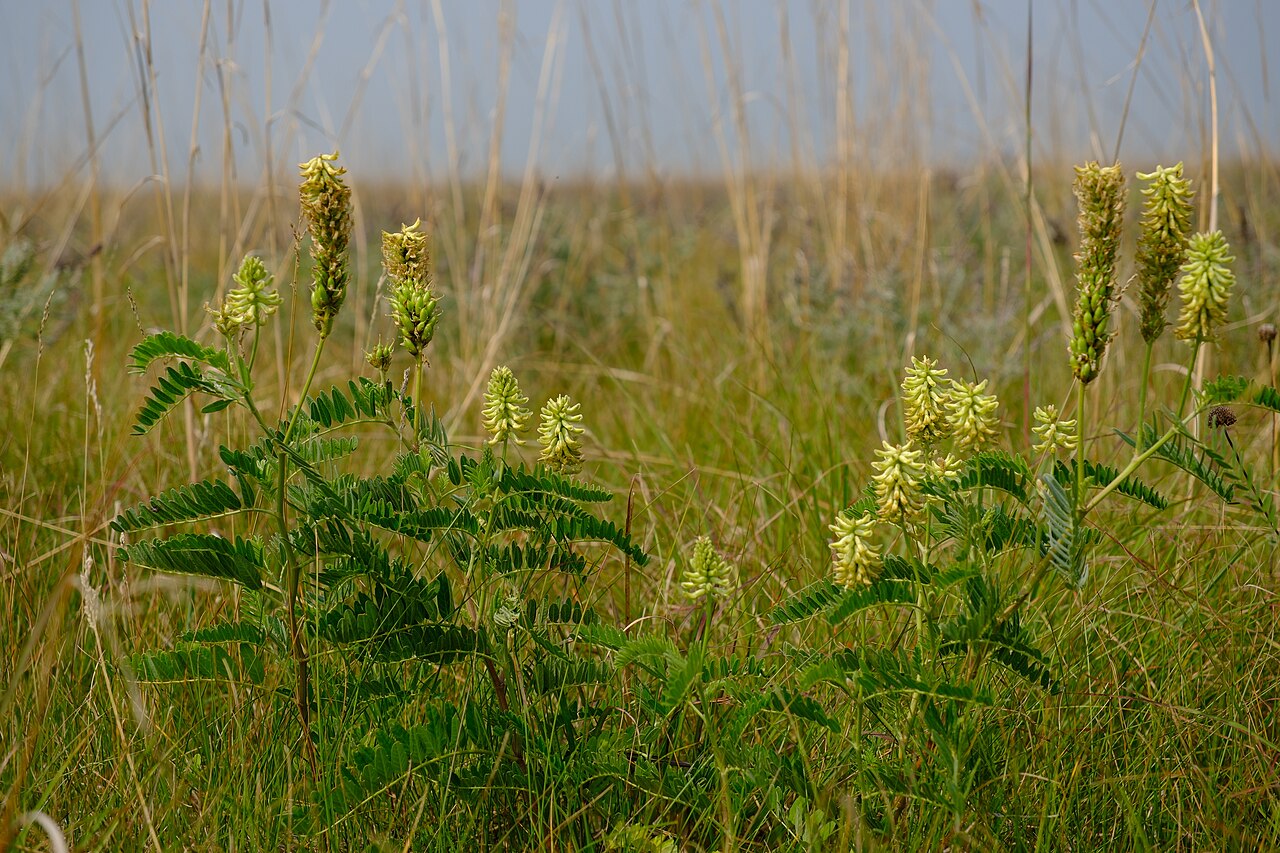
Canadian milkvetch is a clump-forming to colonial perennial, 1 to 4 feet tall, with one to several stout, mostly unbranched stems from creeping rhizomes. The stems are green to reddish and have scattered small, flattened hairs. Older plants form loose patches.
Leaves
The alternate leaves are pinnately compound, 3 to 12 inches long, with about 13 to 29 oblong to elliptic leaflets, each roughly 1/2 to 1 1/2 inches long. Leaflets are smooth above and often have a few flattened hairs below. Narrow stipules wrap around the stem at the base of each leaf.
Flowers
Flowers are borne in dense, cylindrical spikes 2 to 8 inches long on stalks from the upper leaf axils. A spike can have 30 to over 100 flowers. Each flower is narrow and tubular, about 1/2 to 3/4 inch long, creamy white to pale yellow or greenish, and angles downward as it opens. Flowering runs from June to August, sometimes into September.
Fruit
The pods are short, about 1/2 inch long, erect, cylindrical and crowded on the spike. They are hairless, two-chambered and end in a short beak. They turn dark brown and woody, often stay on the plant into winter, and rattle when shaken.
Look-alikes
Most other milkvetches in its range are smaller, with fewer flowers or with inflated or hanging pods. White prairie clover (Dalea candida) has small white flowers in short, slender spikes and only a few leaflets. Wild licorice (Glycyrrhiza lepidota) has similar leaves and creamy flowers, but its pods are covered with hooked bristles like burs.
Quick Facts
| Scientific Name | Astragalus canadensis |
| Family | Fabaceae (pea family) |
| Plant Type | Herbaceous perennial wildflower |
| Mature Height | 1–4 ft |
| Mature Spread | 1–3 ft; spreads slowly by rhizomes |
| Growth Rate | Moderate |
| Sun Exposure | Full sun to part shade |
| Water Needs | Medium; tolerates moist and fairly dry soils |
| Soil Type | Loam, clay loam or sandy soil |
| Soil pH | Slightly acidic to alkaline (about 6.0–8.0) |
| Bloom Time | June–August |
| Flower Color | Creamy white to pale greenish yellow |
| Fall Color | Leaves yellow to brown; dark pods persist |
| Fruit | Short, erect, woody pods |
| Deer Resistant | No; deer and livestock browse it |
| USDA Hardiness Zones | 3–8 |
Native Range
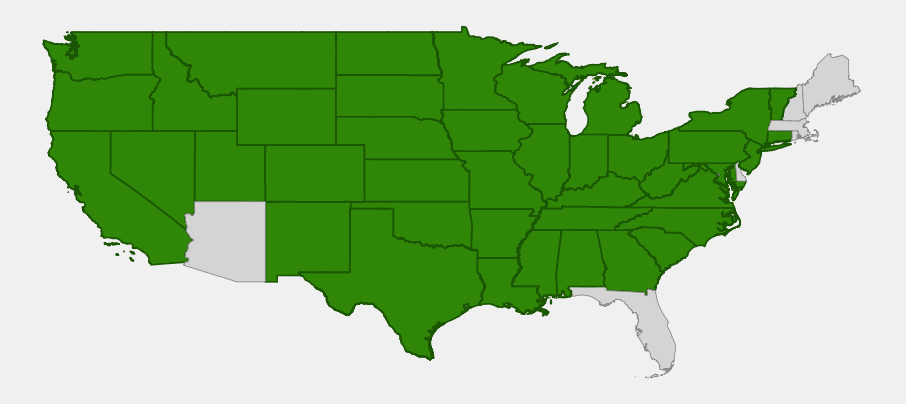
Canadian milkvetch has one of the largest ranges of any North American milkvetch. USDA PLANTS lists it as native in 41 states, from the Atlantic Coast to the Pacific Northwest, and in Canada from southwestern Quebec and Ontario west through the Prairie Provinces to British Columbia and north into the Northwest Territories. It is absent from Florida, Arizona, Delaware and most of northern New England.
It is most common in the Great Plains and Midwest, in tallgrass and mixed-grass prairie from the Dakotas and Minnesota south to Kansas, Missouri and Oklahoma, and in the Rocky Mountain foothills. In the East it is scattered and often local, growing in river floodplains, wet meadows, glades and old fields; it is rare in several eastern states. In Texas it grows mainly in the eastern and northern parts of the state. In the Northwest it grows east of the Cascades in Washington and Oregon and into Idaho, and in northern California it reaches the Modoc Plateau and the Sierra Nevada.
Typical habitats are moist to mesic prairies and meadows, stream banks and gravel bars, lakeshores, roadside ditches, thickets, woodland edges and open woods. It tolerates periodic flooding and prefers more moisture than most prairie legumes.
📋 Regional plant lists featuring Canadian Milkvetch: New York, Pennsylvania & Northern New Jersey · Idaho, Eastern Oregon & Eastern Washington · Ohio & Indiana · Montana & Wyoming · Michigan, Wisconsin & Eastern Minnesota · Kentucky & Tennessee · Nebraska, Kansas & Eastern Colorado · Utah & Western Colorado · Connecticut, Massachusetts & Rhode Island · New Hampshire, Maine & Vermont · Maryland, Virginia & West Virginia · Delaware, Southern New Jersey & Long Island · Illinois, Iowa & Missouri · Alabama, Georgia & Mississippi · North & South Carolina · Arkansas, Louisiana, Eastern Oklahoma & Eastern Texas · North Dakota, South Dakota & Western Minnesota · California & Nevada
Growing & Care Guide
Canadian milkvetch is one of the easiest native legumes to grow. It adapts to most garden soils, tolerates both wet spells and moderate drought, and needs little care once established.
Light
Full sun to part shade. It flowers best in full sun but tolerates a few hours of shade, especially in hot climates.
Soil & Water
It grows in loam, clay loam and sandy soils, from moist to moderately dry. It does well in average garden soil and in low spots that are wet in spring. Water new plants regularly during their first season; established plants have deep roots and rarely need watering. No fertilizer is needed, since it fixes its own nitrogen.
Planting Tips
Plant it in spring or fall, 18 to 24 inches apart. It mixes well with prairie grasses and other wildflowers and can spread slowly by rhizomes into loose patches, so give it room. It works well at the edge of a rain garden or along a pond or ditch.
Pruning & Maintenance
Little maintenance is needed. Leave the dark seed stalks for winter interest, or cut them back in late winter. If it spreads too far, pull or dig unwanted shoots in spring. In prairie plantings, it tolerates occasional burning or mowing in early spring.
Propagation
Grow it from seed. The hard seed coat should be scarified (lightly sanded or nicked) before sowing, or sown outdoors in fall. Inoculating the seed with the right rhizobium bacteria helps young plants fix nitrogen. Established clumps can be divided in early spring.
Landscape Uses
- Prairie and meadow plantings: a reliable native legume in seed mixes
- Pollinator gardens: a magnet for bumble bees in midsummer
- Rain gardens and swales: tolerates seasonal wetness at the outer edges
- Restoration: adds nitrogen to soils in prairie and streambank restoration
- Winter interest: dark, persistent seed spikes
Wildlife & Ecological Value
Canadian milkvetch is a valuable prairie legume for pollinators and the soil.
For Pollinators
Bumble bees are the main pollinators, since they are strong enough to open the narrow, tubular flowers. Other long-tongued bees also visit, and small bees sometimes collect pollen. Several small butterflies in the sulphur and blue groups use milkvetches as caterpillar food plants.
For Birds
Birds eat some of the seeds, and the leafy colonies provide cover for ground-nesting birds in prairies and meadows.
For Mammals
Deer, elk, rabbits and rodents browse the leaves and stems. See the safety note for livestock below.
Ecosystem Role
Like other legumes, it hosts nitrogen-fixing bacteria in root nodules, adding nitrogen to the soil. Its deep roots help hold stream banks and prairie soils.
Cultural & Historical Uses
The genus name Astragalus comes from a Greek name for a legume, and the species name canadensis refers to early specimens collected in Canada. Carl Linnaeus described it in 1753.
Several Indigenous peoples of the Plains and the North used Canadian milkvetch roots in traditional medicine. It is not a food plant and should not be used as a home remedy.
Safety note: Canadian milkvetch is not one of the notorious “locoweeds,” but some populations contain nitro compounds that can poison cattle, sheep and horses that eat large amounts, especially when other forage is scarce. It is not a problem in mixed gardens or diverse prairies, but avoid planting dense stands in pastures and keep pets and children from eating the plant.
Frequently Asked Questions
Is Canadian milkvetch toxic?
Some populations contain nitro compounds that can harm livestock grazing large amounts. It is not dangerous to touch, but it should not be eaten by people or pets and should not make up much of a pasture.
Is Canadian milkvetch a locoweed?
No. It belongs to the same genus as some locoweeds, but it is not one of the species that cause locoism. Its potential toxicity comes from different compounds.
Does Canadian milkvetch spread?
Yes, slowly, by underground rhizomes. It forms loose patches rather than taking over, and it is easy to pull unwanted shoots.
Does it tolerate wet soil?
Yes. It grows naturally on stream banks, lakeshores and moist prairies, and it handles seasonal flooding better than most prairie legumes.
What pollinates Canadian milkvetch?
Mainly bumble bees, which can open the narrow flowers to reach the nectar. Other long-tongued bees visit as well.

Looking for a nursery that carries Canadian Milkvetch?
Browse our native plant nursery directory: Alabama & Arkansas · California · Colorado, Connecticut & Georgia · Idaho, Illinois, Indiana, Iowa & Kansas · Kentucky, Louisiana, Maryland, Michigan, Minnesota, Mississippi, Missouri & Montana · Nebraska, Nevada, New Jersey, New Mexico, New York, North Carolina, North Dakota, Ohio & Oklahoma · Oregon · Pennsylvania, South Carolina, South Dakota, Tennessee, Texas, Utah, Vermont & Virginia · Washington · West Virginia, Wisconsin & Wyoming

