
Clustered Sanicle (Sanicula odorata)
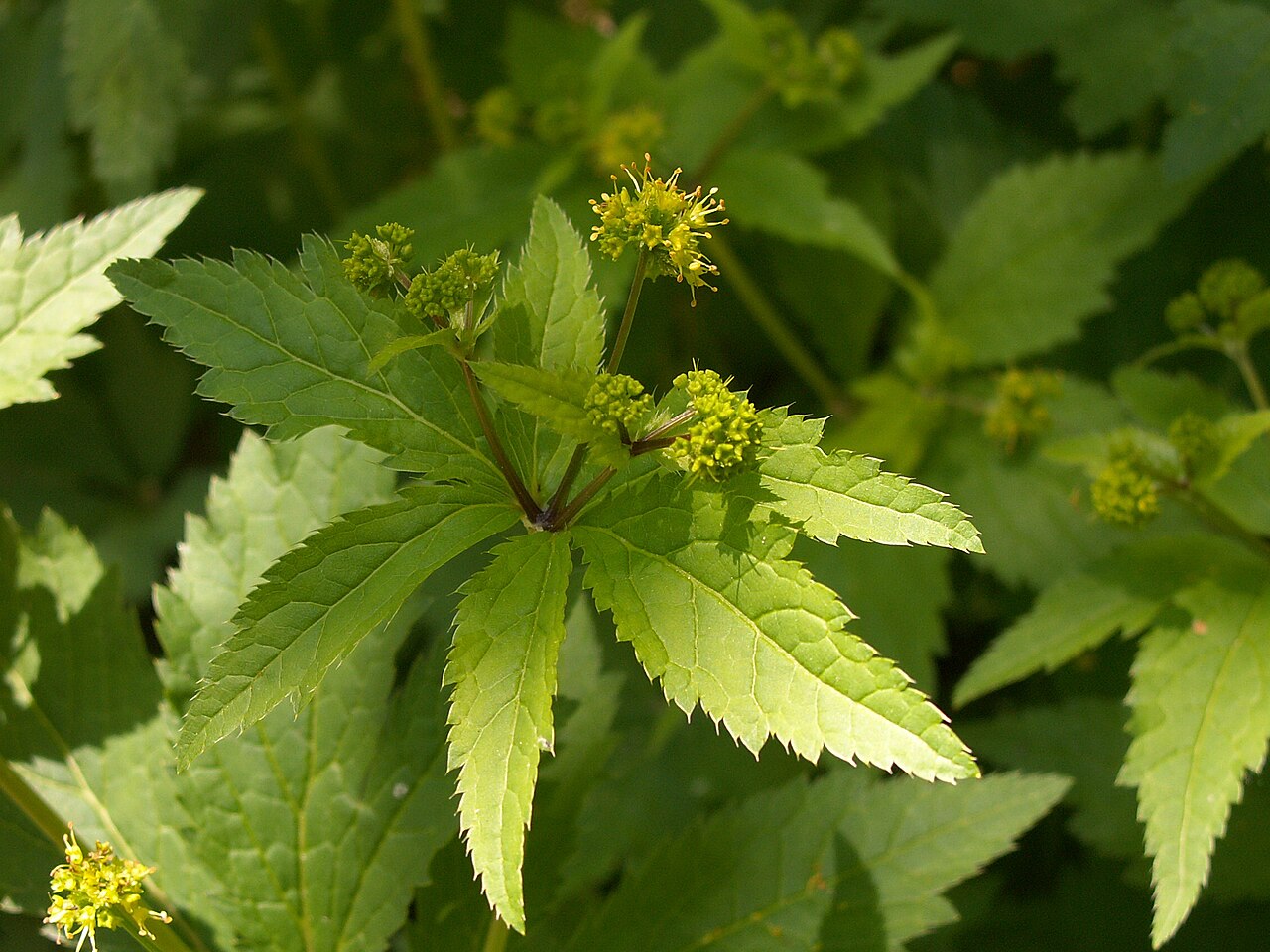
Sanicula odorata, known as Clustered Sanicle, clustered black snakeroot or fragrant snakeroot, is a common woodland wildflower of eastern and central North America. It belongs to the carrot family (Apiaceae). Many older field guides list it as Sanicula gregaria.
It is a leafy perennial 1 to 3 feet tall with handsome, deeply divided, toothed leaves. From late spring into summer it holds small, round clusters of tiny yellow-green flowers with long, protruding stamens, like little pom-poms. These are followed by small, bur-like fruits covered in hooked bristles that catch on fur and clothing.
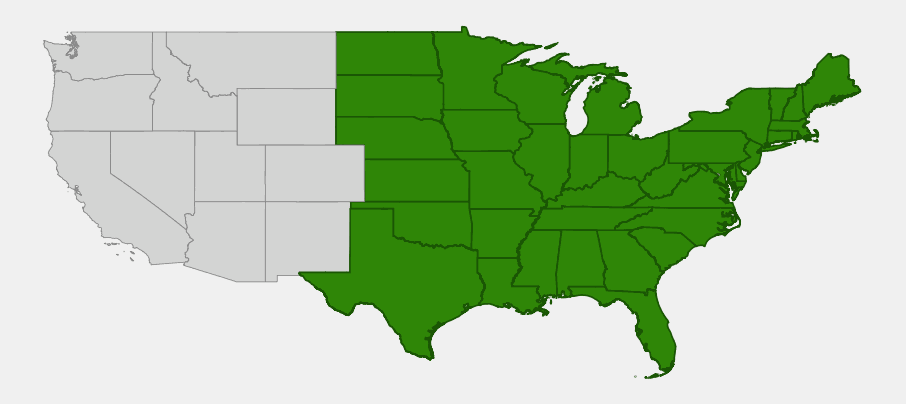
Clustered sanicle grows in moist deciduous woods, floodplains, ravines and shady woodland edges from Maine and southern Canada to Florida and Texas and west to the eastern Great Plains. It is not showy, but it is a dependable, shade-tolerant native for woodland gardens and naturalized shade, and its flowers feed many small native bees and flies.
Identification
Look for a leafy woodland plant with palmately divided, toothed leaves and small, round clusters of yellowish-green flowers with long stamens, later turning into clusters of tiny hooked burs.
Growth Habit
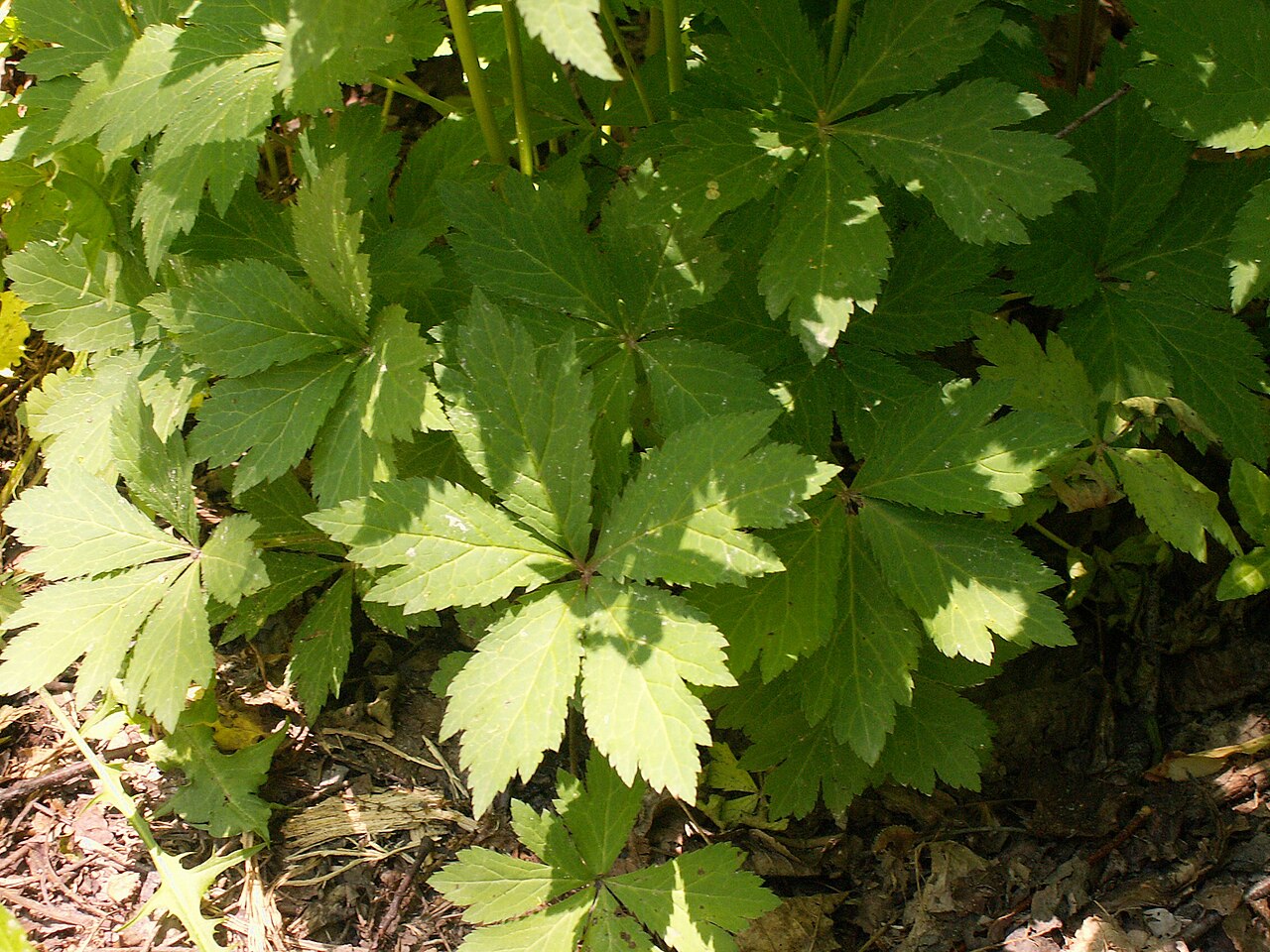
Clustered sanicle grows from a short crown with fibrous roots. Each plant sends up one or a few smooth stems, 1 to 3 feet tall, that branch in the upper part into a loose, spreading top. Plants often grow in loose groups, as the name gregaria (“growing in flocks”) suggests.
Leaves
The basal and lower stem leaves are on long stalks and are palmately divided into three to five leaflets; the two side leaflets are often split so the leaf looks five-parted. Leaflets are lance-shaped to oval, 1 to 3 inches long, sharply and irregularly toothed. Upper leaves are smaller, nearly stalkless and three-parted.
Flowers
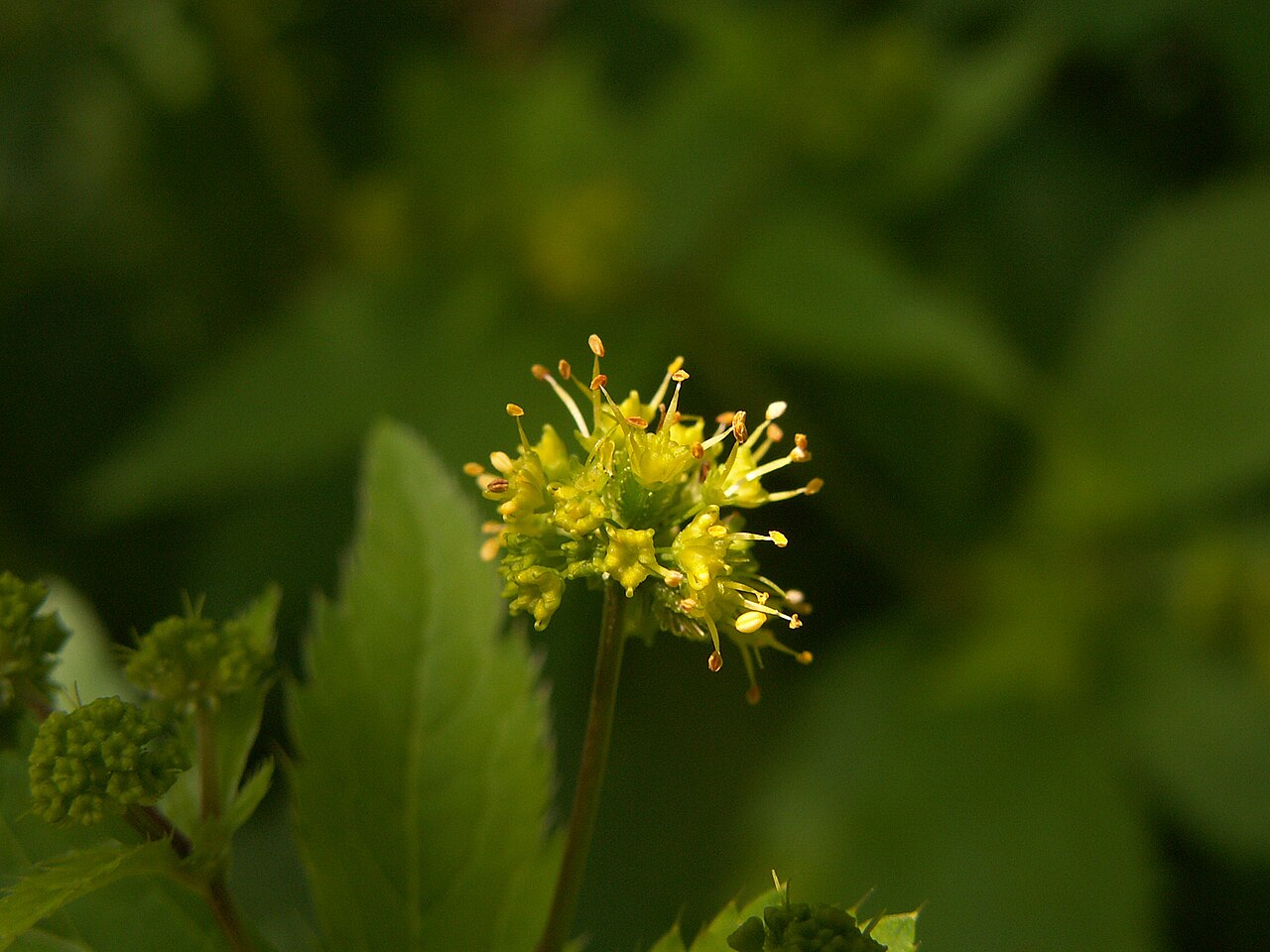
Flowers appear from about April to July. The tiny flowers are crowded into small, round umbellets about 1/4 to 1/2 inch across, held on short stalks at the branch tips. Each cluster has a few stalkless female flowers surrounded by more numerous stalked male flowers. Petals are greenish-yellow to yellow, and the long stamens and styles stick out beyond the petals, giving a fuzzy, pom-pom look.
Fruit & Seeds
The fruits are small, egg-shaped schizocarps, about 1/8 inch long, covered with hooked bristles. The slender styles are longer than the bristles and curve outward. Ripe fruits split into two seeds and cling to passing animals and clothing.
Look-alikes
Canadian black snakeroot (Sanicula canadensis) has whitish flowers, few male flowers and very short styles hidden among the fruit bristles. Maryland black snakeroot (Sanicula marilandica) has greenish-white flowers and more leaflets and is more northern. Large-fruited sanicle (Sanicula trifoliata) has larger fruits with a long beak. Clustered sanicle is the one with yellowish flowers and styles longer than the bristles.
Safety Notes
Clustered sanicle is not known to be toxic, but it is in the carrot family, which includes deadly poisonous plants such as poison hemlock and water hemlock. Do not eat wild plants in this family unless you are certain of their identity.
Quick Facts
| Scientific Name | Sanicula odorata |
| Family | Apiaceae (carrot family) |
| Plant Type | Herbaceous perennial |
| Mature Height | 1–3 ft |
| Mature Spread | 1–2 ft |
| Growth Rate | Moderate |
| Sun Exposure | Part shade to full shade |
| Water Needs | Medium; moist soil |
| Soil Type | Rich loam to clay loam |
| Soil pH | About 5.5–7.5 |
| Bloom Time | April–July |
| Flower Color | Greenish yellow to yellow |
| Fall Color | None notable |
| Fruit | Small, bristly burs |
| Deer Resistant | Moderate |
| USDA Hardiness Zones | 3–9 |
Native Range
Clustered sanicle is native to eastern and central North America. USDA PLANTS lists it as native in 37 states, from Maine, Vermont and New Hampshire south to Florida, and west to North Dakota, South Dakota, Nebraska, Kansas, Oklahoma and Texas, as well as the District of Columbia. In Canada it grows in Ontario, Quebec, New Brunswick and Nova Scotia.
It is one of the most common sanicles in the Midwest and the Appalachian and Ohio Valley regions, where it is a typical plant of rich deciduous woods. It becomes more local toward the edges of its range: in the eastern Dakotas, Kansas and Oklahoma it follows wooded river valleys, and in the Deep South and Florida it is scattered in rich hardwood forests and bottomlands.
Typical habitats are moist to mesic deciduous forests, floodplain and bottomland woods, wooded ravines and slopes, stream banks, thickets and shaded woodland edges. It tolerates some disturbance and often grows along shady trails.
📋 Regional plant lists featuring Clustered Sanicle: North & South Florida · Alabama, Georgia & Mississippi · North & South Carolina · Maryland, Virginia & West Virginia · Kentucky & Tennessee · Arkansas, Louisiana, Eastern Oklahoma & Eastern Texas · Illinois, Iowa & Missouri · Ohio & Indiana · Nebraska, Kansas & Eastern Colorado · North Dakota, South Dakota & Western Minnesota · Michigan, Wisconsin & Eastern Minnesota · New York, Pennsylvania & Northern New Jersey · Delaware, Southern New Jersey & Long Island · Connecticut, Massachusetts & Rhode Island · New Hampshire, Maine & Vermont · South & West Texas
Growing & Care Guide
Clustered sanicle is rarely sold as a plant, but some native seed suppliers offer it, and it often appears on its own in shady yards near woods. It is an easy, low-care native for moist shade.
Light
Grow it in part shade to full shade under deciduous trees. It tolerates morning sun if the soil stays moist.
Soil & Water
It prefers rich, moist, well-drained loam with leaf litter but tolerates clay and seasonally wet floodplain soil. Water during long droughts in its first year; established plants rarely need watering in woodland conditions.
Planting Tips
Use it to fill gaps in a woodland garden or a shady naturalized area with mayapple, wild geranium, waterleaf and ferns. It is best in informal plantings, since its burs cling to clothing and pets, so keep it back from paths you use often.
Pruning & Maintenance
No pruning is needed. Leave the leaf litter in place as a natural mulch. If you do not want it to spread by seed, cut the flowering stems back after bloom, before the burs ripen.
Propagation
Sow fresh seed outdoors in fall; it needs a winter of cold, moist stratification to germinate in spring. Plants often self-seed in suitable shade. Young plants can be moved with a good root ball in early spring or fall.
Landscape Uses
- Woodland gardens: a leafy, shade-tolerant filler with fine-textured flower clusters
- Naturalized shade: self-sows lightly under deciduous trees
- Floodplain and riparian restoration: tolerates periodic flooding in bottomland woods
- Pollinator gardens in shade: small flowers feed native bees and flies
- Native groundlayer plantings: adds diversity under trees and shrubs
Wildlife & Ecological Value
Clustered sanicle is a modest plant, but it is a common part of the forest groundlayer and supports many small insects.
For Pollinators
The small flowers are open and easy to reach and are visited by small native bees such as sweat bees, by syrphid flies and other flies, and by small beetles and wasps.
For Birds
Ground-feeding woodland birds may pick seeds from the burs, and the leafy stems add cover to the forest floor.
For Mammals
The hooked fruits hitch rides on deer, raccoons, foxes and other mammals, which spread the seeds through the woods. White-tailed deer browse the foliage only lightly.
Ecosystem Role
As a common, long-lived member of the woodland groundlayer, clustered sanicle helps hold soil on slopes and floodplains and adds to the diversity of native forbs under trees. Its bur fruits are a classic example of seed dispersal by animals.
Cultural & Historical Uses
The American naturalist Constantine Rafinesque first described this plant in the 19th century, giving it the epithet odorata, “fragrant.” In the 1890s Eugene Bicknell described the same plant as Sanicula gregaria, the name used in most 20th-century floras. In the late 1980s botanists Kathleen Pryer and Lawrence Phillippe showed that Rafinesque’s older name had priority, and the plant became Sanicula odorata.
The genus name Sanicula comes from the Latin sanare, “to heal,” because the European wood sanicle was long used as a wound herb. The North American species were called “snakeroots” because their roots were used in folk remedies, including for snakebite.
The hooked fruits make clustered sanicle a familiar “hitchhiker” to anyone who walks in eastern woods in late summer and finds small burs clinging to socks and pant legs.
Frequently Asked Questions
Is clustered sanicle the same as Sanicula gregaria?
Yes. Sanicula gregaria is an older name for the same plant. The accepted name is now Sanicula odorata.
How do I tell clustered sanicle from black snakeroot?
Clustered sanicle has yellowish-green flowers with long stamens and styles that stick out beyond the fruit bristles. Canadian and Maryland black snakeroots have whitish or greenish-white flowers.
Does clustered sanicle grow in shade?
Yes. It is a woodland plant that grows best in part to full shade in moist, rich soil.
Why do its seeds stick to my clothes?
The small fruits are covered in hooked bristles that cling to fur and fabric, a way of spreading the seeds through the woods.
Is clustered sanicle edible or medicinal?
It is not a food plant. Sanicles were used in folk medicine, but because the carrot family includes deadly look-alikes, do not eat or self-medicate with wild plants in this family.

Looking for a nursery that carries Clustered Sanicle?
Browse our native plant nursery directory: Alabama & Arkansas · Connecticut, Delaware, Florida & Georgia · Illinois, Indiana, Iowa & Kansas · Kentucky, Louisiana, Maine, Maryland, Massachusetts, Michigan, Minnesota, Mississippi & Missouri · Nebraska, New Hampshire, New Jersey, New York, North Carolina, North Dakota, Ohio & Oklahoma · Pennsylvania, Rhode Island, South Carolina, South Dakota, Tennessee, Texas, Vermont & Virginia · West Virginia & Wisconsin

