
Mountain Sweet Cicely (Osmorhiza berteroi)
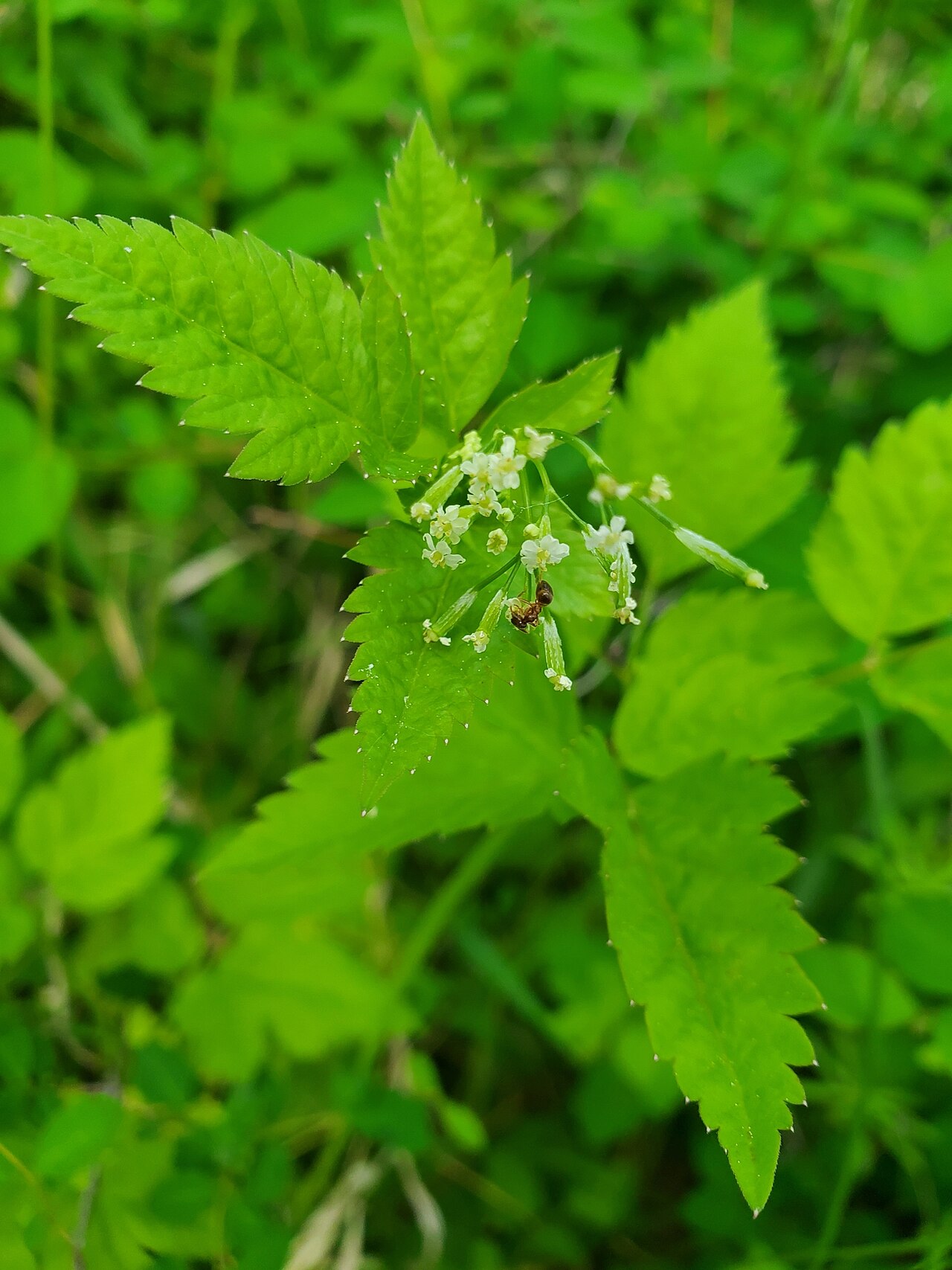
Osmorhiza berteroi, known as Mountain Sweet Cicely or Chilean sweet cicely, is a native woodland herb of moist forests in western North America, with scattered populations around the northern Great Lakes and northern New England. It belongs to the carrot family (Apiaceae) and was long known as Osmorhiza chilensis.
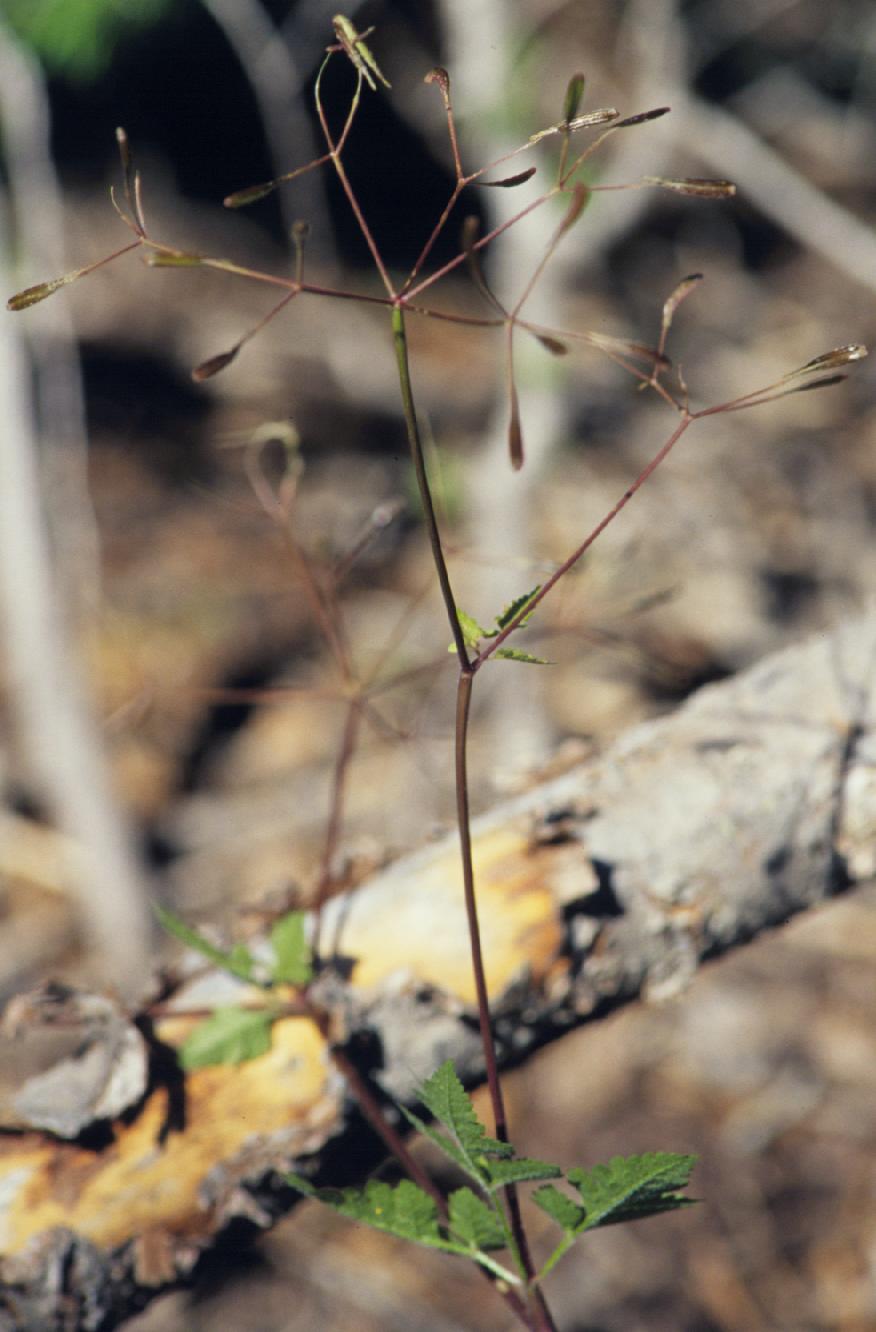
It is a modest, airy plant 1 to 3 feet tall with soft, fern-like leaves divided into coarsely toothed leaflets. In late spring and early summer it carries tiny greenish-white flowers in small, open umbels on long, slender stalks, followed by distinctive needle-like fruits that spread like the spokes of a wheel and cling to anything that brushes past.
Mountain sweet cicely is one of the few North American plants that also grows naturally in South America, in the mountains of Chile and Argentina. In North America it is a common member of the understory in coniferous and mixed forests from Alaska south to California and New Mexico, and it is a good choice for naturalistic shade gardens within its range.
Identification
Look for a slender, hairy-stemmed woodland herb with twice-three-divided, coarsely toothed leaves, sparse umbels of tiny greenish-white flowers, and long, bristly, black-ripening fruits that narrow to a pointed base.
Growth Habit
Mountain sweet cicely is a herbaceous perennial that grows from a short, thick, somewhat aromatic taproot. It produces one to a few slender, branching stems 1 to 3 feet tall, which are usually sparsely hairy, at least near the leaf nodes. Plants are open and airy rather than dense.
Leaves
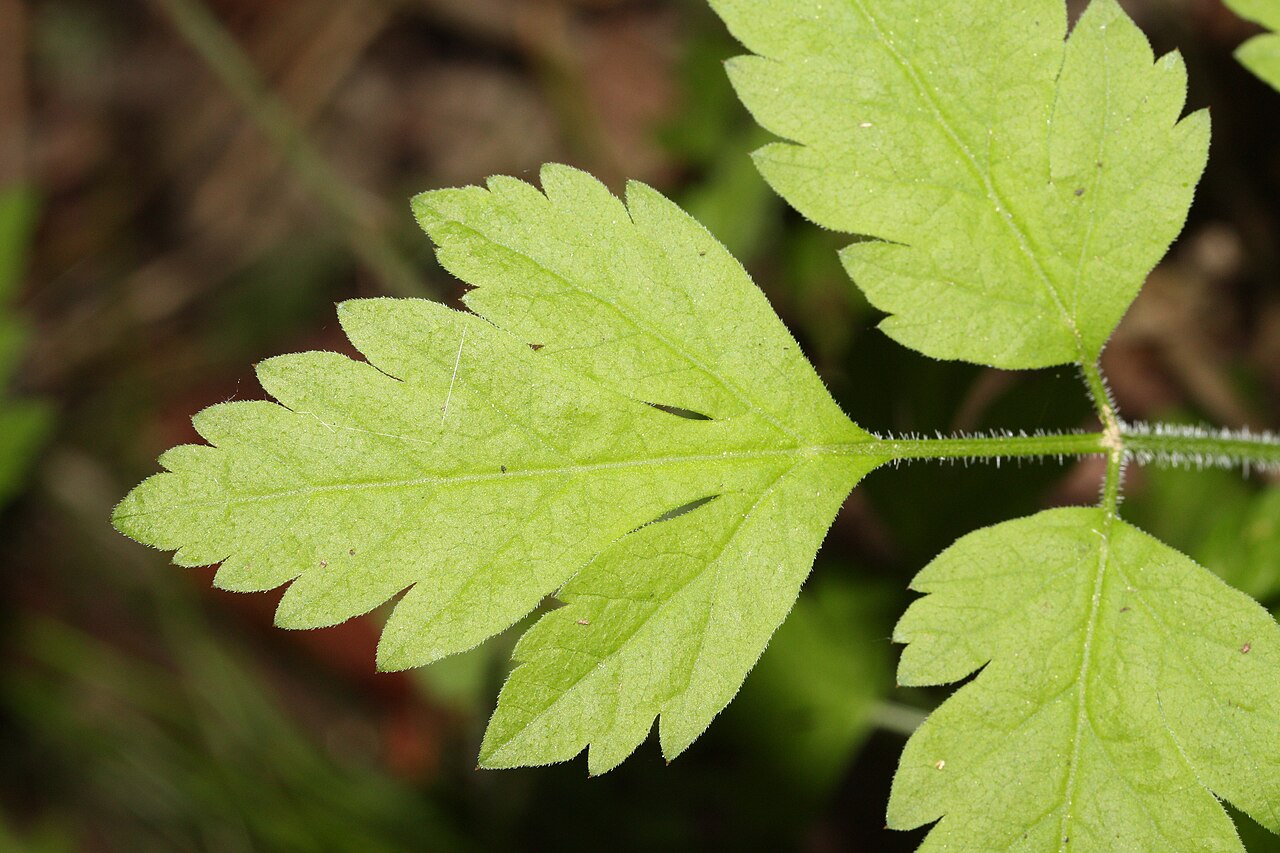
The leaves are mostly near the base and lower stem, on long stalks. Each blade is divided into three parts, and each of those into three again, giving nine (sometimes more) leaflets. The leaflets are ovate, about 1 to 2 1/2 inches long, thin and soft, with coarsely toothed to shallowly lobed edges, and are usually finely hairy.
Flowers
Flowers appear from about May to July, depending on elevation. They are tiny, greenish-white, and borne in a few small umbels at the tips of long, slender, nearly leafless stalks. Each compound umbel has only a few spreading rays, and there are no conspicuous bracts beneath it. The flowers are easy to overlook.
Fruit & Seeds
The fruits are the easiest way to recognize the plant. They are slender, club-shaped and about 1/2 to 3/4 inch long, broadest near the tip and tapering to a narrow, pointed base without a tail-like appendage. They are covered with stiff, upward-pointing bristles and turn dark brown to black when ripe. The barbed fruits hitch rides on animal fur and clothing, which spreads the seeds.
Look-alikes
Hairy sweet cicely (Osmorhiza claytonii) and aniseroot (Osmorhiza longistylis) of eastern forests have similar leaves and fruits, but their fruits end in a short tail at the base, and aniseroot has a strong licorice scent. Blunt-fruited sweet cicely (Osmorhiza depauperata) has club-shaped fruits with a rounded, blunt tip. Western sweet cicely (Osmorhiza occidentalis) is taller, has yellowish flowers, and has fruits without bristles.
Safety Notes
The roots and young leaves of sweet cicelies have been eaten, but the carrot family also includes deadly poisonous plants such as poison hemlock (Conium maculatum) and water hemlock (Cicuta species), which can look similar to the untrained eye. Never eat any wild member of the carrot family unless an expert has confirmed its identity.
Quick Facts
| Scientific Name | Osmorhiza berteroi |
| Family | Apiaceae (carrot family) |
| Plant Type | Herbaceous perennial wildflower |
| Mature Height | 1–3 ft |
| Mature Spread | 1–1.5 ft |
| Growth Rate | Moderate |
| Sun Exposure | Partial shade to full shade |
| Water Needs | Moderate; evenly moist soil |
| Soil Type | Rich, humusy, well-drained forest soil |
| Soil pH | About 5.5–7.0 |
| Bloom Time | May–July |
| Flower Color | Greenish-white |
| Fall Color | Yellowish; dies back in fall |
| Fruit | Slender, bristly, black club-shaped fruits |
| Deer Resistant | No; browsed by deer and elk |
| USDA Hardiness Zones | 3–8 |
Native Range
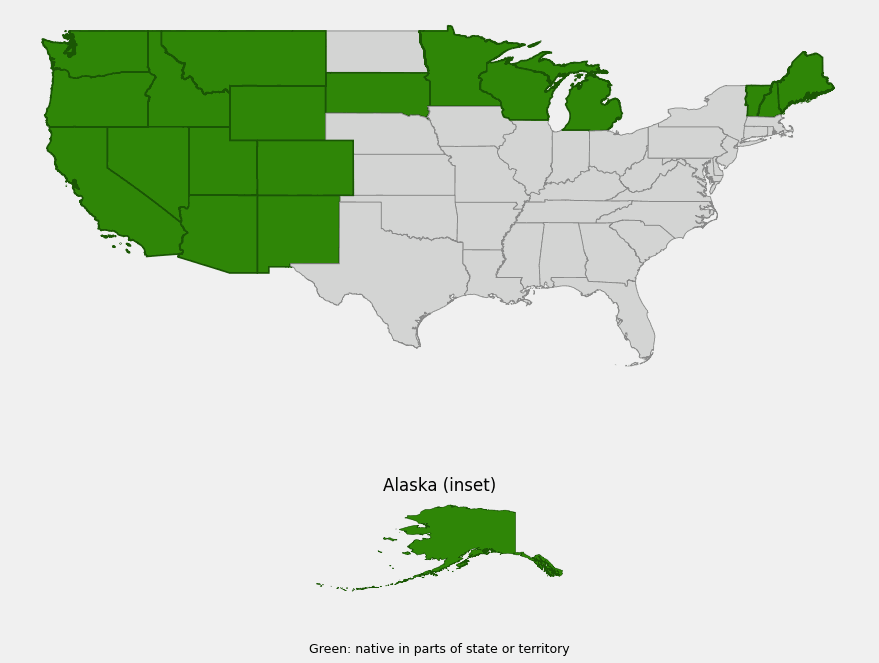
Mountain sweet cicely is native to western North America from southern Alaska and the Yukon south through British Columbia and Alberta to California, Arizona and New Mexico, and east to the Rocky Mountains and the Black Hills of South Dakota. A separate eastern group of populations grows around the upper Great Lakes and in northern New England and the Maritime provinces. It also occurs in the southern Andes of Chile and Argentina.
USDA PLANTS lists it as native in Alaska, Arizona, California, Colorado, Idaho, Maine, Michigan, Minnesota, Montana, Nevada, New Hampshire, New Mexico, Oregon, South Dakota, Utah, Vermont, Washington, Wisconsin and Wyoming. It is common in the Pacific Northwest and the northern Rockies, and much more local in the Great Lakes region and New England, where it often grows in cool, moist forests near Lake Superior and in the northern mountains.
Typical habitats are moist coniferous and mixed forests, aspen groves, shady streambanks, forest openings and the edges of mountain meadows, from near sea level in the Pacific Northwest to subalpine elevations in the Rockies.
📋 Regional plant lists featuring Mountain Sweet Cicely: Alaska · Western Oregon & Western Washington · Idaho, Eastern Oregon & Eastern Washington · California & Nevada · Montana & Wyoming · Utah & Western Colorado · Arizona & New Mexico · North Dakota, South Dakota & Western Minnesota · Michigan, Wisconsin & Eastern Minnesota · New Hampshire, Maine & Vermont
Growing & Care Guide
Mountain sweet cicely is rarely sold by nurseries, but it is easy to grow from seed collected responsibly (a small share from plentiful populations, with permission) or sourced from native seed suppliers. It suits naturalistic woodland gardens rather than formal beds.
Light
Grow it in partial to full shade, under trees or on the north side of buildings. It tolerates morning sun in cool climates but scorches and declines in hot afternoon sun.
Soil & Water
It prefers rich, moist, humusy forest soil with good drainage, such as a woodland floor with plenty of leaf litter. Keep the soil evenly moist, especially in spring and early summer. It will tolerate drier conditions in late summer, when plants naturally begin to fade.
Planting Tips
Plant it in drifts among ferns, western wild ginger, thimbleberry and other woodland plants, spaced about 12 inches apart. Its soft, lacy foliage softens the edges of paths and contrasts well with broad-leaved woodland plants. Because the bristly fruits cling to clothing and pets, keep it a little away from heavily used paths.
Pruning & Maintenance
Little care is needed. Leave fallen leaves around the plants as mulch. Plants self-sow modestly in good conditions; cut off fruiting stems before they ripen if you do not want seedlings. Foliage dies back by late summer or fall and can be left in place.
Propagation
Sow fresh seed outdoors in fall, where winter cold and moisture will break its dormancy, or give it about 90 days or more of cold, moist stratification before spring sowing. The long taproot makes established plants resent being moved, so transplant seedlings while small.
Landscape Uses
- Woodland and shade gardens: soft, fern-like foliage for moist shade
- Forest restoration: a common understory herb in western conifer forests
- Wildlife gardens: foliage for browsers, flowers for small pollinators
- Naturalistic plantings: self-sows modestly under trees
- Native plant education: an easy-to-recognize example of hitchhiking seeds
Wildlife & Ecological Value
Mountain sweet cicely is a small but widespread part of the forest understory, feeding pollinators, browsing animals and the insects that depend on the carrot family.
For Pollinators
The tiny flowers are visited by small bees, flies, small wasps and beetles.
For Birds
It is not an important bird food plant, but grouse and other ground-feeding birds forage among it, and the insects it supports feed forest songbirds.
For Mammals
Deer, elk and moose browse the foliage. The barbed fruits catch in the fur of passing mammals, which carry them to new sites.
Ecosystem Role
As a common understory herb in moist western forests, it helps cover and protect the forest floor and adds diversity to the herb layer. Its hitchhiking fruits make it an effective colonizer of gaps and trailsides.
Cultural & Historical Uses
The species is named for Carlo Giuseppe Bertero, an Italian physician and botanist who collected plants in Chile in the late 1820s, where the plant was first described. For many years North American botanists called it Osmorhiza chilensis, a name given by William Hooker and George Arnott, before Osmorhiza berteroi was recognized as the correct earlier name.
The genus name comes from the Greek osme, “smell,” and rhiza, “root,” for the aromatic roots of several species. The name “sweet cicely” was borrowed from the unrelated European herb Myrrhis odorata, which has a similar sweet anise scent.
Several Indigenous peoples of the Pacific Northwest and the Rockies used sweet cicely roots in traditional medicine. Its natural occurrence in both western North America and southern South America is a classic example of an “amphitropical” distribution, which botanists think resulted from long-distance seed dispersal, possibly by migrating birds.
Frequently Asked Questions
Is mountain sweet cicely edible?
Its roots and young leaves have been eaten, but it resembles deadly poisonous members of the carrot family such as poison hemlock and water hemlock. Never eat it unless an expert has confirmed the identification.
Why do the seeds stick to my clothes?
The long, slender fruits are covered with stiff, upward-pointing bristles that catch on fur and fabric. This is how the plant spreads its seeds through the forest.
Where does mountain sweet cicely grow?
In moist forests from Alaska to California and New Mexico, east to the Rockies and the Black Hills, with scattered populations near the upper Great Lakes and in northern New England. It also grows in Chile and Argentina.
How is it different from hairy sweet cicely?
Hairy sweet cicely grows in eastern hardwood forests, and its fruits end in a short tail at the base. Mountain sweet cicely is mainly western, and its fruits taper to a pointed base without a tail.
Can I grow mountain sweet cicely in my garden?
Yes, in moist, rich, shady soil within its native range. Sow fresh seed outdoors in fall for best results.

Looking for a nursery that carries Mountain Sweet Cicely?
Browse our native plant nursery directory: Alaska & Arizona · California · Colorado · Idaho · Maine, Michigan, Minnesota & Montana · Nevada, New Hampshire & New Mexico · Oregon · South Dakota, Utah & Vermont · Washington · Wisconsin & Wyoming

