
Kalm’s Lobelia (Lobelia kalmii)
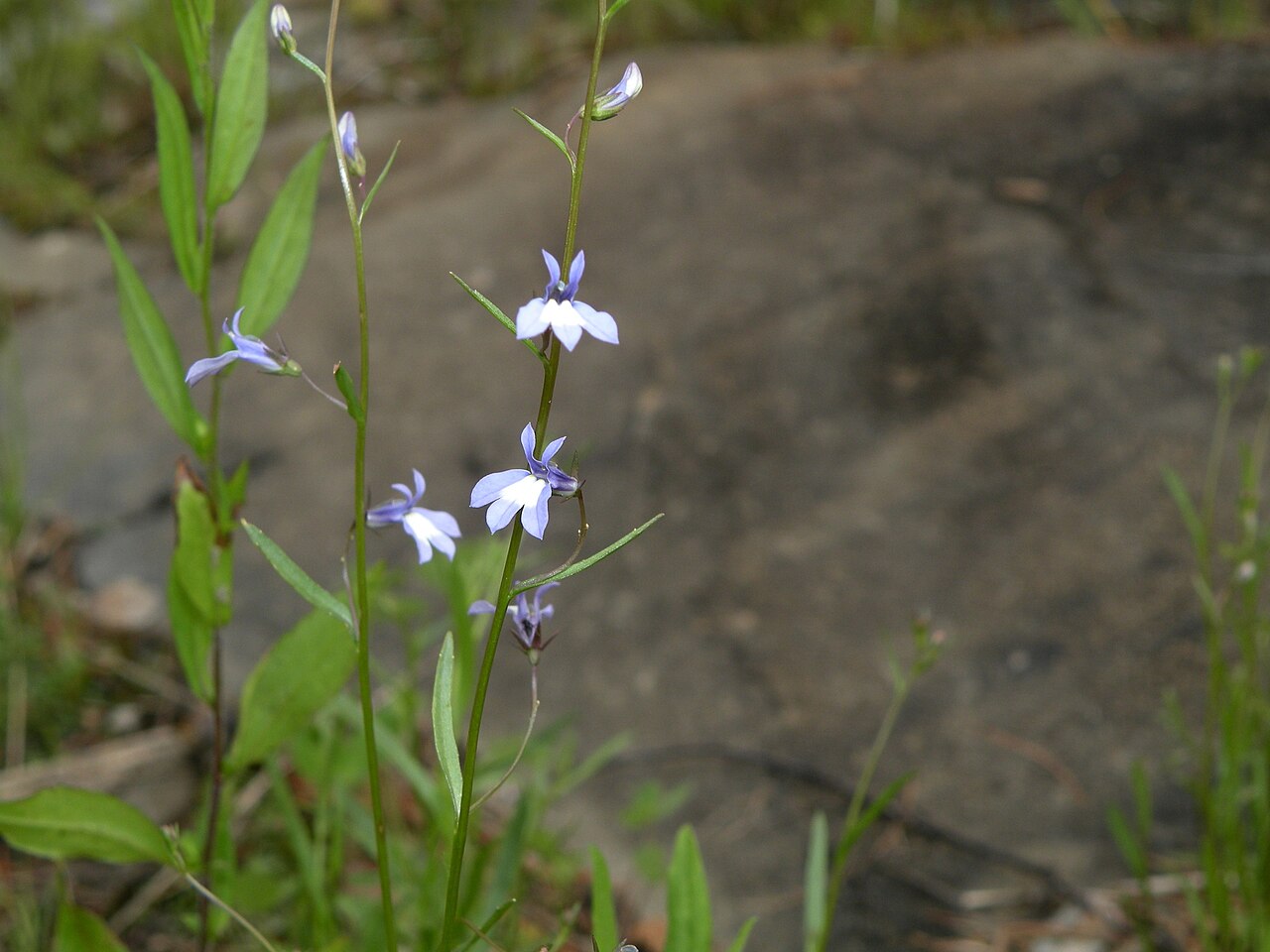
Lobelia kalmii, known as Kalm’s Lobelia and also as Ontario lobelia (the USDA PLANTS name) and brook lobelia, is a small, slender wildflower of fens, wet limestone shores and other open, calcium-rich wetlands across northern North America. It belongs to the bellflower family (Campanulaceae).
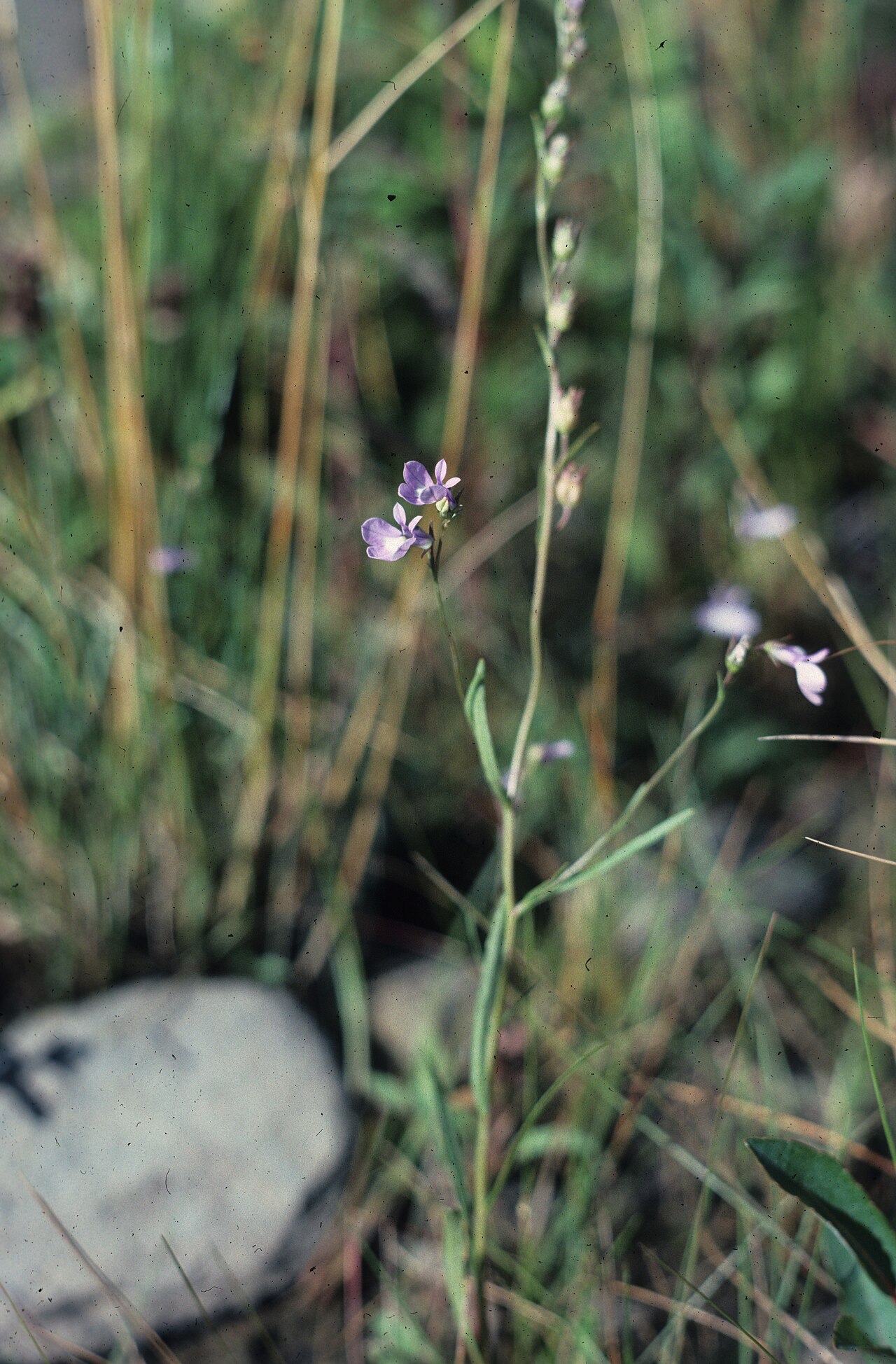
Plants are usually 4 to 16 inches tall, with a rosette of small, spoon-shaped basal leaves and a thin stem carrying narrow leaves and a loose spike of small, light blue flowers with a white eye. They bloom from July into September, often in large numbers in open fens and interdunal swales. It is a perennial, though many individual plants are short-lived.
Kalm’s lobelia is a good indicator of high-quality calcareous wetlands, which are rare and easily damaged. It is uncommon in many states and protected in several. Safety note: like other lobelias, it contains toxic alkaloids, including lobeline, and should not be eaten or used as a home remedy.
Identification
Look for a very slender, few-leaved stem with small, sky-blue lobelia flowers spaced along the top, growing in a wet, open, limy place such as a fen or rocky lakeshore.
Growth Habit
A small, upright perennial, usually 4 to 16 inches tall (rarely to about 20 inches), with one to several thin, smooth stems from a small basal rosette. Plants often form loose colonies.
Leaves
The basal leaves are spoon-shaped to oval, up to about 1 inch long, and often wither by flowering time. The stem leaves are alternate, narrow and linear, about 1/2 to 2 inches long and less than 1/4 inch wide, becoming smaller upward. They are smooth and often slightly fleshy.
Flowers
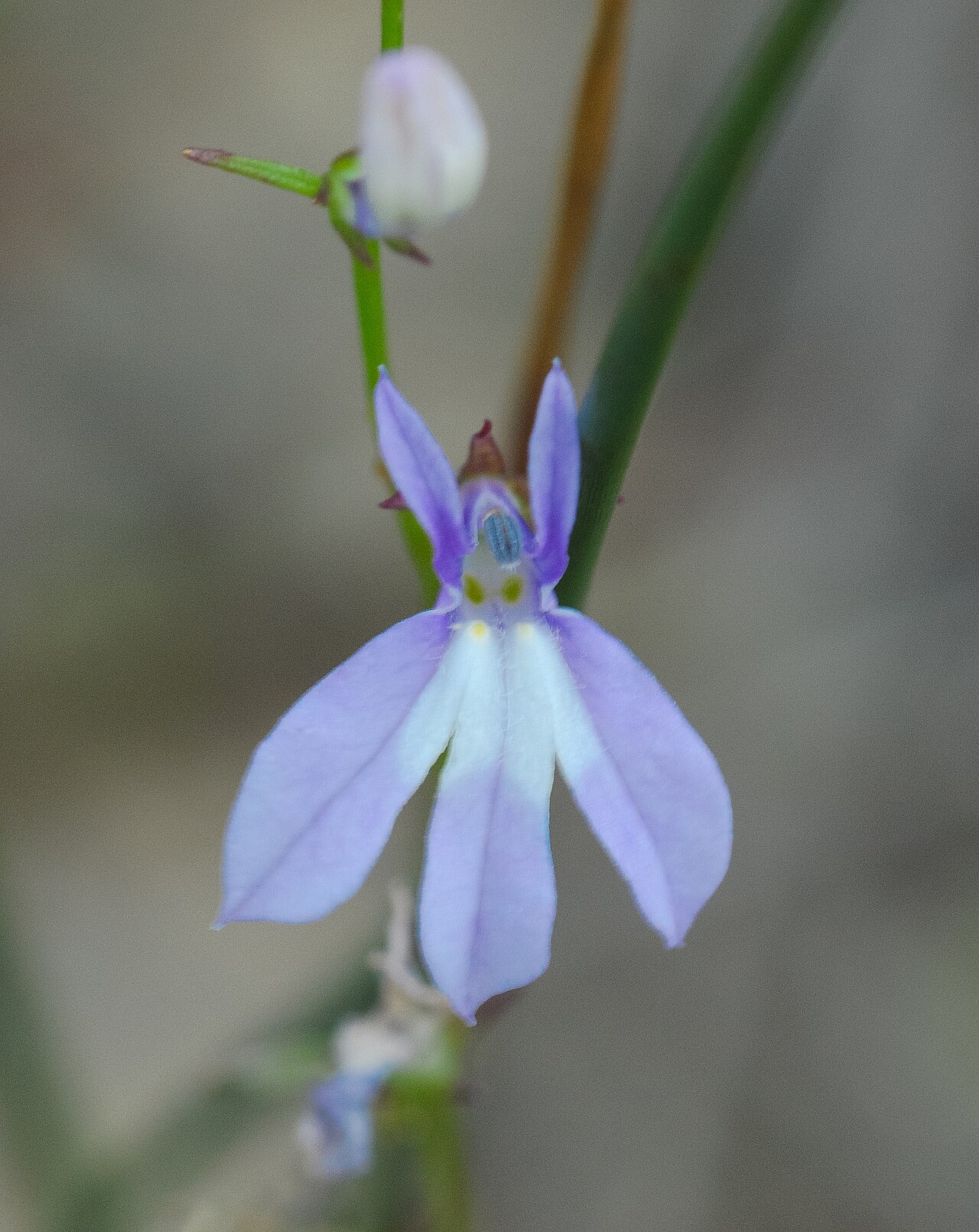
The flowers are about 1/3 to 1/2 inch long, light blue to blue-violet with a white or pale center, on slender stalks that bear tiny bractlets. Like other lobelias, each flower has two narrow upper lobes and a broader, three-lobed lower lip, with the fused stamens forming a tube in the center. They open a few at a time from July into September.
Fruit & Seeds
The fruit is a small capsule that splits open at the top to release many tiny brown seeds.
Look-alikes
Pale-spiked lobelia (Lobelia spicata) has a dense spike of very pale flowers on almost stalkless pedicels and wider leaves. Water lobelia (L. dortmanna) grows in water, with a rosette of hollow, submerged leaves. Indian tobacco (L. inflata) is a hairy annual with inflated seed pods. Great blue lobelia (L. siphilitica) is much larger, with big, dark blue flowers.
Quick Facts
| Scientific Name | Lobelia kalmii |
| Family | Campanulaceae (bellflower family) |
| Plant Type | Short-lived herbaceous perennial |
| Mature Height | 4–16 in |
| Mature Spread | 3–6 in |
| Growth Rate | Moderate |
| Sun Exposure | Full sun to light shade |
| Water Needs | High; constantly moist to wet |
| Soil Type | Wet calcareous peat, marl, sand or gravel |
| Soil pH | Neutral to alkaline (about 7.0–8.5) |
| Bloom Time | July–September |
| Flower Color | Light blue with a white center |
| Fall Color | None notable |
| Fruit | Small capsule with tiny seeds |
| Deer Resistant | Yes; toxic alkaloids |
| USDA Hardiness Zones | 2–6 |
Native Range
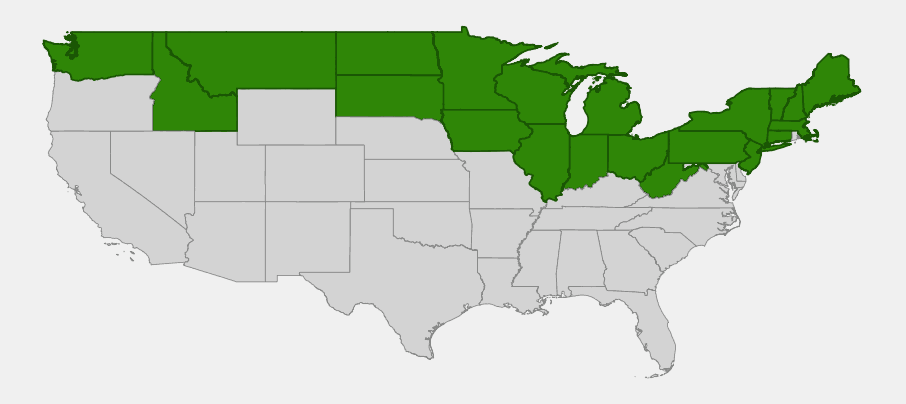
Kalm’s lobelia is native across northern North America. USDA PLANTS lists it from Maine, New Hampshire, Vermont, Massachusetts and Connecticut west through New York, New Jersey, Pennsylvania, West Virginia, Ohio, Indiana, Illinois, Michigan, Wisconsin, Iowa and Minnesota to North Dakota, South Dakota, Montana, Idaho and Washington. In Canada it grows from Newfoundland and the Maritime Provinces west through Quebec, Ontario and the Prairie Provinces to British Columbia, and north into the Northwest Territories.
It is most common around the Great Lakes, especially in Michigan, Wisconsin, Ontario and northern New York, where limestone and dolomite shores and fens are widespread. Southward and westward it becomes local and rare. In New Jersey, Pennsylvania, West Virginia, Iowa and the Dakotas it is known from scattered fens and seeps, and in the West it reaches northwestern Montana, northern Idaho and northeastern Washington, east of the Cascades.
It grows in open, wet, calcium-rich places: fens, marly lakeshores, wet limestone and dolomite pavements and alvars, interdunal swales along the Great Lakes, seepy cliffs, river gravel bars and wet meadows. It needs constant moisture and little competition from taller plants.
📋 Regional plant lists featuring Kalm’s Lobelia: New York, Pennsylvania & Northern New Jersey · Idaho, Eastern Oregon & Eastern Washington · Ohio & Indiana · Montana & Wyoming · Michigan, Wisconsin & Eastern Minnesota · Connecticut, Massachusetts & Rhode Island · New Hampshire, Maine & Vermont · Maryland, Virginia & West Virginia · Delaware, Southern New Jersey & Long Island · Illinois, Iowa & Missouri · North Dakota, South Dakota & Western Minnesota
Growing & Care Guide
Kalm’s lobelia is rarely offered by nurseries and is a challenge to grow, because it depends on constantly wet, limy, open ground with little competition. It is best suited to a sunny bog or fen garden, the edge of a spring-fed pond, or restoration of a damaged fen. Never dig it from wild fens, which are fragile and often protected.
Light
Full sun to light shade. It disappears when taller plants or shrubs shade it out.
Soil & Water
Grow it in constantly moist to wet, neutral to alkaline soil, such as a mix of sand, marl or limestone grit and a little peat, fed by clean, hard water. Never let the soil dry out. Unlike most bog plants, it prefers lime-rich conditions.
Planting Tips
Plant small plugs or sow seed in spring at the edge of a pond, stream or artificial fen, in open, sparsely vegetated spots. Grow it among low sedges and other small fen plants rather than vigorous perennials.
Pruning & Maintenance
Keep taller plants, cattails and invasive reed grass from crowding it. Let plants set seed, because individual plants are often short-lived and the colony depends on new seedlings. Wear gloves when handling it and keep it away from children and pets.
Propagation
From seed. Sow the tiny seeds on the surface of moist, limy mix in fall, or cold-stratify them for about two months and sow in spring; do not cover them, because they need light to germinate. Keep the mix wet. Plants often bloom in their second year.
Landscape Uses
- Fen and bog gardens: a dainty blue flower for wet, limy ground
- Pond and stream edges: grows in moist gravel and sand at the water’s edge
- Wetland restoration: a characteristic species of calcareous fens and shore swales
- Pollinator gardens: late-summer flowers for small bees
- Rock gardens: for constantly wet, seepy pockets in limestone
Wildlife & Ecological Value
Kalm’s lobelia is part of the rich and specialized plant community of northern fens and limy shores, some of the most diverse wetlands in North America.
For Pollinators
Its small blue flowers are visited mainly by small bees, such as sweat bees and other solitary bees, as well as bee flies and small butterflies.
For Birds
It has little direct value for birds.
For Mammals
Because of its alkaloids, it is rarely eaten by deer or other mammals.
Ecosystem Role
Kalm’s lobelia is an indicator of healthy calcareous fens and shore wetlands, which support many rare plants and insects. Its presence often signals the groundwater-fed, lime-rich conditions that these communities need, and it declines when fens are drained, polluted or overgrown by invasive plants.
Cultural & Historical Uses
The species is named for Pehr Kalm, a Swedish-Finnish naturalist and student of Linnaeus who traveled in eastern North America from 1748 to 1751 and collected plants in New York, Pennsylvania and Quebec. The genus Lobelia honors Matthias de l’Obel, a 16th-century Flemish botanist.
Lobelias contain alkaloids such as lobeline, and some species were used in folk medicine, which led to cases of poisoning. Kalm’s lobelia should not be used medicinally or eaten.
Because calcareous fens are rare and easily damaged by drainage, development and changes in groundwater, Kalm’s lobelia is listed as rare, threatened or endangered in several states at the edges of its range. Protecting fens and their groundwater supply is the best way to conserve it.
Frequently Asked Questions
Why is it called Kalm’s lobelia?
It is named for Pehr Kalm, a student of Linnaeus who collected plants in eastern North America in the 1700s. USDA PLANTS calls it Ontario lobelia, and it is also known as brook lobelia.
Is Kalm’s lobelia poisonous?
Yes. Like other lobelias, it contains toxic alkaloids, including lobeline. Do not eat it or use it as a home remedy, and keep it away from children and pets.
Where does Kalm’s lobelia grow?
In open, wet, lime-rich places such as fens, marly lakeshores, wet limestone pavements and interdunal swales, mainly around the Great Lakes and across Canada.
Can I grow Kalm’s lobelia in my garden?
Only in a constantly wet, sunny, limy spot such as a fen garden or a spring-fed pond edge. It does not tolerate dry soil or competition from taller plants.
How is Kalm’s lobelia different from great blue lobelia?
Kalm’s lobelia is small and slender, with narrow leaves and a few small, light blue flowers. Great blue lobelia is 2 to 3 feet tall, with large, dark blue flowers in a dense spike.

Looking for a nursery that carries Kalm’s Lobelia?
Browse our native plant nursery directory: Connecticut · Idaho, Illinois, Indiana & Iowa · Maine, Massachusetts, Michigan, Minnesota & Montana · New Hampshire, New Jersey, New York, North Dakota & Ohio · Pennsylvania, South Dakota & Vermont · Washington · West Virginia & Wisconsin

