
American Alpine Speedwell (Veronica wormskjoldii)
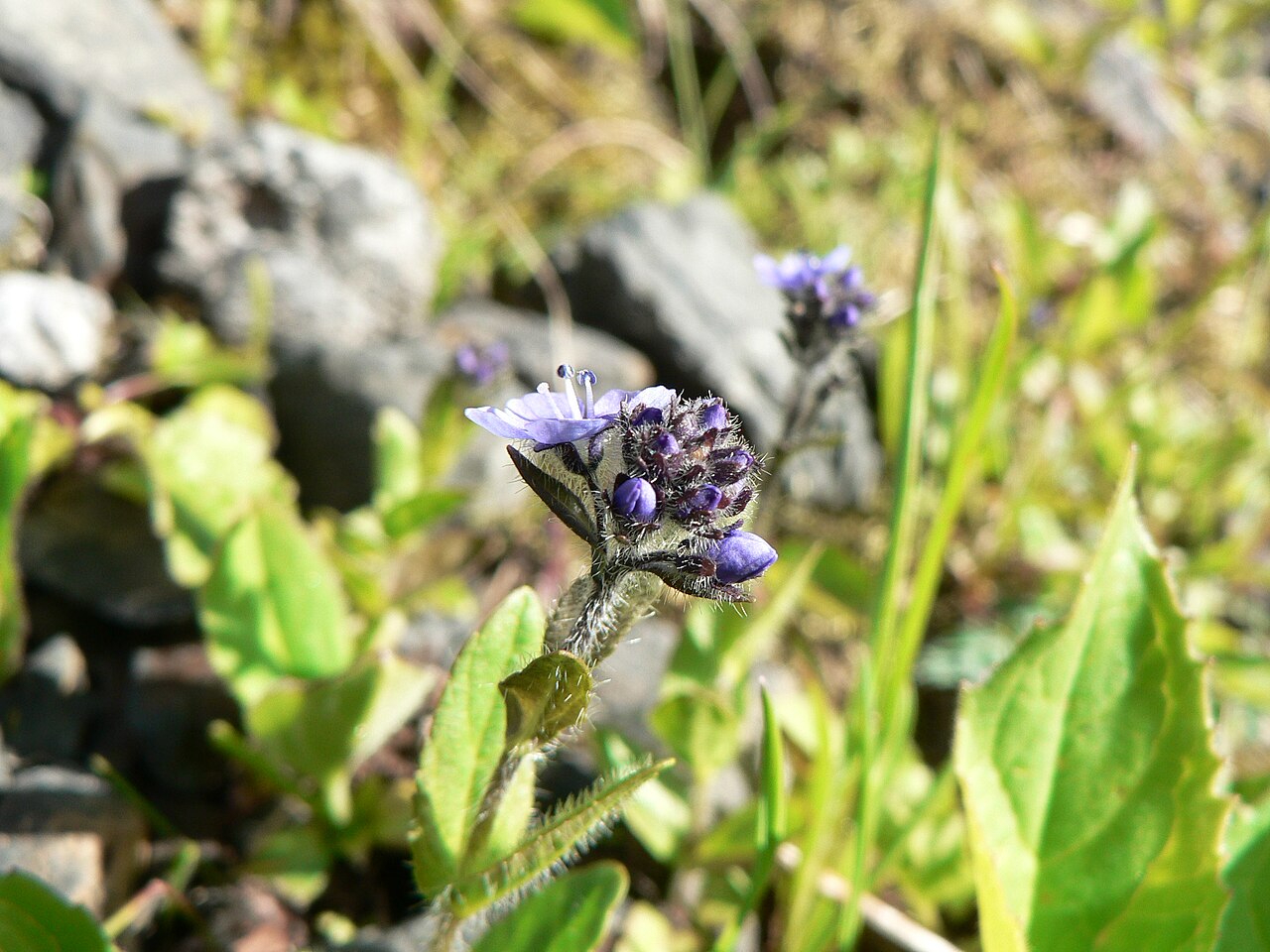
Veronica wormskjoldii, known as American Alpine Speedwell, alpine speedwell or hairy speedwell, is a small perennial wildflower of moist mountain meadows across western North America and the Arctic. In mid to late summer, upright, hairy stems 4 to 16 inches tall end in a compact cluster of dark, fuzzy buds that open a few at a time into small, deep blue to blue-violet flowers. It is a common sight along snowmelt streams, wet meadows and seeps near and above timberline.
It belongs to the plantain family (Plantaginaceae), where speedwells are now placed after being moved from the figwort family. Its range is unusually wide, from Alaska and the Canadian Arctic to Greenland, south through the Rocky Mountains to New Mexico and Arizona and through the Cascades and Sierra Nevada to California, with outlying populations in the high mountains of Maine and New Hampshire.
American alpine speedwell is a native of cool, wet, high places, and it is rarely grown in gardens outside rock and alpine gardens in cold climates. This guide covers how to recognize it, where it grows, and how it fits into the alpine meadow community.
Identification
Several speedwells grow in western mountains. American alpine speedwell is recognized by its upright, unbranched, hairy stems with a dense, glandular-hairy cluster of small dark blue flowers at the top, rather than flowers spread along the stem or in the leaf axils.
Growth Habit
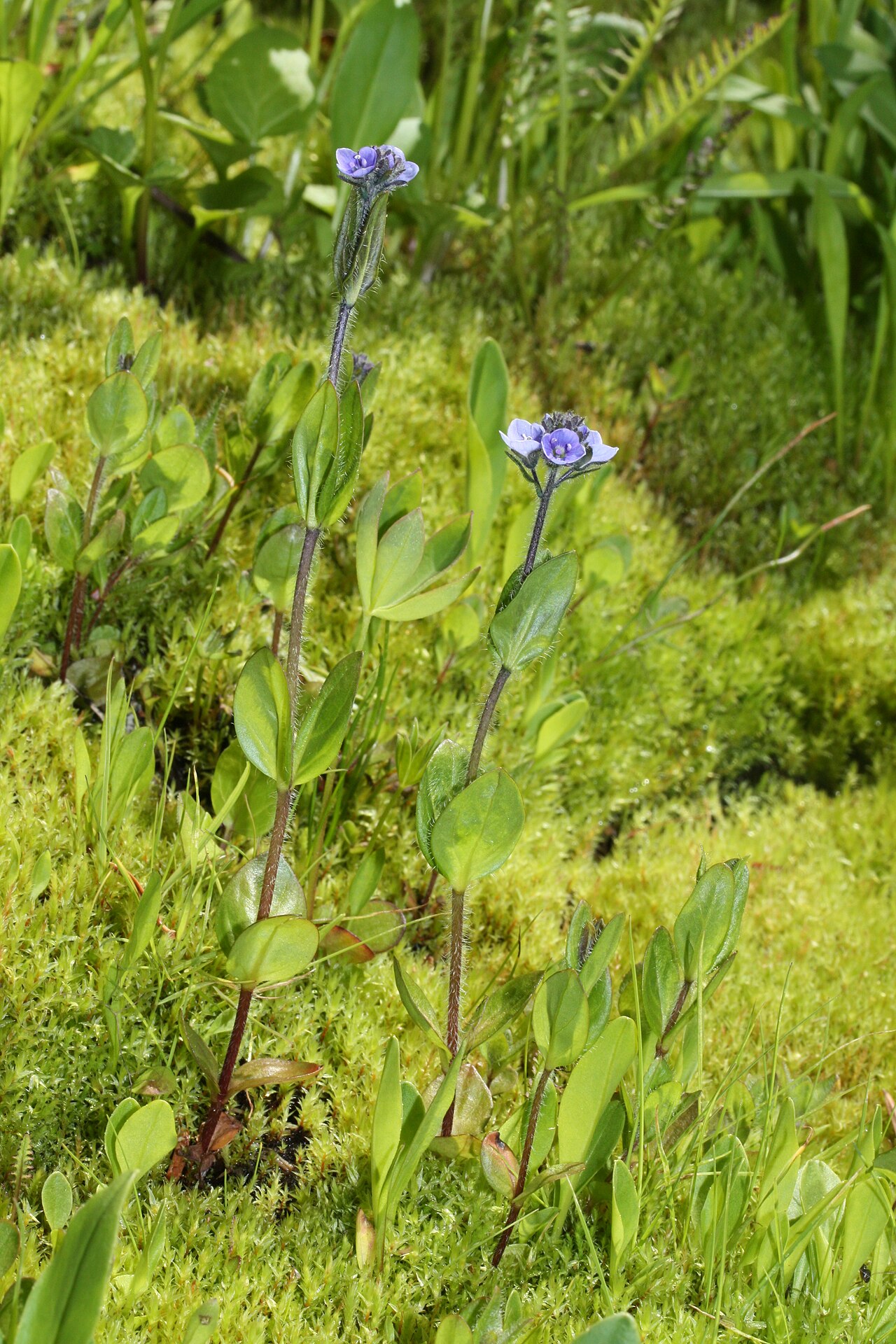
A perennial that grows from slender, creeping rhizomes, often forming small patches. The stems rise from a curved base and stand 4 to 16 inches tall (rarely more), usually unbranched and covered with long, soft, spreading hairs that become sticky-glandular near the flowers.
Leaves
Leaves are opposite, stalkless, oval to elliptic, about ¾ to 1½ inches long, with smooth or slightly toothed edges and a covering of fine hairs. There are typically three to six pairs along the stem.
Flowers
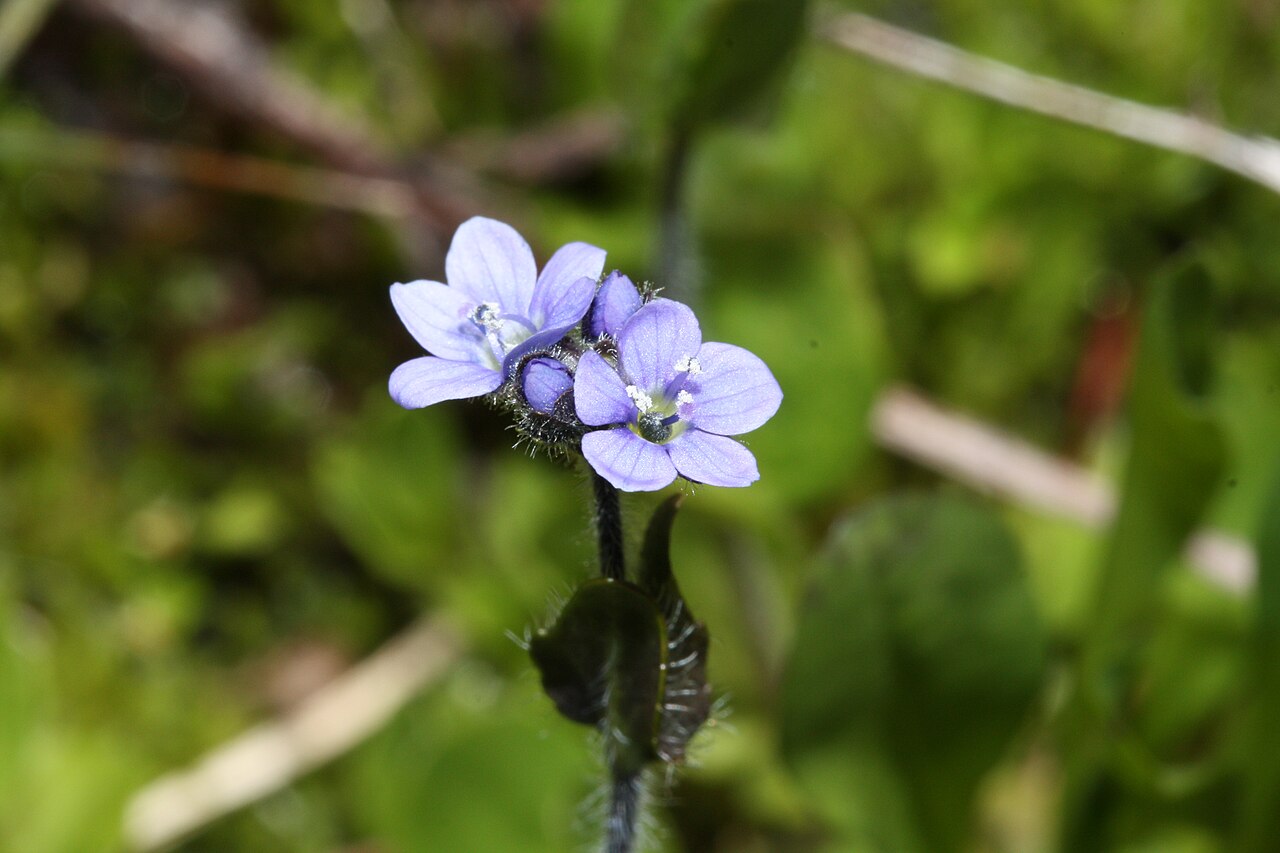
The flowers are crowded into a short, dense raceme at the stem tip that lengthens as it matures. Each flower is about ¼ to ⅜ inch across, with four (occasionally five) unequal, rounded, deep blue to blue-violet lobes, often with darker veins and a paler center, and two stamens. The sepals and flower stalks are hairy and glandular. It blooms from late June to August, as snow melts from its meadows.
The similar Cusick’s speedwell (Veronica cusickii) of the Northwest has larger, deeper violet flowers, nearly hairless leaves, and a long protruding style. American brooklime (Veronica americana) grows in water and carries its flowers in stalked clusters from the leaf axils.
Fruit & Seeds
The fruit is a small, flattened, notched capsule about ¼ inch long, hairy like the rest of the plant, containing many tiny, flattened seeds.
Quick Facts
| Scientific Name | Veronica wormskjoldii Roem. & Schult. (syn. V. nutans, V. alpina var. wormskjoldii) |
| Family | Plantaginaceae (plantain family) |
| Plant Type | Herbaceous perennial from rhizomes |
| Mature Height | 4–16 in |
| Mature Spread | 6–12 in; forms small patches |
| Growth Rate | Slow to moderate |
| Sun Exposure | Full sun to partial shade |
| Water Needs | Moist to wet; consistently moist in summer |
| Soil Type | Moist gravelly, loamy or peaty soils of mountain meadows |
| Soil pH | Slightly acidic to neutral (about 5.5–7.0) |
| Bloom Time | Late June–August |
| Flower Color | Deep blue to blue-violet |
| Fall Color | None notable |
| Fruit | Small, hairy, notched capsule |
| Deer Resistant | Moderate |
| USDA Hardiness Zones | 2–7 |
Native Range
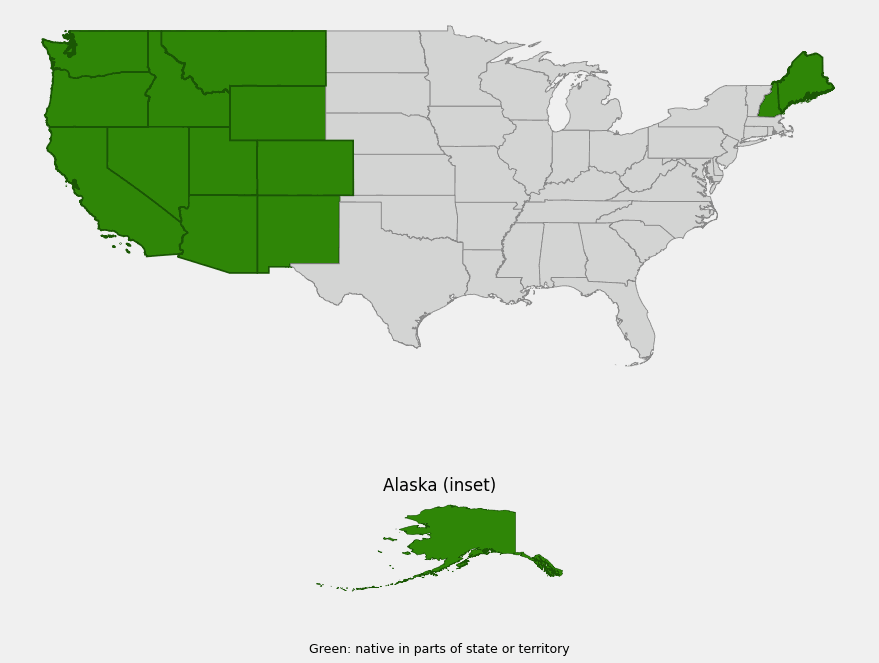
American alpine speedwell has a broad northern and western range. USDA PLANTS lists it as native in Alaska and in 13 western and northeastern states: Washington, Oregon, California, Idaho, Nevada, Montana, Wyoming, Utah, Colorado, Arizona and New Mexico in the West, and Maine and New Hampshire in the East. In Canada it grows from British Columbia and Yukon east through Alberta, the Northwest Territories, Nunavut, Ontario and Quebec to Newfoundland and Labrador, and it also occurs in Greenland.
Two subspecies are recognized. The western subspecies, alterniflora, covers the Rocky Mountains, Cascades, Sierra Nevada and Great Basin ranges. The typical subspecies grows in the eastern Arctic and Greenland, reaching south to the alpine zones of Mount Katahdin in Maine and the White Mountains of New Hampshire, where it is a rare plant. In the Southwest, the populations of northern New Mexico and Arizona’s high peaks are at the southern edge of its range.
Its habitat is moist, open ground in the subalpine and alpine zones: wet meadows, streambanks, seeps, snowbed margins, and damp openings in high-elevation forest. Farther north it descends to lower elevations in tundra and boreal meadows.
📋 Regional plant lists featuring American Alpine Speedwell: Alaska · Idaho, Eastern Oregon & Eastern Washington · Western Oregon & Western Washington · California & Nevada · Montana & Wyoming · Utah & Western Colorado · Arizona & New Mexico · New Hampshire, Maine & Vermont
Growing & Care Guide
American alpine speedwell is a plant of cold, wet mountain meadows and is rarely available in the nursery trade. It can be grown by specialists in rock or alpine gardens in cold climates with cool summers. In most lowland gardens, especially where summers are hot or humid, it does not thrive.
Light
Full sun in cool climates, or light afternoon shade where summers are warmer. In the wild it grows in open meadows that receive bright light but stay cool.
Soil & Water
It needs gritty, humus-rich soil that stays evenly moist through the summer, similar to the snowmelt-fed soils of alpine meadows. Good drainage combined with steady moisture is ideal: a bog edge, the edge of a trough, or a moist scree bed.
Planting Tips
Use nursery-grown plants or seed from reputable sources; never dig plants from mountain meadows, which recover very slowly. Place it near a water feature or in a moist pocket of a rock garden with small alpine companions.
Pruning & Maintenance
Little care is needed. Keep it from drying out in summer, and avoid crowding by vigorous lowland perennials. Stems can be cut back after seeds ripen.
Propagation
Sow seed in fall or give it several weeks of cold, moist stratification before spring sowing. Established patches can be divided carefully in early spring.
Landscape Uses
- Alpine and rock gardens: for specialists in cold, cool-summer climates
- Bog and stream margins: where soil stays cool and moist
- High-elevation restoration: moist meadows and streambanks
- Pollinator support in mountain meadows: small blue flowers for bees and flies
- Wildflower viewing: common along high-country trails in July and August
Wildlife & Ecological Value
American alpine speedwell is a modest but widespread member of the wet alpine meadow community.
For Pollinators
The small, open blue flowers are visited by flies, including flower flies, and small native bees, which are the most active pollinators in cold mountain meadows. Speedwell flowers offer easily reached nectar and pollen.
For Birds
The tiny seeds are of minor value, but white-tailed ptarmigan, rosy-finches and other alpine birds forage in the meadows where it grows.
For Mammals
Elk, deer, mountain goats, pikas and marmots graze in alpine meadows and may eat it along with other low herbs.
Ecosystem Role
It is a characteristic herb of moist subalpine and alpine meadows and snowbed communities. Its rhizomes help bind wet, gravelly soils along streams. Like other alpine plants, it is sensitive to trampling and to warming and drying of high-elevation meadows.
Cultural & Historical Uses
The species name honors Morten Wormskjold (1783–1845), a Danish botanist who collected plants in Greenland in 1812–1813, gathering many species new to science. Johann Jacob Roemer and Josef August Schultes formally described the species in 1817.
The genus Veronica is traditionally linked to Saint Veronica, and the English name speedwell is an old wish of good luck to a traveler, perhaps because the flowers drop easily as people pass by. Many speedwells were used in European folk medicine.
For hikers in the Cascades, Rockies and Sierra Nevada, American alpine speedwell is one of the small blue flowers that mark high summer in wet meadows, often blooming among elephant’s head, marsh marigolds and monkeyflowers.
Frequently Asked Questions
Where does American alpine speedwell grow?
In moist subalpine and alpine meadows of western North America from Alaska to Arizona and New Mexico, across the Canadian Arctic to Greenland, and in the high mountains of Maine and New Hampshire.
Can I grow American alpine speedwell in my garden?
Only in cold climates with cool summers, in a consistently moist, gritty spot such as a bog edge or moist rock garden. It does poorly in hot, humid lowland gardens.
How do I recognize it?
Look for upright, hairy, unbranched stems 4 to 16 inches tall with pairs of stalkless oval leaves and a dense cluster of small, deep blue to violet flowers at the top.
When does it bloom?
From late June to August, as snow melts in its mountain meadows.
Is it rare?
It is common in western mountains, but in New England it is a rare alpine plant known only from a few high peaks.

Looking for a nursery that carries American Alpine Speedwell?
Browse our native plant nursery directory: Alaska & Arizona · California · Colorado · Idaho · Maine & Montana · Nevada, New Hampshire & New Mexico · Oregon · Utah · Washington · Wyoming

