
Great Basin Sand Verbena (Abronia elliptica)
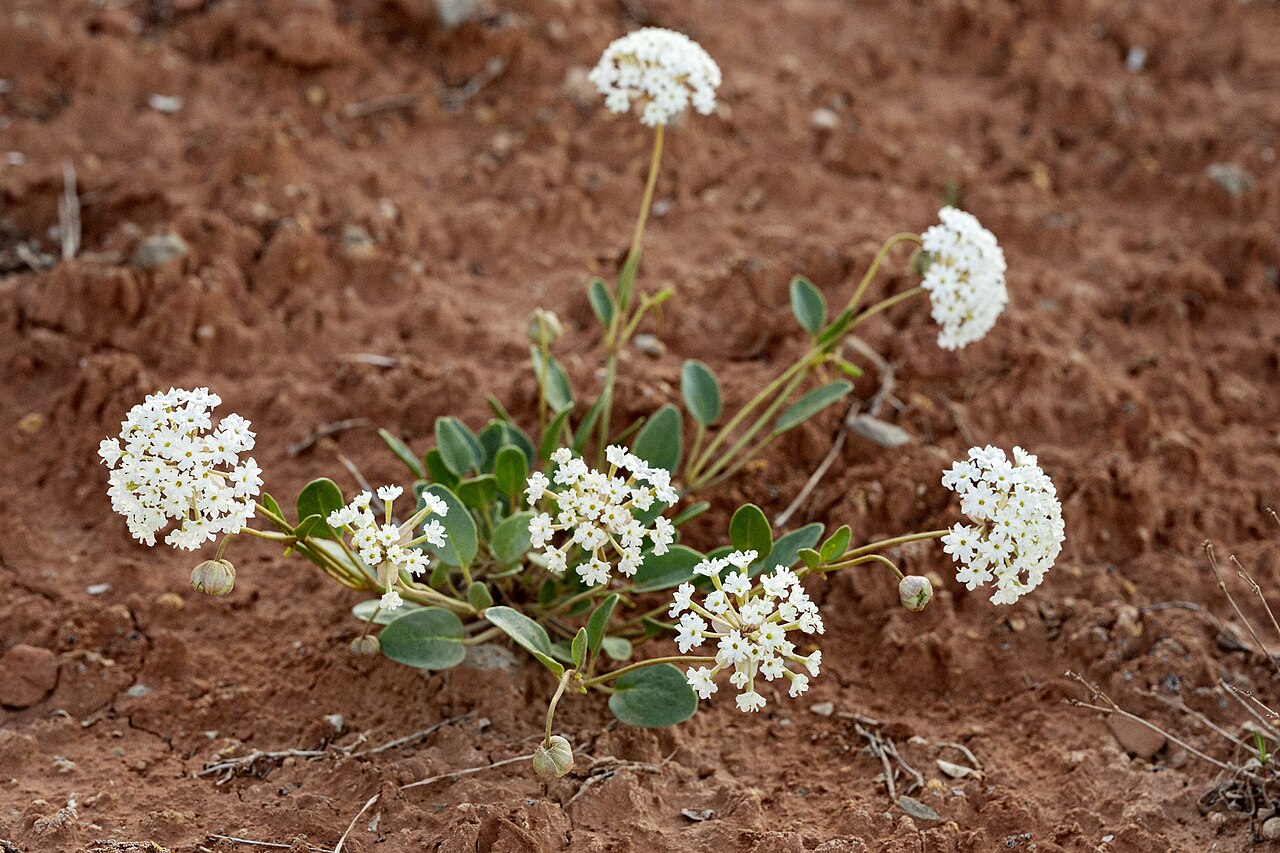
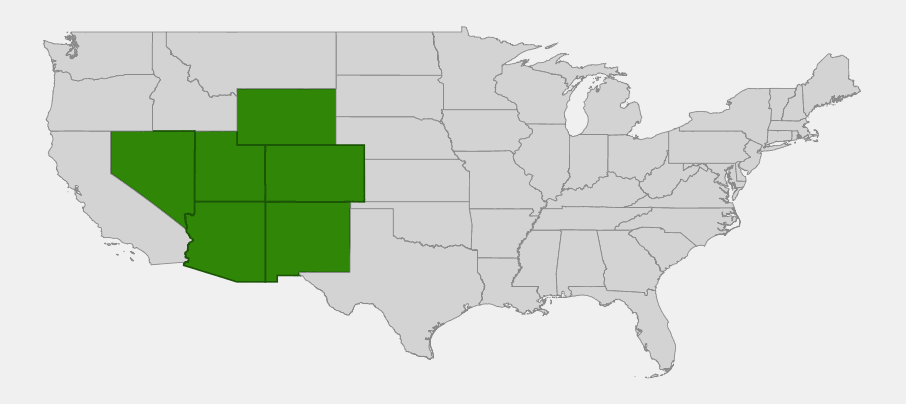
Abronia elliptica, known as Great Basin Sand Verbena, western sand verbena or, in USDA PLANTS, fragrant white sand verbena, is a low perennial wildflower of sandy deserts and dry grasslands in the interior West. It grows from central Nevada and Utah east to western Colorado, south to northern Arizona and northwestern New Mexico, and north into Wyoming.
It forms a low, sprawling clump of sticky, gray-green, oval leaves with rounded heads of small white flowers held above them on short stalks. The flowers open in late afternoon and evening and give off a sweet, heavy fragrance that carries across the sand on still nights. Through most of its range it is the only sand verbena with white flowers.
Great Basin sand verbena is not a true verbena; it belongs to the four o’clock family. In gardens it is a specialist for deep sand and very dry conditions. This guide covers how to identify it, how it differs from the closely related prairie sand verbena, where it grows, how to grow it and what it does for night-flying pollinators.
Identification
Great Basin sand verbena is easy to recognize as a sand verbena by its sticky leaves, white flower heads and papery winged fruits. The harder part is telling it from prairie sand verbena, which some botanists consider the same species.
Growth Habit
Plants are perennials from a deep, woody taproot, with several stems that sprawl or rise to 4 to 16 inches. The stems are often reddish and covered with short, sticky glandular hairs, so they are usually coated with grains of sand. Plants often look like low, loose mounds on open sand.
Leaves
The leaves are opposite, on long stalks, with oval to elliptic, rather thick blades about 1/2 to 2 inches long. They are gray-green, smooth to finely hairy and somewhat sticky, with wavy or slightly rolled edges. The species name elliptica refers to the leaf shape.
Flowers
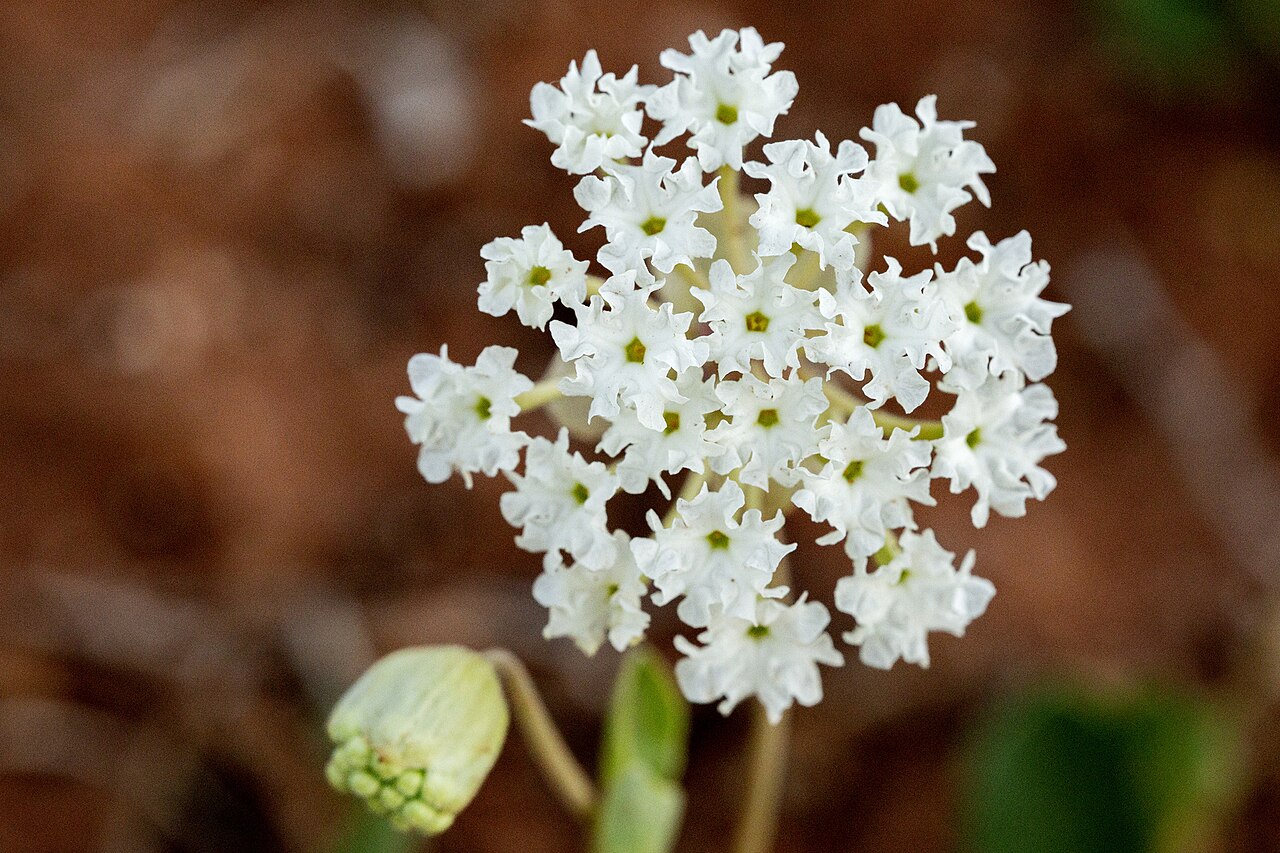
Dense, rounded heads of 25 or more flowers sit at the ends of stalks from the leaf axils, each head surrounded by small, papery bracts. Each flower has a slender tube about 1/2 to 1 inch long that flares into a white (rarely pinkish) star-shaped face. There are no true petals; the showy part is the colored calyx, as in other four o’clocks. The flowers open in the evening and are most fragrant at night. Bloom runs from spring into late summer.
Fruit
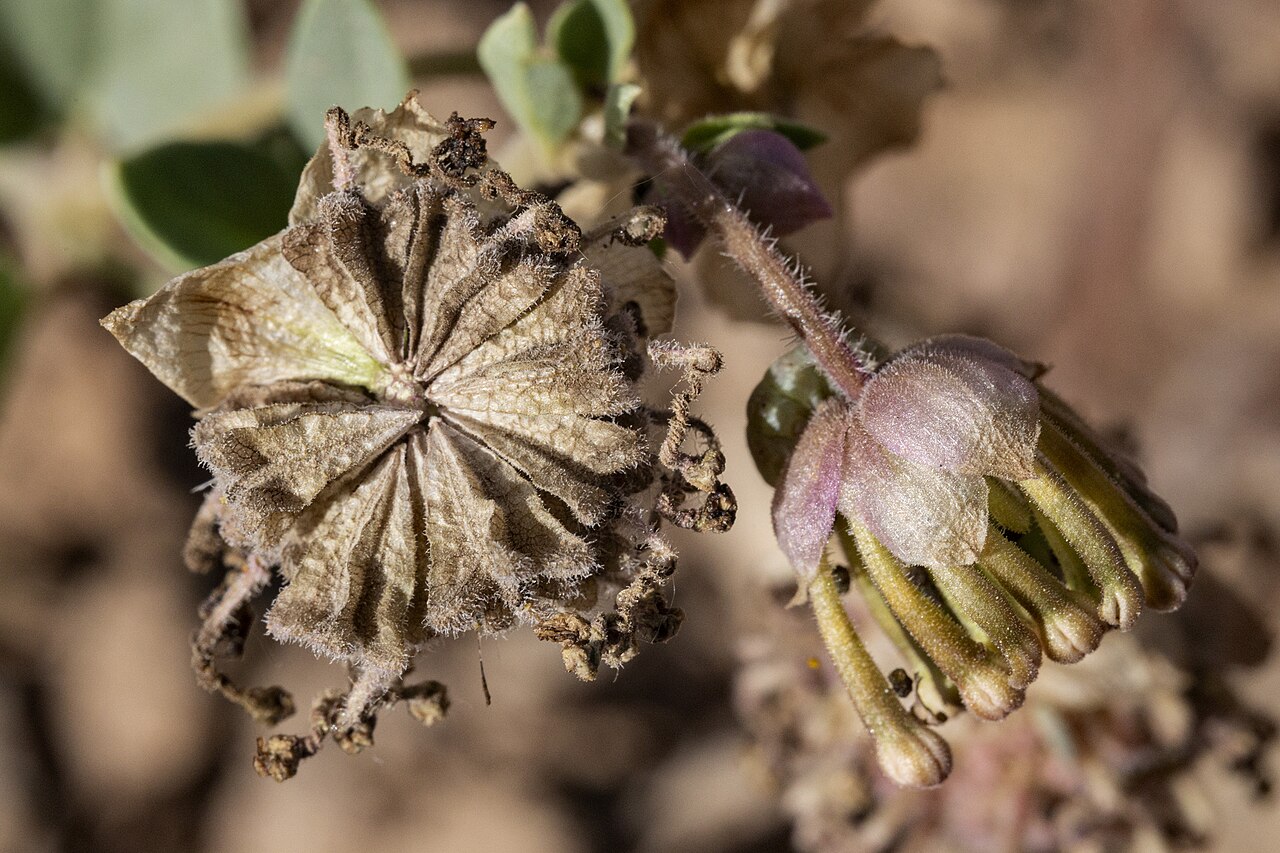
The fruits are dry, papery and winged, usually with three to five broad wings, and form rounded, tan clusters after flowering. In this species the wings typically end in small, thickened, spongy pads on top. These light, winged fruits blow across the sand, spreading the seeds.
Look-alikes
Prairie sand verbena (Abronia fragrans), also called snowball or sweet sand verbena, has the same fragrant white flowers. It is often taller, with stems up to about 3 feet, and its fruits lack the pads on top of the wings. It grows mainly on the Great Plains and in the Southwest, and is the species you will usually find east of the Rockies. Some botanists treat Great Basin sand verbena as a variety of it (A. fragrans var. elliptica); USDA PLANTS keeps them separate. Desert sand verbena (A. villosa) of the low deserts has pink to magenta flowers.
Quick Facts
| Scientific Name | Abronia elliptica A. Nelson |
| Family | Nyctaginaceae (four o’clock family) |
| Plant Type | Herbaceous perennial wildflower |
| Mature Height | 4–16 in |
| Mature Spread | 1–2 ft |
| Growth Rate | Moderate |
| Sun Exposure | Full sun |
| Water Needs | Very low |
| Soil Type | Deep sand or sandy, gravelly soil; excellent drainage |
| Soil pH | Neutral to alkaline (about 7–8.5) |
| Bloom Time | April–September |
| Flower Color | White, rarely pinkish |
| Fall Color | None |
| Fruit | Papery, winged fruits in rounded clusters |
| Deer Resistant | Seldom browsed |
| USDA Hardiness Zones | About 4–8 |
Native Range
Great Basin sand verbena is native to the interior western United States. USDA PLANTS lists it in Arizona, Colorado, Nevada, New Mexico, Utah and Wyoming. The Lady Bird Johnson Wildflower Center describes its range as central Nevada to northern Arizona, northwestern New Mexico, western Colorado and northern Wyoming.
It is most common on the Colorado Plateau of Utah, northern Arizona, western Colorado and northwestern New Mexico, including the red sand country around Moab, Arches, Zion, Grand Canyon and the Four Corners. It also grows in the Great Basin of central and eastern Nevada and in the dry basins of Wyoming, such as the Bighorn Basin.
Typical habitats are sand dunes, sandy flats and washes, sandy desert grassland and shrubland, and openings in pinyon-juniper woodland, at roughly 3,500 to 7,500 feet. It is a plant of open, loose sand and is often one of the first perennials to grow on drifting or disturbed sand.
📋 Regional plant lists featuring Great Basin Sand Verbena: Montana & Wyoming · Utah & Western Colorado · Arizona & New Mexico · California & Nevada
Growing & Care Guide
Great Basin sand verbena is a plant for dry, sandy gardens in the interior West. It is rarely sold in nurseries, though specialist native seed suppliers sometimes offer it. Give it full sun, deep sand and almost no water, and it will reward you with fragrant evening flowers for months.
Light
Plant it in full sun. It grows on open sand with little or no shade, and in shade it becomes leggy and flowers poorly.
Soil & Water
Deep sand or sandy, gravelly soil is essential. It needs excellent drainage and does best in lean soil with no added compost or fertilizer. Once established, it needs little or no supplemental water in its native range; water young plants occasionally during their first summer. Heavy clay and irrigated beds will cause the root to rot.
Planting Tips
It is best started from seed sown where it is to grow, or planted out young from deep pots, because the long taproot resents disturbance. Plant in a sand bed, a sandy slope or a dry rock garden, and pair it with native bunchgrasses, evening primroses and other sand-loving wildflowers. Place it near a patio or path where you can enjoy the fragrance on summer evenings.
Pruning & Maintenance
Little care is needed. You can trim back sprawling or dead stems in early spring before new growth starts. Leave some fruits to ripen if you want to collect seed or let it self-sow. Keep competing weeds and aggressive grasses away from young plants.
Propagation
Grow it from seed. Sand verbena seed can be slow and erratic to germinate; many growers sow it in fall or early winter outdoors so that winter conditions help break dormancy, or soak the fruits before sowing. Some growers remove the papery wings first. Sow shallowly in sandy soil and keep it barely moist until seedlings appear. Collect seed only where permitted, and never dig wild plants.
Landscape Uses
- Sand and dry rock gardens: low mounds of white flowers on deep, dry sand
- Evening and moon gardens: white flowers with a sweet fragrance after dusk
- Xeric and water-wise landscapes: needs little or no water once established
- Pollinator gardens: nectar for sphinx moths and other night-flying insects
- Dune and sandy-site restoration: a native perennial adapted to loose sand
Wildlife & Ecological Value
Great Basin sand verbena is a night bloomer, and much of its wildlife value comes after dark.
For Pollinators
The long-tubed, white, fragrant flowers that open in the evening are typical of moth-pollinated plants. Sphinx moths (hawk moths) and other night-flying moths visit them for nectar, and bees, butterflies and flies also visit the flowers in the early morning and on cool days, before the flowers close.
For Birds
Seed-eating birds may pick seeds from the dry fruit clusters, and the plants provide a little low cover on open sand.
For Mammals
Rodents and other small mammals of sandy deserts may eat the seeds. The sticky, sand-coated foliage is seldom browsed by deer.
Ecosystem Role
Like other sand verbenas, it is a plant of open, shifting sand. Its deep taproot and spreading stems help hold sand in place, and it is part of the sparse, specialized plant community of the dunes and sandy flats of the Colorado Plateau and Great Basin, along with Indian ricegrass and other sand-loving plants.
Cultural & Historical Uses
The genus name Abronia comes from the Greek abros, meaning delicate or graceful, a reference to the bracts around the flower heads. The species was described in 1899 by Aven Nelson, a botanist at the University of Wyoming, who named it elliptica for its leaves.
Its classification is still discussed. Some modern treatments include it in prairie sand verbena (A. fragrans) as a variety, while USDA PLANTS and many regional floras treat it as its own species. Because of this, the plants of the Colorado Plateau may be labeled either name in field guides and online records.
Sand verbenas are found across western North America, from the beaches of the Pacific coast, home of beach sand verbena and yellow sand verbena, to the interior deserts and plains. All share sticky leaves, rounded flower heads and papery winged fruits, and none is related to the true verbenas (Verbena).
Frequently Asked Questions
Is Great Basin sand verbena the same as prairie sand verbena?
They are closely related, and some botanists treat them as one species. USDA PLANTS keeps them separate. Great Basin sand verbena is usually shorter and has small pads on top of the fruit wings, and it grows west of the Rockies, while prairie sand verbena is mainly a plant of the Great Plains and the Southwest.
Why do the flowers smell strongest at night?
The flowers open in the evening and release their scent to attract sphinx moths and other night-flying moths, which pollinate them.
Can I grow Great Basin sand verbena in my garden?
Yes, in the dry interior West if you have deep sand or very well-drained, sandy soil and full sun. It needs little or no water once established and does poorly in clay or irrigated beds.
Is sand verbena a true verbena?
No. Sand verbenas (Abronia) belong to the four o’clock family, Nyctaginaceae. The name comes from the resemblance of their flower clusters to those of garden verbenas.
Where does Great Basin sand verbena grow?
In sandy deserts, dunes and dry grasslands from central Nevada and Utah to western Colorado, northern Arizona, northwestern New Mexico and Wyoming.

Looking for a nursery that carries Great Basin Sand Verbena?
Browse our native plant nursery directory: Arizona · Colorado · Nevada & New Mexico · Utah · Wyoming

