
Summer Grape (Vitis aestivalis)
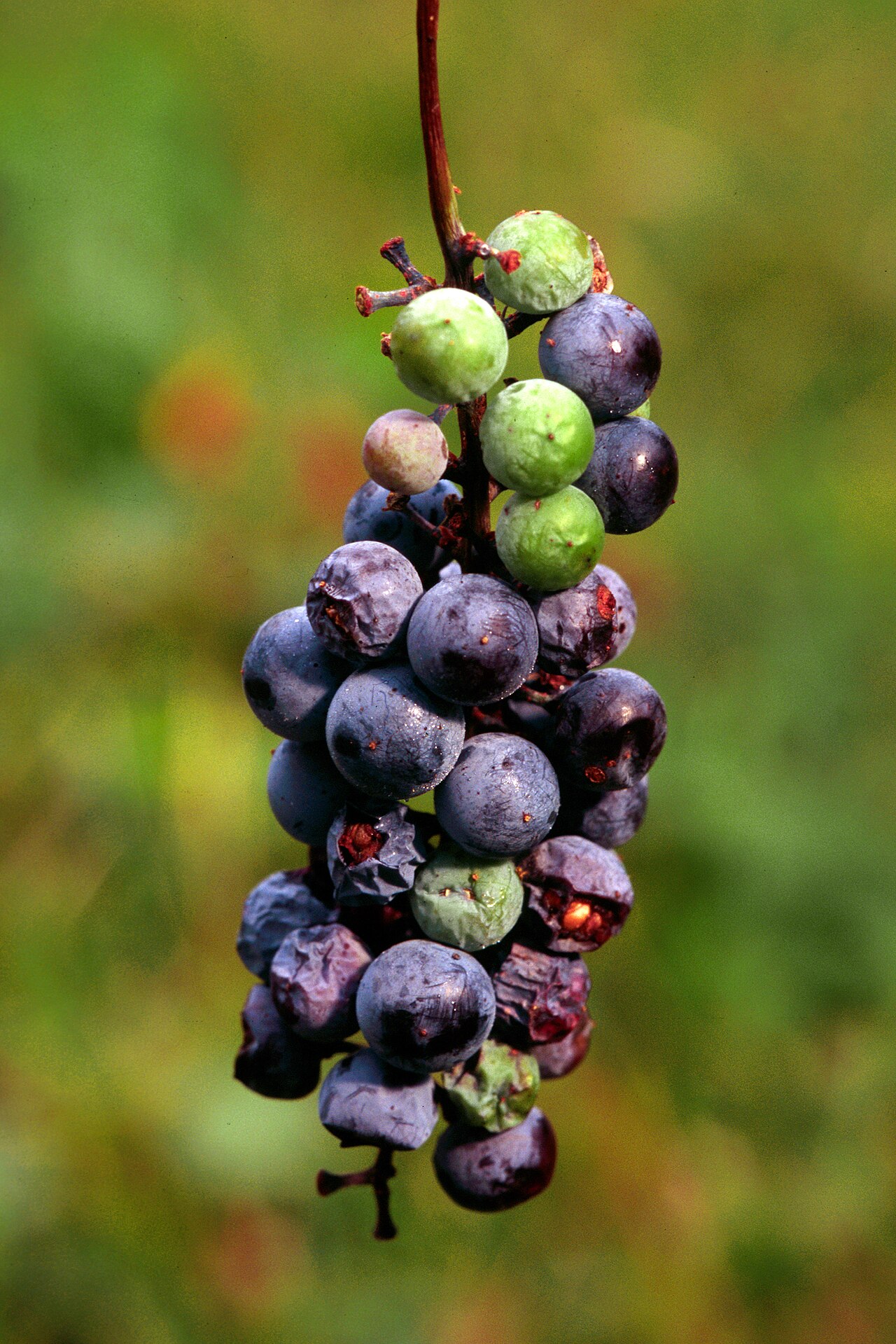
Vitis aestivalis, known as Summer Grape, pigeon grape or bunch grape, is a vigorous native grapevine of dry woods, thickets and forest edges across most of the eastern and central United States and southern Ontario. Climbing by tendrils, it can reach 30 to 50 feet or more into the tops of trees, with shreddy brown bark, large heart-shaped or deeply lobed leaves and, from late summer into fall, hanging clusters of small blue-black grapes.
Despite its name, the fruit ripens from late summer into fall. The berries are small and often tart but sweeten after a frost, and they are an important late-season food for many birds and mammals. Summer grape is also an ancestor of several American wine grapes, most famously the ‘Norton’ grape grown in Missouri and Virginia.
For gardeners with space, it is an outstanding wildlife vine for a fence, arbor or woodland edge, though it is far too vigorous for small gardens. This guide covers how to identify it, where it grows, how to grow and manage it, and its great value to birds and other wildlife.
Identification
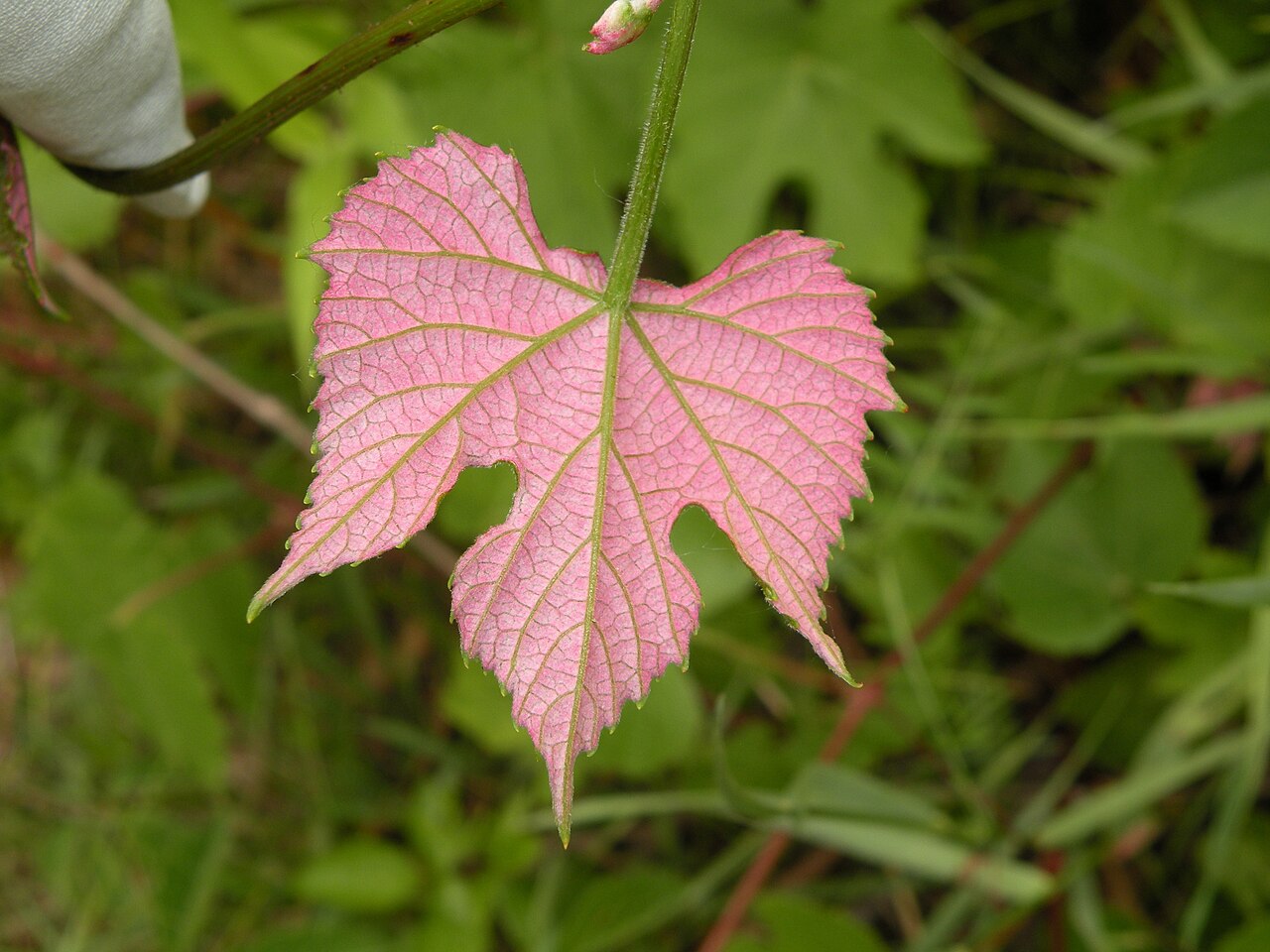
Wild grapes can be hard to tell apart. In summer grape, look at the underside of the leaves and the pattern of tendrils along the stems.
Growth Habit
A high-climbing, deciduous woody vine that climbs by forked tendrils, often 30 to 50 feet long or more, with a trunk that can reach several inches thick. Older bark is brown and peels in long, loose strips. Like most grapes, the tendrils (or flower clusters) are absent at every third node along the stem, a useful clue among wild grapes.
Leaves
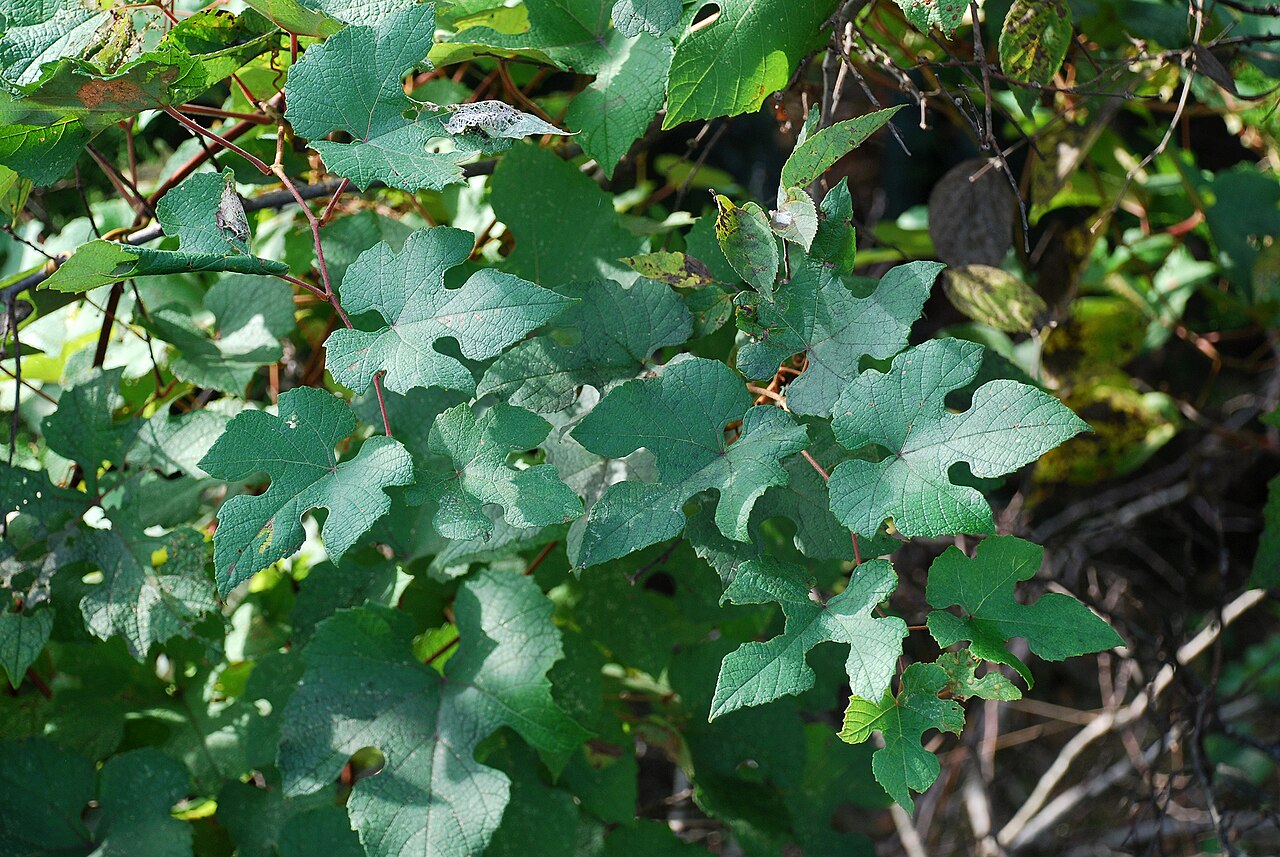
The leaves are alternate and broadly heart-shaped, about 3 to 8 inches long, with coarse teeth. They are often shallowly to deeply three- to five-lobed, especially on young shoots. The upper surface is dull green and smooth, and the underside is covered, at least when young, with cobwebby rusty, reddish or whitish hairs. In the variety known as silverleaf grape (var. bicolor), the underside is pale blue-white with a waxy bloom.
Flowers
Tiny, fragrant, greenish flowers appear in long, branched clusters opposite the leaves in late spring, usually May to June. Plants are functionally male or female, so only female (or perfect-flowered) vines bear fruit.
Fruit & Seeds
The fruit clusters are long and loose, with round berries about ¼ to ½ inch across, ripening from green to blue-black with a whitish bloom from late summer to fall. Each berry has two to four seeds and a thin layer of tart, juicy pulp. Fruit often stays on the vine into late fall.
Look-alikes
Riverbank grape has bright green leaves with green, nearly hairless undersides and sharp teeth, and usually grows in moist bottomlands. Fox grape (V. labrusca) has thick, felted leaf undersides and a tendril or flower cluster at almost every node, plus large, musky fruit. Muscadine has small, rounded, glossy leaves, unforked tendrils and tight bark. Non-native porcelain-berry has white pith and speckled blue-purple fruit.
Quick Facts
| Scientific Name | Vitis aestivalis Michx. |
| Family | Vitaceae (grape family) |
| Plant Type | Deciduous woody vine (liana) |
| Mature Height | 30–50+ ft as a climbing vine |
| Mature Spread | 10–30 ft or more, depending on support |
| Growth Rate | Fast |
| Sun Exposure | Full sun to part shade |
| Water Needs | Low to medium |
| Soil Type | Well-drained sandy, loamy or rocky soils |
| Soil pH | Acidic to neutral (about 5.0–7.5) |
| Bloom Time | May–June |
| Flower Color | Greenish; small and fragrant |
| Fall Color | Yellow |
| Fruit | Small blue-black grapes with a bloom, August–October |
| Deer Resistant | No; deer browse the leaves and eat the fruit |
| USDA Hardiness Zones | 4–9 |
Native Range
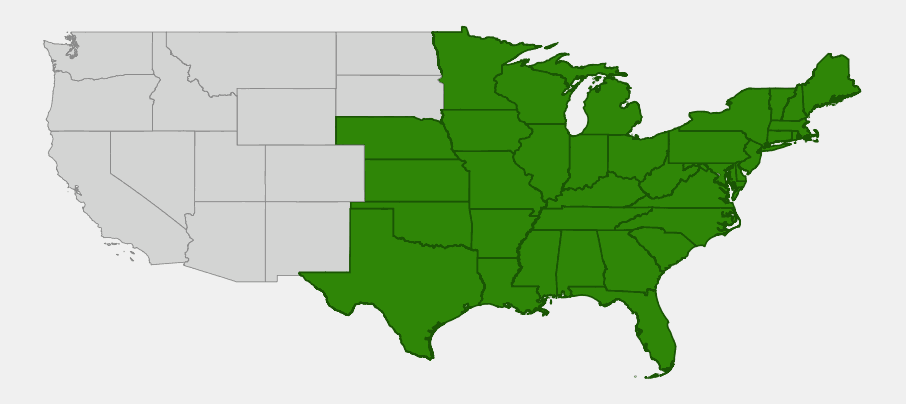
Summer grape is one of the most widespread wild grapes of eastern North America. USDA PLANTS lists it from Maine, Vermont and New Hampshire west through New York, Michigan, Wisconsin and southeastern Minnesota, south to Florida and the Gulf Coast, and west to Iowa, eastern Nebraska and Kansas, Oklahoma and eastern Texas. In Canada it grows in southern Ontario. USDA also shows a California record, but the species is not native there, so it is not included here.
It is common through most of the Southeast and the Ohio and Mississippi valleys and becomes scattered at the northern edge of its range in northern New England, the upper Midwest and Minnesota. Several varieties are recognized: the typical variety across most of the range, the silverleaf grape (var. bicolor) mainly in the North and the Appalachians, and the post oak grape (var. lincecumii) in Texas, Oklahoma, Arkansas and Louisiana.
It grows in drier sites than many wild grapes: upland oak-hickory and pine woods, rocky slopes, thickets, fencerows, roadsides and forest edges, from near sea level to the lower mountains of the Appalachians.
📋 Regional plant lists featuring Summer Grape: New York, Pennsylvania & Northern New Jersey · Ohio & Indiana · Michigan, Wisconsin & Eastern Minnesota · Kentucky & Tennessee · Nebraska, Kansas & Eastern Colorado · Connecticut, Massachusetts & Rhode Island · New Hampshire, Maine & Vermont · Maryland, Virginia & West Virginia · Delaware, Southern New Jersey & Long Island · Illinois, Iowa & Missouri · Alabama, Georgia & Mississippi · North & South Florida · North & South Carolina · Arkansas, Louisiana, Eastern Oklahoma & Eastern Texas · South & West Texas
Growing & Care Guide
Summer grape is easy to grow and very long-lived, but it is a big vine. Give it a sturdy support such as a strong fence, a pergola, an arbor or a tree at a woodland edge where it can climb freely. Plants are available from some native plant nurseries, especially in the Southeast and the Ozarks.
Light
Full sun gives the best fruit. It tolerates part shade, but in shade it climbs toward the light and fruits only at the top of the canopy.
Soil & Water
Plant in well-drained soil; it does well in sandy, rocky and loamy soils and is more drought-tolerant than most wild grapes. Water young plants during dry spells in the first year or two. Established vines need little care and dislike waterlogged soil.
Planting Tips
Plant in spring or fall next to the support it will climb. Because plants are often male or female, plant more than one vine (or a known fruiting selection) if you want grapes. Keep it away from small trees and shrubs that it could smother.
Pruning & Maintenance
Prune in late winter while the vine is dormant. On an arbor or fence, cut back side shoots to a few buds each year and remove weak or dead canes. On a woodland edge, let it grow but cut it back if it shades out young trees. Like other grapes, it can bleed sap if pruned in spring; this is harmless.
Propagation
Grow it from seed sown outdoors in fall or cold-stratified for about three months, from hardwood cuttings taken in winter, or by layering a low cane into the soil. Cuttings and layering preserve the sex of the parent vine.
Landscape Uses
- Wildlife gardens: fall fruit for dozens of species of birds and mammals
- Arbors, fences and pergolas: dense shade and a rustic, shaggy-barked vine
- Woodland edges and hedgerows: natural cover and nesting habitat
- Edible landscaping: tart wild grapes for jelly, juice and wine
- Restoration: a native vine for upland woods and thickets
Wildlife & Ecological Value
Wild grapes are among the most valuable wildlife plants in the East, and summer grape is especially important because of its late-ripening fruit.
For Pollinators
The small, fragrant flowers attract many bees, flies and beetles that collect pollen. The leaves host the larvae of several moths, including the grapevine epimenis, the pandorus sphinx and the Abbott’s sphinx, as well as many leafhoppers and other insects that feed birds.
For Birds
According to Go Botany, the fruit, which ripens late, is a critical food for more than 80 species of birds fattening up for migration, including thrushes, catbirds, mockingbirds, cardinals, woodpeckers and wild turkeys. Birds such as northern cardinals, gray catbirds and brown thrashers use the shreddy bark to build nests, and dense tangles of vines offer nesting cover.
For Mammals
Black bears, raccoons, opossums, foxes, squirrels and white-tailed deer all eat the grapes, and deer also browse the leaves and young shoots.
Ecosystem Role
Summer grape adds a vertical layer of food and cover to forest edges and thickets. Its abundant fall fruit and bark strips connect it to the lives of many birds and mammals, and animals that eat the fruit spread its seeds to new sites.
Cultural & Historical Uses
The French botanist André Michaux described summer grape in 1803. The species name aestivalis means “of summer”, although the grapes ripen mostly in late summer and fall. Other common names include pigeon grape and bunch grape.
The ‘Norton’ grape (also sold as ‘Cynthiana’), developed in Virginia in the early 19th century and now the state grape of Missouri, is believed to come from summer grape crossed with a European wine grape. It remains one of the most widely grown native-derived red wine grapes in the United States.
Native American peoples and early settlers ate wild grapes fresh, dried and cooked, and used the vines for baskets and cordage. Summer grapes remain popular with foragers for jelly and juice, but be sure of your identification: the toxic Canada moonseed has similar-looking dark fruit with a single crescent-shaped seed, and its leaves are not toothed.
Frequently Asked Questions
Are summer grapes edible?
Yes. The small blue-black grapes are edible, though often tart until after a frost. They are used for jelly, juice and wine. Be careful not to confuse them with toxic Canada moonseed, which has a single crescent-shaped seed per berry and untoothed leaves.
How big does summer grape get?
It is a high-climbing vine that often reaches 30 to 50 feet or more into trees. Give it a strong support and plenty of room, or prune it each winter on an arbor.
How do I tell summer grape from other wild grapes?
Look at the leaf undersides: summer grape has cobwebby rusty or whitish hairs, or a waxy blue-white bloom in silverleaf grape. Riverbank grape has green, nearly hairless undersides, and fox grape has thick felt and a tendril at almost every node.
Does summer grape need a partner to make fruit?
Usually yes. Many vines are functionally male or female, so plant several vines or a known fruiting selection if you want grapes.
Why is it called summer grape if it fruits in fall?
The name comes from the scientific name aestivalis, “of summer”. The flowers appear in late spring and the fruit develops over the summer, ripening from late summer into fall.

Looking for a nursery that carries Summer Grape?
Browse our native plant nursery directory: Alabama & Arkansas · Connecticut, Delaware, Florida & Georgia · Illinois, Indiana, Iowa & Kansas · Kentucky, Louisiana, Maine, Maryland, Massachusetts, Michigan, Minnesota, Mississippi & Missouri · Nebraska, New Hampshire, New Jersey, New York, North Carolina, Ohio & Oklahoma · Pennsylvania, Rhode Island, South Carolina, Tennessee, Texas, Vermont & Virginia · West Virginia & Wisconsin

