
Pink Thoroughwort (Fleischmannia incarnata)
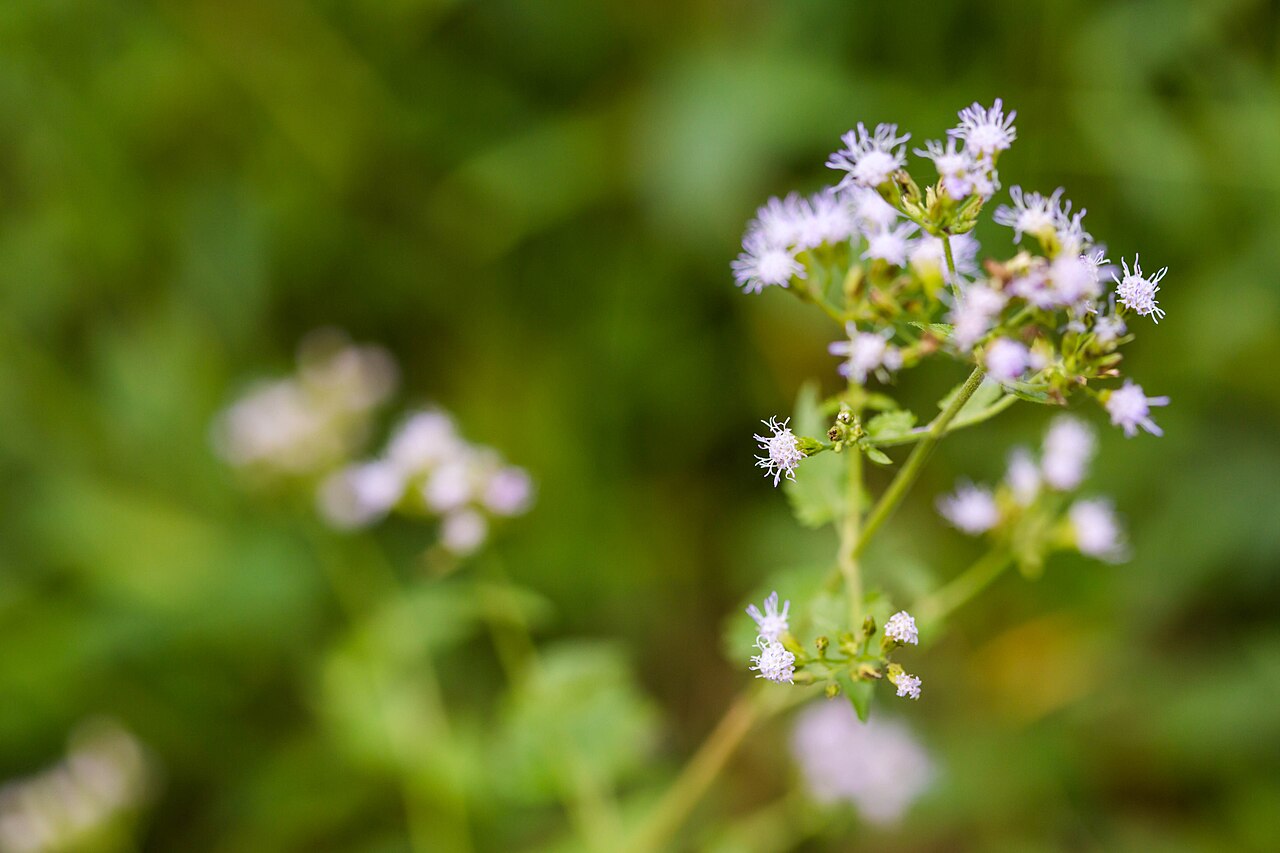
Fleischmannia incarnata, known as Pink Thoroughwort or pink boneset, is a native perennial wildflower of moist, shady woods across the southeastern and south-central United States. It has weak, much-branched stems that sprawl over the ground or lean on other plants, opposite, triangular leaves on long stalks, and, from late summer into fall, loose sprays of small, fluffy, pale pink to lavender flower heads.
It belongs to the sunflower family (Asteraceae) and was long included in the genus Eupatorium as Eupatorium incarnatum, alongside boneset and the thoroughworts. It is now placed in Fleischmannia, a mostly tropical American genus, and it is the only member of that genus widespread in the eastern United States. The species name incarnata means “flesh-colored”, describing the pinkish flowers. Its late blooms make it a valuable nectar source for butterflies in fall.
It ranges from Virginia, West Virginia, Ohio, Indiana and Illinois south to Florida and west to Missouri, Arkansas, Louisiana and Texas, and it also occurs in Mexico. This guide covers how to identify pink thoroughwort, where it grows, how to grow it in a shade or woodland garden, and its value to wildlife.
Identification
Pink thoroughwort looks like a delicate, sprawling cousin of the blue mistflower. The best clues are its triangular, long-stalked leaves, its weak, leaning stems, and its pink to lavender, rayless flower heads in late summer and fall.
Growth Habit
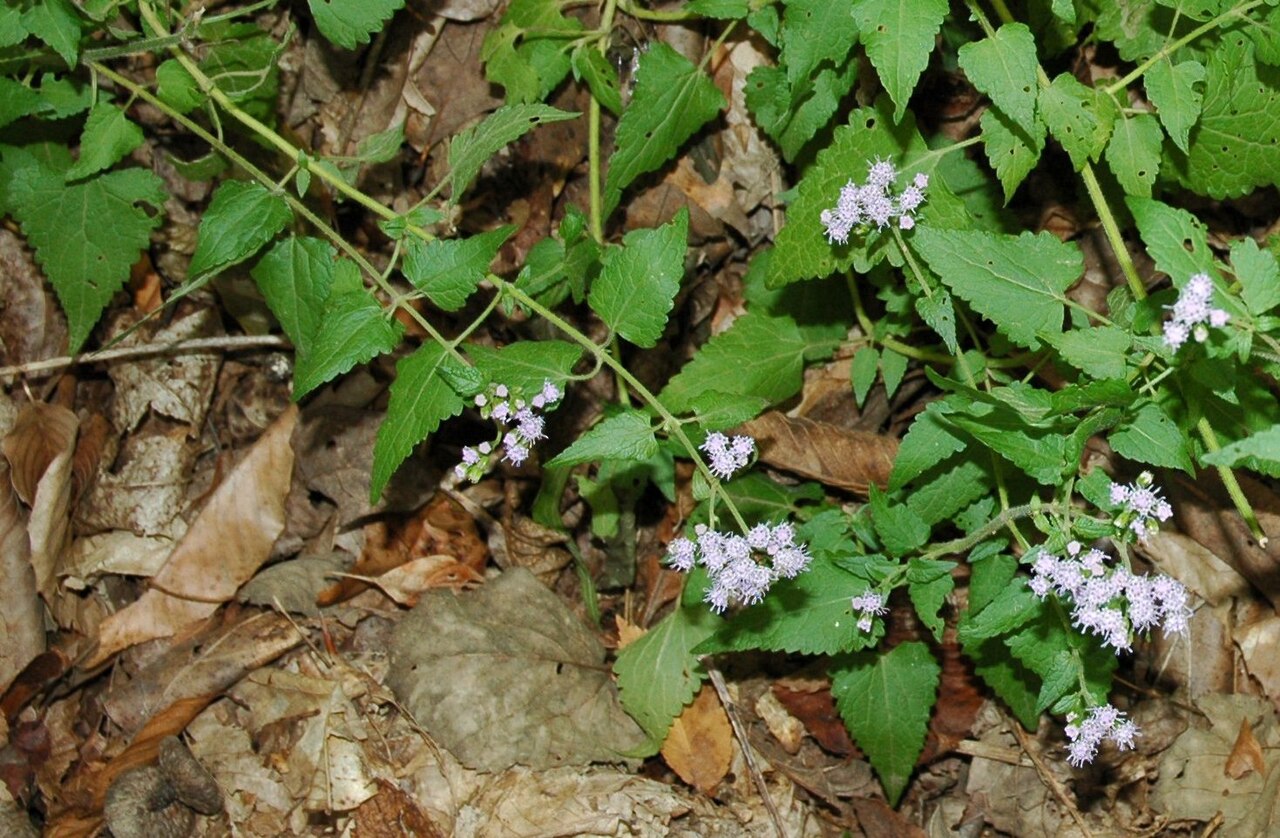
It is a perennial with slender, branching stems that are usually 1 to 3 feet long, sometimes much longer. The stems are weak and often sprawl, arch or scramble over rocks and neighboring plants rather than standing upright.
Leaves
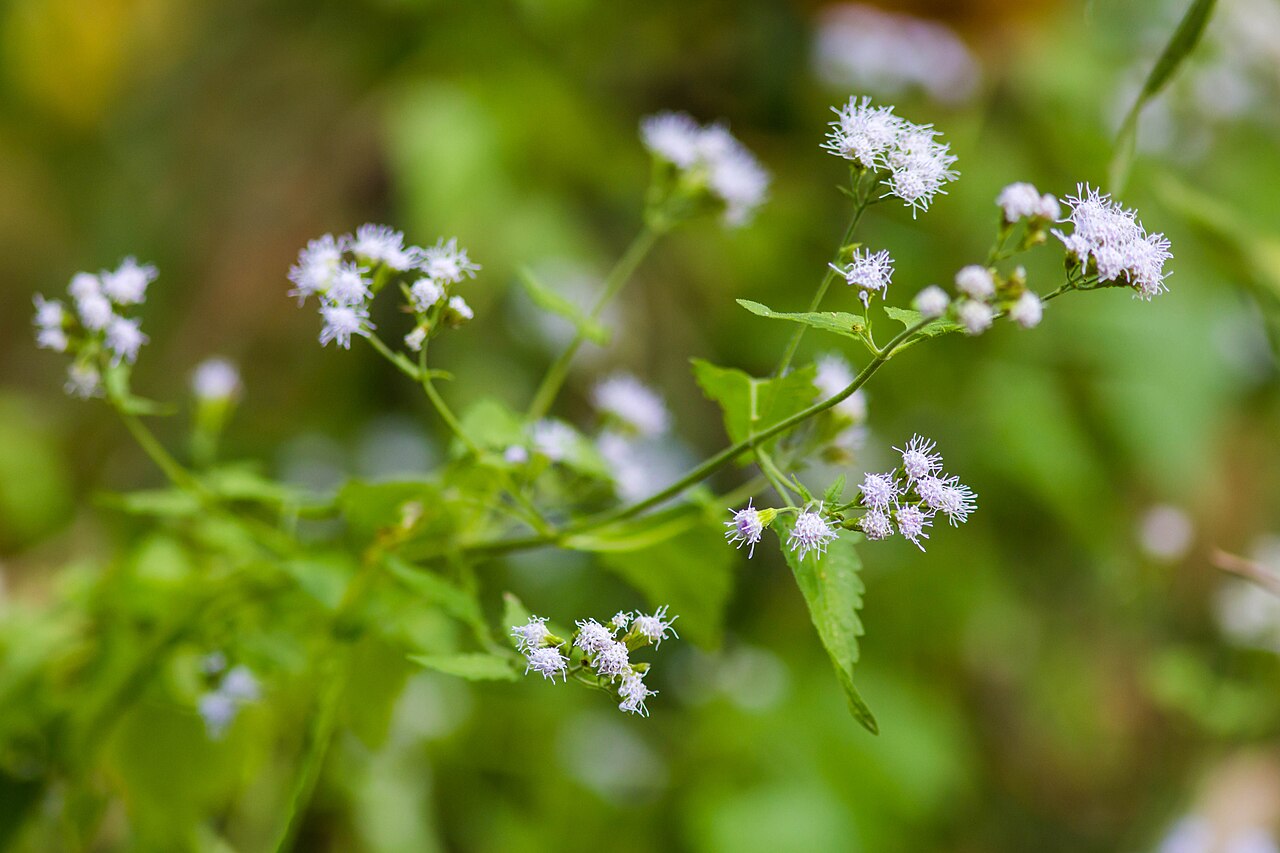
The leaves are opposite, triangular to heart-shaped, about 1 to 3 inches long, with coarse, rounded teeth along the edges and long leaf stalks (petioles), often nearly as long as the blades. They are thin and bright green.
Flowers
The flower heads are small, about 1/4 inch across, and made of 15 to 25 tiny tubular disc flowers, with no petal-like rays. The flowers are pale pink to lavender, sometimes nearly white, with long, thread-like styles that give the heads a fuzzy look. The heads are carried in loose, open clusters at the ends of the branches. It blooms mainly from August or September into November.
Fruit & Seeds
Each flower produces a small, dark, ribbed seed (achene) tipped with a tuft of white bristles, which carries it away on the wind in late fall.
Habitat Clues
Look for it on shaded, moist slopes, along stream banks and ravines, at the base of bluffs and on rocky, often limestone ledges in woods.
Look-alikes
Blue mistflower (Conoclinium coelestinum) has upright stems, blue to violet heads crowded into flat-topped clusters, and leaves with short stalks. White snakeroot (Ageratina altissima) has bright white flowers and stands upright. Pink thoroughwort’s sprawling habit and pinkish heads on long-stalked triangular leaves set it apart.
Quick Facts
| Scientific Name | Fleischmannia incarnata (Walter) R.M. King & H. Rob. (syn. Eupatorium incarnatum) |
| Family | Asteraceae (sunflower family) |
| Plant Type | Herbaceous perennial with sprawling stems |
| Mature Height | 1–3 ft (stems sometimes longer, often leaning) |
| Mature Spread | 2–4 ft |
| Growth Rate | Moderate |
| Sun Exposure | Part shade to shade |
| Water Needs | Moderate; evenly moist soil |
| Soil Type | Moist, humus-rich loam; rocky or limestone soils in woods |
| Soil pH | About 6.0–8.0 |
| Bloom Time | August–November |
| Flower Color | Pale pink to lavender, sometimes nearly white |
| Fall Color | None notable; flowers provide fall color |
| Fruit | Small achene with a tuft of white bristles |
| Deer Resistant | Moderately |
| USDA Hardiness Zones | 6–9 |
Native Range
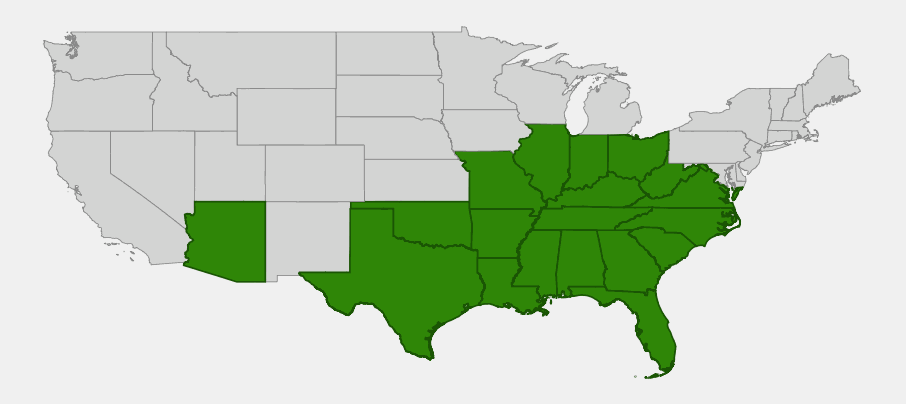
Pink thoroughwort is native to the southeastern and south-central United States and Mexico. USDA PLANTS lists it in Virginia, West Virginia, Ohio, Indiana, Illinois, Kentucky, Tennessee, North Carolina, South Carolina, Georgia, Florida, Alabama, Mississippi, Missouri, Arkansas, Louisiana, Oklahoma, Texas and Arizona.
It is most common in the lower Mississippi Valley and the interior South: Tennessee, Kentucky, Arkansas, Louisiana, Mississippi and eastern and southern Texas, where it is frequent in moist woods and river bottoms. It is more scattered eastward in the Carolinas, Georgia, Virginia and Florida, and reaches its northern limits in southern Ohio, Indiana and Illinois. USDA records for Oklahoma and Arizona are at the state level only; the Arizona record lies far west of the main range and represents an outlying occurrence.
It grows in moist, shaded woods, on wooded slopes and bluffs, along stream banks and ravines, in floodplain forests and on rocky, often calcareous ledges and outcrops, mostly at low to moderate elevations.
📋 Regional plant lists featuring Pink Thoroughwort: Ohio & Indiana · Kentucky & Tennessee · Maryland, Virginia & West Virginia · Arizona & New Mexico · Illinois, Iowa & Missouri · Alabama, Georgia & Mississippi · North & South Florida · North & South Carolina · Arkansas, Louisiana, Eastern Oklahoma & Eastern Texas · South & West Texas
Growing & Care Guide
Pink thoroughwort is an easy, informal plant for shady and woodland gardens in the South, valued for its soft pink flowers and the butterflies they attract in fall. It is offered by some native plant nurseries in the Southeast and Texas, and it is easy to grow from seed or divisions.
Light
Plant it in part shade to full shade; dappled light under trees is ideal. It tolerates morning sun if the soil stays moist.
Soil & Water
It prefers moist, humus-rich soil and grows well in loam, clay or rocky, limestone soils. Water during dry spells, especially in its first year; established plants tolerate some drought but may wilt in hot, dry weather.
Planting Tips
Use it as a loose, spreading groundcover under trees, along a woodland path or on a shady slope, where its sprawling stems can drape over rocks and edges. Combine it with inland sea oats, frostweed, blue mistflower and other fall-blooming natives for a woodland edge planting.
Pruning & Maintenance
Cut the stems back by about a third in early summer if you want a fuller, less sprawling plant. Leave the seed heads standing in fall for birds, and cut the old stems down in late winter. It reseeds modestly.
Propagation
Grow it from seed sown in fall or in spring after a few weeks of cold-moist stratification, or divide established clumps in spring. Stem cuttings taken in early summer also root readily. Collect seed only where permitted.
Landscape Uses
- Shade and woodland gardens: soft pink fall flowers in places where few plants bloom late
- Butterfly gardens: a late-season nectar source for migrating and resident butterflies
- Naturalistic groundcover: sprawling stems drape over rocks, walls and slopes
- Rain garden edges and stream banks: tolerates moist soil in partial shade
- Woodland restoration: a native forb for moist woods and riparian plantings in the South
Wildlife & Ecological Value
Pink thoroughwort blooms when many other woodland wildflowers have finished, making it an important late-season food source for insects in shady habitats.
For Pollinators
Its flowers are visited by many butterflies, including queens, monarchs, skippers and hairstreaks, especially during fall migration in Texas and the Gulf states. Bees, flies and wasps also visit for nectar and pollen.
For Birds
Small seed-eating birds such as goldfinches and sparrows eat the seeds in late fall and winter, and the sprawling stems give cover to ground-feeding birds.
For Mammals
It is lightly browsed by deer. Its main value to mammals is as cover in the woodland understory.
Ecosystem Role
As a fall-blooming understory forb, it supports pollinators late in the season and helps cover and stabilize soil on shady slopes and stream banks. Many plants in its tribe (Eupatorieae) contain pyrrolizidine alkaloids, chemicals that some butterflies, such as queens, seek out from these plants.
Cultural & Historical Uses
Thomas Walter described this plant in 1788 as Eupatorium incarnatum in his Flora Caroliniana, from plants of the South Carolina low country. In 1970 the botanists Robert King and Harold Robinson transferred it to Fleischmannia, part of their major reorganization of Eupatorium and its relatives.
The name thoroughwort, also used for many eupatoriums, comes from the old word “thorough”, meaning “through”, because in common boneset the stem appears to pass through the joined leaves. Pink thoroughwort does not share that feature but has kept the family name. The genus Fleischmannia honors Gottfried Fleischmann, a nineteenth-century German botanist.
Safety note: many plants in the eupatorium tribe contain pyrrolizidine alkaloids, which can damage the liver, so pink thoroughwort should not be used as an herbal remedy or eaten, and livestock should not graze it heavily.
Frequently Asked Questions
Is pink thoroughwort the same as Eupatorium incarnatum?
Yes. It was long known as Eupatorium incarnatum; botanists now place it in the genus Fleischmannia.
Where does pink thoroughwort grow?
It grows in moist, shady woods, slopes, bluffs and stream banks across the southeastern and south-central United States, from Virginia and Ohio to Florida and Texas, and in Mexico.
When does pink thoroughwort bloom?
It blooms in late summer and fall, mostly from August or September into November.
Is pink thoroughwort good for butterflies?
Yes. It is a valuable late-season nectar plant for butterflies, including monarchs and queens during fall migration.
Can I grow pink thoroughwort in shade?
Yes. It does best in part shade to shade with moist, humus-rich soil, and makes a loose, informal groundcover under trees.

Looking for a nursery that carries Pink Thoroughwort?
Browse our native plant nursery directory: Alabama, Arizona & Arkansas · Florida & Georgia · Illinois & Indiana · Kentucky, Louisiana, Mississippi & Missouri · North Carolina, Ohio & Oklahoma · South Carolina, Tennessee, Texas & Virginia · West Virginia

