
Western Goldentop (Euthamia occidentalis)
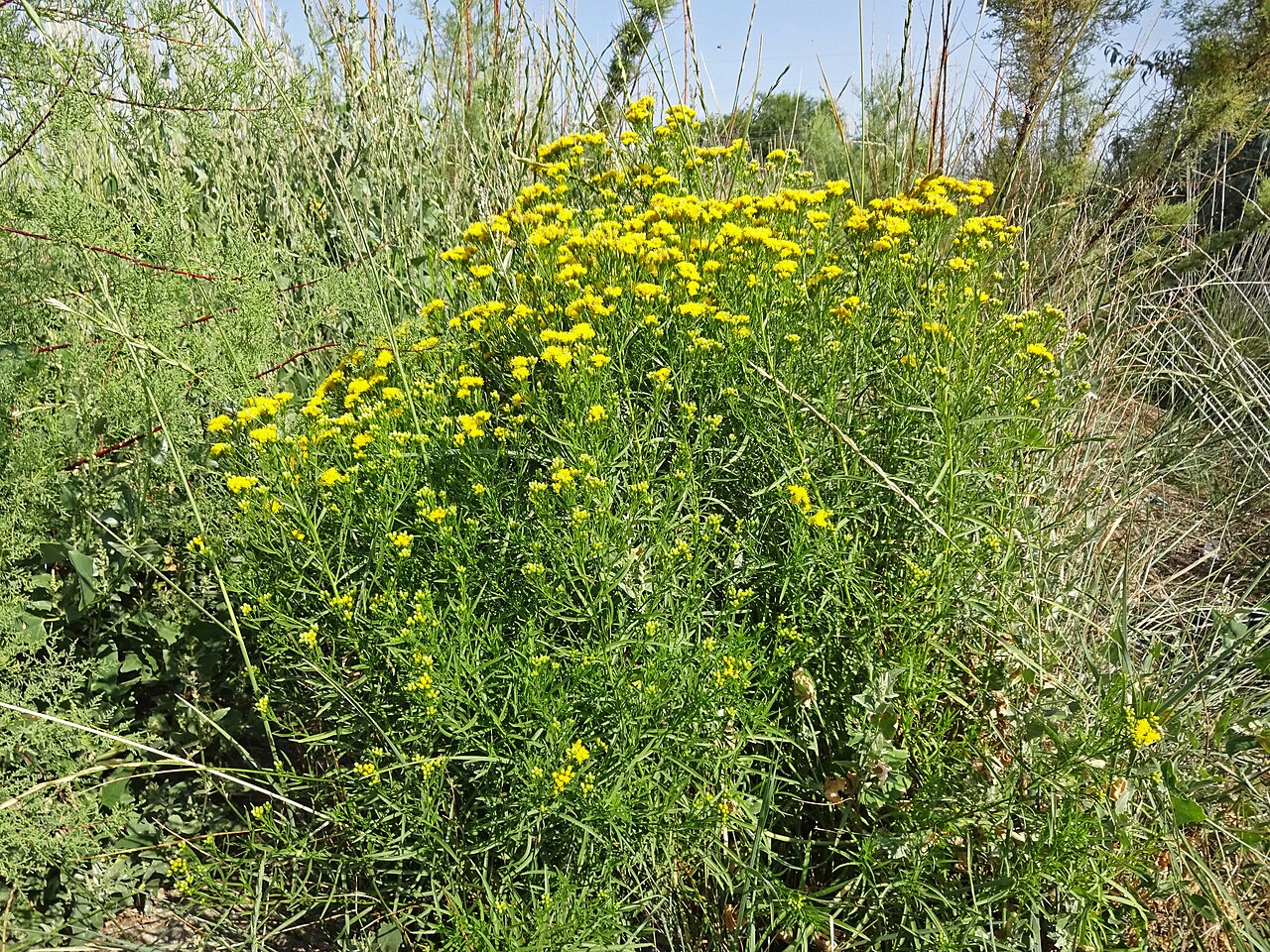
Euthamia occidentalis, known as Western Goldentop or western goldenrod, is a tall, slender, late-blooming wildflower of streambanks, marshes, ditches and lake shores across the western United States. From midsummer into fall its leafy stems end in broad, flat-topped clusters of small, bright yellow flower heads, lighting up wet places when most other wildflowers have faded. It spreads by underground rhizomes and often forms dense colonies along water.
Western goldentop belongs to the aster family (Asteraceae) and is closely related to the true goldenrods (Solidago); older references call it Solidago occidentalis. Like its eastern cousin, the grass-leaved goldenrod (Euthamia graminifolia), it has narrow, grass-like leaves and flat-topped flower clusters, which set the goldentops apart from most goldenrods with their plume- or wand-shaped clusters.
It ranges from British Columbia south through the Pacific states and the Intermountain West to Arizona, New Mexico and northern Mexico. For gardeners it is an easy, vigorous plant for rain gardens, pond edges and wet meadows, and a valuable fall nectar source for bees and butterflies. This guide covers how to identify it, where it grows, and how to use it in native landscapes.
Identification
Western goldentop is easy to spot in late summer and fall: look for colonies of tall, thin, leafy stems topped with flat or rounded sprays of small yellow heads, growing with their feet in moist soil near water.
Stems & Growth Habit
It is a rhizomatous perennial with slender, upright stems usually 2 to 6 feet tall, sometimes taller in rich, wet soil. The stems are smooth, often reddish near the base, and branch mainly in the upper part, where the flower clusters form. Plants spread underground and usually grow in dense stands.
Leaves
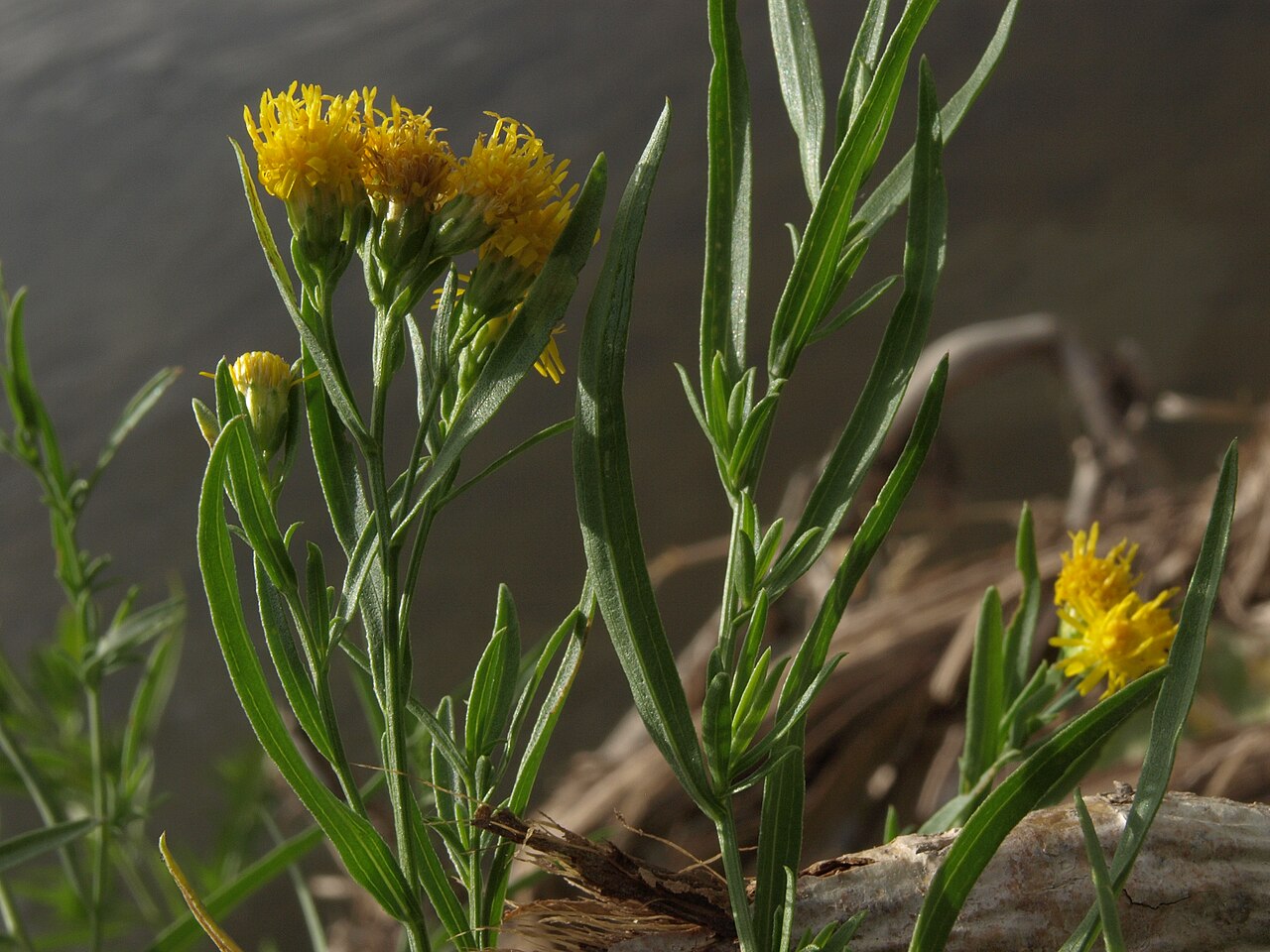
The leaves are alternate, very narrow and grass-like, about 2 to 4 inches long and only ⅛ to ¼ inch wide, with smooth edges. They are hairless, have one to three faint parallel veins, and are dotted with tiny resin glands that you can see as translucent specks when a leaf is held up to the light. The stems are densely leafy all the way up.
Flowers
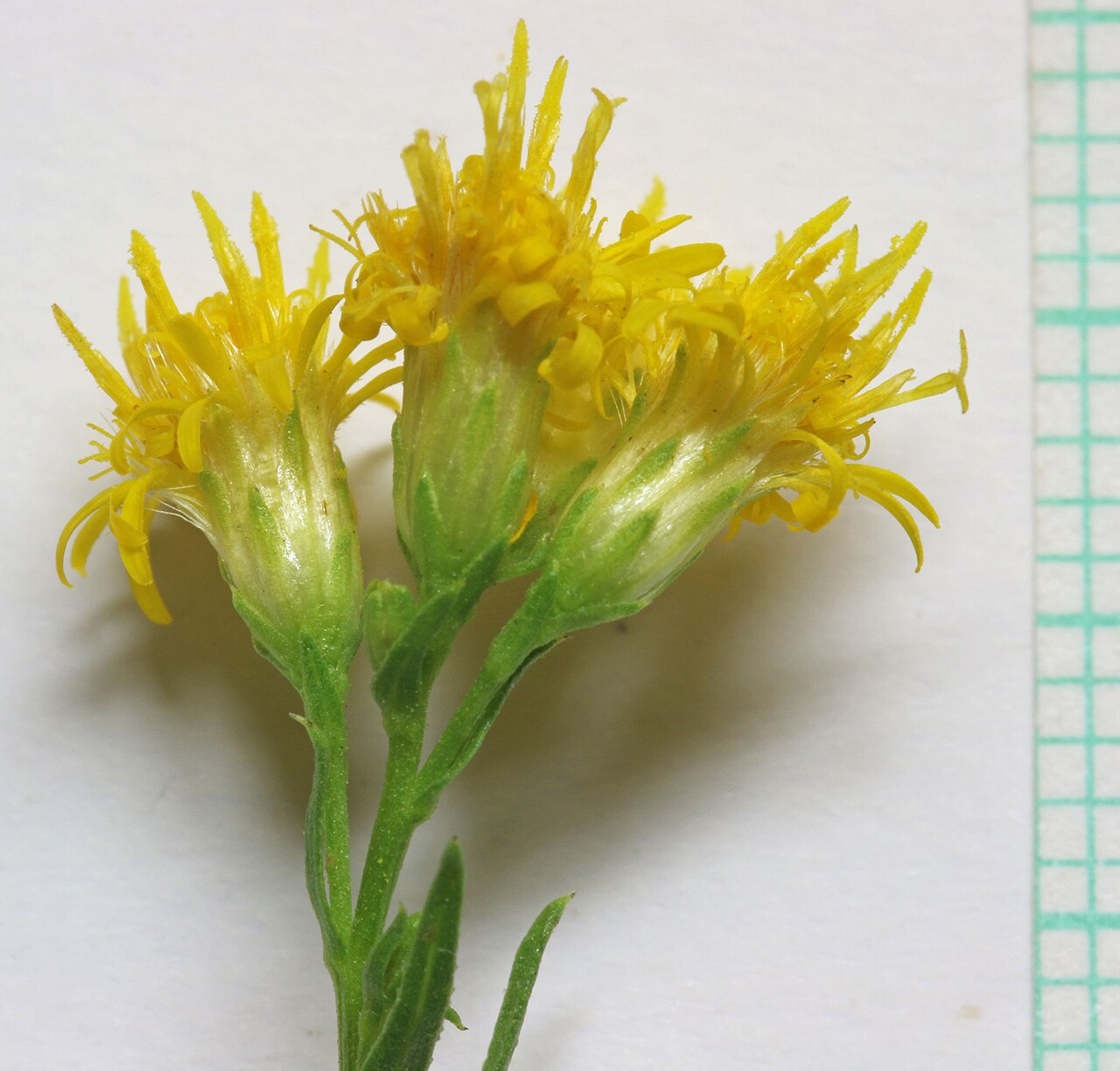
The flower heads are small, about ¼ inch long, and are gathered into broad, flat-topped or rounded clusters at the ends of the branches. Each head has a narrow, slightly sticky, resinous involucre of pale green to yellowish bracts, many tiny yellow ray florets (often 15 to 25) around a smaller number of yellow disc florets. Western goldentop blooms from about July to November, peaking in late summer and early fall.
Fruit & Seeds
After flowering, each floret forms a small, hairy seed (cypsela) topped with a tuft of white bristles (pappus) that carries it on the wind. The seed heads stay on the stems into winter.
Similar Species
Grass-leaved goldenrod (Euthamia graminifolia) is very similar but has slightly wider, hairier leaves with more veins, and is mainly eastern and northern. Other western goldenrods, such as Canada goldenrod (Solidago canadensis and relatives), have broader, toothed leaves and plume-like flower clusters.
Quick Facts
| Scientific Name | Euthamia occidentalis Nutt. |
| Family | Asteraceae (aster family) |
| Plant Type | Herbaceous perennial wildflower, spreading by rhizomes |
| Mature Height | 2–6 ft |
| Mature Spread | 2–3 ft per clump; spreads to form colonies |
| Growth Rate | Fast |
| Sun Exposure | Full sun to light shade |
| Water Needs | High; moist to wet soil |
| Soil Type | Moist to wet sandy, silty or clay soils; tolerates alkaline and slightly salty soils |
| Soil pH | About 6.0–8.5 |
| Bloom Time | July–November |
| Flower Color | Bright yellow |
| Fall Color | Yellow flowers into fall; stems turn tan to reddish |
| Fruit | Small hairy seed with a tuft of white bristles |
| Deer Resistant | Moderately; resinous foliage is browsed only lightly |
| USDA Hardiness Zones | 4–10 |
Native Range
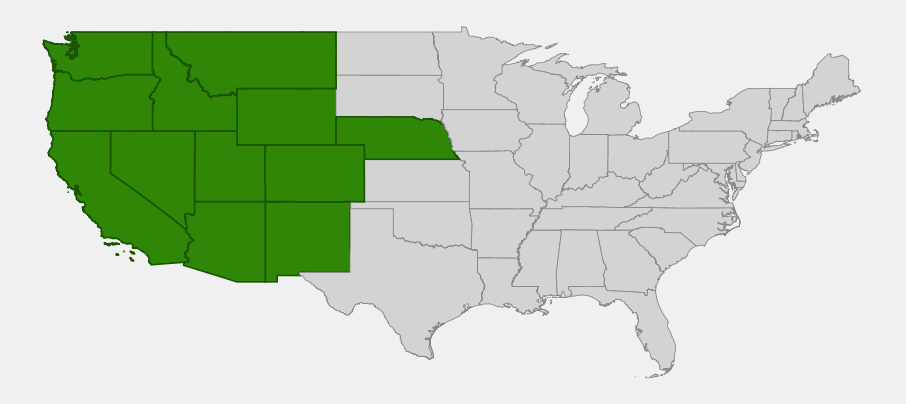
Western goldentop is native to western North America. USDA PLANTS lists it in Arizona, California, Colorado, Idaho, Montana, Nebraska, Nevada, New Mexico, Oregon, Utah, Washington and Wyoming, and in British Columbia in Canada. Its range continues south into northern Mexico. It is most common in the Pacific states and the Great Basin, and reaches the edge of the Great Plains in western Nebraska.
It is a wetland plant, rated as facultative wetland to obligate wetland in the western regions of the National Wetland Plant List. Look for it on streambanks and river bars, around marshes, springs, seeps, ponds and lake shores, along irrigation ditches and canals, and in wet meadows. It tolerates alkaline and somewhat salty soils, so it is common around desert springs and saline marshes as well as freshwater wetlands.
Western goldentop grows from near sea level in California’s Central Valley and coastal marshes up into mountain valleys at moderate elevations. Because it spreads quickly on disturbed, wet ground, it often appears along ditches, reservoir margins and other human-made wetlands as well as in natural habitats.
📋 Regional plant lists featuring Western Goldentop: Western Oregon & Western Washington · Idaho, Eastern Oregon & Eastern Washington · California & Nevada · Arizona & New Mexico · Utah & Western Colorado · Montana & Wyoming · Nebraska, Kansas & Eastern Colorado
Growing & Care Guide
Western goldentop is one of the easiest native perennials to grow in wet, sunny places. It establishes quickly, tolerates heavy or alkaline soils and blooms reliably in late summer and fall. Its one drawback is vigor: it spreads by rhizomes, so give it room or plant it where spreading is an advantage.
Light
Full sun gives the sturdiest stems and the most flowers. It also grows in light or partial shade along streams, but stems may lean toward the light.
Soil & Water
Plant it in soil that stays moist through the growing season: pond and stream edges, rain gardens, swales and wet meadows. It tolerates clay, sand, alkaline soil and short flooding. In drier garden soil it needs regular summer water and will spread less.
Planting Tips
Plant divisions or container plants in spring or fall, about 2 feet apart. Because it forms colonies, pair it with other robust wetland natives such as rushes, sedges and willows, or contain it with a root barrier or by planting it between a path and water.
Pruning & Maintenance
Leave the seed heads standing over winter for birds and cut stems to the ground in late winter. Pull or dig out runners each spring if it spreads beyond where you want it. It needs no fertilizer.
Propagation
Divide rhizome clumps in early spring or fall; divisions establish easily. It also grows from seed sown in fall or given about 30 to 60 days of cold, moist stratification and sown on the surface, since light helps germination.
Landscape Uses
- Rain gardens and bioswales: thrives in soil that is wet in spring and moist in summer
- Pond and stream edges: a fast-spreading bank plant that helps hold soil
- Pollinator gardens: late-season nectar for bees, butterflies and beneficial insects
- Wetland and riparian restoration: quick cover on disturbed, wet ground, including alkaline sites
- Wildflower meadows: golden fall color in moist meadow plantings
Wildlife & Ecological Value
Western goldentop blooms late, when nectar is scarce in many western landscapes, and it is one of the most visited flowers in wet places from August into October.
For Pollinators
Its flat flower clusters attract a wide range of insects: honey bees, bumble bees, many small native bees, wasps, flower flies, soldier beetles and butterflies, including migrating monarchs and painted ladies in fall. Goldentops and goldenrods also host many moth caterpillars and specialist insects such as gall-forming flies and beetles.
For Birds
Small seed-eating birds such as goldfinches, siskins and sparrows feed on the seeds in fall and winter. Insect-eating birds forage among the flowers, and the dense stands give cover for marsh and streamside birds.
For Mammals
Deer and livestock browse it only lightly because of its resinous leaves. Small mammals use the thick stands for cover along water.
Ecosystem Role
Its spreading rhizomes help stabilize streambanks, ditches and shorelines. It is a characteristic plant of western riparian and marsh-edge communities and one of the first natives to colonize newly exposed wet ground.
Cultural & Historical Uses
Thomas Nuttall described Euthamia occidentalis in 1840 from western North America. The genus name Euthamia comes from Greek words meaning “well crowded,” referring to the densely branched, crowded flower clusters. For many years botanists treated the goldentops as part of the goldenrod genus Solidago, and the plant still appears as Solidago occidentalis in older floras.
Goldenrods and goldentops are often blamed for fall hay fever, but their pollen is heavy and sticky and is carried by insects, not the wind. The real culprits are usually wind-pollinated ragweeds that bloom at the same time.
Like other goldenrods, western goldentop has been used as a source of yellow dye. Today it is valued mostly by restoration practitioners and native gardeners who need a tough, fast-establishing plant for wet ground and late-season pollinator food.
Frequently Asked Questions
Is western goldentop the same as goldenrod?
It is a close relative. Goldentops (Euthamia) were once included in the goldenrod genus Solidago, and western goldentop is still often called western goldenrod. They differ in their narrow, grass-like, gland-dotted leaves and flat-topped flower clusters.
Does western goldentop cause hay fever?
No. Its pollen is sticky and carried by insects, so little of it gets into the air. Fall hay fever is mainly caused by wind-pollinated ragweeds.
When does western goldentop bloom?
From about July to November, with the peak in late summer and early fall.
Will western goldentop spread in my garden?
Yes. It spreads by underground rhizomes and can form dense colonies in moist soil. Plant it where that is welcome, such as a pond edge or rain garden, or remove runners each spring.
Can western goldentop grow in dry soil?
It prefers moist to wet soil. It will survive in average garden soil with regular summer watering, but it grows shorter and spreads less, and it is not suited to dry, unirrigated sites.

Looking for a nursery that carries Western Goldentop?
Browse our native plant nursery directory: Arizona · California · Colorado · Idaho · Montana · Nebraska, Nevada & New Mexico · Oregon · Utah · Washington · Wyoming

