
Yellow Giant Hyssop (Agastache nepetoides)
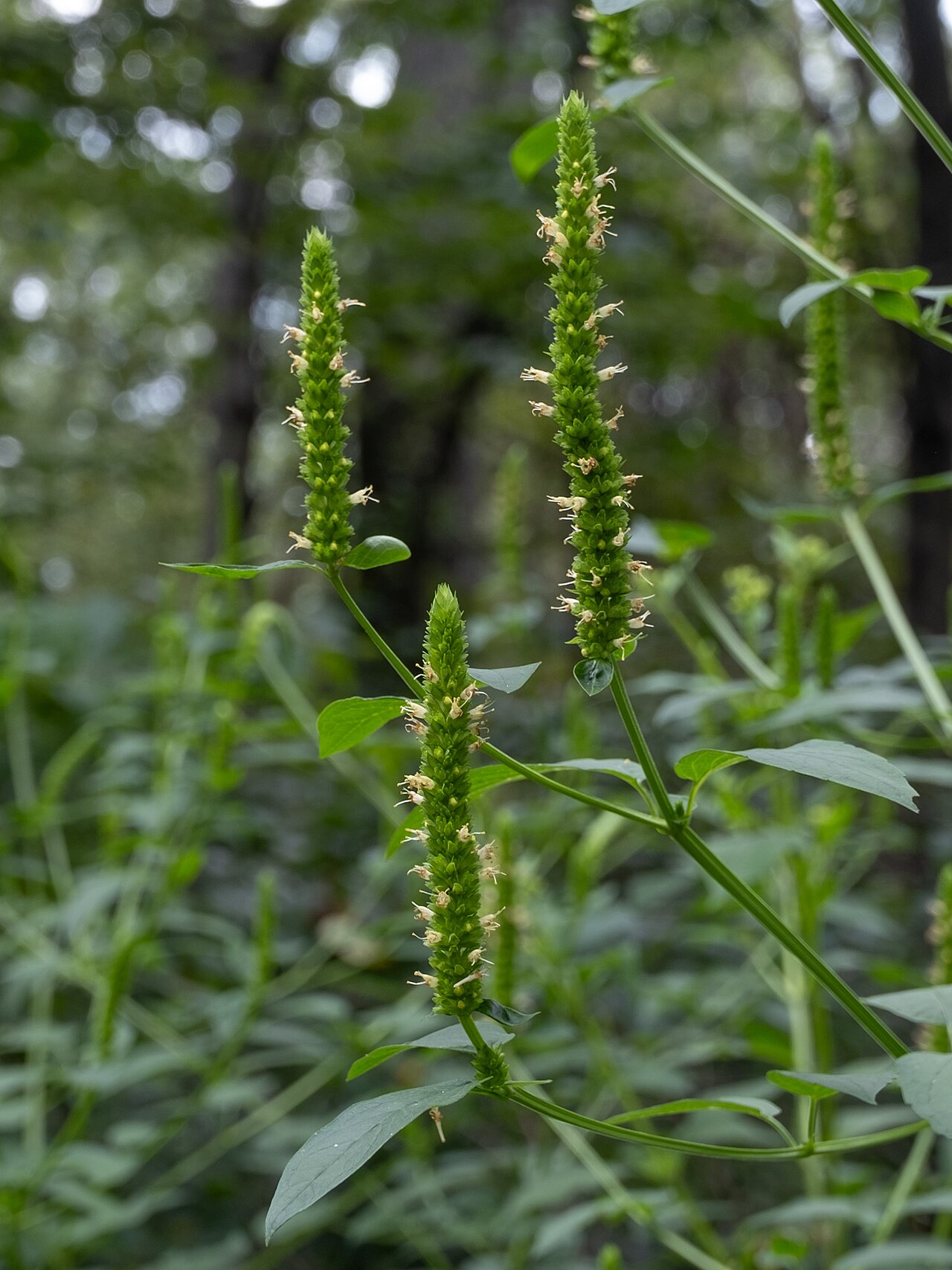
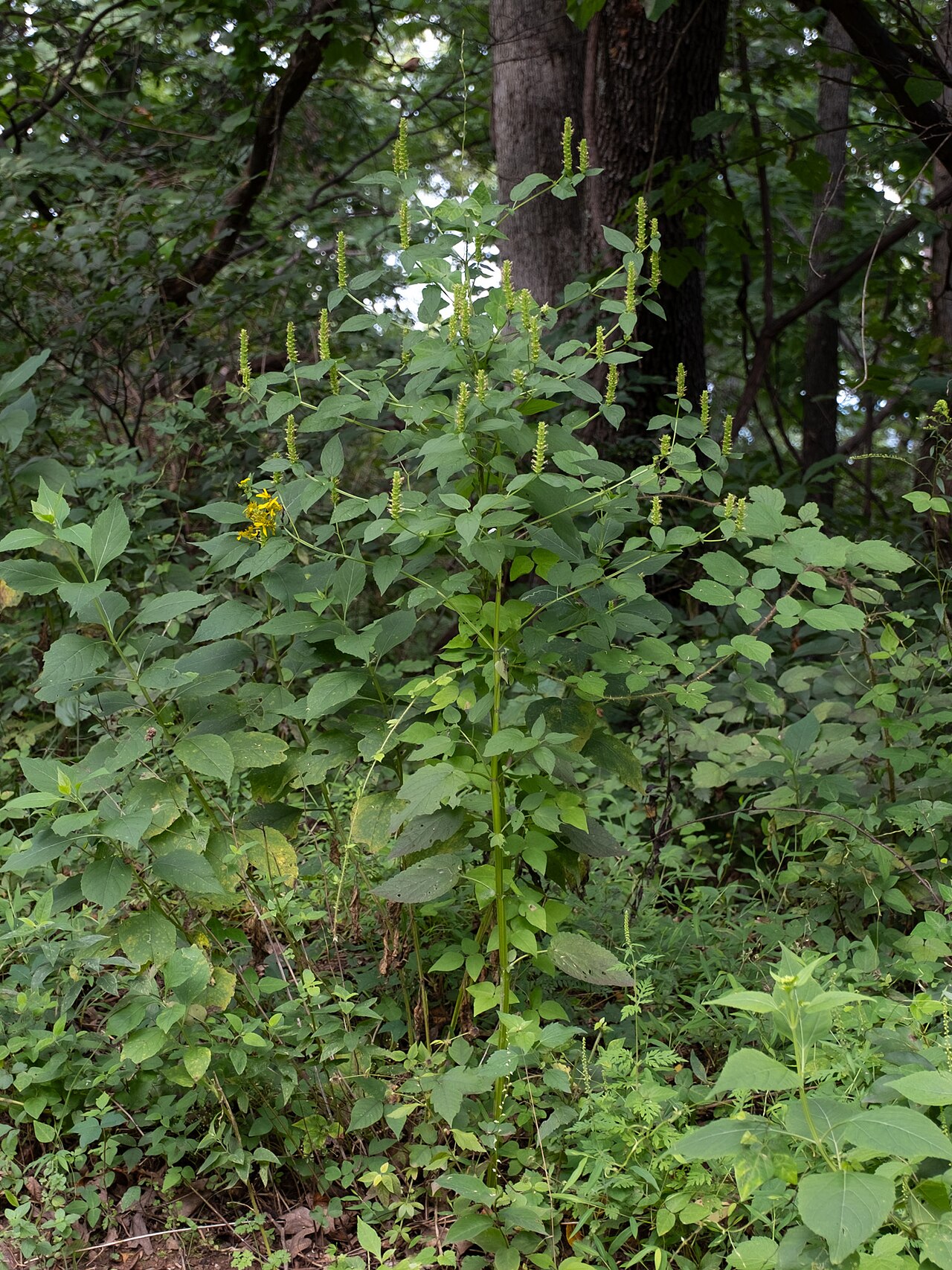
Agastache nepetoides, known as Yellow Giant Hyssop or catnip giant hyssop, is a tall perennial of the mint family (Lamiaceae) native to the central and eastern United States and southern Ontario and Quebec. It grows 3 to 6 feet tall on square, branching stems, with toothed, oval leaves and long, dense, candle-like spikes of small pale yellow flowers from July to September.
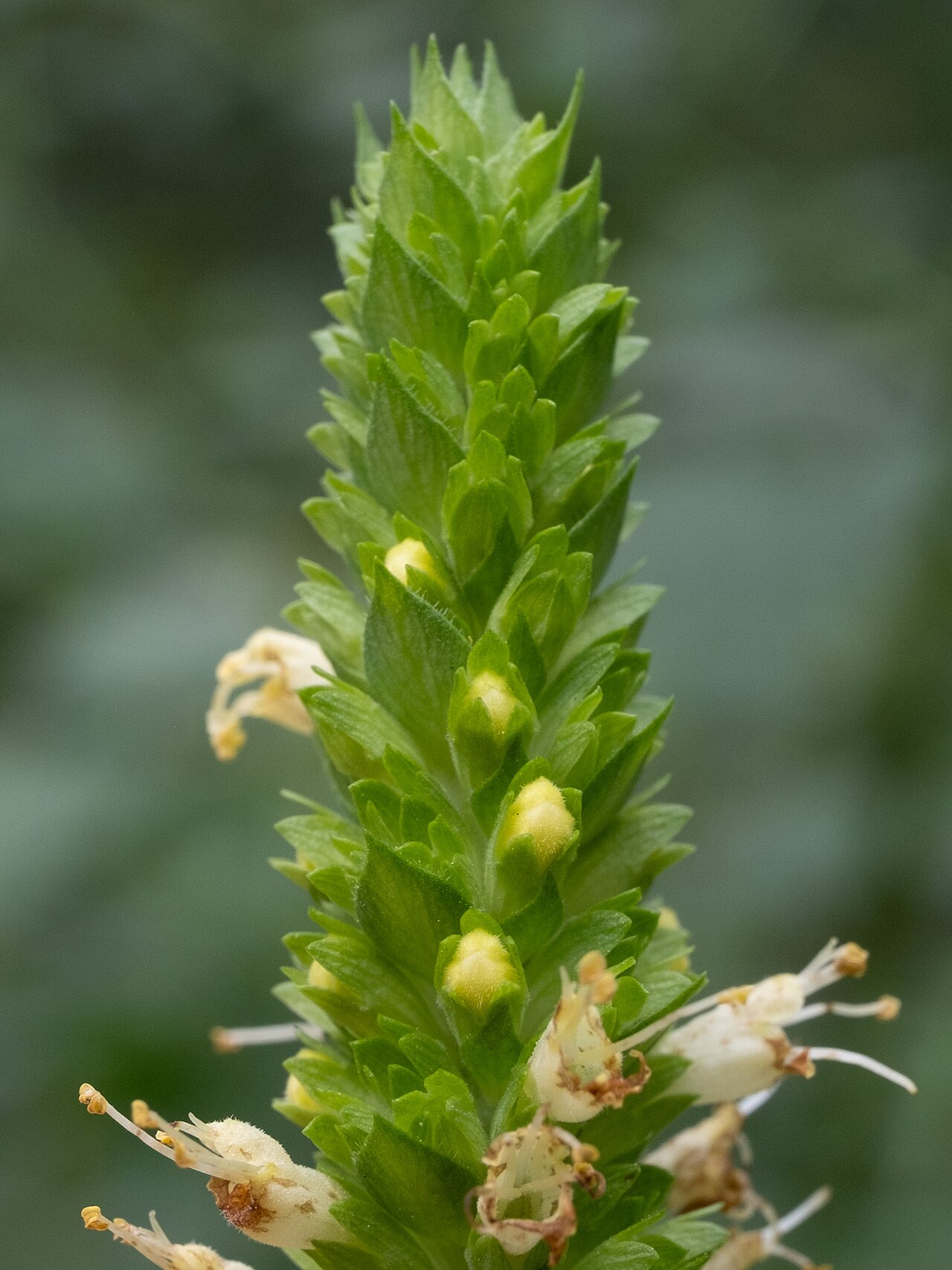
It grows in rich open woods, woodland edges, thickets, clearings and floodplain forests, often in partial shade. Because the flowers are small and the green calyces are showy, the spikes look greenish and stand out more for their form than their color.
Yellow giant hyssop is an excellent bee plant for shady edges and naturalistic gardens. It is easy from seed, tolerates part shade and clay, and leaves architectural seed spikes that stand through winter and feed finches.
Identification
In late summer, look along woodland edges for a tall mint with square stems, coarse toothed leaves, and many stiff, greenish-yellow flower spikes at the branch tips.
Growth Habit
It is an upright, clump-forming perennial 3 to 6 feet tall, occasionally taller, with stout, four-sided stems that branch in the upper half. The stems are smooth or nearly so, which helps separate it from the hairier purple giant hyssop.
Leaves
The leaves are opposite, stalked, oval to broadly lance-shaped, about 3 to 6 inches long, with coarsely toothed edges and pointed tips. They are green on both sides and only faintly scented when crushed, without the strong licorice smell of anise hyssop.
Flowers
Flowers are crowded into dense, cylindrical spikes 3 to 12 inches long at the tops of the stems and branches. Each flower is small, about 1/4 inch long, two-lipped and pale greenish-yellow, with stamens that barely stick out. The green calyces make up most of the spike’s bulk. Bloom time is July to September.
Fruit
Each flower produces four small, smooth brown nutlets. The dried spikes stay on the stems through fall and winter.
Look-alikes
Purple giant hyssop (Agastache scrophulariifolia) has hairy stems and purplish to pinkish flowers. Anise hyssop (Agastache foeniculum) is shorter, smells strongly of licorice and has blue-violet flowers and whitish leaf undersides. Yellow giant hyssop is the one with smooth stems and pale yellow flowers.
Quick Facts
| Scientific Name | Agastache nepetoides |
| Family | Lamiaceae (mint family) |
| Plant Type | Herbaceous perennial |
| Mature Height | 3–6 ft |
| Mature Spread | 1–3 ft |
| Growth Rate | Fast |
| Sun Exposure | Full sun to part shade |
| Water Needs | Medium; moist to medium-dry soil |
| Soil Type | Loam or clay loam; rich woodland soils |
| Soil pH | Slightly acidic to slightly alkaline (about 6.0–7.5) |
| Bloom Time | July–September |
| Flower Color | Pale greenish-yellow |
| Fall Color | None notable; seed spikes turn brown |
| Fruit | Four small brown nutlets per flower |
| Deer Resistant | Good; aromatic mint foliage |
| USDA Hardiness Zones | 4–8 |
Native Range
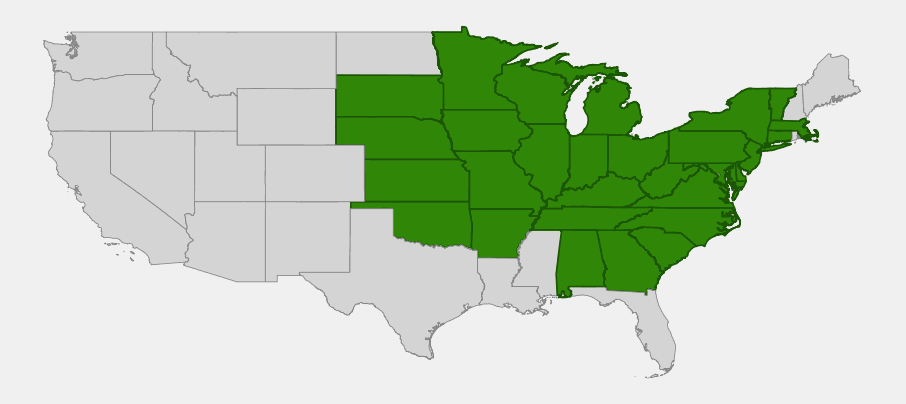
Yellow giant hyssop is native to the central and eastern United States and southern Canada. USDA PLANTS lists it as native in Alabama, Arkansas, Connecticut, Delaware, Georgia, Illinois, Indiana, Iowa, Kansas, Kentucky, Maryland, Massachusetts, Michigan, Minnesota, Missouri, Nebraska, New Jersey, New York, North Carolina, Ohio, Oklahoma, Pennsylvania, South Carolina, South Dakota, Tennessee, Vermont, Virginia, West Virginia and Wisconsin, as well as the District of Columbia, Ontario and Quebec.
It is most frequent in the Midwest, the Ohio Valley and the Appalachian region. It becomes scarce toward the edges of its range in New England, the Deep South and the eastern Great Plains, where it is uncommon to rare in several states.
It grows in rich, open deciduous woods, woodland borders, thickets, clearings, wooded slopes, stream banks and floodplain forests, often where the canopy has opened after disturbance.
📋 Regional plant lists featuring Yellow Giant Hyssop: Alabama, Georgia & Mississippi · Arkansas, Louisiana, Eastern Oklahoma & Eastern Texas · North & South Carolina · Maryland, Virginia & West Virginia · Kentucky & Tennessee · Illinois, Iowa & Missouri · Ohio & Indiana · Nebraska, Kansas & Eastern Colorado · North Dakota, South Dakota & Western Minnesota · Michigan, Wisconsin & Eastern Minnesota · New York, Pennsylvania & Northern New Jersey · Delaware, Southern New Jersey & Long Island · Connecticut, Massachusetts & Rhode Island · New Hampshire, Maine & Vermont
Growing & Care Guide
Yellow giant hyssop is an easy, vigorous perennial for the back of a border, a woodland edge or a pollinator meadow. It is short-lived but reseeds, so it keeps a stand going without much help.
Light
Full sun to part shade. It grows taller and leaner in shade and sturdier in sun, and it is one of the better tall pollinator plants for partly shaded sites.
Soil & Water
Average to rich, moist to medium-dry soil, including clay loam. Established plants tolerate short droughts but look best with steady moisture.
Planting Tips
Plant in spring or fall, 18 to 24 inches apart, at the back of a border or along a woodland edge with goldenrods, asters and wild rye. Its height and stiff spikes give structure to late-summer plantings.
Pruning & Maintenance
Little care is needed. Leave the seed spikes up through winter for birds and winter interest, and cut the old stems down in early spring. Pull extra seedlings if it spreads more than you want.
Propagation
Easy from seed. Sow outdoors in fall or in spring after a short cold, moist stratification. The seeds need light to germinate, so press them onto the soil surface. Seedlings often bloom in their second year.
Landscape Uses
- Pollinator gardens: long-blooming nectar source in late summer
- Woodland edge plantings: tall structure for part shade
- Back of the border: vertical spikes above shorter perennials
- Winter interest: dried seed spikes stand through snow
- Restoration: native component of woodland edges and openings
Wildlife & Ecological Value
Like most native mints, yellow giant hyssop is busy with insects whenever it is in flower.
For Pollinators
The Xerces Society notes it as having special value for native bees and bumble bees. Bumble bees, honey bees, small carpenter bees, sweat bees and other native bees work the spikes, along with wasps, flies and occasional butterflies. It also supports beneficial insects that help control pests.
For Birds
American goldfinches and other small seed-eating birds pick the nutlets from the standing seed spikes in fall and winter.
For Mammals
The aromatic leaves are usually left alone by deer and rabbits.
Ecosystem Role
It fills an important late-summer nectar gap at shaded woodland edges, where few other tall flowering plants grow. Its stiff dead stems give shelter to overwintering insects, and some hollow-stem nesting bees use the cut stems.
Cultural & Historical Uses
The genus name Agastache comes from Greek words meaning very many spikes, a fitting name for these plants with their many dense flower spikes. The species name nepetoides means like Nepeta, or catnip, which explains the other common name, catnip giant hyssop.
Giant hyssops are not related to true hyssop (Hyssopus officinalis) of the Mediterranean. Early settlers borrowed the name because both are aromatic mints with spikes of small flowers.
Yellow giant hyssop is one of several eastern North American Agastache species. Most garden hyssops sold today are western species or hybrids. This one is a true woodland-edge native and is much better suited to part shade and moist eastern soils.
Frequently Asked Questions
Why are yellow giant hyssop flowers so hard to see?
The individual flowers are small and pale greenish-yellow and sit among green calyces, so the spikes look mostly green. Bees find them easily anyway.
Does yellow giant hyssop grow in shade?
Yes. It grows naturally in open woods and woodland edges and does well in part shade, though it is sturdier with some sun.
How tall does yellow giant hyssop get?
Usually 3 to 6 feet tall, with branching stems topped by flower spikes 3 to 12 inches long.
Is yellow giant hyssop good for bees?
Yes. Bumble bees and many other native bees visit it heavily from July to September.
How is it different from anise hyssop?
Anise hyssop is shorter, smells of licorice and has blue-violet flowers. Yellow giant hyssop is taller, has pale yellow flowers and only a faint scent.

Looking for a nursery that carries Yellow Giant Hyssop?
Browse our native plant nursery directory: Alabama & Arkansas · Connecticut, Delaware & Georgia · Illinois, Indiana, Iowa & Kansas · Kentucky, Maryland, Massachusetts, Michigan, Minnesota & Missouri · Nebraska, New Jersey, New York, North Carolina, Ohio & Oklahoma · Pennsylvania, South Carolina, South Dakota, Tennessee, Vermont & Virginia · West Virginia & Wisconsin

