
Nuttall’s Linanthus (Leptosiphon nuttallii)
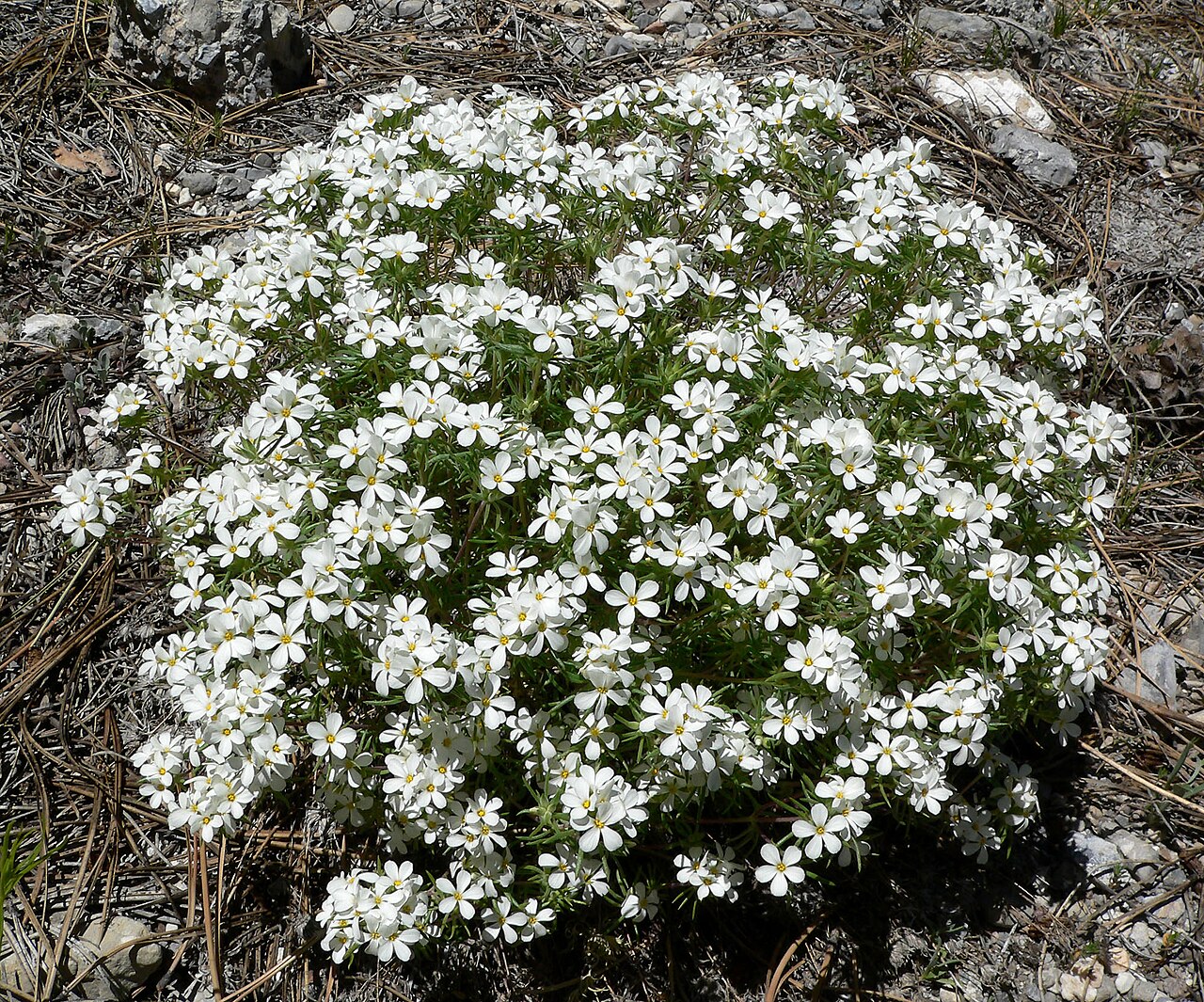
Leptosiphon nuttallii, known as Nuttall’s Linanthus or summer snow, is a low, bushy perennial wildflower of western mountains. It forms tidy mounds 4 to 12 inches tall of fine, needle-like foliage, and from early summer into fall it is covered with white, star-shaped flowers, each with a small yellow eye. A plant in full bloom looks like a cushion dusted with snow, which explains its other common name.
It belongs to the phlox family (Polemoniaceae). Older books list it as Linanthus nuttallii or Linanthastrum nuttallii. Botanists moved it to Leptosiphon after DNA studies, but Linanthus nuttallii is still common in field guides and nursery catalogs. Unlike most of its relatives, which are small annuals, Nuttall’s linanthus is a long-lived perennial with a woody base.
It grows across much of the interior West, from the Cascades and northern Rockies south through the Sierra Nevada, the Great Basin ranges and the Wasatch to the mountains of Arizona and New Mexico. Its usual homes are dry, open, rocky slopes and the sunny openings of pine and fir forests. For gardeners in the West it is a charming rock-garden plant with a long bloom season. This guide covers its identification, range, care, and value for pollinators.
Identification
Nuttall’s linanthus is easy to spot in bloom: a low, rounded clump of fine green foliage covered in white, yellow-centered flowers. The leaves are the key to telling it from similar small white wildflowers.
Form
It is a perennial herb to small subshrub, with many slender stems rising from a woody base and branching root. Plants are usually 4 to 12 inches tall and form compact to sprawling mounds up to about a foot or more across. Stems may be smooth or finely hairy; plants with noticeably hairy stems and leaves are sometimes separated as subspecies pubescens.
Leaves
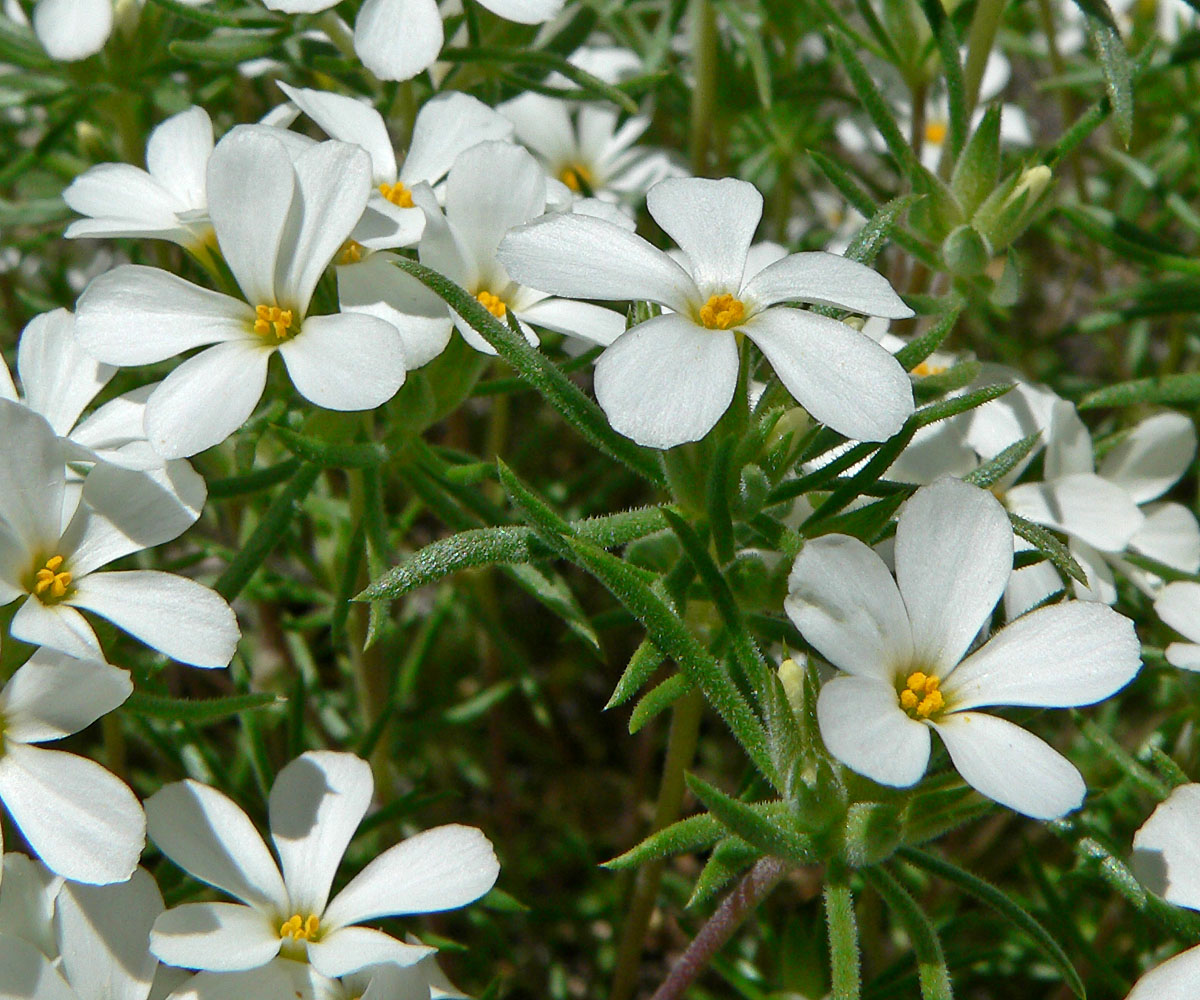
The leaves are opposite, but each one is divided nearly to the base into 3 to 9 narrow, needle-like segments, usually ½ to ¾ inch long. Because of this, each pair of leaves looks like a whorl of fine needles around the stem, giving the plant a soft, bristly texture similar to a small conifer seedling or a mat of phlox.
Flowers
Flowers are borne in clusters at the stem tips. Each one has a short, narrow tube that opens into five flat, rounded white lobes, forming a star about ½ to ¾ inch across. The throat is yellow, and the five stamens are tucked into the tube. Some plants have a light, sweet fragrance. Blooming begins in late spring or early summer and often continues into early fall, especially at higher elevations.
Fruit & Seeds
After flowering, each flower forms a small, three-chambered capsule that splits open to release a few small seeds. Plants also persist for many years from their woody base, so mature colonies are made up of long-lived individual clumps.
Look-alikes
Annual relatives such as Variable Linanthus and Bicolor Babystars are short-lived spring annuals with long, thread-like flower tubes. Native phloxes such as Spiny Phlox also form low mats of needle-like leaves, but their leaves are undivided, and they flower mainly in spring. Nuttall’s linanthus is the only common perennial in the group with divided, whorled-looking leaves and white flowers that last into late summer.
Quick Facts
| Scientific Name | Leptosiphon nuttallii (A. Gray) J.M. Porter & L.A. Johnson (syn. Linanthus nuttallii, Linanthastrum nuttallii) |
| Family | Polemoniaceae (phlox family) |
| Plant Type | Herbaceous perennial to subshrub with a woody base |
| Mature Height | 4–12 in |
| Mature Spread | 8–18 in |
| Growth Rate | Slow to moderate |
| Sun Exposure | Full sun to part shade |
| Water Needs | Low; dry to moderately moist, well-drained soil |
| Soil Type | Rocky, gravelly or sandy soil with excellent drainage |
| Soil pH | About 6.0–8.0 |
| Bloom Time | May–October (mostly June–August) |
| Flower Color | White with a yellow throat |
| Fall Color | None notable; foliage dies back to the woody base in winter |
| Fruit | Small three-chambered capsule |
| Deer Resistant | Moderately; seldom heavily browsed |
| USDA Hardiness Zones | 4–8 |
Native Range
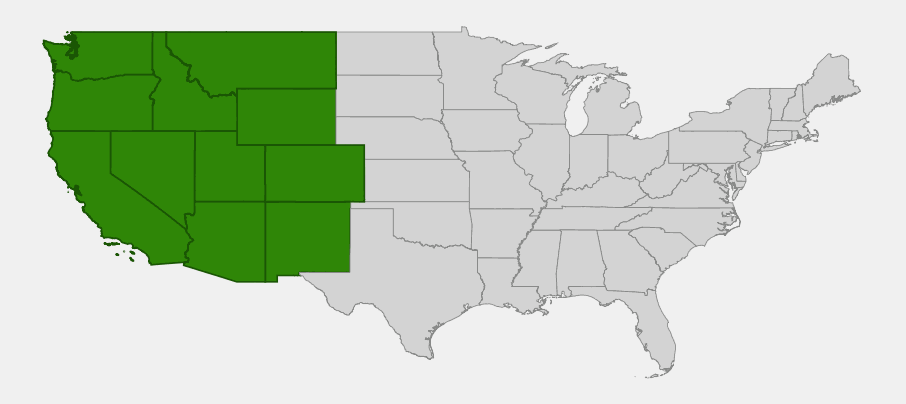
Nuttall’s linanthus is a plant of the mountains of the western United States. USDA PLANTS and the Lady Bird Johnson Wildflower Center record it as native in eleven states: Arizona, California, Colorado, Idaho, Montana, Nevada, New Mexico, Oregon, Utah, Washington and Wyoming.
In the Pacific states it grows along the east side of the Cascades in Washington and Oregon and throughout the Sierra Nevada, the Klamath region and the mountains of southern California. In the interior it is widespread in the ranges of the Great Basin, such as the Spring Mountains and White Mountains, and in the northern and central Rockies of Idaho, Montana, Wyoming, Utah and Colorado. In the Southwest it reaches the mountains and high plateaus of Arizona and New Mexico.
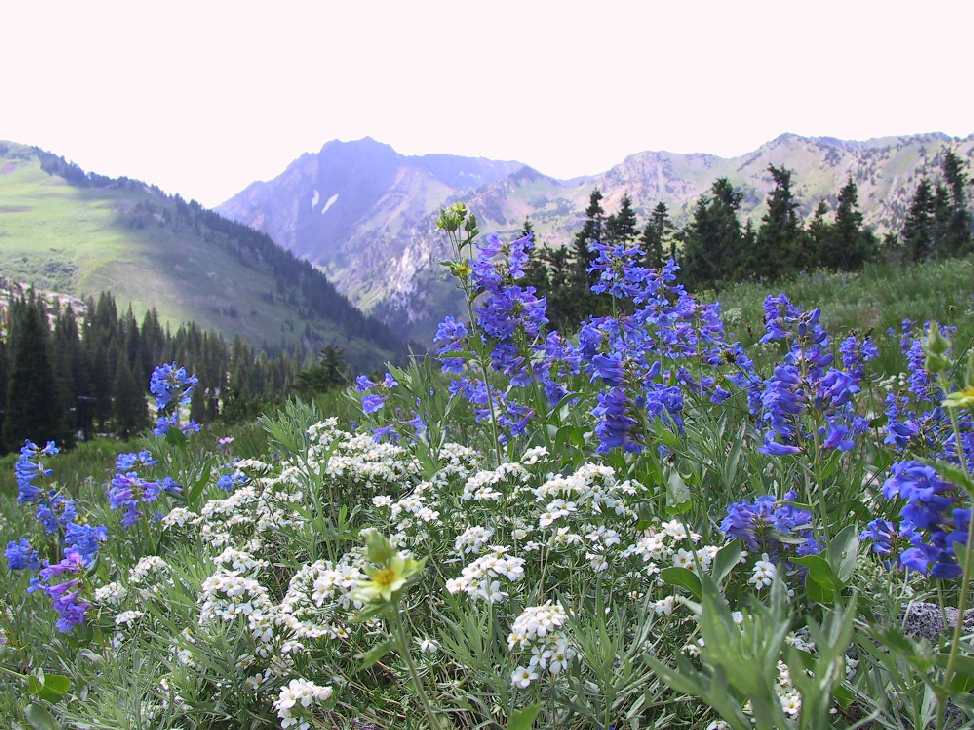
It usually grows between about 4,000 and 11,000 feet. Typical habitats are dry, open, rocky or gravelly slopes, talus, ridges, sagebrush flats and the sunny openings of ponderosa pine, Jeffrey pine, Douglas-fir and other conifer forests. At high elevations it can be abundant in subalpine meadows, as in the Wasatch Mountains of Utah.
📋 Regional plant lists featuring Nuttall’s Linanthus: Arizona & New Mexico · California & Nevada · Idaho, Eastern Oregon & Eastern Washington · Montana & Wyoming · Utah & Western Colorado · Western Oregon & Western Washington
Growing & Care Guide
Nuttall’s linanthus is a lovely, long-blooming perennial for rock gardens and dry slopes in the West. It is not difficult once settled, but like most mountain plants it insists on sharp drainage and dislikes heavy, wet soil, especially in winter.
Light
Grow it in full sun or light part shade. In hot, low-elevation gardens, afternoon shade or the dappled light of open pines suits it best, matching the forest openings where it grows wild.
Soil & Water
Plant it in gritty, rocky or sandy soil with excellent drainage. A raised bed, a scree garden or a slope is ideal. Water regularly until established, then only during long dry spells. Overwatering and soggy winter soil are the most common causes of failure, while established plants handle summer drought well.
Planting Tips
Set out container plants in spring or early fall. Mulch with gravel rather than bark to keep the crown dry. It pairs well with buckwheats, penstemons and small bunchgrasses, and it looks especially good tucked among rocks or along the edge of a dry path.
Pruning & Maintenance
Little care is needed. Trim off spent flower stems in fall or late winter to keep the mound tidy, and avoid fertilizing, which makes it floppy and short-lived. Remove competing weeds by hand so they do not smother the low mounds.
Propagation
Grow it from seed sown in fall outdoors or after a period of cold, moist stratification. Seedlings can be slow to establish. Softwood or semi-hardwood cuttings taken from non-flowering shoots in early summer can also be rooted in a gritty, well-drained mix. Older clumps can sometimes be divided carefully in early spring.
Landscape Uses
- Rock and scree gardens: a compact mound with a long summer bloom
- Dry slopes and xeriscapes: thrives on rocky, well-drained ground with little water
- Pollinator gardens: small white flowers attract bees, flies, butterflies and moths
- Mountain and forest-edge gardens: fits naturally under open pines and with sagebrush
- Habitat restoration: dry slopes and forest openings in its native range
Wildlife & Ecological Value
Nuttall’s linanthus provides a long season of small flowers in dry mountain habitats, supporting a wide range of insects through midsummer, when many spring wildflowers have finished.
For Pollinators
The white, tubular flowers are visited by small native bees, flies, butterflies and moths. Their long bloom season, from early summer into fall, makes them a dependable nectar source in dry forest openings and subalpine meadows.
For Birds
The seeds are small and are not an important food for birds, but the low mounds provide cover for ground-foraging birds and the insects they eat.
For Mammals
Deer and elk may graze it lightly, but it is not a preferred forage plant. Small mammals use the clumps for cover and may eat the seeds.
Ecosystem Role
As a long-lived perennial with a deep, branching root, it helps stabilize loose, rocky soils on slopes and ridges. It is one of the many low wildflowers that give open pine forests and subalpine meadows of the West their summer color.
Cultural & Historical Uses
The species is named for Thomas Nuttall (1786–1859), the English-born botanist and naturalist who explored much of North America, including a journey across the Rockies to the Pacific Coast in 1834. Many western plants bear his name. The species was first described by Asa Gray as Gilia nuttallii and was later placed in Linanthus, Linanthastrum and finally Leptosiphon.
The genus name Leptosiphon comes from the Greek leptos (slender) and siphon (tube), referring to the narrow flower tubes of the group. In Nuttall’s linanthus the tube is rather short compared with its annual relatives.
Nuttall’s linanthus has no well-documented food or medicinal uses. It is valued mainly as a wildflower of western mountain trails, and by rock gardeners who grow it for its tidy form and long season of white flowers.
Frequently Asked Questions
Is Nuttall’s linanthus a perennial?
Yes. Unlike most linanthus and babystars, which are spring annuals, Nuttall’s linanthus is a long-lived perennial with a woody base. It dies back partly in winter and regrows from the base in spring.
Is Nuttall’s linanthus the same as Linanthus nuttallii?
Yes. Linanthus nuttallii and Linanthastrum nuttallii are older names for the same plant. USDA PLANTS and most current floras now use Leptosiphon nuttallii.
When does Nuttall’s linanthus bloom?
It usually blooms from late spring or early summer through late summer, and into early fall in some places. USDA and Lady Bird Johnson Wildflower Center records span May through the fall.
Can I grow Nuttall’s linanthus in my garden?
Yes, in sunny, well-drained sites, especially rock gardens and dry slopes in the West. It needs gritty soil and little water once established, and it dislikes wet winter soil.
Where can I see Nuttall’s linanthus in the wild?
Look on dry, rocky slopes and in sunny openings of pine and fir forests in western mountains, from the Cascades and Sierra Nevada to the Rockies, Great Basin ranges and the mountains of Arizona and New Mexico. It is common in summer in places such as Albion Basin in Utah’s Wasatch Range.

Looking for a nursery that carries Nuttall’s Linanthus?
Browse our native plant nursery directory: Arizona · California · Colorado · Idaho · Montana · Nevada & New Mexico · Oregon · Utah · Washington · Wyoming

