
Native Cinquefoils (Potentilla)
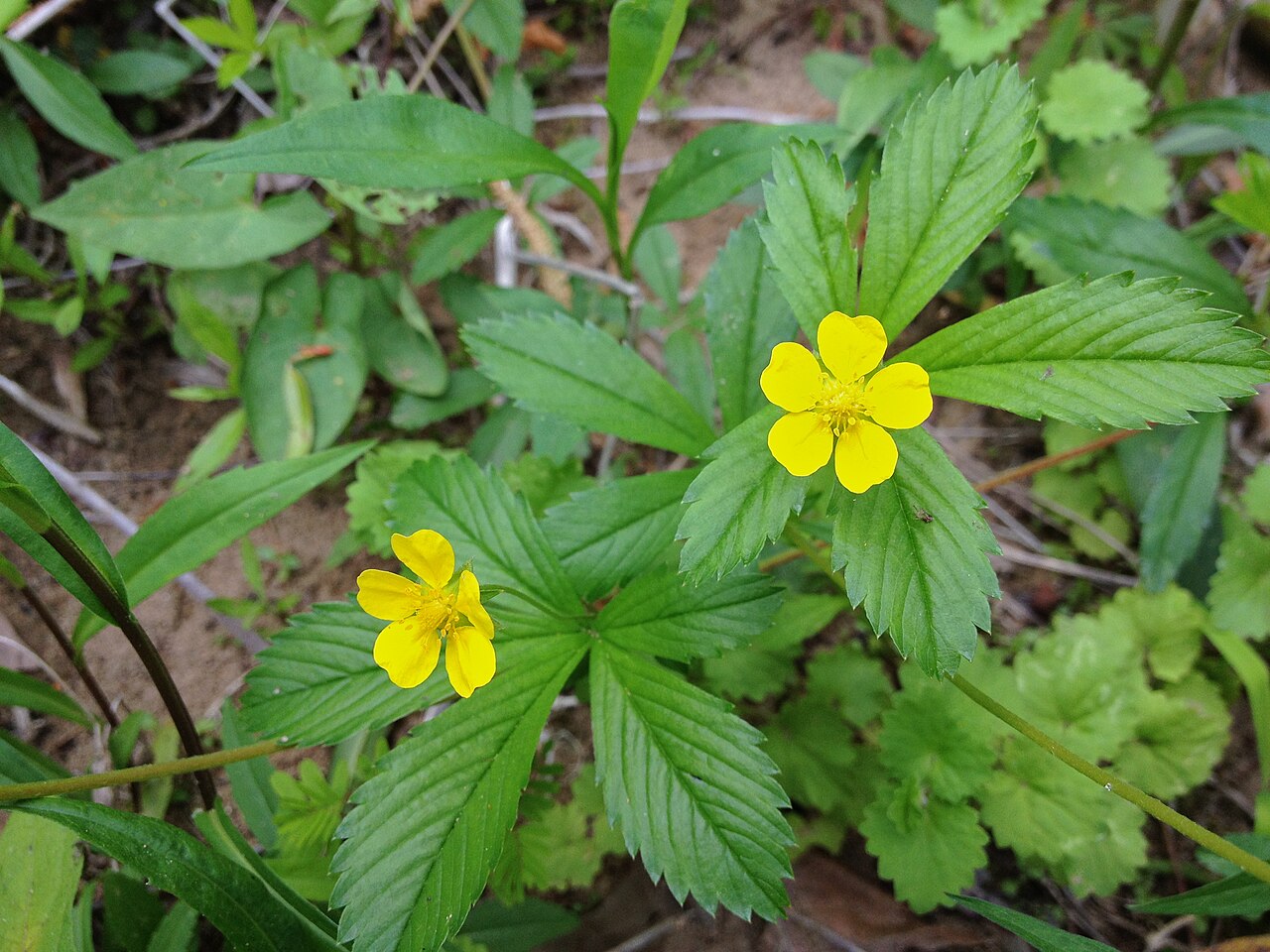
Cinquefoils are low wildflowers and small shrubs of the rose family, named from the old French for “five leaves” because so many of them have leaves divided into five leaflets spread like the fingers of a hand. Their flowers look like tiny single roses: five rounded petals, usually bright yellow, around a central boss of stamens. The main genus, Potentilla, has a few hundred species across the Northern Hemisphere, and roughly 60 to 70 of them are native to the United States, growing in every state except Hawaii.
Native cinquefoils range from the creeping common cinquefoil and dwarf cinquefoil of eastern fields and woodland edges, to the upright slender cinquefoil and silvery woolly cinquefoil of western meadows, to the popular landscape shrub shrubby cinquefoil. Most are tough, drought-tolerant plants of sunny, poor soils, and they support a surprising number of small native bees.
There is a wrinkle for gardeners: botanists have recently moved several familiar “cinquefoils” into separate genera. Shrubby cinquefoil is now usually called Dasiphora fruticosa, tall and sticky cinquefoils are placed in Drymocallis, and silverweed, marsh cinquefoil and three-toothed cinquefoil have their own genera too. They are still cinquefoils in everyday language, so this guide covers them all, and it also explains how to recognize the invasive sulphur cinquefoil that has spread across many western rangelands.
Identification
Cinquefoils are easy to recognize as a group once you know a few features, although separating the species often takes a close look at leaves, hairs and growth habit.
Leaves
Cinquefoil leaves are compound and alternate. In many species they are palmate, with three, five or seven toothed leaflets all spreading from the tip of the leaf stalk, as in common, dwarf and slender cinquefoil. In others they are pinnate, with leaflets arranged in pairs along a central stalk, as in woolly cinquefoil, tall cinquefoil and shrubby cinquefoil. Many western species have silvery or woolly hairs on the undersides of the leaves, which help them conserve water.
Flowers
The flowers are saucer-shaped, with five petals (rarely more in garden forms) and five green sepals alternating with five smaller bracts beneath, so the back of the flower shows a ten-pointed green star. Most native species have bright yellow flowers; tall cinquefoil and three-toothed cinquefoil have white or cream flowers, and marsh cinquefoil is deep reddish-purple. Many bloom in spring in the East and in early to midsummer in the West.
Growth Habit
Native cinquefoils grow in three main forms. Creeping species, such as common and dwarf cinquefoil, spread by slender runners and look a little like wild strawberry without the fruit. Upright perennials, such as slender, woolly and tall cinquefoil, form clumps 1 to 3 feet tall. And shrubby cinquefoil is a small, woody, much-branched shrub 1 to 4 feet tall that blooms all summer.
Fruit
The fruit is a cluster of tiny, dry, seed-like achenes held in the persistent cup of sepals. Unlike the related strawberries, cinquefoils do not form a fleshy fruit, which is one easy way to tell them from wild strawberry and the non-native mock strawberry.
Quick Facts
| Genus | Potentilla (cinquefoils), plus segregate genera Dasiphora, Drymocallis and others |
| Family | Rosaceae (Rose) |
| US-Native Species | Roughly 60–70 Potentilla species (approximate) |
| Plant Types | Herbaceous perennials, creeping groundcovers and small shrubs |
| Mature Height | 2 in – 3 ft (shrubby cinquefoil 1–4 ft) |
| Growth Rate | Moderate |
| Sun Exposure | Full Sun to Part Shade |
| Water Needs | Mostly dry to average; a few species of wet meadows and bogs |
| Soil Type | Lean, well-drained sand, gravel or loam; tolerates poor soil |
| Bloom Time | April – August, depending on species and region |
| Flower Color | Mostly yellow; some white, cream or purple |
| Fruit | Small dry achenes (no fleshy berry) |
| Wildlife Value | Small native bees, flies, butterflies; larval host for some moths |
| Deer Resistant | Generally yes |
| Invasive Relatives | Sulphur cinquefoil (P. recta); creeping and silvery cinquefoils are naturalized |
| USDA Hardiness Zones | 2–9 across the genus (species vary) |
Native Range
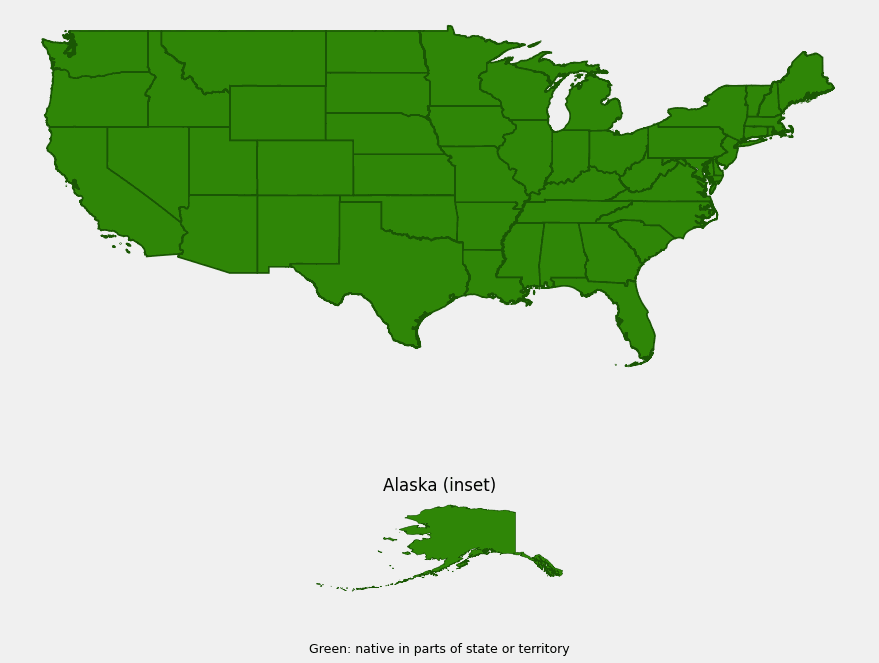
Native cinquefoils grow in every US state except Hawaii, from Florida’s panhandle to Alaska’s tundra. In the East and Midwest, the familiar species are common cinquefoil and dwarf cinquefoil, two creeping, yellow-flowered plants of old fields, pastures, open woods and roadsides; tall cinquefoil grows on prairies and rocky openings, and three-toothed cinquefoil grows on rocky summits and sandy barrens in the Northeast and Great Lakes. Shrubby cinquefoil occurs in northern fens and wet meadows from New England to the upper Midwest.
The West is where cinquefoils are most diverse. Slender cinquefoil, woolly cinquefoil, beautiful cinquefoil and sticky cinquefoil are common in mountain meadows, sagebrush steppe, aspen groves and open pine forests from the Great Plains to the Pacific. Above treeline in the Rockies, Sierra Nevada and Cascades, several low alpine cinquefoils grow among rocks. Shrubby cinquefoil is widespread across the Rockies, Great Basin mountains and Alaska.
Cinquefoils prefer open, sunny ground and tolerate poor, dry or rocky soil. Several native species, especially common cinquefoil and rough cinquefoil, are quick to colonize disturbed ground, and they are sometimes mistaken for weeds. Meanwhile, sulphur cinquefoil and a few other European species have naturalized widely, so not every cinquefoil in a field or pasture is a native plant.
📋 Regional plant lists featuring Native Cinquefoils: Alaska · Georgia, Alabama & Mississippi · Arkansas, Louisiana, Eastern Oklahoma & Eastern Texas · Arizona & New Mexico · North Dakota, South Dakota & Western Minnesota · Delaware, Southern New Jersey & Long Island · Illinois, Iowa & Missouri · Idaho, Eastern Oregon & Eastern Washington · Ohio & Indiana · Kentucky & Tennessee · Maryland, Virginia & West Virginia · Michigan, Wisconsin & Eastern Minnesota · Montana & Wyoming · North Carolina & South Carolina · Nebraska, Kansas & Eastern Colorado · New Hampshire, Maine & Vermont · Connecticut, Massachusetts & Rhode Island · New York, Pennsylvania & Northern New Jersey · Western Oregon & Western Washington · Utah & Western Colorado · California & Nevada · South & West Texas
Native Species
These are the most widespread and useful native cinquefoils, including the close relatives that are now placed in separate genera.
Eastern & Midwestern Species
- Common Cinquefoil (Potentilla simplex): Also called old-field cinquefoil. A creeping perennial of fields, open woods and roadsides across the eastern half of the country, from Maine and Minnesota to Texas and northern Florida. Five-leaflet leaves and single yellow flowers on long stalks in spring. A useful low groundcover for dry, sunny spots.
- Dwarf Cinquefoil (Potentilla canadensis): Similar to common cinquefoil but smaller and silkier, blooming a little earlier in spring. Native from the Northeast and Great Lakes south to Georgia and Alabama, mostly east of the Mississippi. Grows in dry, sandy or rocky soil.
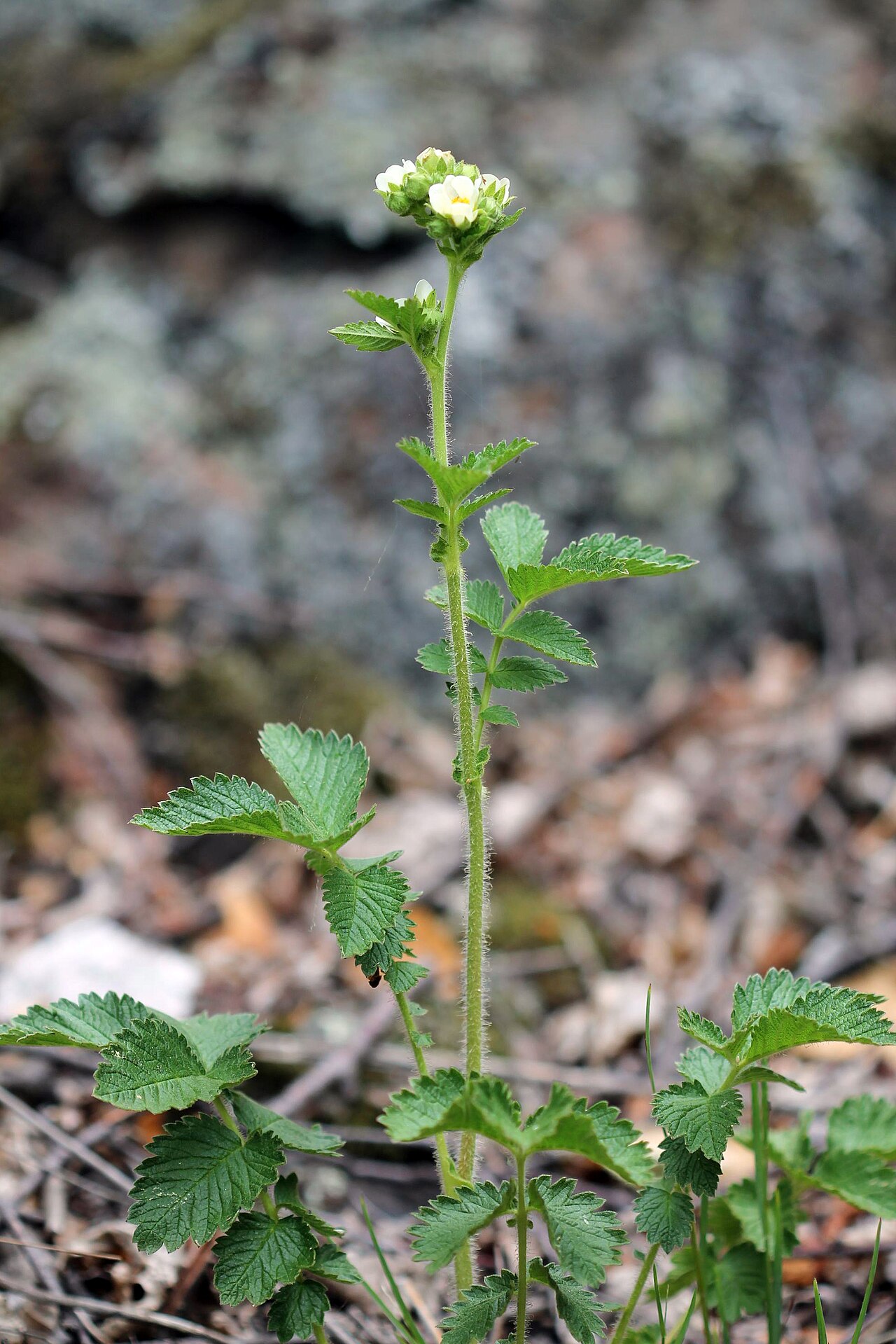
- Tall Cinquefoil (Drymocallis arguta, formerly Potentilla arguta): An upright, 1- to 3-foot prairie perennial with sticky-hairy stems, pinnate leaves and clusters of cream-white flowers in early summer. Native across the northern and central US and the Rockies.
- Three-toothed Cinquefoil (Sibbaldia tridentata, formerly Potentilla tridentata): A low, evergreen groundcover of rocky ledges, sandy barrens and mountaintops in the Northeast and Great Lakes. Glossy leaves with three leaflets, each with three teeth at the tip, and small white flowers. Excellent in rock gardens.
- Rough Cinquefoil (Potentilla norvegica): A short-lived, hairy, weedy-looking plant of disturbed ground found across much of North America. It is native here, though it is easily mistaken for a weed.
Western Species
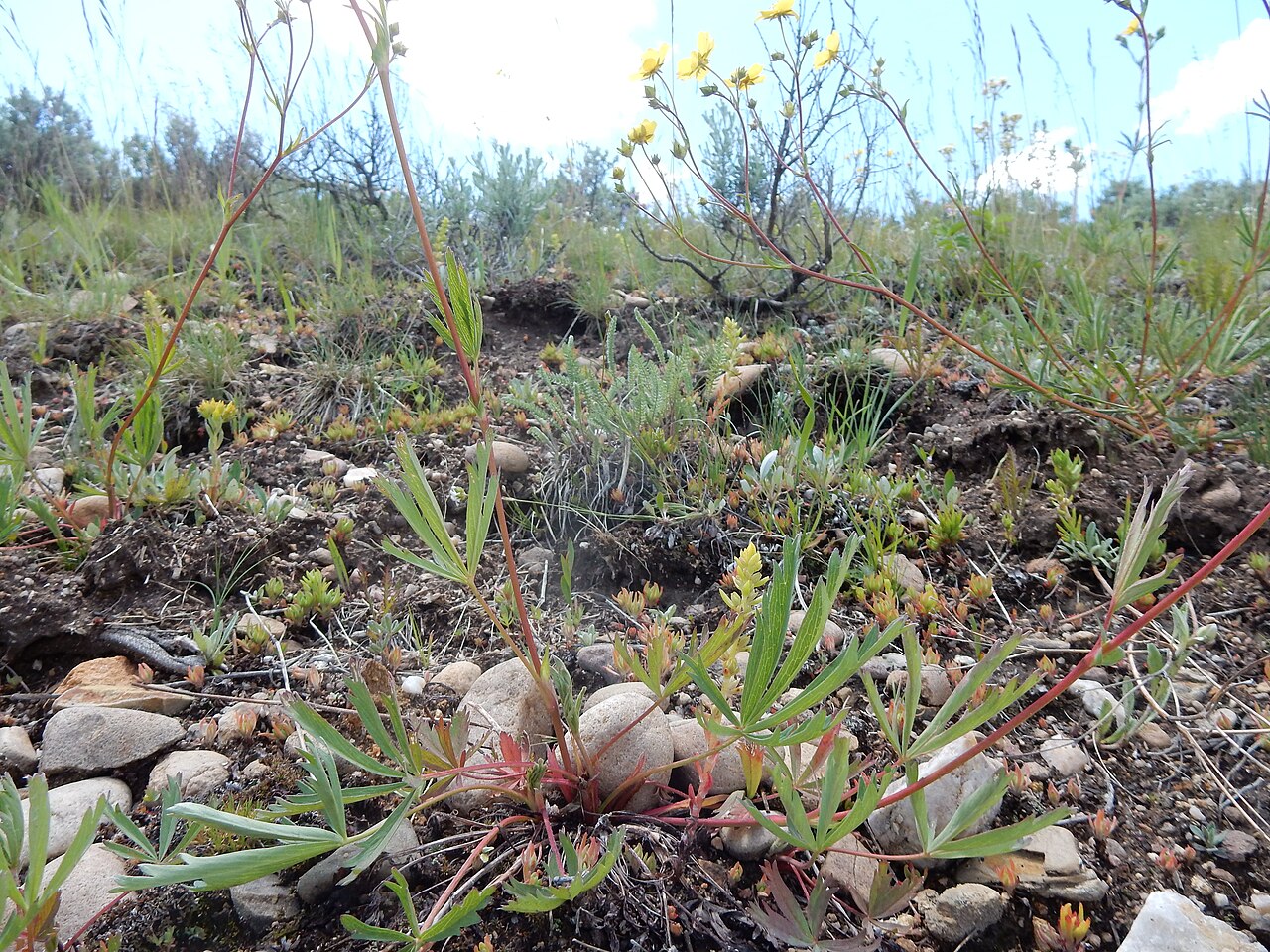
- Slender (Graceful) Cinquefoil (Potentilla gracilis): The most widespread native cinquefoil of the West, from Alaska to California and east to the Great Plains. Palmate leaves with five to nine deeply toothed leaflets, often silvery beneath, and loose clusters of yellow flowers on 1- to 2-foot stems in summer. Beautiful cinquefoil (var. pulcherrima) is a common form in the Rockies.
- Woolly Cinquefoil (Potentilla hippiana): A silvery-gray plant of Rocky Mountain and northern Plains grasslands and open forests, with pinnate, densely hairy leaves and bright yellow flowers. Very drought tolerant and handsome in dry gardens.
- Sticky Cinquefoil (Drymocallis glandulosa, formerly Potentilla glandulosa): A glandular-sticky perennial of western forests and meadows from British Columbia to Baja California and the Rockies, with pale yellow to cream flowers.
- Brook Cinquefoil (Potentilla rivalis): An annual or short-lived species of moist, sandy riverbanks and lakeshores across much of the West and Plains.
Shrubby Cinquefoil & Wetland Relatives
- Shrubby Cinquefoil (Dasiphora fruticosa, formerly Potentilla fruticosa): A compact, 1- to 4-foot deciduous shrub native across the northern US, the Rockies, the Sierra Nevada and Alaska, growing in fens, wet meadows and on mountain slopes. Small pinnate leaves and yellow flowers from early summer into fall. Many cultivars, such as ‘Goldfinger’, ‘Abbotswood’ (white) and ‘Pink Beauty’, are sold widely; they are selections of this native species or of related Eurasian forms.
- Silverweed (Argentina anserina, formerly Potentilla anserina): A creeping plant of moist shores, salt marshes and wet meadows across the northern US and Canada, with silvery, pinnate leaves and solitary yellow flowers.
- Marsh Cinquefoil (Comarum palustre, formerly Potentilla palustris): A sprawling plant of bogs, fens and pond edges across the northern US and Alaska, with unusual star-shaped, deep reddish-purple flowers.
Non-Native Look-Alikes
Several Eurasian cinquefoils have naturalized in the United States. One of them is a major invasive weed.
Sulphur Cinquefoil (Potentilla recta)
Sulphur cinquefoil is an upright, 1- to 2-foot perennial with pale, sulphur-yellow flowers, palmate leaves with five to seven narrow, coarsely toothed leaflets, and stems covered in long, stiff hairs that stick out at right angles. It is invasive in rangelands, pastures and roadsides across much of the West and in parts of the Midwest and Northeast, where it crowds out native grasses and wildflowers and is avoided by livestock. It is a listed noxious weed in several western states, including Montana, Washington and Colorado. It is easy to confuse with native slender cinquefoil, which has deeper yellow flowers, softer hairs and leaflets that are usually silvery or paler beneath. When in doubt, check with your local extension or weed control office before planting or removing.
Creeping Cinquefoil (Potentilla reptans) and Silvery Cinquefoil (Potentilla argentea)
Creeping cinquefoil is a European groundcover that has naturalized in scattered places, especially in the East and on the Pacific Coast. It looks very much like native common cinquefoil, spreading by long runners and bearing single yellow flowers, and the two can be hard to separate in the field, so buy groundcover cinquefoils from native plant nurseries that list the scientific name. Silvery cinquefoil, another European species naturalized in dry fields and roadsides in the Northeast and Midwest, has small, deeply cut leaflets that are white-woolly underneath with rolled edges.
Garden Cinquefoils and Other Look-Alikes
Perennial border cinquefoils such as Nepal cinquefoil (Potentilla nepalensis, including ‘Miss Willmott’) and Himalayan cinquefoil (P. atrosanguinea), with pink, red or orange flowers, come from Asia. Mock strawberry (Potentilla indica, also called Duchesnea indica), an Asian lawn weed, has cinquefoil-like yellow flowers and three-leaflet leaves but produces bland red strawberry-like fruit. The native wild strawberry has white flowers. No cinquefoil native to Michigan or the Great Lakes has pink flowers, so a pink-flowered “cinquefoil” in a garden there is almost certainly an Asian garden species or a cultivar.
Growing & Care Guide
Most native cinquefoils are easy, low-maintenance plants for sunny, lean, well-drained sites. They are a good choice where richer-soil perennials struggle.
Light
Grow cinquefoils in full sun for the most flowers. Common and dwarf cinquefoil and tall cinquefoil tolerate light shade at woodland edges, but bloom less there. Shrubby cinquefoil flowers best with at least six hours of sun.
Soil & Water
Most species prefer dry to medium, well-drained soil and actually do better in lean sand, gravel or rocky soil than in rich garden loam, which can make them floppy. Once established they are very drought tolerant. Shrubby cinquefoil is adaptable to moist or dry soils and tolerates alkaline conditions. Silverweed and marsh cinquefoil need consistently wet soil or shallow water.
Planting Tips
Plant nursery-grown plugs or pots in spring or early fall. Space creeping species 12 to 18 inches apart for a groundcover, upright species 12 to 18 inches apart in drifts, and shrubby cinquefoil 2 to 3 feet apart for a low hedge. Common and dwarf cinquefoil combine well with low native grasses and spring wildflowers in dry lawns or meadow gardens.
Pruning & Maintenance
Herbaceous cinquefoils need little care; cut back old stems in late winter or spring. Shrubby cinquefoil benefits from removing about a third of the oldest stems at the base every few years, or a light shearing in early spring, to keep it dense and blooming. Cinquefoils have few pest problems, though spider mites can affect shrubby cinquefoil in hot, dry sites.
Propagation
Creeping cinquefoils are easily increased by rooting the plantlets that form at the tips of their runners. Upright species can be divided in spring or grown from seed; sow seed outdoors in fall or give it a month of cold, moist stratification. Shrubby cinquefoil roots readily from softwood cuttings in early summer.
Landscape Uses
- Dry, sunny groundcovers and lawn alternatives with common or dwarf cinquefoil
- Prairie and meadow gardens with tall, slender or woolly cinquefoil, little bluestem and prairie smoke
- Rock gardens with three-toothed cinquefoil, woolly cinquefoil and pussytoes
- Low hedges and foundation plantings with shrubby cinquefoil, which tolerates cold, wind and road salt
- Bog and pond edges with marsh cinquefoil and silverweed
- Pollinator gardens that need early, small flowers for small native bees
Wildlife & Ecological Value
Cinquefoils are modest plants, but they play a useful role in sunny, open habitats.
For Pollinators
The open, saucer-shaped flowers offer easy access to pollen and nectar, so they attract many small insects: sweat bees, small carpenter bees, mining bees, syrphid flies and small butterflies such as skippers. Several native bees specialize at least partly on rose-family flowers. Shrubby cinquefoil’s long bloom season provides flowers from early summer until frost.
For Birds
Seed-eating birds such as sparrows and juncos feed on the small seeds of upright cinquefoils, and grouse and ptarmigan browse the leaves and buds of alpine and shrubby species. The insects that cinquefoils attract also feed songbirds.
For Mammals
Deer and elk browse shrubby cinquefoil in the West, though it is generally considered low-preference forage. Rabbits and small mammals graze the leaves of low species. Most cinquefoils are not favored by deer in gardens.
Ecosystem Role
Many cinquefoils are early colonizers of disturbed, sunny ground, stabilizing soil on roadcuts, old fields and gravel bars. Shrubby cinquefoil is an important component of northern fens and mountain wet meadows, and alpine cinquefoils are part of the tundra flowering season. Dwarf cinquefoil is a larval host plant for the rare Appalachian grizzled skipper, and cinquefoils host several small moths.
Cultural & Historical Uses
The name cinquefoil, from French for “five leaves,” was used in medieval Europe, where the five-leaflet leaf became a common heraldic symbol and a motif in Gothic church windows. The genus name Potentilla means “little powerful one,” a reference to the medicinal reputation that European cinquefoils once had.
In North America, Native peoples and settlers used the roots and leaves of several cinquefoils in traditional practices; for example, silverweed roots were dug and cooked as a food by peoples of the Pacific Northwest coast. These are historical uses rather than recommendations, and cinquefoils have little modern use beyond gardens and restoration.
Shrubby cinquefoil has become one of the most widely planted landscape shrubs in cold climates, valued for its toughness and long bloom. Many people who have it in their yards never realize it is a North American native, although some of the popular cultivars come from Eurasian forms of the same widespread species.
Frequently Asked Questions
Is cinquefoil native to North America?
Yes. Roughly 60 to 70 Potentilla species are native to the United States, along with native relatives such as shrubby cinquefoil and tall cinquefoil that are now placed in other genera. Some cinquefoils, especially sulphur cinquefoil, are non-native and invasive.
Is there a “woodland cinquefoil”?
Not as a recognized species. The cinquefoils most likely to be found in open woods and woodland edges in the Northeast, including Maine, are common cinquefoil (Potentilla simplex) and dwarf cinquefoil (Potentilla canadensis), both low, yellow-flowered, creeping natives. They have alternate leaves divided into five leaflets, not opposite leaves.
Is cinquefoil invasive?
Native cinquefoils are not invasive, though common cinquefoil spreads by runners in open ground. The invasive one to watch for is sulphur cinquefoil (Potentilla recta), a tall, pale yellow-flowered European species that is a listed noxious weed in several western states.
Is shrubby cinquefoil a native plant?
Yes. Shrubby cinquefoil (Dasiphora fruticosa, formerly Potentilla fruticosa) is native across the northern US, the Rocky Mountains and Alaska, as well as Europe and Asia. Many nursery cultivars are available; buy straight species or locally sourced plants for restoration work.
How do I tell cinquefoil from wild strawberry?
Both have yellow-centered rose-like flowers and creeping runners, but wild strawberry has white flowers, leaves with three leaflets and juicy red fruit. Common and dwarf cinquefoils have yellow flowers, leaves with five leaflets and only dry seeds.

Looking for a nursery that carries Native Cinquefoils?
Browse our native plant nursery directory: Alabama, Alaska, Arizona & Arkansas · California · Colorado, Connecticut, Delaware, Florida & Georgia · Idaho, Illinois, Indiana, Iowa & Kansas · Kentucky, Louisiana, Maine, Maryland, Massachusetts, Michigan, Minnesota, Mississippi, Missouri & Montana · Nebraska, Nevada, New Hampshire, New Jersey, New Mexico, New York, North Carolina, North Dakota, Ohio & Oklahoma · Oregon · Pennsylvania, Rhode Island, South Carolina, South Dakota, Tennessee, Texas, Utah, Vermont & Virginia · Washington · West Virginia, Wisconsin & Wyoming

