
Native Serviceberries (Amelanchier)
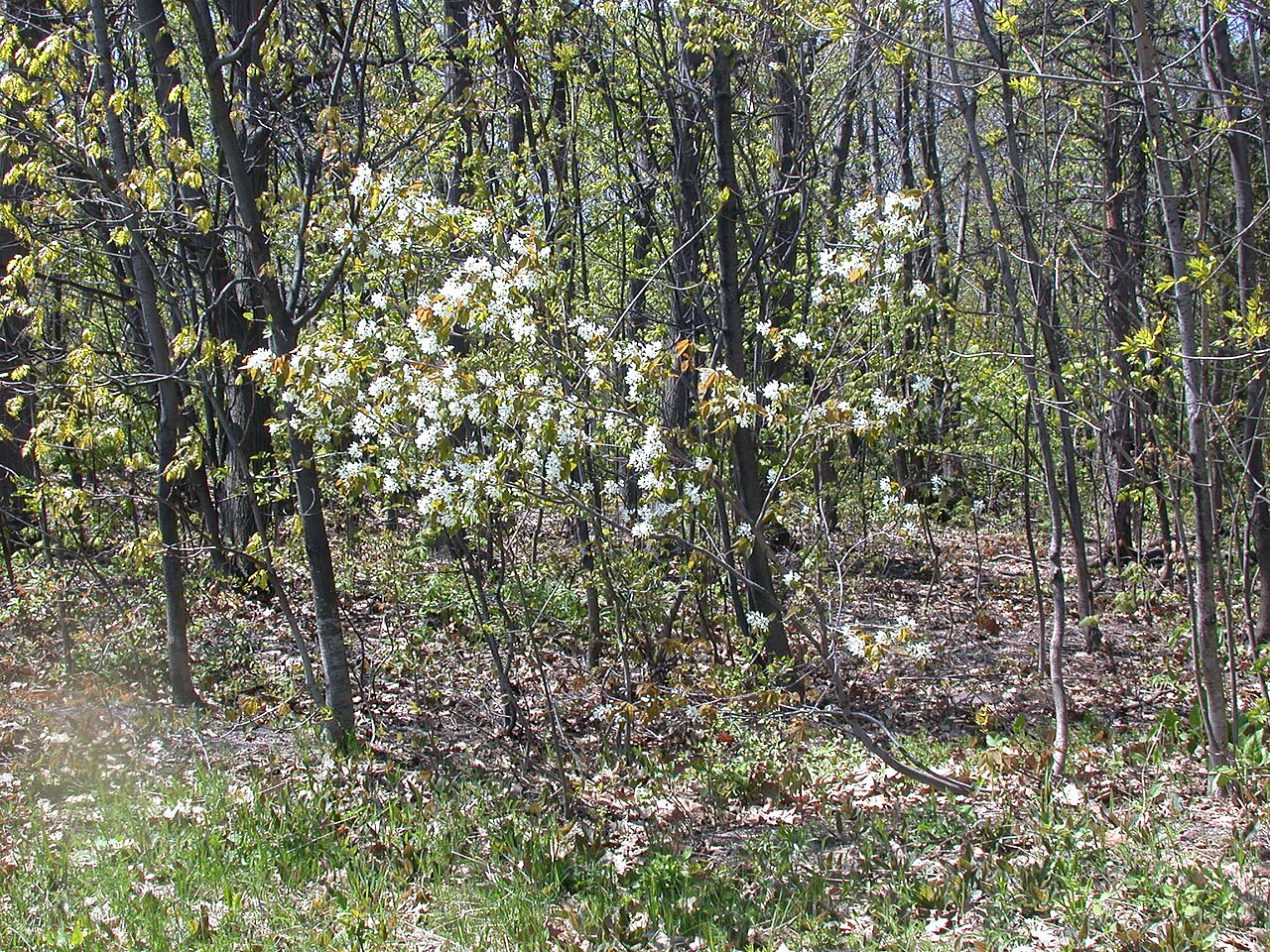
Serviceberries (genus Amelanchier) are small native trees and shrubs in the rose family (Rosaceae), best known for clouds of white flowers in early spring, sweet blue-purple berries in early summer and orange-red fall color. They go by many names: serviceberry, shadbush or shadblow (they bloom when shad fish run up eastern rivers), juneberry (for the month the fruit ripens), sarvis or sarvisberry in the Appalachians, and saskatoon in western Canada and the northern Plains.
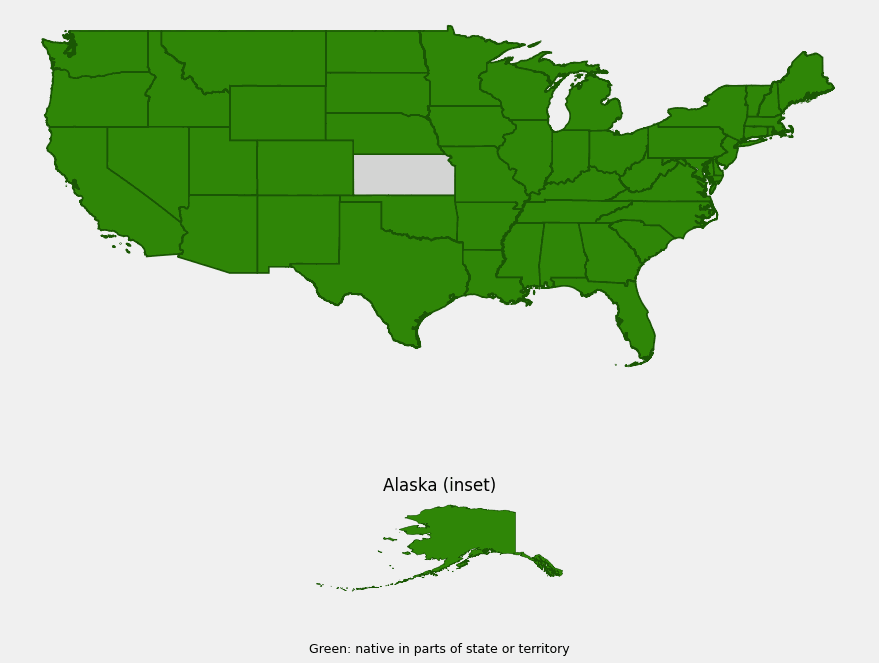
About 20 species grow in North America, and nearly all of them are native to the United States. Serviceberries occur in every state except Kansas and Hawaii, from the Florida panhandle to Alaska. Eastern gardeners mostly plant downy serviceberry, Allegheny serviceberry, shadblow serviceberry and the hybrid apple serviceberry; western gardeners grow saskatoon serviceberry and Utah serviceberry. Unlike many ornamental genera, almost every serviceberry sold in American nurseries is either a native species or a cross between two native species.
If you came here from our list of ornamental trees for Michigan, where the heading reads “Juneberry (Amelanchier)”, you are in the right place: Michigan has at least eight native serviceberries, including downy, Allegheny, roundleaf and running serviceberry, and saskatoon serviceberry in the Upper Peninsula. This page explains how to tell them apart, which one suits your yard and why they are among the best small trees for birds.
Identification
Serviceberries are easiest to recognize in early spring, when they bloom before most other trees leaf out. Individual species are harder: they hybridize freely and vary a lot, so even botanists sometimes label a plant only to genus.
Bark & Form
The tree-sized species (downy, Allegheny and the apple serviceberry hybrids) grow 15 to 30 feet tall, usually with several slender trunks. Their bark is smooth and silvery gray with faint darker vertical streaks, a little like beech bark, becoming slightly furrowed only on old trunks. Shrubby species such as shadblow, saskatoon, roundleaf, Utah and running serviceberry form multi-stemmed clumps or spreading thickets, often suckering from the roots. Winter buds are long, slender and pointed, a bit like miniature beech buds.
Leaves
Leaves are simple, alternate, oval to nearly round, 1 to 3 inches long, with fine or coarse teeth. Details help separate species: downy serviceberry leaves are covered with white wool as they unfold; Allegheny serviceberry leaves emerge hairless and bronze-purple during bloom; saskatoon and Utah serviceberry leaves are rounded and toothed only toward the tip. In fall, serviceberries turn yellow, orange and red, often among the brightest small trees in the landscape.
Flowers
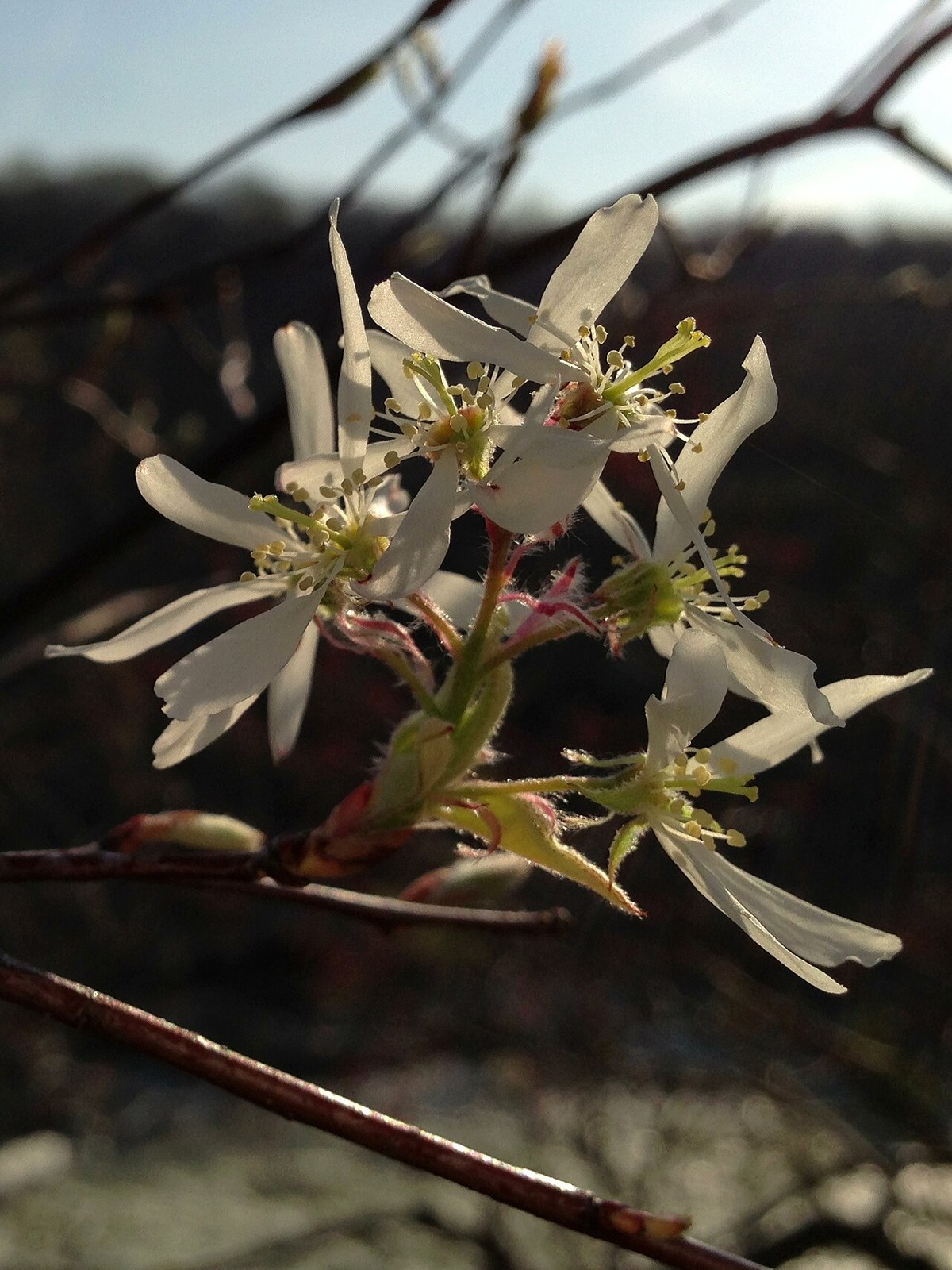
Flowers have five narrow, strap-like white petals, 1/2 to 1 inch long, and appear in loose, drooping or upright clusters (racemes) in early spring, usually from March in the South to May in the North and the mountains. The narrow, slightly twisted petals give the trees a lacy look quite different from the rounded petals of plums, cherries and pears. Bloom lasts about a week.
Fruit
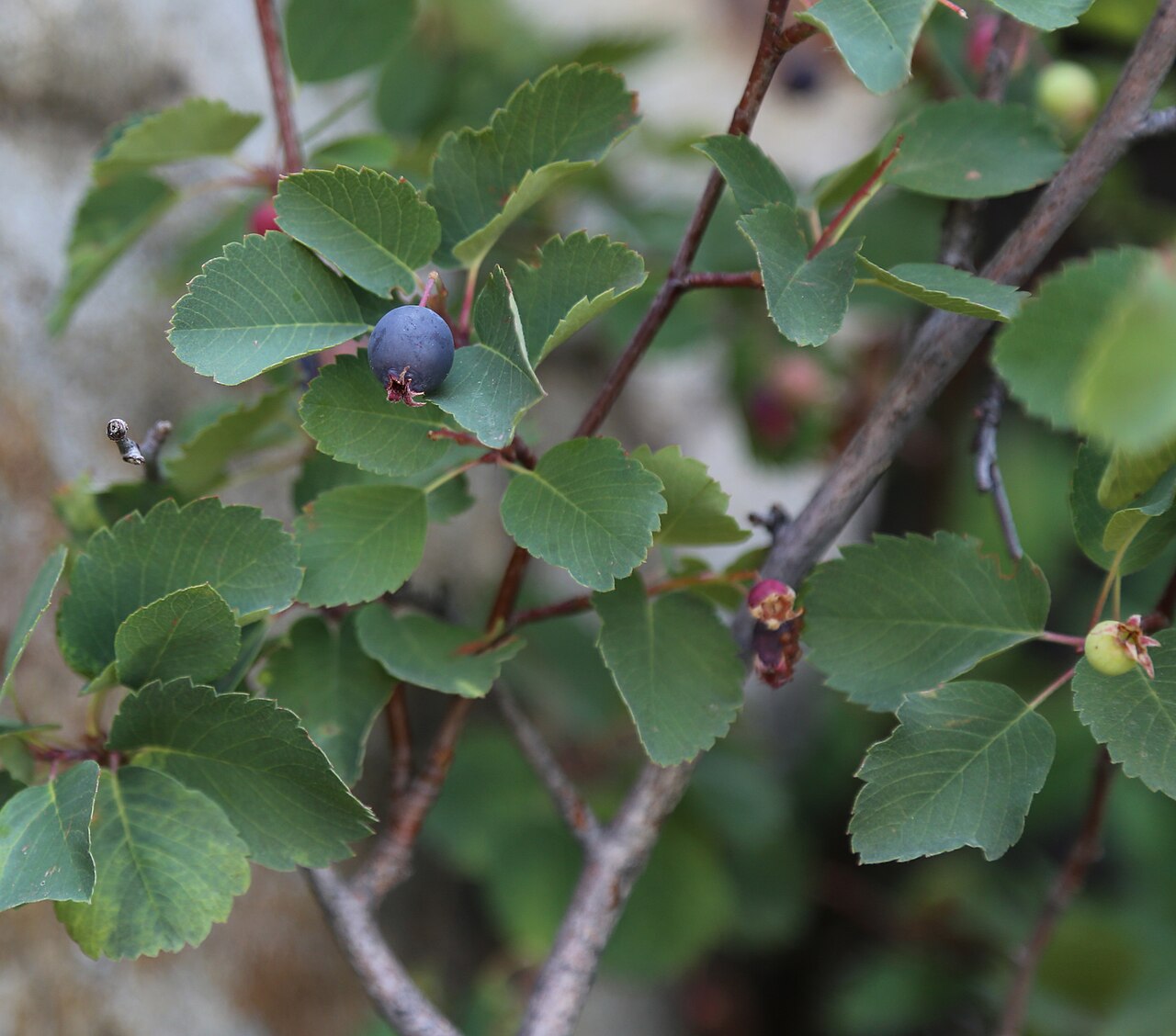
The fruit is a small, round pome (a tiny apple) about 1/4 to 1/2 inch across, ripening from green to red to dark blue-purple in late spring or early summer, with the dried remains of the flower still visible at its tip. Fruit of saskatoon and Allegheny serviceberry is sweet and juicy with an almond-like flavor from the soft seeds; downy and Utah serviceberry fruit is drier. Birds usually strip the trees within days of ripening.
Quick Facts
| Scientific Name | Amelanchier (genus) |
| Family | Rosaceae (Rose) |
| U.S. Native Species | About 20 (plus many natural hybrids) |
| Plant Type | Deciduous small trees and shrubs |
| Mature Height | 1–6 ft (running serviceberry) to 15–30 ft (downy, Allegheny, apple serviceberry) |
| Mature Spread | 4–20 ft; shrubby species sucker into wider colonies |
| Growth Rate | Moderate |
| Sun Exposure | Full sun to part shade; best flowering and fruit in sun |
| Water Needs | Moderate; Utah serviceberry is drought tolerant, shadblow tolerates wet soil |
| Soil Type | Adaptable; moist, well-drained loam is ideal |
| Soil pH | Acidic to slightly alkaline (about 5.0–7.5); western species tolerate alkaline soils |
| Bloom Time | Early spring (March–May), before or as leaves emerge |
| Flower Color | White |
| Fall Color | Yellow, orange and red |
| Fruit | Small blue-purple pomes, ripening June–July; edible and sweet in most species |
| Deer Resistant | No; deer and rabbits browse young plants |
| USDA Hardiness Zones | 2–9 across the genus; most garden species zones 3–8 |
Native Range
In the East, downy serviceberry ranges from Maine to Minnesota and south to the Florida panhandle and East Texas, making it the most widespread eastern species. Allegheny serviceberry is a northern and Appalachian tree, from Newfoundland and Minnesota south in the mountains to Georgia. shadblow serviceberry grows mainly along the Atlantic coast and Piedmont from Maine to Georgia, often in wet thickets. Smaller species such as roundleaf serviceberry, running serviceberry and mountain serviceberry (A. bartramiana) are concentrated in the Northeast and Great Lakes, where the greatest number of species overlap; Michigan, Wisconsin, New York and New England each have half a dozen or more.
In the West, saskatoon serviceberry is the common species from Alaska and the Yukon south through the Rocky Mountains and Cascades to California, Arizona and New Mexico and east across the northern Plains to the Dakotas, western Minnesota and Nebraska. Utah serviceberry replaces it on dry, rocky slopes of the Great Basin, the Colorado Plateau and the Southwest, reaching West Texas. Serviceberries grow from sea level to above 10,000 feet in the Rockies and Sierra Nevada.
Kansas is the only state in the lower 48 without a documented native serviceberry; the trees planted there come from neighboring regions. Because native serviceberries grow almost everywhere, you can usually find one adapted to your area; local seed sources are especially worth seeking out for saskatoon and Utah serviceberry in the dry West.
📋 Regional plant lists covering native serviceberry ranges: Maine, New Hampshire & Vermont · Southern New England · New York, Pennsylvania & Northern New Jersey · Delaware, Southern New Jersey & Long Island · Maryland, Virginia & West Virginia · North Carolina & South Carolina · Georgia, Alabama & Mississippi · Arkansas, Louisiana, Eastern Oklahoma & East Texas · Kentucky & Tennessee · Ohio & Indiana · Illinois, Iowa & Missouri · Michigan, Wisconsin & Eastern Minnesota · Dakotas & Western Minnesota · Nebraska, Kansas & Eastern Colorado · South & West Texas · Arizona & New Mexico · Utah & Western Colorado · Montana & Wyoming · Idaho, Eastern Oregon & Washington · Western Oregon & Washington · California & Nevada · Alaska
Native Species
These are the native serviceberries most often grown in gardens, plus a few important wild species. Click a name for its full growing guide.
Downy Serviceberry (Amelanchier arborea)
Native to: most of the eastern United States, from Maine to Minnesota and south to the Florida panhandle, Louisiana and East Texas. Usually the tallest serviceberry, 15 to 30 feet and occasionally to 40, often with a single trunk. Young leaves are woolly white beneath and flowers open just before the leaves. Fruit is relatively dry. A good small shade-tolerant tree for woodland gardens.
Allegheny Serviceberry (Amelanchier laevis)
Native to: the Northeast, Great Lakes and Appalachians, from Maine to Minnesota and south in the mountains to Georgia and Alabama. A graceful 15- to 30-foot tree whose new leaves are hairless and bronze-purple at flowering time. Its fruit is the sweetest and juiciest of the eastern tree species. Cultivars include ‘Cumulus’ and ‘Snowcloud’.
Apple Serviceberry (Amelanchier × grandiflora)
Native to: wherever downy and Allegheny serviceberry grow together in the East; it is a naturally occurring hybrid of those two native species. Larger flowers than either parent, sometimes pink-tinged in bud, and good fall color. Most of the popular nursery serviceberries belong here, including ‘Autumn Brilliance’, ‘Princess Diana’ and ‘Robin Hill’. Because both parents are native, these cultivars are native-by-native hybrids, not imports.
Shadblow Serviceberry (Amelanchier canadensis)
Native to: mostly the Atlantic coastal plain and Piedmont from Maine to Georgia, with scattered inland records. An upright, multi-stemmed shrub or small tree, 6 to 20 feet, that suckers into clumps and tolerates wet, poorly drained soil better than most serviceberries. Flowers in upright clusters. Good for rain gardens and naturalized edges in the East.
Saskatoon Serviceberry (Amelanchier alnifolia)
Native to: Alaska and western Canada south through the western states to California, Arizona and New Mexico, and east across the northern Plains to the Dakotas, Nebraska, western Minnesota and the Great Lakes. A suckering shrub, usually 4 to 15 feet, with rounded leaves toothed only near the tip and the best-tasting fruit in the genus. Cold hardy to zone 2 and tolerant of wind and alkaline soil. Fruiting cultivars such as ‘Regent’, ‘Smoky’, ‘Northline’ and ‘Thiessen’ are grown commercially for pies and jams.
Utah Serviceberry (Amelanchier utahensis)
Native to: dry slopes of the Great Basin and Southwest, from Oregon, Idaho and Montana south to California, Arizona, New Mexico and West Texas. A stiff, twiggy shrub, 3 to 15 feet, with small, grayish, hairy leaves. The most drought-tolerant serviceberry, suited to xeric gardens on rocky or alkaline soil. Fruit is small and dry but readily eaten by birds and mammals.
Roundleaf Serviceberry (Amelanchier sanguinea)
Native to: the Northeast and Great Lakes states, south in the Appalachians and west to Minnesota and Iowa. A loose, open shrub, 6 to 20 feet, with nearly round, coarsely toothed leaves and reddish twigs. Grows on rocky slopes, bluffs and open woods. A good choice for Michigan and Wisconsin gardens with thin or rocky soil.
Running Serviceberry (Amelanchier stolonifera)
Native to: the Northeast and Great Lakes, from Maine to Minnesota and south to Virginia, mostly on sandy or rocky ground. A low shrub, usually 1 to 4 feet, spreading by underground runners into colonies. Sweet fruit on a small plant. Useful as a native ground-covering shrub on sandy banks and in sunny pollinator gardens.
Mountain Serviceberry (Amelanchier bartramiana)
Native to: New England, New York, Pennsylvania and the upper Great Lakes, in cool bogs, swamps and conifer woods. A small shrub with flowers borne singly or in twos and threes rather than in clusters, and pear-shaped fruit. A northern species rarely offered by nurseries.
Non-Native Look-Alikes
Almost all serviceberries sold in the United States are native or native-by-native hybrids, which makes this one of the easiest genera to buy native. The main confusion comes from other white-flowering trees that bloom at the same time, and from a few European serviceberries in the trade.
Callery Pear (Pyrus calleryana, ‘Bradford’ and other forms)
The biggest look-alike problem in spring. Callery pear blooms at about the same time with masses of white flowers, but its petals are round rather than narrow and strap-like, its flowers have an unpleasant smell, and its leaves are glossy and heart-shaped to oval. Callery pear is invasive across much of the East, Midwest and South, forming thorny thickets in fields and roadsides, and several states, including Ohio and Pennsylvania, have banned its sale. A serviceberry is one of the best replacements.
European and Asian serviceberries
A few non-native serviceberries appear in specialty nurseries. Snowy mespilus (Amelanchier ovalis) is native to southern and central Europe. The serviceberry long sold in Europe as A. lamarckii has naturalized in parts of Europe and is thought to descend from North American plants; it is rarely sold in the United States. Asian species such as A. asiatica are uncommon. None is considered invasive here, but there is little reason to choose them over a native species.
Other spring-flowering natives
Wild plums and cherries (Prunus) bloom with or just after serviceberries; their petals are rounded and their fruit has a single hard pit. Hawthorns (Crataegus) bloom later, usually have thorns and produce red fruit. Ornamental flowering crabapples, many of them Asian hybrids, bloom later with pink or white rounded petals.
Growing & Care Guide
Serviceberries are among the easiest native small trees to grow. They are cold hardy, adapt to many soils and fit into small yards, under power lines and at woodland edges.
Light
Plant in full sun to part shade. Trees in full sun flower and fruit most heavily and color best in fall; in shade they grow more open and lanky but still bloom. Downy and Allegheny serviceberry are the most shade tolerant and work as understory trees beneath taller oaks and maples.
Soil & Water
Most serviceberries prefer moist, well-drained, slightly acidic loam but tolerate clay, sand and rocky soil. shadblow serviceberry handles wet soil; saskatoon and Utah serviceberry handle dry, alkaline western soils. Water regularly through the first two summers. Established eastern species benefit from watering during long droughts, when they may drop leaves early.
Choosing a serviceberry
- Small tree for a yard or street (East and Midwest): apple serviceberry cultivars such as ‘Autumn Brilliance’, or Allegheny serviceberry and downy serviceberry.
- Wet or heavy soil: shadblow serviceberry.
- Best fruit: saskatoon serviceberry cultivars in the North and West; Allegheny serviceberry in the East.
- Dry western gardens: Utah serviceberry or local saskatoon.
- Low shrub or naturalized patch: running serviceberry or roundleaf serviceberry.
Planting Tips
Plant container or balled-and-burlapped trees in spring or fall, setting the root flare at soil level. Multi-stemmed forms are typical and look natural; single-trunk “tree form” plants are available for street and patio use. Space shrub species 4 to 8 feet apart for a hedge or screen. For fruit, plant at least two serviceberries; most set fruit alone but crop better with a partner.
Pruning & Maintenance
Prune in late winter. Remove crossing, damaged or diseased branches, and thin root suckers if you want a tree form rather than a clump. Serviceberries need little else. Mulch the root zone and avoid string-trimmer damage to the thin bark.
Pests & Problems
Serviceberries share diseases with apples and other rose-family plants. Cedar rusts (Gymnosporangium), which alternate between serviceberries and junipers or eastern redcedar, cause orange spots and swollen fruit. Fire blight, leaf spots and powdery mildew show up in wet years, and sawflies and leafminers chew leaves. These problems are mostly cosmetic. Good air circulation and full sun reduce disease.
Propagation
Clean seeds from ripe fruit and sow them outdoors in fall, or give them about 90 to 120 days of cold, moist stratification before spring sowing; germination is often slow and uneven. Suckering species are easily divided by digging rooted suckers in early spring. Named cultivars are grown from softwood cuttings or tissue culture.
Landscape Uses
- Small specimen or street tree with four-season interest (flowers, fruit, fall color, silvery bark)
- Understory tree for woodland gardens and forest edges
- Bird and pollinator gardens; edible landscapes
- Informal hedges, screens and windbreak edges (saskatoon, shadblow)
- Replacement for invasive Callery pear in spring-flowering plantings
Wildlife & Ecological Value
For Pollinators
Serviceberry flowers are an important early nectar and pollen source for native mining bees (Andrena), sweat bees, queen bumble bees, flies and early butterflies, at a time when few other trees are blooming. Serviceberries also host the caterpillars of more than 100 species of butterflies and moths, including the striped hairstreak and red-spotted purple, making them one of the most valuable small native trees for insect food webs.
For Birds
Ripe serviceberries are one of the first wild fruits of the year and are eaten by more than 40 species of birds, including cedar waxwings, American robins, gray catbirds, Baltimore orioles, northern cardinals, thrushes, woodpeckers and eastern bluebirds. Fruiting trees attract flocks of birds for a week or two in June.
For Mammals
Black bears, foxes, chipmunks and squirrels eat the fruit, and deer, elk, moose and rabbits browse the twigs and leaves; saskatoon serviceberry is a key browse shrub on western winter ranges. Protect young garden plants from browsing.
Ecosystem Role
Serviceberries are early-successional plants of forest edges, clearings and rocky openings. Their suckering thickets stabilize slopes and stream banks, and their early bloom and early fruit fill a seasonal gap for pollinators and birds.
Cultural & Historical Uses
Saskatoon berries were one of the most important wild fruits for Indigenous peoples of the northern Plains and western Canada. The fruit was dried in cakes and pounded with dried meat and fat into pemmican, a long-keeping food also adopted by fur traders. The city of Saskatoon, Saskatchewan takes its name from the Cree word for the berry.
The common names record early American life. “Shadbush” marks the trees’ bloom as shad swim upriver to spawn in early spring. “Serviceberry” or “sarvis” is often linked, in Appalachian folk tradition, to the time when roads became passable and circuit-riding preachers resumed church services after winter, though the name may also come from the related European service tree (Sorbus). “Juneberry” simply marks the month of ripe fruit.
The fruit is still gathered for pies, jams, muffins and fresh eating, and saskatoon serviceberry is grown as an orchard crop on the Canadian prairies. The hard, heavy wood was used for tool handles and arrows. Today serviceberries are among the most widely recommended native small trees for home landscapes.
Frequently Asked Questions
Is juneberry the same as serviceberry?
Yes. Juneberry, serviceberry, shadbush, shadblow, sarvis and saskatoon are all common names for Amelanchier. Different regions favor different names, and the same name can be used for several species.
Are serviceberries edible?
Yes. The ripe blue-purple fruit of all native serviceberries is edible, and saskatoon, Allegheny and running serviceberry are especially sweet. Like apple and cherry seeds, the seeds contain small amounts of cyanide-forming compounds; eating the fruit normally is fine, but livestock have been poisoned by eating large amounts of wilted saskatoon leaves.
Are ‘Autumn Brilliance’ and other apple serviceberries native?
They are cultivars of apple serviceberry (Amelanchier × grandiflora), a natural hybrid between two native species, downy and Allegheny serviceberry. They are not imported plants and offer wildlife value similar to their parents.
Which serviceberries are native to Michigan?
Michigan has downy serviceberry, Allegheny serviceberry, roundleaf serviceberry, running serviceberry, saskatoon serviceberry in the Upper Peninsula and several less common species and hybrids. Allegheny and downy serviceberry and their hybrids are the best small trees for most Michigan yards.
How big do serviceberries get?
The tree species and apple serviceberry hybrids reach about 15 to 30 feet tall and 15 to 20 feet wide. Shrub species range from 1 to 4 feet (running serviceberry) to 6 to 15 feet (shadblow, saskatoon, roundleaf and Utah serviceberry).
Why did my serviceberry lose its fruit before it ripened?
Usually birds took it: robins, waxwings and catbirds often strip serviceberries before the fruit is fully dark. Cedar rust and late frosts can also cause fruit drop. Netting a small tree is the only reliable way to save fruit for yourself.

Looking for a nursery that carries Native Serviceberries?
Browse our native plant nursery directory: Alabama, Alaska, Arizona & Arkansas · California · Colorado, Connecticut, Delaware, Florida & Georgia · Idaho, Illinois, Indiana & Iowa · Kentucky, Louisiana, Maine, Maryland, Massachusetts, Michigan, Minnesota, Mississippi, Missouri & Montana · Nebraska, Nevada, New Hampshire, New Jersey, New Mexico, New York, North Carolina, North Dakota, Ohio & Oklahoma · Oregon · Pennsylvania, Rhode Island, South Carolina, South Dakota, Tennessee, Texas, Utah, Vermont & Virginia · Washington · West Virginia, Wisconsin & Wyoming

