
Native Pines (Pinus)
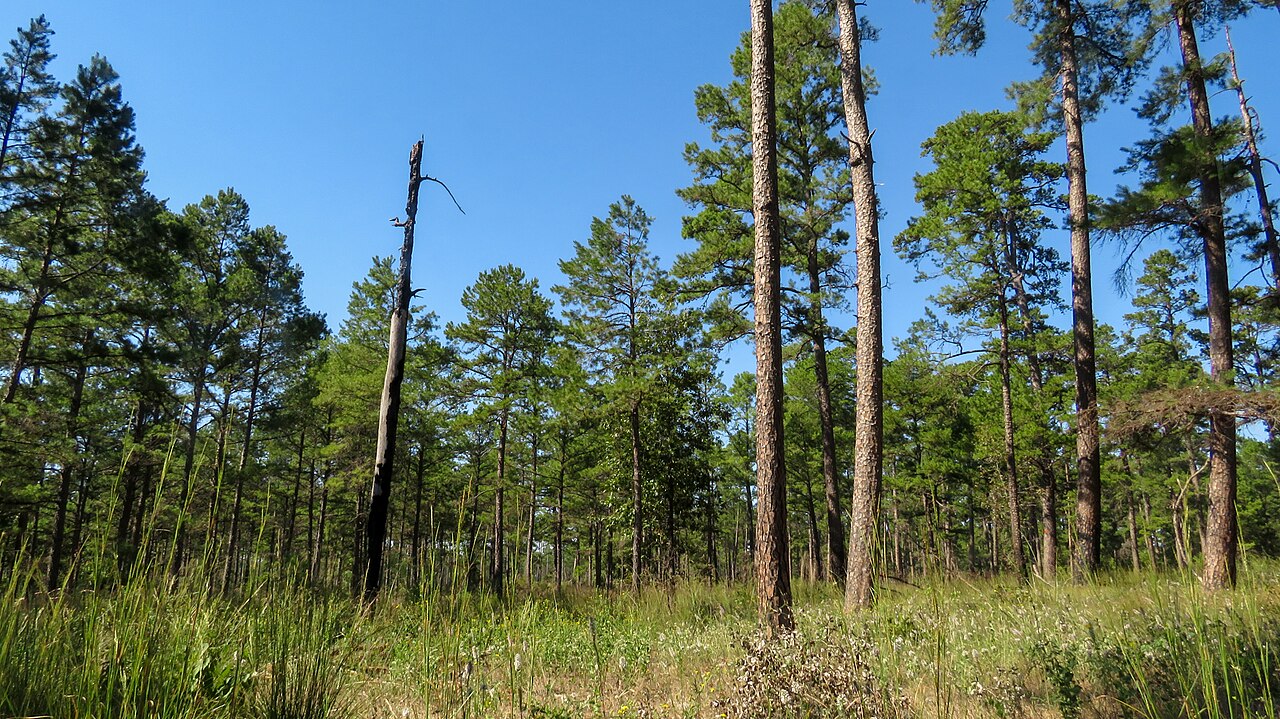
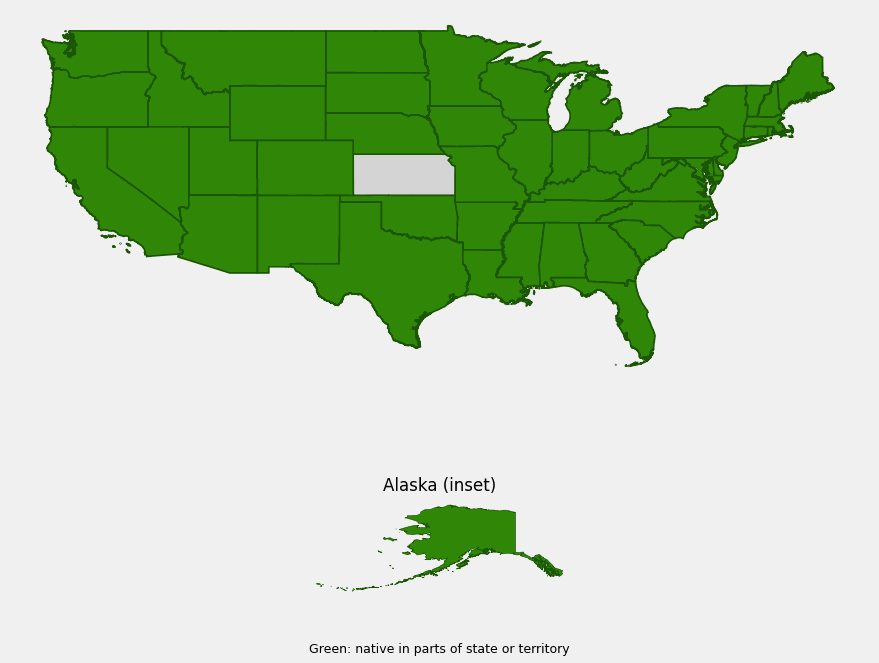
Pines (genus Pinus) are the best-known conifers in the world and the backbone of many American forests. About 110 to 120 species grow across the Northern Hemisphere, and roughly 35 to 40 of them are native to the United States, more than any other country except Mexico. They range from the 200-foot sugar pines of the Sierra Nevada to gnarled, waist-high bristlecones at treeline and the scrubby sand pines of Florida’s ridges. Every state except Kansas and Hawaii has at least one native pine.
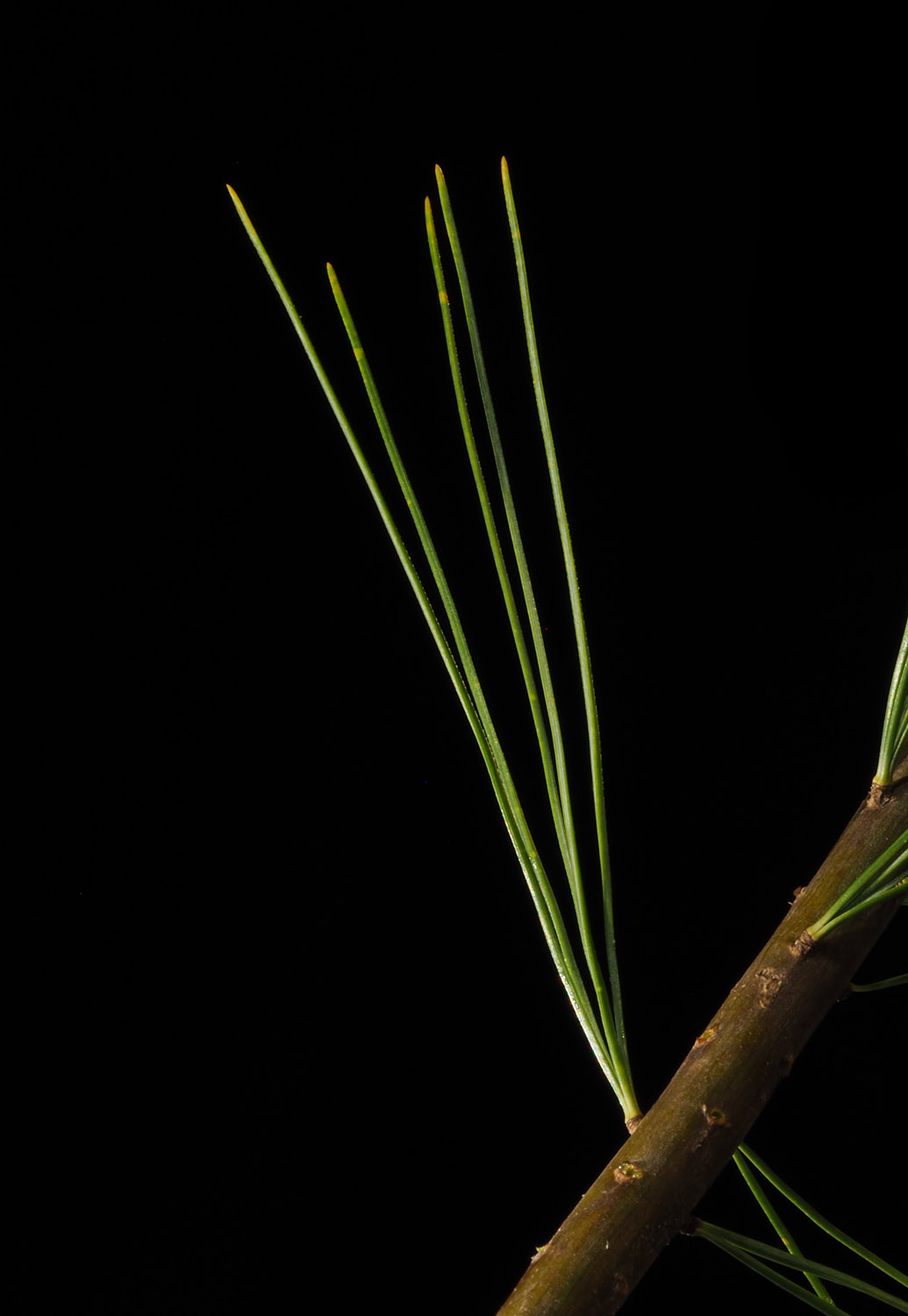
Pines are evergreen trees in the pine family (Pinaceae), and they share one feature that sets them apart from all other North American conifers: their needles grow in bundles (fascicles) of one to five, held together at the base by a papery sheath. Learn to count needles in a bundle and you can sort most pines in a minute. Eastern readers will meet eastern white pine, red pine, jack pine, pitch pine, Virginia pine, shortleaf pine, loblolly pine and longleaf pine; western readers have ponderosa pine, lodgepole and shore pine, limber pine, the pinyons and many mountain specialists.
If you came here from our conifer guide or our list of evergreen trees for Missouri, this page covers which pines are actually native to your area and how to choose one. That matters: many pines sold in garden centers, including Austrian pine, Scots pine, Japanese black pine and mugo pine, come from Europe or Asia, and in the Midwest several of them are dying from pine wilt and needle blights. In Missouri, for example, the only native pine is shortleaf pine, which is also one of the best pines to plant there.
Identification
All pines have woody cones and long needles, but the details of the needles, the sheath at their base and the cones tell you which group, and often which species, you are looking at.
Needles
Pine needles grow in bundles: the number per bundle is the first thing to check. Five needles per bundle marks the white or soft pines: eastern white pine, western white pine, sugar pine, limber pine, whitebark pine and the bristlecones. Two or three needles marks the yellow or hard pines, which include most eastern and southern species and ponderosa pine. The pinyons of the Southwest carry one to four; singleleaf pinyon has a single round needle. Needle length helps too: Virginia pine and jack pine have short, twisted needles barely 1 to 3 inches long, while longleaf pine’s needles reach 8 to 18 inches, the longest of any eastern conifer. In soft pines the papery sheath at the base of the bundle falls off in the first year; in hard pines it stays on.
Bark
Young pines have thin, smooth to scaly bark. With age, hard pines develop thick, plated bark: ponderosa and Jeffrey pine form large orange to cinnamon plates that fit together like puzzle pieces, and the bark of shortleaf pine shows small resin pockets. Eastern white pine bark stays smooth and greenish-gray for years, then becomes dark and deeply furrowed. Thick bark is a fire adaptation: longleaf, shortleaf and ponderosa pines survive frequent low-intensity ground fires that kill thin-barked competitors.
Cones
Pine cones take two years to mature (three in a few species) and usually hang down or point outward from the branches. Hard pines have thick, woody cone scales, often tipped with a prickle; soft pines have thinner scales without prickles. Sizes range from the 1- to 2-inch cones of shortleaf and Virginia pine to sugar pine cones that can exceed 18 inches, the longest of any conifer. Some pines, such as jack pine, sand pine, knobcone pine and many lodgepole pines, have serotinous cones that stay closed on the tree for years until a fire’s heat melts the resin and releases the seeds.
Shape
Young pines are usually pyramidal with branches in regular whorls, one tier per year. Mature trees of most species lose their lower branches and develop open, irregular crowns, which is why an old pine stand looks so different from a fir or spruce forest. Eastern white pine is known for its long, horizontal, wind-swept upper branches; pinyons and bristlecones stay short, broad and gnarled.
Telling pines from look-alikes
Spruces, firs, hemlocks and Douglas-fir carry their needles singly, not in bundles. Larches and true cedars carry needles in dense clusters of 15 or more on short spurs. Several plants called “pines” are not pines at all: Norfolk Island pine (Araucaria), Australian pine (Casuarina, a serious invasive in Florida) and the ground pines (club mosses).
Quick Facts
| Scientific Name | Pinus (genus) |
| Family | Pinaceae (Pine) |
| U.S. Native Species | About 35–40 (counts vary with how varieties are treated) |
| Plant Type | Evergreen coniferous trees, a few shrubby at high elevation |
| Mature Height | Mostly 40–100 ft; pinyons 15–35 ft; sugar and ponderosa pine can top 200 ft |
| Mature Spread | 15–40 ft; open-grown pinyons and old pines are broader |
| Growth Rate | Fast (loblolly, slash, eastern white) to very slow (bristlecones, pinyons) |
| Sun Exposure | Full sun; only eastern white pine tolerates partial shade well |
| Water Needs | Low to moderate; most need good drainage, pond and slash pine tolerate wet flatwoods |
| Soil Type | Sandy, gravelly or rocky, well-drained soils; most dislike heavy, wet clay |
| Soil pH | Mostly acidic (4.5–6.5); ponderosa, limber pine and pinyons tolerate neutral to alkaline soils |
| Cones | Woody, mostly hanging, 1–18+ in, maturing in two years |
| Fall Color | None (evergreen); older inner needles yellow and drop each fall |
| Wildlife Value | Seeds for birds and squirrels, nest and roost trees, larval host for pine elfin and other moths |
| Deer Resistant | Moderately; deer browse seedlings and young white pines |
| USDA Hardiness Zones | 1–10 across the genus; check each species for your zone |
Native Range
Native pines cover the country in two great blocks. In the East, eastern white pine, red pine and jack pine grow across the Great Lakes states and New England, pitch pine and Virginia pine spread through the Appalachians and the mid-Atlantic, and the Southeast is pine country: shortleaf pine, loblolly pine, longleaf pine, slash, spruce, pond and sand pines dominate the coastal plain and Piedmont from Virginia to Florida and west into Arkansas, Louisiana, eastern Oklahoma and East Texas. Shortleaf pine reaches farthest inland, into the Missouri Ozarks and southern Illinois.
In the West, ponderosa pine is the most widespread pine in North America, running from British Columbia to Mexico and east to the Black Hills, western Nebraska and the Texas mountains. Mountain ranges add lodgepole, limber, whitebark and bristlecone pines at higher elevations, while the Great Basin and the Southwest are covered with pinyon-juniper woodland. California alone has about 20 native pines, including sugar pine, Jeffrey, Coulter, gray, knobcone and Bishop pine, plus two very rare species: Torrey pine, found only near San Diego and on Santa Rosa Island, and Monterey pine, native to three small coastal stands and widely planted elsewhere. In Alaska, shore pine (a coastal form of lodgepole pine) grows in the southeastern panhandle.
The gaps are telling. Kansas has no native pine at all; the ponderosa pines in western Kansas windbreaks were planted. Hawaii has none either. Much of the central Plains, Iowa, Illinois, Indiana and Ohio had only small, scattered native pine populations on sandstone bluffs, dunes and barrens, so pines planted in farm windbreaks across the Midwest, especially Scots and Austrian pine, are not native there. Eastern white pine is widely planted far south and west of its natural range, and loblolly pine is grown on plantations well beyond its original range.
📋 Regional plant lists covering native pine ranges: Maine, New Hampshire & Vermont · Southern New England · New York, Pennsylvania & Northern New Jersey · Delaware, Southern New Jersey & Long Island · Maryland, Virginia & West Virginia · North Carolina & South Carolina · Georgia, Alabama & Mississippi · Arkansas, Louisiana, Eastern Oklahoma & East Texas · Kentucky & Tennessee · Ohio & Indiana · Illinois, Iowa & Missouri · Michigan, Wisconsin & Eastern Minnesota · Dakotas & Western Minnesota · Nebraska, Kansas & Eastern Colorado · South & West Texas · Arizona & New Mexico · Utah & Western Colorado · Montana & Wyoming · Idaho, Eastern Oregon & Washington · Western Oregon & Washington · California & Nevada · Alaska
Native Species
These are the native pines gardeners and landowners are most likely to plant or meet. Click a name for its full growing guide; every other native pine with a profile on this site is listed after them.
Eastern White Pine (Pinus strobus)
Native to: Maine to Minnesota and northeastern Iowa, south through the Appalachians to northern Georgia, with outliers in Illinois, Indiana, Ohio, Kentucky and Tennessee. The tallest tree of the eastern forest, historically over 150 feet. Soft, blue-green needles in bundles of five, 3 to 5 inches long, and slender 4- to 8-inch cones. Grows fast, tolerates some shade, and makes a soft screen; dislikes road salt, heavy clay and hot, dry sites. Watch for white pine blister rust where currants and gooseberries grow nearby.
Red Pine (Pinus resinosa)
Native to: the Great Lakes states and the Northeast, from Minnesota to Maine and south to Pennsylvania, with small outliers farther south. A straight, 50- to 80-foot tree with reddish, flaky bark plates and two needles 4 to 6 inches long that snap cleanly when bent. Minnesota’s state tree. Best on sandy, acidic soils in cold climates; it struggles in the heat south of its range.
Jack Pine (Pinus banksiana)
Native to: the boreal forest and Great Lakes region: Minnesota, Wisconsin, Michigan, northern New York and northern New England, with outliers on Indiana and Illinois dunes. A scrappy pine of sand plains with short, twisted paired needles about 1 to 1.5 inches long and curved cones that often stay closed until fire opens them. Young jack pine stands in Michigan are the only nesting habitat of the Kirtland’s warbler.
Pitch Pine (Pinus rigida)
Native to: Maine to Georgia, mostly in the Appalachians and on the coast, including the New Jersey Pine Barrens and Long Island, west to Ohio and Kentucky. Stiff needles in threes and rugged, irregular crowns. It can sprout new shoots from the trunk after fire, which few pines can do. A tough choice for sandy, salty or rocky sites in the Northeast.
Virginia Pine (Pinus virginiana)
Native to: New York and New Jersey south to Alabama and Mississippi, west to southern Indiana and Kentucky. A small, often scraggly tree, 30 to 50 feet, with short, twisted paired needles and persistent small cones. It colonizes old fields and thin, rocky soil and is a traditional southern Christmas tree.
Shortleaf Pine (Pinus echinata)
Native to: from southern New York and New Jersey south to northern Florida, and west through the Ozarks to southern Missouri, southern Illinois, eastern Oklahoma and East Texas. The most widespread southeastern pine and the only pine native to Missouri. Needles in twos and threes, 3 to 5 inches long, and small cones with a sharp prickle on each scale. Young trees can resprout from the base after fire. Usually 60 to 100 feet in the wild. A good pine for dry, rocky, acidic Ozark soils and largely untroubled by pine wilt.
Loblolly Pine (Pinus taeda)
Native to: the coastal plain and Piedmont from southern New Jersey and Delaware to central Florida and west to East Texas and southeastern Oklahoma. The fastest-growing southern pine and the most important timber tree in the South. Needles in threes, 6 to 9 inches long. Tolerates a wide range of soils, including heavier clays, but is too large for small yards.
Longleaf Pine (Pinus palustris)
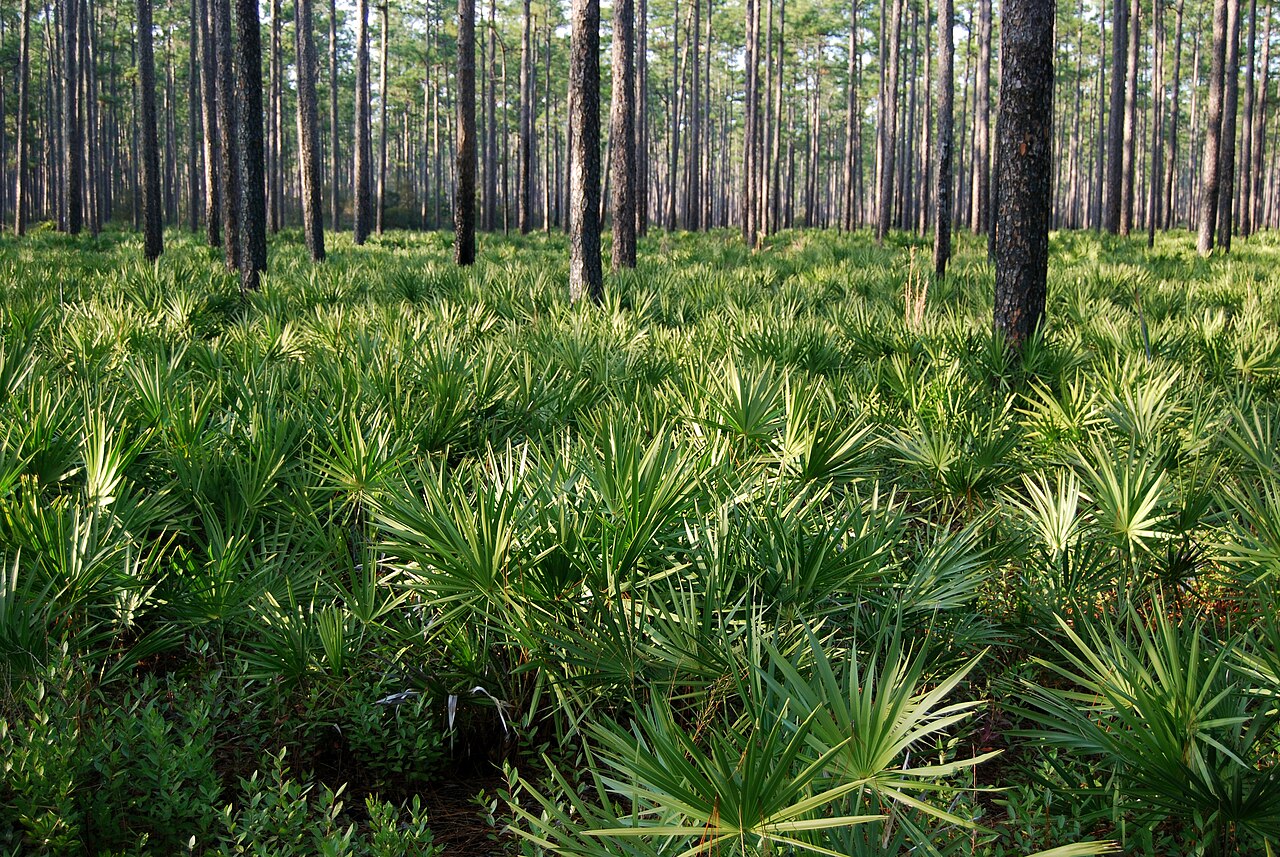
Native to: the southeastern coastal plain from southeastern Virginia to central Florida and west to East Texas. Needles in threes, 8 to 18 inches long, and big 6- to 10-inch cones. Seedlings spend several years in a grassy-looking “grass stage” while they grow deep roots, then shoot up. Longleaf savannas once covered about 90 million acres; less than 5 percent remain. Needs regular fire and sandy soil.
Slash Pine (Pinus elliottii)
Native to: the lower coastal plain from South Carolina through Georgia and Florida to Louisiana; the South Florida variety grows in the Keys and pine rocklands. Long needles in twos and threes and glossy brown cones. Tolerates wetter flatwoods than longleaf. Widely planted in the Southeast.
Ponderosa Pine (Pinus ponderosa)
Native to: western states from Washington, Montana and western North Dakota south to California, Arizona, New Mexico and the mountains of West Texas, east to the Black Hills and the Nebraska Pine Ridge. The signature tree of open western forests, with long needles mostly in threes and orange, puzzle-plated bark that smells of vanilla or butterscotch on warm days. Montana’s state tree. Drought tolerant once established and widely used for windbreaks on the Plains. Its needles can cause abortion in pregnant cattle.
Limber Pine (Pinus flexilis)
Native to: the Rocky Mountains and Great Basin ranges, from Montana and Idaho to New Mexico and eastern California, with outliers in the western Dakotas and Nebraska. A five-needle pine with branches so flexible a young shoot can be tied in a knot. Tolerates wind, cold, drought and alkaline soil; a sturdy evergreen for Rocky Mountain and High Plains gardens.
Colorado Pinyon (Pinus edulis)
Native to: the Four Corners region of Colorado, Utah, Arizona and New Mexico, with edges in Wyoming, the Oklahoma panhandle and far West Texas. A slow-growing, 15- to 35-foot pine with paired, stiff needles and small cones holding large, wingless seeds: the pine nuts of the Southwest. New Mexico’s state tree. Excellent for dry, rocky, alkaline sites.
Western White Pine (Pinus monticola)
Native to: the Cascades, Sierra Nevada and northern Rocky Mountains of Washington, Oregon, Idaho, Montana, California and Nevada. Idaho’s state tree, with soft five-needle bundles and slender 6- to 10-inch cones. Once a major timber tree, it was heavily reduced by white pine blister rust; rust-resistant seedlings are now available.
Lodgepole and Shore Pine (Pinus contorta)
Native to: from southeastern Alaska and the Pacific coast inland across the Rockies, south to California, Colorado and the Black Hills. Paired, often twisted needles. On the coast it grows as shore or beach pine, a crooked, wind-sculpted tree; in the Rockies it is lodgepole pine, tall and straight, with cones that often open only after fire.
Great Basin Bristlecone Pine (Pinus longaeva)
Native to: high mountains of eastern California, Nevada and Utah. The oldest known non-clonal trees on Earth; some individuals are more than 4,700 years old. Five short needles per bundle crowd the twigs like a bottlebrush and stay on the tree for decades. Rarely planted except in very dry, cold rock gardens.
More native pine profiles: Singleleaf Pinyon (Pinus monophylla) · Spruce Pine (Pinus glabra) · Pond Pine (Pinus serotina) · Sand Pine (Pinus clausa) · Table Mountain Pine (Pinus pungens) · Sugar Pine (Pinus lambertiana) · Jeffrey Pine (Pinus jeffreyi) · Whitebark Pine (Pinus albicaulis) · Bishop Pine (Pinus muricata) · Coulter Pine (Pinus coulteri) · Gray Pine (Pinus sabiniana) · Torrey Pine (Pinus torreyana) · Rocky Mountain Bristlecone Pine (Pinus aristata) · Arizona Pine (Pinus arizonica) · Foxtail Pine (Pinus balfouriana) · Knobcone Pine (Pinus attenuata) · Mexican Pinyon (Pinus cembroides) · Monterey Pine (Pinus radiata) · Papershell Pinyon (Pinus remota) · Four-Leaf Pinyon (Pinus quadrifolia) · Southwestern White Pine (Pinus strobiformis) · Apache Pine (Pinus engelmannii) · Chihuahua Pine (Pinus leiophylla) · Border Pinyon (Pinus discolor) · Washoe Pine (Pinus washoensis)
Non-Native Look-Alikes
Several of the pines most often sold in American garden centers, and most often described in landscaping articles, are imports from Europe or Asia. They are not invasive in most of the country, but they are not native, they support less local wildlife, and in the Midwest and Plains several of them are short-lived because of disease.
Austrian Pine (Pinus nigra)
A dark green European pine with stiff paired needles 3 to 6 inches long, planted by the million in Midwestern and Plains windbreaks and yards. It looks much like red pine, but its needles bend rather than snap cleanly, and its bark is gray to dark brown rather than reddish. Austrian pine is badly affected by Diplodia tip blight and Dothistroma needle blight, and in Missouri and neighboring states many trees have been killed by pine wilt. It is not native anywhere in North America.
Scots Pine (Pinus sylvestris)
The common pine of northern Europe and Asia, easily spotted by its orange upper trunk and short, twisted, blue-green needles in pairs. Once the standard Christmas-tree and windbreak pine across the Midwest, it is very susceptible to pine wilt and has naturalized from plantings in parts of the Northeast and Great Lakes states. Native alternatives with similar character are red pine and jack pine in the North and shortleaf pine in the Ozarks and South.
Japanese Black Pine (Pinus thunbergii)
A salt-tolerant Asian pine with stiff, dark paired needles and distinctive white winter buds, long planted on beaches and dunes from New England to the Carolinas. Many coastal plantings have been killed by black turpentine beetle and pine wilt. For salty coastal sites, pitch pine in the Northeast and loblolly pine, slash or sand pine in the Southeast are native choices.
Mugo Pine (Pinus mugo)
A shrubby pine from the mountains of central and southern Europe, sold in dwarf mounding forms for foundation plantings. It suffers from pine needle scale and pine sawflies. North America has no native pine that stays truly shrub-sized in gardens, but dwarf selections of eastern white pine and slow-growing Colorado pinyon or limber pine fill a similar role in the right climate, and native junipers and yews make good low evergreens.
Monterey pine outside California
Monterey pine is a rare native in three small stands on the central California coast, yet it is one of the most-planted timber pines in the world and is invasive in parts of New Zealand, Australia and South Africa. Planted Monterey pines elsewhere in California and the Pacific Northwest are outside their native range.
Growing & Care Guide
Native pines are easy, long-lived trees when they match the site. The usual reasons pines fail in gardens are heavy wet clay, too much shade, planting a species far outside its climate, and the diseases that target non-native pines.
Light
Pines are sun trees. Plant them where they get at least six hours of direct sun; most species thin out, lose lower branches and lean toward light in shade. eastern white pine is the main exception and will grow in partial shade, especially when young.
Soil & Water
Most native pines grow naturally on sandy, gravelly or rocky soils that drain quickly. Eastern and southern pines generally prefer acidic soil; red pine and eastern white pine can yellow (chlorosis) on alkaline soils. Ponderosa pine, limber pine and the pinyons handle neutral to alkaline western soils. Water young trees deeply every week or two during the first two growing seasons; after that, most native pines need no irrigation within their range. Loblolly, slash and pond pine tolerate seasonally wet sites better than other pines.
Choosing a pine for your region
- Northeast and Great Lakes: eastern white pine for fast screening, red pine and jack pine for sandy soils, pitch pine for coastal sand and rocky ridges.
- Mid-Atlantic and Appalachians: eastern white, pitch, Virginia, shortleaf and Table Mountain pine.
- Southeast: longleaf pine for sandy sites and savanna restoration, loblolly pine and slash pine for fast shade, spruce pine for shady or moist sites, sand pine for Florida scrub.
- Missouri and the Ozarks: shortleaf pine, the only native pine, is the best long-term choice and is little troubled by pine wilt.
- Plains and Rocky Mountains: ponderosa pine, limber pine and, at lower elevations in the Southwest, Colorado pinyon.
- Pacific Northwest: shore pine for small or windy yards, western white and ponderosa pine for larger properties.
- California: choose local species such as Coulter, Jeffrey, gray, Bishop or Torrey pine rather than Monterey pine away from its native coast.
Planting Tips
Plant small: container or bare-root seedlings 1 to 3 feet tall establish faster than big balled trees, and pines develop long taproots or deep sinker roots that are cut when large trees are dug. Set the root flare at soil level, loosen circling roots, backfill with native soil and mulch with pine straw or wood chips. Space large species at least 20 to 30 feet from buildings and power lines; most native pines become big trees. Longleaf seedlings should be planted with the bud at the soil surface.
Pruning & Maintenance
Pines need little pruning. Remove dead or damaged branches any time. To keep a pine dense, pinch back the new spring shoots (“candles”) by up to half before the needles expand; pines do not sprout from older bare wood, so do not cut into leafless branches expecting regrowth. Lower limbs shed naturally as trees grow. Leave fallen needles as mulch: pine straw is an excellent, slightly acidic mulch for beds.
Pests & Problems
Southern pine beetle, Ips engraver beetles and turpentine beetles attack stressed trees, especially after drought or root damage. White pine blister rust affects five-needle pines and needs currants or gooseberries nearby to complete its life cycle. Pine sawfly larvae can strip needles from small trees but rarely kill them. Pine wilt, caused by the pinewood nematode, mainly kills non-native Scots, Austrian and Japanese black pines in the Midwest and East; native pines are much more resistant.
Propagation
Most pines grow readily from seed. Collect cones as they turn brown and begin to open in fall, dry them to release the seeds, and sow fresh or after a few weeks of cold, moist stratification (many western species need 30 to 90 days). Serotinous cones of jack and sand pine open in an oven at low heat. Pines are difficult to root from cuttings; named dwarf forms are grafted.
Landscape Uses
- Year-round screening and windbreaks (eastern white, red, ponderosa, loblolly pine)
- Sandy, droughty or rocky sites where few other trees thrive (jack, pitch, Virginia, sand, pinyon pines)
- Savanna and pine-barrens restoration with native grasses and wildflowers underneath (longleaf, shortleaf, pitch pine)
- Specimen trees on large lots and parks; xeric rock gardens for pinyons and bristlecones
- Pine straw mulch and wildlife cover
Wildlife & Ecological Value
For Pollinators
Pines are wind-pollinated, so they offer no nectar, and bees collect only a little of their abundant yellow spring pollen. Their real insect value lies in the many native caterpillars that feed on pine needles, including the eastern pine elfin butterfly and dozens of moths such as pine sphinx and imperial moth, which in turn feed nesting songbirds.
For Birds
Pine seeds feed crossbills, pine siskins, nuthatches, chickadees, wild turkeys and many others. Pinyon jays and Clark’s nutcrackers depend on pinyon and whitebark pine seeds and plant the next generation of trees by caching seeds they never recover. The endangered red-cockaded woodpecker excavates its nest cavities only in living old southern pines, mainly longleaf, and Kirtland’s warbler nests under young jack pines in Michigan. Pine warblers, brown-headed nuthatches and Bachman’s sparrows are characteristic of southern pine woods.
For Mammals
Red squirrels, Abert’s squirrels (on ponderosa pine), chipmunks and black bears eat pine seeds, and dense young pines give deer and rabbits winter shelter. Porcupines eat pine inner bark. Grizzly bears in the northern Rockies rely heavily on whitebark pine seeds, which they often take from squirrel caches.
Ecosystem Role
Many native pine ecosystems are shaped by fire. Longleaf, shortleaf, pitch and ponderosa pine forests were historically kept open by frequent low ground fires, which supported grassy, flower-rich understories; fire suppression has turned many into dense, fire-prone thickets. Jack, sand, knobcone and many lodgepole pines rely on fire to open their cones. Whitebark pine, a keystone of high western mountains, is listed as threatened under the Endangered Species Act because of blister rust, mountain pine beetle and changing fire patterns, and longleaf savannas are among the most species-rich, and most reduced, habitats in North America.
Cultural & Historical Uses
Eastern white pine shaped colonial history. Under the “King’s Broad Arrow” policy, the tallest white pines in New England were reserved for Royal Navy ship masts, and resentment over the policy fed early colonial unrest. In the 1800s, Great Lakes white and red pine forests were logged almost completely, building much of the Midwest. Southern longleaf pine produced the “naval stores” industry, tar, pitch and turpentine collected from the trees, and its dense, resinous heart pine lumber is still salvaged from old buildings.
In the West, pine nuts from Colorado and singleleaf pinyon were a staple food for many Indigenous peoples of the Great Basin and Southwest and are still gathered every fall. Pine resin was used to waterproof baskets and as glue, and ponderosa pine wood and bark served many uses. Lodgepole pine takes its name from its use for the poles of tipis and lodges.
Pines are also state trees: eastern white pine for Maine and Michigan, red pine for Minnesota, western white pine for Idaho, ponderosa pine for Montana, Colorado pinyon for New Mexico, singleleaf pinyon and bristlecone pine for Nevada, and longleaf pine for Alabama and North Carolina (as “pine”). Pine wood today makes up a large share of the lumber, plywood and paper produced in the United States.
Frequently Asked Questions
What pines are native to Missouri?
Only one: shortleaf pine (Pinus echinata), native to the Ozarks of southern Missouri. Eastern white pine, Scots pine, Austrian pine, red pine and mugo pine are often planted in Missouri but are not native there, and Scots and Austrian pine in particular are frequently killed by pine wilt. Shortleaf pine is the best long-lived pine for most Missouri yards with well-drained soil.
How do I tell a pine from a spruce or fir?
Look at how the needles attach. Pine needles grow in bundles of two to five (one in singleleaf pinyon) wrapped at the base by a papery sheath. Spruce and fir needles attach one at a time directly to the twig. Pine cones are woody and usually hang or point outward; fir cones stand upright and fall apart on the tree.
What is the fastest-growing native pine?
loblolly pine and slash pine in the South and eastern white pine in the North commonly grow 2 to 3 feet a year on good sites when young. They also become very large trees, so give them room.
Are pine needles toxic to pets or livestock?
Ponderosa pine needles, and those of a few related western pines, can cause abortion in pregnant cattle that eat them in quantity, and pine resin and needles can upset dogs’ and cats’ stomachs if chewed. Pine needles are otherwise not considered highly toxic, but do not let livestock browse ponderosa pine in late pregnancy.
Is Austrian pine or Scots pine invasive?
Neither is a major invasive in most states, but both are non-native Eurasian pines. Scots pine has naturalized from plantings in parts of the Northeast and Great Lakes. In the Midwest, both are now discouraged because pine wilt, Diplodia tip blight and other diseases kill many trees; native pines suited to the region are a longer-lasting choice.
Which native pine is best for a small yard?
Few native pines stay small, but Colorado pinyon and the other pinyons (15 to 35 feet) suit dry western yards, Virginia pine and shore pine stay moderate in the East and Northwest, and dwarf cultivars of eastern white pine are widely available for tight spaces.

Looking for a nursery that carries Native Pines?
Browse our native plant nursery directory: Alabama, Alaska, Arizona & Arkansas · California · Colorado, Connecticut, Delaware, Florida & Georgia · Idaho, Illinois, Indiana & Iowa · Kentucky, Louisiana, Maine, Maryland, Massachusetts, Michigan, Minnesota, Mississippi, Missouri & Montana · Nebraska, Nevada, New Hampshire, New Jersey, New Mexico, New York, North Carolina, North Dakota, Ohio & Oklahoma · Oregon · Pennsylvania, Rhode Island, South Carolina, South Dakota, Tennessee, Texas, Utah, Vermont & Virginia · Washington · West Virginia, Wisconsin & Wyoming

