
Common Cottongrass (Eriophorum angustifolium)
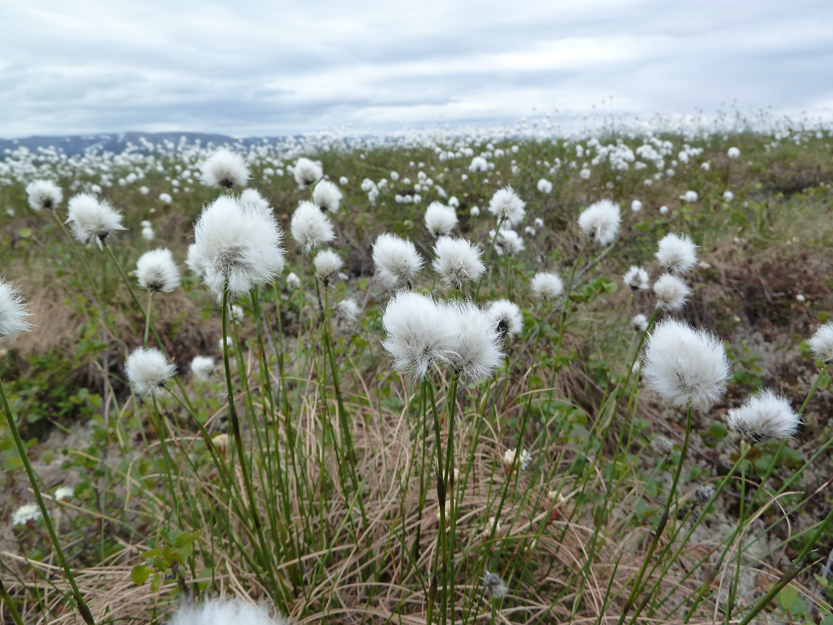
Eriophorum angustifolium, known as Common Cottongrass or tall cottongrass, is a perennial sedge of bogs, fens and wet tundra. In early summer it covers wet ground with nodding tufts of bright white “cotton,” which are actually long, silky bristles attached to the seeds. Despite the name, it is not a grass but a member of the sedge family (Cyperaceae).
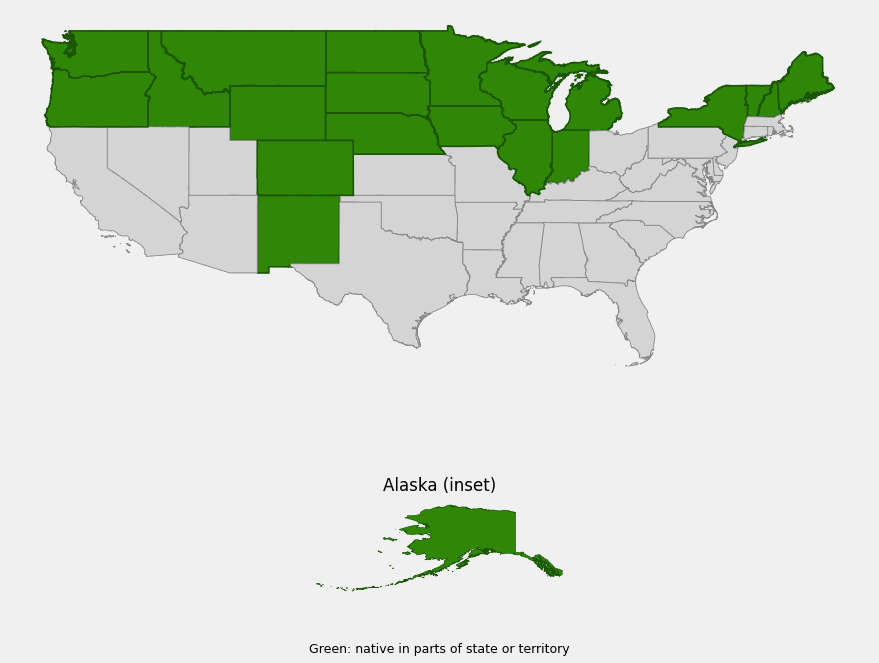
It is one of the most widespread wetland plants of the Northern Hemisphere, growing across northern Europe, Asia, Greenland, Canada and Alaska. In the lower 48 states it grows across the northern tier from Washington and Oregon to Maine, and south in the Rocky Mountains to Colorado and New Mexico. In Alaska it is one of the most familiar plants of the tundra.
Common cottongrass spreads by underground rhizomes into large colonies. It needs constantly wet, usually acidic, sunny ground, which makes it a beautiful plant for a bog garden, pond edge or wet meadow in cool climates, but not an easy plant for ordinary garden soil.
Identification
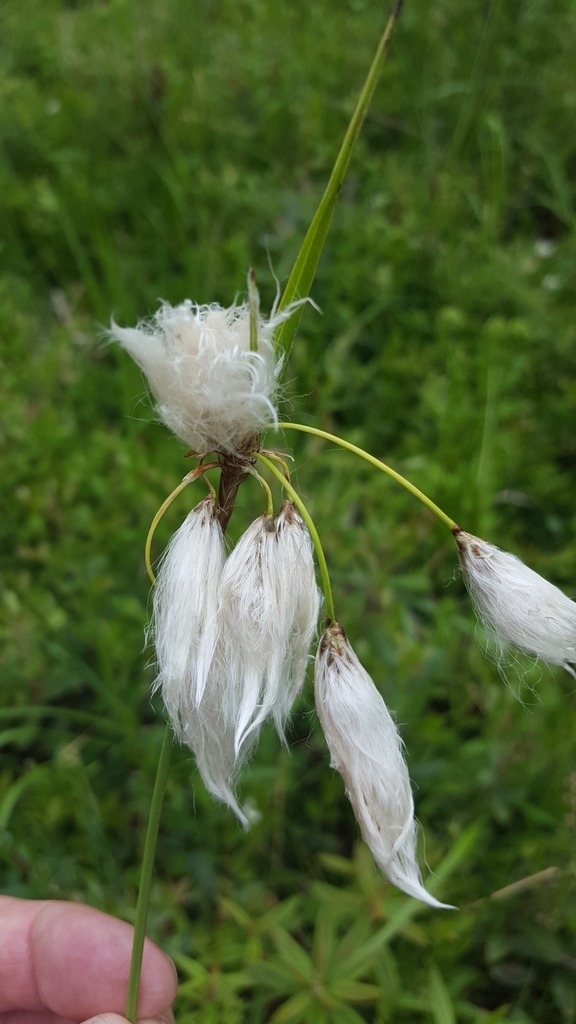
Look for a sedge in wet, open ground with several drooping white cotton heads on each stem, hanging on stalks of different lengths, with one or more short leafy bracts at their base.
Growth Habit
Common cottongrass grows from creeping rhizomes and forms loose colonies rather than tight tussocks. The flowering stems are usually 1 to 2 1/2 feet tall, round to bluntly three-sided and smooth. Plants often grow in large stands that turn reddish in fall.
Leaves
The leaves are long and narrow, usually about 1/8 to 1/4 inch wide, flat to channeled near the base and narrowing to a long, three-sided, solid tip. The upper stem has one or two leaves, and the old leaves often turn red to brown at the tips during the season.
Flowers
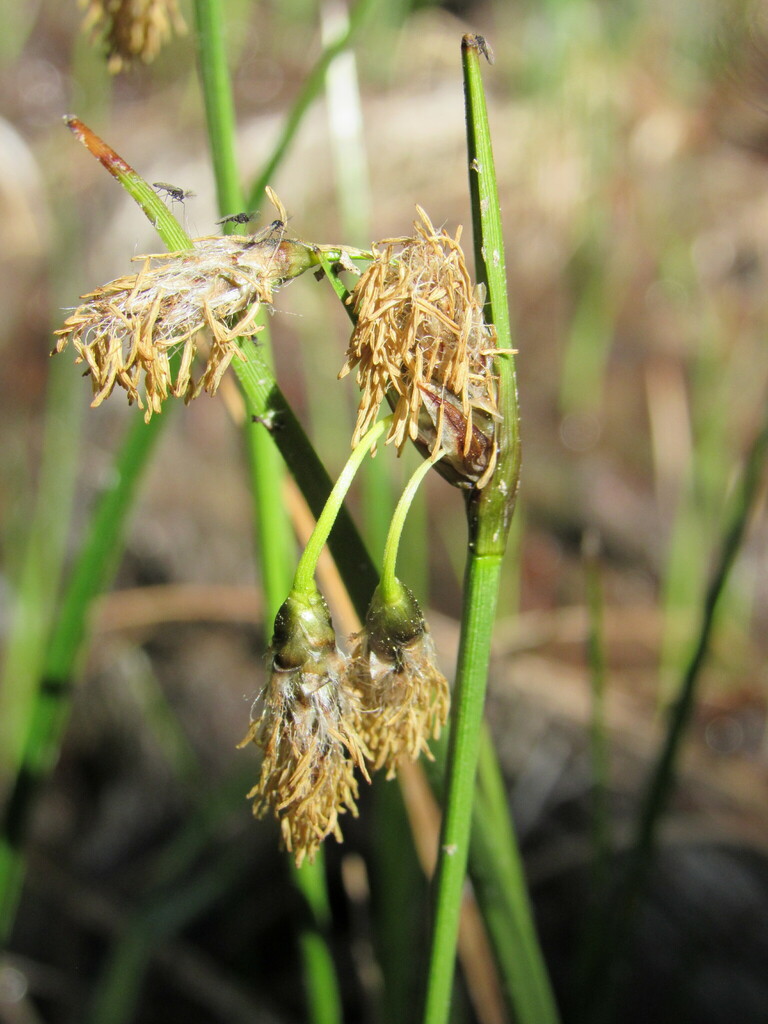
Each stem ends in a cluster of usually 2 to 8 (sometimes up to 10) small, dark brown to gray spikelets on slender stalks of different lengths, with one to three short leaf-like bracts below the cluster. The flowers are tiny and wind-pollinated, with dangling yellow anthers. They bloom in late spring and early summer, from May at lower elevations to July in the Arctic and high mountains.
Fruit & Seeds
After flowering, the bristles around each tiny flower grow into silky, white threads about 1 to 1 1/2 inches long, so each spikelet becomes a white tuft and the whole cluster hangs like a set of cotton balls. Each fruit is a small, three-sided brown achene, carried off by the wind on its bristles in mid to late summer.
Look-alikes
Tussock cottongrass (Eriophorum vaginatum) grows in dense tussocks and has only one upright white head per stem, with no leafy bracts. Tawny cottongrass (E. virginicum) has an upright, rusty-brown to tan head. Slender cottongrass (E. gracile) is smaller, with very narrow leaves and fewer, smaller heads. Woolgrass (Scirpus cyperinus) has woolly brown, not white, heads.
Quick Facts
| Scientific Name | Eriophorum angustifolium |
| Family | Cyperaceae (sedge family) |
| Plant Type | Perennial, rhizomatous sedge |
| Mature Height | 1–2.5 ft |
| Mature Spread | Spreads by rhizomes into colonies |
| Growth Rate | Moderate |
| Sun Exposure | Full sun |
| Water Needs | High; constantly wet soil or shallow water |
| Soil Type | Peat, muck and wet organic or sandy soil |
| Soil pH | Acidic to neutral (about 4.0–7.0) |
| Bloom Time | May–July; cotton heads June–August |
| Flower Color | Inconspicuous brown spikelets; white cotton heads |
| Fall Color | Reddish to bronze leaves |
| Fruit | Tiny achenes with long white bristles |
| Deer Resistant | Moderately |
| USDA Hardiness Zones | 2–7 |
Native Range
Common cottongrass has a circumpolar range in the cooler parts of the Northern Hemisphere. In North America it grows throughout Alaska and every Canadian province and territory, and in Greenland. USDA PLANTS lists it as native in Alaska and 20 of the lower 48 states: Washington, Oregon, Idaho, Montana, Wyoming, Colorado, New Mexico, North Dakota, South Dakota, Nebraska, Minnesota, Iowa, Wisconsin, Illinois, Indiana, Michigan, New York, Vermont, New Hampshire and Maine.
In the lower 48 it is most common in the bogs and fens of the Great Lakes states and northern New England and in the mountains of the West. The southern Rocky Mountain populations in Colorado and northern New Mexico grow in high-elevation fens. Records in Iowa, Illinois, Indiana and Nebraska are scattered, in fens, seeps and Sandhills wetlands at the southern edge of its range, where it is often rare.
It grows in open, wet, usually acidic places: sphagnum bogs, poor and rich fens, wet tundra, sedge meadows, lake and pond margins, seeps and ditches. In the Arctic it often grows in standing water and helps fill in shallow ponds.
📋 Regional plant lists featuring Common Cottongrass: Alaska · Montana & Wyoming · Idaho, Eastern Oregon & Eastern Washington · Western Oregon & Western Washington · North Dakota, South Dakota & Western Minnesota · Michigan, Wisconsin & Eastern Minnesota · Illinois, Iowa & Missouri · Ohio & Indiana · Nebraska, Kansas & Eastern Colorado · New York, Pennsylvania & Northern New Jersey · Delaware, Southern New Jersey & Long Island · New Hampshire, Maine & Vermont
Growing & Care Guide
Common cottongrass is a hardy, long-lived plant for gardeners in cool climates who have a truly wet, sunny spot. It is sold by some native wetland and bog plant nurseries. It does poorly in hot, humid summers and in ordinary garden soil.
Light
Full sun. It flowers and fruits poorly in shade.
Soil & Water
Grow it in constantly wet, acidic, low-nutrient soil, such as peat and sand in a bog garden, or in up to about 2 inches of standing water at a pond edge. It should never dry out. Avoid fertilizer and lime, and use rainwater rather than hard tap water in a bog garden if you can.
Planting Tips
Plant divisions or potted plants in spring, 12 to 18 inches apart. In a small bog garden or container, plant it in a sunken pot or tub so its rhizomes do not overrun smaller plants such as sundews. It looks best planted in drifts, where the cotton heads catch the light.
Pruning & Maintenance
Little care is needed. Cut back the old leaves in early spring. Pull out stems that spread where they are not wanted. Remove taller wetland weeds such as cattails and reed canary grass, which can shade it out.
Propagation
Divide clumps of rhizomes in spring. It can also be grown from seed collected when the cotton heads are fully fluffy: remove the bristles and sow on the surface of a wet peat and sand mix in cool conditions. Do not dig plants from wild bogs and fens, which are fragile and often protected.
Landscape Uses
- Bog gardens: white cotton heads above sundews and pitcher plants
- Pond edges: grows in wet soil or shallow water
- Wetland restoration: colonizes bare peat and wet ground
- Rain gardens: only in cool climates with constantly wet soil
- Naturalistic plantings: drifts of white in early summer
Wildlife & Ecological Value
Common cottongrass is a key plant of northern wetlands and tundra, where it provides food for grazing animals and nesting material for birds.
For Pollinators
It is wind-pollinated, but flies and other small insects visit the flowers for pollen in early spring, when little else is blooming in the far north.
For Birds
Geese, including snow geese on their Arctic breeding grounds, graze the leaves and dig up the rhizomes and stem bases. Ptarmigan eat the shoots and flower heads, and many small birds use the soft cotton to line their nests.
For Mammals
Caribou, muskoxen, moose and lemmings and voles graze its tender shoots and leaves, especially in spring and early summer when the new growth is rich in nutrients.
Ecosystem Role
Its rhizomes help bind wet peat and colonize bare, disturbed bog surfaces, so it is often one of the first plants to return after peat cutting or fire. Like many wetland sedges, its hollow, air-filled tissues carry oxygen to its roots in waterlogged soil, and in doing so they also release methane from the peat, which makes cottongrass important in studies of Arctic wetlands and climate.
Cultural & Historical Uses
The genus name Eriophorum comes from Greek words meaning “wool-bearing,” for the cottony heads, and angustifolium means “narrow-leaved.”
Indigenous peoples of the North have used cottongrass in many ways. The fluffy seed heads were used as wicks for traditional seal-oil lamps, as tinder, and as padding or absorbent material, and in Alaska the tender lower stems and rhizomes have been eaten. In Europe the cotton was tried for stuffing pillows and even for making paper and cloth, but the fibers are too brittle to spin well.
Common cottongrass is a familiar symbol of northern moors and tundra. In Scotland and Ireland it is called bog cotton, and in Alaska and northern Canada a field of white cottongrass is one of the classic sights of the short Arctic summer.
Frequently Asked Questions
Is cottongrass a grass?
No. Despite the name, it is a sedge in the family Cyperaceae. The “cotton” is made of bristles on the seeds.
How can I tell common cottongrass from tussock cottongrass?
Common cottongrass has several drooping white heads on each stem with leafy bracts below them, and it spreads by rhizomes. Tussock cottongrass has a single upright head per stem and grows in dense tussocks.
When does cottongrass turn white?
The white heads form after flowering, usually from June to August, depending on latitude and elevation.
Can I grow common cottongrass in my garden?
Yes, in a sunny bog garden, pond edge or other spot that stays wet all the time, ideally in a cool climate. It struggles in dry soil and hot summers.
Where does common cottongrass grow in the United States?
In Alaska, across the northern states from Washington to Maine, and south in the Rocky Mountains to Colorado and New Mexico.

Looking for a nursery that carries Common Cottongrass?
Browse our native plant nursery directory: Alaska · Colorado · Idaho, Illinois, Indiana & Iowa · Maine, Michigan, Minnesota & Montana · Nebraska, New Hampshire, New Mexico, New York & North Dakota · Oregon · South Dakota & Vermont · Washington · Wisconsin & Wyoming

