
Water Canna (Canna glauca)
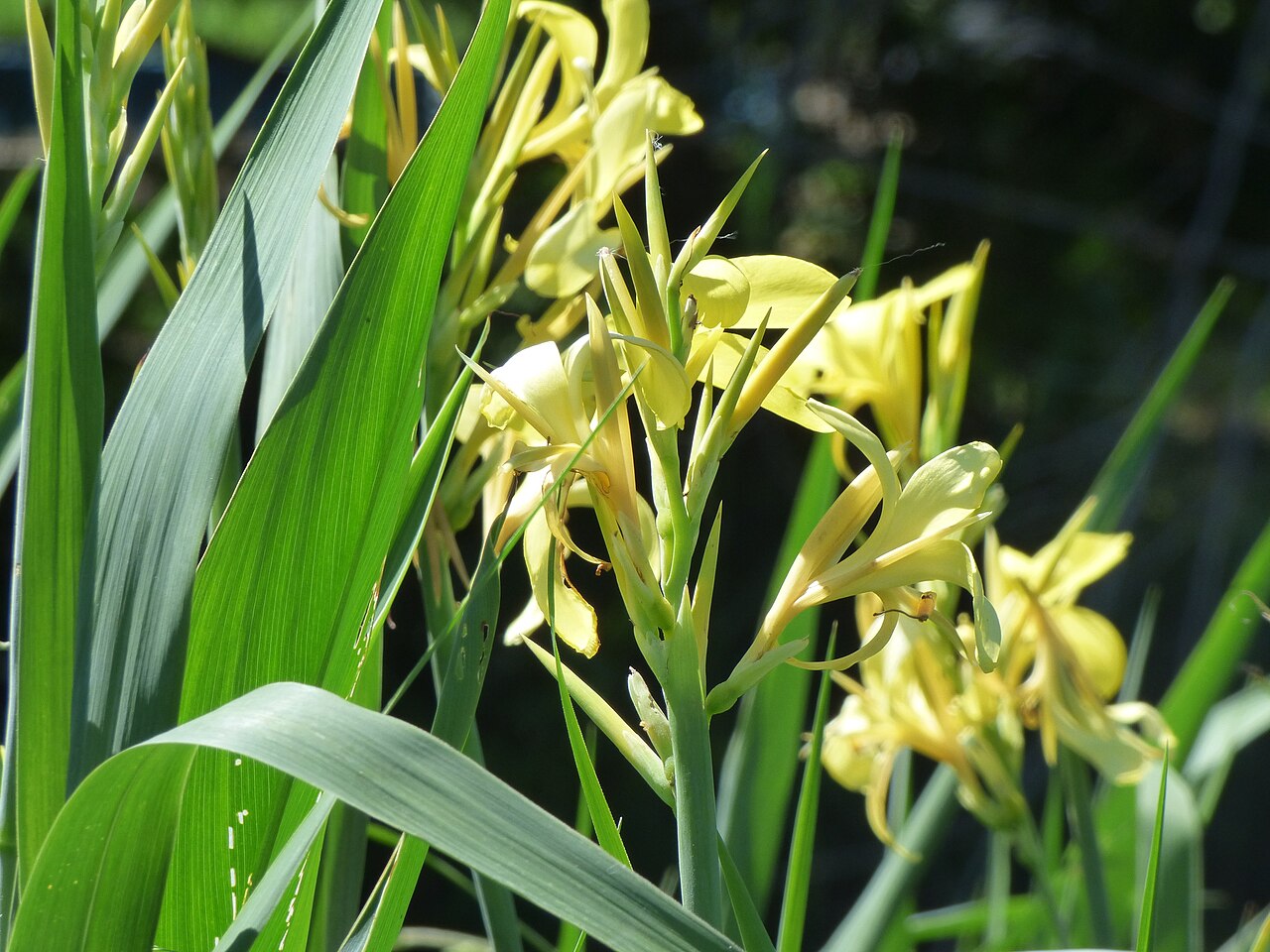
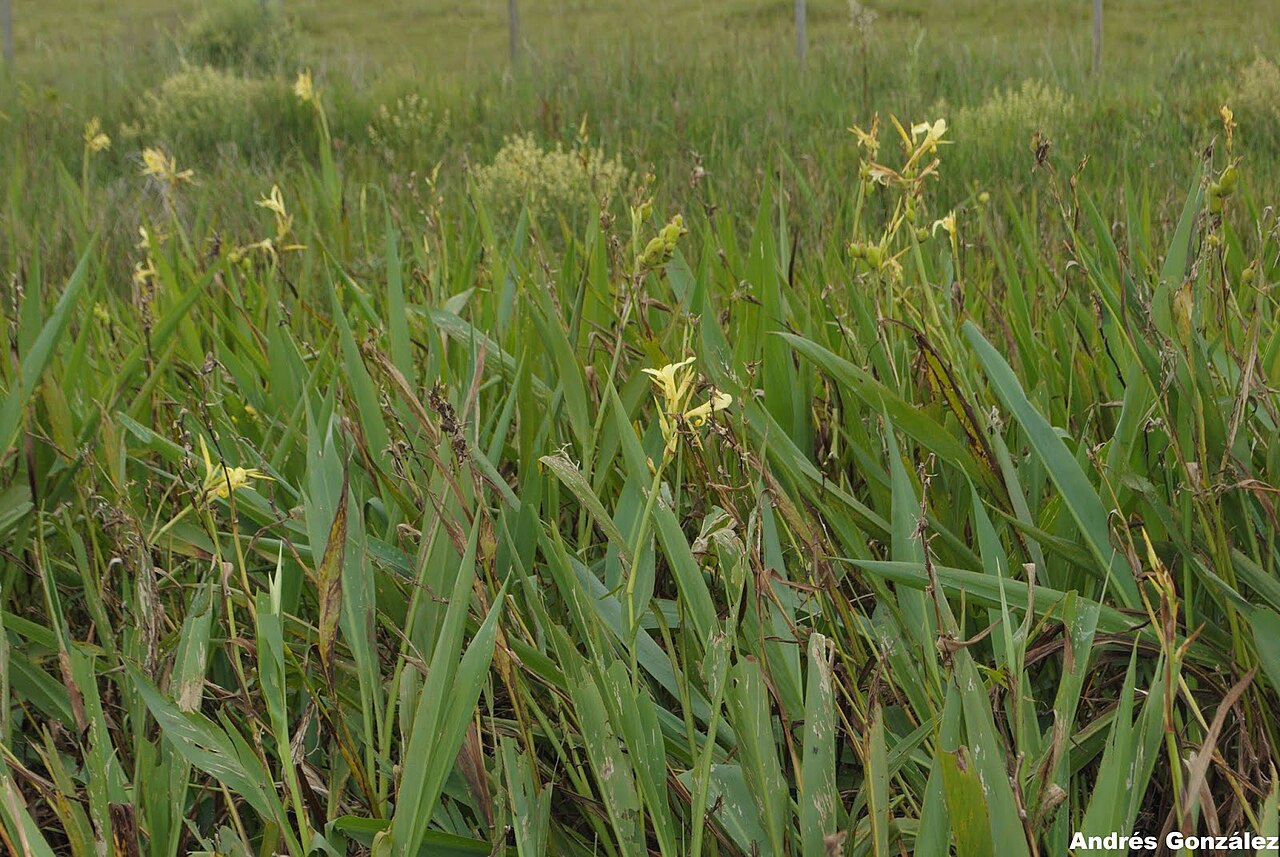
Canna glauca, Water Canna, also called Louisiana canna and, in Puerto Rico, maraca amarilla, is a tall, clump-forming wetland perennial with narrow, blue-green leaves and soft, butter-yellow flowers. It grows 3 to 6 feet tall from creeping rhizomes and spreads into stands along pond margins, marshes, ditches and swamp edges. Flowers open from spring to fall, a few at a time, on stalks above the foliage.
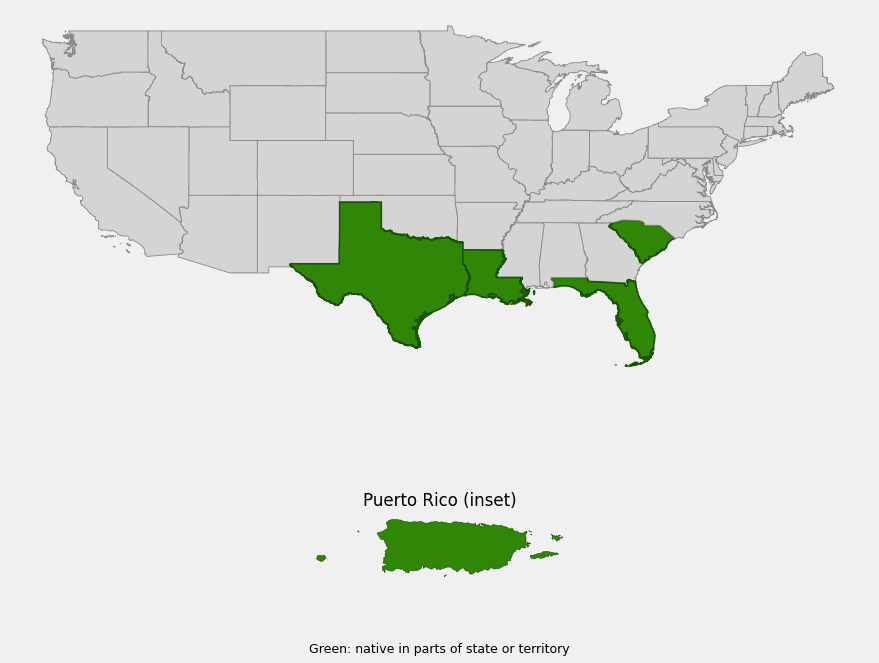
It is one of only two cannas native to the United States. The other is the golden Bandana of the Everglades (Canna flaccida). Water canna’s U.S. range runs along the Gulf and southern Atlantic coastal plain, in Florida, Louisiana and the Texas coast, with scattered records in South Carolina, and it is native in Puerto Rico and the Virgin Islands. From there its range continues through Mexico, Central America, the West Indies and South America south to Argentina and Uruguay.
Water canna is also a garden plant with a long history. It reached English glasshouses by the 1730s, and it is a parent of the popular Longwood water cannas and many other hybrids that can grow standing in water. This guide covers how to identify it, where it grows, how to grow it in ponds and rain gardens, and its role in wetland food webs.
Identification
Water canna is easy to recognize when in bloom: no other native wetland plant has its combination of large, banana-like leaves arranged in two ranks and pale yellow, irregular flowers. Common garden cannas (Canna × generalis) have broader leaves and larger red, orange or pink flowers.
Leaves & Stems
The leaves are long, narrow and lance-shaped, about 12 to 24 inches long but only 2 to 5 inches wide, smooth-edged and upright. They are distinctly glaucous, with a waxy blue-green to gray-green bloom (glauca means “bluish-gray”). Each leaf base wraps around the stem, and the stems arise from thick, creeping rhizomes.
Flowers
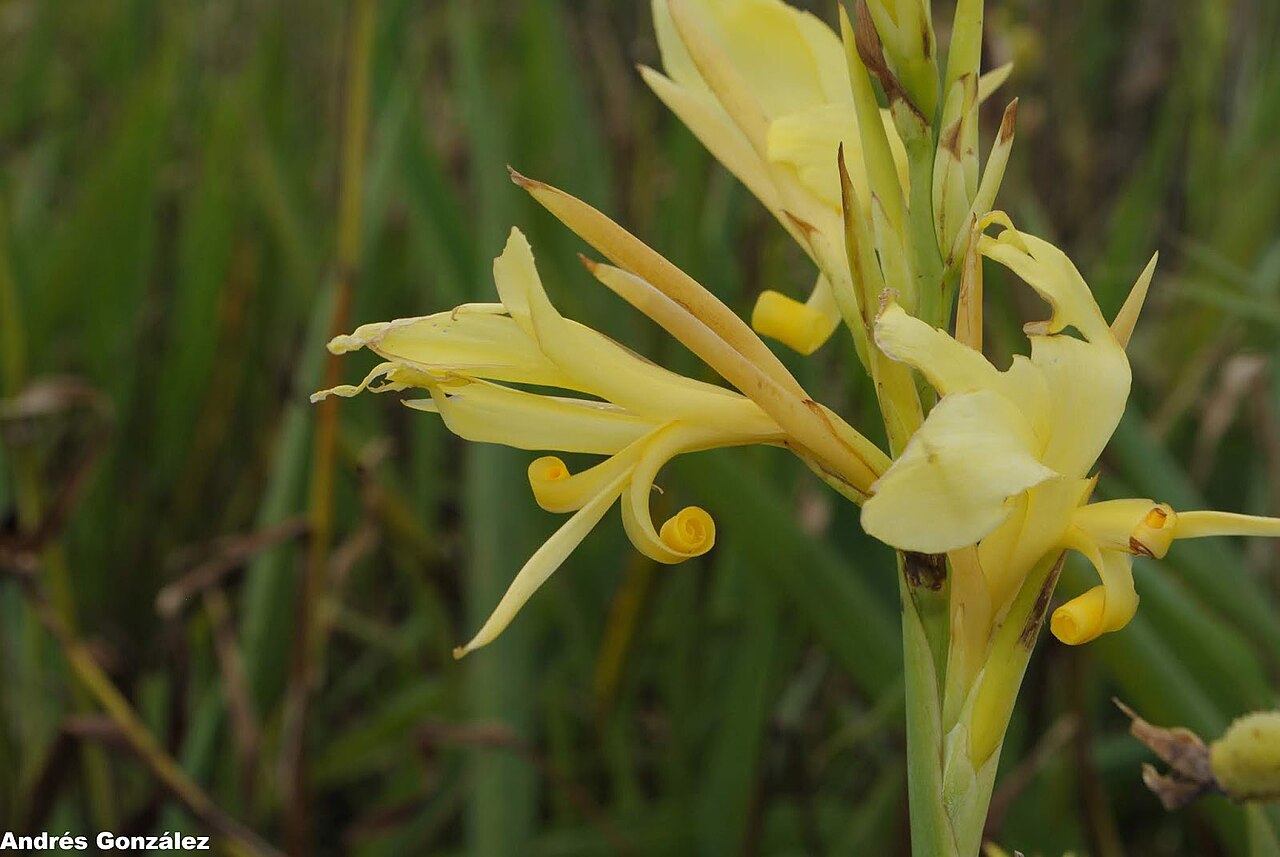
The flowers are about 3 to 4 inches long, pale lemon to butter yellow, and lack spots or red markings in the typical form. As in all cannas, the three true petals are small and narrow; the showy parts are three or four petal-like staminodes, plus a narrow, curled lip (the labellum). One petal-like stamen carries a single half-anther, and the style is flattened. Each flower lasts about a day.
Fruit & Seeds
The fruit is a rounded to oblong, warty green capsule about an inch long that turns brown and splits to release several round, very hard, dark brown to black seeds. These hard seeds are the source of the old name “Indian shot” used for cannas generally.
Similar Species
Bandana of the Everglades (Canna flaccida) has larger, brighter yellow flowers with broad, floppy, crinkled staminodes and green rather than blue-gray leaves. Alligator flag has similar leaves but tall, arching stalks of small purple flowers.
Quick Facts
| Scientific Name | Canna glauca |
| Family | Cannaceae (canna family) |
| Plant Type | Rhizomatous wetland perennial (emergent aquatic) |
| Mature Height | 3–6 ft |
| Mature Spread | 2–3 ft per clump; spreads into colonies |
| Growth Rate | Fast in warm weather |
| Sun Exposure | Full sun to part shade |
| Water Needs | High; wet soil or shallow water up to about 6 in |
| Soil Type | Muck, loam, sand or clay that stays wet |
| Soil pH | About 5.5–7.5 |
| Bloom Time | Spring to fall (April–October) |
| Flower Color | Pale yellow |
| Fall Color | None; tops die back after frost |
| Fruit | Warty capsule with hard black seeds |
| Deer Resistant | Moderate |
| USDA Hardiness Zones | 8–11 (rhizomes survive light freezes in zone 8) |
Native Range
In the United States, water canna is native along the Gulf and southern Atlantic coastal plain. USDA PLANTS records it from Florida, Louisiana, Texas and South Carolina, and as native in Puerto Rico and (with some doubt) the U.S. Virgin Islands. Florida has the most populations, in marshes, swamps and wet ditches through much of the peninsula. In Louisiana it grows in the coastal marshes and bayous of the southeast, including the area around Jean Lafitte National Historical Park, and in Texas it is found near the coast, in marshes and lake margins from Harris and Brazoria counties southward.
South Carolina is at the northern edge of its range, and records there are few and scattered. Because water canna is also planted in ponds and water gardens, some outlying records may come from cultivated plants. In Puerto Rico it grows in freshwater marshes and along ditches and streams in the lowlands.
Outside the U.S. it ranges through Mexico, Central America and the Caribbean to South America as far south as Argentina and Uruguay. A form widely grown in South and Southeast Asia has naturalized in several countries there.
📋 Regional plant lists featuring Water Canna: North & South Florida · Puerto Rico · North & South Carolina · Arkansas, Louisiana, Eastern Oklahoma & Eastern Texas · South & West Texas
Growing & Care Guide
Water canna is one of the easiest native plants for ponds, water gardens, retention basins and rain gardens in warm climates. It grows fast, blooms for months and tolerates both standing water and soil that dries out briefly. Nursery plants are sold by many aquatic and native plant nurseries; buy those rather than digging from wild marshes. In Puerto Rico, use local nursery stock where it is available.
Light
Full sun gives the most flowers and the bluest leaves. It tolerates part shade, but flowers less.
Soil & Water
Plant it in constantly moist to wet soil, or in shallow water up to about 6 inches deep. It grows in muck, sand, loam or clay, and in containers of heavy garden soil sunk into a pond. In a garden bed it needs regular watering; it will not tolerate long drought.
Planting Tips
Plant rhizomes or potted plants in spring, about 2 feet apart. In a lined pond, grow it in a wide container to keep it from spreading across the shelf. In colder parts of zone 8, plant it in soil rather than open water and mulch the crown in winter.
Pruning & Maintenance
Cut off spent flower stalks to keep it tidy and encourage more blooms. Remove frost-blackened foliage in winter. Divide crowded clumps every few years. Watch for canna leafroller caterpillars, which roll leaves into tubes; light damage can be tolerated or the rolled leaves removed.
Propagation
Divide the rhizomes in spring, keeping at least one growing point per piece. Seed works too, but the coats are very hard: nick or file each seed, or soak it in warm water for a day or two, before sowing in warm, moist mix. Seed-grown plants flower in their first or second year.
Landscape Uses
- Ponds and water gardens: a tall vertical accent for pond margins and shallow shelves
- Rain gardens and retention basins: tolerates fluctuating water levels and helps take up nutrients
- Wetland restoration: for freshwater marsh edges within its native range
- Containers: grows well in a large pot set in a saucer of water
- Butterfly gardens: a host plant for the Brazilian skipper
Wildlife & Ecological Value
Water canna is a structural plant in many southern marshes, and it supports a small but distinctive group of wildlife.
For Pollinators
The flowers produce nectar and are visited by bees, including large bees that can push into the flower, and by hummingbirds. Flowers open in the morning and last only about a day, but a clump produces new ones over a long season.
For Birds
Marsh birds such as rails, bitterns and red-winged blackbirds nest and shelter in dense canna and other emergent vegetation. Hummingbirds sometimes visit the flowers.
For Mammals
The dense stands give cover to marsh rabbits and other small mammals. The hard seeds are rarely eaten.
Ecosystem Role
Cannas are the host plants of the Brazilian skipper (Calpodes ethlius), whose caterpillars, known as canna leafrollers, cut and fold leaves into tubes where they feed and hide. Water canna’s spreading rhizomes help stabilize soft soils along shorelines, and its fast growth takes up nutrients from the water, which is why cannas are used in constructed wetlands.
Cultural & Historical Uses
Linnaeus named Canna glauca in 1753. Plants had already been brought to England by about 1730, and early 19th-century issues of Curtis’s Botanical Magazine illustrated several color forms. In the 19th century, cannas became fashionable bedding plants in Europe, and breeders crossed many species, including water canna, to create the garden cannas sold today.
Water canna has had a second career in breeding. In the 1970s and 1980s, Robert Armstrong at Longwood Gardens in Pennsylvania crossed Canna glauca with garden cannas and produced the Longwood water cannas, such as ‘Ra’, ‘Erebus’, ‘Endeavour’ and ‘Taney’, which inherit its narrow leaves and ability to grow standing in water. These remain popular pond plants.
The hard, round seeds of cannas have been used throughout the American tropics as beads, in rattles and maracas, and as improvised shot, giving the genus the name “Indian shot.” The Puerto Rican name maraca amarilla means “yellow maraca.”
Frequently Asked Questions
Is water canna native to the United States?
Yes. USDA PLANTS lists it as native in Florida, Louisiana, Texas, South Carolina and Puerto Rico. It and Canna flaccida are the only cannas native to the U.S.
Can water canna grow in standing water?
Yes. It grows in permanently wet soil or in shallow water up to about 6 inches deep, which makes it a good pond and water-garden plant.
Is water canna invasive?
Not within its native range, though it spreads steadily by rhizomes. Outside the Americas, a form of it has naturalized in parts of tropical Asia, so plant it only where it is native or where it can be contained.
How is water canna different from common garden canna?
Garden cannas are hybrids with broad leaves and big red, orange, pink or yellow flowers. Water canna has narrow, blue-green leaves and smaller, pale yellow flowers, and it tolerates standing water.
What is eating the leaves of my water canna?
Usually the caterpillar of the Brazilian skipper, called the canna leafroller, which rolls leaves into tubes. It is a native butterfly, and plants recover from moderate feeding.

Looking for a nursery that carries Water Canna?
Browse our native plant nursery directory: Florida · Louisiana · South Carolina & Texas

