
Chamisso Arnica (Arnica chamissonis)
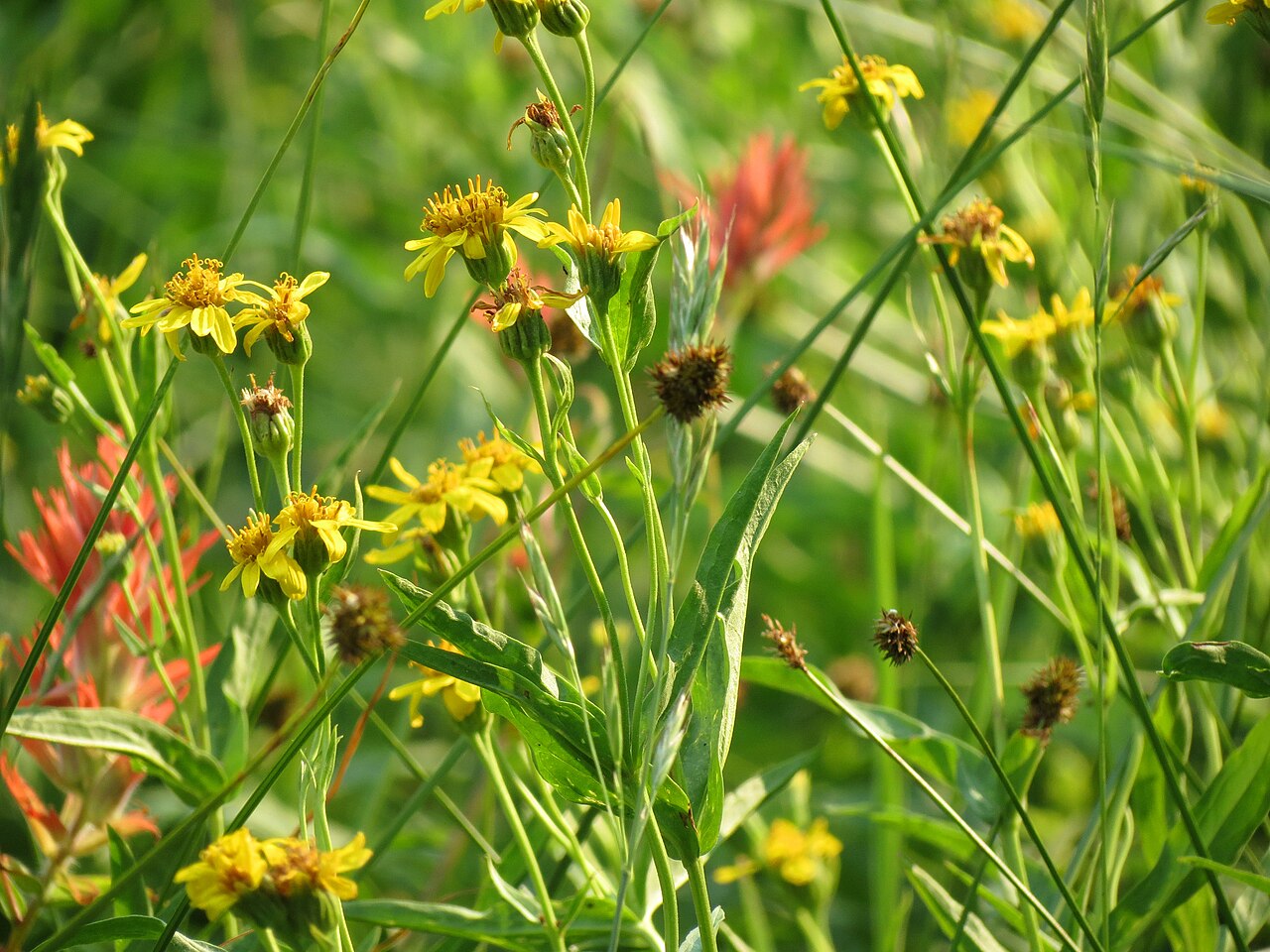
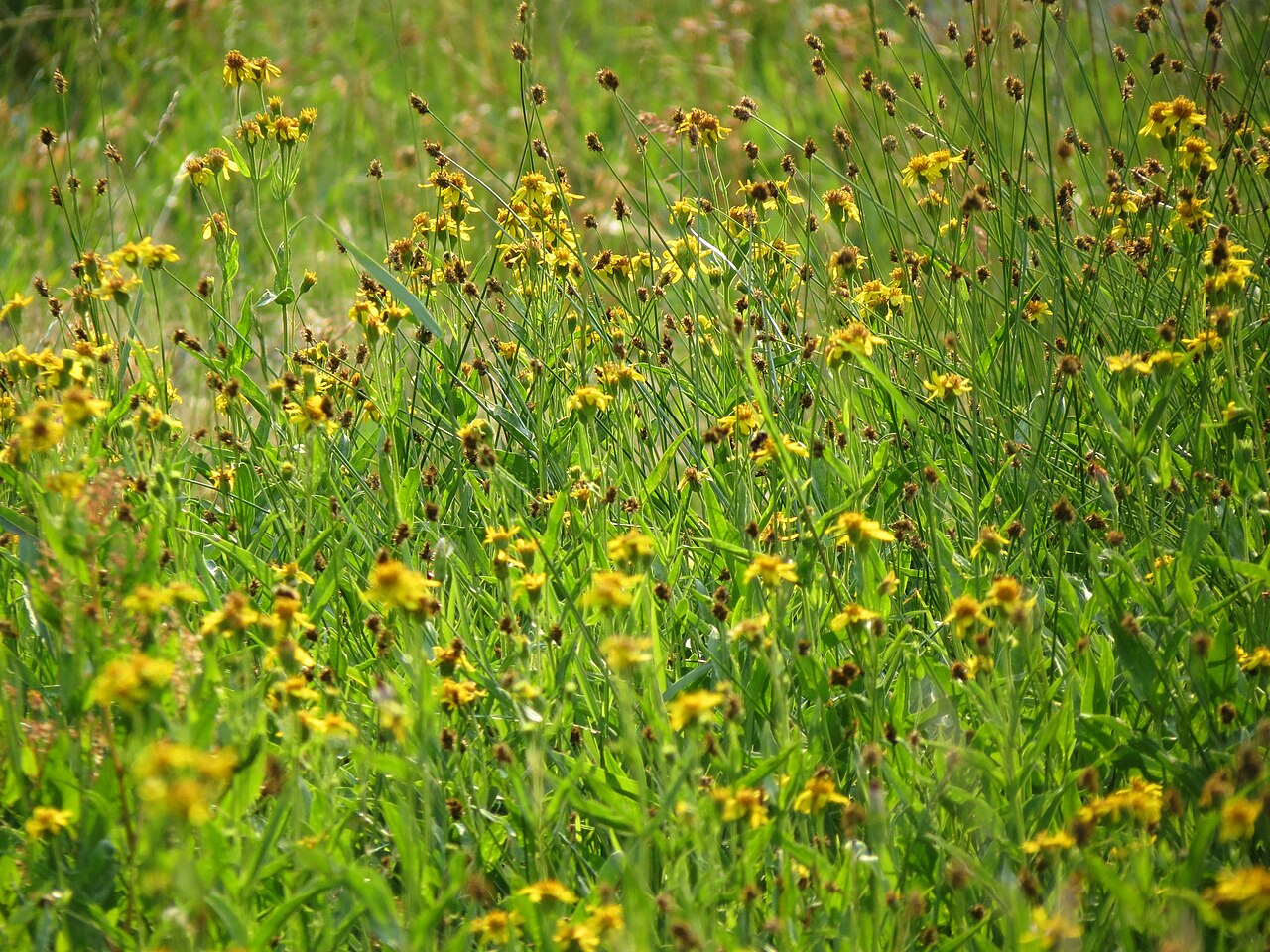
Arnica chamissonis, Chamisso Arnica, also called leafy arnica or meadow arnica, is a yellow-flowered perennial of moist mountain meadows, streambanks and forest openings across western North America. From late June to September it carries several bright yellow, daisy-like heads, each 1½ to 2 inches across, on leafy stems 1 to 3 feet tall, and it spreads by rhizomes into loose, cheerful patches.
It is the closest North American relative of the famous European Arnica montana, and because it is easier to grow, it has been cultivated in Europe as a medicinal substitute for that species. Like other arnicas it contains helenalin, a compound that is toxic if eaten and can irritate the skin; see the safety note below.
Chamisso arnica is one of the easiest arnicas to grow, and a good choice for moist, sunny gardens in cool climates, rain gardens and mountain meadow restorations. This guide covers how to identify it, where it grows, how to grow it and its value to pollinators.
Identification
Arnicas are easy to tell from other yellow daisies by their opposite leaves. Among the arnicas, Chamisso arnica stands out for its many pairs of stem leaves and the tufts of white hairs at the tips of its flower-head bracts.
Stems & Leaves
Stems rise 1 to 3 feet from creeping rhizomes, usually several together. Each stem carries 4 to 10 pairs of opposite, lance-shaped to narrowly oval leaves, 2 to 8 inches long, without stalks or with short winged stalks, smooth-edged or finely toothed, and more or less hairy. The leaves are spread evenly up the stem rather than crowded at the base. The form called silver arnica (var. incana) has grayish, densely hairy leaves.
Flowers
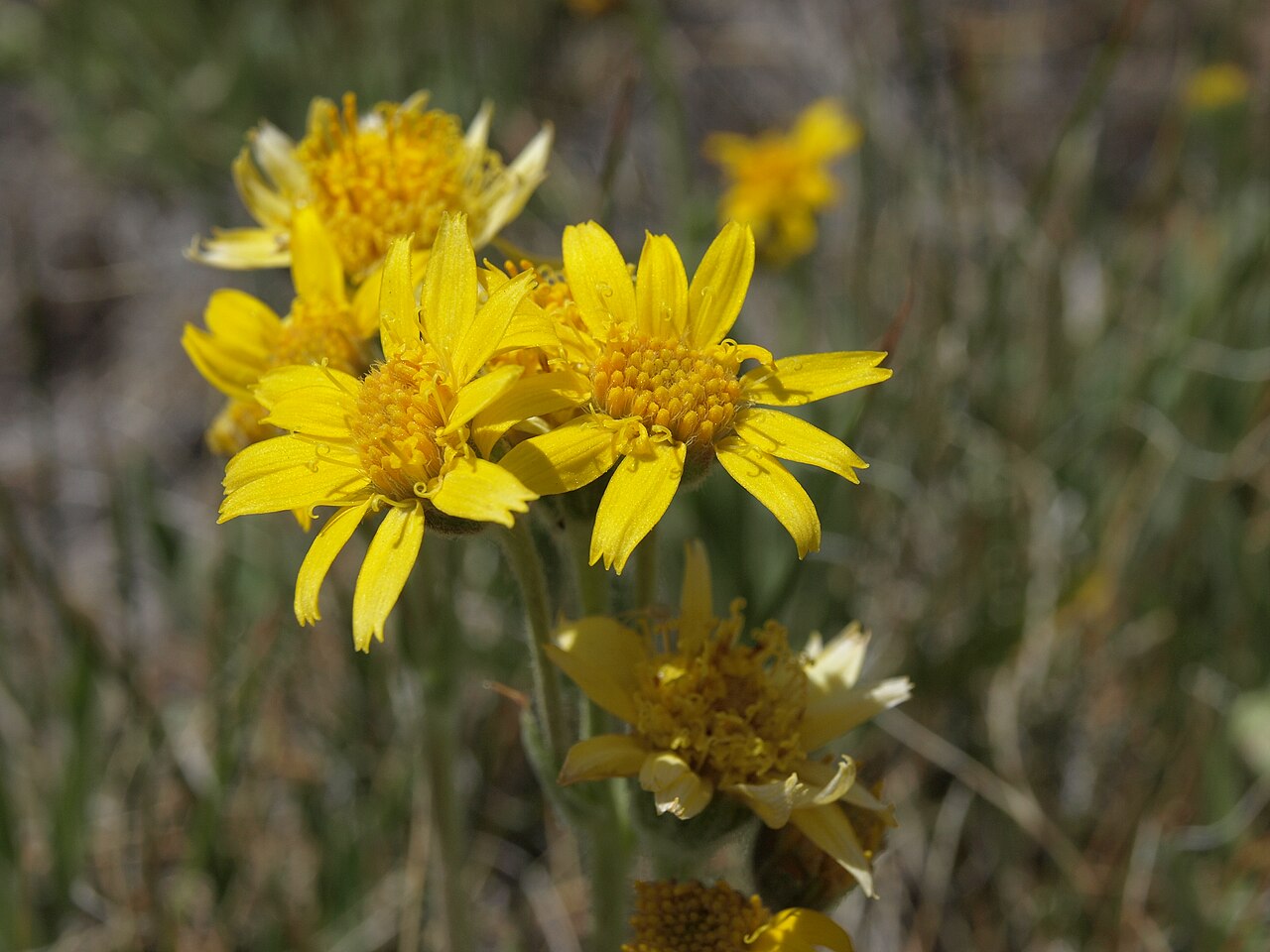
Each stem bears 3 to 15 or more flower heads in a loose, open cluster from late June to September. Each head has about 10 to 16 yellow ray florets with notched tips around a yellow disk, 1½ to 2 inches across. The narrow green bracts around the head end in a small tuft of long white hairs, a good field character.
Seeds
The seeds are small, hairy achenes topped by a ring of straw-colored to pale tan bristles (pappus) that carries them on the wind.
Look-alikes
Heartleaf arnica (A. cordifolia) has heart-shaped leaves, mostly 2 to 4 pairs, and grows in drier, shadier forests. Arrowleaf ragwort grows in the same wet places but has alternate, triangular leaves and smaller heads with fewer rays. Mule-ears and balsamroots have mostly basal leaves.
Quick Facts
| Scientific Name | Arnica chamissonis |
| Family | Asteraceae (aster family) |
| Plant Type | Herbaceous perennial, spreading by rhizomes |
| Mature Height | 1–3 ft |
| Mature Spread | 1–2 ft per clump; spreads into patches |
| Growth Rate | Moderate |
| Sun Exposure | Full sun to part shade |
| Water Needs | Medium to high; consistently moist soil |
| Soil Type | Moist loam, sandy or gravelly soils with organic matter |
| Soil pH | About 6.0–7.2 |
| Bloom Time | Late June–September |
| Flower Color | Yellow |
| Fall Color | None notable |
| Fruit | Small hairy achenes with tan bristles |
| Deer Resistant | Generally yes; usually avoided |
| USDA Hardiness Zones | 2–8 |
Native Range
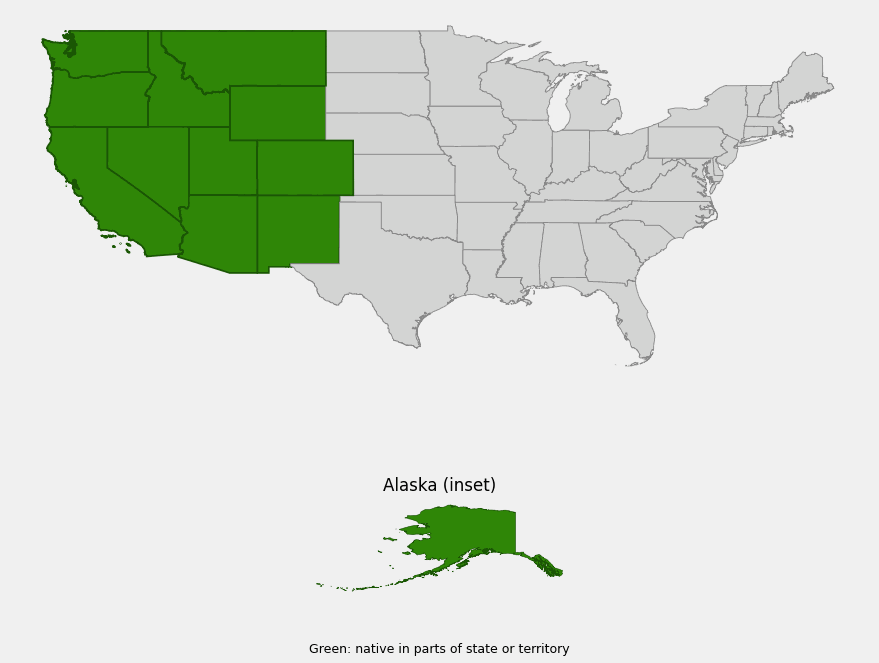
Chamisso arnica is native to western and northern North America. In the United States it grows in Alaska and in 11 western states: Washington, Oregon, California, Idaho, Nevada, Montana, Wyoming, Utah, Colorado, Arizona and New Mexico. In Canada it ranges from the Yukon and British Columbia east across the prairie provinces to Ontario and Quebec. USDA PLANTS also lists a record from Oklahoma, but no specimens from that state turn up in herbarium databases and it is not part of the plant’s known range, so it is left off this map.
It is a plant of the mountains in the lower 48 states, from the Cascades and Sierra Nevada to the Rockies, reaching south to the high country of Arizona and New Mexico, while in Canada and Alaska it also grows at low elevations. It is most common in the northern Rockies and the Cascades.
It grows in moist to wet meadows, along streams and lakeshores, in seeps, aspen groves and moist forest openings, and on avalanche paths, from foothills and valleys to subalpine elevations, roughly sea level in the north to about 11,000 feet in the southern Rockies.
📋 Regional plant lists featuring Chamisso Arnica: Alaska · Western Oregon & Western Washington · Idaho, Eastern Oregon & Eastern Washington · California & Nevada · Montana & Wyoming · Utah & Western Colorado · Arizona & New Mexico
Growing & Care Guide
Chamisso arnica is the easiest arnica for gardens. It thrives in moist, sunny spots in cool-summer climates and spreads into an informal groundcover of foliage topped with yellow daisies in mid to late summer. Seed and plants are available from western native seed companies and some perennial nurseries. Safety note: all parts of the plant contain helenalin and are toxic if eaten, causing stomach upset and, in larger amounts, heart and other serious effects. Keep it away from children and pets that chew plants, never take it internally, and wear gloves if your skin is sensitive, since handling it can cause dermatitis in some people.
Light
Full sun in cool, moist climates; part shade, especially in the afternoon, where summers are hot or dry.
Soil & Water
Give it moist, well-drained but never droughty soil with some organic matter. It does well along pond and stream edges and in rain gardens, but not in standing water. In dry regions it needs regular summer watering; it does poorly in hot, humid lowland summers.
Planting Tips
Plant in spring or early fall, about 12 to 18 inches apart for a groundcover. Pair it with grasses and other meadow perennials that can share space with its rhizomes.
Pruning & Maintenance
Deadhead to extend flowering or leave seed heads for birds and self-sowing. Cut stems back in late fall or early spring. Divide crowded patches every few years in spring, and pull spreading shoots where they are not wanted.
Propagation
Sow fresh seed outdoors in fall or in spring after a few weeks of cold, moist stratification, barely covering it; germination is usually good. Divide rhizomes in early spring or fall.
Landscape Uses
- Moist meadows and rain gardens: a long-blooming yellow daisy for wet, sunny sites in cool climates
- Mountain and northern gardens: very cold-hardy and at home at high elevation
- Pollinator gardens: late-summer nectar and pollen for bees, flies and butterflies
- Restoration: used in revegetating disturbed mountain meadows, roadsides and streambanks
- Streambank plantings: rhizomes help bind moist soil along streams and ponds
Wildlife & Ecological Value
Chamisso arnica blooms in mid to late summer, when mountain meadows are busy with pollinators.
For Pollinators
Its heads are visited by bumblebees, solitary bees, hoverflies, beetles and butterflies such as fritillaries and checkerspots. Some seed-feeding flies and moths develop in arnica flower heads.
For Birds
Finches and other small seed-eating birds take the seeds in late summer and fall, and grouse may feed on the foliage.
For Mammals
Deer and elk usually avoid it, though they may nibble the flowers. Rodents eat some seeds.
Ecosystem Role
Its spreading rhizomes help stabilize soil in wet meadows and along streams, and its late flowers add to the nectar supply in mountain meadows. It is an early colonizer of disturbed moist ground such as avalanche tracks and road cuts.
Cultural & Historical Uses
The species is named for Adelbert von Chamisso (1781–1838), the German poet and botanist who sailed on the Russian Rurik expedition and collected plants in Alaska and California. The German botanist Christian Friedrich Lessing described the species.
Arnica has a long history in European folk medicine as a topical remedy for bruises and sprains. Because the European Arnica montana is protected and hard to cultivate, Chamisso arnica, especially the leafy form, has been grown commercially as a substitute, and German pharmacopoeia standards have accepted its flowers for arnica preparations. Arnica products are meant only for use on unbroken skin; arnica taken by mouth, except in extremely diluted homeopathic form, is poisonous.
Western Indigenous peoples used several arnica species externally on sprains and bruises. Today Chamisso arnica is valued in North America mainly as a beautiful, easy wildflower of mountain meadows.
Frequently Asked Questions
Is Chamisso arnica poisonous?
Yes, if eaten. Like other arnicas it contains helenalin, which can cause vomiting, heart problems and other serious effects. It can also irritate sensitive skin. Never take it internally, and keep it away from children and pets.
Is Chamisso arnica the same as Arnica montana?
No. Arnica montana is European. Chamisso arnica is a North American species with similar chemistry, and has been grown as a substitute for it in herbal products.
Where does Chamisso arnica grow?
In moist meadows and along streams in the mountains of the western United States, and across much of Canada and Alaska.
Can I grow Chamisso arnica in my garden?
Yes, if you have moist soil and cool summers. It is the easiest arnica to grow and spreads into patches. It struggles in hot, humid or dry lowland gardens.
When does it bloom?
From late June to September, depending on elevation and latitude.

Looking for a nursery that carries Chamisso Arnica?
Browse our native plant nursery directory: Alaska & Arizona · California · Colorado · Idaho · Montana · Nevada & New Mexico · Oregon · Utah · Washington · Wyoming

