
Scarlet Hedgehog Cactus (Echinocereus coccineus)
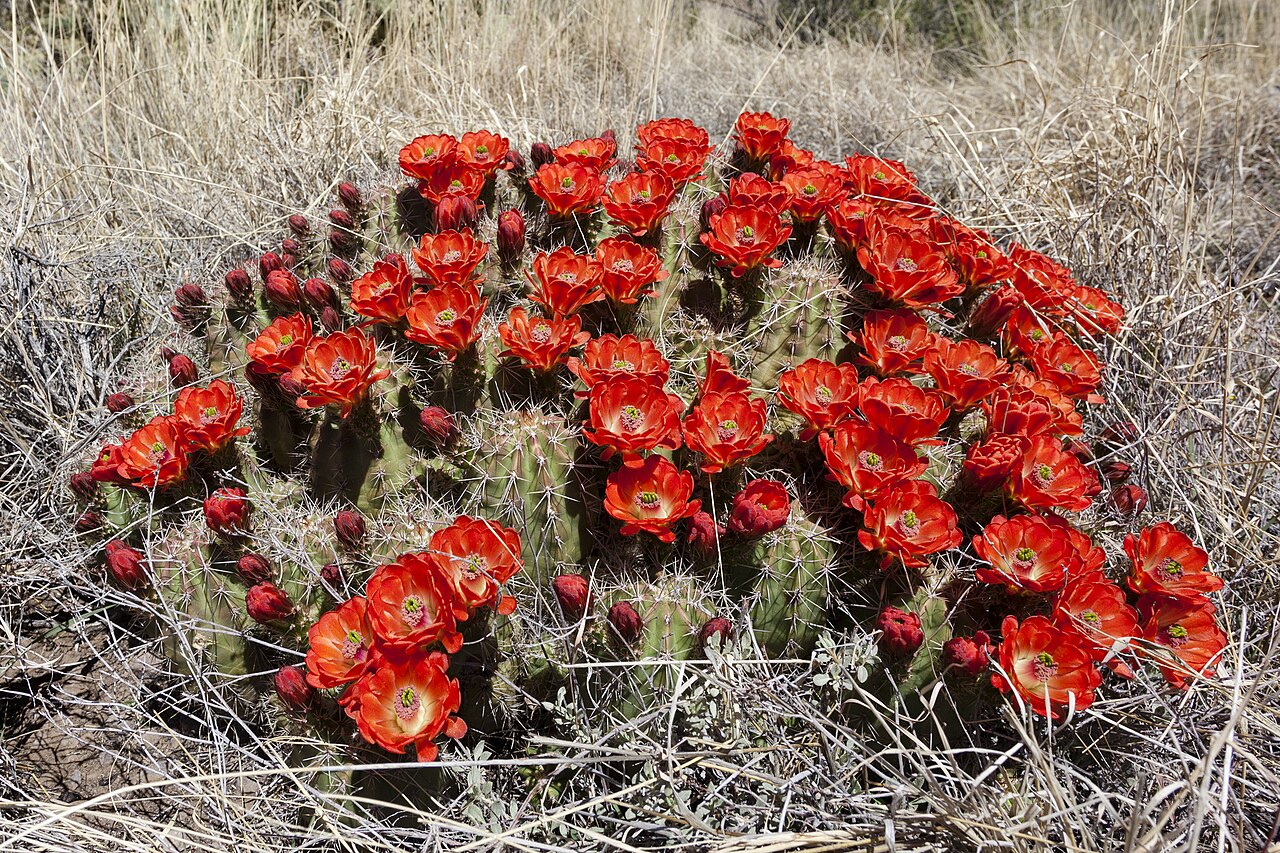
Echinocereus coccineus, the Scarlet Hedgehog Cactus, is a mound-forming cactus of the Southwest famous for its brilliant scarlet to red-orange flowers in spring. Its short, cylindrical, spiny stems grow in clusters that can include dozens or even hundreds of heads, forming mounds up to 2 or 3 feet across. In April and May the mounds are covered with waxy, cup-shaped flowers that draw hummingbirds from far away.
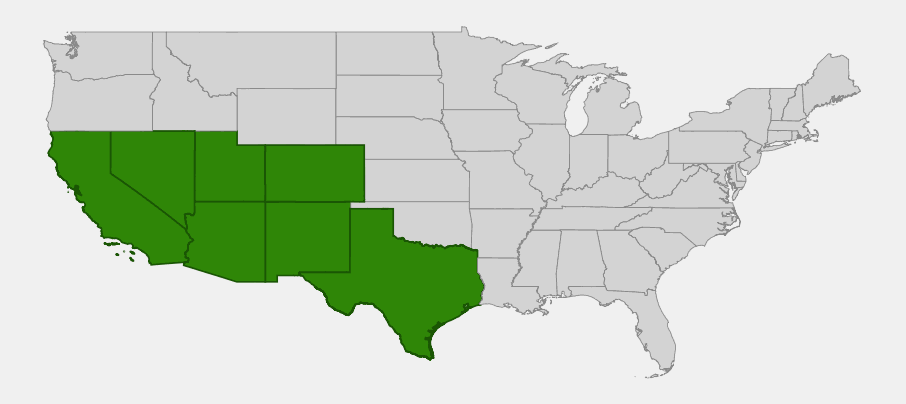
It is native to the mountains, mesas and high deserts of New Mexico, Arizona, Colorado, Utah and western Texas, and into northern Mexico. USDA PLANTS also records it in Nevada and California. It grows from about 2,500 feet in the Chihuahuan Desert to more than 9,000 feet in the southern Rockies, on rocky slopes, in grasslands and in piñon-juniper and pine woodlands.
Scarlet hedgehog cactus is closely related to Claret Cup Cactus (Echinocereus triglochidiatus), and many people use the name claret cup for both. Many botanists now treat them as separate species: scarlet hedgehog cactus is the more widespread of the two, with spinier stems and flowers that are functionally male or female. This page covers how to identify it, where it grows, how to grow it, and why wild plants should never be dug.
Identification
The scarlet, cup-shaped flowers and mound-forming habit separate scarlet hedgehog cactus from most other hedgehog cacti, which have pink, magenta or yellow flowers. Telling it apart from claret cup cactus is harder and often depends on spines, flower structure and range.
Stems
The stems are cylindrical to egg-shaped, usually 2 to 12 inches tall and 2 to 4 inches thick, with 8 to 11 ribs. They branch from the base to form clumps or dense mounds. Old plants can have hundreds of stems.
Spines
Each areole carries several straight radial spines and one to several central spines, in white, gray, tan, yellowish or reddish brown. Spine number and density vary a lot from place to place. In general, scarlet hedgehog cactus has more numerous, slender spines than claret cup cactus, which often has only a few stout, angular spines per areole.
Flowers
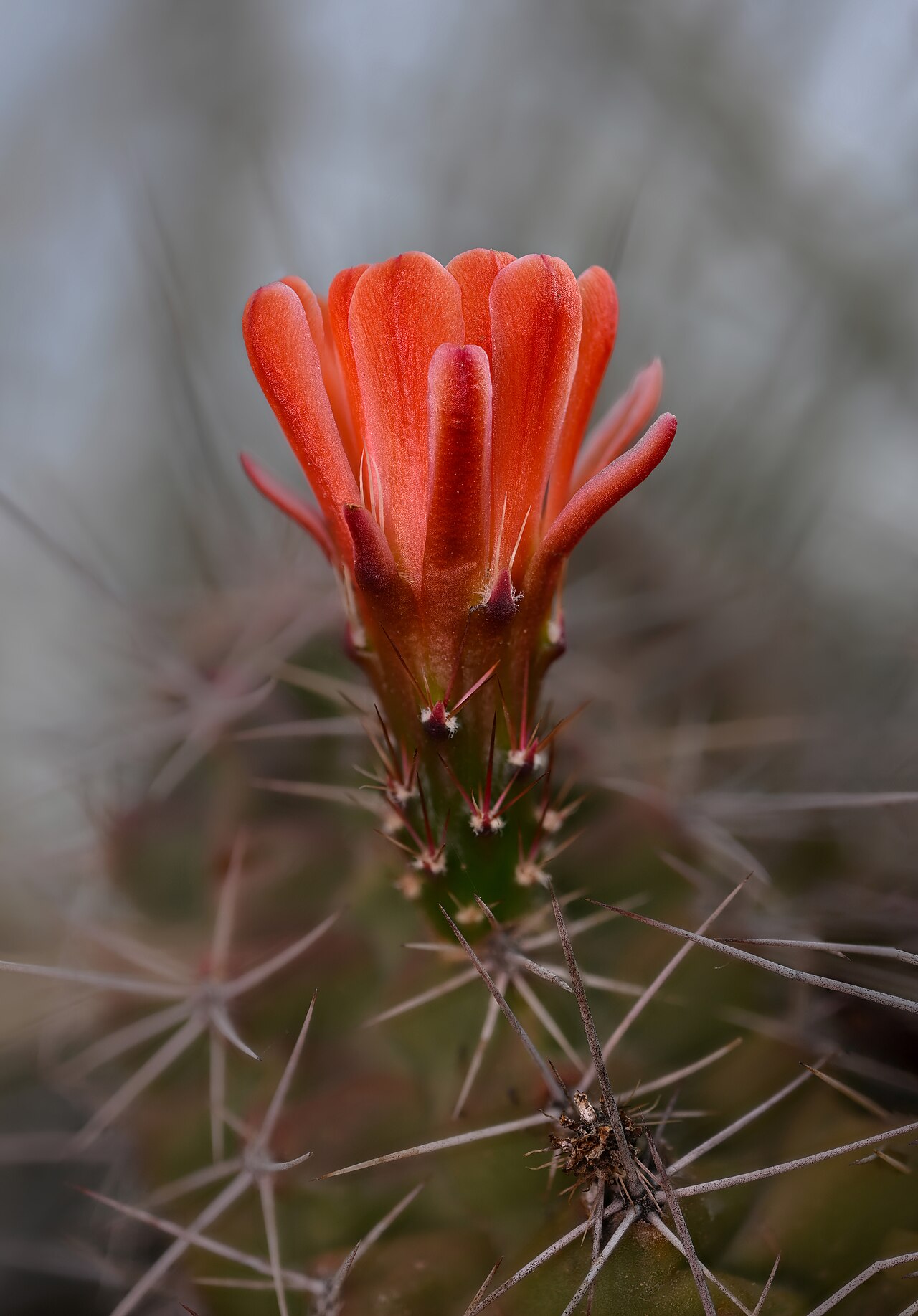
The flowers are scarlet to red-orange, rarely orange-yellow, 1.5 to 3 inches long, funnel- to cup-shaped and waxy, with a green stigma. They stay open for several days and nights. Unlike most cacti, plants are functionally unisexual: male flowers have abundant pollen, while female flowers have small, empty anthers and a larger stigma. Bloom time is mostly April and May, earlier at low elevations.
Fruit
Female plants produce round to egg-shaped fruits that turn red when ripe. They are juicy, sweet and edible, though covered with spines that fall away as they ripen.
Similar Species
Claret Cup Cactus has fewer, stouter, often angled spines and flowers with both functional pollen and stigma; in the strict sense it occurs mainly in New Mexico, Colorado and western Texas. Strawberry Hedgehog Cactus and Engelmann’s Hedgehog Cactus have magenta to purple flowers. Lace Hedgehog Cactus has pink flowers and comb-like spines.
Quick Facts
| Scientific Name | Echinocereus coccineus Engelm. |
| Family | Cactaceae (cactus family) |
| Plant Type | Clumping to mound-forming cactus |
| Mature Height | 4–12 in |
| Mature Spread | 1–3 ft as mounds mature |
| Growth Rate | Slow |
| Sun Exposure | Full sun to light shade |
| Water Needs | Very low; drought tolerant |
| Soil Type | Rocky, gravelly or sandy, very well-drained soils |
| Soil pH | About 6.5–8.5 |
| Bloom Time | April–May (March at low elevations; into June up high) |
| Flower Color | Scarlet to red-orange |
| Fall Color | None; stems may turn reddish or purplish in cold or drought |
| Fruit | Red, spiny, juicy edible fruit on female plants |
| Deer Resistant | Yes |
| USDA Hardiness Zones | 5–9 (high-elevation forms are the hardiest) |
Native Range
USDA PLANTS records scarlet hedgehog cactus as native in Arizona, California, Colorado, Nevada, New Mexico, Texas and Utah. It is most common in New Mexico, Arizona, southern Colorado and southern Utah, and in Texas it grows in the Trans-Pecos and western Edwards Plateau. In California and Nevada, many botanists treat the red-flowered hedgehog cacti as Mojave mound cactus (Echinocereus mojavensis, or E. triglochidiatus var. mojavensis), so those records depend on how the group is divided.
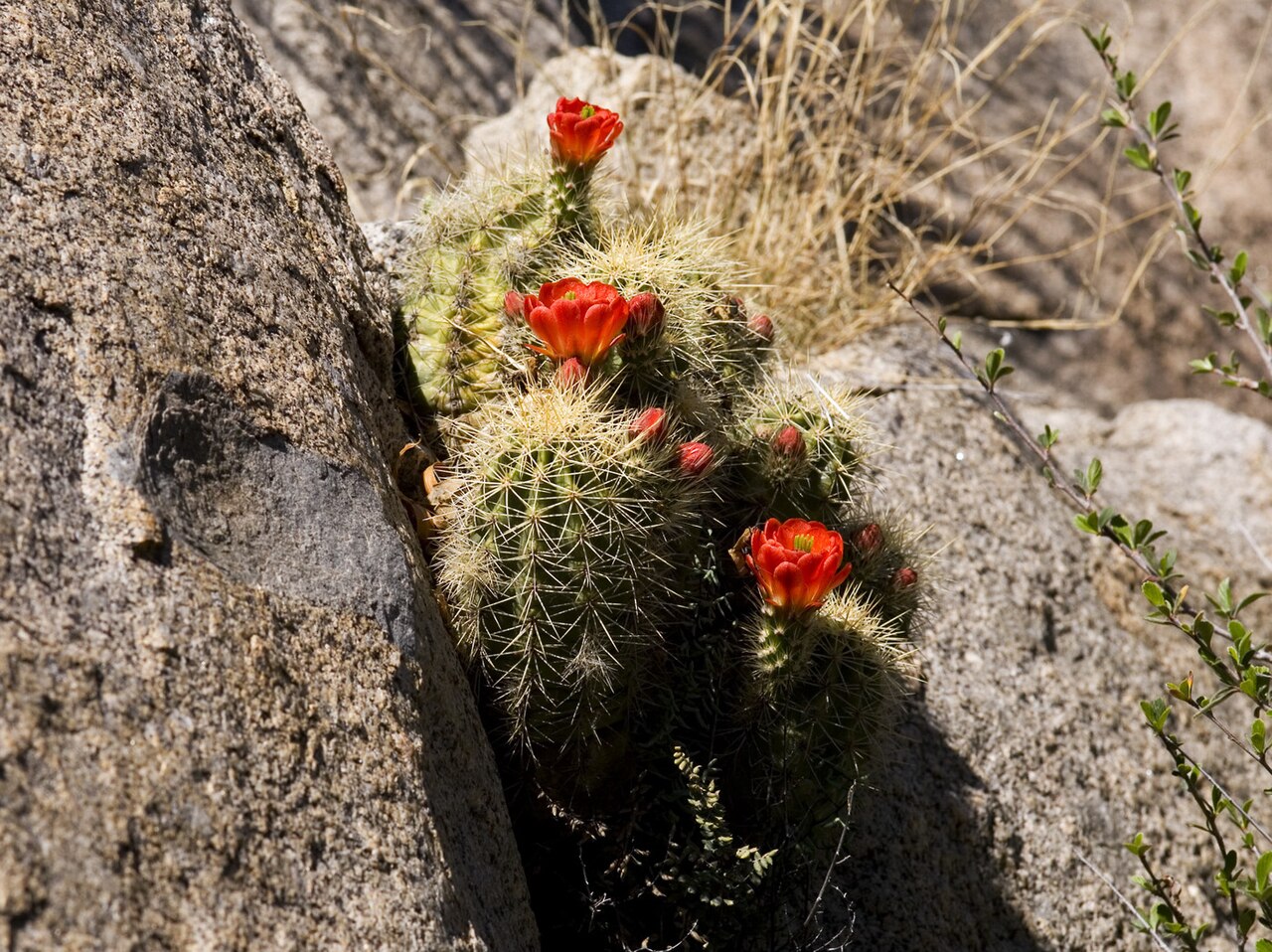
It grows on rocky slopes, ledges and cliffs, in crevices of granite, limestone and volcanic rock, on gravelly mesas and in desert grasslands, and in piñon-juniper, oak and ponderosa pine woodlands. Its elevation range, from roughly 2,500 to over 9,000 feet, makes some populations very cold-hardy.
The species also extends south into northern Mexico. Several varieties or subspecies have been named, including the Arizona hedgehog cactus (var. or subsp. arizonicus), a rare form of central Arizona listed as endangered under the U.S. Endangered Species Act.
📋 Regional plant lists featuring Scarlet Hedgehog Cactus: Arizona & New Mexico · Utah & Western Colorado · South & West Texas · California & Nevada
Growing & Care Guide
Scarlet hedgehog cactus is one of the most rewarding cacti for rock gardens and xeriscapes in the Southwest and other dry, sunny regions. High-elevation forms tolerate hard freezes as long as they stay dry in winter. Buy only nursery-propagated plants. Never dig cacti from the wild: it is illegal on public land and without permits in several states, and the Arizona hedgehog cactus form is federally endangered.
Light
Full sun is best for compact growth and heavy flowering. In the hottest low-desert gardens, light afternoon shade helps prevent sunburn.
Soil & Water
Excellent drainage is essential. Plant in gravelly, rocky or sandy soil, on a slope, berm or rock garden, or in a container with a gritty cactus mix. Water occasionally during the warm season if there is no rain, letting the soil dry completely between waterings, and keep plants dry in winter. Wet, cold soil causes rot.
Planting Tips
Plant in spring or early summer, setting the base of the stems at or slightly above soil level and top-dressing with gravel to keep the stems dry. Handle plants with folded newspaper, carpet strips or thick gloves. In wetter climates, grow it in a raised bed or pot and protect it from winter rain.
Pruning & Maintenance
No pruning is needed. Remove fallen leaves and debris from the mound, and avoid fertilizers, which cause soft growth. Mounds slowly enlarge for decades.
Propagation
Grow it from seed, sown on gritty mix in warmth and kept lightly moist until the seedlings establish, or by removing offsets (stem pups) and letting the cut ends dry for a week or two before planting. Because plants are functionally male or female, you need both to produce fruit and seed.
Landscape Uses
- Rock gardens: spectacular spring color among boulders and gravel
- Xeriscapes: very drought-tolerant once established
- Hummingbird gardens: scarlet flowers that attract hummingbirds in spring
- Containers: compact clumps for pots and troughs on sunny patios
- Slopes and walls: rock crevices, retaining walls and dry slopes
Wildlife & Ecological Value
Scarlet hedgehog cactus is one of the few cacti adapted for hummingbird pollination, and its flowers and fruits are important to wildlife in spring and summer.
For Pollinators
The red, tubular, odorless flowers with abundant nectar are classic hummingbird flowers. Broad-tailed, black-chinned and other hummingbirds are the main pollinators, and the early bloom coincides with their spring migration. Bees and beetles also visit the open flowers.
For Birds
Besides hummingbirds, birds such as thrashers, finches and quail eat the ripe fruits and spread the seeds.
For Mammals
Rodents, ground squirrels and other mammals eat the fruits and seeds, and some gnaw on the stems during drought. Its spines protect it from most larger browsers.
Ecosystem Role
Cactus mounds create small sheltered spots where insects, lizards and small animals hide. Its long life and slow growth make it a stable part of rocky desert and woodland communities.
Cultural & Historical Uses
George Engelmann, the German-American physician and botanist who described many cacti of the American West, named Echinocereus coccineus in 1848. The species name means “scarlet.” For much of the 20th century it was lumped with claret cup cactus under E. triglochidiatus, and you will still see it under that name in many guides and nurseries.
Research by cactus specialists showed that scarlet hedgehog cactus has twice the chromosome number of claret cup cactus in the strict sense, and that its plants are functionally male or female. These differences, along with spine characters, are why many botanists now recognize it as a separate species.
The sweet, red fruits of hedgehog cacti were gathered and eaten by Indigenous peoples of the Southwest after the spines were brushed off. Safety note: the spines can cause painful puncture wounds; keep plants away from paths where children and pets play, and wear thick gloves when handling them.
Frequently Asked Questions
Is scarlet hedgehog cactus the same as claret cup cactus?
They are close relatives, and many people call both claret cup. Many botanists treat scarlet hedgehog cactus (Echinocereus coccineus) as a separate species from claret cup cactus (E. triglochidiatus) because it has more slender spines, a different chromosome number and functionally male or female flowers.
When does scarlet hedgehog cactus bloom?
Mostly in April and May. Low-elevation plants can start in March, and high-elevation plants may bloom into June.
Is scarlet hedgehog cactus cold hardy?
Yes. Forms from high elevations tolerate temperatures well below 0°F if kept dry, and the species is generally grown in USDA zones 5 to 9. Wet winter soil is a greater danger than cold.
Can I dig a scarlet hedgehog cactus from the wild?
No. Collecting cacti is illegal on public lands and regulated in several states, and one form, the Arizona hedgehog cactus, is federally endangered. Buy nursery-propagated plants instead.
Are the fruits edible?
Yes. The ripe red fruits are sweet and edible after the spines are removed. Only female plants produce fruit.

Looking for a nursery that carries Scarlet Hedgehog Cactus?
Browse our native plant nursery directory: Arizona · California · Colorado · Nevada & New Mexico · Texas & Utah

