
Tall Hairy Agrimony (Agrimonia gryposepala)
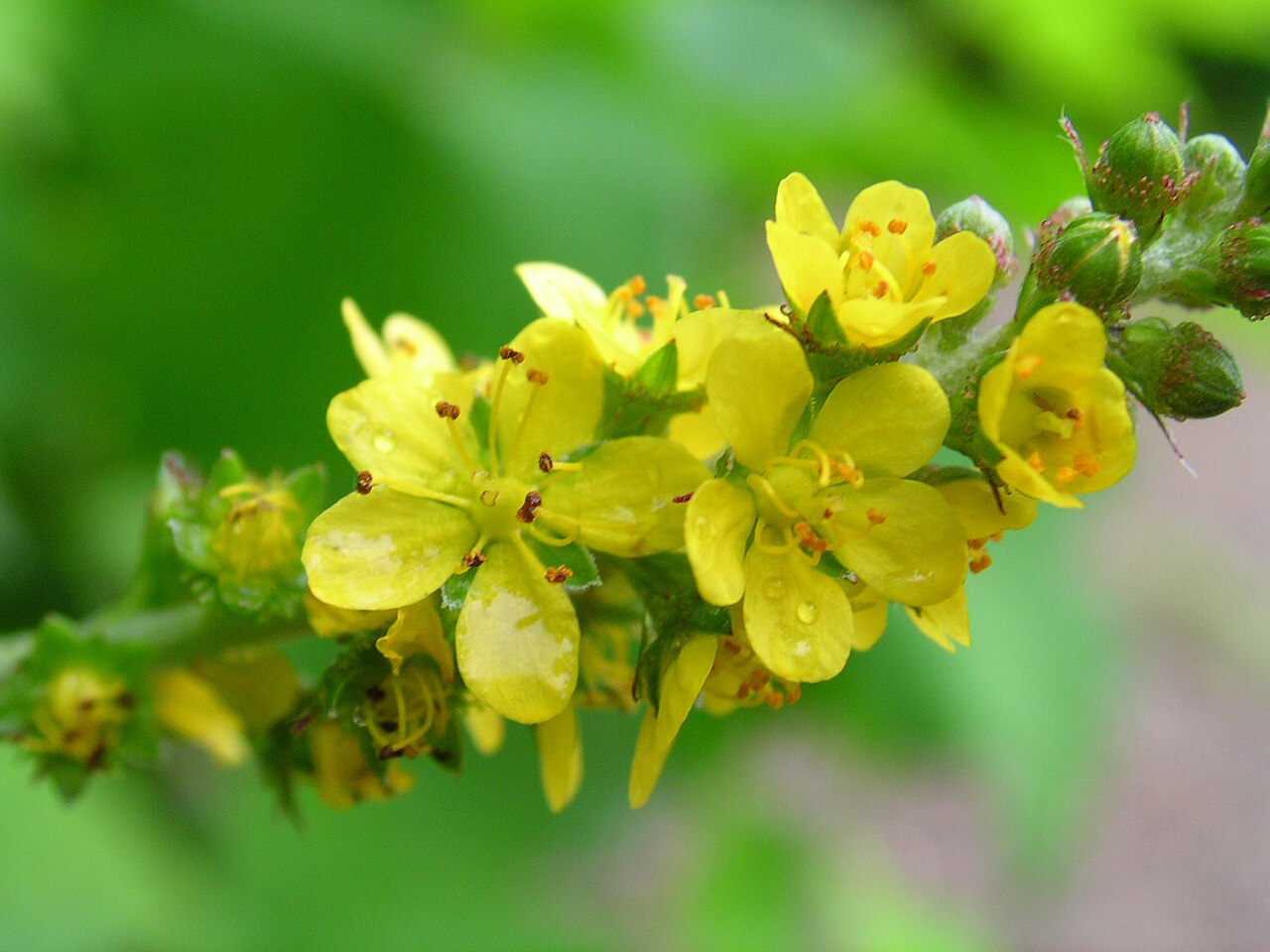
Agrimonia gryposepala, known as Tall Hairy Agrimony, hooked agrimony or common agrimony, is a native perennial wildflower of woodland edges, thickets and moist openings across much of eastern and central North America. In mid to late summer it raises slender, wand-like spikes of small, bright yellow, five-petaled flowers above clumps of large, divided, toothed leaves. It is the most common agrimony in the northern United States and southern Canada.
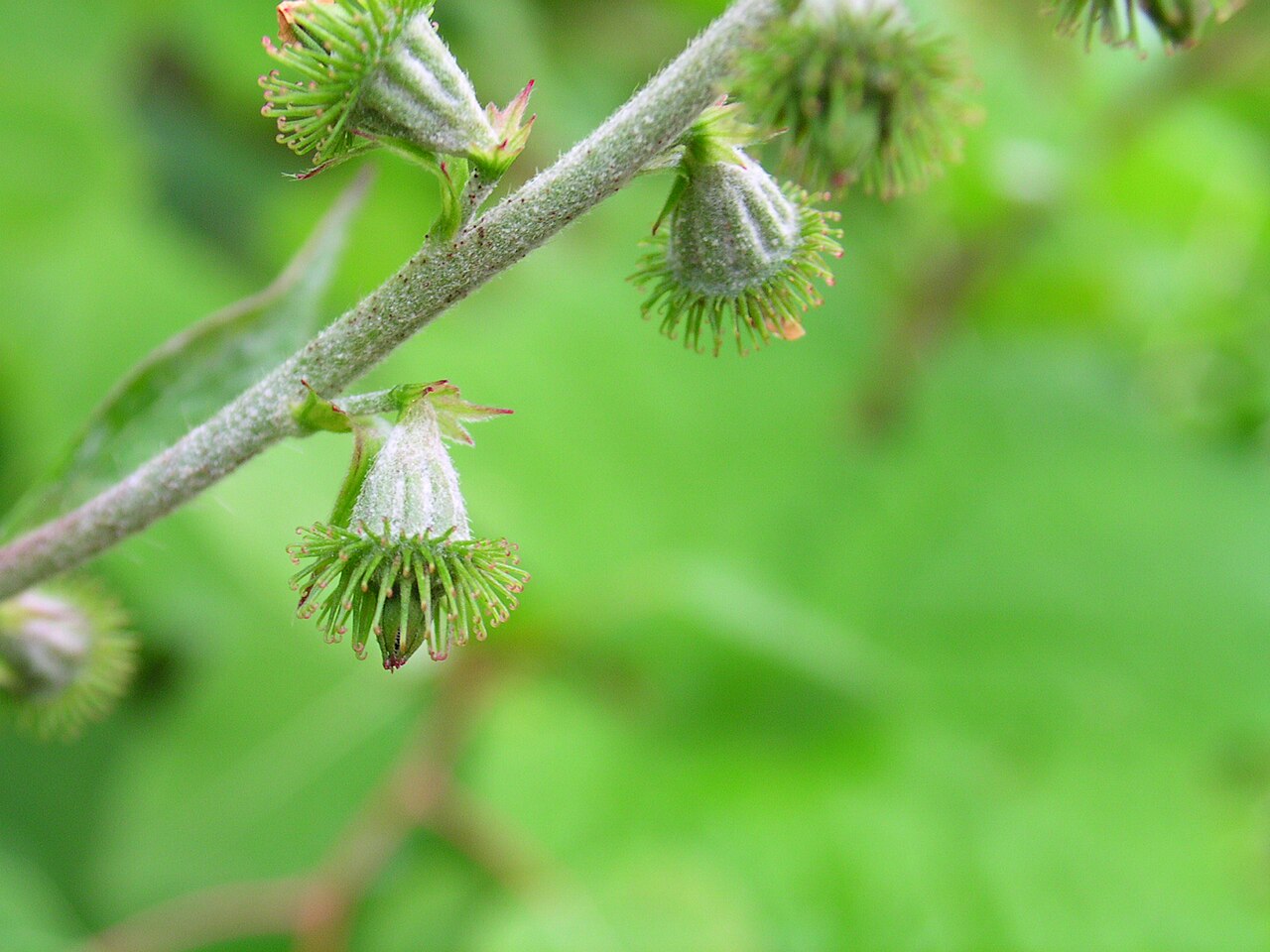
Its fruits are what most people remember. Each small, bell-shaped fruit is crowned with rings of hooked bristles that cling to socks, pant legs and dog fur, making agrimony one of the familiar “stick-tight” plants of late-summer hikes. The species name gryposepala means “hooked sepals,” after these bristles.
Tall hairy agrimony belongs to the rose family (Rosaceae) and is a native counterpart of the European common agrimony (A. eupatoria), the herb used in traditional European herbal medicine. It is easy to grow in light shade, attracts small bees and flies, and makes a natural addition to woodland gardens and naturalized edges.
Identification
There are several native agrimonies in North America, and they look similar at a glance. Tall hairy agrimony is identified by its glandular-hairy stems, its large leaves with few main leaflets, and its relatively large fruits with spreading hooked bristles.
Stems
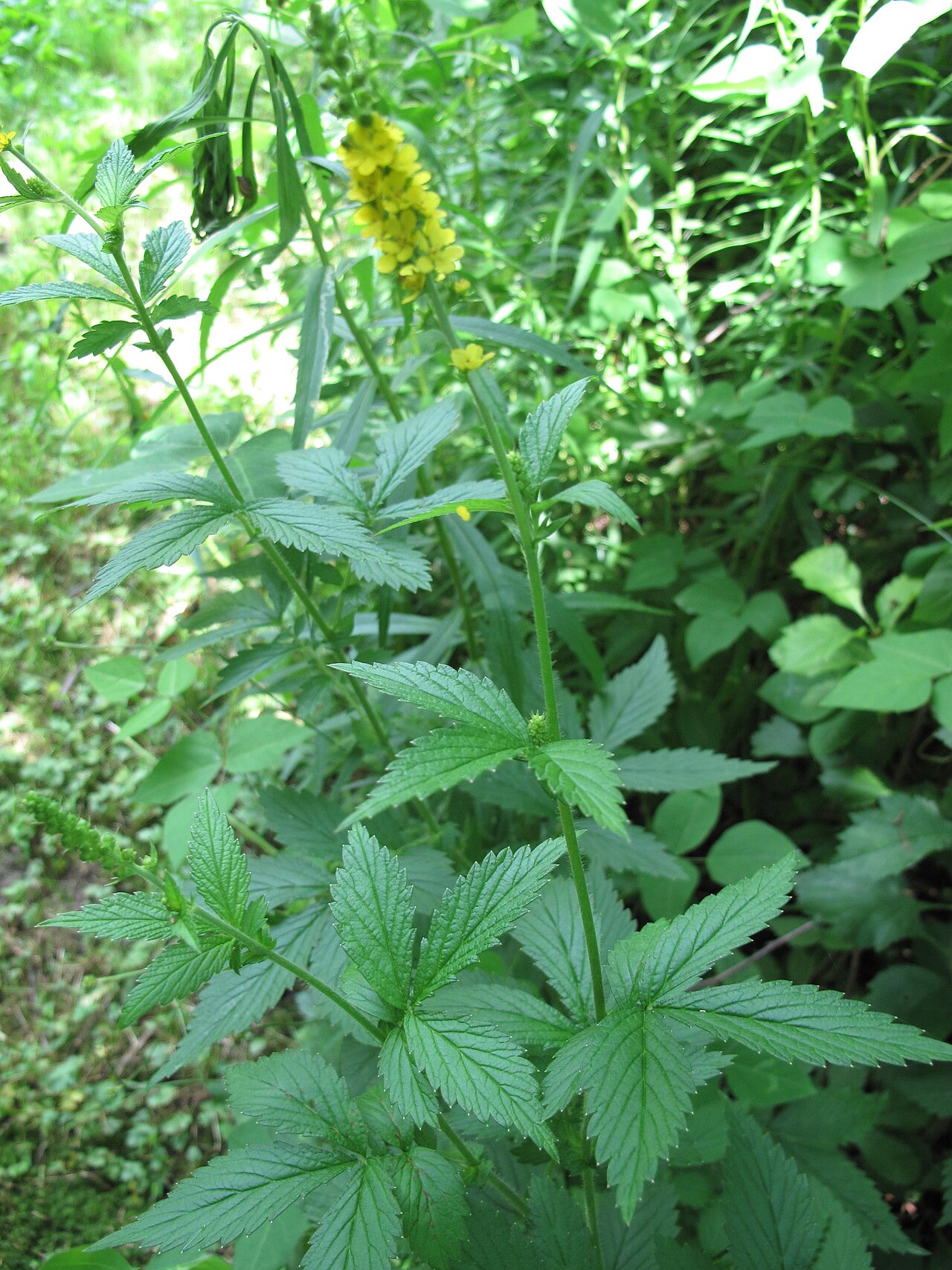
Plants grow 2 to 5 feet tall from a short rootstock with fibrous roots. The stems are usually unbranched below the flower spike and are covered with long, spreading hairs mixed with tiny glandular hairs, which give the stem a slightly sticky feel. The “tall hairy” of the common name refers to these hairy stems.
Leaves
The leaves are alternate and pinnately compound, up to about 10 inches long, with usually 5 to 9 large, coarsely toothed main leaflets and pairs of much smaller leaflets between them. The leaflets are dark green above, paler and somewhat hairy and dotted with tiny glands below. Large, leafy stipules clasp the stem at the base of each leaf.
Flowers
The flowers are borne along slender terminal spikes 4 to 12 inches long, opening gradually from the bottom up from about July into September. Each flower is about ⅓ inch across, with five yellow petals and numerous stamens, on a very short stalk. Only a few flowers are open at once on each spike, so the plant blooms for several weeks.
Fruit
The fruit is a small, top-shaped or bell-shaped structure (the hardened floral cup, or hypanthium) about ¼ inch long, grooved lengthwise and topped with several rows of hooked bristles. The outer bristles spread or bend backward. Each fruit holds one or two seeds and falls as a unit, catching on passing animals. Compared with Swamp Agrimony, which has many narrow leaflets, tall hairy agrimony has fewer, broader leaflets and larger fruits.
Quick Facts
| Scientific Name | Agrimonia gryposepala Wallr. |
| Family | Rosaceae (rose family) |
| Plant Type | Herbaceous perennial wildflower |
| Mature Height | 2–5 ft |
| Mature Spread | 1–2 ft |
| Growth Rate | Moderate |
| Sun Exposure | Partial shade to full sun |
| Water Needs | Moderate; moist to medium soil |
| Soil Type | Loamy, humus-rich soils; tolerates clay and rocky soils |
| Soil pH | About 5.5–7.5 |
| Bloom Time | July–September |
| Flower Color | Yellow |
| Fall Color | Leaves turn dull yellow to reddish-brown |
| Fruit | Small bell-shaped bur with hooked bristles |
| Deer Resistant | Moderately; foliage is hairy and somewhat astringent |
| USDA Hardiness Zones | 3–8 |
Native Range
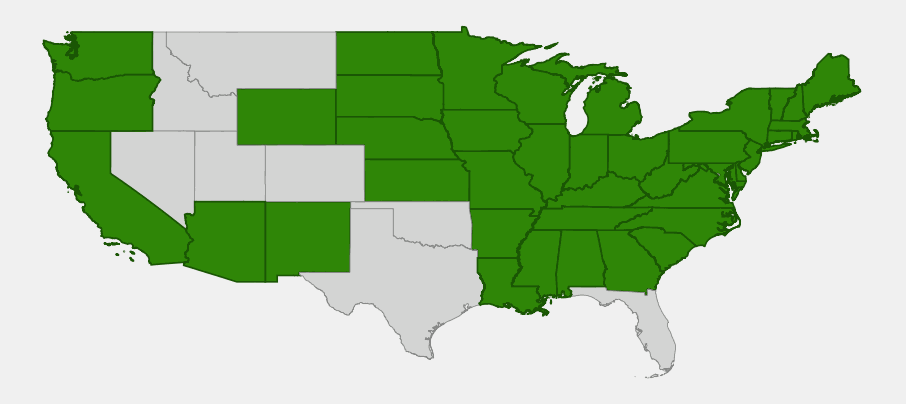
Tall hairy agrimony is widespread in eastern and central North America. USDA PLANTS records it as native in 40 states, from Maine and the Great Lakes west to the Dakotas, Nebraska and Kansas and south to Tennessee, the Carolinas and northern Georgia, with scattered records farther south in Alabama, Mississippi and Louisiana. In Canada it grows from Manitoba and Ontario east through Quebec to the Maritime provinces, and it also occurs in British Columbia.
It is most common in the Northeast, the Great Lakes states and the northern Midwest, and becomes more scattered in the South, where it is mainly found in the Appalachians and other uplands. Western populations are widely separated from the main range: USDA records it in Wyoming, Arizona, New Mexico, California, Oregon and Washington, where it grows in moist canyons, meadows and woodland openings. These are outlying records, and some botanists think a few of them may be the result of introductions.
Its habitats are moist to medium woods, woodland edges and openings, thickets, stream banks, floodplain forests, wooded fencerows, roadsides and old fields that are growing back to forest. It tolerates some disturbance and often grows along trails, where its burs are spread by people and animals.
📋 Regional plant lists featuring Tall Hairy Agrimony: Alabama, Georgia & Mississippi · North & South Carolina · Maryland, Virginia & West Virginia · Kentucky & Tennessee · Arkansas, Louisiana, Eastern Oklahoma & Eastern Texas · Illinois, Iowa & Missouri · Ohio & Indiana · Nebraska, Kansas & Eastern Colorado · North Dakota, South Dakota & Western Minnesota · Michigan, Wisconsin & Eastern Minnesota · New York, Pennsylvania & Northern New Jersey · Delaware, Southern New Jersey & Long Island · Connecticut, Massachusetts & Rhode Island · New Hampshire, Maine & Vermont · Montana & Wyoming · Arizona & New Mexico · California & Nevada · Western Oregon & Western Washington
Growing & Care Guide
Tall hairy agrimony is an easy, long-lived wildflower for partly shaded gardens. It is offered by some native plant nurseries and seed companies, especially in the Midwest and Northeast. It is not a showy specimen plant, but its airy yellow spikes add late-summer interest to woodland edges, and it fills in among ferns, sedges and other shade plants.
Light
Light shade to partial sun is ideal: woodland edges, open woods, or the east side of a building. It tolerates full sun if the soil stays reasonably moist, and quite heavy shade, where it flowers less.
Soil & Water
It prefers moist to medium, loamy, humus-rich soil but adapts to clay, rocky or sandy soils. Water new plantings through their first summer. Established plants handle short dry spells but look best where the soil does not dry out completely.
Planting Tips
Plant container-grown plants in spring or fall, about 18 inches apart. It works well in groups among woodland grasses, sedges, ferns and other summer bloomers. Keep it a little back from paths if you dislike the clinging burs.
Pruning & Maintenance
It needs little care. Cut the flower spikes after bloom if you want to avoid burs, or leave them for wildlife and natural reseeding. Cut back dead stems in late winter or early spring. It has few pest or disease problems, though leaves may show some leaf spot or mildew in humid summers.
Propagation
Grow from seed sown outdoors in fall, or cold-stratify seed for about two months before spring sowing. Plants may self-seed lightly around the garden. Established clumps can be divided in early spring.
Landscape Uses
- Woodland gardens and edges: late-summer yellow spikes in light shade
- Naturalized areas and thickets: a durable native for restoring woodland openings and old fields
- Pollinator gardens: pollen for small bees and flies in mid to late summer
- Rain garden margins: on the drier outer edges of rain gardens and swales
- Wildlife plantings: seeds and cover for small wildlife
Wildlife & Ecological Value
Tall hairy agrimony is a modest but useful wildlife plant, offering pollen in late summer and seeds that travel with passing animals.
For Pollinators
The flowers produce pollen but little or no nectar. They are visited mainly by small bees, such as sweat bees, and by syrphid flies and other flies that feed on pollen. The long bloom period provides a steady pollen source in mid to late summer.
For Birds
Some songbirds and game birds may eat the seeds, but the hooked burs make them less attractive than other seeds. The plant provides cover along woodland edges.
For Mammals
The burs catch in the fur of deer, foxes, raccoons and other mammals, which carry the seeds to new places. Deer browse the foliage only lightly.
Ecosystem Role
Agrimony is a classic example of animal dispersal by hitchhiking seeds. The hooked bristles on each fruit attach to passing animals and are brushed off later, often along trails and edges, which helps explain why agrimony is so common along paths and woodland borders.
Cultural & Historical Uses
The German botanist Karl Friedrich Wilhelm Wallroth described Agrimonia gryposepala in 1842. Its European relative, A. eupatoria, has been used in herbal medicine since ancient times, and early European settlers in North America sometimes used the native agrimonies in the same ways, as an astringent tea and a remedy for sore throats and minor wounds.
Several Native American peoples used native agrimonies in their medicine. The Cherokee and others used preparations of agrimony roots for fevers, diarrhea and other ailments, and the plants were used as astringents for skin problems. These are historical uses, not recommendations; agrimonies contain tannins and should not be used medicinally without professional guidance.
Today tall hairy agrimony is valued mostly by native plant gardeners and naturalists. Its burs are a reliable reminder of late-summer walks in the woods, and it is part of the rich native flora of woodland edges that support pollinators and other wildlife.
Frequently Asked Questions
Why is it called tall hairy agrimony?
It is one of the taller agrimonies, often 3 to 5 feet, and its stems are covered with long, spreading hairs mixed with tiny glandular hairs. Other names include hooked agrimony, for the hooked bristles on its fruits, and common agrimony, because it is the most common agrimony in much of the northern U.S.
How do I get rid of agrimony burs on clothing?
The burs come off easily by hand or with a stiff brush. Fleece and wool hold them most stubbornly. If you have agrimony in your garden, cut the flower spikes after blooming to prevent burs.
Is tall hairy agrimony good for pollinators?
Yes, in a modest way. Its flowers offer pollen but little nectar, and they attract small bees and flies over a long summer bloom period.
How is it different from swamp agrimony?
Swamp agrimony (A. parviflora) has many narrow, crowded leaflets (often 11 to 19) and smaller fruits, and it grows in wetter places. Tall hairy agrimony has fewer, broader leaflets (usually 5 to 9) and glandular-hairy stems.
Does tall hairy agrimony spread aggressively?
No. It forms clumps that expand slowly and may self-seed lightly, but it is not invasive. It is easy to keep in place in a garden.

Looking for a nursery that carries Tall Hairy Agrimony?
Browse our native plant nursery directory: Alabama, Arizona & Arkansas · California · Connecticut, Delaware & Georgia · Illinois, Indiana, Iowa & Kansas · Kentucky, Louisiana, Maine, Maryland, Massachusetts, Michigan, Minnesota, Mississippi & Missouri · Nebraska, New Hampshire, New Jersey, New Mexico, New York, North Carolina, North Dakota & Ohio · Oregon · Pennsylvania, Rhode Island, South Carolina, South Dakota, Tennessee, Vermont & Virginia · Washington · West Virginia, Wisconsin & Wyoming

