
Orange-fruited Horse Gentian (Triosteum aurantiacum)
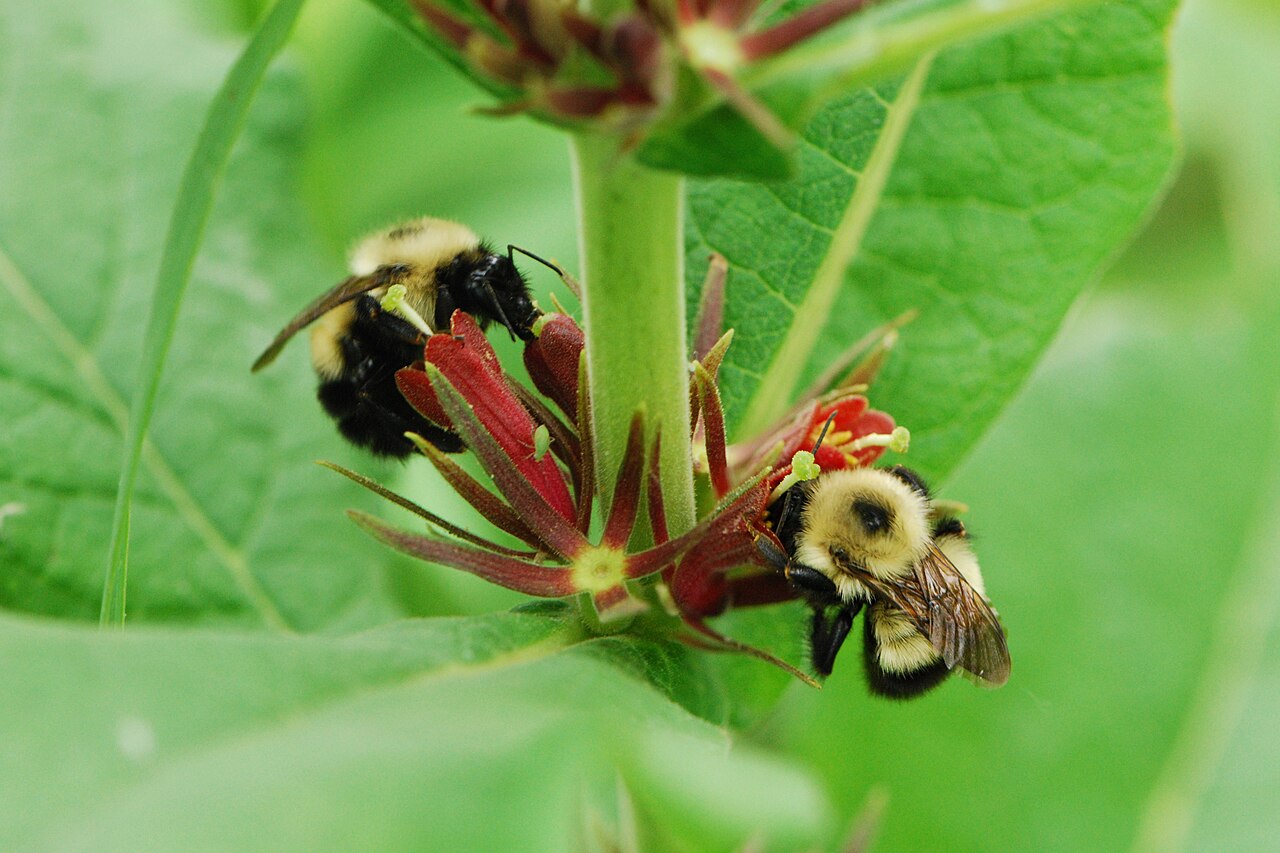
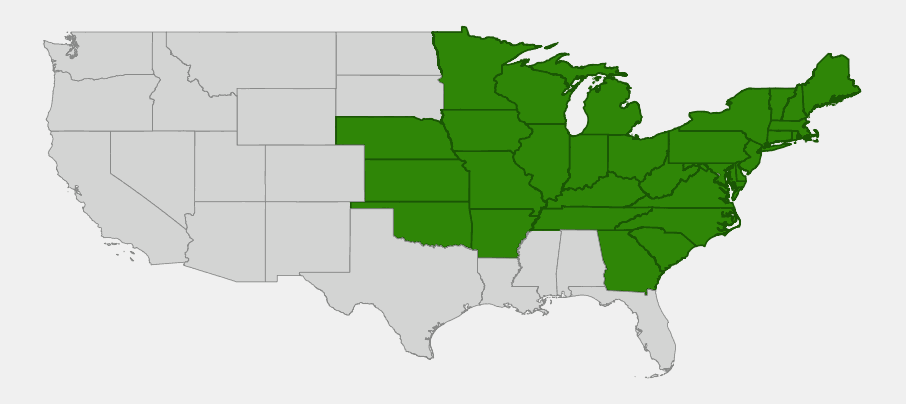
Triosteum aurantiacum, the Orange-fruited Horse Gentian (also called orangefruit horse-gentian, early horse gentian, wild coffee and coffee tinker’s-weed), is a coarse, upright native perennial of the honeysuckle family. It grows in rich deciduous woods, woodland edges, thickets and savannas across eastern and central North America, from New Brunswick and southern Ontario south to Georgia and west to Minnesota, Nebraska, Kansas and Oklahoma.
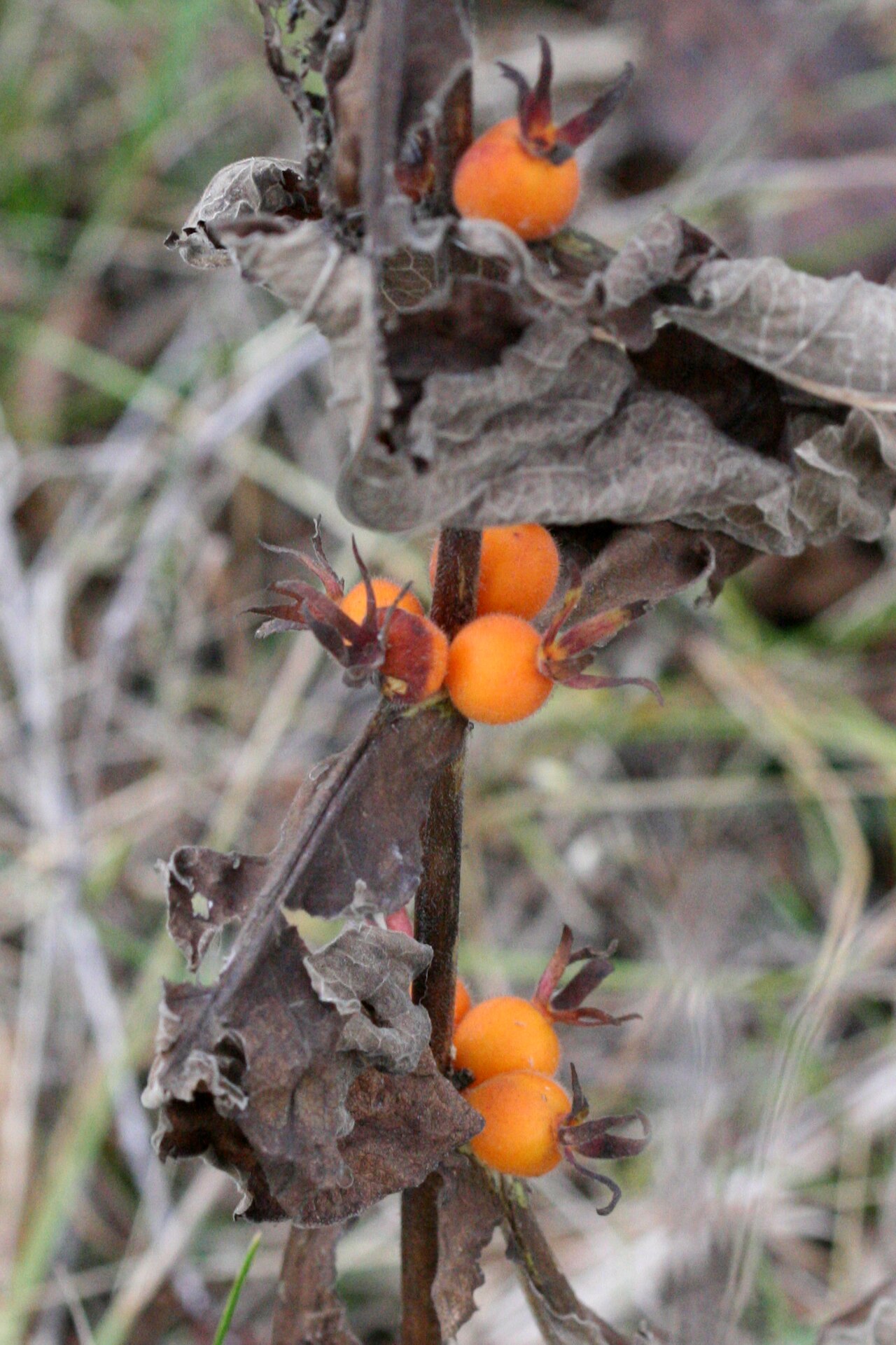
It is an unusual plant that most people walk past until fall. In late spring it bears small, dull purplish-red tubular flowers tucked into the axils of large, paired leaves, and in late summer and autumn these turn into clusters of bright orange, hairy fruits, each topped with a crown of narrow, leaf-like sepals.
The names “wild coffee” and “coffee tinker’s-weed” come from the old practice of roasting the seeds as a coffee substitute, and “feverwort” from its use as a medicinal herb. This guide covers how to identify it, where it grows, how to grow it in a woodland garden and its value to bumble bees and wildlife.
Identification
Orange-fruited horse gentian is an upright, unbranched perennial with large opposite leaves, small reddish flowers in the leaf axils and clusters of orange fruits.
Stems & Habit
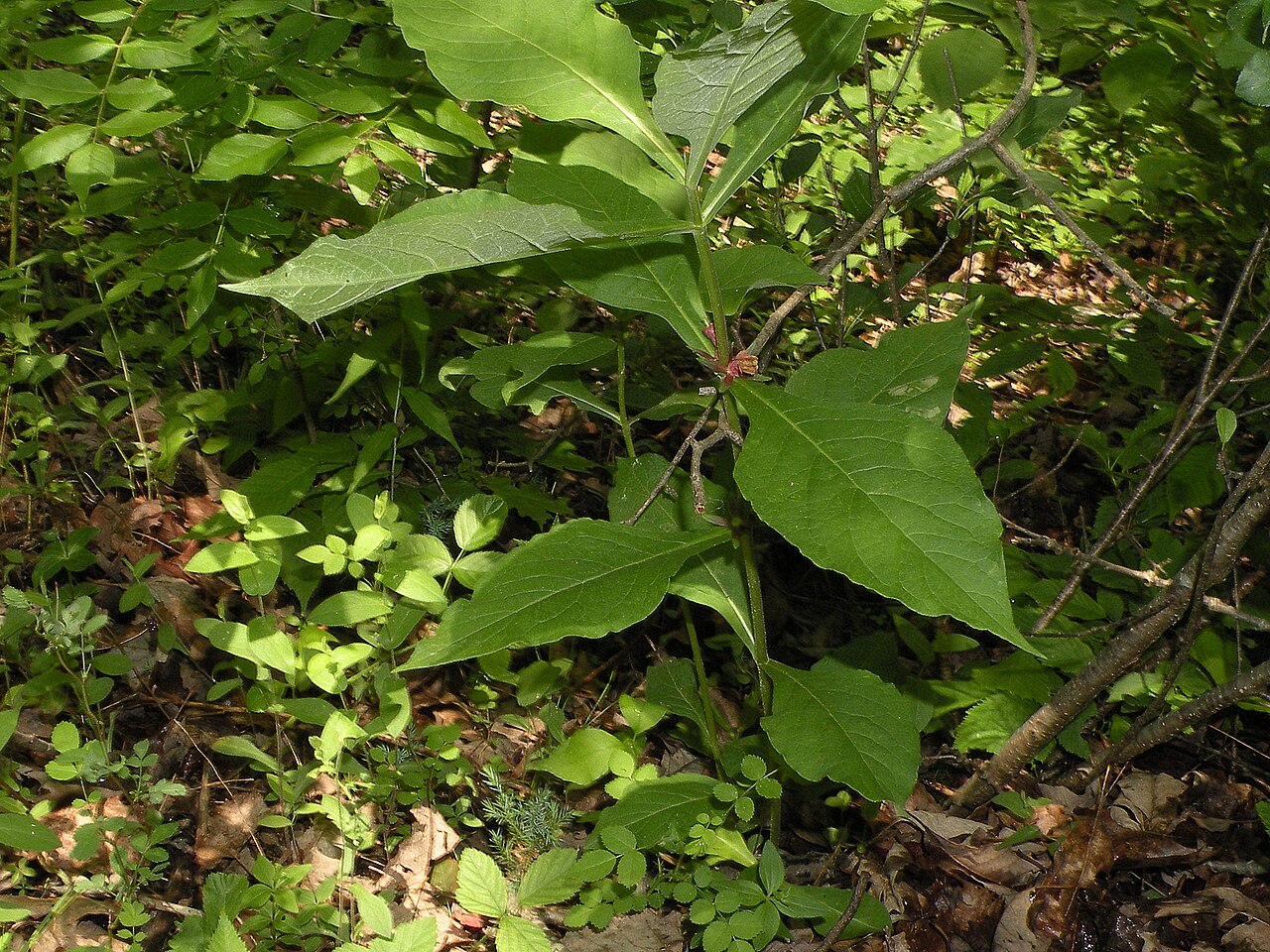
It grows from a thick, deep root to 2 to 4 feet tall, usually with one to several stout, unbranched stems. The stems are covered with short, soft hairs and longer glandular hairs, and often look reddish or brownish.
Leaves
The leaves are opposite, large and broad, about 4 to 8 inches long, oval to lance-shaped with a pointed tip and smooth edges. They narrow toward the base, where pairs may clasp the stem or, less often, are joined around it. The undersides are soft-hairy.
Flowers
From about May to June, small, stalkless flowers appear in the leaf axils, one to several at each node. They are tubular, about ½ inch long, dull purplish-red to maroon, with five narrow, leafy green sepals that are longer than the corolla tube.
Fruit & Look-alikes
The fruit is a round to slightly oval, hairy orange drupe about ⅓ to ½ inch long, topped by the persistent sepals and holding three hard, ribbed stones. The closely related feverwort (Triosteum perfoliatum) has leaves joined around the stem in pairs, so that the stem appears to pass through them, and yellowish-orange fruit. Narrow-leaved horse gentian (T. angustifolium) is smaller, with narrow leaves and greenish-yellow flowers.
Quick Facts
| Scientific Name | Triosteum aurantiacum E.P. Bicknell |
| Family | Caprifoliaceae (honeysuckle family) |
| Plant Type | Herbaceous perennial |
| Mature Height | 2–4 ft |
| Mature Spread | 1–2 ft |
| Growth Rate | Slow to moderate |
| Sun Exposure | Partial shade; tolerates sun to fairly deep shade |
| Water Needs | Moderate |
| Soil Type | Rich, well-drained woodland loam; often over limestone |
| Soil pH | About 6.0–7.5 |
| Bloom Time | May–June |
| Flower Color | Dull purplish-red to maroon |
| Fall Color | Leaves turn brown; showy orange fruit |
| Fruit | Hairy orange drupe with three stones |
| Deer Resistant | Moderate |
| USDA Hardiness Zones | 3–8 |
Native Range
Orange-fruited horse gentian is native to eastern and central North America. USDA PLANTS lists it in 30 states, from Maine and the Great Lakes south through the Appalachians to Georgia and the Carolinas, and west to Minnesota, Iowa, Nebraska, Kansas, Oklahoma and Arkansas. In Canada it grows in Ontario, Quebec, New Brunswick and Nova Scotia.
It is the most widespread horse gentian in the Northeast and much of the Midwest, but it is local and uncommon in many areas, especially at the edges of its range. It is most often found where soils are rich and not too acidic, including over limestone and other calcareous rock.
It grows in rich deciduous and mixed woods, woodland edges and clearings, thickets, oak savannas, wooded slopes and ravines, and along old roads and fence lines. It usually occurs as scattered single plants or small groups rather than large colonies.
📋 Regional plant lists featuring Orange-fruited Horse Gentian: Alabama, Georgia & Mississippi · North & South Carolina · Maryland, Virginia & West Virginia · Kentucky & Tennessee · Arkansas, Louisiana, Eastern Oklahoma & Eastern Texas · Illinois, Iowa & Missouri · Ohio & Indiana · Nebraska, Kansas & Eastern Colorado · Michigan, Wisconsin & Eastern Minnesota · New York, Pennsylvania & Northern New Jersey · Delaware, Southern New Jersey & Long Island · Connecticut, Massachusetts & Rhode Island · New Hampshire, Maine & Vermont
Growing & Care Guide
Orange-fruited horse gentian is rarely sold, but it is occasionally offered by native plant nurseries and seed suppliers in the Midwest and Northeast. It is a long-lived, low-maintenance plant for the woodland garden, valued more for its fall fruit and its bumble bee visitors than for its flowers. Buy nursery-grown plants or seed, and never dig plants from the wild; the deep root makes wild plants hard to move and they are uncommon in many areas.
Light
Partial shade or dappled light under deciduous trees is best. It tolerates morning sun and fairly deep shade, but flowers and fruits more in some light.
Soil & Water
Give it rich, well-drained loam with plenty of leaf litter, ideally neutral to slightly alkaline. It likes evenly moist soil but tolerates short dry spells once established.
Planting Tips
Plant young, container-grown plants in spring or fall, about 18 inches apart, where the fall fruit can be seen, such as near a woodland path. Plant it at its final location, since the deep root resents being moved.
Pruning & Maintenance
No pruning is needed. Leave the stems and fruit standing into winter for birds, and cut them back in early spring. It is slow to establish and may take several years to reach full size.
Propagation
Grow it from seed. Remove the pulp from ripe fruit and sow the stones outdoors in fall; they need warm and cold periods and often germinate over two or more years. Mature clumps can be divided carefully in early spring.
Landscape Uses
- Woodland gardens: bold foliage and showy fall fruit in partial shade
- Pollinator plantings: early-summer flowers for bumble bees
- Savanna and woodland edge restoration: native forb of rich woods and oak openings
- Fall and winter interest: orange fruit clusters in the leaf axils
Wildlife & Ecological Value
Orange-fruited horse gentian supports bumble bees in early summer and offers fruit to wildlife in fall.
For Pollinators
The tubular flowers are pollinated mainly by bumble bees, which crawl into the short tubes for nectar, and they are also visited by other bees. The flowers are easy to miss but are reliably busy with bumble bees in season.
For Birds
Birds may eat the orange fruits in fall and winter, and the stems provide some cover on the woodland floor.
For Mammals
Small mammals such as mice and chipmunks eat the fruits and seeds. Deer browse it occasionally.
Ecosystem Role
It is one of the characteristic forbs of rich, often calcareous, woodlands and savannas, where its presence often signals high-quality, undisturbed habitat. Its fruits contribute to fall food supplies on the forest floor.
Cultural & Historical Uses
The genus name Triosteum comes from Greek words meaning “three bones,” a reference to the three hard stones inside each fruit. The species name aurantiacum means “orange,” for the fruit. The American botanist Eugene P. Bicknell described the species in 1901, separating it from the similar feverwort.
Several Native American peoples used horse gentians in traditional medicine. The roots were known as a strong emetic and purgative, and settlers used them as a home remedy for fevers, giving rise to the name feverwort. Because of these strong effects, the plant should not be used as a home remedy.
Early settlers are said to have dried and roasted the seeds as a coffee substitute, which is why some horse gentians are still called “wild coffee.” This species should not be confused with the tropical wild coffees (Psychotria) of Florida.
Frequently Asked Questions
Why is it called horse gentian?
The origin of the name is uncertain; it likely refers to the bitter, medicinal roots, which recalled those of gentians, with “horse” meaning coarse or large, as in many old plant names. It is not related to true gentians, but belongs to the honeysuckle family.
Are the orange fruits edible?
No. The fruits are not considered edible, and the roots of horse gentians have strong emetic and purgative effects. Historically, the roasted seeds were used as a coffee substitute, but this is not recommended.
How do I tell orange-fruited horse gentian from feverwort?
Orange-fruited horse gentian has leaves that narrow to the base and usually are not joined around the stem, and dull red flowers. Feverwort (Triosteum perfoliatum) has leaf pairs joined so that the stem appears to pass through them.
Where does orange-fruited horse gentian grow?
In rich deciduous woods, woodland edges, thickets and savannas from the Northeast and Great Lakes south to Georgia and west to Minnesota, Kansas and Oklahoma.
Does it attract pollinators?
Yes. Its small tubular flowers are visited mainly by bumble bees in late spring and early summer.

Looking for a nursery that carries Orange-fruited Horse Gentian?
Browse our native plant nursery directory: Arkansas · Connecticut, Delaware & Georgia · Illinois, Indiana, Iowa & Kansas · Kentucky, Maine, Maryland, Massachusetts, Michigan, Minnesota & Missouri · Nebraska, New Hampshire, New Jersey, New York, North Carolina, Ohio & Oklahoma · Pennsylvania, Rhode Island, South Carolina, Tennessee, Vermont & Virginia · West Virginia & Wisconsin

