
Dwarf Burhead (Echinodorus tenellus)
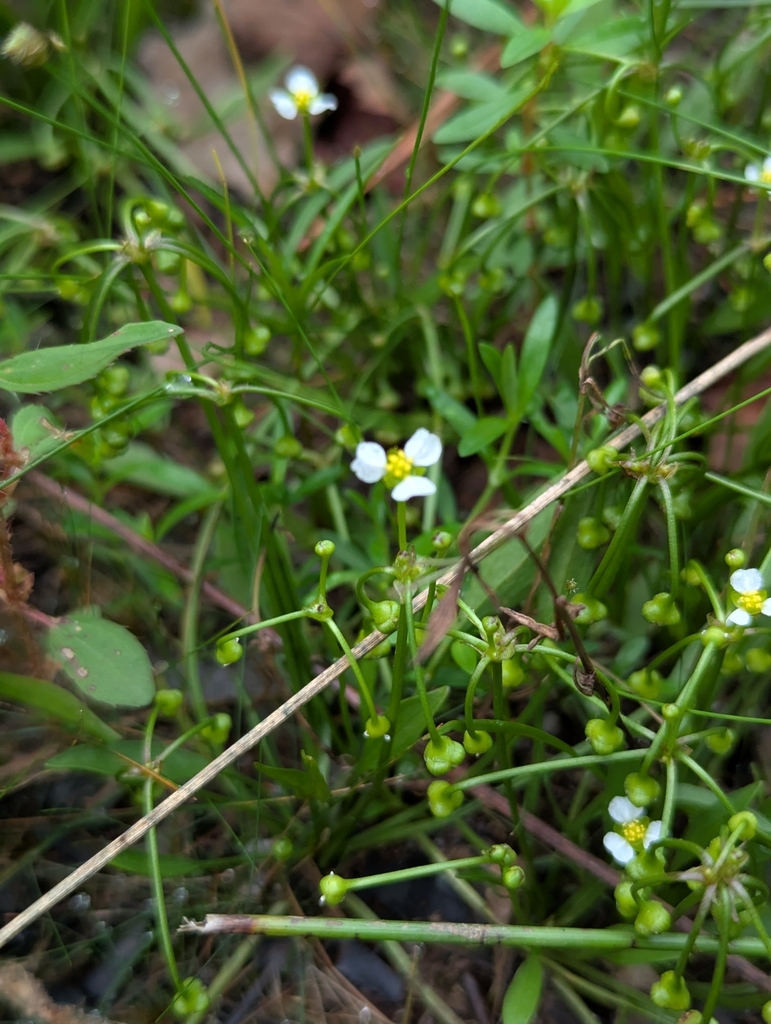
Echinodorus tenellus, known as Dwarf Burhead, mudbabies, or in the aquarium trade as the pygmy chain sword, is a tiny aquatic plant of the water plantain family. In the wild it forms low, grass-like tufts on muddy and sandy pond shores and opens small, white, three-petaled flowers. Underwater, it spreads by runners into the dense green carpets prized by aquarium keepers. Many botanists now call it Helanthium tenellum.
It is native to the eastern United States, from Texas, Oklahoma and Kansas east to Florida and north to Michigan, New York and Massachusetts, and to Puerto Rico, the West Indies, Mexico, Central America and South America as far as Argentina. Though widespread, it is easily overlooked, and it is rare and state-listed in several northern states.
This page covers how to identify dwarf burhead in the wild, where it grows, how to grow it in an aquarium, pond margin or bog garden, and its role on seasonally flooded shorelines.
Identification
Dwarf burhead is easy to miss: a small, grassy tuft at the water’s edge, usually only noticed when its little white flowers open. Look for its narrow leaves, three-petaled flowers and runners.
Size & Form
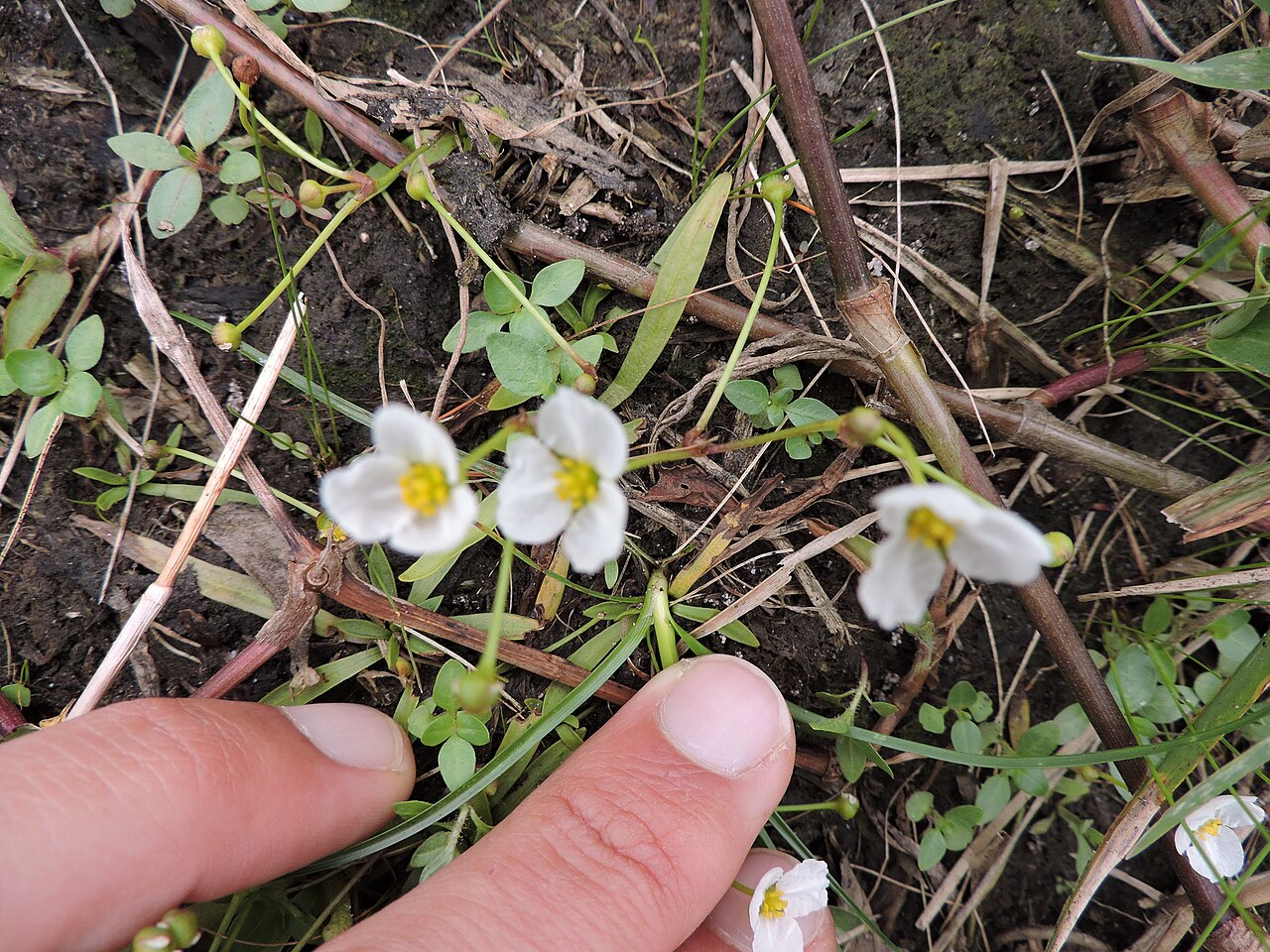
It is a small perennial, or sometimes an annual, usually only 1 1/2 to 6 inches tall, occasionally to about 8 inches. Plants grow in tufts from a short base and send out slender runners (stolons) that root and form new plantlets, so it often covers patches of mud or lake bottom.
Leaves
The leaves are narrow and grass-like, from very slender and ribbon-like when submerged to narrowly lance-shaped or elliptic when growing in air, with a blade about 3/8 to 1 1/2 inches long and up to 3/8 inch wide on a longer stalk. In some growth stages, the blade is hardly distinguishable from the stalk.
Flowers
From early summer into fall, slender, often curved flower stalks 1 to 8 inches long carry a few flowers in one or two whorls. Each flower has three green sepals and three white petals, and is about 1/4 to 1/3 inch across, with 6 to 9 yellow stamens around a cluster of tiny pistils.
Fruit
The flowers develop into tiny, round heads of flattened achenes, each about 1/25 inch long, black and ribbed, with a short beak. These “bur heads,” enclosed by the enlarged sepals, give the genus its common name.
Similar Species
Young awl-leaf arrowhead and other small arrowheads look similar out of flower, but their flowers are unisexual and arranged in separate male and female whorls, and their leaves are often thicker. Spikerushes such as dwarf spikerush and needle spikerush form similar mats but have round, leafless stems topped by tiny cone-like spikes. The larger creeping burhead (Echinodorus cordifolius) has broad, heart-shaped leaves.
Quick Facts
| Scientific Name | Echinodorus tenellus (Mart. ex Schult. & Schult. f.) Buchenau (syn. Helanthium tenellum, Echinodorus parvulus) |
| Family | Alismataceae (water plantain family) |
| Plant Type | Small aquatic or emergent perennial (sometimes annual) |
| Mature Height | 1.5–6 in, occasionally to 8 in |
| Mature Spread | Spreads by runners into mats |
| Growth Rate | Moderate to fast |
| Sun Exposure | Full sun to part shade; medium to high light in aquariums |
| Water Needs | Wet; saturated mud or shallow water |
| Soil Type | Sandy or muddy shorelines; fine gravel or sand substrate |
| Soil pH | About 5.5–7.5 |
| Bloom Time | June–November |
| Flower Color | White with yellow stamens |
| Fall Color | None |
| Fruit | Tiny head of ribbed, beaked achenes |
| Deer Resistant | Not applicable; aquatic |
| USDA Hardiness Zones | 6–11 outdoors; any zone in aquariums |
Native Range
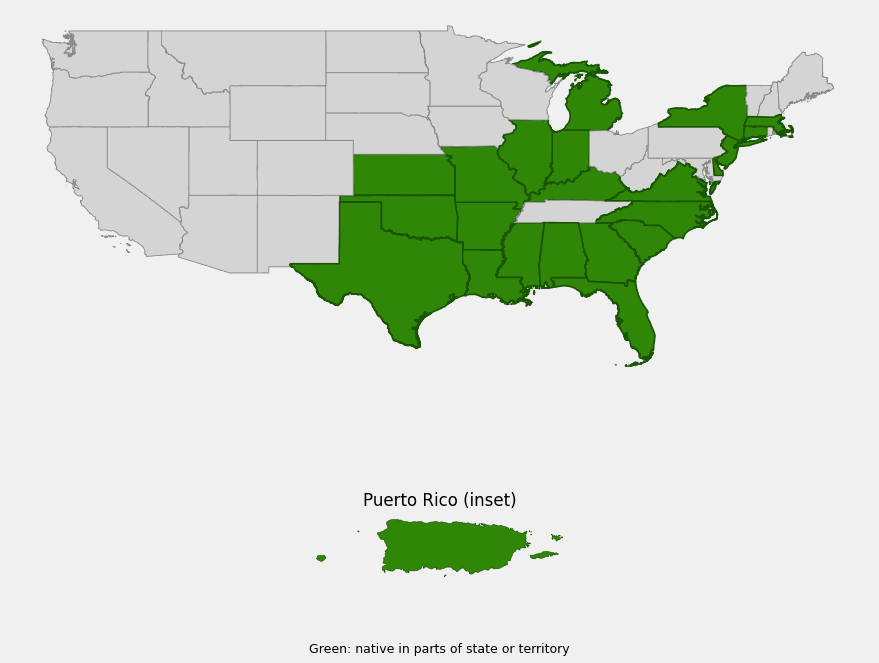
USDA PLANTS lists dwarf burhead as native in Alabama, Arkansas, Connecticut, Delaware, Florida, Georgia, Illinois, Indiana, Kansas, Kentucky, Louisiana, Massachusetts, Michigan, Mississippi, Missouri, New Jersey, New York, North Carolina, Oklahoma, South Carolina, Texas and Virginia, and in Puerto Rico. It is most frequent on the Atlantic and Gulf Coastal Plain and becomes scattered inland.
It is listed as endangered or otherwise rare in several states at the edge of its range, including Connecticut, Illinois, Indiana, Kentucky and Michigan. Beyond the United States it ranges through the West Indies, southern Mexico and Central America to South America as far south as Argentina.
In the wild it grows on the exposed sandy and muddy shores of ponds, lakes and reservoirs, in ditches and wet depressions, and in shallow water. It is a classic plant of seasonally fluctuating shorelines, such as coastal plain ponds, where it appears in abundance when water levels drop.
📋 Regional plant lists featuring Dwarf Burhead: North & South Florida · Alabama, Georgia & Mississippi · North & South Carolina · Maryland, Virginia & West Virginia · Kentucky & Tennessee · Arkansas, Louisiana, Eastern Oklahoma & Eastern Texas · Illinois, Iowa & Missouri · Ohio & Indiana · Michigan, Wisconsin & Eastern Minnesota · Nebraska, Kansas & Eastern Colorado · New York, Pennsylvania & Northern New Jersey · Delaware, Southern New Jersey & Long Island · Connecticut, Massachusetts & Rhode Island · New Hampshire, Maine & Vermont · Puerto Rico · South & West Texas
Growing & Care Guide
Most people grow dwarf burhead as the pygmy chain sword, a classic carpeting plant for freshwater aquariums, which is sold widely from nursery cultures. It can also be grown in sunny pond margins and bog containers. Buy cultivated plants rather than collecting from wild shorelines, especially where it is state-listed.
Light
Outdoors, give it full sun to part shade at the water’s edge. In aquariums it needs moderate to high light to stay compact and spread into a carpet; in dim tanks it grows tall and sparse.
Soil & Water
Outdoors, plant it in saturated mud or water up to a few inches deep. In aquariums, use a fine gravel or sand substrate, ideally with root tabs or a nutrient-rich layer, at temperatures of about 64 to 82°F (18 to 28°C). It tolerates a wide range of water hardness and a pH of about 6 to 7.5. Added CO2 speeds growth but is not essential.
Planting Tips
Separate nursery clumps into small plantlets and push them into the substrate about an inch apart. They will spread by runners within a few weeks to months. Plants grown above water in nurseries often drop their leaves after planting underwater and then regrow narrower submerged leaves; this is normal.
Pruning & Maintenance
Thin out older plants and runners when the carpet becomes too dense, and trim leaves that grow too tall. Outdoors in cold areas, overwinter it underwater in a pond deep enough not to freeze solid, or indoors in a container.
Propagation
It propagates itself readily by runners: simply cut and replant the young plantlets. It also sets seed when grown above water, and seeds sown on wet mud germinate in warm conditions.
Landscape Uses
- Aquariums: a classic, easy carpeting plant for the foreground of freshwater tanks
- Pond margins: a small, grassy edge plant for muddy shallows in sunny ponds
- Bog and container water gardens: fits miniature water gardens and tabletop containers
- Shoreline restoration: native to coastal plain ponds and sandy lake shores
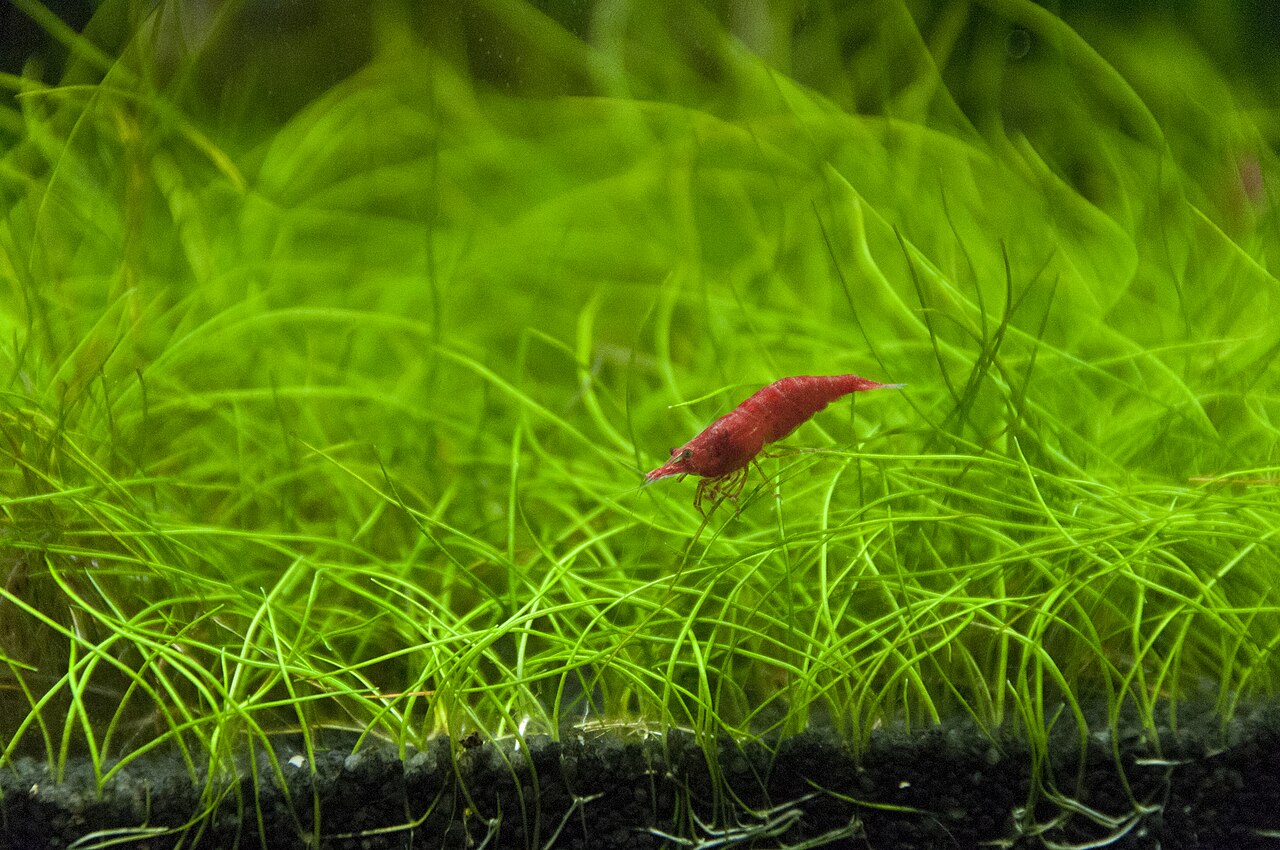
- Shrimp and nano tanks: gives cover and grazing surfaces for small invertebrates
Wildlife & Ecological Value
Small as it is, dwarf burhead plays a part in the ecology of shallow water and wet shorelines.
For Pollinators
The tiny flowers are visited by small bees, flies and other insects, which feed on pollen and nectar. Flowers on submerged plants can also self-pollinate.
For Birds
Ducks and shorebirds feed on the seeds and tender plants of small water plants like this one along shallow shores.
For Mammals
Its value to mammals is limited, but its mats shelter aquatic invertebrates that many animals eat.
Ecosystem Role
Its carpets stabilize fine sediment and provide shelter and egg-laying sites for small fish, tadpoles and aquatic insects. On seasonally exposed shores, it is part of a specialized community of small plants that depends on natural water-level changes.
Cultural & Historical Uses
Dwarf burhead has been one of the most popular aquarium plants for decades under the names Echinodorus tenellus and pygmy chain sword. Many aquarium sources state that it comes from South America, but it is equally native to the eastern United States, where it grows wild on muddy shores from Texas to Massachusetts.
Botanists have debated its classification. Some place it in Echinodorus, the Amazon sword genus; others separate it and a few relatives into the small genus Helanthium, a name used in many recent floras and aquarium references. The species name tenellus means “rather delicate.”
Because aquarium plants can escape when tanks are emptied, never release aquarium plants or water into the wild, even native species, since they may carry snails, algae or diseases from other parts of the world.
Frequently Asked Questions
Is Echinodorus tenellus native to the United States?
Yes. Dwarf burhead is native to the eastern United States, from Texas, Oklahoma and Kansas east to Florida and north to Michigan, New York and Massachusetts, and to Puerto Rico. It also grows wild through Latin America.
Is dwarf burhead the same as the pygmy chain sword?
Yes. The aquarium plant sold as pygmy chain sword or Echinodorus tenellus is the same species as the wild dwarf burhead, also called mudbabies. Many references now call it Helanthium tenellum.
How do I make Echinodorus tenellus carpet in an aquarium?
Give it moderate to high light, a fine substrate with root nutrients, and plant small clumps about an inch apart. Added CO2 helps. It spreads by runners and usually forms a carpet in a few weeks to a few months.
Can I grow dwarf burhead outdoors?
Yes. Plant it in saturated mud or shallow water at a sunny pond edge or bog container. In cold climates, keep it below the ice line in a pond or overwinter it indoors.
Is dwarf burhead rare?
It is widespread but easily overlooked, and it is listed as endangered or rare in several states at the edge of its range, including Connecticut, Illinois, Indiana, Kentucky and Michigan. Buy cultivated plants rather than collecting it from the wild.

Looking for a nursery that carries Dwarf Burhead?
Browse our native plant nursery directory: Alabama & Arkansas · Connecticut, Delaware, Florida & Georgia · Illinois, Indiana & Kansas · Kentucky, Louisiana, Massachusetts, Michigan, Mississippi & Missouri · New Jersey, New York, North Carolina & Oklahoma · South Carolina, Texas & Virginia

