
Seaside Brookweed (Samolus valerandi)
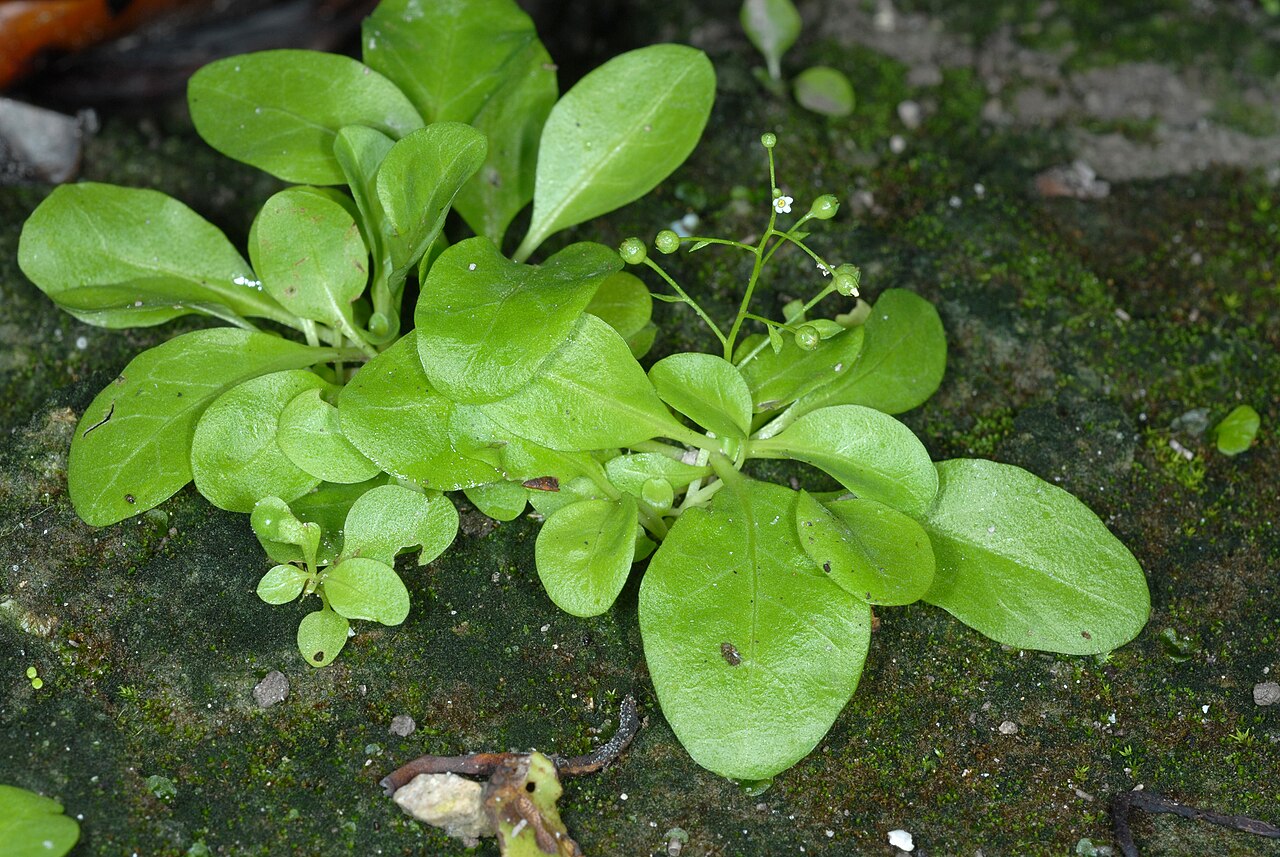
Samolus valerandi, known as Seaside Brookweed (also water pimpernel), is a small wetland perennial of stream banks, springs, seeps, ditches and fresh to brackish marshes. The North American plants belong to subspecies parviflorus, which many botanists treat as a separate species, Samolus parviflorus; older books also call it Samolus floribundus. It is placed in the primrose family (Primulaceae), sometimes split out as its own family, Samolaceae.
Seaside brookweed starts as a rosette of smooth, bright green, spoon-shaped leaves and then sends up slender, leafy stems usually 4 to 12 inches tall (rarely to about 2 feet). From spring to fall the stems carry loose sprays of tiny white flowers on long, threadlike stalks, followed by little round capsules. It is easy to overlook, but it is one of the most widespread native wetland wildflowers in the United States.
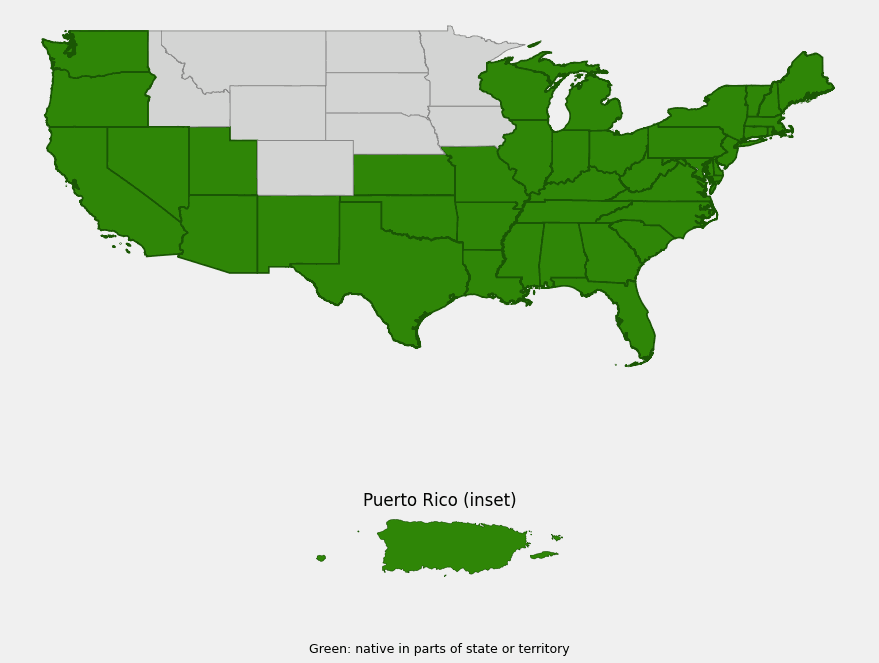
Despite its common name, seaside brookweed is not limited to the coast. It grows in wet places across most of the United States outside the northern Rockies and northern Plains, from Maine and the Great Lakes to Florida, Texas, the Southwest, California and the lower Columbia River, as well as in eastern Canada and Puerto Rico. It is an obligate wetland plant, and it is useful in pond edges, rain gardens and wet meadow plantings.
Identification
Seaside brookweed is small and delicate. Look for a rosette of bright green, spoon-shaped leaves in mud or shallow water, with airy sprays of tiny white flowers whose long stalks each carry a minute bract near the middle.
Growth Habit
It is a short-lived perennial (sometimes behaving as an annual) with a basal rosette and one to several erect or leaning, branched stems, usually 4 to 12 inches tall and occasionally up to about 2 feet in deep shade or rich mud. The whole plant is smooth and hairless.
Leaves
Basal leaves are spoon-shaped to oblong, 1 to 4 inches long, rounded at the tip and tapering to a short stalk, smooth-edged and bright to pale green. Stem leaves are alternate and smaller, becoming tiny upward.
Flowers
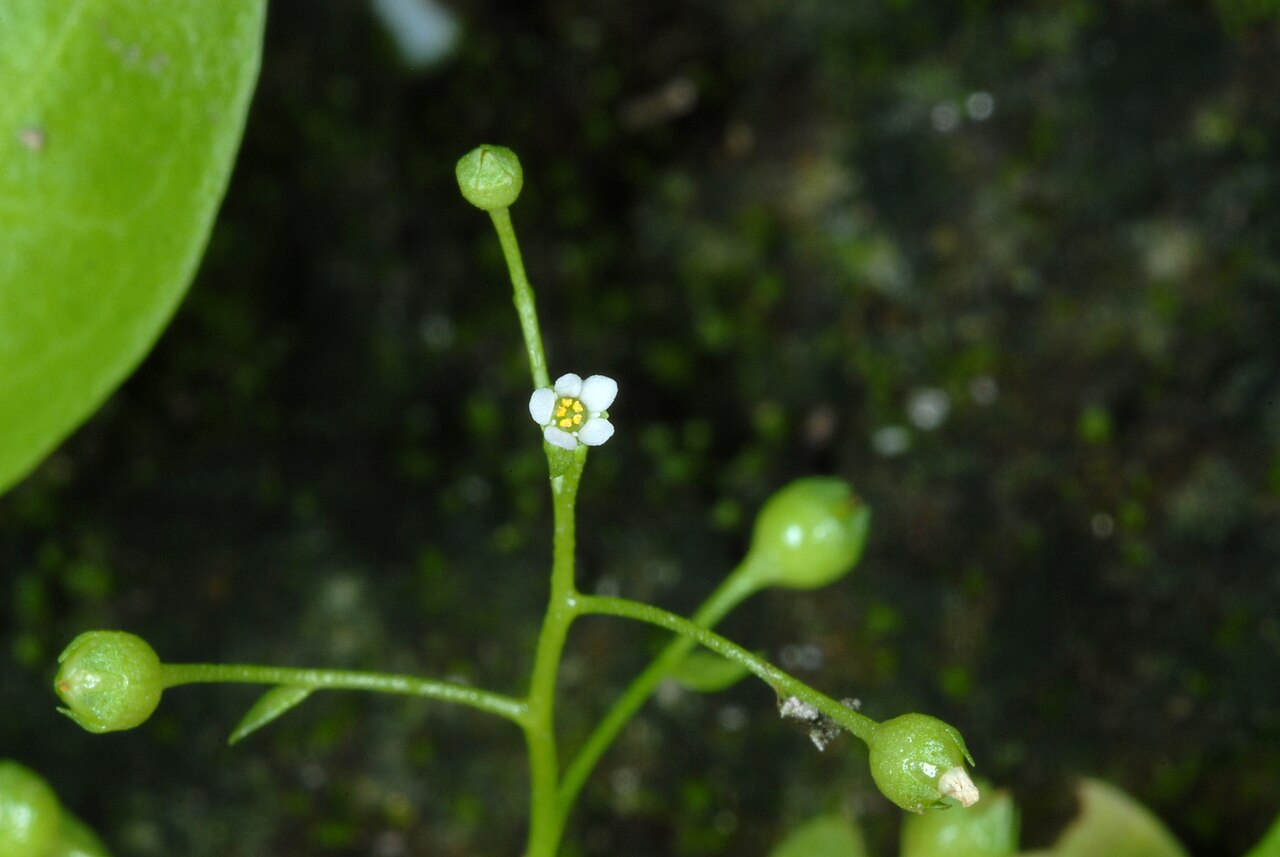
Flowers appear from about April to October, earlier and longer in the South. They are borne in loose, open clusters (racemes) at the stem tips. Each flower is only about 1/8 inch wide, with a white, bell-shaped corolla divided into five rounded lobes and five small sterile staminodes between the stamens. Each flower stalk is long and threadlike, with a tiny leaf-like bract attached partway along it, a good field mark for the genus.
Fruit & Seeds
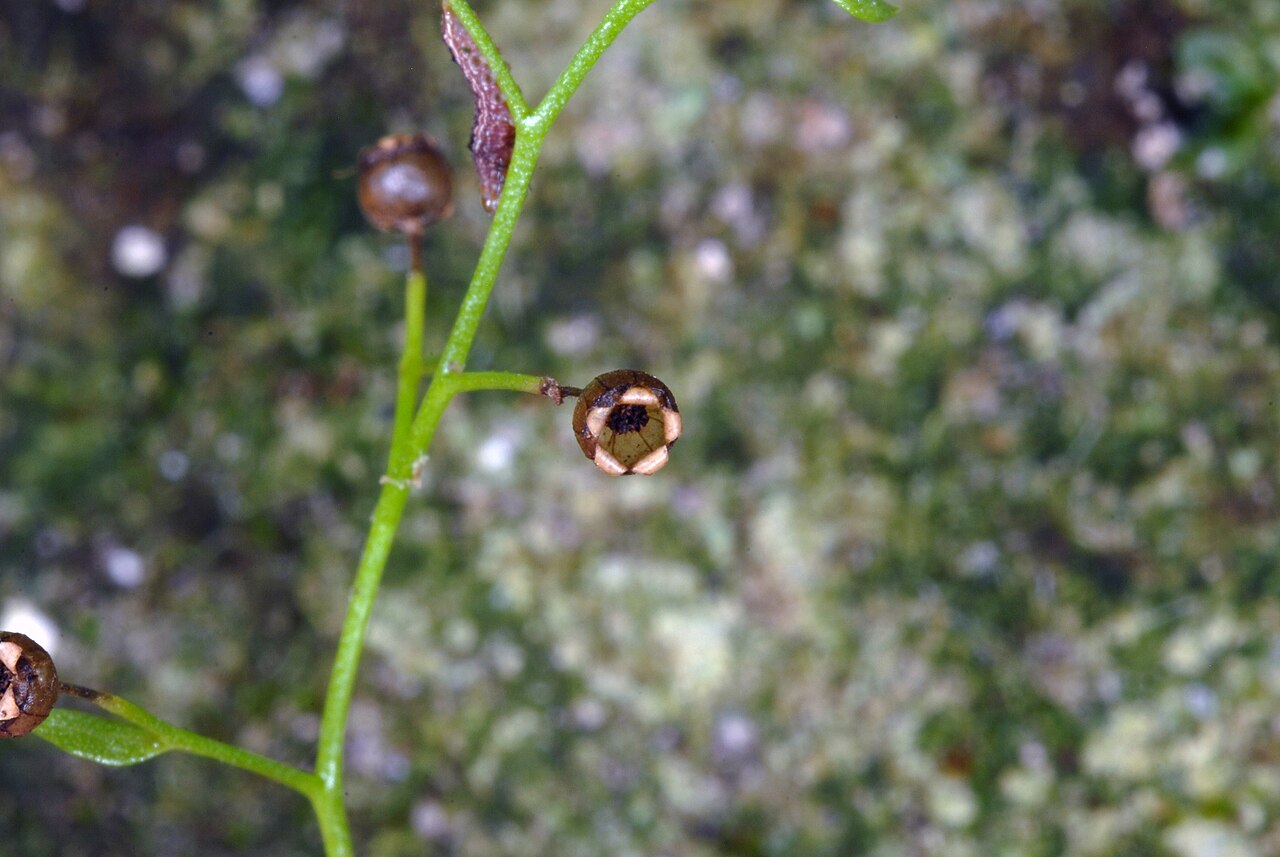
The fruit is a small round capsule about 1/8 inch across, partly enclosed by the persistent calyx, turning brown and splitting at the top into five teeth. It contains many tiny, dark seeds that wash along stream margins and spread in mud on the feet of birds and animals.
Look-alikes
Water pimpernel is also used for Lindernia and other small wetland plants, but those have opposite leaves. Small seedlings of Lysimachia species have opposite or whorled leaves and yellow flowers. Watercresses (Nasturtium) have divided leaves and four-petaled flowers. The combination of a basal rosette, alternate stem leaves, tiny white five-lobed flowers and a bract partway up each flower stalk identifies brookweed.
Safety Notes
Seaside brookweed is not known to be toxic, but it is not a food plant. Some plants in the primrose family contain saponins, so do not eat it or feed it to pets.
Quick Facts
| Scientific Name | Samolus valerandi ssp. parviflorus (syn. Samolus parviflorus) |
| Family | Primulaceae (primrose family); sometimes Samolaceae |
| Plant Type | Short-lived herbaceous perennial; wetland wildflower |
| Mature Height | 4–12 in (rarely to 2 ft) |
| Mature Spread | 4–8 in |
| Growth Rate | Fast |
| Sun Exposure | Full sun to part shade |
| Water Needs | High; wet mud or shallow water |
| Soil Type | Wet mud, sand or muck; tolerates mild salinity |
| Soil pH | About 6.0–8.5 |
| Bloom Time | April–October |
| Flower Color | White |
| Fall Color | None notable |
| Fruit | Small round capsule with many tiny seeds |
| Deer Resistant | Unknown; rarely browsed |
| USDA Hardiness Zones | 5–11 |
Native Range
The species Samolus valerandi in the broad sense grows nearly worldwide in temperate and tropical wetlands. The American plants, subspecies parviflorus, range from southeastern Canada through much of the United States to Mexico, Central America, the Caribbean and South America. USDA PLANTS lists it as native in Puerto Rico, in eastern Canada (New Brunswick, Nova Scotia, Ontario, Prince Edward Island and Quebec) and in 39 of the lower 48 states plus the District of Columbia.
It is most common in the Southeast, the Gulf Coast and Texas, where the Lady Bird Johnson Wildflower Center describes it as growing along creeks, ditches and seepage areas throughout the state. In the Northeast it is mainly a plant of tidal shores and coastal marshes, and in the Midwest and Ohio Valley of springs, seeps and stream banks. In the West it occurs at desert springs and streams in Arizona, New Mexico, Nevada, Utah and California.
In the Pacific Northwest it is rare and local. Herbarium records from Oregon and Washington come from fresh to slightly brackish tidal marshes and shores of the lower Columbia River estuary, in Clatsop County, Oregon, and Wahkiakum County, Washington, with a few other records on the Oregon coast. It does not grow east of the Cascades.
📋 Regional plant lists featuring Seaside Brookweed: New York, Pennsylvania & Northern New Jersey · Ohio & Indiana · Michigan, Wisconsin & Eastern Minnesota · Kentucky & Tennessee · Nebraska, Kansas & Eastern Colorado · Utah & Western Colorado · Connecticut, Massachusetts & Rhode Island · New Hampshire, Maine & Vermont · Maryland, Virginia & West Virginia · Delaware, Southern New Jersey & Long Island · Arizona & New Mexico · Illinois, Iowa & Missouri · Alabama, Georgia & Mississippi · North & South Florida · Puerto Rico · North & South Carolina · Arkansas, Louisiana, Eastern Oklahoma & Eastern Texas · South & West Texas · Western Oregon & Western Washington · California & Nevada
Growing & Care Guide
Seaside brookweed is rarely sold, but it is easy to grow from seed and often appears on its own in wet spots. Grow it where the soil never dries out: at the edge of a pond, stream or rain garden, or in a container water garden.
Light
It grows in full sun to part shade. In hot climates it appreciates some afternoon shade; in full sun it stays shorter and more compact.
Soil & Water
Give it constantly wet soil, mud or shallow water up to about an inch deep. It tolerates sand, muck and limey or slightly salty water, which makes it useful in coastal and alkaline wetlands. It will not survive in dry garden soil.
Planting Tips
Plant small plants or sow seed along a pond margin, in a bog garden, at the low point of a rain garden, or in a shallow tub water garden. Because it is small, place it at the front of wetland plantings where taller rushes and sedges will not cover it.
Pruning & Maintenance
Little care is needed. Plants are short-lived but reseed freely in open mud, so leave some bare, wet ground for seedlings. Pull back taller neighbors or algae mats that smother it.
Propagation
Sow the tiny seeds on the surface of wet soil and do not cover them; they need light to germinate. Keep the pot standing in water. Seedlings grow quickly and can flower in their first year. Established rosettes can also be divided.
Landscape Uses
- Pond and stream margins: a small white-flowered edging for wet mud
- Rain gardens: for the wettest low spots that hold water
- Wetland restoration: seeps, springs and marsh edges, including brackish sites
- Container water gardens: a delicate filler for shallow tubs
- Wildlife ponds: cover and small flowers at the waterline
Wildlife & Ecological Value
Seaside brookweed is a small part of the plant community of wet shores, but it adds long-season flowers and cover at the water’s edge.
For Pollinators
The tiny white flowers are visited by small bees, flies and other small insects; the flowers can also self-pollinate, which helps the plant set abundant seed.
For Birds
The tiny seeds are too small to be an important bird food, but the plant is part of the low cover used by rails, wrens and shorebirds feeding along muddy shores.
For Mammals
Mammals rarely eat it. It is part of the low vegetation at the edges of marshes used by muskrats and other wetland mammals.
Ecosystem Role
As a fast-growing colonizer of bare, wet mud, seaside brookweed helps stabilize stream banks, spring outflows and marsh edges. In the arid Southwest it is a characteristic plant of springs and seeps, which are small, isolated oases for wildlife. It also tolerates brackish water, linking freshwater and tidal marsh communities.
Cultural & Historical Uses
The genus name Samolus is old. The Roman author Pliny the Elder described a marsh herb called samolus that Gaulish druids gathered for treating cattle, and early botanists applied the name to this plant. The species name honors Valerand Dourez, a 16th-century French botanist; Linnaeus took the name from earlier authors when he described the species in 1753.
The North American subspecies was described by the eccentric naturalist Constantine Samuel Rafinesque as Samolus parviflorus, “small-flowered samolus.” Botanists still disagree about whether American and Eurasian brookweeds are best treated as one species or two, which is why both names appear in field guides and databases.
Seaside brookweed has little recorded traditional use. Today it is valued by wetland ecologists as a widespread, long-blooming native of springs, seeps and marsh edges, and it is a welcome volunteer in wildlife ponds.
Frequently Asked Questions
Does seaside brookweed only grow by the sea?
No. Despite the name, it grows at springs, seeps, stream banks and ditches far inland, from the Ohio Valley to desert springs in Arizona and Utah, as well as in fresh and brackish coastal marshes.
Is Samolus valerandi the same as Samolus parviflorus?
American plants are Samolus valerandi subspecies parviflorus in USDA PLANTS. Many botanists treat them as a separate species, Samolus parviflorus. The name refers to the same North American plant either way.
Can I grow seaside brookweed in a normal garden bed?
Only if the bed stays wet all the time. It needs saturated soil or shallow water, so it is best at a pond edge, in a bog garden or in a container water garden.
Where can I get seaside brookweed?
It is seldom sold by name. Look for it at native wetland plant nurseries, or collect a small amount of seed from a healthy, abundant population where collecting is permitted, leaving most of the seed behind.
Is seaside brookweed invasive?
No. It is native and can reseed in wet mud, but it is small and easily removed, and it does not take over healthy wetland plantings.

Looking for a nursery that carries Seaside Brookweed?
Browse our native plant nursery directory: Alabama, Arizona & Arkansas · California · Connecticut, Delaware, Florida & Georgia · Illinois, Indiana & Kansas · Kentucky, Louisiana, Maine, Maryland, Massachusetts, Michigan, Mississippi & Missouri · Nevada, New Hampshire, New Jersey, New Mexico, New York, North Carolina, Ohio & Oklahoma · Oregon · Pennsylvania, Rhode Island, South Carolina, Tennessee, Texas, Utah, Vermont & Virginia · Washington · West Virginia & Wisconsin