
Wild Basil (Clinopodium vulgare)
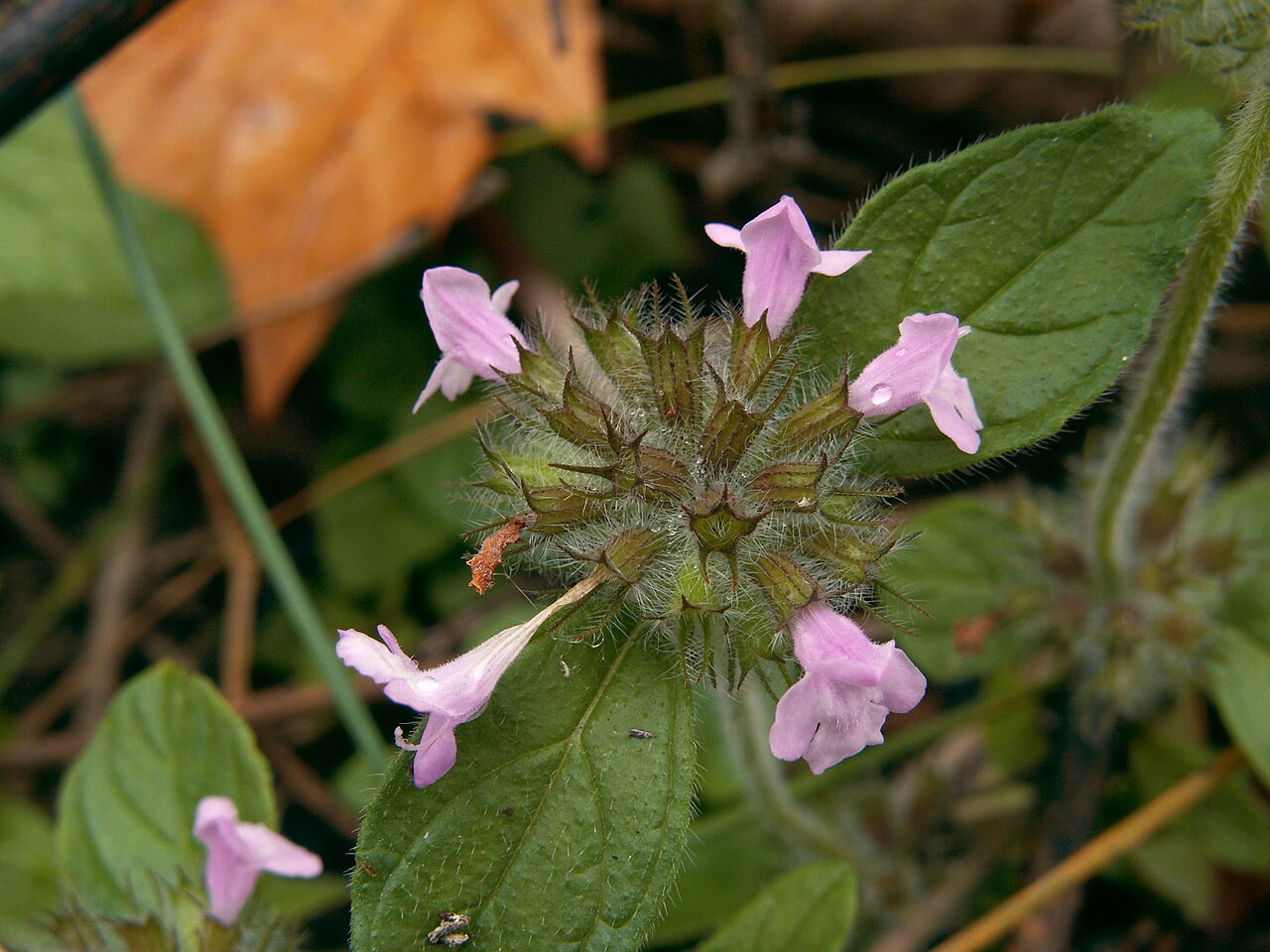
Clinopodium vulgare, known as Wild Basil, is a low, hairy perennial of the mint family (Lamiaceae) that grows in open woods, woodland edges, rocky ledges and old fields. From midsummer into fall it produces dense, rounded whorls of small pink to rose-purple, two-lipped flowers, set in a cushion of bristly, hairy bracts that make each cluster look woolly.
Despite the name, it is not the culinary basil (Ocimum basilicum). Its leaves have only a mild, faintly minty scent. It is a circumboreal species, found across Europe, Asia and North America, and its status in North America is mixed. Native populations, often called var. neogaea, grow in the Northeast, the Great Lakes region and the Appalachians, while some populations, especially along roadsides and in the Pacific Northwest, came from Europe.
Wild basil is an easy, adaptable plant for dry, partly shaded spots, and its long bloom season attracts bees and other pollinators. This guide covers how to identify it, where it grows as a native plant, how to grow it in a woodland edge or meadow garden, and its value to wildlife.
Identification
Wild basil is a typical mint, with square stems and opposite leaves. Its best field mark is the bristly, hairy whorls of bracts around the flowers.
Growth Habit
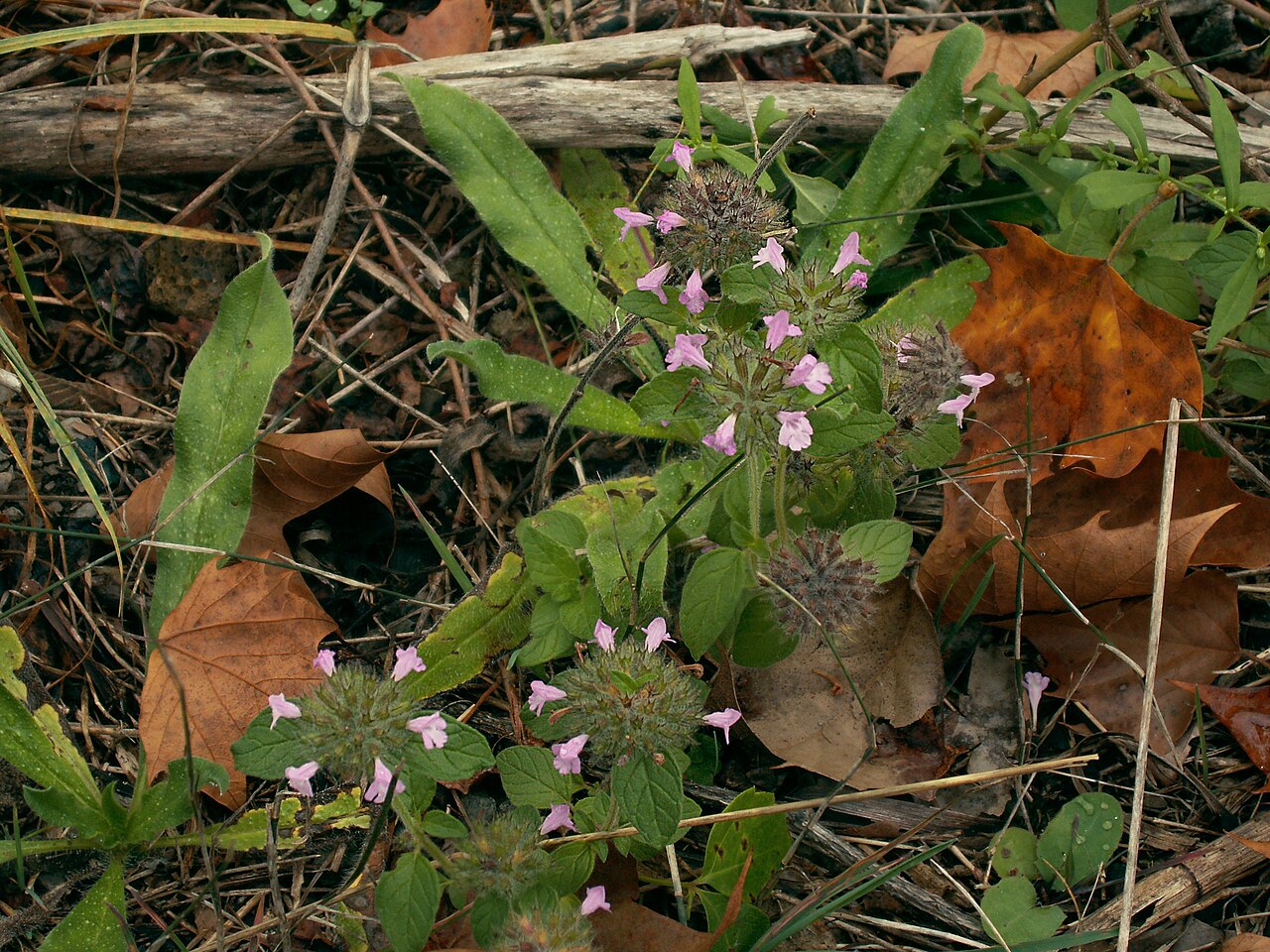
It is a perennial from creeping rhizomes, usually 8 to 24 inches tall, with mostly unbranched, square stems covered in soft, spreading hairs. It often forms loose patches.
Leaves
The leaves are opposite, oval to egg-shaped, about 3/4 to 2 inches long, with smooth or slightly toothed edges and short stalks. They are softly hairy and have only a mild scent when crushed.
Flowers
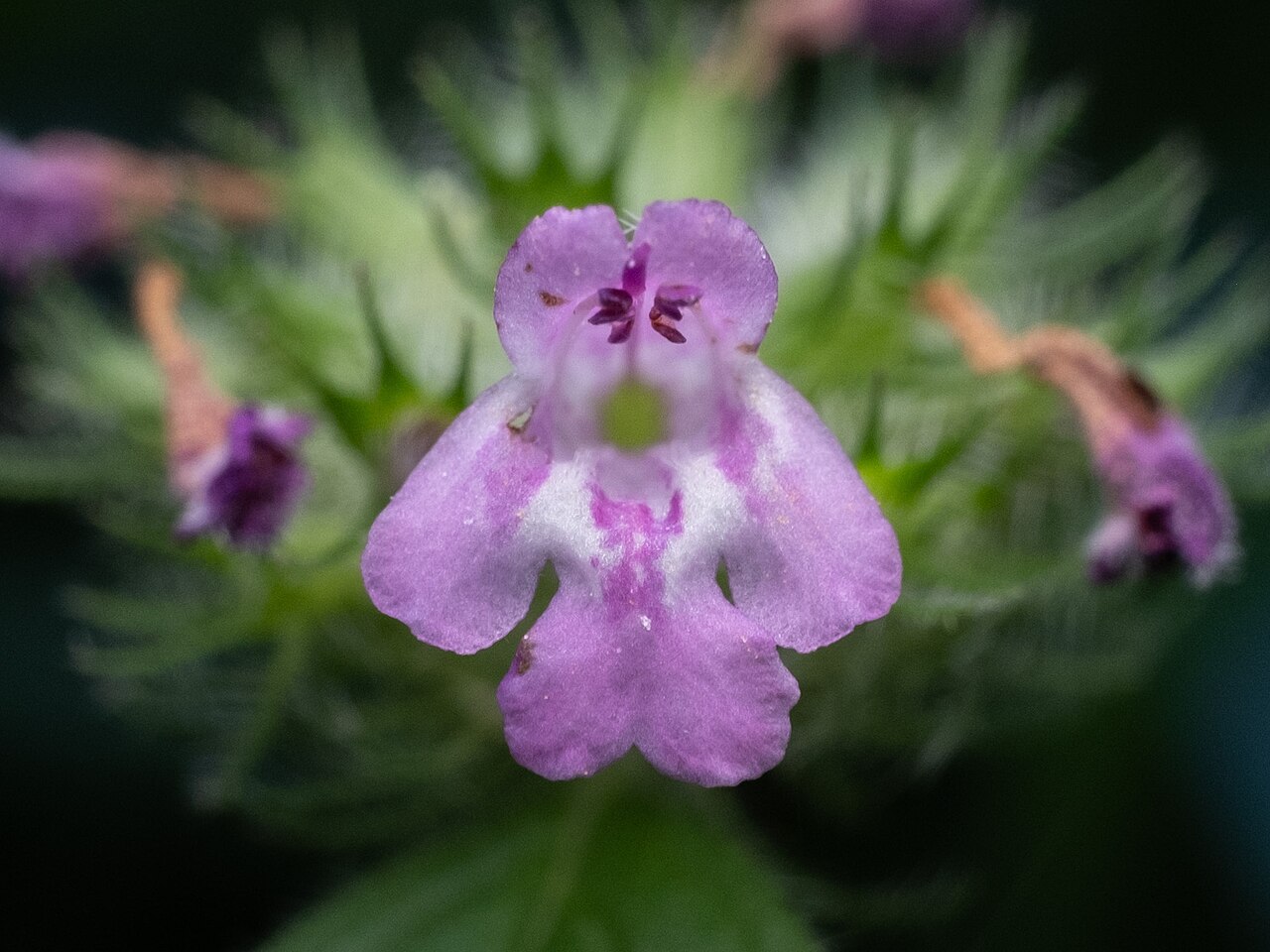
The flowers are borne in dense, rounded whorls at the upper leaf nodes and at the stem tip. Each whorl is surrounded by many narrow, bristly, hairy bracts, giving it a woolly or pincushion look. The flowers are about 1/2 inch long, tubular and two-lipped, pink to rose-purple, rarely white. They bloom from about June to September.
Fruit & Seeds
Each flower produces four tiny nutlets, enclosed in the persistent, hairy calyx.
Look-alikes
Basil thyme (Clinopodium acinos), an introduced annual, is smaller, with fewer flowers per whorl and no bristly bracts. Wild bergamot (Monarda fistulosa) has larger, lavender flowers in a single head at the stem tip and a strong scent. Self-heal (Prunella vulgaris) has its flowers in a dense, cylindrical spike rather than separate whorls.
Quick Facts
| Scientific Name | Clinopodium vulgare L. (syn. Satureja vulgaris (L.) Fritsch) |
| Family | Lamiaceae (mint family) |
| Plant Type | Herbaceous perennial from rhizomes |
| Mature Height | 8–24 in |
| Mature Spread | 12–18 in; spreads slowly by rhizomes |
| Growth Rate | Moderate |
| Sun Exposure | Full sun to part shade |
| Water Needs | Low to moderate |
| Soil Type | Well-drained, rocky, sandy or loamy soil |
| Soil pH | About 6.0–8.0 |
| Bloom Time | June–September |
| Flower Color | Pink to rose-purple, rarely white |
| Fall Color | None notable |
| Fruit | Four tiny nutlets in a persistent calyx |
| Deer Resistant | Generally avoided by deer |
| USDA Hardiness Zones | 3–8 |
Native Range
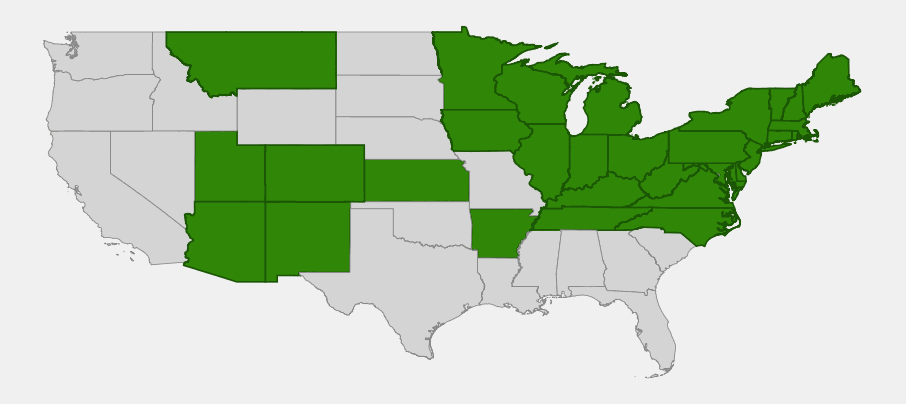
Wild basil occurs across the Northern Hemisphere. USDA PLANTS lists it as native in the lower 48 states and Canada and records it in 32 states. This guide follows USDA but leaves out Washington and Oregon, where Pacific Northwest floras, including the Burke Herbarium of the University of Washington, treat it as introduced from Europe. Native Plant Trust describes its status in New England as mixed, with both native and introduced populations.
Native populations are concentrated in the Northeast, the Great Lakes states and the Appalachians, from Maine and New York west through Michigan, Wisconsin and Minnesota and south to Virginia, West Virginia, Kentucky, Tennessee and North Carolina. Records farther west, in Arkansas, Iowa, Kansas, Colorado, Montana, Utah, Arizona and New Mexico, are scattered, and some may represent introduced plants. In Canada it grows from British Columbia and Ontario east to Quebec, the Maritime provinces and Newfoundland.
It grows in dry to moist open woods, woodland edges and clearings, rocky slopes, ledges and balds, meadows and old fields, and along roadsides, often on calcareous or rocky soils.
📋 Regional plant lists featuring Wild Basil: New York, Pennsylvania & Northern New Jersey · Ohio & Indiana · Montana & Wyoming · Michigan, Wisconsin & Eastern Minnesota · Kentucky & Tennessee · Nebraska, Kansas & Eastern Colorado · Utah & Western Colorado · Connecticut, Massachusetts & Rhode Island · New Hampshire, Maine & Vermont · Maryland, Virginia & West Virginia · Delaware, Southern New Jersey & Long Island · Arizona & New Mexico · Illinois, Iowa & Missouri · North & South Carolina · Arkansas, Louisiana, Eastern Oklahoma & Eastern Texas
Growing & Care Guide
Wild basil is an easy, low-maintenance perennial for dry woodland edges, rock gardens and informal meadows. It is offered by some native seed suppliers and nurseries in the Northeast and Midwest. Choose plants or seed from a local, native source where possible, since European strains are also sold as herbs.
Light
It grows in full sun to part shade. In the wild it is most common in partial shade at woodland edges and in clearings, and it flowers well in light, dappled shade.
Soil & Water
Plant it in well-drained soil, from sandy or rocky to average loam. It tolerates dry soils once established and does well on slopes and among rocks. Avoid soggy soil. Water during its first season, then only during long droughts.
Planting Tips
Plant nursery plants in spring or fall, 12 to 18 inches apart. It works well at the front of a woodland edge planting, between stones, or in a pollinator meadow with wild bergamot, columbine and native grasses.
Pruning & Maintenance
Little care is needed. Cut back old stems in late winter or early spring. It spreads slowly by rhizomes and self-sows modestly; pull unwanted seedlings if needed.
Propagation
Grow it from seed sown in fall or in spring after a few weeks of cold, moist stratification; the small seeds need light, so press them onto the surface. It can also be divided in spring or grown from stem cuttings in early summer.
Landscape Uses
- Woodland edge gardens: pink summer flowers for partly shaded borders
- Rock gardens and slopes: thrives in dry, rocky, well-drained soil
- Pollinator gardens: a long bloom season for bees and butterflies
- Meadows and old fields: blends with native grasses and wildflowers
- Low-maintenance plantings: drought-tolerant and rarely browsed by deer
Wildlife & Ecological Value
Like many mints, wild basil is a reliable pollinator plant, blooming from midsummer into early fall.
For Pollinators
Bumble bees, small native bees and honey bees visit the tubular flowers for nectar and pollen. Butterflies and skippers also feed at the flowers, and hover flies visit them frequently.
For Birds
Small seed-eating birds may pick at the nutlets in fall, and the plant provides some low cover for ground-foraging birds.
For Mammals
Its hairy, aromatic foliage is generally avoided by deer and rabbits, which makes it useful in gardens with heavy browsing.
Ecosystem Role
On woodland edges, ledges and rocky slopes, it is part of a diverse community of sun-loving perennials. Its rhizomes help hold thin soils, and its late-season flowers help sustain pollinators as summer wildflowers fade.
Cultural & Historical Uses
The genus name Clinopodium comes from the Greek kline, bed, and pous, foot, which is said to describe the shape of the flower clusters, like the foot of a bed. Vulgare means “common”. The species was named by Carl Linnaeus in 1753. It has also been placed in Satureja, the savory genus, and in Calamintha.
In Europe, wild basil has a long history in folk medicine and as a mild flavoring herb. Native Plant Trust notes its use in European herbal medicine as an anti-inflammatory. Its flavor is much milder than that of culinary basil or savory.
North American botanists have debated which wild basil populations are native. The name var. neogaea, meaning “of the New World”, was given to plants considered native in eastern North America.
Frequently Asked Questions
Is wild basil the same as cooking basil?
No. Culinary basil is Ocimum basilicum, an annual from tropical Asia. Wild basil (Clinopodium vulgare) is a hardy perennial mint with only a mild scent.
Is wild basil native to North America?
Partly. USDA lists it as native, and native populations grow in the Northeast, Great Lakes region and Appalachians. Some populations, especially in the Pacific Northwest and along roadsides, are introduced from Europe.
Where does wild basil grow?
In open woods, woodland edges, rocky ledges, meadows and old fields across much of the northeastern and north-central United States and southern Canada, with scattered records in the West.
Does wild basil attract pollinators?
Yes. Bumble bees, other native bees, butterflies and hover flies visit its pink flowers from about June to September.
Is wild basil deer resistant?
Generally yes. Its hairy, aromatic leaves are usually avoided by deer and rabbits.

Looking for a nursery that carries Wild Basil?
Browse our native plant nursery directory: Arizona & Arkansas · Colorado, Connecticut & Delaware · Illinois, Indiana, Iowa & Kansas · Kentucky, Maine, Maryland, Massachusetts, Michigan, Minnesota & Montana · New Hampshire, New Jersey, New Mexico, New York, North Carolina & Ohio · Pennsylvania, Rhode Island, Tennessee, Utah, Vermont & Virginia · West Virginia & Wisconsin

