
Bulbous Bittercress (Cardamine bulbosa)
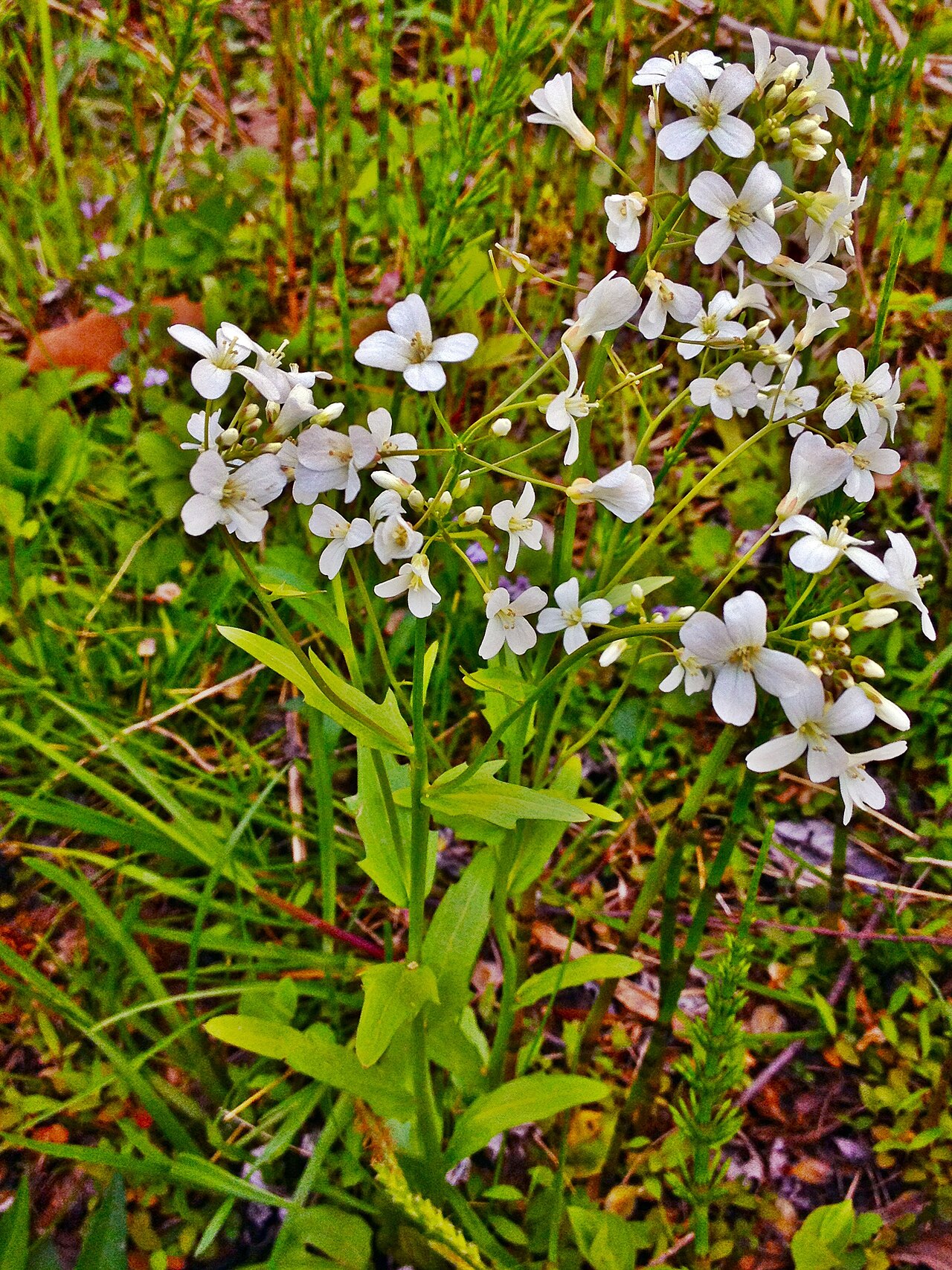
Cardamine bulbosa, Bulbous Bittercress, is a delicate spring wildflower of wet places in eastern and central North America. Also called spring cress or bulbous cress, it is a member of the mustard family (Brassicaceae) that grows along springs, brooks, swamps and wet meadows. In early to mid spring it sends up slender, smooth stems 8 to 24 inches tall, topped with loose clusters of clean white, four-petaled flowers.
The plant takes its name from the small, swollen, bulb-like tuber at the base of the stem, from which new shoots arise each year. Its leaves and tubers have the sharp, peppery taste typical of the cresses and mustards, and in the past they were eaten in spring salads and used as a horseradish-like seasoning.
Bulbous bittercress is a good native plant for rain gardens, pond edges and wet woodland gardens, where it adds early flowers for small bees and butterflies. This guide covers how to identify it, where it grows, and how to grow it.
Identification
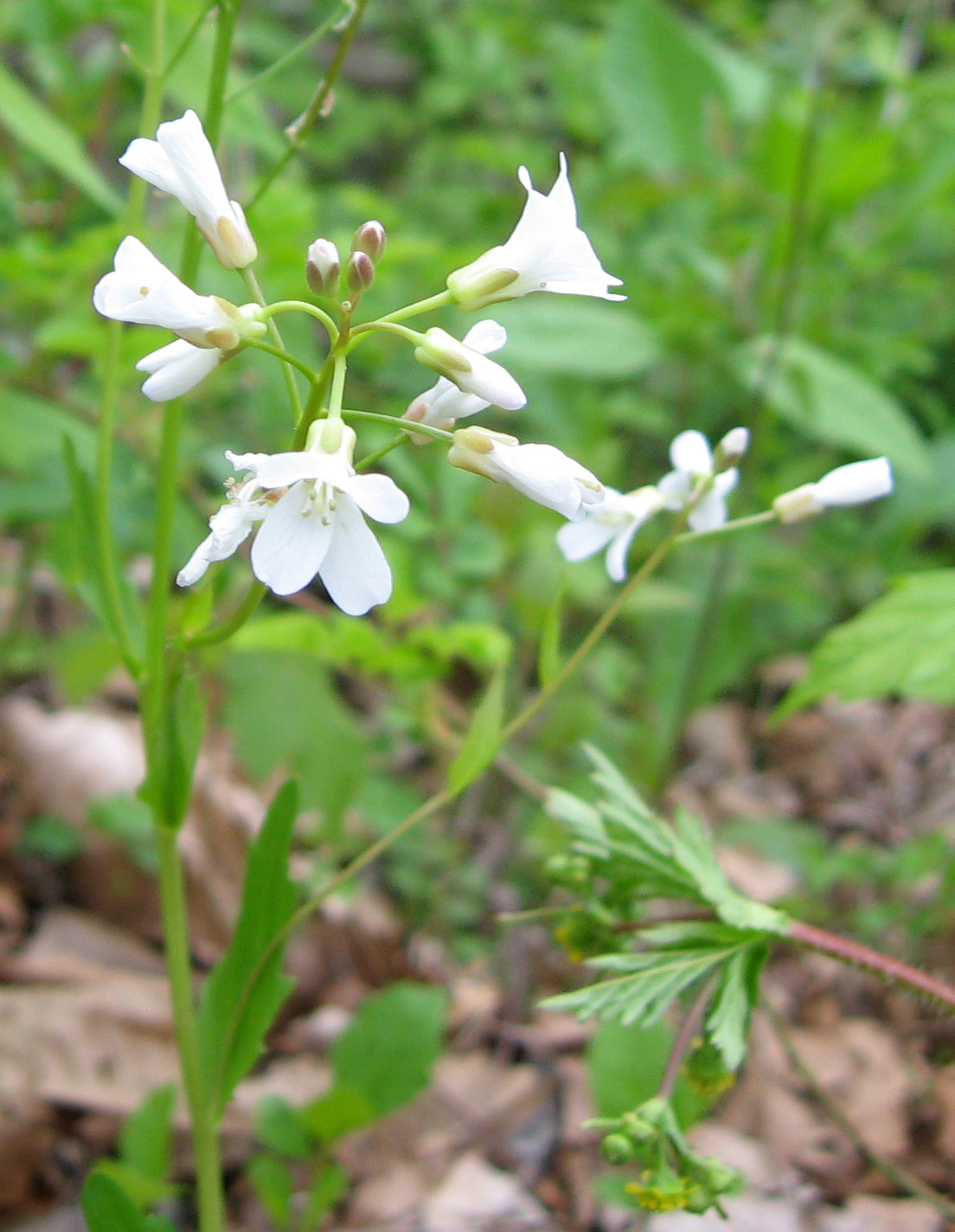
Bulbous bittercress is a smooth, upright plant of wet ground, with rounded basal leaves, narrower stem leaves and a cluster of white, cross-shaped flowers at the top in spring.
Roots & Stems
Each plant grows from a short, thickened, tuber-like base, often with small tubers on short rhizomes, which lets it form small colonies. The stems are usually single, unbranched or branched only near the top, 8 to 24 inches tall, smooth and hairless.
Leaves
The basal leaves are long-stalked and round to heart- or kidney-shaped, about 1 to 2 inches across. The stem leaves are quite different: alternate, stalkless or nearly so, oblong to lance-shaped, 1 to 2 inches long, with smooth or slightly wavy edges and a few small teeth. The basal leaves often wither by flowering time.
Flowers
The flowers are borne in a loose cluster at the top of the stem that lengthens as it blooms. Each flower is about ½ inch across, with four white, rounded petals arranged in a cross, four small sepals, and six stamens, four long and two short, as in other mustards. Flowering runs from about March in the South to June in the North.
Fruit & Look-alikes
The fruits are slender, upright pods (siliques) about 1 inch long, which split open to release the seeds. Purple cress (C. douglassii) is very similar but has pale pink to lavender flowers and hairy stems, and blooms a little earlier. Cuckooflower (C. pratensis) and Pennsylvania bittercress (C. pensylvanica) have pinnately divided leaves. The toothworts have deeply divided or compound leaves.
Quick Facts
| Scientific Name | Cardamine bulbosa (syn. Cardamine rhomboidea, Arabis bulbosa) |
| Family | Brassicaceae (mustard family) |
| Plant Type | Herbaceous perennial wildflower from a small tuber |
| Mature Height | 8–24 in |
| Mature Spread | 4–8 in; slowly forms small colonies |
| Growth Rate | Moderate |
| Sun Exposure | Part shade to full sun |
| Water Needs | High; wet to saturated soil |
| Soil Type | Wet, rich loam, muck or silt |
| Soil pH | About 5.5–7.5 |
| Bloom Time | March–June |
| Flower Color | White |
| Fall Color | None; summer-dormant after fruiting |
| Fruit | Slender upright pods (siliques) about 1 in long |
| Deer Resistant | Low to moderate; tender spring growth may be browsed |
| USDA Hardiness Zones | 3–9 |
Native Range
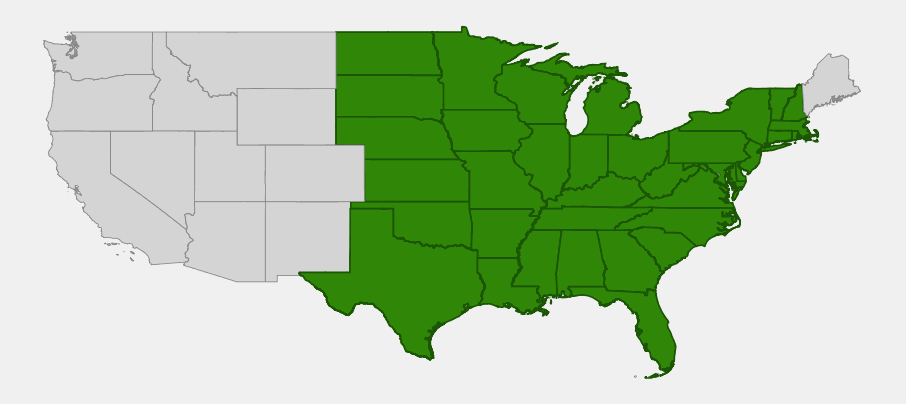
Bulbous bittercress has a wide range in eastern and central North America. The Lady Bird Johnson Wildflower Center describes it as Manitoba east to Nova Scotia, south to Florida, west to Texas and north to North Dakota. USDA PLANTS lists it as native in 36 states, from Vermont, New Hampshire and southern New England south to Florida and west to the Dakotas, Nebraska, Kansas, Oklahoma and Texas, and in Manitoba, Ontario and Quebec in Canada.
It is most common in the Midwest, the Ohio and Mississippi valleys and the mid-Atlantic, and more scattered in the far Southeast and on the Great Plains, where it is mostly limited to wet ground along streams and in floodplains. In Texas it grows mainly in the eastern part of the state, and in the Dakotas in the east.
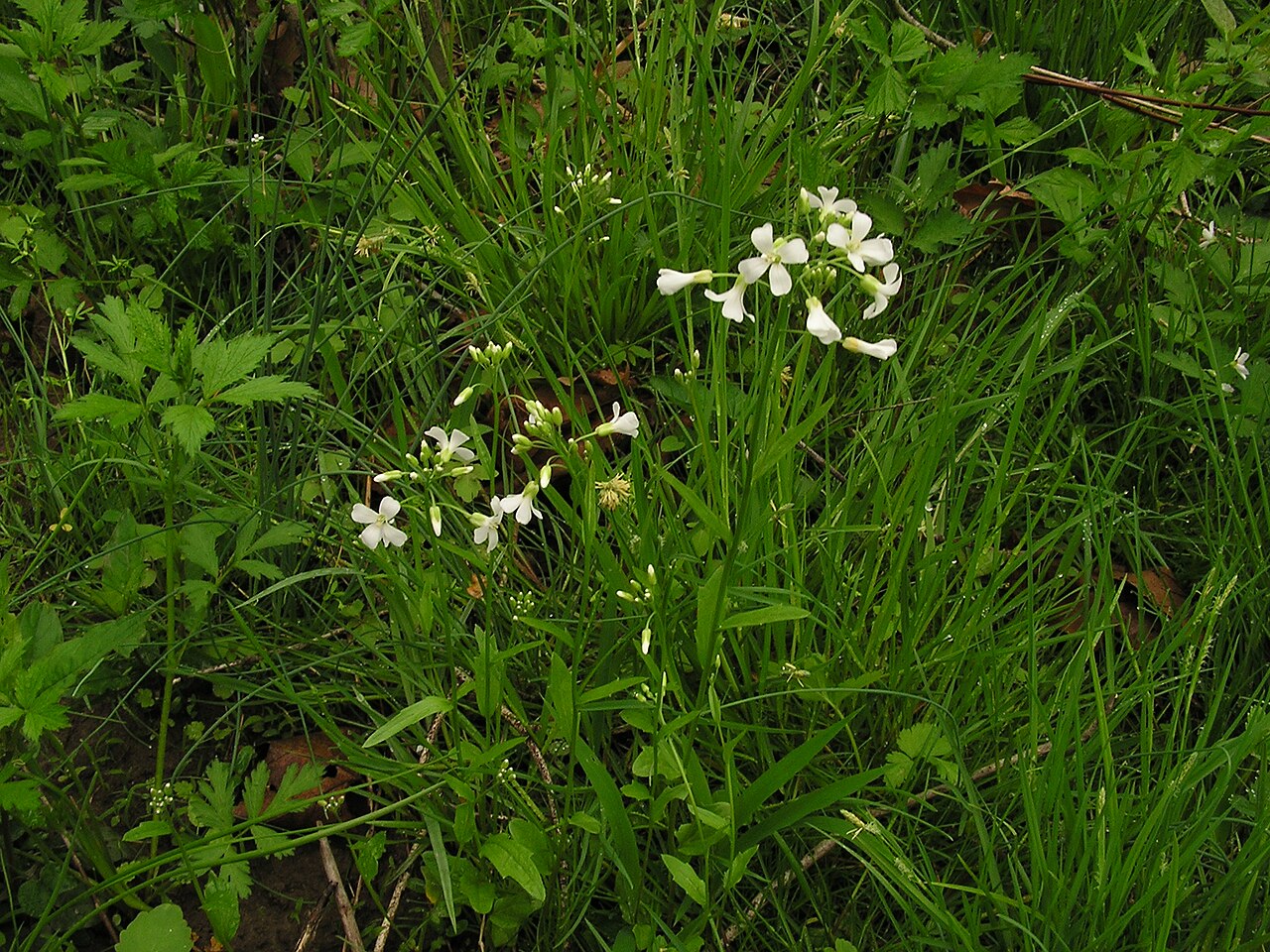
Its habitat is consistently wet: springs and seeps, the banks of brooks and streams, swamps and wet woods, floodplain forests, wet meadows and marsh edges. It is an obligate wetland plant across its range and often grows in partial shade under swamp and floodplain trees, as well as in open wet meadows.
📋 Regional plant lists featuring Bulbous Bittercress: New York, Pennsylvania & Northern New Jersey · Ohio & Indiana · Michigan, Wisconsin & Eastern Minnesota · Kentucky & Tennessee · Nebraska, Kansas & Eastern Colorado · Connecticut, Massachusetts & Rhode Island · New Hampshire, Maine & Vermont · Maryland, Virginia & West Virginia · Delaware, Southern New Jersey & Long Island · Illinois, Iowa & Missouri · Alabama, Georgia & Mississippi · North & South Florida · North & South Carolina · Arkansas, Louisiana, Eastern Oklahoma & Eastern Texas · North Dakota, South Dakota & Western Minnesota
Growing & Care Guide
Bulbous bittercress is easy to grow in the right spot: consistently wet soil and spring sun or light shade. It is a spring ephemeral of sorts, flowering and fruiting early and then fading back by midsummer. Buy plants or seed from native plant nurseries, and leave wild colonies undisturbed.
Light
Part shade to full sun. In nature it often grows under deciduous trees in swamps and floodplains, where it gets full spring sun before the canopy closes, and in open wet meadows.
Soil & Water
It needs wet to saturated soil, such as muck, silt or rich loam, and tolerates shallow standing water in spring. It will not survive in dry garden soil. Stream banks, pond and bog edges, seeps, rain gardens and low, wet corners are ideal.
Planting Tips
Plant small plants or tubers in early spring or fall in wet ground, about 6 inches apart in small groups so they can make a show. Combine it with other spring wetland wildflowers like marsh marigold and golden ragwort, and with later-emerging plants such as sensitive fern, jewelweed and turtlehead, which will fill the space after it goes dormant.
Pruning & Maintenance
No pruning is needed. Let the plants set seed and die back naturally. Mark the spot so you do not dig into the dormant tubers in summer. Keep aggressive plants such as cattails and reed canary grass from crowding it out.
Propagation
Propagate it by sowing fresh seed on wet soil in late spring or fall, or by dividing the small tubers when the plant is dormant. Seeds sown outdoors usually germinate the following spring after winter cold.
Landscape Uses
- Rain gardens and pond edges: early white flowers in consistently wet soil
- Wet woodland gardens: pairs with spring ephemerals and ferns
- Wetland and stream restoration: a native spring wildflower for wet meadows and floodplains
- Pollinator gardens: early nectar and pollen for small bees and flies
- Edible landscapes: peppery leaves and tubers, harvested sparingly from planted stock only
Wildlife & Ecological Value
Blooming in early spring, bulbous bittercress is one of the first flowers available to insects in wet woods and meadows.
For Pollinators
The open, white flowers offer nectar and pollen to small native bees such as sweat bees and mining bees, as well as flies and early butterflies. Plants in the genus Cardamine are also caterpillar food plants for some native white butterflies and orangetips, which feed on mustard-family plants.
For Birds
Its small seeds may be eaten by ground-feeding birds, and it adds to the early-season insect life that warblers and other birds feed on in wet woods.
For Mammals
Deer and rabbits may nibble the tender spring growth, and small mammals may dig the tubers.
Ecosystem Role
It is part of the spring flora of seeps, swamps and floodplains, and makes use of the period before trees leaf out and taller plants grow. Its tubers and small colonies help it persist in wet, periodically flooded ground.
Cultural & Historical Uses
The genus name Cardamine comes from an ancient Greek name for a cress, and “bittercress” refers to the sharp, mustard-like flavor of the leaves. Like other cresses, the young leaves contain the same kind of pungent compounds as horseradish and mustard.
In the 19th and early 20th centuries, books on wild foods described the small tubers and leaves of spring cress as a peppery addition to salads and as a horseradish substitute. If you want to try it, harvest only small amounts from plants you have grown yourself, be certain of the identification, and never dig wild colonies, which are slow to recover and are scarce in parts of its range.
Today bulbous bittercress is valued mostly as a wildflower, a sign of healthy springs, seeps and floodplain wetlands, and as an easy, attractive native for wet gardens.
Frequently Asked Questions
Why is it called bulbous bittercress?
It grows from a small, swollen, bulb-like tuber at the base of the stem, and its leaves have a sharp, bitter-peppery taste like other cresses. It is also called spring cress and bulbous cress.
Is bulbous bittercress edible?
The young leaves and tubers are edible and taste like mild horseradish, and they were eaten in the past. Only harvest small amounts from plants you have grown, be certain of the identification, and never dig wild populations.
When does bulbous bittercress bloom?
In spring, from about March in the South to May or June in the North.
How is it different from purple cress?
Purple cress (Cardamine douglassii) has pinkish to lavender flowers and hairy stems and blooms a little earlier. Bulbous bittercress has white flowers and smooth stems.
Is bulbous bittercress a weed?
No. It is a native wetland wildflower. It should not be confused with the non-native hairy bittercress (Cardamine hirsuta), a small weedy annual of lawns and gardens.

Looking for a nursery that carries Bulbous Bittercress?
Browse our native plant nursery directory: Alabama & Arkansas · Connecticut, Delaware, Florida & Georgia · Illinois, Indiana, Iowa & Kansas · Kentucky, Louisiana, Maryland, Massachusetts, Michigan, Minnesota, Mississippi & Missouri · Nebraska, New Hampshire, New Jersey, New York, North Carolina, North Dakota, Ohio & Oklahoma · Pennsylvania, Rhode Island, South Carolina, South Dakota, Tennessee, Texas, Vermont & Virginia · West Virginia & Wisconsin