
Tower Mustard (Arabis glabra)
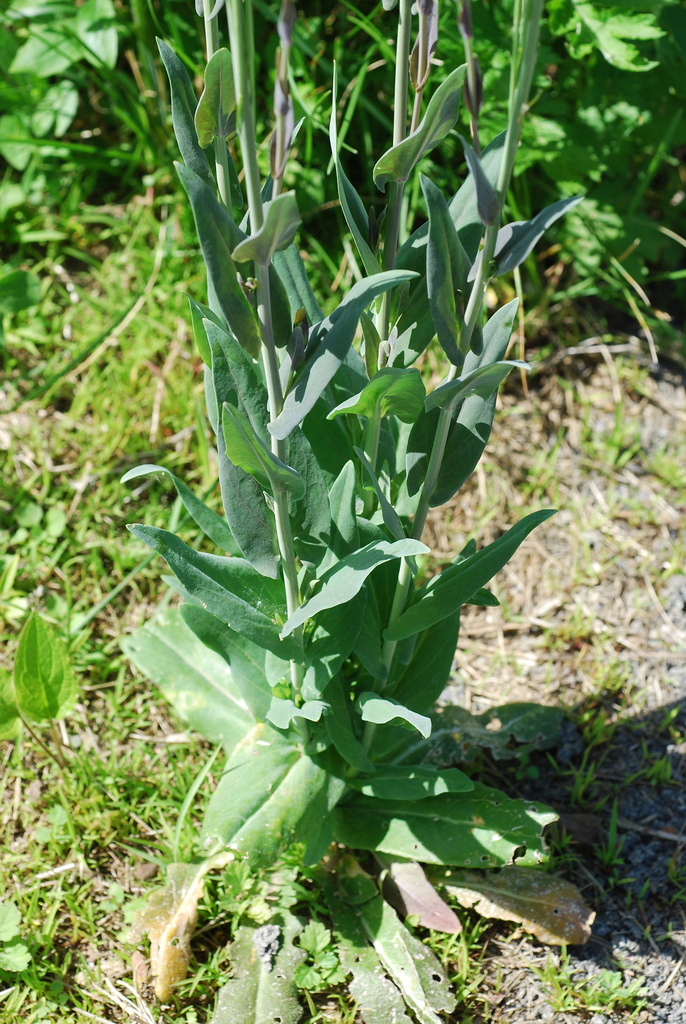
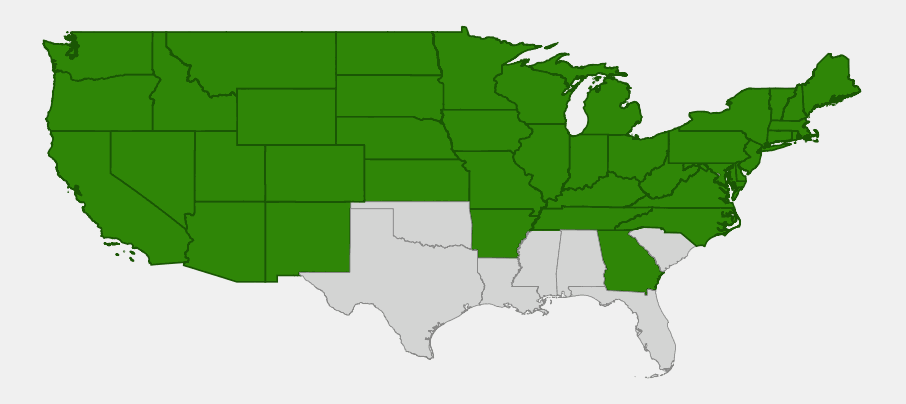
Arabis glabra, known as Tower Mustard (USDA: tower rockcress), is a tall, slender biennial of the mustard family (Brassicaceae). Many floras now place it in its own genus as Turritis glabra. It is native across much of North America and also Europe, Asia and North Africa. USDA PLANTS lists it as native in Canada and in 41 of the lower 48 states, from New England and the Mid-Atlantic west through the Midwest and northern Plains to the Rocky Mountains, the Southwest and the Pacific Coast.
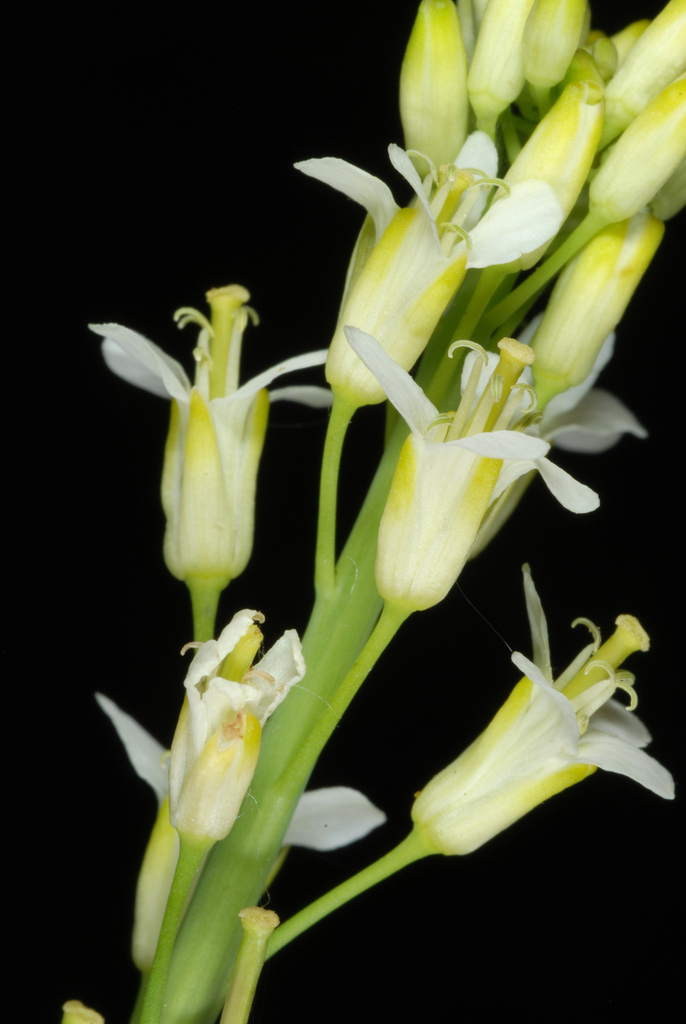
In its first year it forms a low rosette of hairy, toothed leaves. In its second spring it sends up a single stiff, waxy stem, usually 1 to 4 feet tall, with smooth, gray-green leaves that clasp the stem with arrow-shaped bases. Small, pale cream to yellowish flowers open at the top, followed by very long, narrow seed pods held tightly upright against the stem, giving the plant its tower-like look.
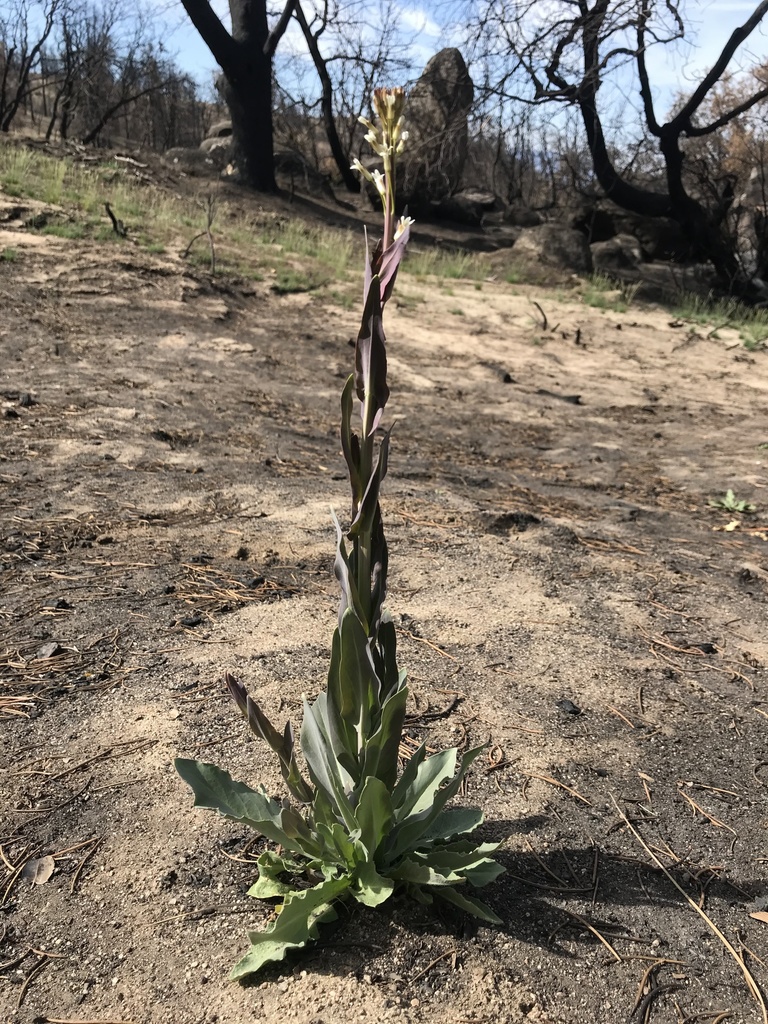
It grows in open, often disturbed places: rocky slopes, sandy fields, open woods, clearings, dunes and burned areas. It is not a showy garden flower, but it is an interesting native for wild meadows and dry, sunny slopes, and it is part of the early community of plants that colonize bare ground after fire or disturbance.
Identification
Tower mustard is easy to spot in late spring by its single, straight, gray-green stem with clasping arrow-shaped leaves and a column of long seed pods pressed closely against the stem.
Growth Form
A biennial, sometimes annual or short-lived perennial. It starts as a flat basal rosette, then bolts a stiff, upright stem, usually unbranched or with a few branches, 1 to 4 feet tall and occasionally taller. The lower stem is often hairy; the upper stem is smooth and covered with a pale, waxy bloom.
Leaves
Basal leaves are oblong to spoon-shaped, 2 to 5 inches long, toothed or wavy-edged and covered with small forked hairs; they often wither by flowering time. Stem leaves are smooth, gray-green, lance-shaped and clasp the stem with pointed, arrow-shaped lobes at the base. They become smaller up the stem.
Flowers
From about April to July, the stem ends in a narrow raceme of small flowers, each about 1/4 inch long, with four pale yellow to creamy white petals and six stamens. Flowers open from the bottom of the cluster upward while pods form below them.
Fruit
The fruits are very slender, straight pods (siliques) about 2 to 4 inches long, held stiffly erect and pressed against the stem. They split lengthwise to release small seeds, which can remain in the soil for years.
Look-alikes
Other rockcresses (Boechera and Arabis species) may have similar upright pods, but most have white or pink flowers and lack the smooth, gray-green, clasping upper leaves. Field pennycress and other weedy mustards have rounded or flat pods rather than long, stem-hugging ones.
Safety
Tower mustard is not known to be seriously toxic. Like many mustards, it contains sharp-tasting mustard oils, and large amounts may upset the stomach of livestock. It is not a recognized food plant.
Quick Facts
| Scientific Name | Arabis glabra (also Turritis glabra) |
| Family | Brassicaceae (mustard family) |
| Plant Type | Biennial (sometimes annual or short-lived perennial) |
| Mature Height | 1–4 ft |
| Mature Spread | 6–12 in |
| Growth Rate | Fast |
| Sun Exposure | Full sun to part shade |
| Water Needs | Low to moderate; dry to average soil |
| Soil Type | Sandy, gravelly, rocky or loamy well-drained soil |
| Soil pH | About 5.5–8.0 |
| Bloom Time | April–July |
| Flower Color | Pale yellow to creamy white |
| Fall Color | None; dies after setting seed |
| Fruit | Long, slender, erect pods pressed against the stem |
| Deer Resistant | Moderately |
| USDA Hardiness Zones | 3–8 |
Native Range
Tower mustard has a very wide natural range across the temperate Northern Hemisphere. In North America it grows across southern Canada from the Maritimes to British Columbia and the Yukon, and in the United States from Maine to Washington and south to Georgia, Tennessee, Arkansas, Kansas, New Mexico, Arizona and California. It is absent from most of the Deep South and the southern Great Plains. In Alaska, USDA lists it as introduced.
In the West it is common in sagebrush, foothills, open conifer forests and burned areas, and it often appears in abundance in the first years after wildfire. In the Midwest and East it is more scattered, growing on sandy and rocky ground, dunes, cliffs, open woods and roadsides. Because it also grows in Europe and favors disturbed sites, some botanists suspect that a few eastern populations may have arrived from overseas, but USDA PLANTS treats it as native throughout the lower 48 states where it occurs.
It favors open, sunny or lightly shaded sites with little competition, such as rocky outcrops, gravel bars, sandy fields, forest clearings and recently burned or logged ground.
📋 Regional plant lists featuring Tower Mustard: New York, Pennsylvania & Northern New Jersey · Idaho, Eastern Oregon & Eastern Washington · Ohio & Indiana · Montana & Wyoming · Michigan, Wisconsin & Eastern Minnesota · Kentucky & Tennessee · Nebraska, Kansas & Eastern Colorado · Utah & Western Colorado · Connecticut, Massachusetts & Rhode Island · New Hampshire, Maine & Vermont · Maryland, Virginia & West Virginia · Delaware, Southern New Jersey & Long Island · Arizona & New Mexico · Illinois, Iowa & Missouri · Alabama, Georgia & Mississippi · North & South Carolina · Arkansas, Louisiana, Eastern Oklahoma & Eastern Texas · North Dakota, South Dakota & Western Minnesota · Western Oregon & Western Washington · California & Nevada
Growing & Care Guide
Tower mustard is rarely sold, but it is easy to grow from seed in dry, sunny, open spots. It is best suited to naturalistic plantings, rock gardens and restoration of open, rocky or sandy sites.
Light
It grows best in full sun to light shade. It does not compete well in dense shade or tall, thick vegetation.
Soil & Water
Plant it in well-drained sandy, gravelly or rocky soil. It tolerates poor, dry soils and does not need fertilizer or extra water once established. Heavy, wet soils are not suitable.
Planting Tips
Sow seed in fall on bare, open soil, pressing it lightly into the surface. Plants form rosettes the first year and flower the second. To keep it in a planting, leave some open ground where seedlings can establish each year.
Pruning & Maintenance
No pruning is needed. Let the stems stand until the pods split and release their seed, then remove the dead stems if you like. It is short-lived, so new plants come from seed.
Propagation
Grow it from seed collected from dry, tan pods in summer. Sow outdoors in fall; a winter outdoors improves germination. Seedlings do not transplant well once the taproot develops.
Landscape Uses
- Dry meadows and prairies: a tall, vertical accent among grasses
- Rock gardens and slopes: thrives in thin, rocky soil
- Post-fire restoration: colonizes open ground after burns
- Pollinator plantings: spring flowers for small bees and flies
- Butterfly habitat: a native mustard that can serve as a larval host
Wildlife & Ecological Value
Tower mustard is a short-lived pioneer plant whose flowers and foliage support small insects in open habitats.
For Pollinators
Its small flowers are visited by small native bees, flies and beetles. Like other native mustards, it can serve as a larval host for butterflies of the white and orangetip group, whose caterpillars feed on mustard-family plants.
For Birds
Seed-eating birds such as sparrows and finches may forage on the small seeds after the pods open.
For Mammals
It is grazed lightly by deer and livestock. Its sharp-tasting mustard oils make it less palatable than many plants.
Ecosystem Role
As a pioneer of disturbed and burned ground, it helps cover bare soil in the first years after fire, landslides or other disturbance, and its long-lived seed bank lets it reappear when conditions open up again.
Cultural & Historical Uses
The name “tower mustard” describes its straight, narrow form, with long seed pods pressed against the stem like the stones of a tower. The alternative genus name Turritis also means “tower-like.” The species name glabra means “smooth,” referring to the hairless upper stem and leaves.
Botanists have moved tower mustard between Arabis and Turritis several times. DNA studies support treating it as Turritis glabra, a genus separate from the rockcresses, but USDA PLANTS continues to use Arabis glabra.
Because it grows natively on both sides of the Atlantic, tower mustard is one of a small group of North American wildflowers that European botanists and gardeners also know well. In parts of Europe it has declined as open, sandy habitats have disappeared, while in western North America it remains a familiar sight on burned and rocky slopes.
Frequently Asked Questions
Is tower mustard a weed?
It is a native plant in most of the lower 48 states and Canada, though it favors disturbed ground like many weeds. It rarely becomes a problem and is short-lived, but USDA lists it as introduced in Alaska.
Why is it called tower mustard?
Its single straight stem, clasping leaves and long seed pods pressed upright against the stem give it a narrow, tower-like shape.
Is it Arabis or Turritis?
Both names are used. USDA PLANTS calls it Arabis glabra, while many current floras use Turritis glabra based on DNA studies.
When does it bloom?
From about April to July, in its second year, depending on latitude and elevation.
Does it come back every year?
Individual plants usually die after flowering and setting seed in their second year, but new plants grow from seed, so it can persist in a site for many years.

Looking for a nursery that carries Tower Mustard?
Browse our native plant nursery directory: Arizona & Arkansas · California · Colorado, Connecticut, Delaware & Georgia · Idaho, Illinois, Indiana, Iowa & Kansas · Kentucky, Maine, Maryland, Massachusetts, Michigan, Minnesota, Missouri & Montana · Nebraska, Nevada, New Hampshire, New Jersey, New Mexico, New York, North Carolina, North Dakota & Ohio · Oregon · Pennsylvania, Rhode Island, South Dakota, Tennessee, Utah, Vermont & Virginia · Washington · West Virginia, Wisconsin & Wyoming