
Virginia Dayflower (Commelina virginica)
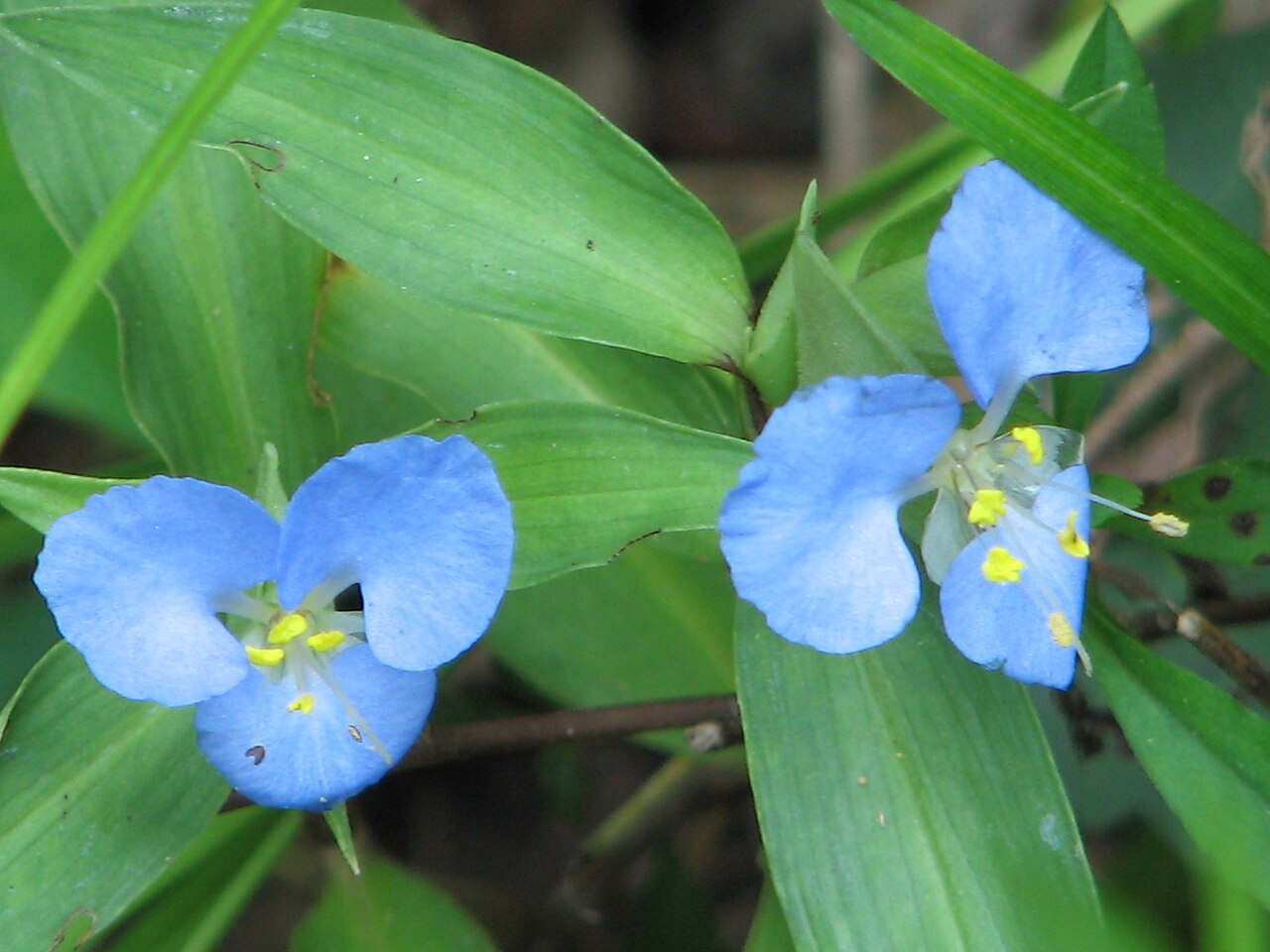
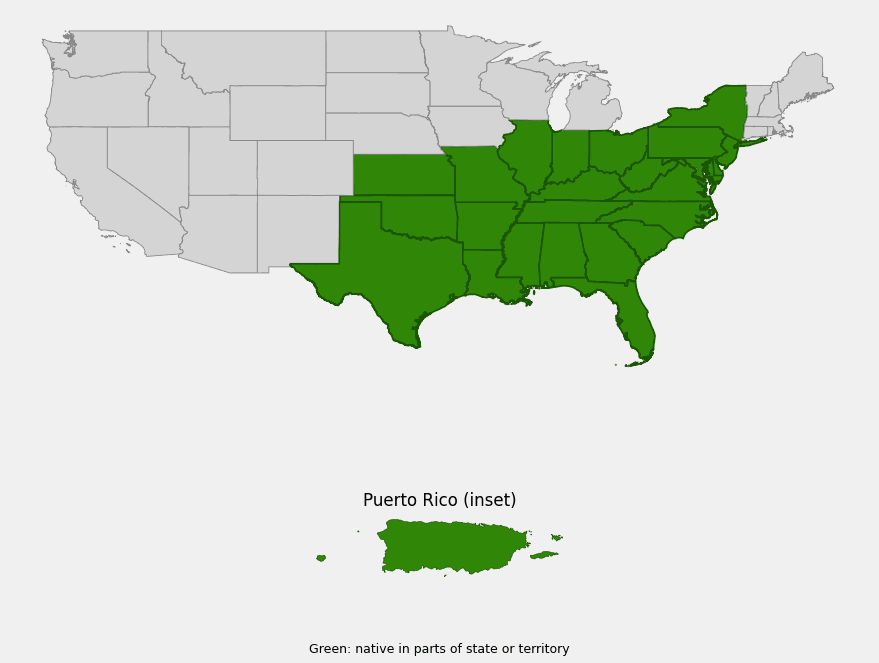
Commelina virginica, known as Virginia Dayflower, is a native perennial of the spiderwort family (Commelinaceae). It grows in floodplain forests, swamps, wet woods, stream banks and ditches across the southeastern and south-central United States, from New Jersey and southern New York south to Florida and west to Texas, Oklahoma and Kansas. USDA PLANTS also lists it as native in Puerto Rico.
It is the largest of the native dayflowers in the East, with leafy, upright stems 1 to 3 feet tall and long, lance-shaped leaves up to about 8 inches long. From early summer to fall it bears clear sky-blue flowers about 1 inch across. Each flower has three blue petals of nearly equal size and lasts only part of one day, opening in the morning and fading by afternoon, which is where the name dayflower comes from.
Virginia dayflower is a good native choice for shady, wet spots, rain gardens and pond or stream edges, where it spreads slowly by rhizomes. It is often confused with the Asian dayflower (Commelina communis), a weedy annual introduced from East Asia that has two blue petals and one tiny white one. Virginia dayflower is a perennial with three blue petals, larger leaves and clustered spathes.
Identification
Virginia dayflower is a tall, leafy dayflower of wet, shady places. Look for three nearly equal blue petals, clustered funnel-shaped spathes at the stem tips, and leaf sheaths fringed with reddish hairs.
Growth Habit
It is a clump-forming perennial that spreads by underground rhizomes. The stems are fleshy, jointed and usually upright, 1 to 3 feet tall. Plants often form loose colonies in floodplains and wet woods.
Leaves
The leaves are alternate, lance-shaped, 3 to 8 inches long and 1/2 to 1 1/2 inches wide, with parallel veins and long-pointed tips. Each leaf has a tubular sheath that wraps the stem, and the top of the sheath is fringed with reddish-brown hairs, a useful identification feature.
Flowers
The flowers come out of folded, leaf-like bracts (spathes) clustered at the ends of the stems. In Virginia dayflower several spathes are grouped together, and each is fused along its lower edge into a funnel. The flowers are about 1 inch wide, with three sky-blue petals of nearly equal size and yellow stamens. Each flower lasts only a few hours. Flowering runs from about June to October.
Fruit & Seeds
The fruit is a small capsule that develops inside the spathe and holds a few smooth to slightly wrinkled seeds. The spathes contain a clear, slimy mucilage that surrounds the developing fruits.
Look-alikes
Asian dayflower (Commelina communis, introduced) is a sprawling annual with two blue petals and one small white petal, and its spathes are single and not fused. Whitemouth Dayflower (C. erecta) of drier, sandy places has two blue petals and a small white lower petal. Spiderworts such as Virginia Spiderwort have three equal petals too, but their flowers grow in clusters without folded spathes and are usually purple-blue.
Safety
Virginia dayflower is not known to be toxic. Leaves and young shoots of some dayflowers have been eaten as cooked greens, but do not eat any wild plant without expert identification.

Quick Facts
| Scientific Name | Commelina virginica |
| Family | Commelinaceae (spiderwort family) |
| Plant Type | Rhizomatous herbaceous perennial |
| Mature Height | 1–3 ft |
| Mature Spread | 1–2 ft; spreads slowly by rhizomes |
| Growth Rate | Moderate |
| Sun Exposure | Partial shade to full shade; sun in wet soil |
| Water Needs | High; moist to wet soil |
| Soil Type | Rich, moist loam, silt or muck |
| Soil pH | About 5.5–7.5 |
| Bloom Time | June–October |
| Flower Color | Sky blue |
| Fall Color | None; dies back after frost |
| Fruit | Small capsule hidden in the spathe |
| Deer Resistant | No; deer and rabbits eat the leaves |
| USDA Hardiness Zones | 6–10 |
Native Range
Virginia dayflower is native to the eastern and south-central United States and the Caribbean. USDA PLANTS lists it as native in the lower 48 states and Puerto Rico and records it from 24 states: Alabama, Arkansas, Delaware, Florida, Georgia, Illinois, Indiana, Kansas, Kentucky, Louisiana, Maryland, Mississippi, Missouri, New Jersey, New York, North Carolina, Ohio, Oklahoma, Pennsylvania, South Carolina, Tennessee, Texas, Virginia and West Virginia. It is not recorded from Canada.
It is most common on the Atlantic and Gulf Coastal Plains and in the bottomlands of the lower Mississippi Valley, from Virginia and the Carolinas south to Florida and west to eastern Texas, Arkansas and eastern Oklahoma. It reaches north to southern Illinois, Indiana, Ohio and Pennsylvania, and records in New York and Kansas are at the northern and western edges of its range. In Texas it grows mainly in the eastern part of the state. In Puerto Rico it is found in moist, shaded places.
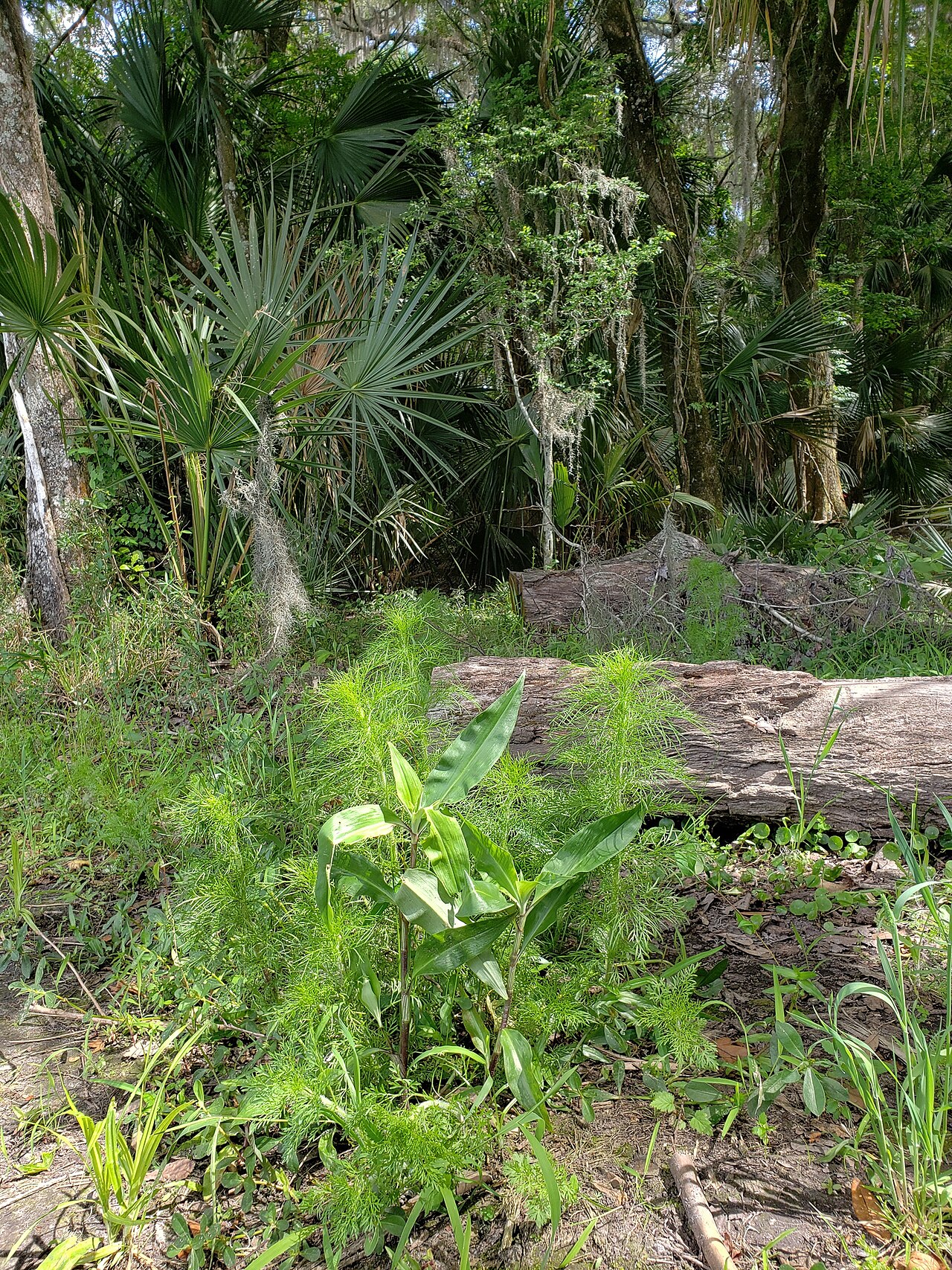
Habitats include floodplain and bottomland forests, swamps and swamp edges, wet woods, stream and river banks, wet ditches and seepy slopes. It grows best in rich, moist soil with partial shade.
📋 Regional plant lists featuring Virginia Dayflower: New York, Pennsylvania & Northern New Jersey · Ohio & Indiana · Kentucky & Tennessee · Nebraska, Kansas & Eastern Colorado · Maryland, Virginia & West Virginia · Delaware, Southern New Jersey & Long Island · Illinois, Iowa & Missouri · Alabama, Georgia & Mississippi · North & South Florida · Puerto Rico · North & South Carolina · Arkansas, Louisiana, Eastern Oklahoma & Eastern Texas
Growing & Care Guide
Virginia dayflower is occasionally sold by native plant nurseries in the Southeast and is easy to grow in moist shade. It is a better choice than the weedy Asian dayflower for gardeners who want a blue-flowered groundcover for wet spots.
Light
Partial to full shade is ideal. It tolerates more sun if the soil stays wet, but the leaves may scorch in hot, dry sun.
Soil & Water
Plant it in rich, moist to wet soil. It tolerates periodic flooding and heavy soils. Water during dry spells, especially in the first year; it does not tolerate drought.
Planting Tips
Plant divisions or container plants in spring, 12 to 18 inches apart. Use it along shady stream banks, at pond edges, in the low part of a rain garden or in a woodland garden with ferns, sedges and inland sea oats.
Pruning & Maintenance
Little care is needed. Cut back dead stems after frost or in early spring. It spreads slowly by rhizomes; divide clumps every few years if you want more plants or need to control its spread.
Propagation
Divide the rhizomes in spring. Stem cuttings with a node or two root easily in moist soil. Seed can be sown in fall; it needs a cold, moist winter period to germinate.
Landscape Uses
- Shade and woodland gardens: blue summer flowers in moist shade
- Rain gardens: the wettest, shadiest parts of a rain garden
- Stream and pond banks: holds soil with its rhizomes
- Floodplain restoration: a native groundcover for bottomland forests
- Pollinator gardens: pollen for bumblebees and other native bees
Wildlife & Ecological Value
Virginia dayflower is a common, quiet member of southern floodplain forests and swamps, where it feeds insects, birds and mammals.
For Pollinators
Dayflowers produce little or no nectar. Instead, bees, especially bumblebees and sweat bees, and syrphid flies visit the flowers to collect pollen. The bright yellow stamens act as a lure.
For Birds
Doves, quail, wild turkeys and songbirds eat dayflower seeds, and the dense stems give cover to ground-feeding birds in wet woods.
For Mammals
Deer and rabbits browse the tender, juicy leaves and stems. Dayflowers are a known summer food of white-tailed deer in the Southeast.
Ecosystem Role
Its rhizomes help hold soil on floodplains and stream banks, and its colonies form part of the herbaceous layer of bottomland forests and swamps. Because it is a native perennial of shady wetlands, it does not usually spread into lawns and gardens the way the Asian dayflower does.
Cultural & Historical Uses
Linnaeus named the genus Commelina for the Dutch botanists Jan and Caspar Commelin. He is said to have compared the two showy petals and one tiny petal of the Asian dayflower to the two well-known Commelins and a third family member who achieved little in botany. Virginia dayflower, with three equal petals, spoils the joke.
The species name virginica refers to Virginia, the colony from which many early North American plant specimens reached European botanists. Older names for the plant include Commelina deficiens and C. longifolia.
The Asian dayflower (Commelina communis) was introduced to North America and has become a common weed in gardens, nurseries and fields. Learning to tell it from Virginia dayflower helps gardeners remove the weed while keeping the native plant.
Frequently Asked Questions
How do I tell Virginia dayflower from Asian dayflower?
Virginia dayflower has three blue petals of nearly equal size, clustered, fused spathes and upright stems from rhizomes. Asian dayflower is a sprawling annual with two blue petals and one tiny white petal.
Why is it called a dayflower?
Each flower opens in the morning and wilts the same day, usually by afternoon.
Where does it grow best?
In moist to wet soil in partial or full shade, such as floodplain forests, swamp edges, stream banks and rain gardens.
Is it invasive?
No. It is a native perennial that spreads slowly by rhizomes in wet, shady sites. The weedy dayflower in many gardens is the introduced Asian dayflower.
Does it attract pollinators?
Yes. Bumblebees, sweat bees and syrphid flies visit the flowers to collect pollen.

Looking for a nursery that carries Virginia Dayflower?
Browse our native plant nursery directory: Alabama & Arkansas · Delaware, Florida & Georgia · Illinois, Indiana & Kansas · Kentucky, Louisiana, Maryland, Mississippi & Missouri · New Jersey, New York, North Carolina, Ohio & Oklahoma · Pennsylvania, South Carolina, Tennessee, Texas & Virginia · West Virginia