
Carolina Redroot (Lachnanthes caroliana)
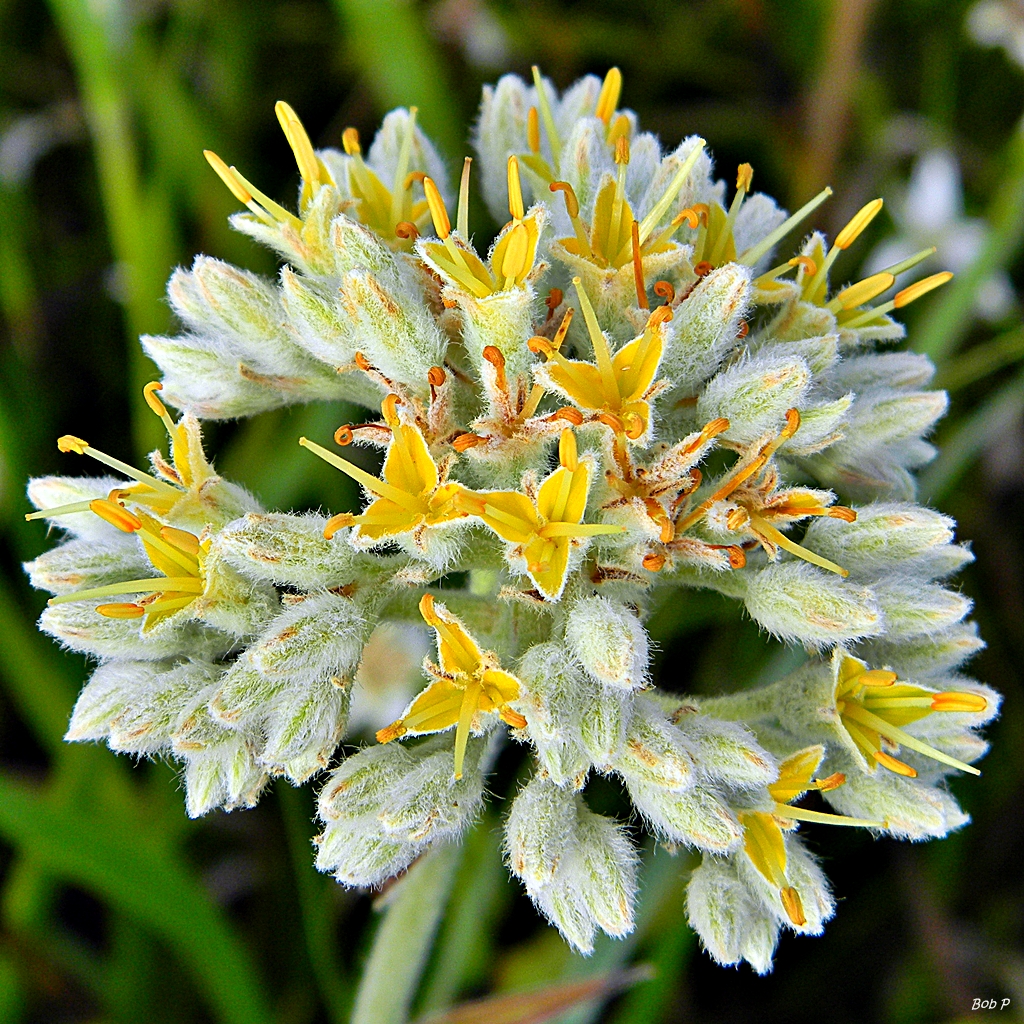
Lachnanthes caroliana, known as Carolina Redroot, redroot, bloodroot or paintroot, is a wetland perennial of the Atlantic and Gulf coastal plains of eastern North America. It forms clumps of flat, sword-shaped, iris-like leaves, and in summer sends up a stout, hairy stem topped by a dense, flat-topped cluster of woolly gray-white buds and small, dull yellow flowers. Its most remarkable feature is hidden underground: the roots and rhizomes are filled with a blood-red sap.
It is the only species in its genus and the only North American member of the bloodwort family (Haemodoraceae), a family otherwise found mainly in Australia and South Africa. It grows in wet, acidic, sandy soils: pine savannas and flatwoods, bog edges, wet ditches, pond shores and the edges of cranberry bogs, from Massachusetts and Nova Scotia south to Florida and west to Louisiana, with a rare inland outpost in Tennessee.
The name is spelled two ways. USDA PLANTS and many recent sources use caroliana, while many floras use caroliniana; older books call it Lachnanthes tinctoria, after its use as a dye. This guide covers how to identify Carolina redroot, where it grows, how to grow it in a wet garden, and its curious history, which includes a mention by Charles Darwin.
Identification
Out of flower, Carolina redroot looks like a small iris or a clump of grass-like leaves. In bloom, the woolly, flat-topped flower clusters are unmistakable, and a glance at the bright red roots settles any doubt.
Stems & Growth Habit
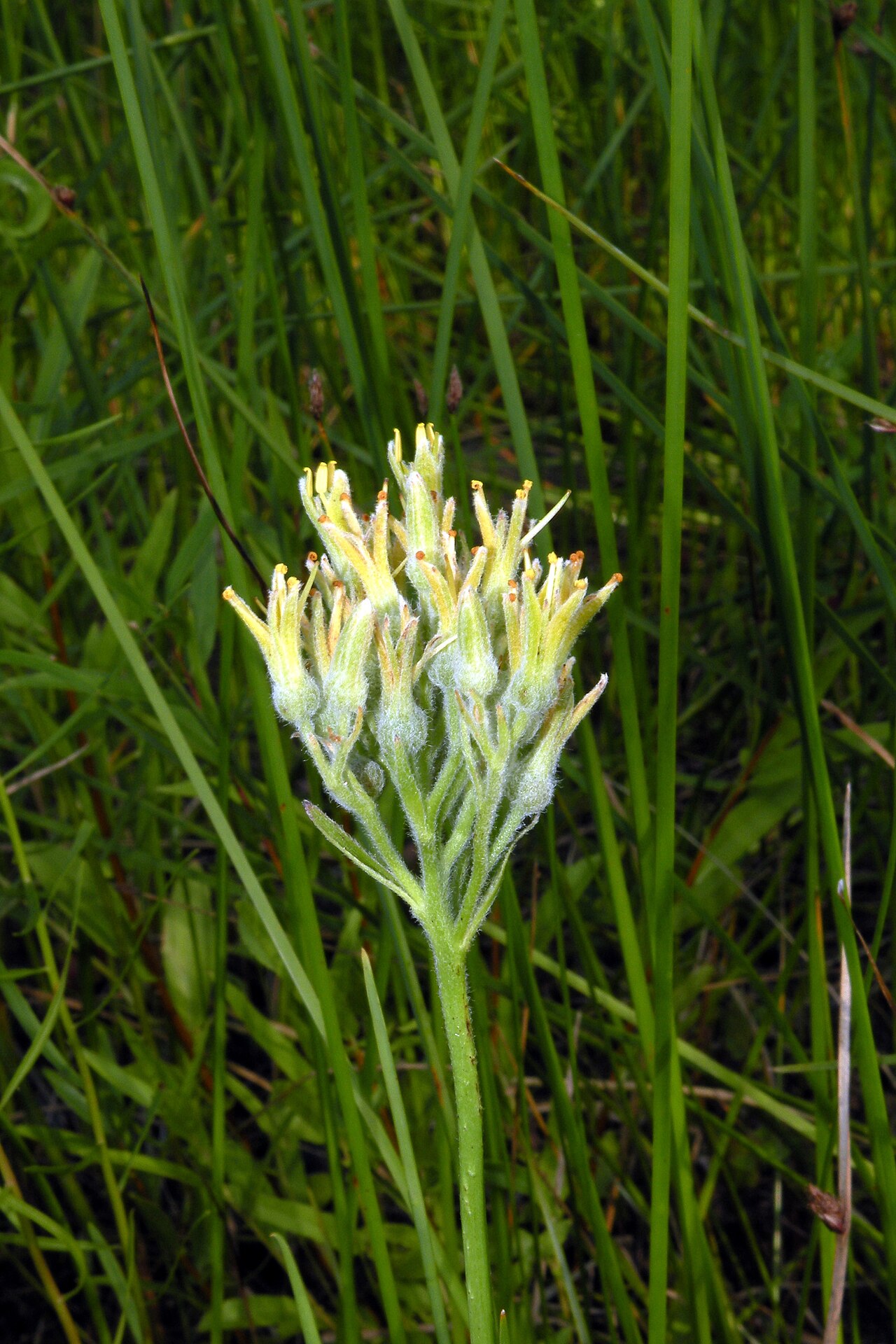
Plants grow from a short, red rhizome with fibrous red roots, forming clumps or loose colonies. The flowering stem is usually 1 to 3 feet tall, stout, and covered in soft, whitish hairs, especially toward the top.
Leaves
The leaves are mostly basal, flat and sword-shaped, about ½ inch wide and up to about 1½ feet long, arranged in a flat fan like an iris. They are smooth and green, often with a reddish base. A few smaller leaves clasp the flowering stem.
Flowers
The flowers are borne in a dense, rounded to flat-topped cluster at the top of the stem, 2 to 4 inches across. Every part of the cluster, including the stalks, buds and outer surface of the flowers, is covered in dense, woolly, gray-white hairs, so the cluster looks frosted or felted. Each flower is about ½ inch across, with six narrow, dull yellow tepals that are hairy outside and smooth inside, three long stamens and a long style. Bloom is from June to September, peaking in mid to late summer.
Fruit & Seeds
Each flower produces a small, rounded, three-parted capsule that splits open to release a few flat, dark seeds. The dry capsules and stems stay standing into winter and are easy to recognize.
Look-alikes
Golden crest (Lophiola aurea) grows in the same wet pinelands and also has woolly flower clusters with yellow flowers, but it is shorter, with narrower leaves and no red sap. Yellow-eyed grasses (Xyris) have similar iris-like leaves but bear their yellow, three-petaled flowers from small, scaly heads on wiry stems. Before blooming, young plants can be mistaken for blue flag iris, but iris roots are not red.
Quick Facts
| Scientific Name | Lachnanthes caroliana (also spelled caroliniana; syn. L. tinctoria) |
| Family | Haemodoraceae (bloodwort family) |
| Plant Type | Herbaceous perennial with red rhizomes |
| Mature Height | 1–3 ft in flower |
| Mature Spread | 6–12 in per clump; spreads by rhizomes |
| Growth Rate | Moderate |
| Sun Exposure | Full sun to part shade |
| Water Needs | High; wet to moist |
| Soil Type | Wet, acidic, sandy or peaty soils |
| Soil pH | About 4.0–6.0 |
| Bloom Time | June–September |
| Flower Color | Dull yellow, with woolly gray-white buds |
| Fall Color | None of note |
| Fruit | Small rounded capsule with a few flat seeds |
| Deer Resistant | Moderate |
| USDA Hardiness Zones | 6–10 |
Native Range
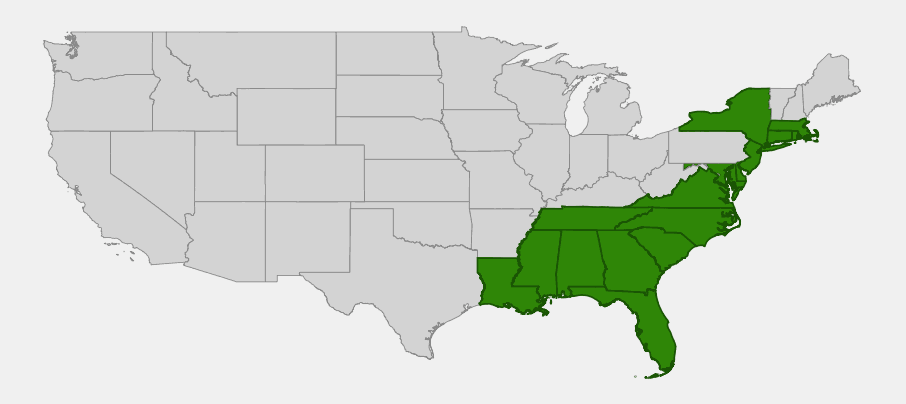
Carolina redroot is a coastal plain plant. USDA PLANTS lists it as native in 16 states, along the Atlantic coast from Massachusetts, Rhode Island and Connecticut through Long Island, New Jersey, Delaware, Maryland and Virginia to the Carolinas, Georgia and Florida, and west along the Gulf coast through Alabama and Mississippi to Louisiana. It is also native to southwestern Nova Scotia, where it is a rare species protected as a species at risk, and to Cuba.
The Tennessee record is an outlying, disjunct population in Coffee County on the Highland Rim, documented by herbarium specimens. That area holds several wetland plants otherwise found mainly on the coastal plain, and redroot there is far from the rest of its range.
Within its range, it grows in wet, acidic, sandy or peaty places: wet pine flatwoods and savannas, bog and pond margins, wet ditches, sandy swales, and the edges of cranberry bogs, where it can become a weed. It is most abundant in Florida and the southeastern coastal plain and becomes scattered and local northward.
📋 Regional plant lists featuring Carolina Redroot: New York, Pennsylvania & Northern New Jersey · Kentucky & Tennessee · Connecticut, Massachusetts & Rhode Island · New Hampshire, Maine & Vermont · Maryland, Virginia & West Virginia · Delaware, Southern New Jersey & Long Island · Alabama, Georgia & Mississippi · North & South Florida · North & South Carolina · Arkansas, Louisiana, Eastern Oklahoma & Eastern Texas
Growing & Care Guide
Carolina redroot is an easy plant for the right spot: a sunny, wet, acidic, sandy place such as a bog garden, pond edge or rain garden on sandy soil. It is not a showy perennial, but its woolly flower clusters are interesting up close, and it supports pollinators and wildlife. It is occasionally offered by native plant nurseries in the Southeast; never dig it from the wild, especially at the northern edge of its range, where it is rare.
Light
Full sun is best for flowering. It tolerates part shade, but blooms less and becomes floppy in deep shade.
Soil & Water
It needs consistently wet to moist, acidic soil, ideally sand or a sand-peat mix. It does well in soil that is saturated part of the year and tolerates brief shallow flooding. It has low drought tolerance and does not do well in alkaline or rich, heavy soil.
Planting Tips
Plant in spring in a bog garden, along a pond or stream margin, in a wet swale, or in a rain garden with sandy, acidic soil. Combine it with pitcher plants, sundews, meadow beauties and native grasses for a natural pine-savanna look. In a container bog, it can be grown in a peat and sand mix kept constantly wet.
Pruning & Maintenance
Leave the dry flower stalks standing for winter interest and seed for birds, then cut them back in late winter. In wild habitats, redroot responds well to fire and other disturbance that keeps shrubs from shading it; in a garden, remove woody seedlings that crowd it.
Propagation
Sow fresh seed on the surface of wet, acidic, sandy soil in fall or after a period of cold, moist stratification in spring. Clumps can also be divided in early spring by cutting the red rhizomes into sections, each with leaves and roots. Wear gloves: the red sap stains skin and clothing.
Landscape Uses
- Bog gardens: with pitcher plants, sundews and other carnivorous and wetland plants
- Pond and stream margins: in wet, sandy, acidic soil at the water’s edge
- Rain gardens on sandy soil: in the wettest zone of coastal plain rain gardens
- Pine savanna and wetland restoration: a characteristic perennial of wet flatwoods and savannas
- Wildlife plantings: its rhizomes feed sandhill cranes and its seeds feed birds
Wildlife & Ecological Value
Carolina redroot is a common part of southeastern wetland communities and has some notable relationships with wildlife, especially cranes.
For Pollinators
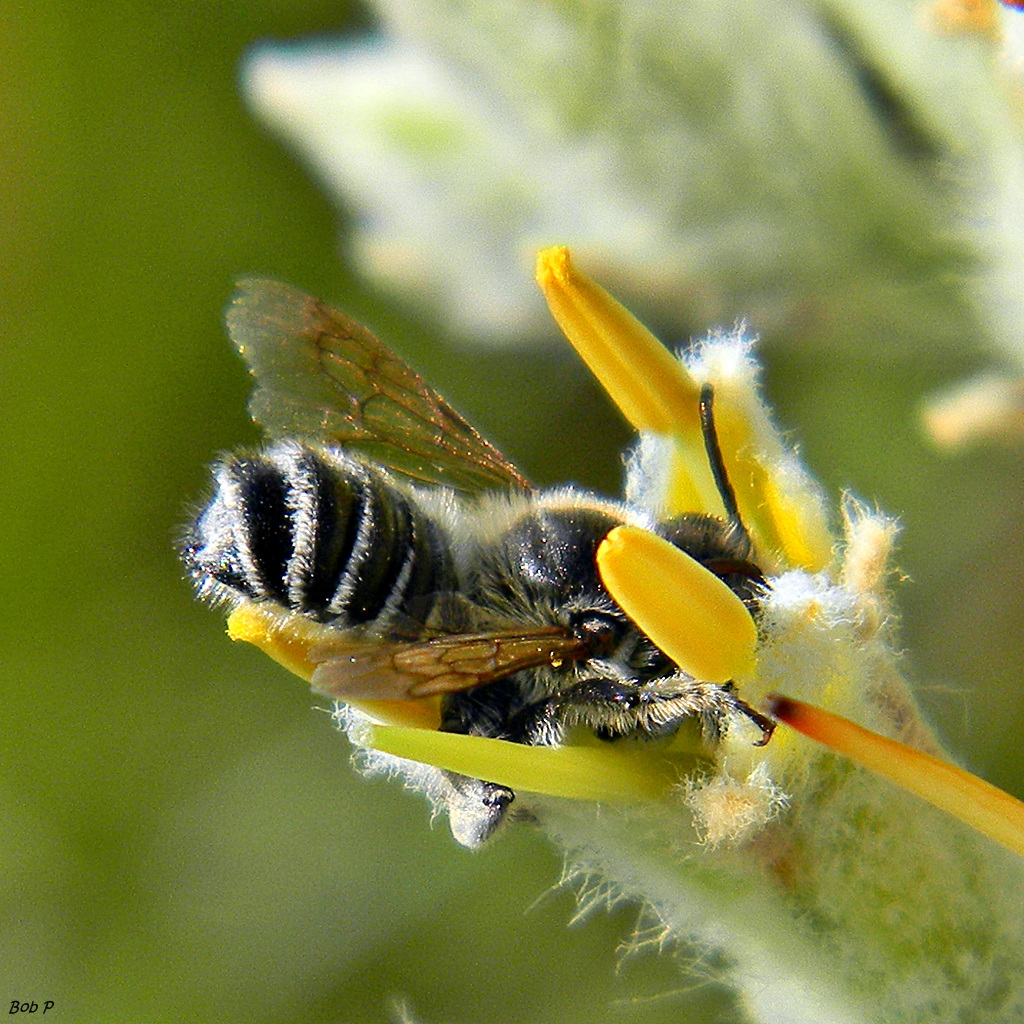
The small yellow flowers produce nectar and pollen that attract many small bees, including leaf-cutter and sweat bees, as well as wasps, flies and butterflies. Its long summer bloom makes it a dependable resource in wet pinelands.
For Birds
Sandhill cranes are known to dig up and eat the starchy red rhizomes, and in parts of Florida redroot is considered an important crane food. Small birds eat the seeds from the dry capsules in fall and winter.
For Mammals
Feral hogs may root up the rhizomes. Deer occasionally graze the foliage, but it is not a preferred food.
Ecosystem Role
Redroot is often one of the first plants to appear after disturbance in wet, sandy places, such as fire, ditch digging or soil scraping, and it can form large stands that help stabilize wet sand. Its red color comes from pigments in a group of compounds called phenylphenalenones, which are unusual among plants and may protect the roots from fungi and grazing.
Cultural & Historical Uses
The red pigment in the roots was historically used to make a red dye, which is why older books call the plant Lachnanthes tinctoria, “dyer’s lachnanthes,” and why it is sometimes called paintroot. Some Native American peoples reportedly used it as a medicine and a stimulant, but the plant contains bioactive compounds and is not safe to eat or use as a home remedy.
Charles Darwin mentioned the plant in On the Origin of Species, passing on a report from farmers in Virginia who said all their pigs were black because the “paint-root” colored the bones of the pigs that ate it pink and made the hooves of all but the black ones drop off. Darwin used the story as an example of how color can be linked to other traits.
Today redroot is better known to cranberry growers, who sometimes treat it as a weed of bogs, and to naturalists in Florida, where sandhill cranes can be seen digging for its roots in wet pastures and flatwoods.
Frequently Asked Questions
Why is it called redroot?
Its roots and rhizomes are filled with a bright red sap. The color comes from unusual pigments that were once used to make dye.
Is it caroliana or caroliniana?
Both spellings are used. USDA PLANTS uses Lachnanthes caroliana, while many floras use caroliniana. Older books use Lachnanthes tinctoria. They are all the same plant.
Can I grow Carolina redroot in my garden?
Yes, if you have a sunny, wet, acidic, sandy spot such as a bog garden or pond edge. It is not suited to ordinary dry garden beds.
Is Carolina redroot poisonous?
It is not known as a common poisoning risk, but the roots contain bioactive pigments, old farm lore says they stained the bones of pigs that ate them, and it should not be eaten. Wear gloves when dividing it, since the sap stains skin.
What eats Carolina redroot?
Sandhill cranes dig up and eat the rhizomes, and small birds eat the seeds. The flowers feed small bees and other insects.

Looking for a nursery that carries Carolina Redroot?
Browse our native plant nursery directory: Alabama · Connecticut, Delaware, Florida & Georgia · Louisiana, Maryland, Massachusetts & Mississippi · New Jersey, New York & North Carolina · Rhode Island, South Carolina, Tennessee & Virginia