
Hairy Sweet Cicely (Osmorhiza claytonii)
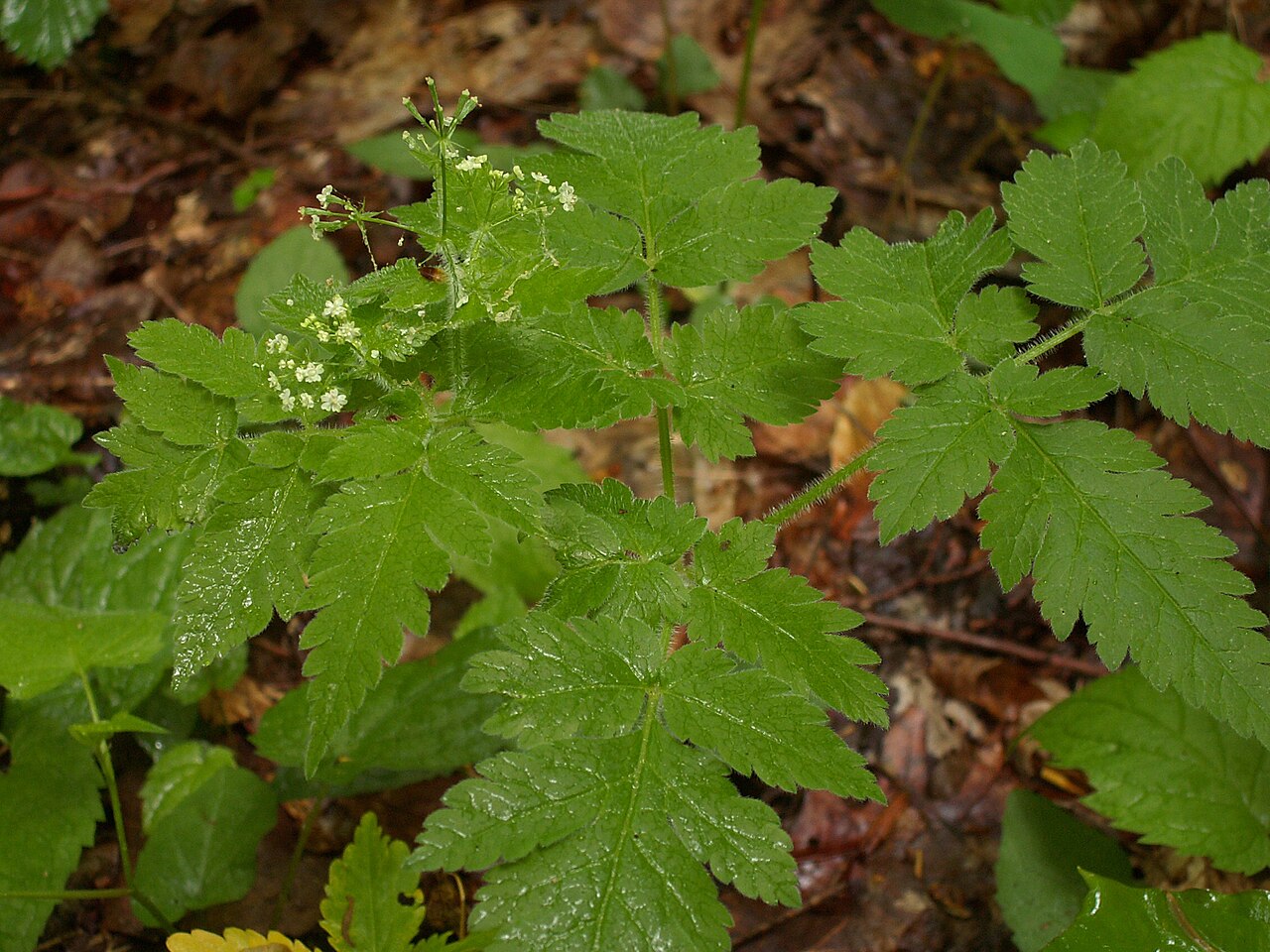
Osmorhiza claytonii, known as Hairy Sweet Cicely, Clayton's sweetroot or bland sweet cicely, is a soft, hairy woodland perennial in the carrot family. It grows 1 1/2 to 3 feet tall, with lacy, fern-like leaves and small, loose clusters of tiny white flowers in mid to late spring, followed by slender, bristly seeds that hitch rides on passing animals and hikers.
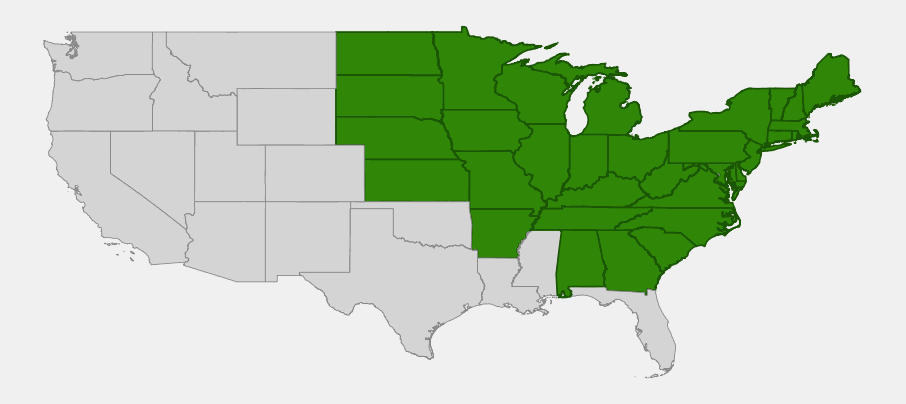
It is native across eastern North America, from Nova Scotia, Quebec and Manitoba south through New England, the Great Lakes states and the northern Plains to the Ozarks and the southern Appalachians of Georgia, Alabama and the Carolinas. It is a common plant of rich, moist deciduous forests, often growing with trilliums, wild ginger, waterleafs and other spring wildflowers.
Its roots have a faint licorice or anise scent, much milder than its close relative aniseroot, which is why it is sometimes called bland sweet cicely. It is a good, easy native groundcover for shady gardens. Because the carrot family includes some of the most poisonous plants in North America, including water hemlock and poison hemlock, it should never be foraged casually.
Identification
Look for a softly hairy woodland plant with fern-like, twice-divided leaves, small open umbels of tiny white flowers, and long, narrow, bristly seeds.
Growth Habit
Hairy sweet cicely is a clump-forming perennial with one to several branching stems, usually 1 1/2 to 3 feet tall, rising from a cluster of thick, fleshy roots. The stems and leaves are covered with soft, spreading white hairs, which give the plant a slightly fuzzy look.
Leaves
The leaves are large and fern-like, divided two or three times into groups of three (ternately compound). The leaflets are oval to lance-shaped, about 1 to 3 inches long, coarsely toothed and often lobed, and softly hairy on both sides. Lower leaves have long stalks; upper ones are smaller.
Flowers
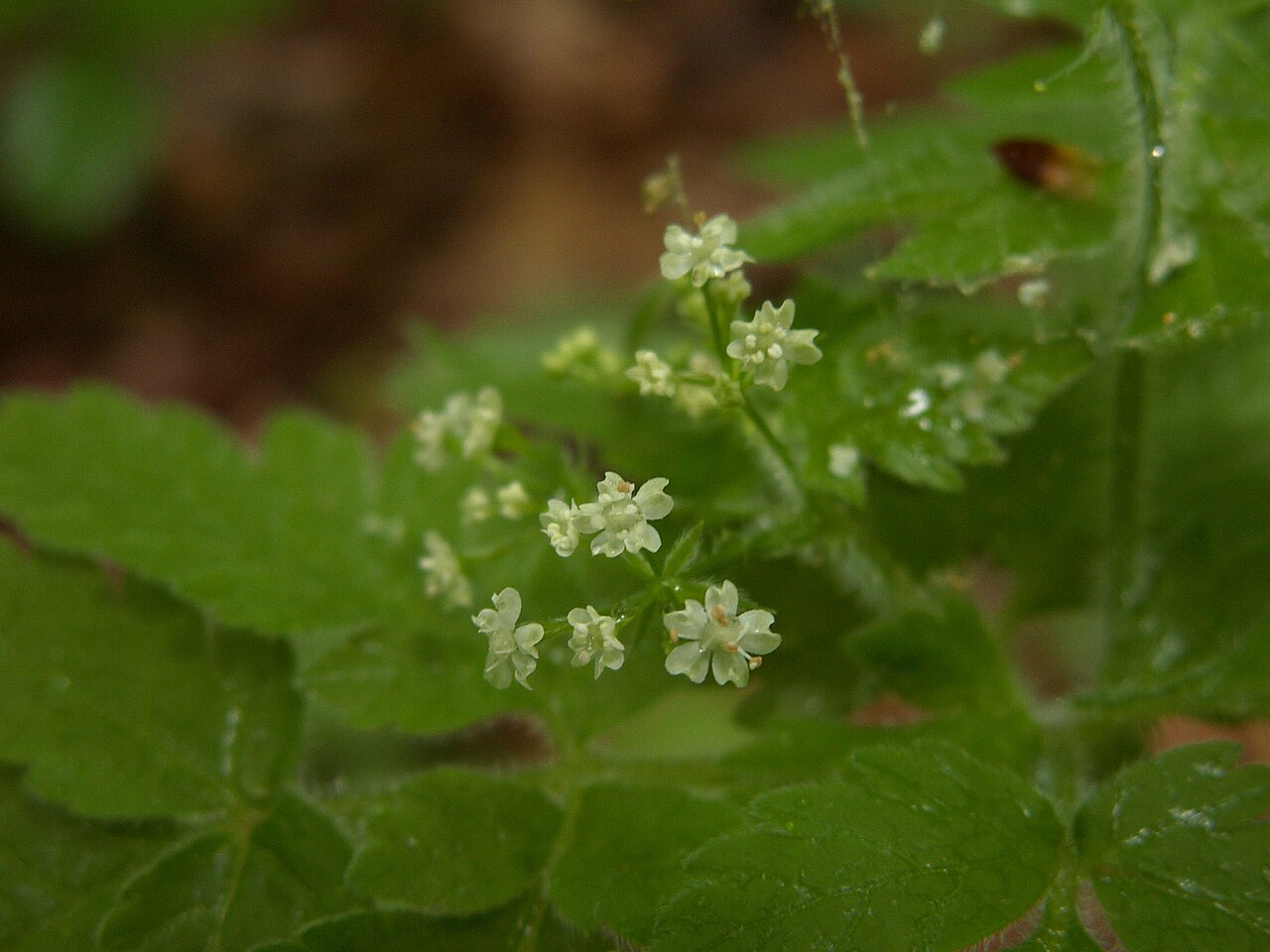
Tiny white flowers about 1/8 inch across are borne in small, loose compound umbels of three to six rays on long stalks above the leaves. The styles of the flowers are very short, shorter than the petals. It blooms from about April to June.
Fruit
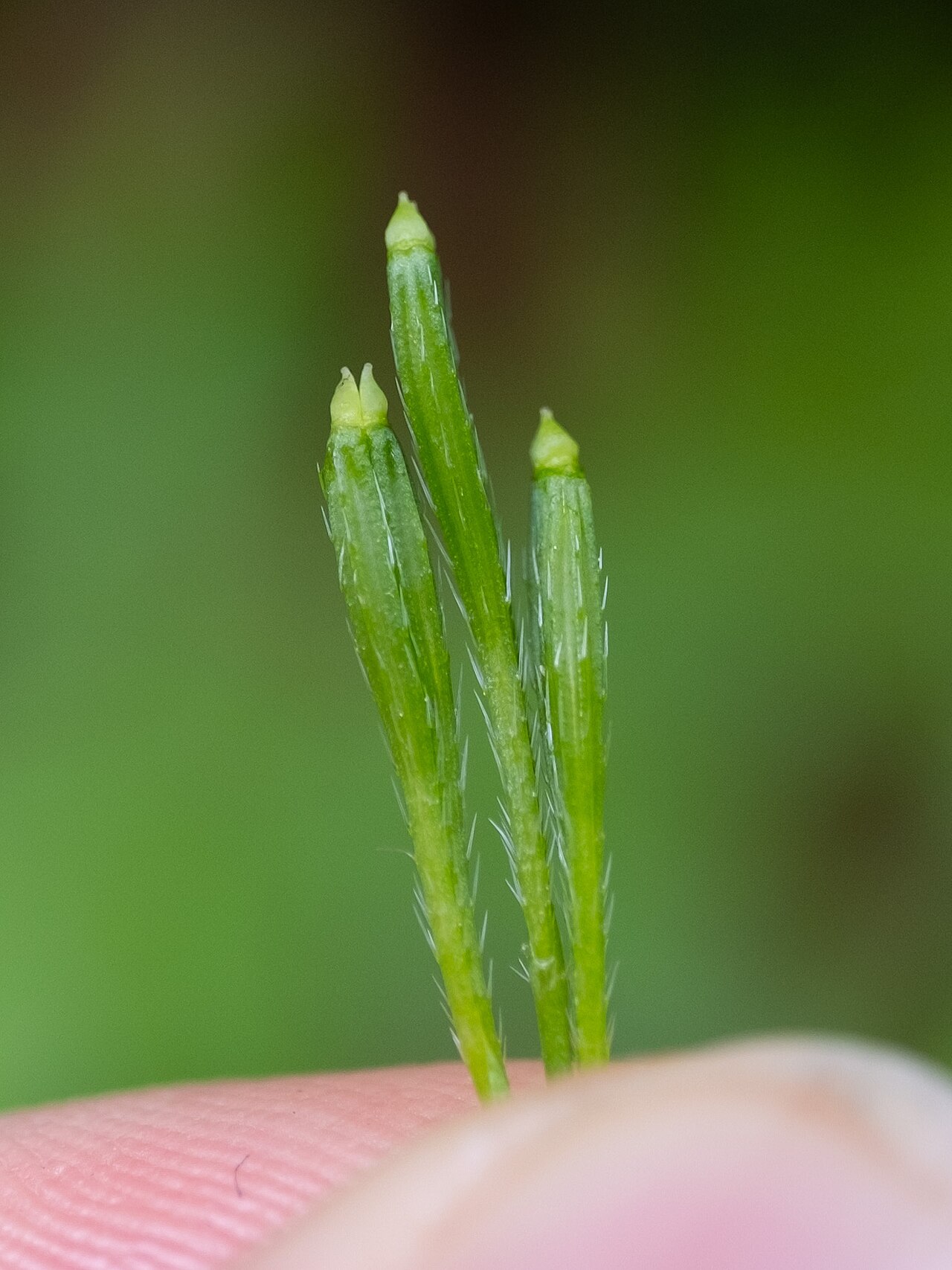
The fruits are slender, club-shaped and about 3/4 inch long, with stiff, upward-pointing bristles along the ribs and a short, tail-like base. They ripen green to dark brown in early summer and cling to fur, socks and pant legs.
Look-alikes
Aniseroot (Osmorhiza longistylis) is very similar but usually less hairy, has a strong anise smell when the roots are crushed, and its flowers have long styles that stick out beyond the petals. Honewort (Cryptotaenia canadensis) has leaves with only three leaflets and smooth seeds.
Poisonous look-alikes: Several deadly plants share the carrot family's divided leaves and white umbels. Water hemlock (Cicuta maculata) grows in wet places and is among the most toxic plants in North America; non-native poison hemlock (Conium maculatum) has smooth, purple-spotted stems and a musty smell. Never eat any wild carrot-family plant unless you are absolutely certain of its identity.
Quick Facts
| Scientific Name | Osmorhiza claytonii (syn. Washingtonia claytonii) |
| Family | Apiaceae (carrot family) |
| Plant Type | Herbaceous perennial wildflower |
| Mature Height | 1.5–3 ft |
| Mature Spread | 1–2 ft |
| Growth Rate | Moderate |
| Sun Exposure | Part shade to full shade |
| Water Needs | Medium; evenly moist soil |
| Soil Type | Rich, loamy, humus-rich woodland soil |
| Soil pH | Slightly acidic to neutral (about 5.5–7.5) |
| Bloom Time | April–June |
| Flower Color | White |
| Fall Color | None notable; foliage yellows and fades |
| Fruit | Slender, bristly, club-shaped seeds about 3/4 in long |
| Deer Resistant | Moderate; occasionally browsed |
| USDA Hardiness Zones | 3–8 |
Native Range
USDA PLANTS lists hairy sweet cicely as native in 32 states, from Maine to the Dakotas and south to Arkansas, Alabama and Georgia: Alabama, Arkansas, Connecticut, Delaware, Georgia, Illinois, Indiana, Iowa, Kansas, Kentucky, Maine, Maryland, Massachusetts, Michigan, Minnesota, Missouri, Nebraska, New Hampshire, New Jersey, New York, North Carolina, North Dakota, Ohio, Pennsylvania, Rhode Island, South Carolina, South Dakota, Tennessee, Vermont, Virginia, West Virginia and Wisconsin. In Canada it grows from Manitoba and Ontario east to the Maritime provinces.
It is most common in the Northeast, the Great Lakes region and the Appalachians. At the edges of its range it follows rich, moist woods: into the Ozarks of Missouri and Arkansas, the wooded river valleys of eastern Kansas, Nebraska and the Dakotas, and the mountains of Georgia, Alabama and the Carolinas.
It grows in rich, moist deciduous and mixed forests, on wooded slopes and ravines, in floodplain terraces and along shaded streams, usually in loamy, humus-rich soils.
📋 Regional plant lists featuring Hairy Sweet Cicely: New York, Pennsylvania & Northern New Jersey · Ohio & Indiana · Michigan, Wisconsin & Eastern Minnesota · Kentucky & Tennessee · Nebraska, Kansas & Eastern Colorado · Connecticut, Massachusetts & Rhode Island · New Hampshire, Maine & Vermont · Maryland, Virginia & West Virginia · Delaware, Southern New Jersey & Long Island · Illinois, Iowa & Missouri · Alabama, Georgia & Mississippi · North & South Carolina · Arkansas, Louisiana, Eastern Oklahoma & Eastern Texas · North Dakota, South Dakota & Western Minnesota
Growing & Care Guide
Hairy sweet cicely is an easy, unfussy plant for shady woodland gardens. It fills in among spring ephemerals and stays green into summer.
Light
Part shade to full shade under deciduous trees is ideal. It tolerates morning sun if the soil stays moist, but hot afternoon sun scorches the leaves.
Soil & Water
Plant it in rich, loamy soil with plenty of leaf litter or compost. Keep the soil evenly moist, especially in spring and early summer. Once established it tolerates short dry spells in shade, and the leaves may yellow early in a dry summer.
Planting Tips
Plant in spring or fall, 12 to 18 inches apart, among ferns, sedges and spring wildflowers. Let fallen leaves stay in place as natural mulch. Because the seeds cling to clothing, keep it a little back from narrow paths.
Pruning & Maintenance
It needs little care. Cut back stems after the seeds drop if you want a tidier look, or remove seed heads before they ripen to limit self-sowing and hitchhiking seeds.
Propagation
Sow fresh seed outdoors in fall; it needs a cold, moist winter to germinate the next spring. Established clumps can be divided carefully in early spring or fall. Buy plants from native plant nurseries rather than digging them from the wild.
Landscape Uses
- Woodland gardens: soft, fern-like foliage under trees
- Shade groundcover: fills gaps among spring ephemerals
- Naturalized areas: self-sows modestly in rich woods
- Pollinator gardens: early nectar for small bees and flies
- Forest restoration: a common understory plant of rich hardwood forests
Wildlife & Ecological Value
Hairy sweet cicely is a modest but useful member of the spring forest understory.
For Pollinators
Small native bees, including sweat bees and small carpenter bees, along with flies and small wasps, visit the tiny flowers for nectar and pollen. Like other carrot-family plants, it can host the caterpillars of black swallowtail butterflies.
For Birds
Its foliage adds cover in the forest understory for ground-feeding birds, and insects on the plants are food for warblers and other songbirds.
For Mammals
White-tailed deer occasionally browse the leaves. The bristly fruits catch in the fur of deer, raccoons and other mammals, which carry the seeds to new places.
Ecosystem Role
As a long-lived woodland perennial, it helps form the herb layer of rich hardwood forests, holding soil on slopes and adding diversity among spring ephemerals. Its hitchhiking seeds are a classic example of animal-dispersed seeds in eastern forests.
Cultural & Historical Uses
The genus name Osmorhiza means “fragrant root,” from the anise-scented roots of the genus. The species name honors John Clayton, a colonial Virginia botanist whose collections were the basis of the 18th-century Flora Virginica.
The roots of the related aniseroot have a much stronger licorice scent and were used by Indigenous peoples and settlers as a flavoring and in traditional medicine. Hairy sweet cicely has a weaker flavor, which earned it the name bland sweet cicely.
The name sweet cicely was borrowed from a European herb, Myrrhis odorata, which has a similar anise scent. Its old synonym Washingtonia claytonii still appears on some herbarium labels.
Frequently Asked Questions
How do I tell hairy sweet cicely from aniseroot?
Hairy sweet cicely is softer and hairier, its roots have only a faint anise smell, and its flower styles are very short. Aniseroot (Osmorhiza longistylis) has a strong licorice smell and long styles that stick out beyond the petals.
Is hairy sweet cicely edible?
Its roots have been used as a mild flavoring, but it is not recommended for foraging. The carrot family includes deadly plants such as water hemlock and poison hemlock that can look similar, and mistakes can be fatal.
Why do the seeds stick to my clothes?
The slender fruits are covered in stiff, upward-pointing bristles that catch on fur and fabric. This helps animals carry the seeds to new places in the woods.
Does it grow in full shade?
Yes. It grows well in part to full shade under deciduous trees, as long as the soil is rich and stays moist in spring.
Does it host butterflies?
Like many native carrot-family plants, it can host black swallowtail caterpillars, and its small flowers feed native bees and flies in spring.

Looking for a nursery that carries Hairy Sweet Cicely?
Browse our native plant nursery directory: Alabama & Arkansas · Connecticut, Delaware & Georgia · Illinois, Indiana, Iowa & Kansas · Kentucky, Maine, Maryland, Massachusetts, Michigan, Minnesota & Missouri · Nebraska, New Hampshire, New Jersey, New York, North Carolina, North Dakota & Ohio · Pennsylvania, Rhode Island, South Carolina, South Dakota, Tennessee, Vermont & Virginia · West Virginia & Wisconsin
