
American Buckwheat Vine (Brunnichia ovata)
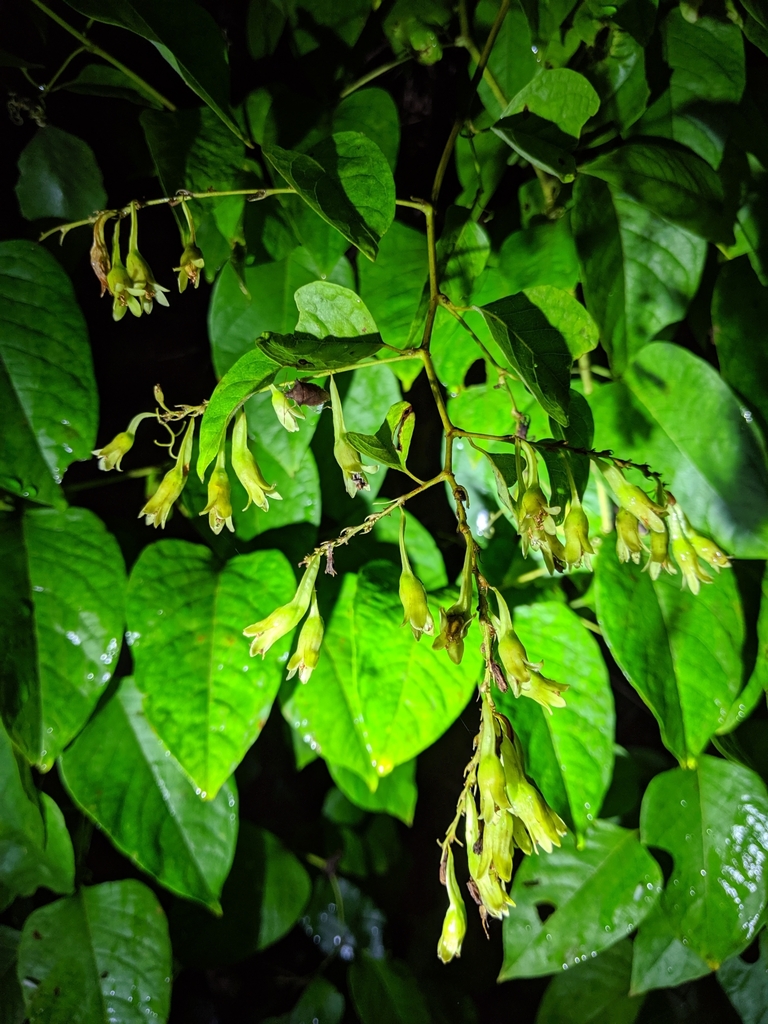
Brunnichia ovata, known as American Buckwheat Vine, redvine or ladies’ eardrops, is a woody, deciduous, tendril-climbing vine in the buckwheat family (Polygonaceae). It is the only member of its genus in the Americas, and it is one of the very few woody climbers in a family better known for smartweeds, docks and wild buckwheats. Older botanical works list it as Brunnichia cirrhosa, a name that refers to its tendrils.
It grows in bottomland forests, swamp margins, riverbanks, levees and wet thickets across the southeastern and south-central United States, from South Carolina and Florida west to eastern Texas and Oklahoma and north up the Mississippi Valley to southern Illinois. Stems can climb 30 to 40 feet into trees, or sprawl over shrubs and fences, and the plant spreads from deep roots.
In early summer it hangs out long, loose clusters of small greenish-yellow flowers, followed by showy, winged, pinkish-tan fruits that dangle like earrings well into fall. It is a natural part of southern floodplain plant communities, although it can be aggressive in farm fields and small gardens. It is best used in wild, wet areas where it has room to ramble.
Identification
Look for a high-climbing vine with simple, oval leaves, tendrils at the ends of the branchlets, and hanging clusters of small flowers that become flattened, winged, papery fruits.
Growth Habit
American buckwheat vine is a perennial, deciduous woody vine. Young stems are green and slender; older stems become woody and brown and can grow thick at the base. The vine climbs by tendrils and can reach 30 to 40 feet in trees, though in open ground it often forms tangled mounds over shrubs, fences and fallen logs. It spreads by deep, running roots, so several stems often come up close together.
Leaves
The leaves are alternate, simple, untoothed and oval to heart-shaped, usually 2 to 6 inches long, with a pointed tip and a broadly wedge-shaped to nearly straight base. They are smooth and bright green, and paler underneath. The papery sheath (ocrea) that wraps the stem at each leaf in other members of the buckwheat family is reduced to a small ring or line on this species.
Tendrils
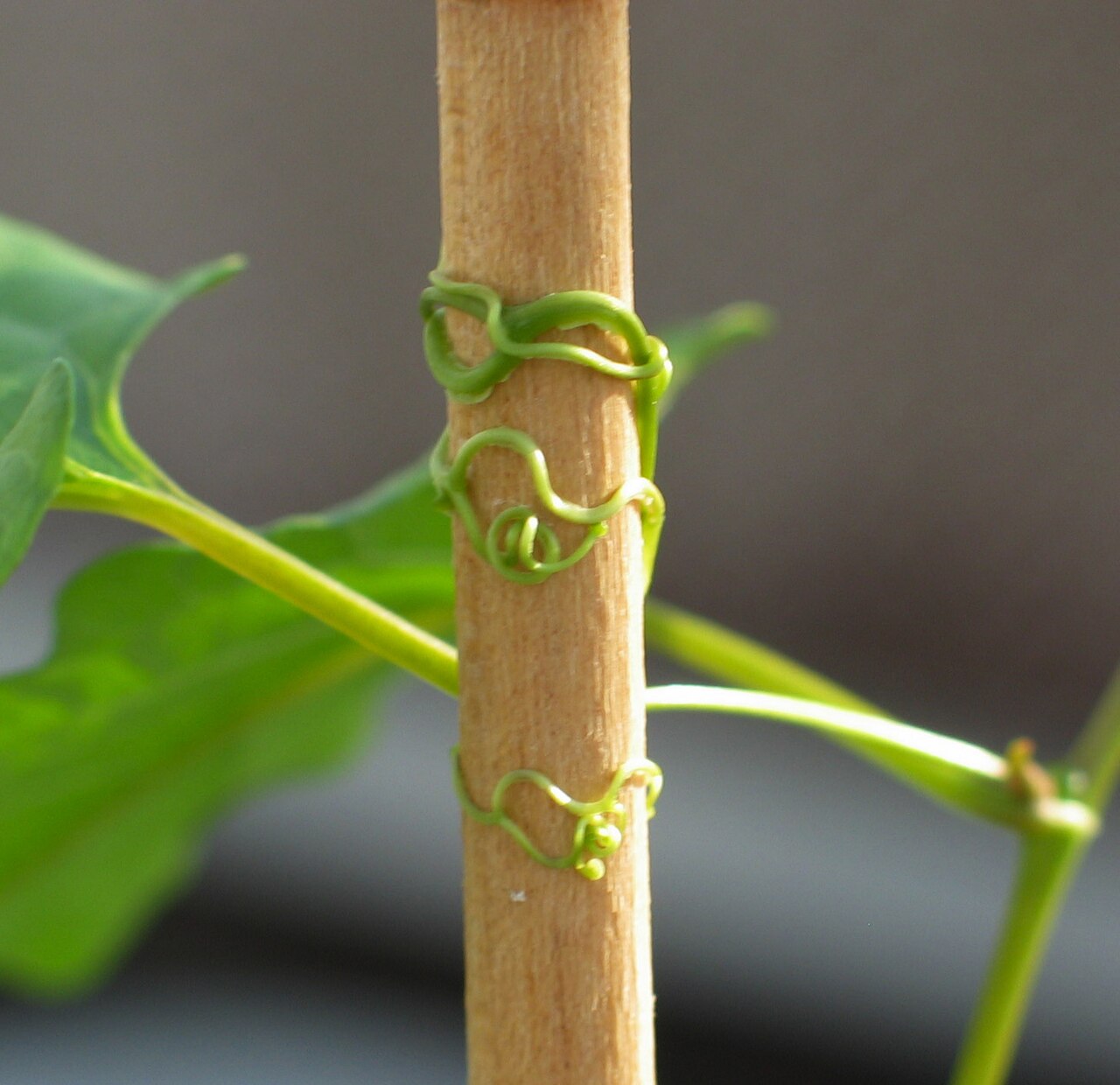
The tendrils are a good identification feature. They form at the ends of short branchlets, often where a flower cluster would otherwise be, and coil tightly around twigs and stems. No other woody vine in its range has tendrils on simple, untoothed, oval leaves. The grapes and peppervines have toothed or lobed leaves, and greenbriers have tendrils that come from the leaf stalks and usually have prickly stems.
Flowers
The flowers appear in June and July in long, loose, hanging clusters (panicles of racemes) from the leaf axils and branch tips. Each flower is small, about 1/4 inch across, with five greenish-yellow to cream sepals and no true petals. Each sits at the tip of a slender, flattened stalk that will become the wing of the fruit.
Fruit & Seeds
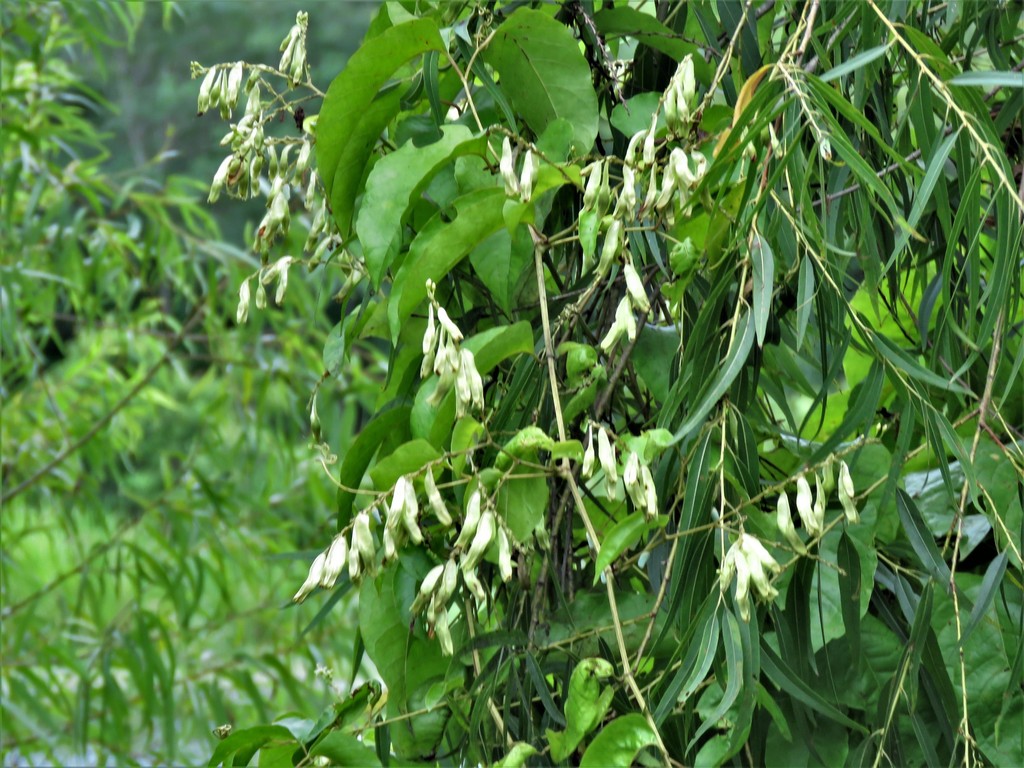
The fruit is the most noticeable part of the plant. After flowering, the flower base and its stalk enlarge into a flattened, winged, papery case about 1 to 1 1/2 inches long, enclosing a single hard, three-sided seed (achene). The fruits turn from green to pinkish-red and then tan-brown and hang in clusters from late summer into winter. They float and are spread by floodwaters, which helps explain the plant’s close link to rivers and bottomlands.
Look-alikes
The closest look-alike is climbing false buckwheat (Fallopia scandens), which also has heart-shaped leaves and winged fruits but is a herbaceous, twining vine without tendrils, with much smaller fruits. Heartleaf peppervine has toothed leaves and berries, and supplejack has smooth, green, twining stems, leaves with many straight parallel veins, and blue-black fruit.
Quick Facts
| Scientific Name | Brunnichia ovata (syn. B. cirrhosa) |
| Family | Polygonaceae (buckwheat family) |
| Plant Type | Deciduous woody vine, climbing by tendrils |
| Mature Height | Climbs 20–40 ft |
| Mature Spread | 10–20 ft; spreads by roots |
| Growth Rate | Fast |
| Sun Exposure | Full sun to part shade |
| Water Needs | Moist to wet; tolerates flooding |
| Soil Type | Alluvial clay, silt and loam |
| Soil pH | Acidic to neutral (about 5.0–7.5) |
| Bloom Time | June–July |
| Flower Color | Greenish-yellow to cream |
| Fall Color | Not notable |
| Fruit | Winged, papery, pinkish to tan fruit clusters, late summer–winter |
| Deer Resistant | Low |
| USDA Hardiness Zones | 6–9 |
Native Range
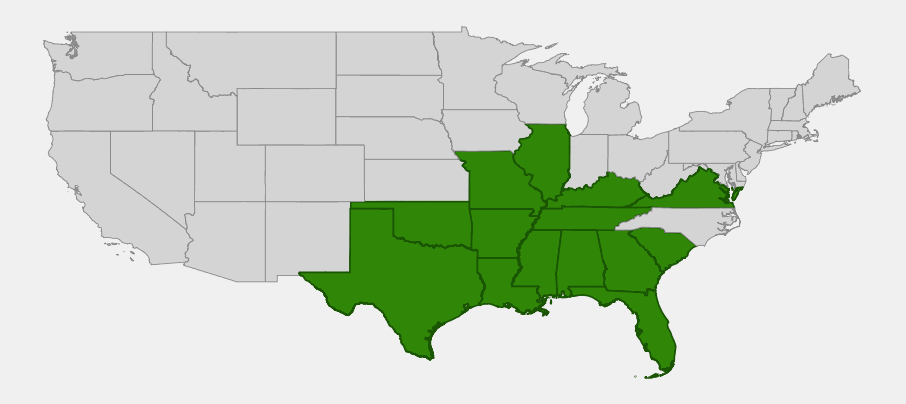
American buckwheat vine is native to the southeastern and south-central United States. USDA PLANTS lists it from Alabama, Arkansas, Florida, Georgia, Illinois, Kentucky, Louisiana, Mississippi, Missouri, Oklahoma, South Carolina, Tennessee, Texas and Virginia. It is not native to Canada.
Its stronghold is the Mississippi Embayment and the Gulf Coastal Plain, where it is common along the Mississippi, Red, Arkansas and Yazoo Rivers and their tributaries, north to the bottomlands of southeastern Missouri, western Kentucky and Tennessee and the southern tip of Illinois. It also grows along rivers of the Atlantic and Gulf Coastal Plains from South Carolina and Georgia to the Florida Panhandle and northern Florida, and west into eastern Oklahoma and East Texas. Virginia is at the northeastern edge of its range, where it is uncommon in the southeastern corner of the state.
It grows in floodplain and bottomland forests, along the edges of swamps, bayous and oxbow lakes, on riverbanks, levees and ditch banks, and in wet thickets and clearings. It is also a well-known weed of cotton and soybean fields on former bottomland in the Mississippi Delta.
📋 Regional plant lists featuring American Buckwheat Vine: North & South Florida · Alabama, Georgia & Mississippi · North & South Carolina · Maryland, Virginia & West Virginia · Kentucky & Tennessee · Arkansas, Louisiana, Eastern Oklahoma & Eastern Texas · Illinois, Iowa & Missouri
Growing & Care Guide
American buckwheat vine is rarely sold, and it is not a vine for a small, tidy garden. It is fast, deep-rooted and hard to remove once established. It is a good choice for naturalizing a wet woodland edge, a pond or stream bank, or a large fence or dead tree in a wild part of a property within its native range.
Light
Full sun to part shade. It flowers and fruits best where its upper stems reach the sun, such as forest edges and openings, but it tolerates shade at its base.
Soil & Water
It grows best in deep, moist to wet, fertile clay, silt or loam, like the soils of river bottoms. It tolerates seasonal flooding and poorly drained ground very well, and it also tolerates average garden soil once established. It is not suited to dry, sandy or rocky sites.
Planting Tips
Give it a strong, large support, such as a sturdy fence, a large dead tree or the edge of a woodland, and plenty of room. Do not plant it next to a house, near young trees that it could smother, or in beds with smaller plants. Keep it away from cropland, where it is a troublesome weed.
Pruning & Maintenance
Cut stems back hard in late winter if it grows beyond its space. Pull or dig root sprouts that come up where they are not wanted while they are small, as the deep roots resprout readily. Otherwise it needs no care: no fertilizer, no watering once established, and it has few pest problems.
Propagation
Grow it from seed collected from ripe, brown fruits in fall. Sow outdoors in fall or give the seed a cold, moist period before spring sowing. Root cuttings and divisions of rooted suckers also establish easily.
Landscape Uses
- Wetland and stream-bank plantings: a native vine for flood-prone ground
- Woodland edges: covers snags, stumps and forest edges in wild areas
- Naturalized areas: adds summer flowers and long-lasting fruit clusters
- Wildlife cover: forms dense tangles for birds and small animals
- Erosion control: deep, spreading roots help hold banks and levees
Wildlife & Ecological Value
In southern bottomlands, American buckwheat vine adds midsummer flowers and dense, climbing cover along the edges of swamps and rivers.
For Pollinators
The small, open flowers produce nectar and are visited by many kinds of bees, wasps and flies in June and July, when the vine can be thick with blooms along forest edges.
For Birds
The dense tangles of stems over shrubs and small trees provide nesting and resting cover for songbirds of bottomland forests. The hard seeds are not a major food, but some birds and waterfowl may eat seeds that fall into the water.
For Mammals
Deer browse the leaves and young shoots. The thick mounds of vines also give cover to rabbits and other small mammals in floodplain thickets.
Ecosystem Role
American buckwheat vine is a typical vine of southern floodplain forests, where it climbs into gaps and edges after floods, storms or logging. Its floating fruits are carried by floodwaters, which spread it along rivers and sloughs. Its deep roots help it survive floods, fire and cutting.
Cultural & Historical Uses
The genus Brunnichia was named for Morten Thrane Brünnich, an 18th-century Danish naturalist. The species name ovata refers to the oval leaves, while the older name cirrhosa means “with tendrils.”
The common name “ladies’ eardrops” comes from the hanging clusters of winged fruits, which look like dangling earrings. The name “redvine” comes from the pinkish-red color the fruits take on as they ripen, and from the reddish-brown older stems.
In the Mississippi Delta, where much bottomland forest has been cleared for farming, redvine survives in fields from its deep roots and is a well-known agricultural weed. Its persistence in cropland is a reminder of the floodplain forests that once covered that land.
Frequently Asked Questions
Is American buckwheat vine related to buckwheat?
Yes. It belongs to the buckwheat family (Polygonaceae), along with buckwheat, smartweeds, docks and wild buckwheats, but it is one of the few woody vines in the family.
How does American buckwheat vine climb?
It climbs with tendrils that form at the ends of short branches and coil around twigs and stems. It does not have aerial roots, so it does not cling to walls.
Is American buckwheat vine invasive?
It is native to the southeastern United States, but it is aggressive. It spreads by deep roots and is a weed of farm fields in the Mississippi Delta, so plant it only where it has room to grow.
When does American buckwheat vine bloom?
It blooms in June and July. The winged fruits ripen from late summer into fall and often hang on the vine into winter.
Where does American buckwheat vine grow?
In bottomland forests, swamp edges, riverbanks and wet thickets from South Carolina and Florida west to eastern Texas and Oklahoma, and north up the Mississippi Valley to southern Illinois.

Looking for a nursery that carries American Buckwheat Vine?
Browse our native plant nursery directory: Alabama & Arkansas · Florida & Georgia · Illinois · Kentucky, Louisiana, Mississippi & Missouri · Oklahoma · South Carolina, Tennessee, Texas & Virginia

