
Heartleaf Nettle (Urtica chamaedryoides)
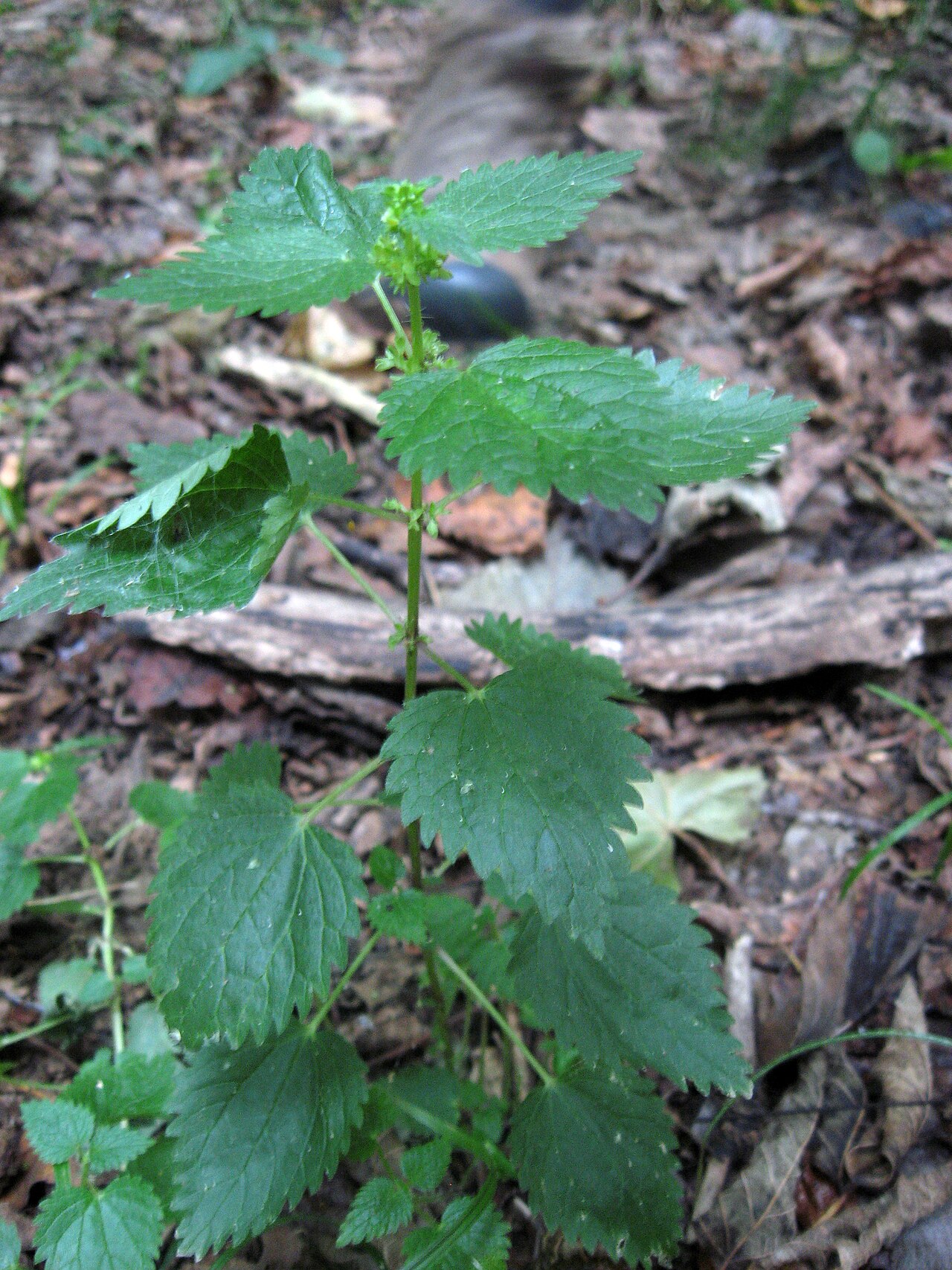
Urtica chamaedryoides, known as Heartleaf Nettle or dwarf stinging nettle, is a small, native annual nettle of the southeastern and south-central United States and northern Mexico. It grows in rich, moist woods, bottomland forests and shady edges, and it often appears in yards, gardens and pastures. It is best known for its sting: the stems and leaves are covered with stiff, glassy hairs that inject irritating chemicals into the skin at the lightest touch.
Heartleaf nettle belongs to the nettle family (Urticaceae), together with the taller American stinging nettle, wood nettle and the non-stinging false nettle. It is smaller and more delicate than stinging nettle, usually under 2 feet tall, with heart-shaped lower leaves and tiny greenish flowers clustered in the leaf axils. It grows through the cool season, flowering mostly from late winter into early summer in the South.
Safety note: touching heartleaf nettle causes a burning, stinging rash that usually fades within a few hours to a day. Wear gloves and long sleeves when working near it, and teach children to recognize it. Although it is rarely planted, it is a genuine part of southern woodland ecosystems and a host plant for several butterflies. This guide covers how to identify it, where it grows and its role in nature.
Identification
Heartleaf nettle is a slender, upright plant with opposite, toothed leaves and bristly stinging hairs. The lower leaves are broad and heart-shaped, while the upper leaves are narrower, and tiny green flowers sit in round clusters where the leaves meet the stem.
Stems & Growth Habit
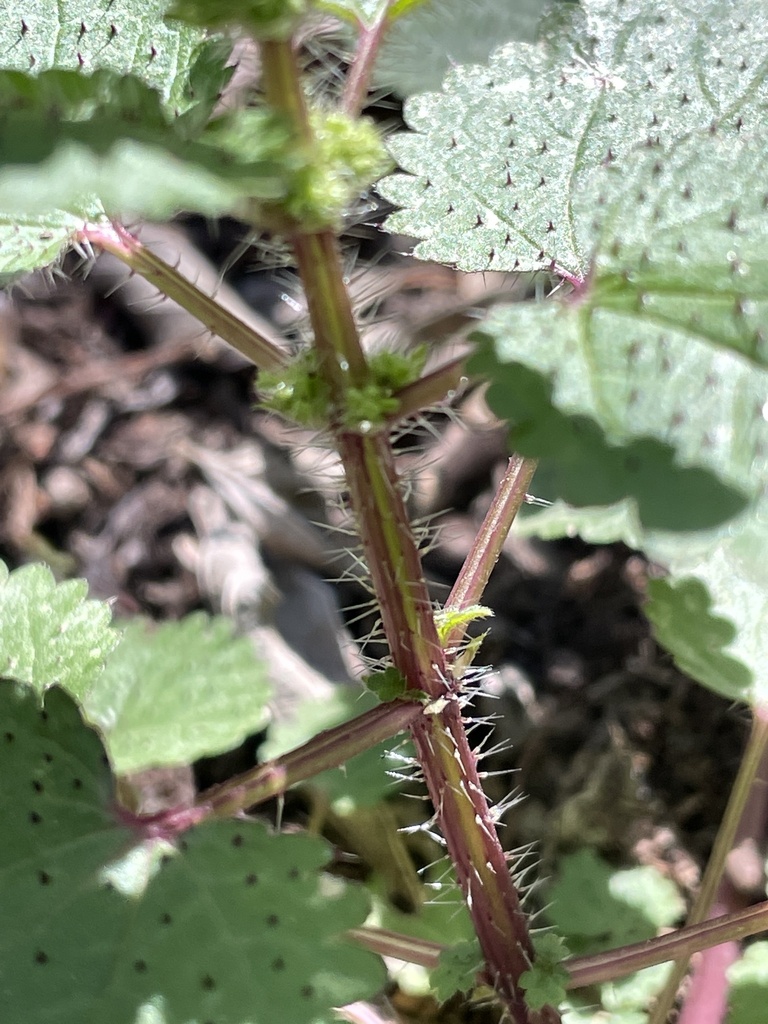
It is an annual that grows from a slender taproot, with one to several upright, unbranched or sparingly branched stems usually 8 inches to 2 feet tall, occasionally taller in rich shade. The stems are four-angled, green to reddish, and covered with long stinging hairs and shorter soft hairs. Plants often grow in loose patches where they have reseeded.
Leaves
The leaves are opposite, with slender stalks. The lower leaves are broadly ovate to rounded with a heart-shaped base, about 1 to 2 inches long, and coarsely toothed along the edges; upper leaves become narrower and more lance-shaped. Both surfaces carry scattered stinging hairs, and the undersides often show tiny dots (cystoliths) typical of the nettle family.
Flowers
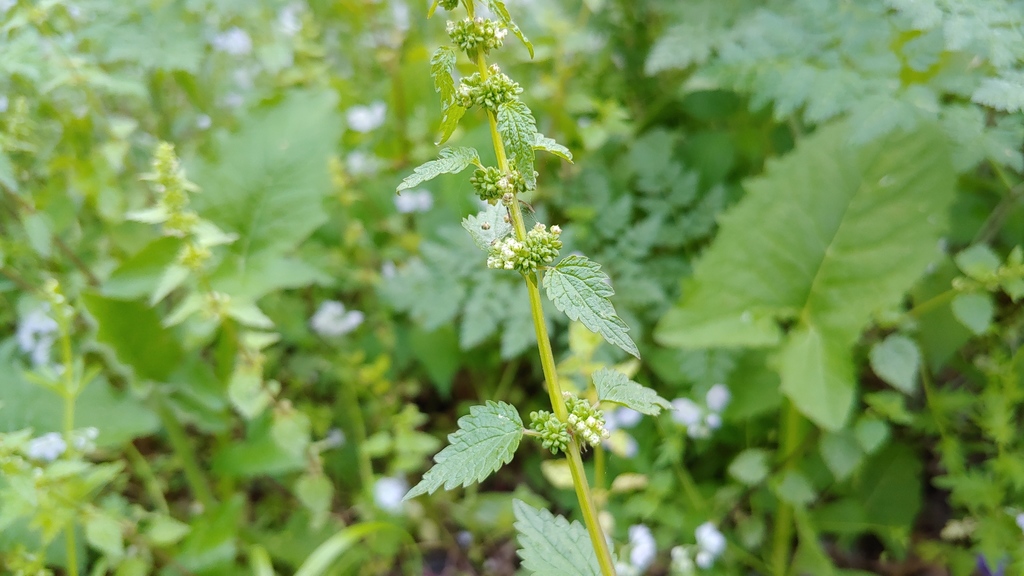
The flowers are tiny, green and petal-less, packed into small, rounded or slightly elongated clusters in the leaf axils. Male and female flowers are on the same plant, often in the same cluster. The flowers are wind-pollinated: the stamens spring open to release puffs of pollen. In the Southeast it blooms mainly from late winter into early summer, and in mild areas it can flower through much of the year.
Fruit & Seeds
Each female flower produces a tiny, flattened, egg-shaped seed (achene) enclosed by the persistent sepals. The seeds drop near the parent plant, and plants reseed readily in moist, shaded soil.
Stinging Hairs
The stinging hairs are hollow, needle-like cells with a brittle, glassy tip. When touched, the tip breaks off and the hair injects a mixture of irritating substances, including histamine and acetylcholine, into the skin. The result is an immediate burning or prickling sensation, often followed by redness, small welts and itching.
Similar Species
American stinging nettle (Urtica dioica subsp. gracilis) is a much taller perennial (3 to 6 feet) with long, narrow leaves and flowers in long, branched spikes. Wood nettle (Laportea canadensis) has alternate leaves. False nettle (Boehmeria cylindrica) has opposite, toothed leaves and spike-like flower clusters but no stinging hairs.
Quick Facts
| Scientific Name | Urtica chamaedryoides Pursh |
| Family | Urticaceae (nettle family) |
| Plant Type | Annual herb with stinging hairs |
| Mature Height | 8 in–2 ft |
| Mature Spread | 6–12 in |
| Growth Rate | Fast |
| Sun Exposure | Part shade to full shade |
| Water Needs | Medium; moist soil |
| Soil Type | Rich, moist loam and alluvial soils; also disturbed garden soil |
| Soil pH | About 5.5–8.0 |
| Bloom Time | Late winter to early summer (Feb–June); longer in mild areas |
| Flower Color | Green, inconspicuous |
| Fall Color | None |
| Fruit | Tiny flattened achene |
| Deer Resistant | Yes; stinging hairs deter browsing |
| USDA Hardiness Zones | 6–10 (cool-season annual) |
Native Range
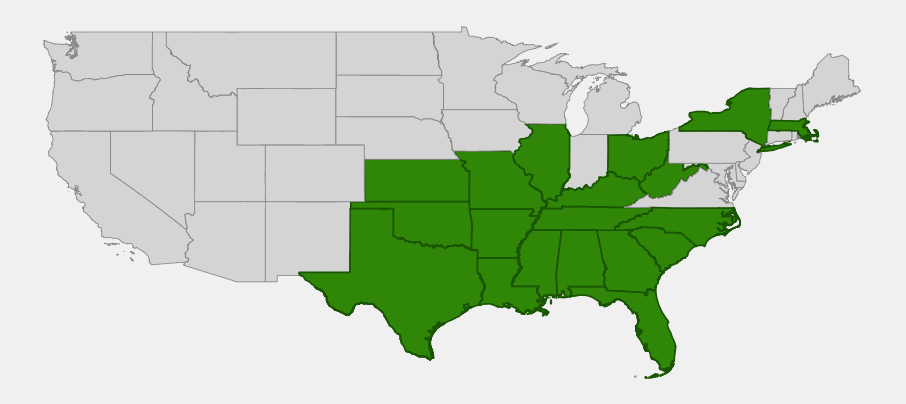
Heartleaf nettle is native to the southeastern and south-central United States and northern Mexico. USDA PLANTS lists it in Alabama, Arkansas, Florida, Georgia, Illinois, Kansas, Kentucky, Louisiana, Mississippi, Missouri, North Carolina, Ohio, Oklahoma, South Carolina, Tennessee, Texas and West Virginia, with outlying records from Massachusetts and New York. Its core range runs from the Carolinas and Florida west through the Gulf states to Oklahoma and Texas, and north up the Mississippi and Ohio valleys to southern Illinois and Ohio.
The Massachusetts and New York records are outlying and probably historical, and there are no recent reports of the plant from those states. Elsewhere it is common in suitable habitat, especially in Texas, Louisiana and Florida, where it has become a weed of lawns, gardens and pastures in some areas.
It grows in rich, moist woods and bottomland hardwood forests, along streams and floodplains, in shaded ravines and on wooded slopes, and in disturbed shady places such as woodland edges, fencerows, yards and livestock areas. It favors fertile, moist soil and is most abundant in the cool, moist months of late winter and spring.
📋 Regional plant lists featuring Heartleaf Nettle: North & South Florida · Alabama, Georgia & Mississippi · North & South Carolina · Maryland, Virginia & West Virginia · Kentucky & Tennessee · Arkansas, Louisiana, Eastern Oklahoma & Eastern Texas · South & West Texas · Illinois, Iowa & Missouri · Ohio & Indiana · Nebraska, Kansas & Eastern Colorado · New York, Pennsylvania & Northern New Jersey · Connecticut, Massachusetts & Rhode Island
Growing & Care Guide
Heartleaf nettle is not a garden ornamental, and most gardeners encounter it as a volunteer rather than plant it. It can have a place in wild, shaded corners of large native landscapes and butterfly habitat, where its sting is not a problem. Where it is unwanted, it is easy to control because it is an annual.
Light
It grows in part to full shade under trees and along woodland edges. It can tolerate sun in moist, cool seasons, but it typically declines in hot, sunny summer conditions.
Soil & Water
It prefers rich, moist, well-drained loam or alluvial soil and thrives where organic matter is high, such as under trees or near compost and livestock areas. It does poorly in dry, poor soil.
Planting Tips
If you want it for butterfly habitat, let existing volunteers reseed in a wild, shaded area away from paths, play areas and places where people or pets brush past. Mark the area so visitors know to avoid touching it.
Pruning & Maintenance
Always wear gloves, long sleeves and long pants when handling it. To control it, pull young plants or cut them before they set seed; because it is an annual, preventing seed production will reduce it over a few seasons. Mulch helps suppress seedlings.
Propagation
It reseeds on its own in moist, shaded soil. Seed can be scattered in fall or winter where you want it to grow; seedlings appear in the cool season.
Landscape Uses
- Butterfly habitat: larval host for red admiral, question mark and other nettle-feeding butterflies
- Woodland ecology: part of the spring herb layer of southern bottomland forests
- Wild areas: can be left in shaded, out-of-the-way corners of large natural landscapes
- Nature education: a good example of plant chemical defenses and stinging hairs
- Wildlife cover: dense patches shelter insects and small animals on the forest floor
Wildlife & Ecological Value
Despite its sting, heartleaf nettle is a useful wildlife plant, especially for butterflies whose caterpillars specialize on the nettle family.
For Pollinators
Its flowers are wind-pollinated and offer no nectar, but it is a larval host plant for butterflies that feed on nettles, including the red admiral, the question mark and the eastern comma. Their caterpillars often fold or tie leaves together to make shelters.
For Birds
Seed-eating birds may eat the small seeds, and insect-eating birds find caterpillars and other insects on the plants. It is not a major bird food plant.
For Mammals
The stinging hairs strongly discourage browsing by deer, rabbits and livestock, so patches often persist where other plants are grazed down.
Ecosystem Role
As a cool-season annual of rich, moist forest floors, it uses nutrients and light before the canopy fully leafs out, then dies back and returns those nutrients to the soil. Its stinging defenses and the specialist insects that overcome them make it a small but interesting part of southern woodland food webs.
Cultural & Historical Uses
Frederick Pursh described Urtica chamaedryoides in 1814 in his flora of North America. The species name means “like Chamaedrys,” a name used for germanders, likely for the shape of its small, toothed leaves. The genus name Urtica comes from the Latin urere, “to burn,” for the sting.
Nettles have long been used for food, fiber and medicine around the world. Young leaves of stinging nettles lose their sting when cooked or dried, and the fibrous stems of larger nettles have been used to make cord and cloth. Heartleaf nettle is small and seldom used this way, but it shares the same chemistry and stinging hairs.
For many southern gardeners and hikers, heartleaf nettle is a familiar spring nuisance that announces itself with a sharp sting on bare ankles. Learning to recognize its heart-shaped, bristly leaves is the best protection.
Frequently Asked Questions
What happens if I touch heartleaf nettle?
Its stinging hairs inject irritating chemicals into the skin, causing an immediate burning sensation, redness and small welts that usually fade within a few hours to a day. Wash the area with soap and cool water and avoid rubbing it. Seek medical help if a reaction is severe or involves the eyes or breathing.
Is heartleaf nettle native?
Yes. It is native to the southeastern and south-central United States and northern Mexico, even though it often grows as a weed in lawns, gardens and pastures.
How do I get rid of heartleaf nettle?
Wear gloves and pull or hoe plants before they set seed. Because it is an annual, preventing seed production for a few seasons and mulching bare soil will greatly reduce it.
What butterflies use heartleaf nettle?
It is a larval host for nettle-feeding butterflies such as the red admiral, question mark and eastern comma.
How is it different from stinging nettle?
Heartleaf nettle is a small annual, usually under 2 feet tall, with heart-shaped lower leaves and flowers in small clusters in the leaf axils. American stinging nettle is a tall perennial with long, narrow leaves and long, branched flower spikes.

Looking for a nursery that carries Heartleaf Nettle?
Browse our native plant nursery directory: Alabama & Arkansas · Florida & Georgia · Illinois & Kansas · Kentucky, Louisiana, Massachusetts, Mississippi & Missouri · New York, North Carolina, Ohio & Oklahoma · South Carolina, Tennessee & Texas · West Virginia

