
American Marshpennywort (Hydrocotyle americana)
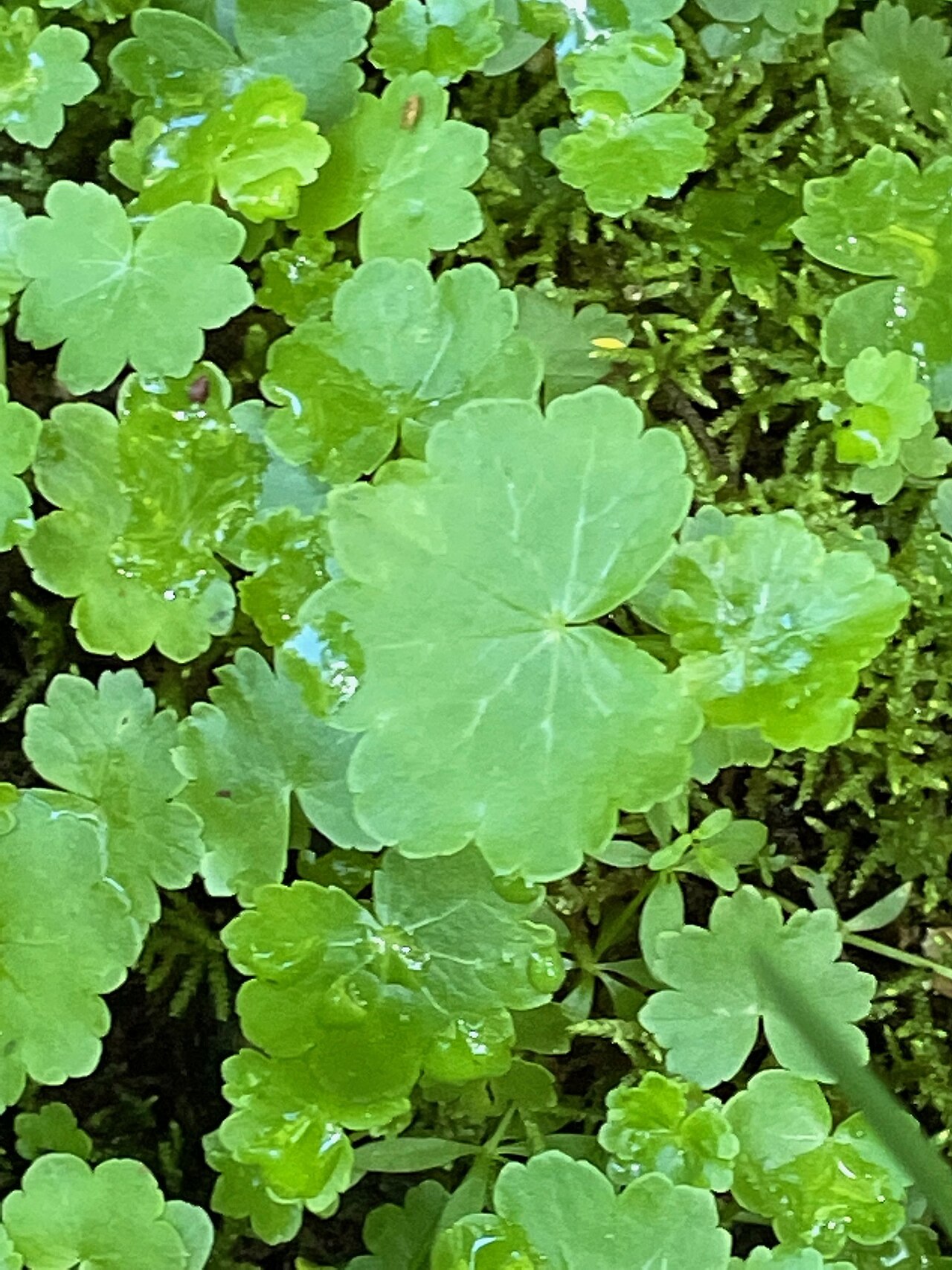
Hydrocotyle americana, known as American Marshpennywort or American water-pennywort, is a small, creeping wildflower of wet woods, seeps, stream edges, bogs and moist meadows in eastern North America. Its threadlike stems run along the ground and root at the nodes, carrying shiny, round, scalloped leaves about the size of a coin. In summer, tiny white flowers appear in small clusters at the bases of the leaf stalks, so close to the stem that they are easy to overlook.
The pennyworts (Hydrocotyle) were long placed in the carrot family (Apiaceae), where USDA PLANTS still lists them, but most botanists now include them in the ginseng family (Araliaceae). American marshpennywort is the most northern and woodland-dwelling of the native pennyworts, growing from the Great Lakes and New England south through the Appalachians to the Carolinas and Tennessee.
It is a modest plant but a useful one: a low, glossy, naturally spreading groundcover for wet, shaded spots where little else grows, and a part of the mossy groundlayer in seepage forests and swamp edges. This guide covers how to identify it, where it grows and how to use it in native landscapes.
Identification
American marshpennywort is easy to recognize by its slender creeping stems and its shiny, round to kidney-shaped leaves with a deep notch at the base and shallow, scalloped lobes along the edge.
Stems & Growth Habit
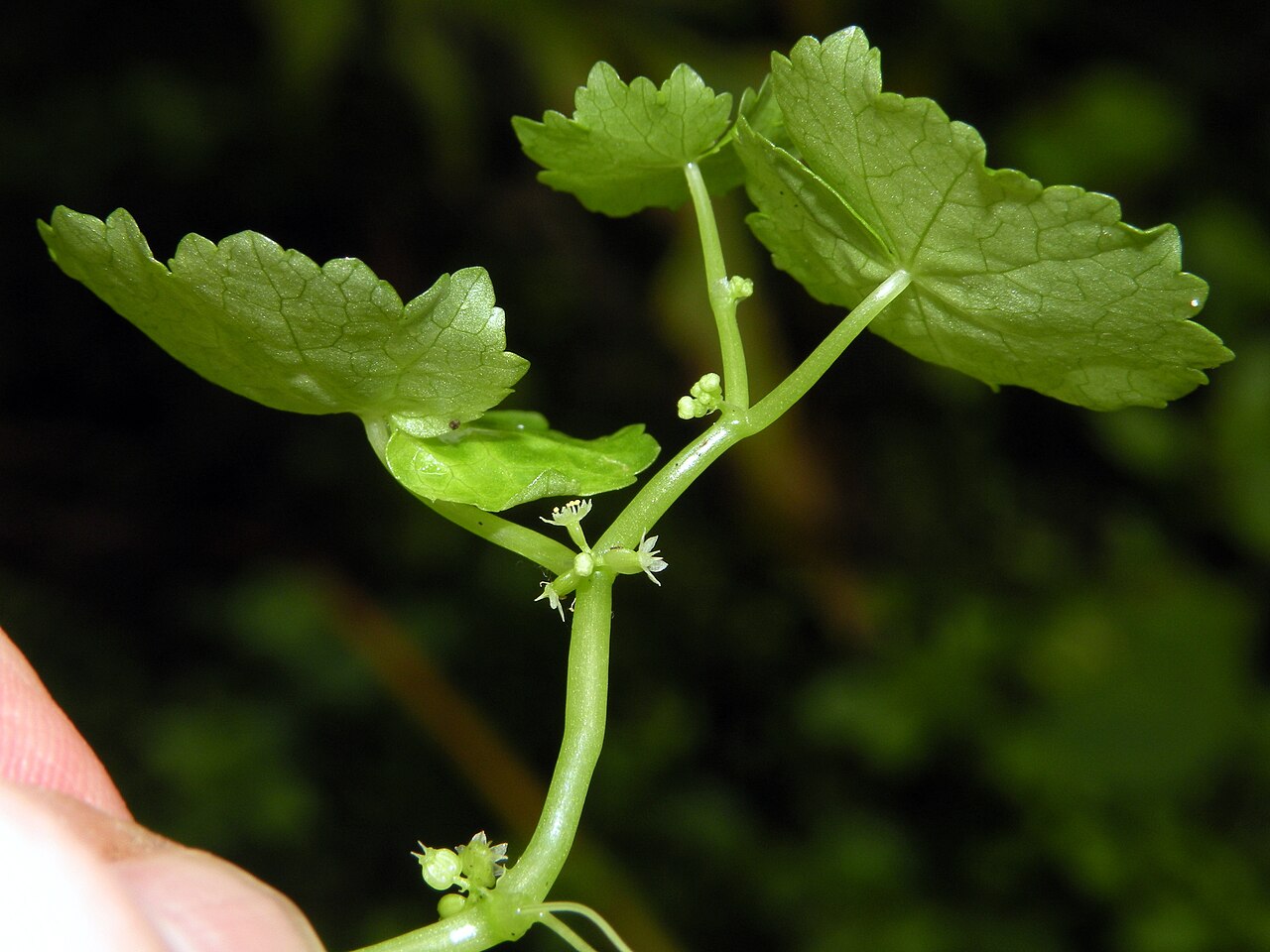
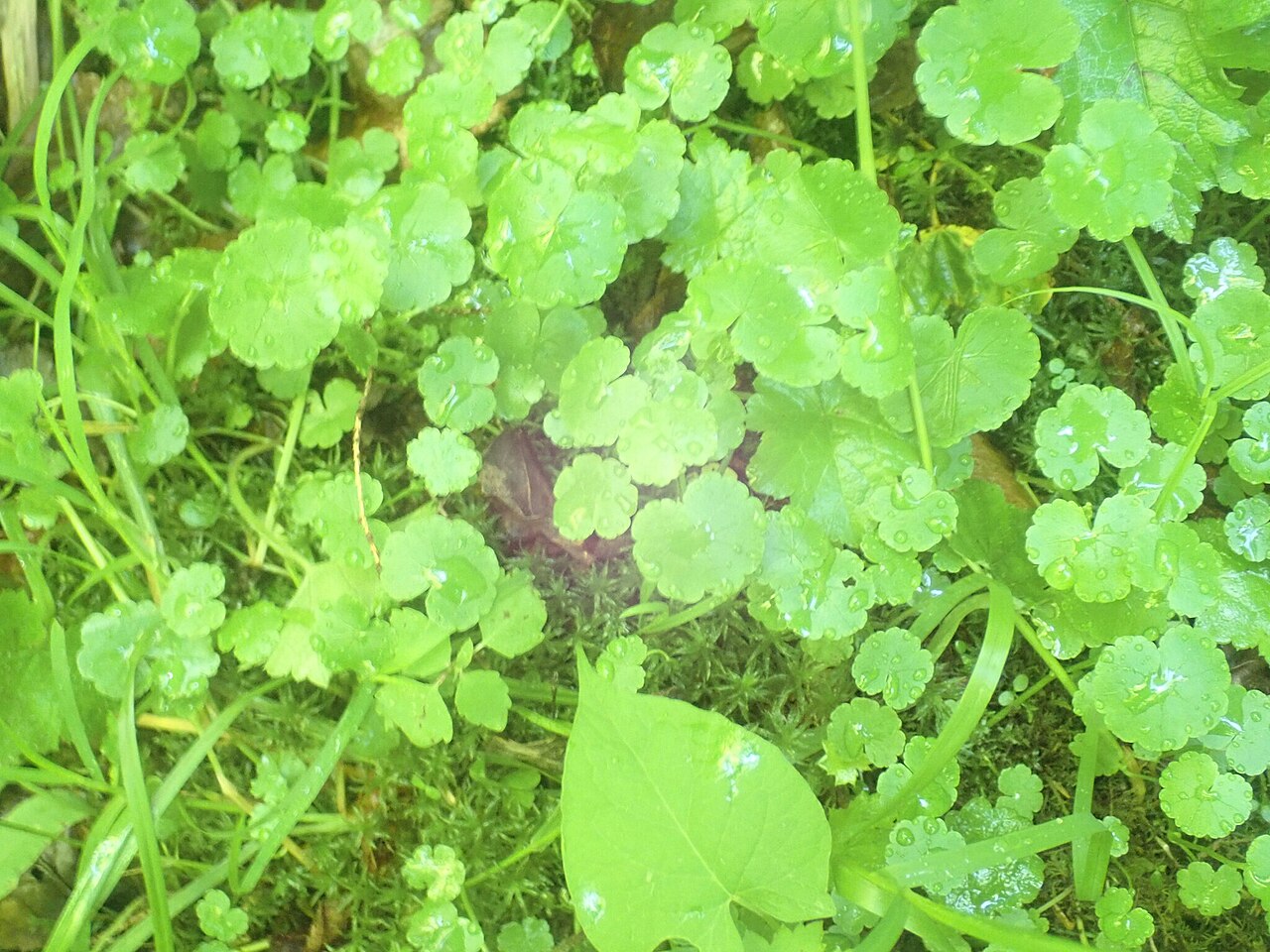
It is a low, mat-forming perennial with slender, smooth, creeping stems that branch and root at the nodes. The stems lie on the ground or scramble through moss and low plants, rarely rising more than a few inches. Plants can form loose to dense carpets in wet places.
Leaves
The leaves are alternate, round to kidney-shaped, about ½ to 2 inches across, with a deep, narrow notch at the base where the leaf stalk attaches. The edges have shallow, rounded lobes that are themselves finely scalloped. The surface is smooth, thin and noticeably glossy, bright to deep green, and the leaf stalks are short to moderately long.
Flowers
The flowers are tiny, white to greenish white, about ⅛ inch across, with five petals. They are borne in small, nearly stalkless clusters of one to several flowers in the leaf axils along the stem. American marshpennywort blooms from about June to September.
Fruit & Tubers
Each flower produces a tiny, flattened, rounded fruit that splits into two one-seeded halves. In late summer and fall the plant also forms small, whitish tubers at the tips of some stems, which overwinter and help it spread.
Similar Species
Whorled marshpennywort (Hydrocotyle verticillata) and largeleaf pennywort (H. bonariensis) have umbrella-like leaves with the stalk attached in the center, not at a notch. Creeping Charlie (Glechoma hederacea), a non-native mint, has opposite, hairy leaves on square stems and purple flowers. Violets have heart-shaped leaves in basal clumps rather than on creeping stems.
Quick Facts
| Scientific Name | Hydrocotyle americana L. |
| Family | Araliaceae (ginseng family); Apiaceae in USDA PLANTS |
| Plant Type | Creeping herbaceous perennial groundcover |
| Mature Height | 1–4 in |
| Mature Spread | 6 in–2 ft; spreads by rooting stems |
| Growth Rate | Moderate to fast in wet soil |
| Sun Exposure | Part shade to full shade |
| Water Needs | High; moist to wet soil |
| Soil Type | Wet, mossy, organic or sandy soils; seeps and stream margins |
| Soil pH | About 4.5–7.0 |
| Bloom Time | June–September |
| Flower Color | White to greenish white |
| Fall Color | Leaves stay green until hard frost |
| Fruit | Tiny flattened two-part fruit; small overwintering tubers |
| Deer Resistant | Mostly; rarely browsed |
| USDA Hardiness Zones | 3–8 |
Native Range
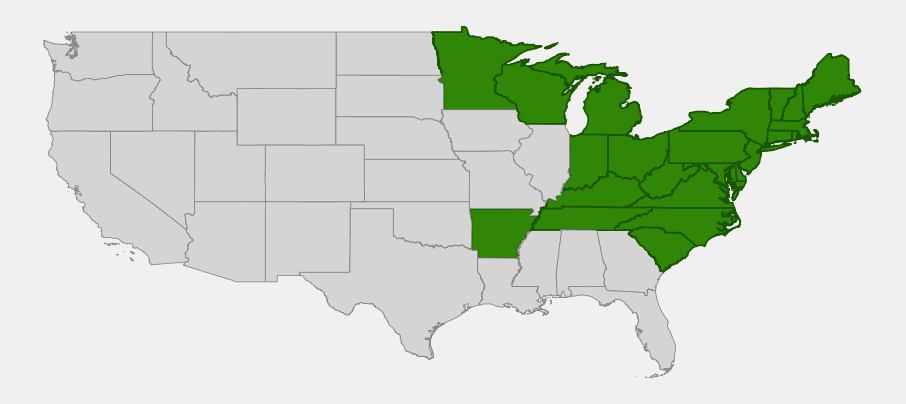
American marshpennywort is native to eastern North America. USDA PLANTS lists it in Arkansas, Connecticut, Delaware, Indiana, Kentucky, Maine, Maryland, Massachusetts, Michigan, Minnesota, New Hampshire, New Jersey, New York, North Carolina, Ohio, Pennsylvania, Rhode Island, South Carolina, Tennessee, Vermont, Virginia, West Virginia and Wisconsin, as well as the District of Columbia, and in eastern Canada from Ontario east to Nova Scotia.
Its core range covers New England, New York, Pennsylvania, the Great Lakes states and the Appalachian Mountains. It becomes scattered toward the south, where it is mostly found in the mountains of North Carolina, Tennessee and South Carolina, and it reaches Arkansas as an outlying southwestern record.
It grows in wet, usually shaded places: seepage slopes and springheads, the edges of streams and brooks, wet and mossy woods, swamp and bog margins, wet meadows and damp ditches and trailsides. It is often found among mosses and sphagnum, from low elevations up into the cool, moist forests of the Appalachians.
📋 Regional plant lists featuring American Marshpennywort: North & South Carolina · Maryland, Virginia & West Virginia · Kentucky & Tennessee · Arkansas, Louisiana, Eastern Oklahoma & Eastern Texas · Ohio & Indiana · Michigan, Wisconsin & Eastern Minnesota · New York, Pennsylvania & Northern New Jersey · Delaware, Southern New Jersey & Long Island · Connecticut, Massachusetts & Rhode Island · New Hampshire, Maine & Vermont
Growing & Care Guide
American marshpennywort is an easy, low groundcover for wet, shady places such as stream banks, the edges of rain gardens and ponds, and seepy spots in woodland gardens. It is occasionally sold by native plant and water-garden nurseries and is easy to start from a few rooted pieces from a nursery or a friend’s garden.
Light
It grows best in part to full shade. It tolerates morning sun where the soil stays wet, but hot afternoon sun scorches the thin leaves.
Soil & Water
Keep the soil constantly moist to wet. It thrives in organic, mossy or sandy soils at the edge of water, in seeps and in boggy areas, and tolerates shallow standing water for short periods. It will not survive in dry garden soil.
Planting Tips
Set rooted pieces 6 to 12 inches apart in spring or early fall, pressing the stems onto wet soil so the nodes can root. It combines well with ferns, skunk cabbage, marsh marigold and sedges along a stream or pond edge, and can fill gaps between stepping stones in wet shade.
Pruning & Maintenance
No pruning is needed. Pull out runners if it spreads where it is not wanted; it is shallow-rooted and easy to remove. Keep fallen leaves from smothering it in fall.
Propagation
Divide mats or root stem cuttings with a node or two in moist soil; they root within a few weeks. The small tubers formed in fall can also be planted. Seed is rarely used.
Landscape Uses
- Wet shade groundcover: glossy, low carpet where lawn and most groundcovers fail
- Stream and pond edges: softens wet banks among ferns and sedges
- Rain garden margins: for the constantly moist, shaded parts of a rain garden
- Bog and seep gardens: grows among mosses and sphagnum
- Wetland restoration: native groundlayer for restored seeps and forested wetlands
Wildlife & Ecological Value
American marshpennywort is a small part of wetland food webs, providing low cover and food for small animals in seeps and wet woods.
For Pollinators
Its tiny white flowers are visited by small bees, flies and other small insects, though they offer only modest amounts of nectar and pollen.
For Birds
It is not an important food plant for birds, but the wet, mossy habitats where it grows support many insects eaten by woodland birds such as warblers, thrushes and waterthrushes.
For Mammals
It is rarely browsed by deer. Small mammals, salamanders and frogs use the moist cover of its mats along streams and seeps.
Ecosystem Role
Its creeping, rooting stems help cover and hold wet soil along small streams and seeps, and it is a characteristic plant of the mossy groundlayer in seepage forests and swamp edges.
Cultural & Historical Uses
Carl Linnaeus described Hydrocotyle americana in 1753 in Species Plantarum. The genus name comes from the Greek hydor, “water,” and kotyle, “small cup,” referring to the cupped, round leaves of many pennyworts and their wet habitats. The common name “pennywort” refers to the round, coin-shaped leaves.
Some pennyworts have been eaten as greens or used in folk medicine, but American marshpennywort is not a recognized edible. The Lady Bird Johnson Wildflower Center notes that eating the leaves may cause nausea, so it should be treated as a plant to look at rather than eat.
For botanists and naturalists in the Northeast, it is a familiar companion on wet, mossy trails and stream banks, a quiet indicator of constantly moist, shaded ground.
Frequently Asked Questions
Where does American marshpennywort grow?
In wet, shaded places in eastern North America: seeps, stream edges, wet woods, bog margins and wet meadows from Minnesota and Maine south through the Appalachians to the Carolinas and Tennessee, and in eastern Canada.
Can I use American marshpennywort as a groundcover?
Yes, in wet, shaded spots. It forms a low, glossy carpet along streams, ponds and seeps and in the wet parts of rain gardens, but it will not grow in dry soil.
Is American marshpennywort edible?
It is not a recognized edible plant, and eating the leaves may cause nausea. Enjoy it as a groundcover and wildflower instead.
When does it bloom?
From about June to September. The tiny white flowers are clustered at the leaf bases and are easy to miss.
How is it different from other pennyworts?
American marshpennywort has round leaves with a deep notch at the base where the stalk attaches. Most other native pennyworts, such as whorled and largeleaf pennywort, have umbrella-shaped leaves with the stalk attached in the center.

Looking for a nursery that carries American Marshpennywort?
Browse our native plant nursery directory: Arkansas · Connecticut & Delaware · Indiana · Kentucky, Maine, Maryland, Massachusetts, Michigan & Minnesota · New Hampshire, New Jersey, New York, North Carolina & Ohio · Pennsylvania, Rhode Island, South Carolina, Tennessee, Vermont & Virginia · West Virginia & Wisconsin

