
Thinleaf Sunflower (Helianthus decapetalus)
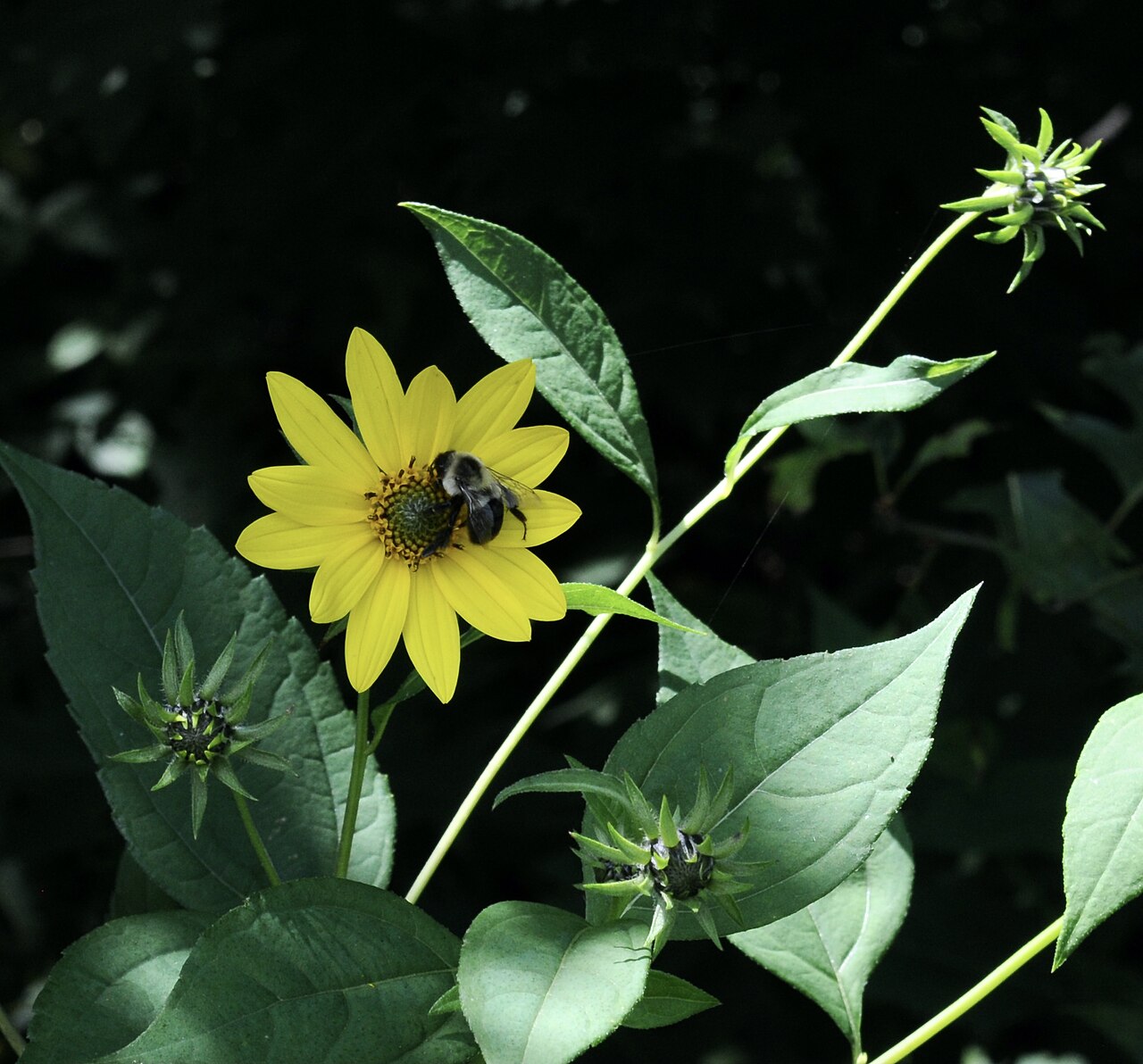
Helianthus decapetalus, the Thinleaf Sunflower, also called pale sunflower, ten-petal sunflower or forest sunflower, is a native perennial sunflower of eastern North America in the aster family (Asteraceae). It grows 2 to 5 feet tall from spreading rhizomes, with thin, toothed, pointed leaves and clear yellow daisy-like flower heads 2 to 3 inches across in late summer.
Unlike most sunflowers, it is a plant of shade and moisture. It grows in rich, moist woods, along streams and rivers, in floodplains and at woodland edges and clearings, from Maine and southern Quebec and Ontario south to Georgia and west to Wisconsin, Iowa, Kansas and Oklahoma.
Its name decapetalus means “ten petals,” though the number of ray petals usually varies from about 8 to 12. Thinleaf sunflower is one of the best sunflowers for partly shaded gardens, and it feeds bees, butterflies and seed-eating birds from midsummer into fall.
Identification
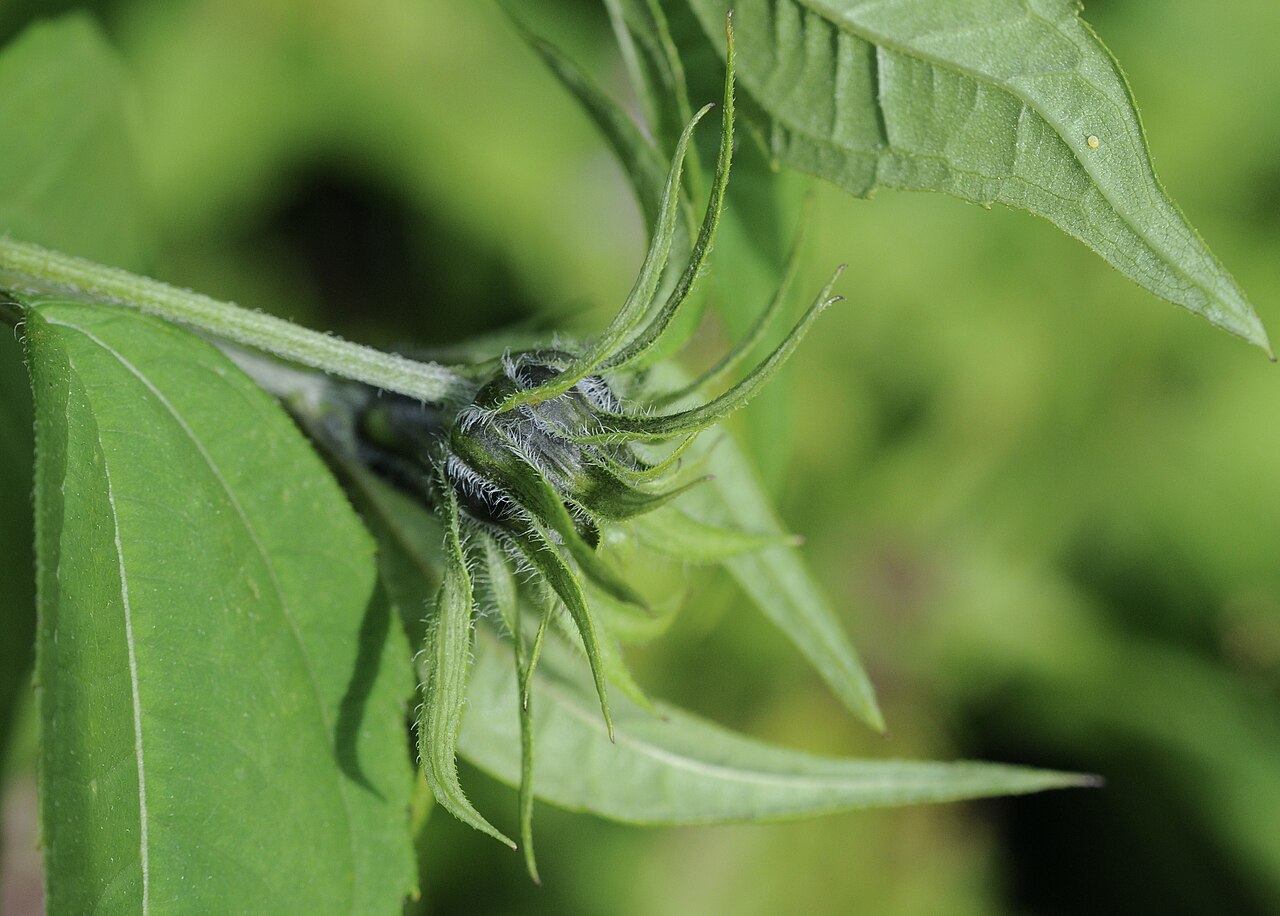
Look for a woodland sunflower 2 to 5 feet tall with thin, coarsely toothed, stalked leaves that are green on both sides, clear yellow heads with about 8 to 12 rays, and long, loose, spreading bracts beneath the heads, in moist, partly shaded sites.
Growth Habit
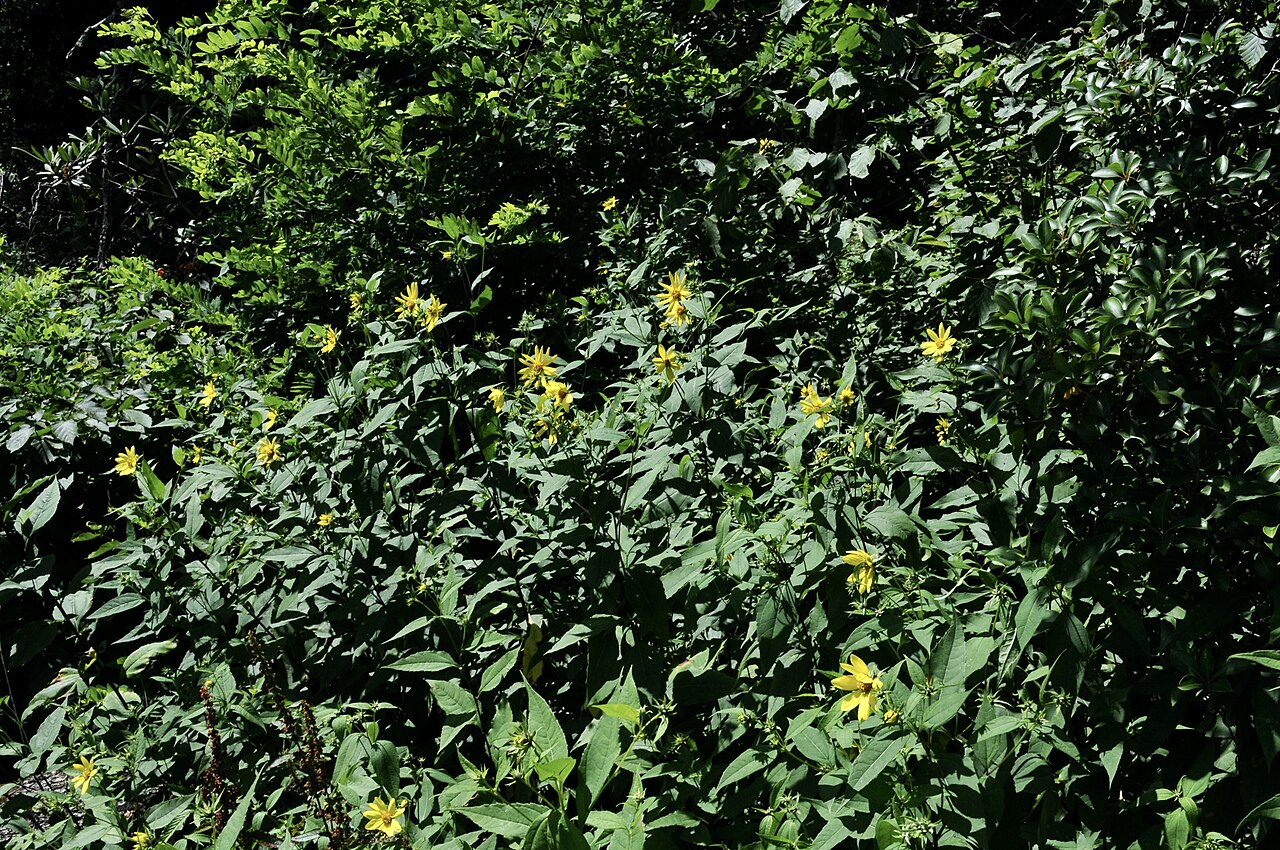
Thinleaf sunflower is a rhizomatous perennial that forms loose patches or colonies. Its stems are usually 2 to 5 feet tall, smooth below and somewhat rough above, often purplish, and branching near the top into several flowering stalks.
Leaves
The leaves are mostly opposite on the lower stem and sometimes alternate above. They are ovate to lance-shaped, 3 to 8 inches long, with coarse teeth, long pointed tips and distinct stalks (petioles) about 1/2 to 1 1/2 inches long. As the name says, they are thin, almost papery, and green on both sides, slightly rough on top and smooth or sparsely hairy beneath.
Flowers
The flower heads are about 2 to 3 inches across, with usually 8 to 12 pale to bright yellow ray petals around a yellow center disk about 1/2 inch wide. Below the head, the green bracts (phyllaries) are long, narrow and loose, often spreading and as long as or longer than the disk. Flowering is from about July to September or October.
Fruit & Seeds
The fruits are small, dark, wedge-shaped achenes, each with two small scales on top. They ripen in fall and are eaten by birds.
Look-alikes
Woodland sunflower has stalkless or very short-stalked, thicker, rough leaves held at right angles and grows in drier woods. Pale-leaved sunflower has thicker leaves that are whitish beneath and shorter, tighter bracts. Jerusalem artichoke is taller and coarser, with thick, rough leaves and edible tubers, usually in sunnier sites. Small-headed sunflower (Helianthus microcephalus) has many smaller heads with only about 5 to 8 rays. Sunflowers hybridize, so some plants are hard to name.
Quick Facts
| Scientific Name | Helianthus decapetalus |
| Family | Asteraceae (aster family) |
| Plant Type | Rhizomatous herbaceous perennial |
| Mature Height | 2–5 ft |
| Mature Spread | 2–4 ft (spreads by rhizomes) |
| Growth Rate | Fast |
| Sun Exposure | Part shade to full sun |
| Water Needs | Moderate; prefers moist soil |
| Soil Type | Rich, moist loam; alluvial soils |
| Soil pH | Slightly acidic to neutral (about 5.5–7.0) |
| Bloom Time | July–September |
| Flower Color | Pale to bright yellow |
| Fall Color | None notable |
| Fruit | Small dark achenes eaten by birds |
| Deer Resistant | No; deer browse it |
| USDA Hardiness Zones | 3–8 |
Native Range
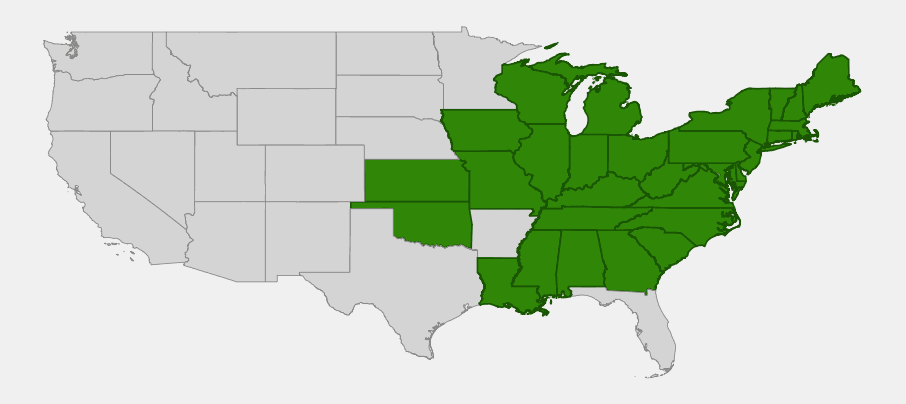
USDA PLANTS lists thinleaf sunflower as native to 30 states and the District of Columbia, from Maine, New Hampshire and Vermont south to Georgia, Alabama, Mississippi and Louisiana, and west to Michigan, Wisconsin, Iowa, Missouri, Kansas and Oklahoma. In Canada it is native to southern Ontario, southern Quebec and New Brunswick.
It is most common in the Northeast, the Appalachians, the Ohio Valley and the upper Midwest. In the Deep South and at the western edge of its range in Kansas, Oklahoma and Louisiana it is less common and found mostly in moist, wooded valleys.
It grows in rich, moist deciduous woods, wooded stream banks and floodplains, ravines, woodland edges, thickets, clearings and shaded roadsides, from near sea level to over 4,500 feet in the southern Appalachians.
📋 Regional plant lists featuring Thinleaf Sunflower: New York, Pennsylvania & Northern New Jersey · Delaware, Southern New Jersey & Long Island · Connecticut, Massachusetts & Rhode Island · New Hampshire, Maine & Vermont · Maryland, Virginia & West Virginia · North & South Carolina · Alabama, Georgia & Mississippi · Kentucky & Tennessee · Ohio & Indiana · Michigan, Wisconsin & Eastern Minnesota · Illinois, Iowa & Missouri · Nebraska, Kansas & Eastern Colorado · Arkansas, Louisiana, Eastern Oklahoma & Eastern Texas
Growing & Care Guide
Thinleaf sunflower is easy to grow and one of the few sunflowers that blooms well in part shade. It is sold by native plant nurseries, and double-flowered and other named cultivars offered under this name, some of which are hybrids, are old garden favorites.
Light
Part shade to full sun. It blooms well in dappled shade or with a few hours of direct sun, and in full sun if the soil stays moist.
Soil & Water
Give it rich, moist, humus-rich soil. It tolerates clay and periodic flooding but dislikes long droughts; water in dry spells, especially in sun.
Planting Tips
Plant 2 to 3 feet apart at a woodland edge, along a stream, in a rain garden or at the back of a shady border. It spreads by rhizomes, so give it room or plant it where neighbors such as wingstem, cutleaf coneflower and asters can hold their own.
Pruning & Maintenance
Cut stems back by about a third in early summer for shorter, bushier plants. Divide clumps every few years if they spread too far. Leave seed heads standing for birds in fall and cut stems in late winter.
Propagation
Divide rhizomes in spring or fall, which is the easiest method. Seeds germinate best after 1 to 2 months of cold, moist stratification; sow outdoors in fall or stratify in the refrigerator before spring sowing.
Landscape Uses
- Shade and woodland edge gardens: one of few sunflowers that blooms in part shade
- Rain gardens and streambanks: tolerates moist soil and brief flooding
- Pollinator gardens: late-summer nectar and pollen for many bees
- Bird gardens: fall seeds for goldfinches and other birds
- Naturalized areas: spreads into colonies that hold soil
Wildlife & Ecological Value
Like other native sunflowers, thinleaf sunflower supports a large community of insects and birds from midsummer to fall.
For Pollinators
The flowers are visited by bumble bees, long-horned bees, sweat bees and other native bees, including specialist bees that collect pollen mainly from sunflowers, as well as butterflies, skippers and beneficial wasps. Native sunflowers are larval host plants for butterflies such as the silvery checkerspot and many moths.
For Birds
American goldfinches, chickadees, nuthatches and other seed-eating birds eat the seeds in fall and winter.
For Mammals
Deer and rabbits browse the leaves and young stems. Small mammals eat the fallen seeds.
Ecosystem Role
Thinleaf sunflower helps hold soil on stream banks and in floodplains with its spreading rhizomes. It brightens the edges of eastern forests in late summer and provides late-season food when many woodland wildflowers have finished blooming.
Cultural & Historical Uses
Thinleaf sunflower was named by Linnaeus in 1753 from plants grown in European gardens, and it has been cultivated as an ornamental for centuries. Many double-flowered perennial sunflowers sold as Helianthus decapetalus or Helianthus × multiflorus are thought to be hybrids of it and the common annual sunflower.
The genus name Helianthus comes from the Greek helios (sun) and anthos (flower). The species name decapetalus means “ten-petaled,” and the name ten-petal sunflower is a direct translation. Common names vary widely: USDA uses thinleaf sunflower, while others call it pale sunflower or forest sunflower.
Its close relative, the Jerusalem artichoke, was an important food crop of Native Americans, and the two are related enough to hybridize. Thinleaf sunflower itself was not a major food plant, but the seeds of many native sunflowers were eaten.
Frequently Asked Questions
Will thinleaf sunflower grow in shade?
Yes. It is one of the most shade-tolerant sunflowers and blooms in part shade or dappled light. Flowering is heaviest with a few hours of direct sun.
Is thinleaf sunflower the same as pale sunflower?
Yes, pale sunflower is another common name for Helianthus decapetalus, along with ten-petal sunflower and forest sunflower. USDA PLANTS uses thinleaf sunflower. It should not be confused with pale-leaved sunflower (Helianthus strumosus).
Does thinleaf sunflower spread?
Yes. It spreads by rhizomes into colonies, especially in moist, rich soil. Divide it every few years or give it room to roam.
Does thinleaf sunflower really have ten petals?
Not always. The name means ten petals, but heads usually have about 8 to 12 rays.
When does thinleaf sunflower bloom?
From about July to September, sometimes into October.

Looking for a nursery that carries Thinleaf Sunflower?
Browse our native plant nursery directory: Alabama · Connecticut, Delaware & Georgia · Illinois, Indiana, Iowa & Kansas · Kentucky, Louisiana, Maine, Maryland, Massachusetts, Michigan, Mississippi & Missouri · New Hampshire, New Jersey, New York, North Carolina, Ohio & Oklahoma · Pennsylvania, Rhode Island, South Carolina, Tennessee, Vermont & Virginia · West Virginia & Wisconsin

